


Blog · Stain Removal Guide
Red Chile Stain on Carpet? What Works in New Mexico
If you live in Las Cruces, red chile on the carpet is not a rare accident. It is a Tuesday.
Updated September 16, 202610 min read
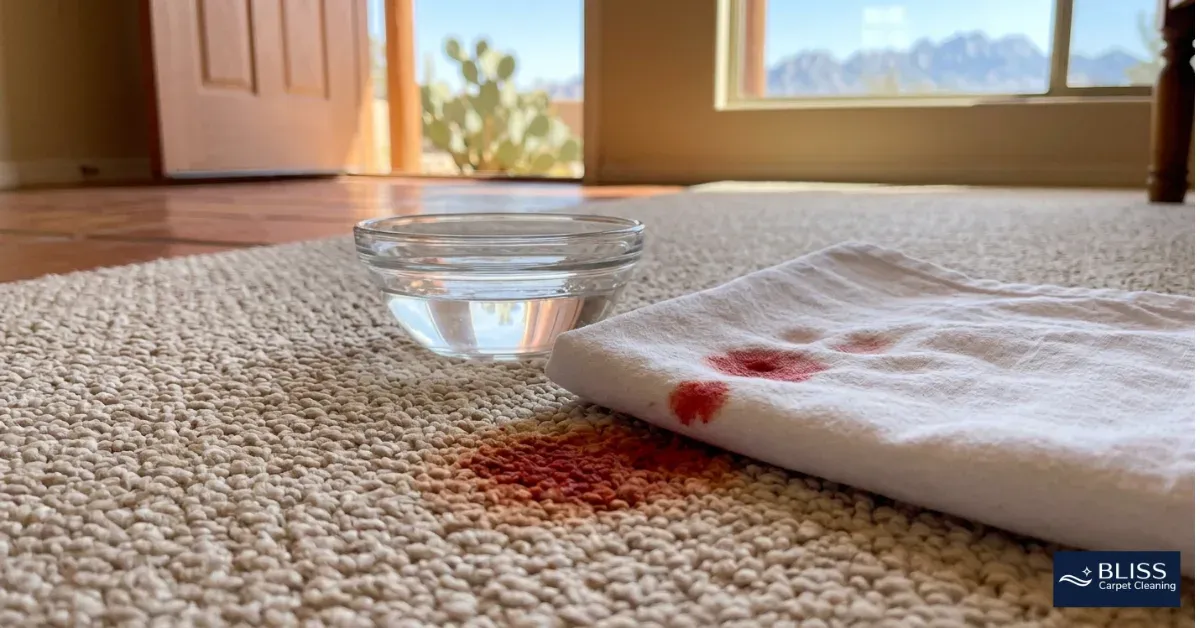
That deep red food stain hits fast, and in the dry Chihuahuan Desert air, it sets faster here than almost anywhere else. This article tells you exactly what works, what destroys your carpet, and when to stop and call a professional.
Red chile stains carpet fast because it combines pigment, capsaicin oil, and food acid in one spill. Blot immediately with a clean white cloth. Never rub. Apply one teaspoon of dish soap in two cups of cold water. Blot until color lifts. Dried stains need an enzyme cleaner. Stains that stay need a professional.
Why Red Chile Stains Are So Hard to Get Out of Carpet
Red chile is not one stain. It is three bonded together, which is why it fights harder than most food stains.
The red pigment behaves like fabric dye. The IICRC confirms food dyes in chile-based sauces bond to synthetic carpet fibers the same way clothing dye does. Once set, that bond is extremely difficult to break without professional equipment.
Capsaicin is oil-based. Oil repels water, so plain water or a wet cloth barely touches the core of a spicy food stain. You lift some surface color but the greasy base stays locked in the fibers.
Red chile sauce also carries acidity that can damage carpet fiber pH, especially in wool or natural blends. Apply the wrong cleaner on top of that and you risk permanently altering the fiber color.
Mesilla Valley homeowners eat red chile daily. Knowing what you are actually fighting is half the battle.
Chile Stain Removal in Las Cruces Starts in the First Five Minutes
Speed is everything with this stain. The IICRC ANSI/S100-2021 standard states that immediate treatment is the primary factor preventing a food stain from becoming permanent.
Las Cruces low humidity and indoor heat mean moisture evaporates faster here than in humid climates. A stain that gives a Houston homeowner 20 minutes to treat may give you 10. NMSU renters and military families near the Fort Bliss corridor face added pressure since deposit deductions for permanent carpet damage can run into hundreds of dollars.
Act fast. Work from the outer edge inward. Remove solids first with a spoon before adding any liquid.
Blotting vs Rubbing — Why Most People Make It Worse
Rubbing pushes red pigment deeper into the pile and spreads the stain sideways into clean fibers. Blotting means pressing straight down, holding two to three seconds, and lifting straight up. Move to a fresh cloth section each time. That pulls the stain up instead of grinding it in.
What to Avoid Putting on a Fresh Chile Stain
Hot water opens carpet fibers and drives the spicy food stain deeper. Always use cold water. Undiluted dish soap leaves residue that attracts dirt and creates a gray shadow stain within days. Oxy-based spray cleaners applied too aggressively can permanently bleach synthetic carpet fibers, turning the spot yellow, pink, or orange according to the Carpet and Rug Institute.
Step-by-Step: How to Remove a Red Chile Stain from Carpet
What you need: clean white cloths, one teaspoon of clear dish soap, two cups of cold water, a spray bottle, and a dry towel.
- 1
Scrape solids
Scrape solid chile off the carpet surface with a spoon. Do not press down.
- 2
Blot the wet stain
Blot the wet stain firmly with a dry white cloth. Lift straight up. Repeat on fresh cloth sections until no more color transfers.
- 3
Mix the cleaning solution
Mix one teaspoon of dish soap into two cups of cold water. Apply a small amount to the stain with a cloth. Do not soak the carpet.
- 4
Blot from the outside in
Blot from the outer edge inward. Red color should transfer to the cloth. Keep moving to clean sections.
- 5
Rinse and blot dry
Rinse the area with a small amount of plain cold water to remove soap residue. Blot dry.
- 6
Weight a dry towel over the spot
Place a dry white towel over the spot with something heavy on top for 15 minutes. This pulls remaining moisture and residue up from the pile.
Do not repeat the dish soap method more than twice. Over-wetting carpet risks mold growth under the padding.
How to Remove Dried Red Chile Stains from Carpet in NM
A dried stain needs rehydration before it responds to any cleaner. Treating a dry chile stain like a fresh one moves surface dust around but leaves the bonded pigment untouched.
Scrape off any dried crust gently. Vacuum the loosened particles. Skipping this step means dried chile residue dissolves back into the carpet the moment you add liquid.
The Enzyme Cleaner Method for Dried Food Stains
Enzyme cleaners break down food proteins, pepper oils, and pigments at a molecular level. Dish soap cannot do this on a set stain. Apply the enzyme cleaner directly, allow the dwell time the product specifies, keep the area moist with a damp cloth on top, then blot firmly. Two to three applications may be needed. Between each application, blot dry and let the carpet rest before reapplying.
Enzyme cleaners are safe on most synthetic carpet. Test on wool or natural fiber rugs in a hidden corner before use.
When DIY Has Gone as Far as It Can
If the stain remains after two full enzyme cleaner attempts, stop adding product. You are either dealing with a permanently dyed fiber or a stain that has reached the backing and padding. Neither responds to anything sold in stores. That is where professional hot water extraction takes over.
Why the Wrong Cleaner Can Permanently Damage Your Carpet
Using the wrong product causes two problems at once: it fails on the stain and damages the carpet in a way that cannot be reversed.
The Carpet and Rug Institute warns that Oxy-based cleaners not thoroughly rinsed from synthetic carpet cause permanent bleaching over time. The fiber turns light yellowish-brown, pink, or orange. That patch cannot be fixed by any cleaner or professional.
Scrubbing breaks down carpet fiber tips, creates pilling, and drives the stain into the base of the pile. The carpet looks matted and damaged even after the color is gone.
Steam cleaning a fresh spicy food stain sets the pigment permanently with heat before the cleaning action can lift it. Steam is a maintenance tool, not an emergency stain treatment.
What Red Chile Stains in Las Cruces Homes Actually Cost You
Untreated stains carry real financial and health consequences that most Las Cruces homeowners only consider after the damage is done.
The IICRC ANSI/S100-2021 standard confirms that food stains cleaned immediately rarely become permanent. Every minute of delay raises the risk significantly.
The Carpet and Rug Institute confirms Oxy cleaners left on synthetic fibers cause permanent bleaching. One misapplied product can turn a treatable stain into a carpet replacement situation.
The IICRC recommends professional carpet cleaning every 6 to 12 months in high-traffic areas. Untreated food stains compound with soil and residue, making later removal progressively harder with each passing month.
The EPA reports that Americans spend roughly 90 percent of their time indoors. Carpet holding untreated food residue continuously feeds bacteria and allergens back into your home air.
For renters near NMSU or military families in the greater Las Cruces area, a permanent stain at move-out is a direct deposit deduction. Standard leases allow landlords to charge full carpet replacement costs for damage from stains.
When to Call a Professional Carpet Cleaner for Chile Stains
Call a professional after two failed home attempts, or immediately if the stain has been sitting more than 24 hours.
Professional hot water extraction flushes the stain from the pile, through the backing, and out of the padding below. No home product reaches the padding layer. That is the critical difference.
Wicking is the sign you need professional help. You clean the spot, it disappears, and within a day or two a faint red stain reappears as the carpet dries. That is residue in the padding pulling back up through the fibers. Surface cleaning cannot stop it. Extraction does.
Homeowners with light-colored carpet, wool rugs, or older carpet with stain history should call earlier. Multiple previous stains in the same area make each new stain harder to treat without professional pre-treatment chemistry.
Red Chile Stain FAQ — Questions Las Cruces Homeowners Ask
Does hot water make a chile stain worse?
+
Yes. Heat opens carpet fibers and drives the pigment deeper before it can be lifted. Use cold or cool water only on any fresh spicy food stain.
Can I use bleach on a red chile stain?
+
No. Bleach permanently removes color from carpet fibers. You will be left with a bleached patch that no professional can restore. It is not a stain remover for carpet.
Will hydrogen peroxide remove a red chile stain from carpet?
+
Three percent hydrogen peroxide can lighten residual color on synthetic carpet after other methods have been tried. Apply a small amount, let it sit a few minutes, then blot. The IICRC advises against it on wool or natural fiber carpet without testing first, as color loss is possible.
Does baking soda work on chile stains?
+
Baking soda absorbs surface moisture and odor but does not break down red chile pigment or capsaicin oil. Sprinkle it on a fresh wet spill to draw out moisture before blotting. It is not effective as a standalone stain treatment.
How long before a red chile stain becomes permanent?
+
In Las Cruces, bonding can start within 10 to 15 minutes due to low humidity and warm indoor temperatures. The IICRC is clear that immediate treatment is what prevents permanent damage. Do not wait.
What if the stain comes back after cleaning?
+
That is wicking. Residue left in the carpet padding draws back up through the fibers as the carpet dries. Surface cleaning cannot reach the padding. Professional hot water extraction removes it completely and stops it from returning.
Is dish soap safe to use on carpet for chile stains?
+
Yes, when properly diluted. One teaspoon of clear dish soap in two cups of cold water is safe and effective on fresh food stains. Never apply undiluted soap directly to carpet. Residue left in the fibers attracts dirt and creates a dirty shadow over time.
Does red chile stain light-colored carpet permanently?
+
It can, especially without immediate treatment or if the wrong product is applied. Light and beige carpets show red pigment faster. Stains that have been sitting more than a few hours on light carpet almost always need professional treatment for full removal.
Will a steam cleaner set the stain deeper?
+
Yes on a fresh stain. The heat bonds the pigment to carpet fibers before cleaning action can lift it. Use a steam cleaner only for routine maintenance on unstained carpet, never as a first response to a spill.
Are chile stains covered by carpet warranties?
+
Most warranties cover manufacturing defects, not stain damage or cleaning errors. The Carpet and Rug Institute notes that using non-approved cleaning methods can void fiber warranties entirely. Use CRI-approved methods and keep your warranty documentation.
Conclusion
Red chile is everyday life in Las Cruces, and that means carpet stains are part of the territory. Most fresh stains come out fully with fast action and the right method. The ones that do not need professional extraction, not more product.
One thing worth knowing that has not come up yet: your carpet fiber type changes everything. Nylon handles spot treatment more forgivingly than wool, olefin, or polyester. If you do not know what your carpet is made of, treat it gently and call a professional sooner. Aggressive DIY on the wrong fiber causes permanent damage that no one can undo.
Professional carpet cleaning in Las Cruces costs far less than replacing a section of carpet because a stain was treated wrong.

Michael Sanders
Michael Sanders is a home care and cleaning industry writer covering carpet maintenance, flooring care, and household cleaning practices across the United States. His work focuses on practical, research-backed guidance — from stain and odor removal to deep extraction methods and indoor allergen prevention. Michael collaborates with cleaning professionals to ensure accuracy, and his writing reflects a genuine interest in helping homeowners make informed decisions about caring for their homes.


Don't Let a Stain Win
If your DIY attempts haven't worked, call Bliss Carpet Cleaning. We serve Las Cruces, NM and the surrounding areas with professional hot water extraction.
Call Now — Free Quote