Nylon vs Polyester Carpet: Durability, Cost, and Care
Nylon vs polyester carpet is one of the most confusing flooring decisions homeowners face, mostly because the advice keeps changing. For decades, nylon was the default answer for anyone who wanted carpet that lasts. Lately, more installers are quietly steering customers toward polyester instead.
Both sides have a point, and neither tells the whole story. The real answer depends on actual lab numbers, not brand reputation, plus where in your home the carpet is going. This guide breaks down durability, stain resistance, cost, and comfort with real data, so you can pick the right fiber for your room instead of guessing.
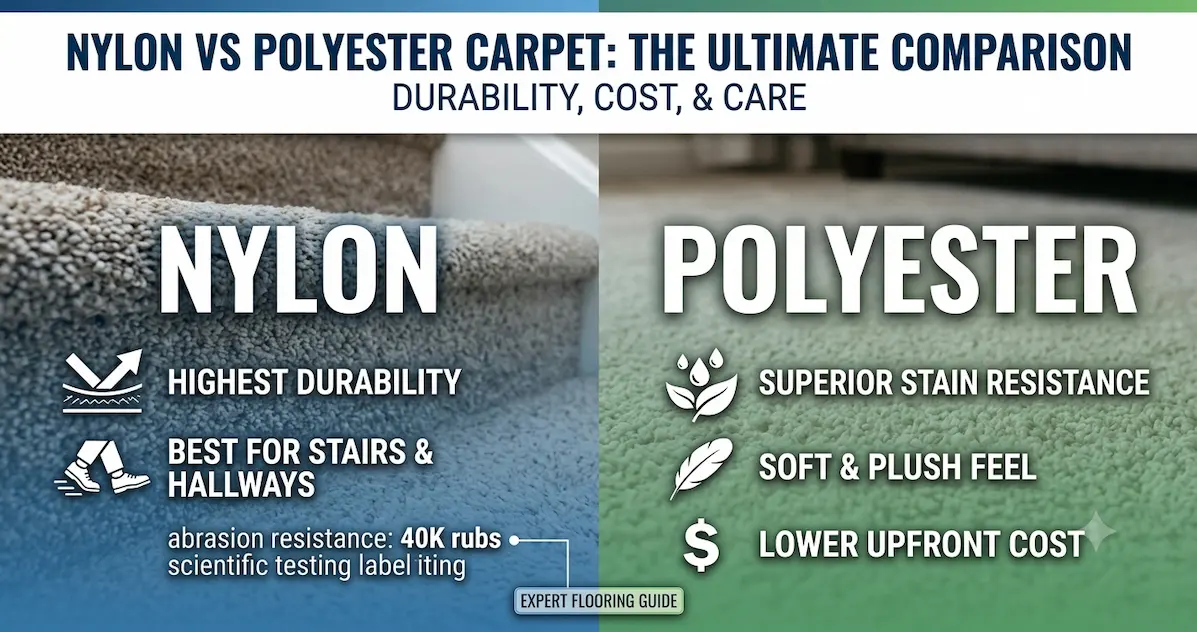
Nylon is generally more durable and better for high-traffic areas, while polyester is naturally more stain-resistant and softer at a lower price. Nylon typically outperforms polyester in abrasion resistance by roughly two to one, but modern solution-dyed polyester has closed much of the older performance gap.
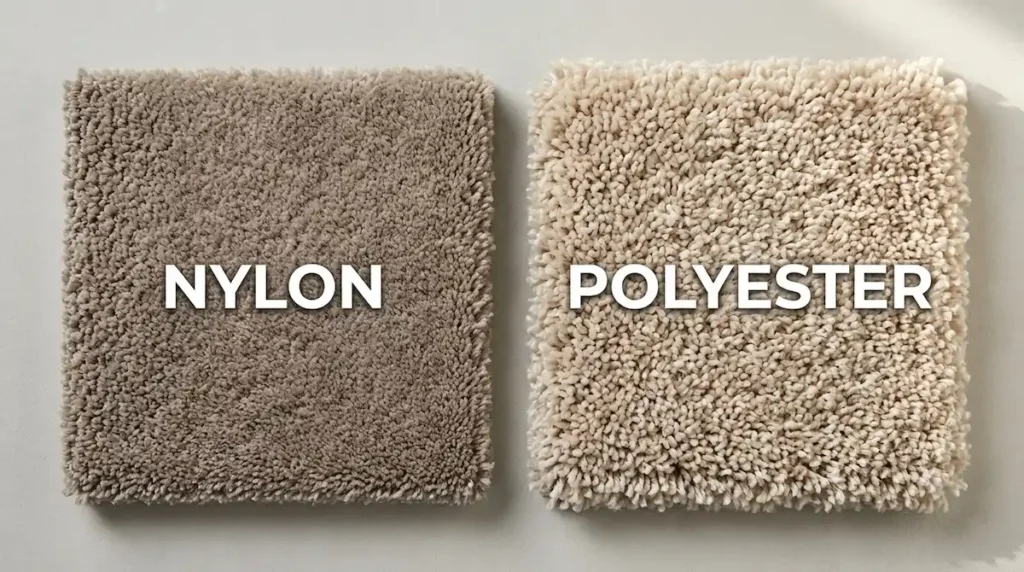
Here’s how nylon vs polyester carpet stacks up at a glance:
| Factor | Nylon | Polyester |
|---|---|---|
| Durability | Highest among synthetic fibers | Good, improving with newer technology |
| Stain Resistance | Resists stains when treated | Naturally water-resistant |
| Softness | Firmer, improving in newer lines | Naturally soft and plush |
| Cost | Higher | Lower |
| Best For | Stairs, hallways, heavy traffic | Bedrooms, low-traffic rooms, budget projects |
Nylon vs Polyester Carpet: Which Holds Up Better?
Nylon holds up better under repeated foot traffic, point blank. The fiber itself recovers from crushing and bending more completely than polyester does, which is why it still dominates hallways, stairs, and high-traffic commercial spaces.
The difference comes down to resilience, not raw strength, the fiber’s ability to spring back into shape after a footstep compresses it. Nylon’s molecular structure gives it a kind of memory polyester’s structure doesn’t have to the same degree.
That said, the gap has narrowed. Modern solution-dyed polyester holds its shape better than older polyester carpet did, and for low to moderate traffic, a quality polyester carpet can perform close to nylon for the first several years.
Nylon 6 vs. Nylon 6,6: Does the Type Matter?
Yes, somewhat. Nylon 6,6 is the higher-performing version of nylon, with a tighter molecular structure that gives it better heat resistance, lower static, and more durability under repeated abrasion.
In testing, nylon 6,6 fiber withstands around 40,000 rubs before it starts to wear, compared to about 20,000 for polyester, according to materials testing from Ascend Materials. Nylon 6 sits in between, performing well but generally not matching 6,6’s heat resistance. For most homeowners this matters less than overall carpet construction, but it’s worth asking about when comparing two nylon carpets.
| Feature | Nylon 6 | Nylon 6,6 |
|---|---|---|
| Abrasion Resistance | Good | Better, about 40,000 rubs before wear |
| Static Resistance | Lower | Higher |
| Heat Resistance | Moderate | Better |
| Typical Cost | Slightly lower | Slightly higher |
Is Nylon Carpet Better Than Polyester for Stains?
Is nylon carpet better than polyester when it comes to stains? No, actually, polyester wins this category. Polyester is naturally hydrophobic, meaning it repels water-based liquids instead of absorbing them, which makes spills easier to wipe up before they set in.
Nylon is naturally more absorbent, so untreated nylon stains faster than polyester does. Most nylon carpet sold today comes with a stain-resistant treatment to compensate, and it works well, but it’s a coating, not a built-in trait.
Polyester’s resistance is part of the fiber itself, so it doesn’t wear off the way a topical treatment can. The one place nylon still has an edge is oil-based stains, where polyester’s hydrophobic surface doesn’t offer the same protection.
What Does “Solution-Dyed” Actually Mean?
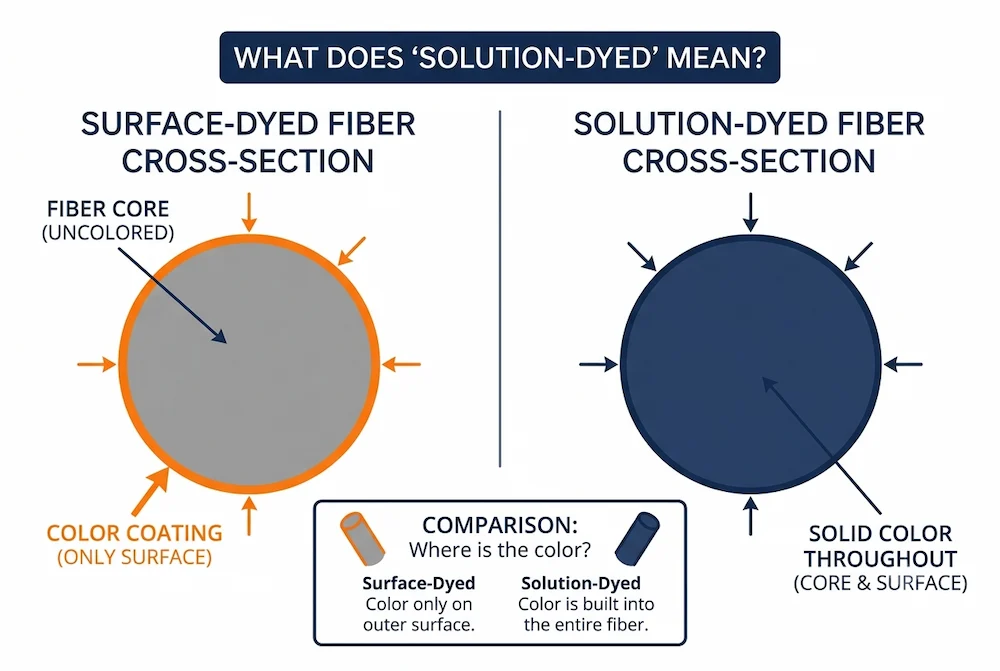
Solution-dyed means the color is mixed into the fiber while it’s still liquid plastic, before it’s spun into thread, so the color runs all the way through instead of sitting on the surface.
Traditional carpet dyeing applies color to finished fiber, similar to dyeing fabric after it’s woven. That surface-level color can be stripped or faded by harsh cleaning chemicals and sunlight over time.
Solution-dyed fiber, whether it’s nylon or polyester, resists fading and bleaching because there’s no surface layer of color to lose. This is part of why many modern pet-stain warranties exist: you can use stronger cleaners without worrying about pulling the color out of the carpet.
How Much Does Nylon vs Polyester Carpet Cost?
Nylon typically costs more than polyester, both for the raw material and the finished installed price, mainly because nylon fiber is more expensive to manufacture.
Nylon raw fiber generally runs about 30 percent more than polyester to produce, and that difference carries through to the price on the roll. Over a 15 to 20 year span, though, nylon’s longer lifespan can offset that upfront cost in a high-traffic area.
Polyester makes more financial sense where the carpet won’t see heavy use, since you’re not paying a durability premium you don’t need.
Which Is Softer, Nylon or Polyester?
Polyester is generally softer underfoot, especially in finer, more tightly spun fibers, though newer nylon lines have closed much of that gap.
Polyester fiber can be manufactured in thinner filaments than nylon, creating a silkier, more velvet-like texture. This is one reason it’s popular in bedrooms, where comfort matters more than traffic resistance.
Nylon has historically felt firmer underfoot, but manufacturers now offer softer nylon lines built specifically to compete on comfort, so the gap is smaller than it used to be.
Nylon vs Polyester Carpet for Stairs and High-Traffic Rooms
Nylon is the safer choice for stairs and heavy-traffic rooms, since it resists crushing and matting better under repeated, concentrated pressure.
Stairs take more abuse than flat flooring because every step concentrates weight and friction on the same narrow strip. A fiber that doesn’t bounce back quickly shows wear lines within a year or two in that kind of spot.
For hallways, entryways, and stairs, nylon’s resilience earns its higher price. Save polyester for bedrooms and other lower-traffic spaces where softness and stain resistance matter more than wear.
Why Fiber Choice Affects Durability and Waste
Choosing a more durable fiber for high-traffic areas means replacing carpet less often, which matters given how much carpet ends up in landfills every year.
According to materials testing from Ascend Materials, nylon 6,6 withstands roughly 40,000 abrasion rubs before wearing out, compared to about 20,000 for polyester, nearly double the resistance. The World Floor Covering Association reports that more than 90 percent of today’s carpet is synthetic fiber, so this gap affects most carpet sold.
The EPA reports that more than 4 billion pounds of carpet enter the U.S. solid waste stream every year. Choosing the right fiber for the right room, instead of the cheapest option everywhere, is one of the simplest ways to get more years out of a carpet before it adds to that number.
On the sustainability side, polyester has its own advantage. Industry reporting from Waste360 shows about half of the polyester carpet made in the U.S. comes from recycled PET bottles, giving it a smaller manufacturing footprint, even though it may need replacing sooner in high-traffic spots.
Common Questions, Answered
Here’s a quick rundown of nylon carpet pros and cons, plus a few other common questions homeowners ask before buying.
Is polyester carpet good for homes with pets?
Yes, polyester’s stain resistance makes it a solid choice for pet accidents, especially solution-dyed versions. Just keep in mind it’s not as resistant to matting from claws and constant movement as nylon.
Is Berber carpet usually nylon or polyester?
Berber is traditionally made from nylon or polypropylene because the looped construction needs a fiber that resists crushing. Polyester Berber exists too, but it’s less common since the loop style already loses some of polyester’s softness advantage.
How long does nylon carpet actually last?
Well-maintained nylon carpet typically lasts 15 to 20 years in moderate traffic, sometimes longer in lower-use rooms. High-traffic areas like stairs and hallways will wear faster regardless of fiber.
Is 100% nylon carpet worth it over a blend?
100% nylon usually performs better than a nylon blend, since blending in a cheaper fiber typically lowers overall durability. It costs more upfront, but it’s worth it for rooms that see constant use.
What are the biggest disadvantages of nylon carpet?
Nylon costs more than polyester and absorbs liquid more readily without a stain treatment. It also attracts more static than polyester, especially in dry winter months.
What are the biggest disadvantages of polyester carpet?
Polyester crushes and mats faster under heavy traffic, and it doesn’t bounce back from furniture dents as well as nylon. It’s also more vulnerable to oil-based stains than water-based ones.
Does polyester look as good as nylon?
Modern polyester actually takes dye better than nylon in some cases, producing richer, more vibrant colors. Where nylon still wins is pattern definition and texture retention over years of wear.
Which fiber is more eco-friendly, nylon or polyester?
Polyester has the edge here, since roughly half of polyester carpet sold in the U.S. is made from recycled PET bottles. Nylon is increasingly recyclable too, but it’s made from virgin petroleum-based materials more often than polyester is.
The honest takeaway is that nylon vs polyester carpet isn’t a contest with one winner, it’s a matching exercise. Nylon earns its higher price in stairs and hallways, anywhere traffic is constant. Polyester earns its lower price in bedrooms and guest rooms, anywhere stains matter more than wear.
If you are in the Las Cruces NM area and need help choosing or maintaining the right carpet for your home, our team is ready to help.