
Blog · Stain Removal Guide
How to Get Gum Out of Carpet: Full Guide
Figuring out how to get gum out of carpet is a different job than cleaning any stain, because gum is not a stain at all. It is soft plastic welded around your carpet fibers, and it ignores soap and water completely.
Published October 31, 20269 min read
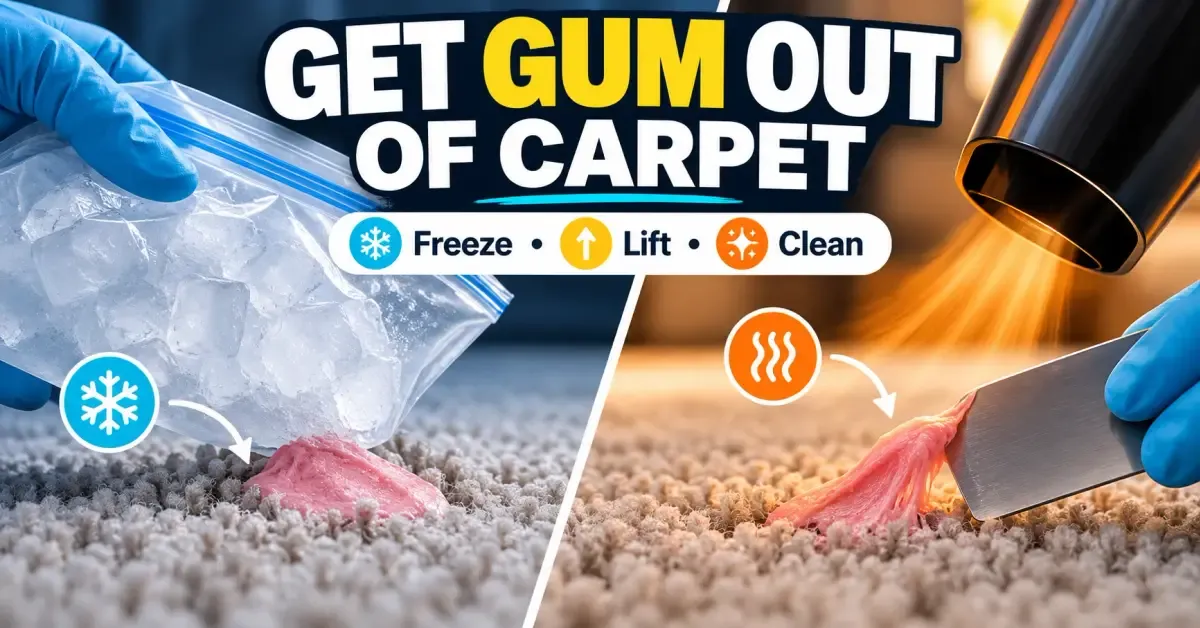
The internet's favorite fixes make things worse: forums recommend everything from WD-40 with no warnings to lighter fluid, an actual fire hazard. This guide covers the freeze method done right, the heat alternative for flattened gum, an honest verdict on which gum removers are safe and which damage carpet, the old-gum approach nobody else explains, and the residue stage that decides whether the spot stays clean or turns into a gray dirt magnet.
Freeze the gum solid with ice in a sealed plastic bag, then snap it off the fibers with a dull knife and vacuum the fragments. Dissolve the leftover residue with a citrus-based gum remover or rubbing alcohol after a colorfast test, then wash the spot with dish soap solution and dry.
How Do You Get Gum Out of Carpet?
Freeze it, break it off, dissolve the residue, then wash the spot. That four-stage sequence works because it treats gum as what it is: an adhesive, not a spill.
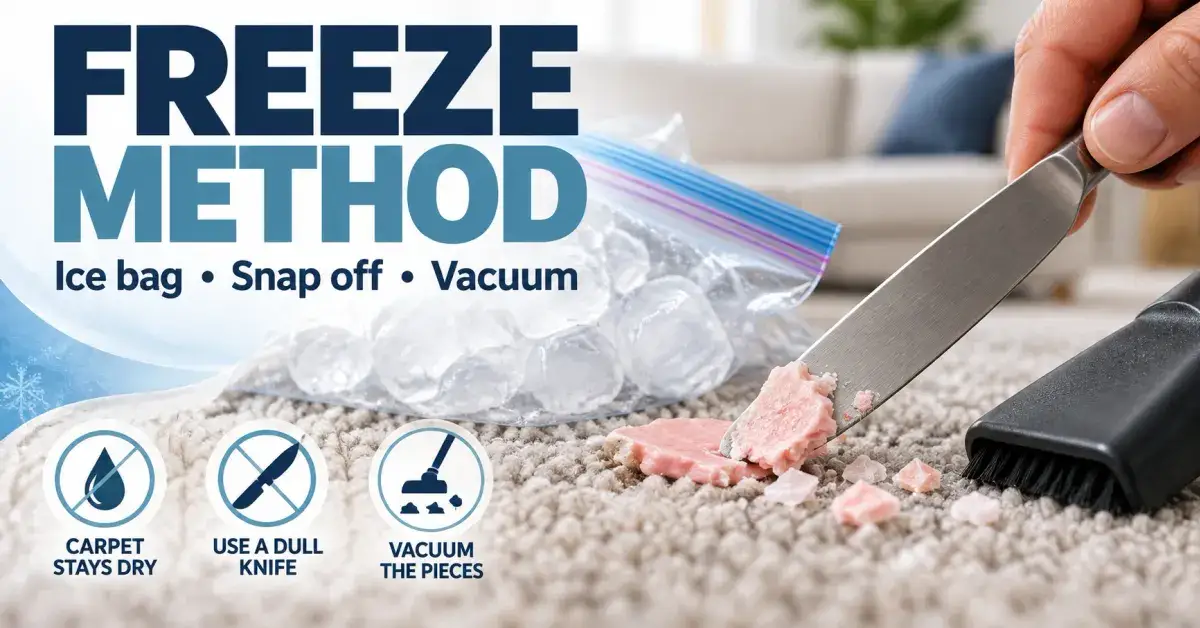
Start with ice cubes in a sealed sandwich bag pressed onto the gum for 10 to 15 minutes. Once the gum is rigid, lift and snap it away from the fibers with a dull butter knife or a credit card edge. Vacuum every fragment immediately.
A sticky film always remains at the fiber level. Treat it with a citrus gum remover or rubbing alcohol, then finish with half a teaspoon of dish soap in a cup of warm water, blot, rinse, and dry.
Skip the soap-and-water first instinct entirely. Water does nothing to gum except make the fibers around it wet and harder to work with.
Why Does Gum Stick to Carpet So Stubbornly?
Gum sticks because its base is synthetic rubber, and rubber grips fiber the way a tire grips road.The International Chewing Gum Association confirms modern gum base includes synthetic polymers, the same polymer family as soft plastics. That is why no amount of scrubbing with detergent touches it.
The useful part: rubber changes state with temperature, and that single fact is the entire removal playbook.
| Gum State | Temperature | The Right Move |
|---|---|---|
| Frozen and brittle | Cold from ice | Snap and lift it off fibers |
| Firm but flexible | Room temperature | Do not touch it yet, pick cold or heat |
| Soft and stretchy | Warm from a hair dryer | Pull it free with gloved fingers |
| Melted and flowing | High heat | Never allow this, it soaks the backing |
Cold makes gum shatter like plastic. Heat makes it release and stretch. Room temperature is the worst state to fight it in, which is exactly where most people start pulling.
How Do You Freeze Gum Out of Carpet the Right Way?
Keep the gum dry, freeze it fully, and work fast once it hardens. Those three details separate a clean lift from a smeared mess.
Seal ice cubes in a zip-top bag with no leaks. Wet gum absorbs water into the surrounding pile and softens sooner. Press the bag on the gum for 10 to 15 minutes until the blob is rigid to the touch.
Then move quickly. Snap the frozen gum upward off the fibers with a dull knife, working from the edges of the blob toward the center. Gum rewarms in a minute or two, so lift what you can, vacuum the fragments before they turn sticky again, and refreeze for another round.
Two or three freeze cycles beat one long struggle. A freezer pack wrapped in a thin towel works even faster than cubes and stays dry by design.
How Do You Remove Gum With Heat Instead of Ice?
Heat wins when the gum is stretched thin or stepped flat across the pile. Thin smears have no bulk to snap off, so softening and pulling beats freezing and cracking.
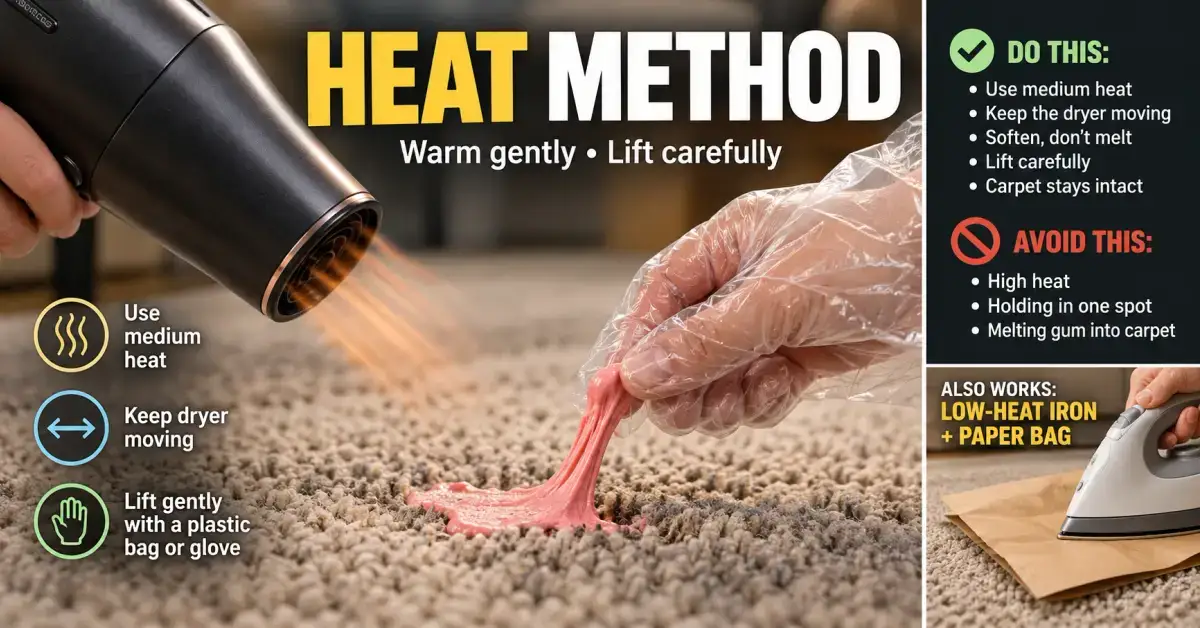
Aim a hair dryer at the gum on medium heat for a few seconds at a time. When the gum turns pliable, pull it off the fibers with fingers covered by a plastic bag or rubber gloves. The gum sticks to the plastic more readily than to the carpet, and each pull lifts a layer.
The paper transfer option also works: lay a brown paper bag over the gum and press a low-heat iron on top for 20 seconds, and the gum wicks into the paper.
Watch the heat ceiling. Polyester and olefin fibers scorch and melt under sustained high heat, so keep the dryer moving and never run the iron hot. Warm the gum, not the carpet.
What Gum Remover for Carpet Actually Works, and What Should You Avoid?
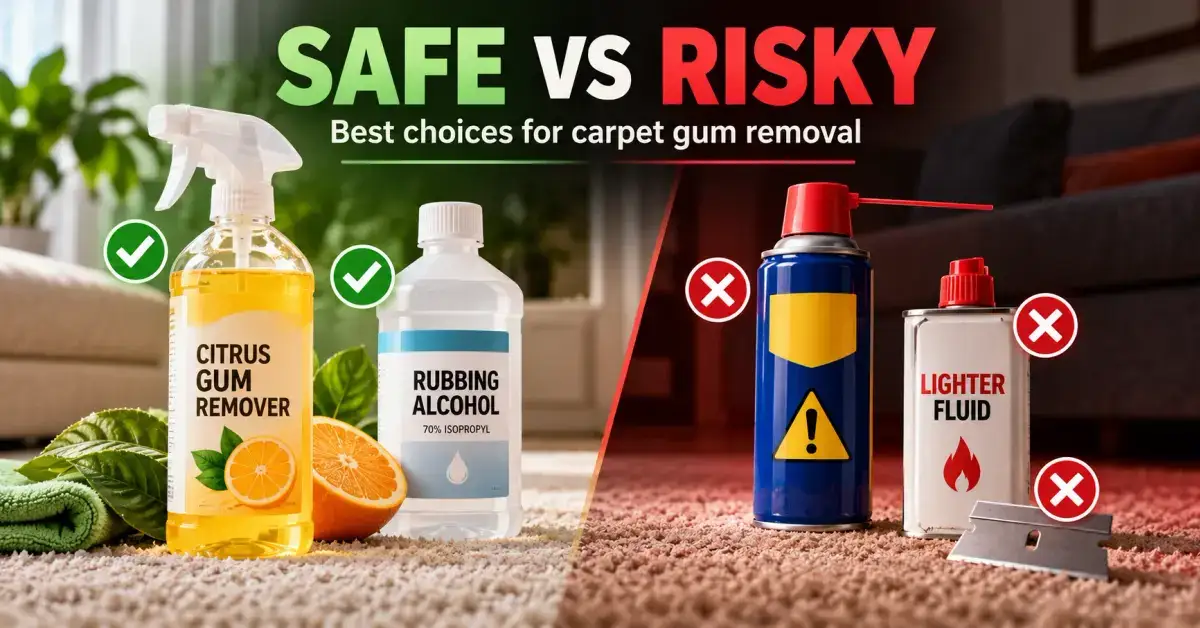
Citrus-based removers are the professional standard, and several popular folk remedies belong nowhere near carpet. Choosing a gum remover for carpet comes down to one question: does it dissolve gum without leaving its own problem behind?
| Product | Verdict | Why |
|---|---|---|
| Citrus d-limonene remover | Best choice | Made for adhesives, dissolves gum base, minimal residue |
| Rubbing alcohol | Safe | Breaks down residue, dries clean, cheap |
| Dry-cleaning solvent | Safe | Professional spotting standard for adhesives |
| WD-40 | Risky | Petroleum product, leaves oily residue, needs full wash-out |
| Unknown goo removers | Risky | Untested solvents can strip carpet dye |
| Lighter fluid | Never | Flammable liquid on carpet is a genuine fire hazard |
| Razor blades | Never | Cuts pile permanently, damage cannot be undone |
Always colorfast test any solvent on a hidden patch first and wait several minutes. A renter who followed forum advice and soaked a gum spot with WD-40 removed the gum and gained a dark oily patch that collected dirt for months, because the wash-out step never happened. If you do use WD-40, the dish soap wash afterward is mandatory.
How Do You Get Old Gum Out of Carpet?
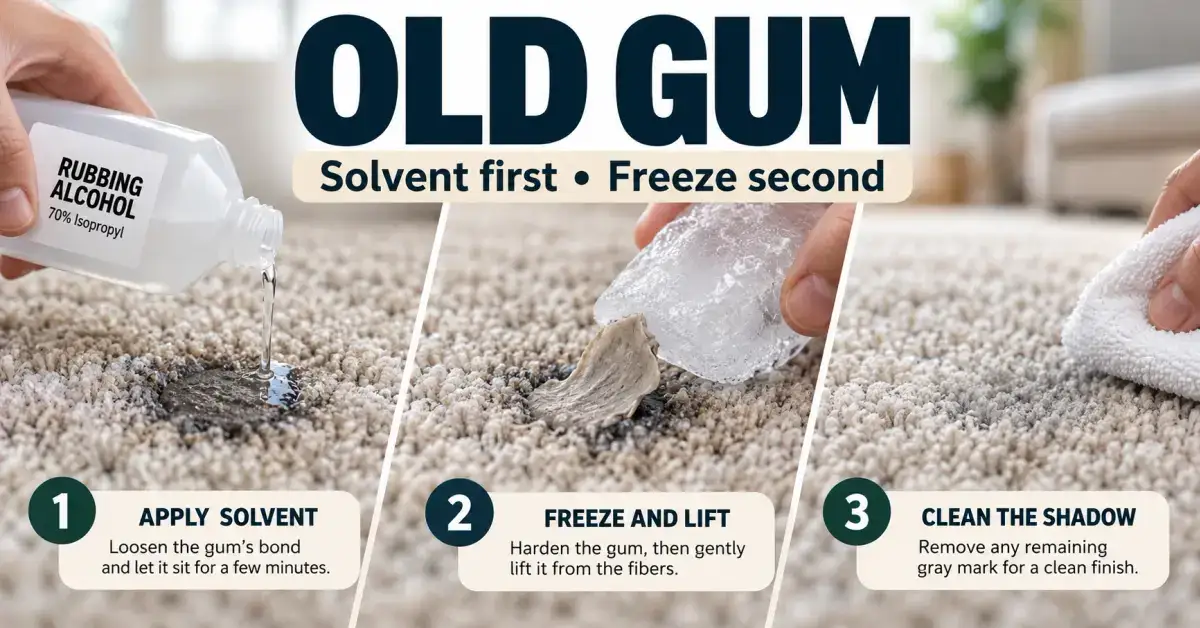
Old gum needs solvent first, freeze second, the reverse of the fresh-gum order. This is the switch every other guide misses, and it is the answer to how to get old gum out of carpet without tearing fiber.
Gum that has been walked on for weeks flattens, spreads, and bonds around individual fibers instead of sitting on top of them. Frozen old gum snaps, but the pieces stay locked around the fiber. So soften the bond first: apply citrus gum remover or rubbing alcohol, let it dwell a few minutes, and work the loosened gum out with a dull knife. Then freeze whatever fragments remain and snap them free.
Old gum also carries a second problem: a dirt shadow. Weeks of foot traffic press soil into the sticky surface, so the spot looks gray even after the gum is out. Finish with a dish soap spot-clean and rinse.
A homeowner who found a flattened, blackened gum spot under a couch after a year needed one solvent session, one freeze pass, and a spot wash. The gum left. So did the shadow.
How Do You Get Gum Out of a Rug or Off a Hard Floor?
Rugs follow the same sequence with a fiber check first, and hard floors are the easy case. On rugs, freezing is universally safe, but solvents are not. Wool tolerates cold perfectly, while citrus and alcohol need a hidden-spot test on any natural fiber or dyed rug. Viscose and silk should skip solvents entirely.
Rugs give you one advantage: slide a folded towel under the rug beneath the gum. During heat or solvent work, the towel catches what carpet padding would otherwise absorb. For antique, hand-knotted, or valuable rugs, a professional rug cleaner is the honest recommendation, since pros carry gum solvents formulated for delicate fibers.
Hard floors are simple by comparison. Freeze the gum with ice, scrape with a plastic scraper, and wipe residue with rubbing alcohol. Avoid metal scrapers on wood and vinyl, which gouge finish faster than gum ever could.
What Mistakes Make Gum in Carpet Worse?
Pulling warm gum is the biggest mistake, because room-temperature gum stretches instead of releasing. Every tug spreads it across more fibers and pushes it deeper. Change its temperature first, always.
Cutting is the most permanent mistake. Scissors and razor blades remove gum by removing pile, and a bald patch is forever while gum is temporary.
The quieter errors: wetting the gum before freezing, which slows hardening and spreads stickiness. Overheating synthetic fiber with a dryer or iron. Skipping the residue stage, which leaves an invisible sticky film that collects soil into a gray spot within weeks. And letting scraped fragments sit in the pile, where they rewarm and restart the problem.
Why Removing Gum Correctly Actually Matters
Gum is an adhesive problem, and the professionals treat it that way. The IICRC S100 cleaning standard places gum under solvent-gel and freeze-spotting protocols, handled as an adhesive rather than a stain, which is why standard carpet shampooing passes right over it.
The Carpet and Rug Institute advises pretesting every cleaning agent in an inconspicuous area and blotting rather than rubbing, and that caution matters doubly with solvents, since overuse can damage carpet backing. Manufacturer warranty documentation from brands like Shaw and Mohawk excludes damage from improper chemicals and cut pile, and petroleum solvent residue left in carpet can put stain warranty coverage at risk.
The fire-safety point deserves its own line: flammable solvents like lighter fluid should never touch carpet indoors, no matter how many forum threads recommend it. The Consumer Product Safety Commission names lighter fluid specifically among flammable liquids that pose a fire hazard.
Common Questions About Gum Removal, Answered
How do you get bubble gum out of carpet?
+
Bubble gum follows the same freeze, snap, and residue sequence, though its softer base rewarms faster. Work in shorter cycles and refreeze more often. The residue stage matters more since bubble gum carries extra sugar and softeners.
Does WD-40 really get gum out of carpet?
+
It can loosen gum, but it trades one problem for another. WD-40 is a petroleum product that leaves an oily residue requiring a full dish soap wash-out. A citrus gum remover does the same job cleaner.
Does peanut butter remove gum from carpet?
+
It works on hair, not carpet. The oils soften gum but soak into the pile and create a grease stain that is harder to remove than the gum was. Skip it entirely on carpet.
How do you get gum out of carpet without ice?
+
Use a freezer pack, or flip to the heat method with a hair dryer and gloved fingers. Canned air held upside down also freezes gum in seconds. Any approach that changes the gum's temperature works.
How do you get dried gum out of carpet?
+
Dried, hardened gum often snaps off with just a dull knife and no freezing. Scrape gently, vacuum fragments, then dissolve the base residue with citrus remover or alcohol. Finish with a soap wash if a dirt shadow remains.
How do you remove the sticky residue after the gum is gone?
+
Dab rubbing alcohol or citrus remover on a white cloth and blot the sticky film until it releases. Then wash with dish soap solution, rinse with plain water, and blot dry. Skipping this step leaves a soil magnet in the pile.
Does vinegar remove gum from carpet?
+
Warm vinegar can slightly soften gum, but it is weak compared to citrus removers or alcohol. It helps most as a mild follow-up cleaner. Do not rely on it for the main removal.
How do you get melted crayon out of carpet?
+
Treat crayon like wax, not gum: freeze and scrape the solid, then lift residue by ironing over a brown paper bag on low heat. Finish the color mark with rubbing alcohol on a white cloth. Test the alcohol on a hidden spot first.
Will a carpet cleaning machine remove gum?
+
No, machines cannot extract a solid adhesive, and hot water can soften gum deeper into the pile. Remove the gum physically first. The machine earns its place afterward, rinsing out solvent and soap residue.
When should you call a professional for gum in carpet?
+
Call when gum is ground deep into the pile, spread across a wide area, stuck in a wool or valuable rug, or still bonded after a solvent and freeze round. Professionals carry citrus solvent gels and controlled spotting tools. A service visit costs less than replacing cut or solvent-damaged carpet.
The insight worth keeping is that temperature is your real tool, and everything about how to get gum out of carpet follows from choosing the right state to fight it in: brittle when frozen, compliant when warm, and never at room temperature where it wins every tug. Handle the residue stage and the spot disappears instead of graying back.
Need a carpet cleaning company you can trust? We handle residential and commercial carpet cleaning, rug cleaning, upholstery cleaning, and pet stain and odor removal —our team is ready to help.

Michael Sanders
Michael Sanders is a home care and cleaning industry writer covering carpet maintenance, flooring care, and household cleaning practices across the United States. His work focuses on practical, research-backed guidance — from stain and odor removal to deep extraction methods and indoor allergen prevention. Michael collaborates with cleaning professionals to ensure accuracy, and his writing reflects a genuine interest in helping homeowners make informed decisions about caring for their homes.