

Blog · Carpet Cleaning Guide
How to Dry Wet Carpet Fast: Steps, Timeline, and Tips
Wet carpet is an emergency, but a manageable one. The best way to dry wet carpet is to stop the water, pull out as much as you can, and then run fans and a dehumidifier in a closed room. That order matters, because extraction does more for speed than any amount of airflow.
Published November 14, 202613 min read

If you want to know how to dry carpet fast, or what to do with wet carpet right now, the first hour decides most of the outcome. The EPA advises drying carpet and backing within 24 to 48 hours when the water is clean. Below, you will learn how to identify your water type, follow the core steps, estimate drying time, confirm the carpet is dry, and decide when to replace it. This guide covers home carpet, not vehicle carpet.
What Kind of Wet Carpet Are You Dealing With?
Whether wet carpet can be saved depends on the type of water and how long it has been wet, not on how it looks. Clean water from a supply line or roof leak is usually salvageable. Contaminated water is not, and time makes every category worse.
| Water type | Common sources | Can it usually be saved? |
|---|---|---|
| Clean (Category 1) | Broken supply line, icemaker line, rain through a roof leak | Usually, if drying starts within 24 to 48 hours |
| Gray (Category 2) | Washing machine or dishwasher overflow | Sometimes the carpet; the padding is usually replaced. Gray water left over 48 hours can become black water |
| Black (Category 3) | Sewage, river or seawater, floodwater | No. Remove the carpet and padding |
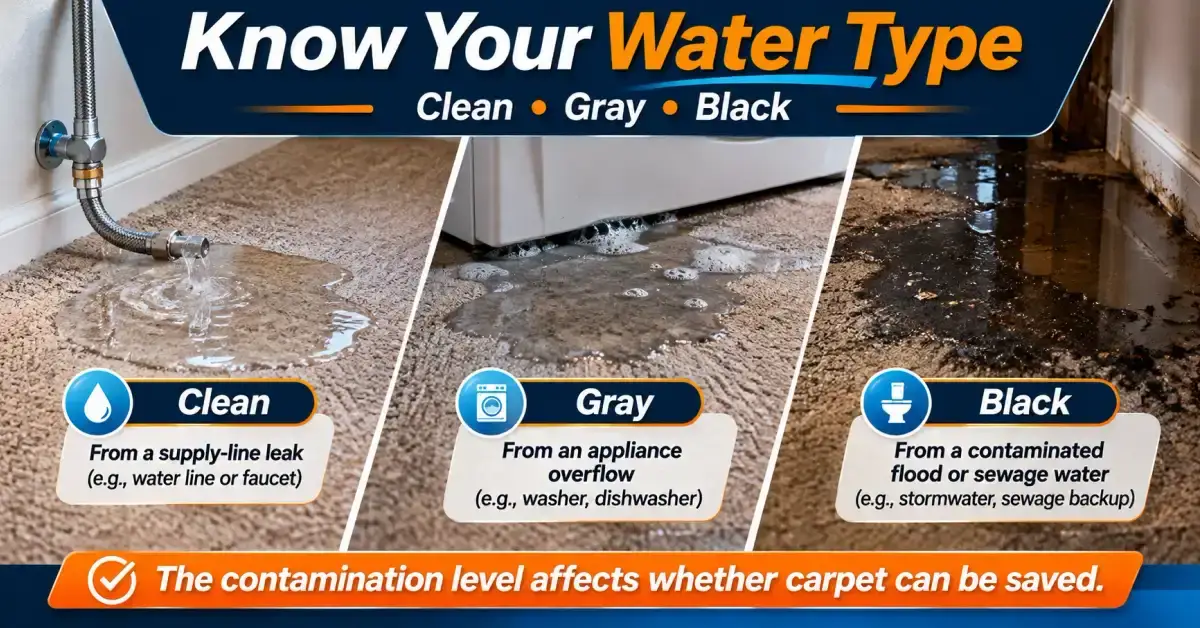
These categories come from the IICRC S500 standard that restoration professionals use. NC State Extension says to call a professional for gray or black water and to discard padding soaked by either. The CDC lists carpeting and carpet padding among the items to throw away after a flood when they cannot be cleaned and dried quickly. Separately, OSHA's general rule is that porous material wet for more than 48 hours is best removed and replaced.
If you cannot tell which category you have, treat the water as the worse one. Wear gloves and waterproof boots when you handle carpet that may have touched a toilet, a drain, or outdoor water.
Is the Carpet Dry on Top but Wet Underneath?
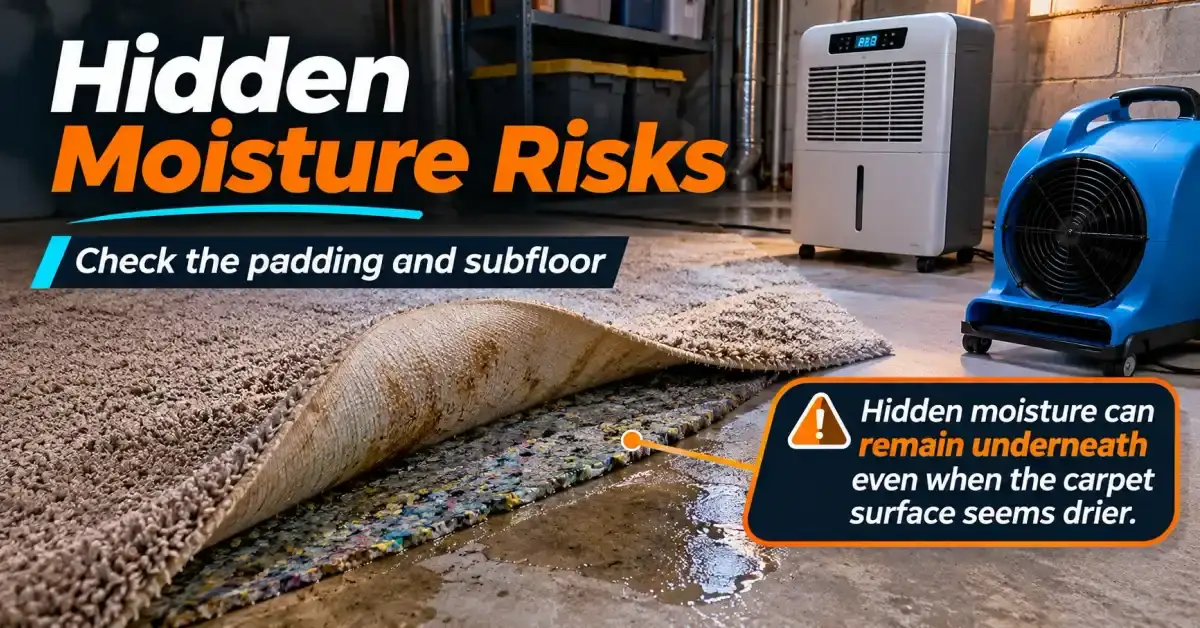
Carpet padding holds far more water than the carpet fibers, and it gets almost no airflow. A surface can feel dry while the padding stays soaked. Lift a corner at a wall edge and press a dry paper towel into the padding. If the towel comes away damp, the padding is still holding water, and that moisture can feed mold and odor underneath.
How to Dry Wet Carpet Fast: The Core Steps
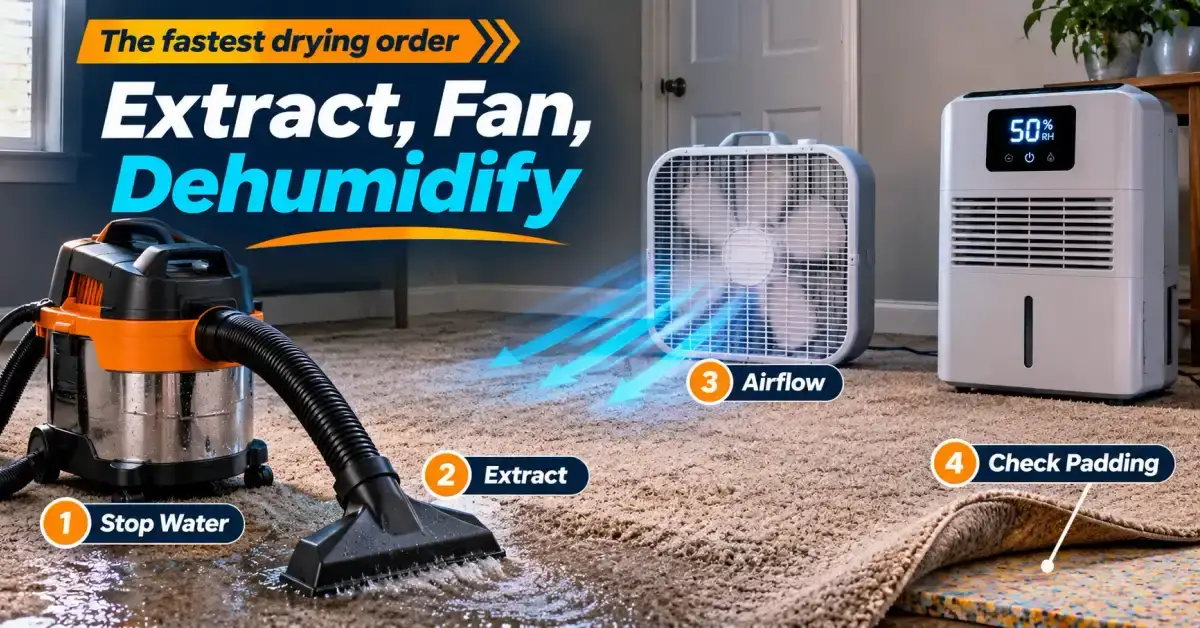
The fastest way to dry carpet is to work in a fixed order: stop the water, extract it, then add airflow and dehumidification. Jumping straight to fans leaves standing water in the padding, and airflow alone removes that water very slowly. Follow the four steps below.
Step 1: Stop the Water and Clear the Area
Shut off the source or contain the spill first. Move furniture off the wet area, or set foil or plastic under the legs so wood and metal do not stain damp carpet. Keep children and pets away. Turn off power to the room only if you can reach the breaker safely.
Step 2: Get the Water Out of the Carpet
Extraction is the biggest speed lever, so spend most of your effort here. To get water out of carpet, run a wet/dry shop vacuum in slow, overlapping passes and empty the tank often. Never use a regular household vacuum on wet carpet, because water can damage it and create an electrical risk. No shop vacuum? See the no-wet-vac section below. Keep going until the vacuum stops pulling up water.
Step 3: Add Airflow and a Dehumidifier
Aim box fans or air movers low and across the carpet surface, and close the room's doors. Place a dehumidifier in the same room. The two tools work as a team. Fans lift moisture out of the carpet and padding into the air. The dehumidifier then removes that moisture from the air, so the fans keep working instead of just raising humidity. Either tool alone is slower.
Open windows only when the air outside is drier than the air inside. On a humid or rainy day, open windows add moisture. Guides disagree on using a hair dryer for tiny spots, but it can melt synthetic fibers and does nothing for soaked carpet.
Step 4: Check the Padding and Subfloor
Lift a corner and press the padding. Padding that stays wet after extraction is usually cheaper to replace than to dry, especially after gray water. NC State Extension says padding can be saved only when clean water wet part of it for less than 48 hours. For a small leak area, NC State Extension suggests pulling up and propping the wet carpet so air reaches both sides. Let the subfloor dry fully before you lay carpet back down.
How Long Does It Take for Wet Carpet to Dry?
Most wet carpet needs 24 to 48 hours of drying, which matches the EPA's window for clean water. Light dampness dries faster, while soaked padding and flooded rooms take days. How long it takes to dry depends on how much water the carpet absorbed, how quickly you extracted it, and the airflow and humidity in the room. NC State Extension advises drying within 24 hours to limit mold.
| Situation | Typical drying time with fans | What to know |
|---|---|---|
| Spill blotted right away | A few hours | Usually affects the spot only |
| Light dampness after cleaning | About 6 to 24 hours | Over-wetting from rental machines runs longer |
| Leak caught early, water extracted | About 24 to 48 hours | Padding may lag behind the carpet |
| After a leak, no extraction | Several days | Past the safer window; check the padding |
| Soaked or flooded carpet | Several days or more | Often needs replacing |
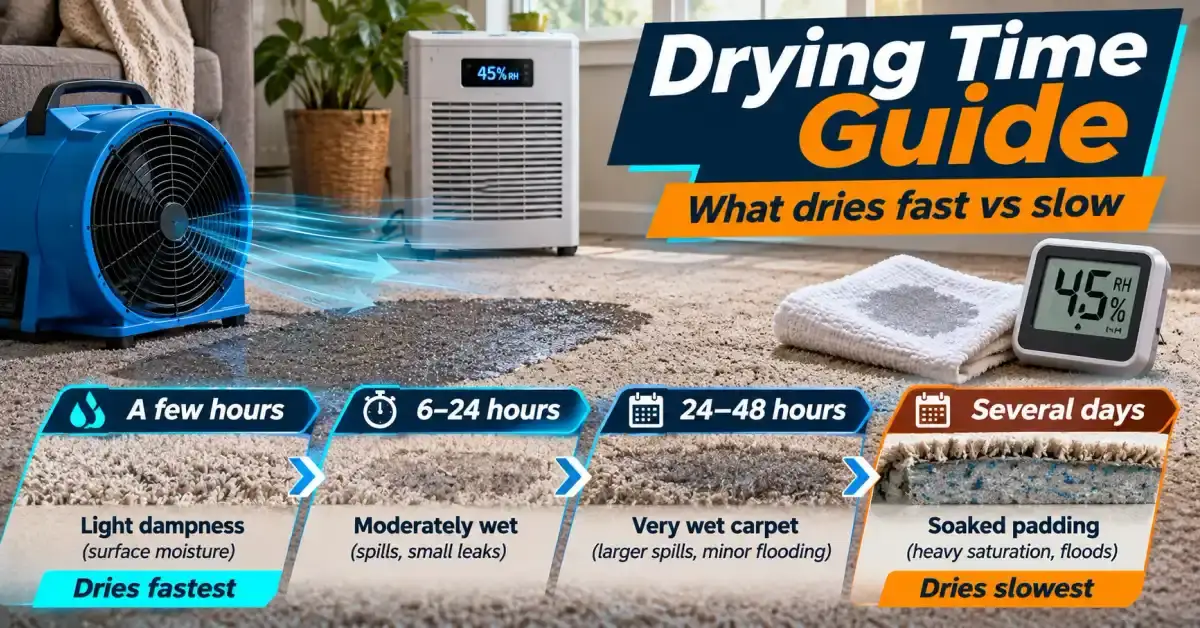
These ranges are reasoned estimates, not guarantees. Humidity and cold slow everything down. In winter or humid weather, expect the long end of each range, and rely on the dehumidifier rather than open windows.
How to Tell If Carpet Is Actually Dry
Press a folded white towel into the pile with your full weight for about 20 seconds. Any dampness on the towel means the carpet is still wet. Check slow spots such as under furniture, along baseboards, and in corners. Smell the carpet at floor level, since a sour or earthy odor signals microbial growth. A hygrometer shows whether room humidity has dropped.
If you use a moisture meter, compare readings with an unaffected area of the same carpet. Restorers call this a dry standard, and it works better than any single universal number.
Key Takeaway: Carpet is dry only when a pressed towel stays dry, slow spots feel dry, the floor smells neutral, and meter readings match an unaffected area.
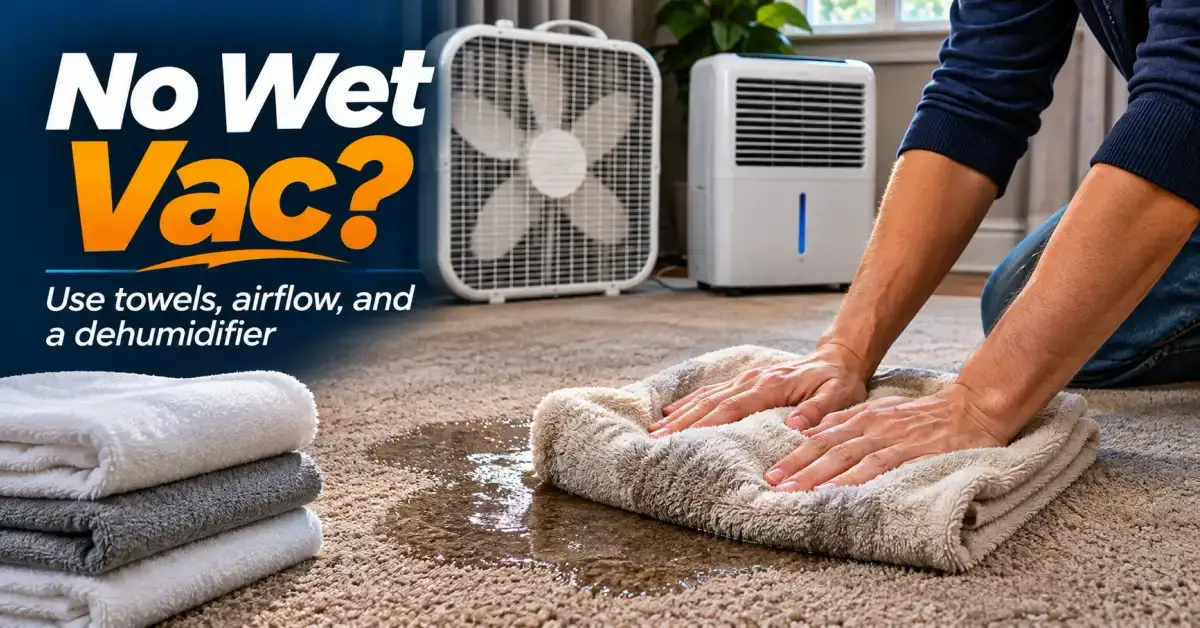
How to Dry Wet Carpet Without a Wet Vac
You can dry wet carpet without a wet vac, but it takes longer and works best on small to moderate areas. Press towels into the carpet to pull water up, then switch to fans and a dehumidifier.
- Pick up or sweep away loose debris.
- Fold thick towels and lay them over the wet area.
- Stand or kneel on the towels for about a minute to press water out.
- Swap in dry towels as soon as the first ones saturate, and repeat.
- Close the room, then run fans low across the carpet and a dehumidifier.
For a large soaked area, renting a wet/dry vacuum for a day is usually faster than towels. Drying without a dehumidifier still works but runs slower, so ventilate only when the outdoor air is drier than the air inside.
Special Situations
My Carpet Has Been Wet for 3 Days. Now What?
Three days is well past the 48 hour guideline. The EPA's 24 to 48 hour window has closed, and OSHA says porous material wet for more than 48 hours is best removed and replaced. Mold may have started in the padding even if the carpet feels dry. Check for a musty smell or visible spotting. Plan to replace the padding and ask a professional to assess the carpet before you keep drying it yourself.
Key Takeaway: Carpet wet for 3 days has passed the 48 hour guideline and may have hidden mold. Replace the padding and have a professional assess the carpet.
Drying a Flooded Basement Carpet
Identify the water first. Floodwater or sewage means discarding the carpet and padding. If the water was clean, such as a burst pipe, extract it, then run fans and a higher-capacity dehumidifier, often rented. A shop vacuum may lack the power for a flooded room, so renting an extractor works better. A basement flood adds humidity, little natural airflow, and a concrete floor that releases moisture slowly, so drying takes longer than in an upstairs room. Many guides advise keeping the room at or below about 75°F, because extra heat without dehumidification can encourage microbial growth.
Key Takeaway: After a basement flood, identify the water type first, rent stronger equipment for clean water, and keep the room near 75°F or cooler.
Using Baking Soda on Wet Carpet
Baking soda helps only at the end. Once standing water is out, sprinkle a light layer on damp carpet to absorb odor and a little moisture. Leave it for 30 minutes to a few hours, then vacuum thoroughly. On soaked carpet it clumps and will not pull water out of the padding, so it never replaces extraction, fans, or a dehumidifier.
Drying Carpet After Cleaning
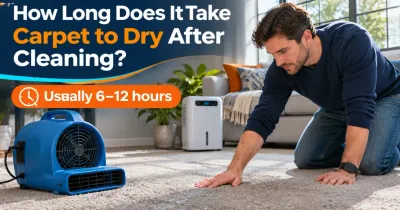
Rental machines often leave carpet wetter than expected. Run fans and a dehumidifier right away, keep foot traffic off, and open windows only if the outside air is dry. Carpet should feel dry in about 6 to 24 hours. If it still feels damp after a day, check the padding for moisture.
When to Call a Professional (or Replace the Carpet)
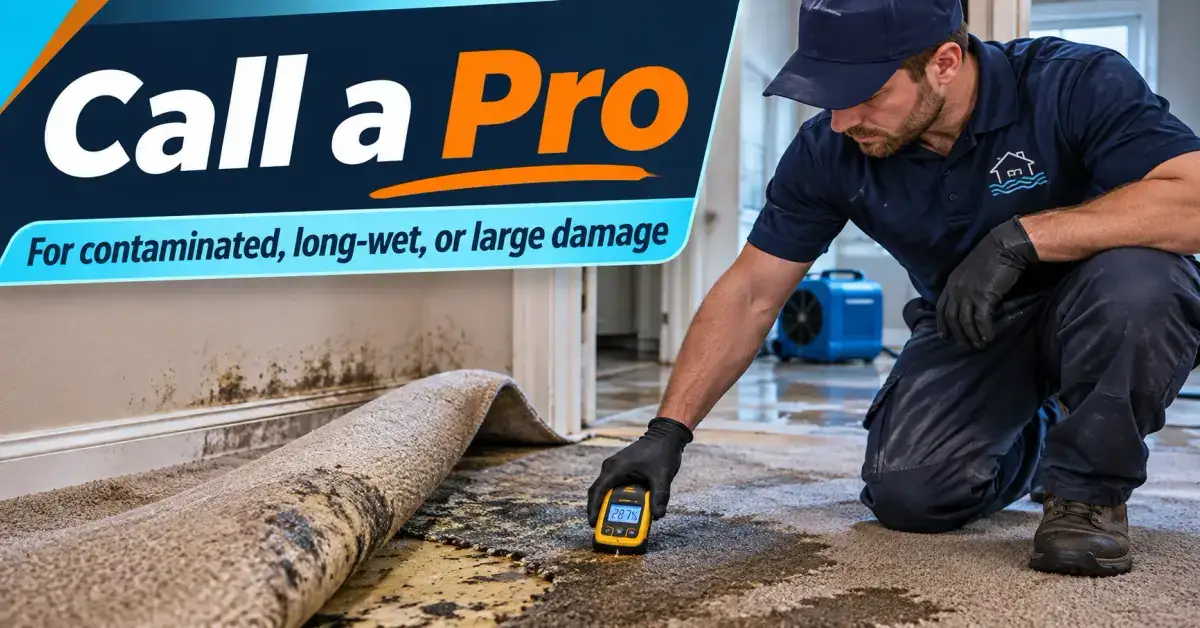
Call a professional when the water was gray or black, the carpet has been wet for more than 48 hours, or the area is large. Professionals bring stronger extraction and measured drying that home equipment cannot match.
- The water was gray, black, sewage, or floodwater.
- Carpet or padding has stayed wet for more than 48 hours.
- You smell mustiness or see mold.
- Water reached more than one room or a large area.
- You need records for an insurance claim, so photograph the damage before you start.
A restoration company typically brings high-capacity extraction, air movers, moisture meters, antimicrobial treatment, and padding replacement.
Wet Carpet Drying FAQs
Can a fan alone dry wet carpet?
+
A fan alone can dry light dampness, but it is slow for soaked carpet. Fans move moisture into the air, so without extraction and a dehumidifier the room humidity rises and the padding stays wet. Remove the water first, then add fans and a dehumidifier.
Can I use a hair dryer to dry wet carpet?
+
Only on a tiny spot, held several inches away. A hair dryer can melt synthetic fibers and does almost nothing for padding. For anything larger, use extraction, fans, and a dehumidifier.
How long does it take for wet carpet to grow mold?
+
Mold can start within 24 to 48 hours in damp conditions. The EPA treats 48 hours as a guideline rather than a guarantee, because mold can appear even when materials dry sooner. Fast extraction and drying lower the risk.
Should I pull up wet carpet?
+
Lift a corner first and check the padding. If the water was gray, black, or flood, pull the carpet and padding. For clean water, you can often dry carpet in place if extraction starts quickly, and replace the padding if it stays wet.
How do I get the musty smell out after wet carpet dries?
+
Confirm the carpet and padding are fully dry first. Then sprinkle baking soda, wait a few hours, and vacuum. A smell that returns means hidden moisture or mold, so lift a corner and check the padding.
Conclusion
Knowing how to dry wet carpet comes down to a simple order: stop the water, extract it, add fans and a dehumidifier, and confirm it is dry. Act within 24 to 48 hours when the water is clean, and replace padding or carpet after gray, black, or long-standing water. If you doubt the water type or the area is large, call a professional. Start extraction now, since the first hour matters most.
Need a carpet cleaning company you can trust? We handle residential and commercial carpet cleaning, rug cleaning, upholstery cleaning, and pet stain and odor removal —our team is ready to help.

Michael Sanders
Michael Sanders is a home care and cleaning industry writer covering carpet maintenance, flooring care, and household cleaning practices across the United States. His work focuses on practical, research-backed guidance — from stain and odor removal to deep extraction methods and indoor allergen prevention. Michael collaborates with cleaning professionals to ensure accuracy, and his writing reflects a genuine interest in helping homeowners make informed decisions about caring for their homes.