
Blog · Carpet Cleaning Guide
How to Deodorize Carpet: A Step-by-Step Guide by Smell Type
The best way to get smell out of carpet depends on what causes it. For everyday staleness, here is how to deodorize carpet in an afternoon: vacuum, sprinkle baking soda, wait, then vacuum again. This natural, low-cost fix handles dust, cooking and foot odors well. It will not cure a musty smell from damp padding or old pet urine, and the wrong treatment can lock those odors in.
Published November 13, 202612 min read
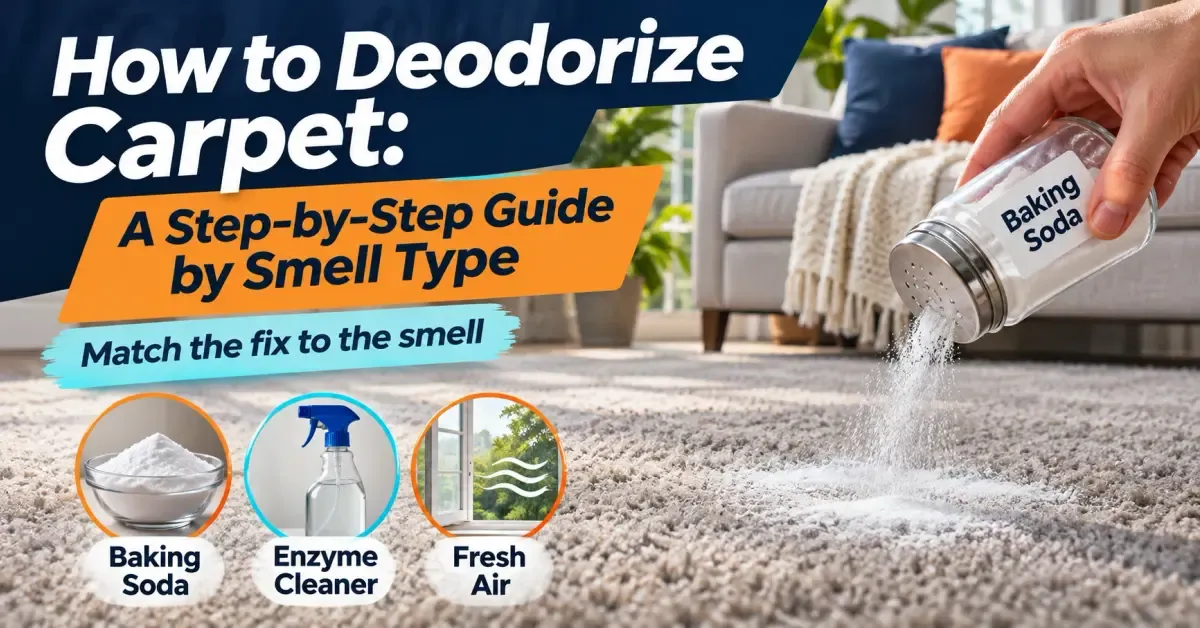
This guide shows you how to match the fix to the smell, how long to leave baking soda on, and which methods suit your carpet fiber. You will also learn how to make carpet smell good safely around pets and how to keep it fresh afterward.
Find Out Why Your Carpet Smells Before You Treat It
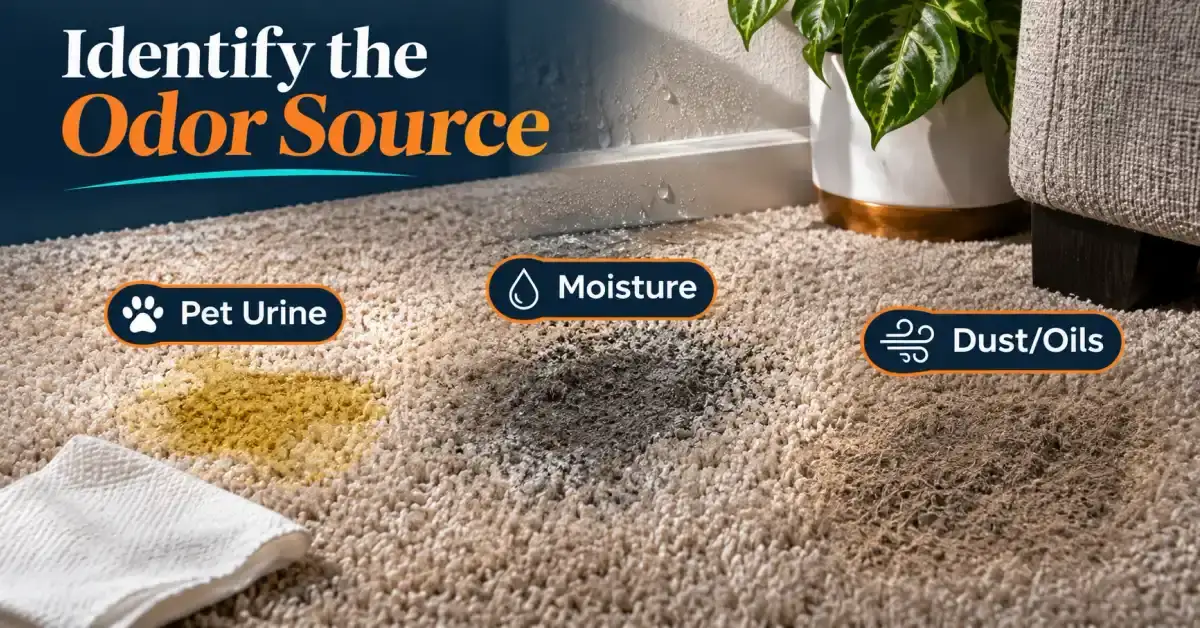
Before you decide how to get smell out of carpet, find the source. Effective carpet odor removal starts there. Odors come from pet urine, spills, sweat and skin oils, trapped moisture, new-carpet chemicals, or plain dust. Each needs a different fix. Sniff the area, note when the smell appears, and check for dampness. That quick diagnosis tells you what to put on carpet and what to skip.
| Smell source | Typical sign | Best first fix |
|---|---|---|
| Pet urine | Sharp ammonia smell, stronger in humid weather | Enzyme cleaner |
| Mold or mildew | Musty smell, often after a leak or flood | Dry fully, then see the mold section |
| Feet and body oils | Sour smell in bedrooms and hallways | Baking soda |
| Spilled drinks | Sweet or sour smell around one spot | Blot, rinse, then baking soda |
| New carpet | Chemical smell after installation | Fresh air and time |
| General staleness | Dull, dusty smell across the room | Vacuum plus baking soda |
Is the Smell in the Carpet or in the Padding?
Surface odor fades once you clean the fibers. Padding odor does not. If the smell returns within days, grows stronger on humid days, or centers on a past leak or pet accident, the source probably sits underneath. Press a clean white cloth into the carpet and sniff it. If you can, lift a corner at a wall edge and check the padding. Padding that smells strong, looks stained or feels damp needs the steps in the professional section below, not another round of deodorizer.
Key Takeaway: If a smell returns after cleaning or strengthens in humid weather, suspect the padding, not the carpet surface.
How to Deodorize Carpet With Baking Soda
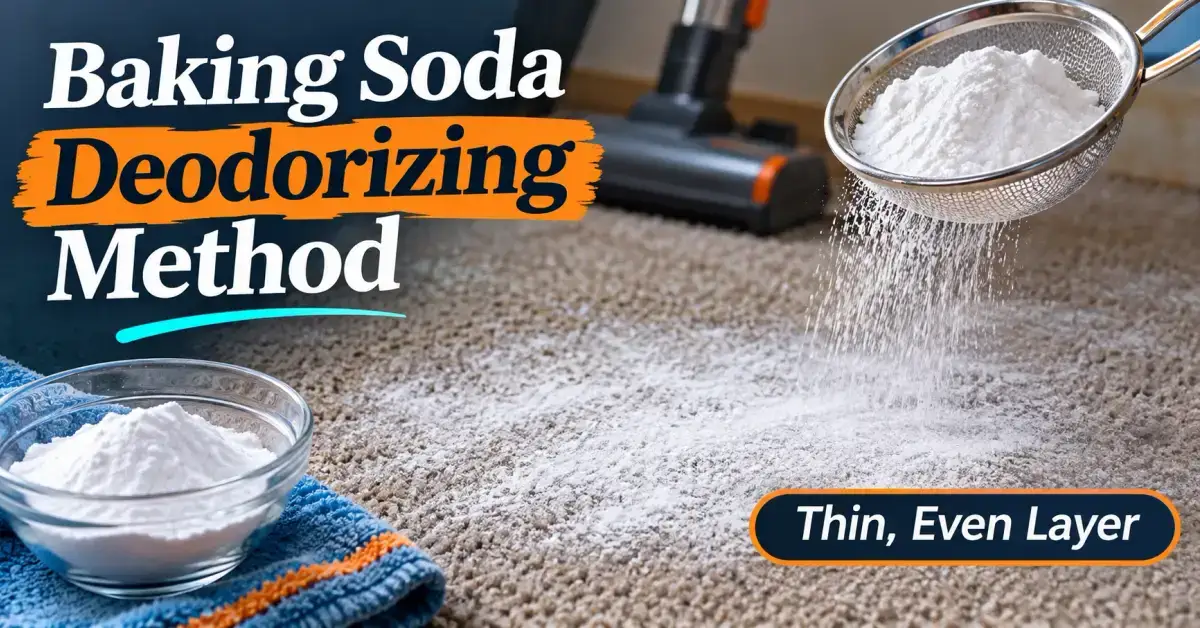
To deodorize carpet with baking soda, vacuum first, sprinkle a thin and even layer, brush it in, wait from 15 minutes to overnight depending on the smell, then vacuum slowly in two directions. It is a dry method that works naturally, so the carpet never gets wet.
Step-by-Step Baking Soda Method
- Make sure the carpet is dry, then vacuum the whole area. Doing this before applying powder lets the baking soda touch the fibers instead of loose dirt. Baking soda should never go onto damp carpet.
- Sprinkle a thin, even layer with a shaker or sieve. Heavy piles clump and are hard to vacuum up.
- Work the powder in gently with a soft brush or broom.
- Wait for the time that matches the odor strength (see the table below).
- Vacuum slowly in two directions. Empty the bin or clean the filter afterward, because fine powder can clog some vacuums. Check your manual first.
How Long to Leave Baking Soda on Carpet
| Odor strength | How long to leave it on |
|---|---|
| Light (stale air, cooking) | 15 to 30 minutes |
| Moderate (feet, general pet smell) | 1 to 4 hours |
| Strong or set-in | 8 to 12 hours, or overnight |
Treat these as guidance ranges from consumer cleaning sources, not lab results. Do not leave powder down longer than about 24 hours, because it gets harder to vacuum and can slightly discolor some carpets. If a strong smell survives one overnight treatment, vacuum, wait a day, and repeat once. Keep pets and small children out of the room while the powder sits.
How to Make Carpet Smell Good: Baking Soda and Essential Oil
If you want a scent, mix about one cup of baking soda with ten or so drops of essential oil. That ratio is a typical range, not a tested figure. Skip this step in homes with cats or birds. PDSA, a UK veterinary charity, lists tea tree, eucalyptus, citrus, peppermint and lavender among oils toxic to cats, and says the majority of essential oils are toxic to cats. No oil should be called cat-safe. Plain, fragrance-free baking soda is the safest default.
Key Takeaway: Skip essential oils if you have cats or birds, and use plain baking soda instead.
Baking soda works by absorbing moisture and some odor compounds, and it mildly raises the pH where it touches. It does not disinfect, and it cannot fix mold or soaked padding.
How to Deodorize Carpet Without Baking Soda or Shampooing
You can freshen carpet without baking soda or shampooing by using diluted white vinegar, an enzyme cleaner, fresh air or a dry deodorizing powder. The right choice depends on the smell. These methods use little or no water, so the carpet dries fast.
White Vinegar Spray
Mix equal parts white vinegar and water in a spray bottle. Test a hidden spot first. Mist the area lightly, never soak it, then let it air dry with a window open or a fan running. Vinegar can affect dyes on wool and silk, so avoid it on those fibers.
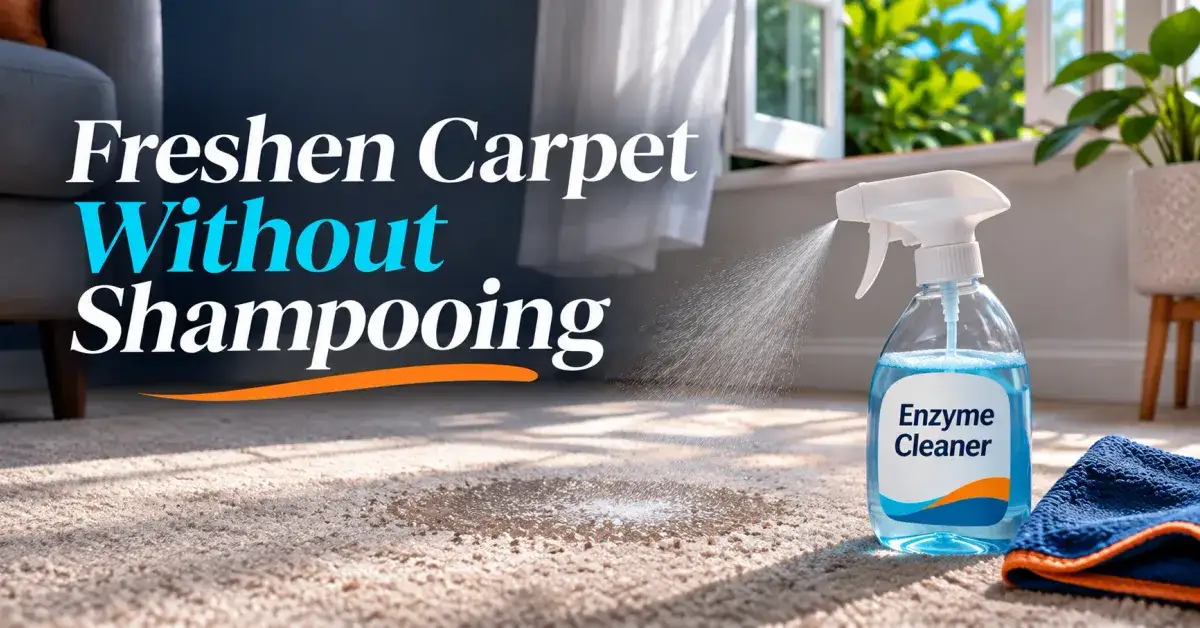
Enzyme Cleaner for Pet Urine and Organic Smells
Dried urine leaves uric acid crystals that plain water-based cleaners do not dissolve. Humidity can reactivate them, which is why the smell seems to come back. Enzyme cleaners break down these organic residues. Apply the cleaner as the label directs, keep the spot wet for the stated time, then let it air dry. Avoid hot water or steam on untreated urine, because heat can make the smell worse. Use the same approach for vomit and other organic spills.
Key Takeaway: Treat urine with an enzyme cleaner first, because crystals in dried urine resist regular cleaners and can reactivate in humid air.
Dry Powders, Fresh Air and Activated Charcoal
Commercial dry carpet powders work much like baking soda. Open windows, run fans and use a dehumidifier to clear stale air. Bowls of activated charcoal nearby absorb airborne odor, but they will not clean the fibers.
Why You Should Not Mix Vinegar and Baking Soda
The fizz is a reaction between the two, and it produces carbon dioxide, water and sodium acetate. They largely cancel each other out, so little cleaning power reaches the odor. If you want both, use them separately.
| Fiber | Baking soda | Vinegar spray | Enzyme cleaner |
|---|---|---|---|
| Nylon | Usually fine | Usually fine, diluted | Usually fine |
| Polyester | Usually fine | Usually fine, diluted | Usually fine |
| Olefin (polypropylene) | Usually fine | Usually fine, diluted | Usually fine |
| Wool | Limit or avoid | Avoid | Check the label |
| Silk, viscose, jute | Avoid | Avoid | Check the label |
This table is general guidance. Always patch test and follow the manufacturer's care instructions.
How to Get Specific Smells Out of Carpet
Mold, feet, alcohol and new-carpet smells each need their own approach. Moisture problems need drying, not deodorizer. Foot and alcohol smells respond to baking soda. New-carpet smell fades with fresh air. Pet urine and vomit follow the enzyme cleaner steps above.
Mold, Mildew and Damp or Wet Carpet Smell
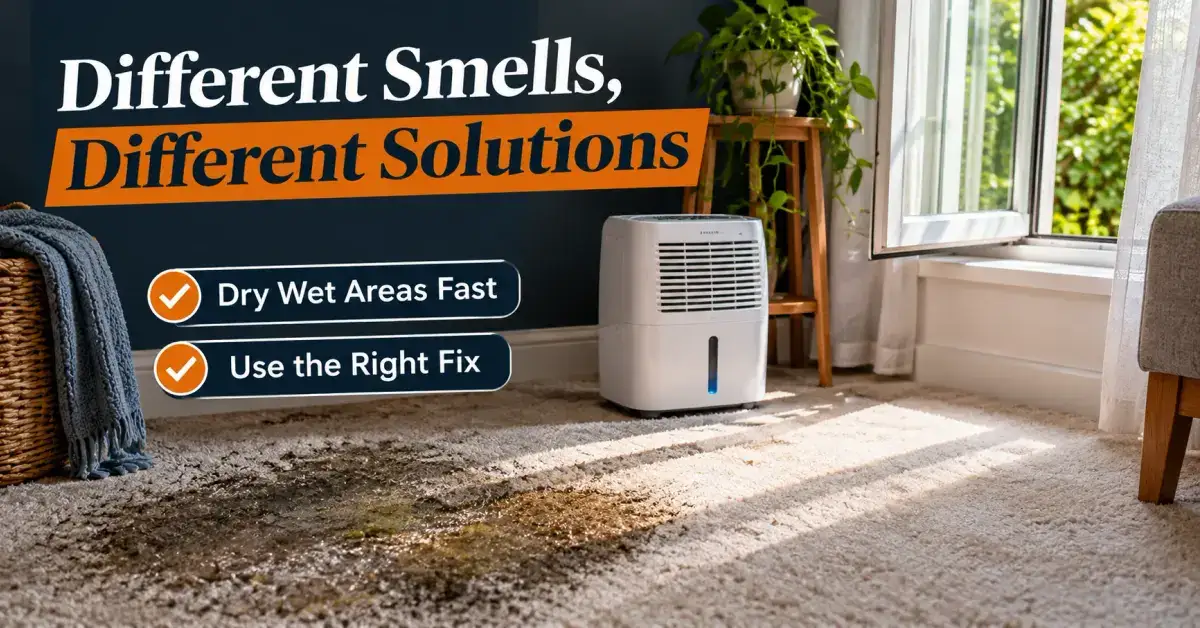
A musty smell means moisture, and the odor will keep returning until you remove the moisture. Find and stop the water source first. The EPA advises drying water-damaged items within 24 to 48 hours to prevent mold growth, so start fans and a dehumidifier right away. A light vinegar spray can help on small surface spots, but deodorizer will not cure mold. The EPA says homeowners can usually handle mold covering less than about 10 square feet, roughly a 3 foot by 3 foot patch. It also warns that carpet may have to be thrown away if it becomes moldy, and it lists the underside of carpets and pads as a place mold can hide. Call a professional for larger areas, major water damage, sewage water or health concerns.
Key Takeaway: Dry wet carpet within 24 to 48 hours, treat only mold patches under about 10 square feet yourself, and expect to replace carpet or padding that stays musty.
Feet and Body Odor Smell
Sour foot smell comes from sweat, skin oils and bacteria that settle into high-traffic fibers. Use the moderate baking soda tier of 1 to 4 hours. Then vacuum more often, ask people to remove shoes, and air out the room.
Alcohol, Beer and Wine Smell
Blot the spill and never rub it. Rinse with cool water and a little dish soap, then blot again. Once the spot is nearly dry, sprinkle baking soda and vacuum after a few hours. Rinse thoroughly so no sugary or soapy residue stays in the fibers to keep smelling.
New Carpet Smell
New-carpet smell comes from volatile organic compounds, mainly 4-PCH and a little styrene. Cleaning does not help, but fresh air does. The Carpet and Rug Institute, an industry group, says emissions from new carpet normally dissipate within 24 hours with good ventilation. Open windows and run fans. If the smell lasts for weeks or causes symptoms, contact the retailer or installer.
How to Freshen Carpet and Keep It Smelling Fresh
To freshen carpet and keep it smelling fresh, vacuum weekly, blot spills right away, control humidity and refresh with baking soda about once a month. Pet and high-traffic homes need more attention.
- Vacuum weekly, or twice weekly in pet and high-traffic homes.
- Blot spills immediately instead of rubbing.
- Use door mats and ask people to remove shoes.
- Run a dehumidifier or fan in damp rooms.
- Refresh with baking soda monthly, or more often with pets.
- Book professional hot water extraction every 12 to 18 months, or every 6 to 12 months with pets or children. This matches common manufacturer guidance.
These are guidance ranges, not strict rules. Removing dirt and moisture before they build up is the simplest way to freshen up carpet between deep cleans.

When to Call a Professional or Replace the Padding
Call a professional when the smell keeps returning after cleaning, when mold is visible, or when water or urine has soaked into the padding. Use this checklist to decide:
- The smell returns after you clean and dry the carpet.
- You can see mold, or mold covers more than about 10 square feet.
- A large area got wet, especially from sewage or flood water.
- Urine soaked through to the padding.
Padding cannot be deodorized like the carpet surface, and it often needs replacing after heavy soaking. A professional can use hot water extraction and replace padding. Treat urine with an enzyme cleaner first, because hot water or steam can worsen untreated urine odor.
Carpet Deodorizing FAQs
Can I leave vinegar on carpet overnight?
+
Avoid it. Mist lightly and let the carpet air dry with ventilation. Soaked carpet stays damp, which feeds mildew, and vinegar can affect dyes. If you over-wet an area, blot it and run fans until it is fully dry.
Is baking soda safe for all carpet types?
+
It is usually safe in a thin layer on synthetic carpets such as nylon, polyester and olefin. Limit or avoid it on wool, silk and viscose, and follow the manufacturer's care guidance. Always test a hidden spot first.
Are essential oils safe for pets on carpet?
+
Not reliably. Many oils are toxic to cats, and birds are also sensitive. PDSA says the majority of essential oils are toxic to cats, so skip them in homes with cats. Use plain baking soda, and call your vet if a pet shows drooling, vomiting or coughing after exposure.
How often should I deodorize my carpet?
+
Vacuum weekly and use baking soda about once a month. Pet or high-traffic homes may need it every two weeks. Treat spills and accidents right away instead of waiting for the schedule.
Why does my carpet still smell after cleaning?
+
The source is probably deeper. Urine crystals, moisture or mold in the padding keep releasing odor after the fibers are clean. Slow drying can also cause a temporary smell. Improve airflow, use an enzyme cleaner for urine, and check the padding if the smell persists.
Will baking soda hurt my vacuum?
+
A thin layer is usually fine, but fine powder can clog filters. Vacuum slowly, clean the filter afterward, and check your manual first.
Conclusion
Knowing how to deodorize carpet starts with diagnosing the smell. Baking soda handles everyday odors, vinegar or an enzyme cleaner covers the alternatives, and moisture or mold calls for drying, not perfume. Vacuum, apply a light baking soda layer, wait the right time and see whether the smell returns. If it does, check the padding. A simple routine keeps carpet smelling fresh.
Need a carpet cleaning company you can trust? We handle residential and commercial carpet cleaning, rug cleaning, upholstery cleaning, and pet stain and odor removal —our team is ready to help.

Michael Sanders
Michael Sanders is a home care and cleaning industry writer covering carpet maintenance, flooring care, and household cleaning practices across the United States. His work focuses on practical, research-backed guidance — from stain and odor removal to deep extraction methods and indoor allergen prevention. Michael collaborates with cleaning professionals to ensure accuracy, and his writing reflects a genuine interest in helping homeowners make informed decisions about caring for their homes.