


Blog · Carpet Cleaning Guide
How to Stop Cat From Peeing on Carpet: A Vet-First Plan
When a cat keeps peeing on carpet, it is usually a signal, not spite. Here is how to stop cat from peeing on carpet: see your vet to rule out a medical cause, then clean the spot down to the pad with an enzymatic cleaner. Next, fix the litter box setup and make the spot less appealing.
Published November 12, 202614 min read
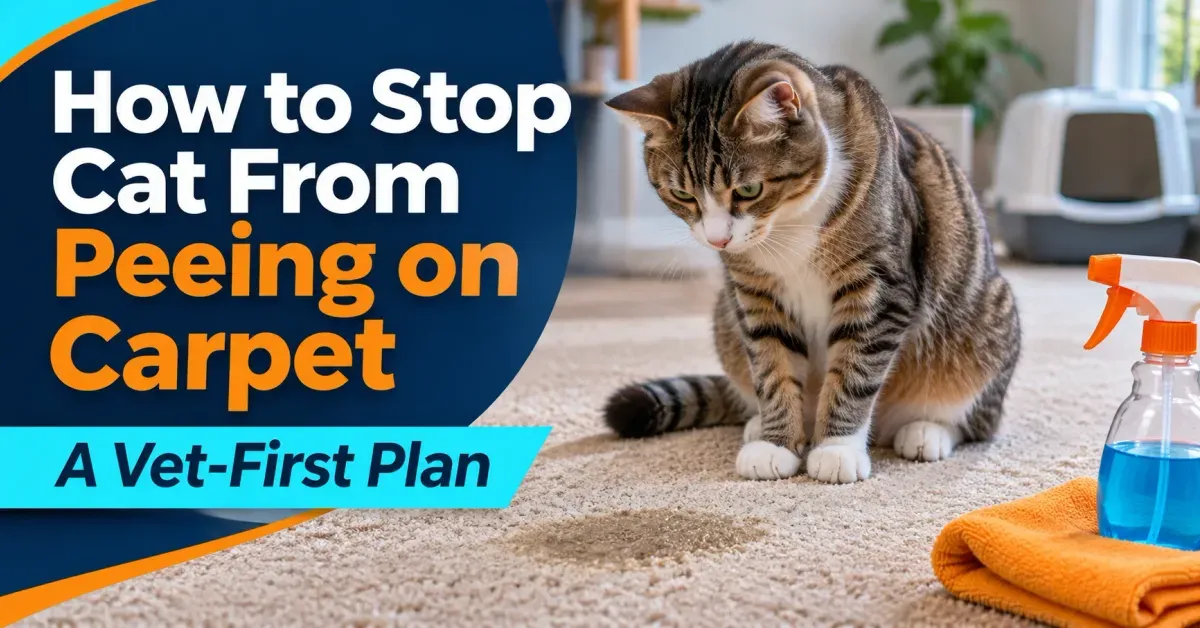
Smell pulls cats back to the same place, and the ASPCA warns that cleaning with ammonia could attract your cat to the same spot again. One warning comes first. A male cat that strains with little or no urine coming out needs an emergency vet right now. Below, you will find the likely causes, why cats choose the same spot, a five-step plan, common mistakes, and when to get more help.
First, Rule Out an Emergency
Red Flags That Need a Vet Today
Urinary blockage is a life-threatening emergency, and it affects male cats most often. According to PetMD's veterinary reviewers, an untreated blockage can kill a cat in as little as 24 to 48 hours. Call an emergency vet right away if your cat shows any of these signs:
- Straining in the box with little or no urine coming out
- Crying or hiding while trying to urinate
- Vomiting or unusual tiredness
- Blood in the urine
- Constant licking of the genital area
If you cannot tell whether your cat is urinating, treat it as an emergency. Never try to unblock a cat at home. For milder changes, such as a few accidents in an otherwise normal cat, book a regular vet visit using Step 1 below.

Why Your Cat Keeps Peeing on Carpet Instead of the Litter Box
Why is my cat peeing on the carpet? Four causes come up most often: a health problem, a litter box problem, stress, or marking. They often overlap, so check all four before you decide.
Medical Causes
Pain or illness can make a cat avoid the box. Vets look for urinary tract infection, feline idiopathic cystitis, bladder stones or crystals, kidney disease, diabetes, hyperthyroidism, and arthritis. A cat with sore joints may skip a box with high sides. A sudden change in habits, even in an older cat, deserves a vet visit before anything else.
Litter Box Problems
Cats can reject a box that feels dirty, cramped, or unpleasant. Common culprits include too few boxes, boxes that are too small, lids, liners, scented litter, and spots near noisy appliances. When a cat chooses carpet instead of the litter box, the box itself is often part of the story. Step 3 gives a full checklist.
Stress and Household Changes
New pets, a move, visitors, a changed schedule, or tension between cats can all trigger accidents. A cat that feels unsafe may avoid a box in a busy spot, or one that another cat guards.
Spraying vs. Peeing: How to Tell the Difference
Spraying and ordinary urination need different fixes. The ASPCA and the AAFP/ISFM house-soiling guidelines describe the difference this way:
| Feature | Spraying (marking) | Peeing (house-soiling) |
|---|---|---|
| Surface | Usually vertical, such as walls and furniture | Usually horizontal, such as carpet |
| Posture | Standing, tail up and often twitching | Squatting |
| Amount | Smaller | Larger |
| Main fix | Stress reduction, vet check, and sometimes neutering (Step 5) | Vet check, litter box changes, and deep cleaning (Steps 1 to 3) |

The ASPCA adds that sprayed urine often smells stronger. The two behaviors can overlap, and a cat that marks may still use the litter box, so a clean box does not rule marking out.
Why Your Cat Keeps Peeing on the Carpet in the Same Spot
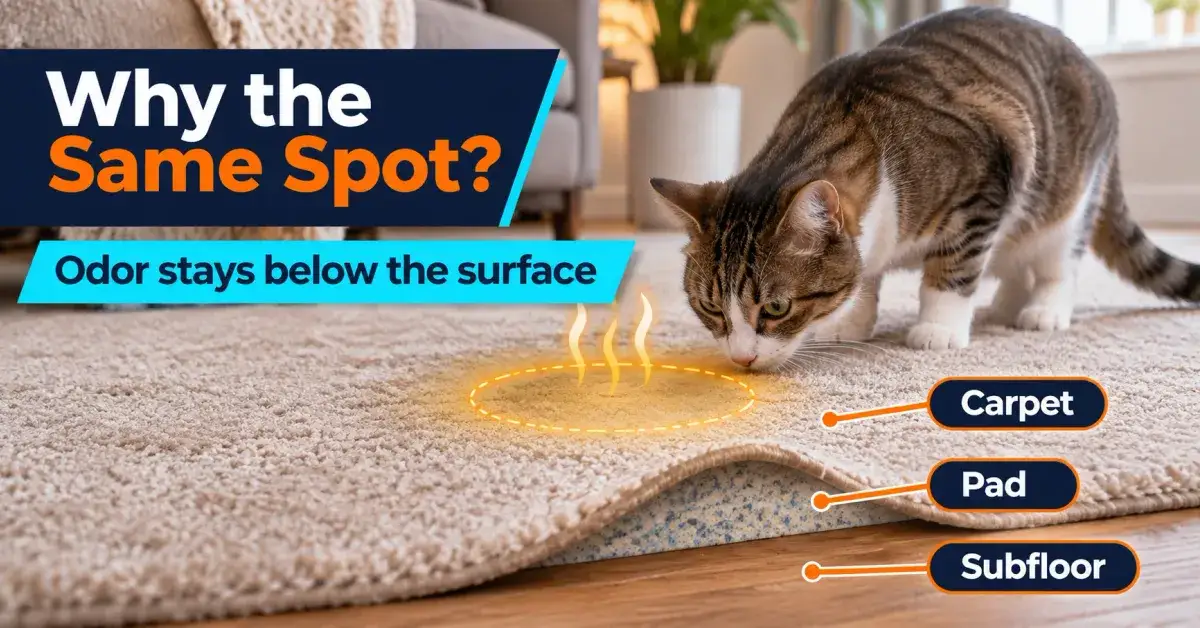
When a cat keeps peeing on carpet in the same spot, scent is usually the reason. Urine soaks through the fibers into the pad and sometimes the subfloor, so wiping the surface leaves most of it behind. You may stop smelling it, but your cat will not, and that lingering odor tells the cat this is a bathroom. This happens with a male cat or a female cat alike.
An unfixed cause keeps the cycle going. If pain, a dirty box, or stress is still there, even a perfect cleanup only buys time.
Key Takeaway: Cats return to a spot because urine odor stays in the carpet, pad, or subfloor. Clean it deeply and fix the underlying cause, or the cat will keep going back.
How to Stop Cat From Peeing on Carpet: The 5-Step Plan
Follow these steps in order. Each one removes a reason your cat has to return to the carpet, and skipping ahead usually lets the problem come back.
Step 1: See Your Vet
Book a vet visit even if you suspect a behavior problem. The ASPCA says a vet should rule out medical causes and confirm the cat is not marking. The AAFP/ISFM guidelines say a urinary work-up starts with urinalysis and urine culture.
Tell the vet when the accidents began, where they happen, how much urine you see, and what changed at home. If you are asking how to stop my cat peeing on the carpet and nothing works, a skipped exam is the first gap to close. This guide is general information, not a diagnosis, so let your vet make the call.
Step 2: Clean the Spot All the Way Down to the Pad
Fresh cat pee (or cat wee on carpet, as some owners search it) soaks down fast, so act quickly. Follow this sequence:
- Blot with paper towels or a clean cloth. Press down and do not rub, because rubbing pushes urine deeper.
- For older accidents, turn off the lights and scan the carpet with a black light. Dried urine often glows, so mark each spot with tape. A black light works best on dried stains.
- Soak the area with an enzymatic cleaner made for pet urine. Use enough to reach as deep as the urine went. Test a hidden patch first, because the AAFP/ISFM guidelines note that effectiveness varies widely by product.
- Skip ammonia-based and harsh chemical cleaners. The ASPCA and AAFP/ISFM both advise against them.
- Let the carpet air dry, and keep your cat out of the room until it does.
- Repeat if urine smells return. If the odor persists after repeated treatment, lift a corner of the carpet, check the pad, and replace it if it is soaked.

Step 3: Fix the Litter Box Setup
Small flaws in a litter box can push a cat toward the carpet. Audit yours against ASPCA and AAFP/ISFM guidance:
- Number: Provide one box per cat plus one extra. The AAFP/ISFM guidelines say even a single cat should have two boxes in separate spots.
- Placement: Put boxes in different rooms and on every level of your home.
- Size: Choose a large, rectangular box about 1.5 times your cat's nose-to-tail-base length.
- Style: Use open boxes with low sides. Skip lids and liners.
- Litter: Pick unscented, clumping, fine and sand-like litter. Fill it about 1 to 2 inches deep, and at least about 1.25 inches. Test brands side by side.
- Location: Choose quiet spots away from food, water, and loud appliances, with more than one way out.
- Cleaning: Scoop at least daily. Wash the box with soap and hot water every 1 to 4 weeks, and avoid strong chemicals.
Once your cat uses a box reliably, leave it in place for two weeks. Then move it gradually if you need to.

Step 4: Deter the Spot and Change What It Means
While you work on the cause, deter the spot. Here is what to put on carpet to keep a cat off it, and what to avoid:
| Option | Why it helps or harms | Safety note |
|---|---|---|
| Litter box on the spot | Gives the cat an acceptable place to go there; move it gradually later | ASPCA suggests this for cats that soil a few spots |
| Food, water, bedding, or toys | Changes what the spot means to your cat | Helpful, but no guarantee |
| Upside-down carpet runner, aluminum foil, or double-sided tape | Makes the surface unpleasant underfoot | Temporary; remove once habits change |
| Regular or motion-activated light in a dark area | Makes the spot less appealing | Listed by the ASPCA |
| Closed door | Blocks access while you fix the cause | Temporary |
| Avoid: essential oils (citrus, tea tree, eucalyptus, peppermint, cinnamon, clove, pine) | May seem natural | Can poison cats, which are especially sensitive (VCA Hospitals, Pet Poison Helpline, Merck Veterinary Manual) |
| Avoid: garlic, citrus peels, citronella | No proven benefit | Not worth the risk |
| Avoid: ammonia-based cleaners | Ammonia is also a component of cat urine | Can attract the cat back (ASPCA) |
| Avoid: punishment | Raises fear | Can worsen the problem |

No scent is proven to deter cats from peeing, and that includes vinegar (see the FAQ below).
Step 5: Lower Stress and Handle Marking
Give each cat its own food, water, boxes, and resting places, so cats in a multi-cat home do not compete. Keep routines steady and introduce new pets gradually. Pheromone diffusers may help stress-related marking in some cats, but the AAFP/ISFM guidelines say evidence varies, so treat them as a helper, not a cure. If an intact cat sprays, ask your vet about spaying or neutering. It can reduce or stop marking, though some neutered cats still spray.
Key Takeaway: Reduce competition and stress at home. Diffusers may help some cats, and neutering can reduce marking in intact cats, but neither replaces the vet exam, deep cleaning, or box fixes.
Mistakes That Make the Problem Last Longer
- Punishing your cat, scolding, or rubbing its nose in the mess. This raises fear and can push cats to hide their accidents.
- Cleaning with scented or ammonia-based products.
- Cleaning once and assuming the job is done.
- Skipping the vet visit when the signs look behavioral.
- Changing many things at once, so you cannot tell what helped.
When You Can't Stop Cat From Peeing on Carpet at Home
If your cat won't stop after a vet exam, deep cleaning, and litter box changes, ask your vet about a veterinary behaviorist. In a multi-cat home, you may also need to find out which cat is responsible. Cameras can help, and your vet may suggest a fluorescein dye test, although it can stain carpet and is not always reliable. If the pad stays contaminated, replacing it may finally end the cycle.
Cat Peeing on Carpet FAQs
Do cats pee on carpet to get back at you?
+
No. Cats do not plan revenge. Peeing outside the box points to a health problem, stress, or a litter box issue. Punishment makes it worse, so look for the cause instead.
What scent will keep cats from peeing, and does vinegar work?
+
No scent is proven to keep cats from peeing, and homemade sprays fall in the same category. Essential oils can poison cats, so avoid them. Vinegar has no reliable evidence as a deterrent, and an enzymatic cleaner is the better first choice.
Why does my cat poop in the box but pee on the carpet?
+
Urinary problems, a dislike of the box for urine, or stress can cause this pattern. See your vet first, then work through the litter box checklist in Step 3.
Why is my cat suddenly peeing on the carpet, even an older cat?
+
A sudden change often points to a medical problem or a new stressor. In older cats, vets watch for arthritis, kidney disease, diabetes, and hyperthyroidism. Book a vet visit instead of waiting.
Does neutering stop a cat from peeing on carpet?
+
Neutering can reduce or stop marking in intact cats. It does not fix medical problems or litter box issues, and some neutered cats still spray.
Conclusion
The short answer on how to stop cat from peeing on carpet is vet first, clean deep, fix the cause. Rule out an emergency, book the exam, remove the odor down to the pad, and correct the litter box setup. Be patient and never punish your cat. If the problem persists, your vet can point you to a behaviorist.
Need a carpet cleaning company you can trust? We handle residential and commercial carpet cleaning, rug cleaning, upholstery cleaning, and pet stain and odor removal —our team is ready to help.

Michael Sanders
Michael Sanders is a home care and cleaning industry writer covering carpet maintenance, flooring care, and household cleaning practices across the United States. His work focuses on practical, research-backed guidance — from stain and odor removal to deep extraction methods and indoor allergen prevention. Michael collaborates with cleaning professionals to ensure accuracy, and his writing reflects a genuine interest in helping homeowners make informed decisions about caring for their homes.