
Blog · Carpet Cleaning Guide
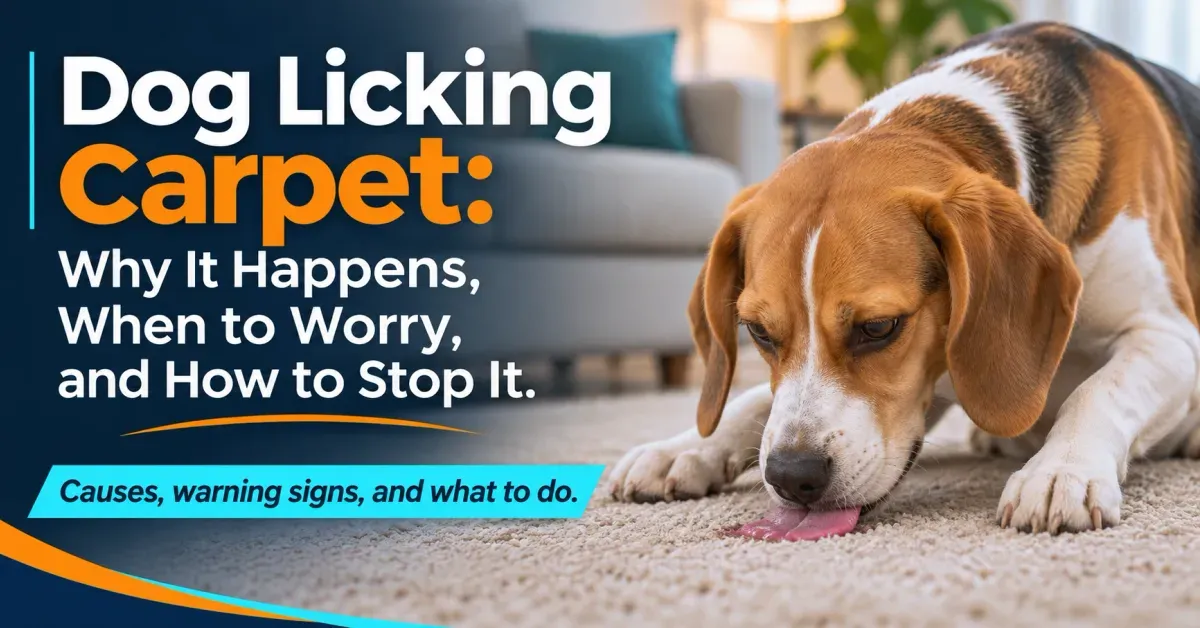
Dog Licking Carpet: Why It Happens, When to Worry, and How to Stop It
Why is my dog licking the carpet? Often the answer is simple: a spill, a crumb, or an interesting smell. But dog licking carpet that starts all of a sudden, turns frantic, or never stops can point to nausea or a stomach problem, and that deserves a call to your vet.
Published November 12, 202613 min read
In a University of Montreal study of dogs that licked surfaces excessively, vets found stomach or intestinal abnormalities in 14 of 19 dogs. This guide shows which signs are urgent, what usually causes the licking, whether carpet fibers and cleaning products are a risk, and a step-by-step plan to stop it.
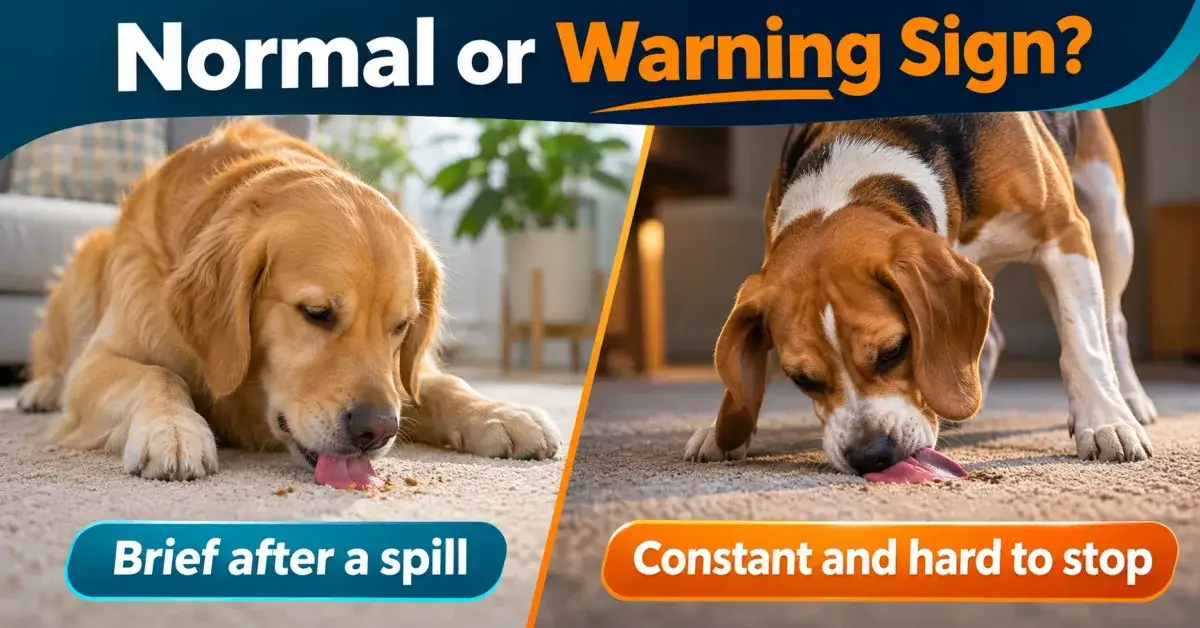
Is Dog Licking Carpet Normal or a Warning Sign?
Normal Licking: Crumbs, Scent, and Spills
A quick lick at a spilled drink, a dropped crumb, or a spot where another pet had an accident is normal. So is a brief sniff and lick of a new rug. If the licking stops when you call your dog, and your dog eats, plays, and sleeps as usual, clean the spot and keep watching. Short bouts of dog licking floor surfaces after a meal usually fall in the same category.
What Is Excessive Licking of Surfaces (ELS)?
Veterinarians use the term Excessive Licking of Surfaces, or ELS, for a dog that licks carpet, floors, rugs, blankets, or furniture so much that it stands out. These dogs lick constantly, often obsessively, and are hard to interrupt. ELS describes a behavior, not a cause. A 2012 study in the Journal of Veterinary Behavior followed 19 dogs with ELS and 10 healthy dogs. Vets found stomach or intestinal abnormalities in 14 of the 19 licking dogs. After treatment, the licking improved in 10 of 17 dogs and resolved in 9 of 17 over 90 days. The licking dogs were not significantly more anxious than the healthy ones.
Key Takeaway: ELS means licking surfaces to an extreme degree. In a small study, 14 of 19 dogs with ELS had a stomach or intestinal abnormality, so check your dog's health before you assume a habit.
When Is Dog Licking Carpet a Reason to Call the Vet?
Dog licking carpet that is new, intense, or paired with other symptoms needs attention. Use this table to decide how fast to act. A dog that licks all of a sudden, or frantically, is telling you something changed.
| Sign | What it can mean | What to do |
|---|---|---|
| Licking started suddenly or became frantic | Nausea, pain, or a stomach problem | Call your vet within a day |
| Licking that won't stop when you interrupt it | ELS or compulsive behavior, with a medical cause possible | Book a visit this week |
| Drooling, lip smacking, gulping, gagging, coughing, or repeated swallowing | Nausea, reflux, or another throat or stomach problem | Call your vet the same day |
| Vomiting, diarrhea, no appetite, or weight loss | Stomach or intestinal illness | Call your vet the same day |
| Vomiting with no stool, belly pain, or weakness after chewing or swallowing carpet | Possible blockage (PetMD) | Contact a vet immediately |
| Repeated retching with little coming up and a swollen, tight belly | Possible bloat (AAHA) | Go to an emergency clinic now |
| Night restlessness, pacing, or waking in an older dog | Pain or cognitive dysfunction | Book a visit and list the changes |
| Occasional licking after a spill, otherwise normal | Normal | Clean the spot and watch |
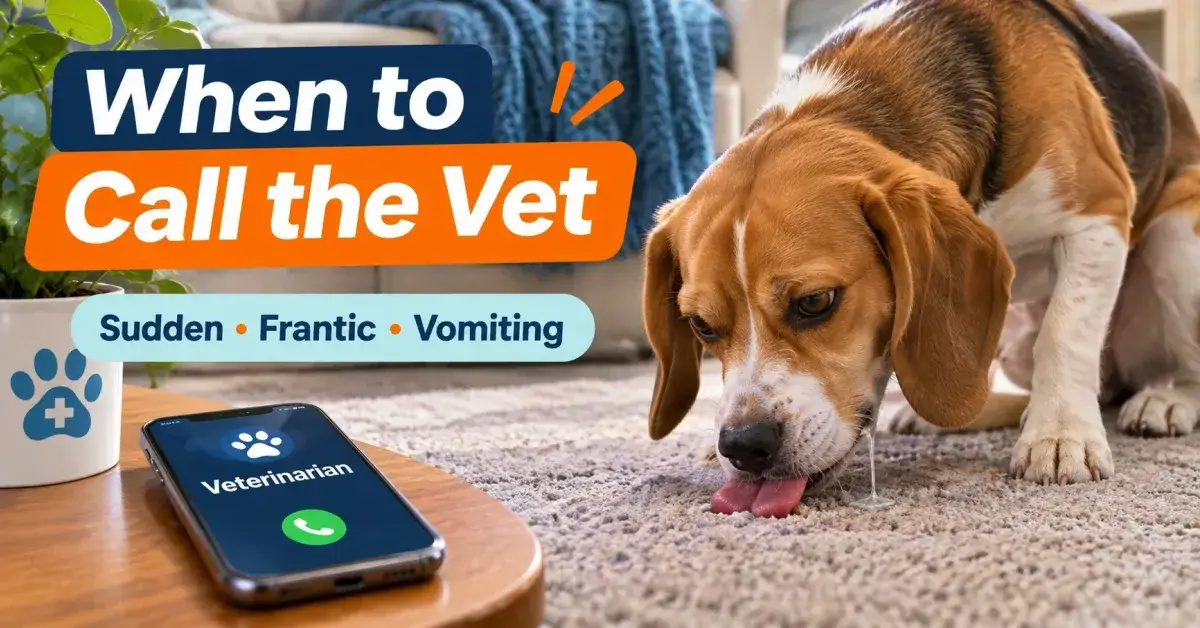
Call your vet whenever you are unsure. Say when the licking began, what else you have noticed, and whether your dog has chewed or swallowed carpet.
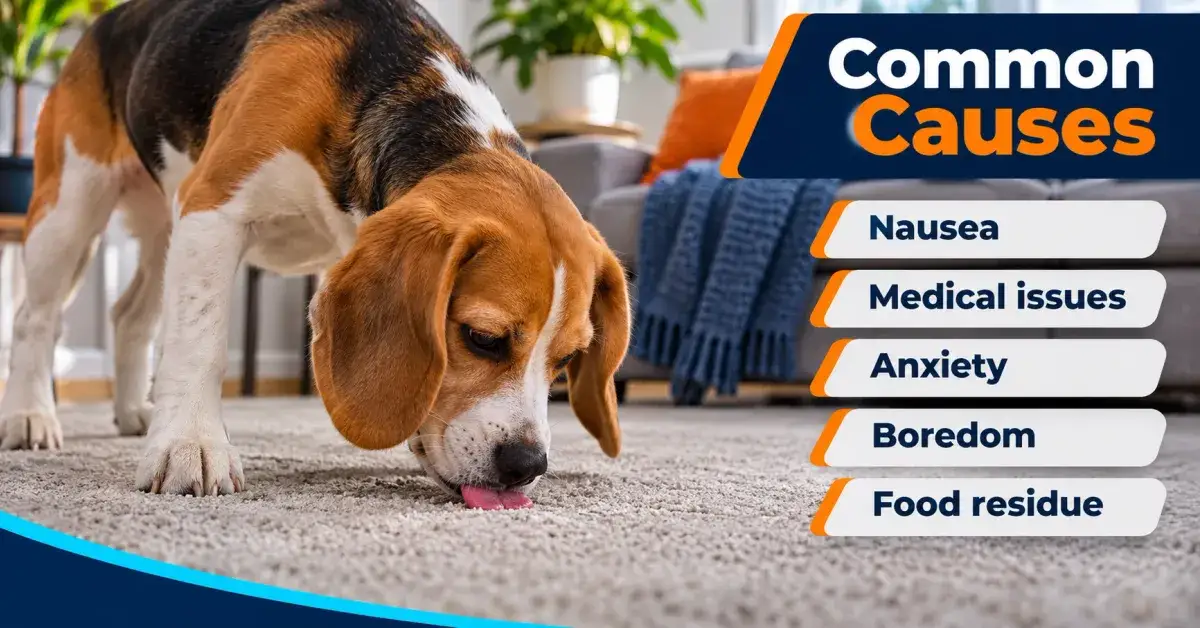
Common Causes of a Dog Licking the Floor and Carpet
Why does my dog lick the carpet? Usually for one of five reasons, listed here from the most urgent to the least.
Nausea and Upset Stomach
Nausea is the most commonly cited trigger. A dog with an upset stomach may lick carpet or floors, drool, smack its lips, or gulp. Some lick frantically and then vomit. Some also eat grass. Most grass-eating dogs are not sick beforehand, and fewer than 25% vomit afterward, according to VCA Animal Hospitals. So a dog licking the carpet and eating grass may be showing nausea, but that link is not proven. If it happens repeatedly or with vomiting, ask your vet.
Key Takeaway: Nausea is the first thing to rule out. Drooling, lip smacking, gulping, or vomiting alongside the licking calls for a vet visit.
Other Medical Causes
Pain can drive licking, and dental pain is one example. Some medications, such as steroids, can increase hunger, and a hungry dog may lick surfaces for traces of food. Nervous system problems can also play a part, as can pica, the habit of eating non-food items. Your vet sorts these out with an exam and tests.
Anxiety and Compulsive Licking
A dog that licks mainly when left alone, along with pacing, panting, or destructive behavior, may have separation anxiety. Some dogs develop repetitive licking that looks like a habit they cannot drop, and some lick obsessively. Vets generally call this compulsive behavior only after medical causes are ruled out. A certified trainer or a veterinary behaviorist can build a plan.
Boredom
A dog with little exercise or mental work may lick the carpet to fill time, often in the evening. Boredom is a real cause, but treat it as the last answer, not the first. Rule out health problems before you settle on it.
Food Smells and Carpet Residue
Carpet holds crumbs, grease, and dried spills long after you stop seeing them. Your dog's nose finds them first. If the licking centers on one spot, food residue is likely, and cleaning the spot helps. It will not fix nausea or anxiety, so keep watching for other signs.
How to Tell What Is Behind the Licking
Why does my dog keep licking the carpet? The pattern often points the way. Track when, where, and what else you notice for a few days, then match it below.
| What you notice | Likely cause | Next step |
|---|---|---|
| After meals | Leftover food smell or post-meal nausea | Clean the area and tell your vet if it happens often |
| When lying down or relaxing | Nausea, comfort habit, or early compulsive licking | Note how long it lasts and mention it to your vet |
| At night | Empty-stomach nausea, anxiety, or boredom; in older dogs, pain or cognitive changes | See the night section below |
| Only when left alone, with pacing or panting | Separation anxiety | Ask your vet about a behavior plan |
| Dog keeps licking floor or carpet in one spot | Food residue or scent | Blot, clean, and block access to the spot |
| Many surfaces: carpet, floor, blankets, couch | ELS pattern | Book a vet visit |
| Together with eating grass | Possible nausea (not proven) | Watch for vomiting and call your vet if it repeats |
| Only when bored in the evening | Boredom | Add exercise and mental work after a vet check |
Dog Licking Carpet at Night or in an Older Dog
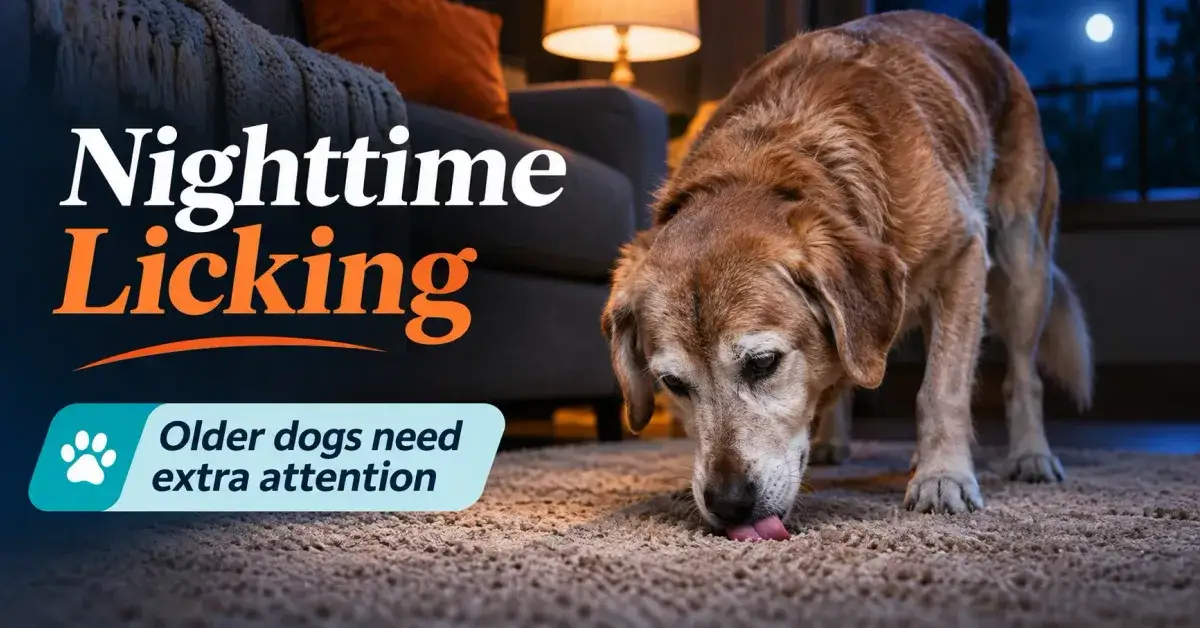
Dog licking carpet at night often happens when the stomach is empty and nausea builds, or when a dog feels anxious in a quiet house. In an old dog, new licking can also come from pain, nausea, or canine cognitive dysfunction. The Morris Animal Foundation's DISHAA tool, created by veterinary behaviorist Dr. Gary Landsberg, lists signs worth reporting to your vet:
- Aimless pacing or wandering
- Restlessness or waking at night
- Vocalizing at night
The tool advises talking to your vet when several categories of behavior change. Write down what you see, with times, and bring the list.
Is It Safe for a Dog to Lick Carpet?
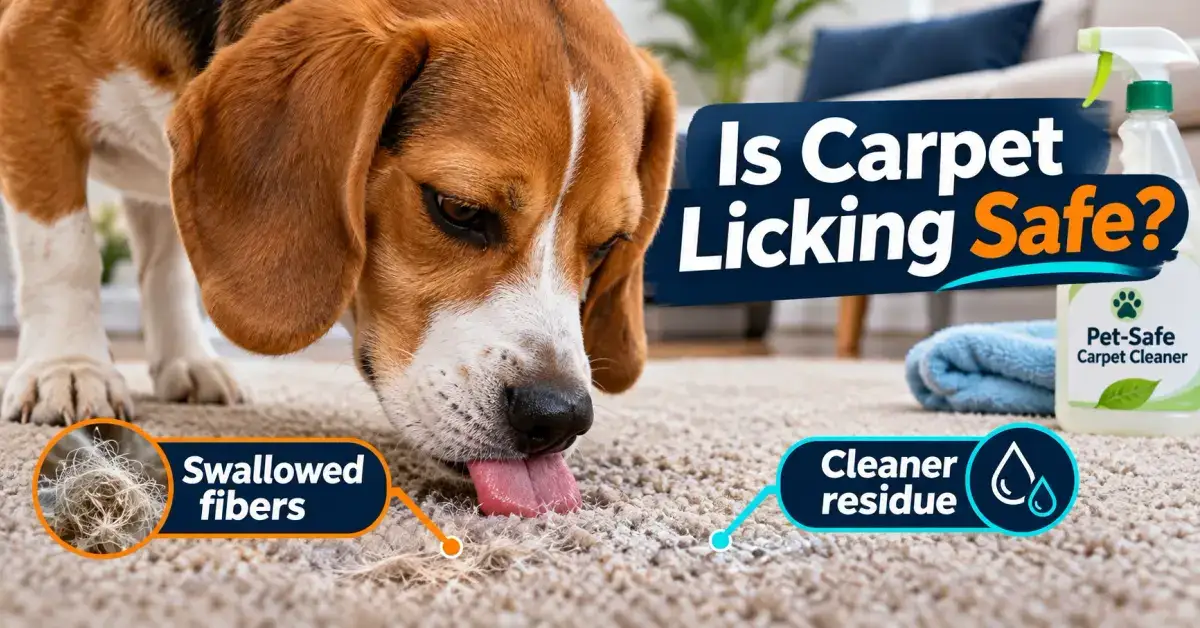
Occasional licking of a carpet or rug rarely hurts. Two carpet-specific risks deserve attention: swallowed fibers and product residue.
Swallowed Carpet Fibers
A dog that licks carpet may also chew and swallow fibers, and swallowed material can block the intestines. PetMD's veterinarian-reviewed guide lists these signs of blockage: vomiting, loss of appetite, abdominal pain, lethargy, diarrhea or straining, and weight loss. Vomiting with no stool is a strong sign. Contact a vet immediately, because dogs with a complete blockage survive only a few days. If your dog is eating carpet rather than only licking it, tell your vet even if your dog seems fine.
Key Takeaway: Vomiting with no stool after your dog chews or swallows carpet is an emergency. Call a vet immediately.
Cleaning Products and Carpet Deodorizer Powder
The ASPCA says carpet fresheners used as directed should not cause significant harm. It advises washing your dog's paws if powder gets on them and keeping pets out of the room until you vacuum. Minor ingestion may cause mild stomach upset. For carpet shampoo, the ASPCA says to let the carpet dry before pets come back in. None of this means every cleaner is safe. Follow the label, and if your dog licks a product or you are unsure, call the ASPCA Animal Poison Control Center at (888) 426-4435 or your vet.
Key Takeaway: Keep your dog out of the room until deodorizer powder is vacuumed and shampooed carpet is dry. Call poison control or your vet if your dog licks a product.
How to Stop Your Dog From Licking the Carpet
Start with health, then fix the carpet and the routine. Follow these steps in order.
- Track the pattern. For a few days, note the time, the place, and what happens before and after.
- Call your vet if you see any red flag in the table above, or if the licking is new.
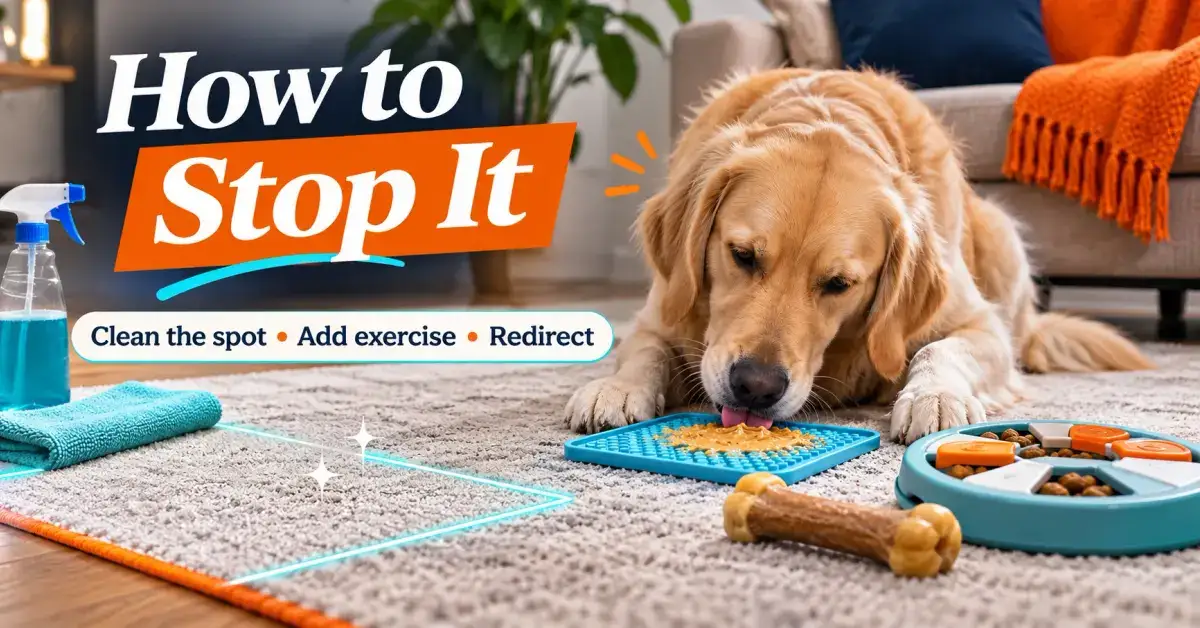
- Blot up food and spill residue. If you use a carpet product, choose one labeled for pets, follow the label, and keep your dog out until the carpet is fully dry.
- Keep meals regular. If licking happens at night, ask your vet about feeding times and any medications.
- Add exercise and mental work, such as a sniff walk or a puzzle feeder, before your dog's usual licking time.
- Redirect with a lick mat or a chew, and reward calm behavior.
- If your dog will keep licking after redirection, block access to the spot while you investigate.
- Bring in a certified trainer or a veterinary behaviorist for compulsive or anxious licking.
Enzymatic cleaners and steam cleaning (hot water extraction) can lift food residue, but no study shows they stop licking. Treat cleaning as one step, not the cure.
What Not to Do
Do not punish your dog. Punishment can add stress and does not treat nausea or pain. Do not use scented sprays or essential oils to mask the smell unless your vet approves them. Do not give human stomach medicines. Do not assume boredom without a vet check.
What to Expect at the Vet
Your vet will ask when the licking began, what it looks like, and what your dog eats. Expect a physical exam, often including the mouth and belly. Depending on the findings, your vet may suggest bloodwork, a stool test, imaging, or a gastrointestinal workup. Bring your notes, a short phone video of the licking, and a list of medications and foods.
FAQs About Dogs Licking the Carpet
What does it mean when a dog licks the carpet?
+
Usually a taste or smell left on the carpet, nausea, or boredom. Constant licking of many surfaces fits the ELS pattern and calls for a vet check.
Why is my dog licking the floor and not only the carpet?
+
The same causes apply to tile, wood, and vents: nausea, residue, anxiety, boredom, or ELS. Licking across many surfaces is the typical ELS pattern, so book a vet visit.
Why does my dog lick the floor after eating?
+
Leftover food smell is the simple explanation. If it happens after every meal, or comes with drooling, gulping, or vomiting, post-meal nausea is possible and your vet should check.
Can boredom alone cause a dog to lick the carpet?
+
Yes, but only after medical causes are ruled out. Boredom licking often shows up in the evening and eases with more exercise and mental work.
Will cleaning the carpet stop the licking?
+
It can help when food residue is the draw, because it removes the smell. It will not fix nausea, pain, or anxiety, so keep watching for other signs.
The Bottom Line on Dog Licking Carpet
Occasional dog licking carpet after a spill is normal. Sudden, frantic, or constant licking, especially with drooling, vomiting, or appetite changes, means it is time to call your vet. Protect your carpet from fibers and residue, track the pattern, and treat the cause, not just the licking.
Need a carpet cleaning company you can trust? We handle residential and commercial carpet cleaning, rug cleaning, upholstery cleaning, and pet stain and odor removal —our team is ready to help.

Michael Sanders
Michael Sanders is a home care and cleaning industry writer covering carpet maintenance, flooring care, and household cleaning practices across the United States. His work focuses on practical, research-backed guidance — from stain and odor removal to deep extraction methods and indoor allergen prevention. Michael collaborates with cleaning professionals to ensure accuracy, and his writing reflects a genuine interest in helping homeowners make informed decisions about caring for their homes.