


Blog · Cleaning Methods
Hot Water Extraction Carpet Cleaning: How It Works
Hot water extraction carpet cleaning is the process most professionals use to pull deep dirt out of carpet fibers using heated water and pressure. Homeowners see the term "steam cleaning" used for the same service and end up confused about what they are actually paying for. Some companies push hot water extraction as the only real option. Others claim it damages carpet or leaves it wet for days.
Updated October 22, 202610 min read
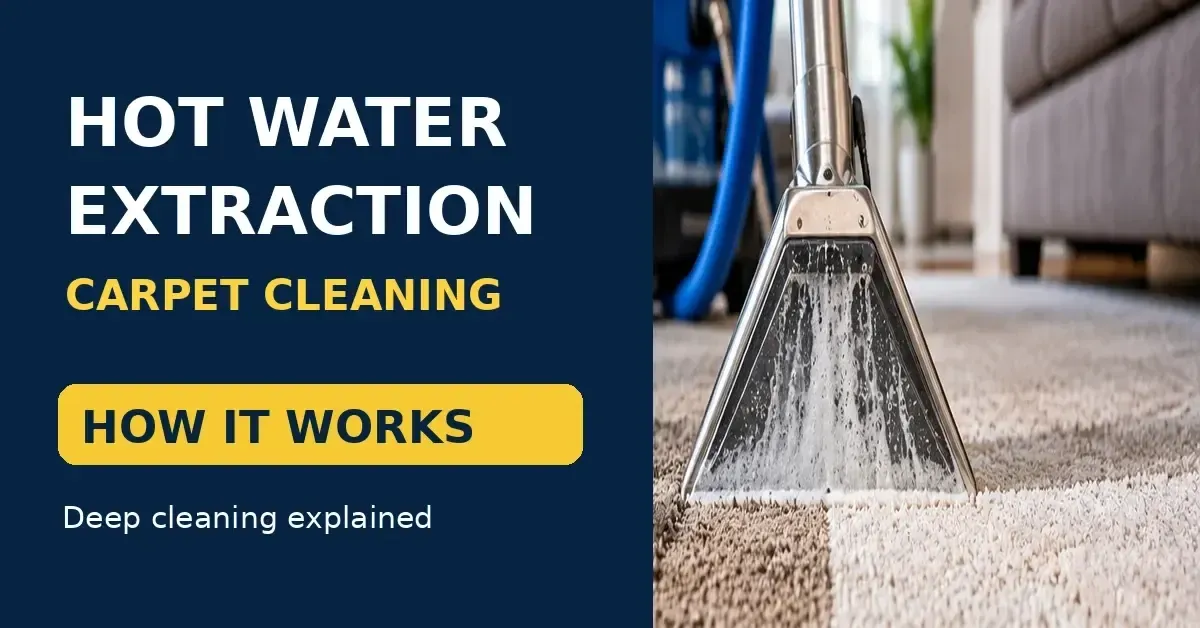
This article breaks down exactly what hot water extraction is, how the process works step by step, and where it genuinely fits compared to other cleaning methods. You will also learn how often it protects your carpet warranty and what really happens during drying.
Hot water extraction carpet cleaning injects a heated water and cleaning solution mix deep into carpet fibers under pressure, then immediately vacuums it back out along with the loosened dirt. It is the method most manufacturers require to keep carpet warranties valid, and it removes far more embedded soil than surface cleaning or dry compound methods.
What Is Hot Water Extraction Carpet Cleaning?
Hot water extraction carpet cleaning uses pressurized hot water mixed with a cleaning solution to flush dirt out of carpet fibers, then extracts the water and soil with a powerful vacuum. It works from the inside of the fiber outward, not just across the surface.
Most consumer carpet cleaner rental machines and every professional truck mounted unit rely on this same basic method. The difference between a weak clean and a genuinely deep clean usually comes down to water temperature, pressure, and how much water gets pulled back out.
This is why hot water extraction remains the standard against which every other carpet cleaning method gets measured. Dry compound cleaning and encapsulation both work on the surface layer. Hot water extraction reaches the base of the fiber where grit and oily soil actually collect.
How Does Hot Water Extraction Carpet Cleaning Work, Step by Step?
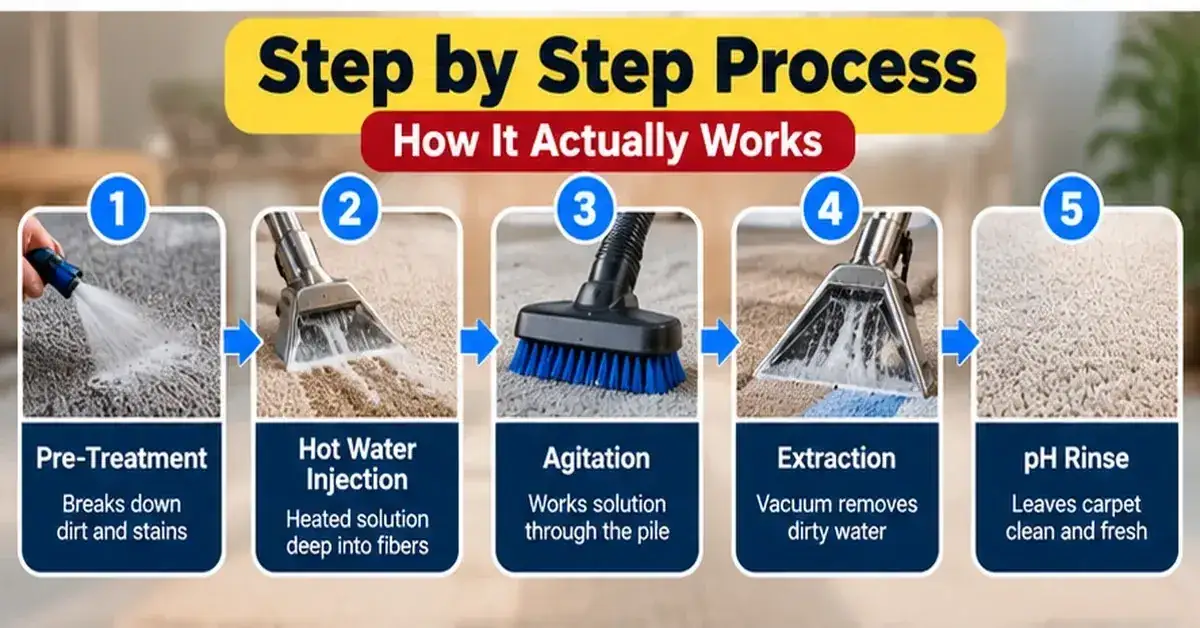
Hot water extraction works in five stages: pre-treatment, hot water injection, agitation, extraction, and a pH balancing rinse. Each stage has a specific job, and skipping one is usually why a carpet resoils fast.
First, a technician applies a pre-treatment spray to break down oily soil and traffic lane buildup. Next, a wand injects heated water combined with a cleaning solution directly into the carpet under pressure, typically in the 150 to 210 degree range depending on the equipment. Agitation, either from the wand itself or a separate brush pass, works the solution through the pile.
The same wand pass that injects the water also extracts it, using strong suction to pull the dirty water and loosened soil back into the machine's recovery tank. A final rinse with a mild acidic solution brings the carpet's pH back to neutral. This step matters more than most homeowners realize, since a high pH residue left behind is a common reason carpets attract dirt again quickly.
Hot Water Extraction vs Steam Cleaning: Are They Actually the Same Thing?
Hot water extraction and steam cleaning are the same service in almost every case, despite the different names. The confusion comes from marketing, not the equipment. No licensed carpet cleaning company is running actual steam, which is water vapor, directly on your carpet.
True steam has a temperature near 212 degrees and carries very little moisture. It would barely lift soil and would leave carpet backing and padding almost dry. What companies call steam cleaning is hot water extraction with heated water, not vapor, doing the actual soil removal work.
The term stuck decades ago and never went away. When you compare carpet cleaning vs steam cleaning quotes from two different companies, you are almost always comparing the same underlying process with different branding, unless a company specifically states it uses dry steam or a bonnet method instead.
Truck-Mounted vs Portable Hot Water Extraction: What's the Real Difference?
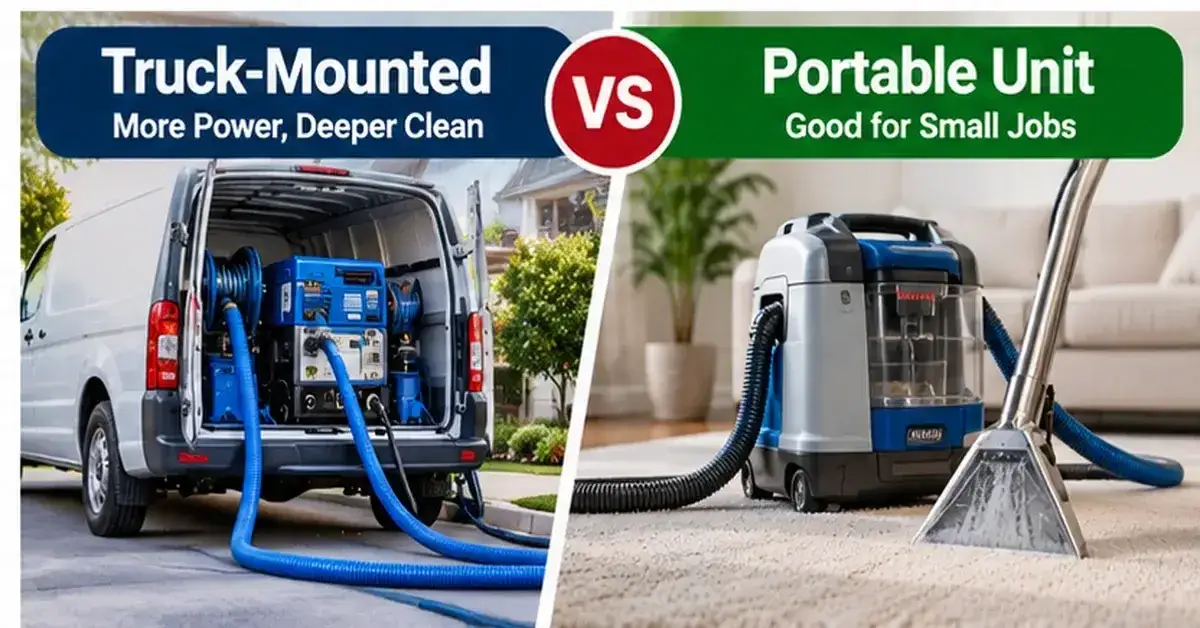
Truck mounted hot water extraction systems generate more heat, more pressure, and more vacuum power than portable units, which means faster drying and deeper soil removal. Portable units trade some of that power for flexibility in spaces a hose cannot reach.
Truck-Mounted vs Portable Hot Water Extraction
| Factor | Truck-Mounted | Portable |
|---|---|---|
| Power Source | Runs off the vehicle engine or a separate onboard generator | Plugs into a standard home outlet |
| Water Temperature | Stays consistently hot throughout the job | Cools faster during longer jobs |
| Vacuum Recovery | Strong enough to leave carpet only lightly damp | Weaker, so carpet stays wetter longer |
| Best For | Whole home cleanings, larger square footage, high traffic carpet | High rise units, stairs, spaces without truck access |
Consider a homeowner who rents a portable unit for a weekend deep clean. The carpet often still feels damp the next morning, and traffic lanes reappear within a few months because the machine could not maintain temperature or pull enough water back out. A truck mounted system on the same carpet typically leaves it dry within hours and removes soil the portable unit left behind.
What Are the Pros and Cons of Hot Water Extraction?
Hot water extraction removes more embedded soil and allergens than any other common cleaning method, but it takes longer to dry and costs more than lighter alternatives. Weighing both sides honestly helps you pick the right method for your situation.
On the plus side, hot water extraction reaches soil trapped at the base of the fiber, which vacuuming and surface cleaning miss entirely. It also reduces allergen levels more effectively since the extraction step physically removes particles instead of just relocating them. Most carpet manufacturers require this method specifically because it produces the most consistent, warranty-approved results.
On the downside, drying time is longer than encapsulation or dry compound cleaning, which can be a problem in humid climates or homes with limited airflow. The equipment and expertise needed for a truly deep clean also make it pricier than lighter maintenance methods, though the depth of clean usually justifies the cost for a full deep clean rather than routine upkeep.
See our steam-versus-dry comparison for the annual cost and maintenance trade-offs.
How Long Does Carpet Take to Dry After Hot Water Extraction?
Carpet typically dries within 6 to 12 hours after hot water extraction, though modern truck mounted systems with strong vacuum recovery can bring that down to 2 to 4 hours. Drying speed depends heavily on airflow, humidity, and how much water the machine pulled back out during extraction.
Opening windows, running ceiling fans, or using a portable air mover speeds things up considerably. Turning on the air conditioner also helps pull moisture out of the air in warmer months. Avoid walking on damp carpet with shoes, since that pushes soil from the shoe sole back into the wet fibers.
The drying window matters for a reason beyond comfort. The EPA notes that wet materials, including carpet, should dry within 24 to 48 hours to prevent mold growth, and recommends keeping indoor humidity below 60 percent, ideally between 30 and 50 percent. A homeowner who cleans carpet in a closed up guest room during a humid week and skips fans or ventilation can end up with a musty smell within days, even though the cleaning itself was done correctly. The problem is almost always trapped moisture, not the extraction process.
How Often Should You Get Hot Water Extraction Cleaning?
Most carpet manufacturers require professional hot water extraction every 12 to 18 months to keep your warranty valid, though homes with pets, kids, or heavy foot traffic often need it more often. This requirement is not a suggestion buried in fine print. It is enforced.
Shaw, Mohawk, Beaulieu, and Masland all specify hot water extraction using CRI Seal of Approval certified products and equipment as a warranty condition, with most requiring cleaning every 12 to 18 months and Shaw allowing up to 24 months in lighter traffic homes. Skipping this or using an unapproved method, like a rented bonnet machine, can void wear and stain warranties entirely.
Picture a homeowner who files a warranty claim after carpet fibers start matting down in a hallway. The claim gets denied because the only cleaning receipts on file are from a portable rental unit, not a certified hot water extraction service. Keeping receipts from a qualified provider is the only way to prove the warranty condition was met.
What Hot Water Extraction Data Tells You About Carpet Care
Carpet care data from health and industry organizations shows why the cleaning method you choose actually matters, not just how often you clean. These numbers explain the reasoning behind manufacturer requirements and drying guidance.
The EPA states that materials wet from cleaning or water damage should dry within 24 to 48 hours to limit mold risk, and recommends keeping indoor humidity between 30 and 50 percent. The IICRC S100 standard governs professional carpet cleaning methods, including hot water extraction, and defines the practices technicians should follow for an effective, appropriate clean. Major manufacturers including Shaw and Mohawk require hot water extraction using CRI Seal of Approval equipment every 12 to 18 months to preserve warranty coverage. The Carpet and Rug Institute independently tests cleaning equipment for soil removal performance before granting that Seal of Approval, giving homeowners a way to verify a company's tools actually perform.
Common Questions About Hot Water Extraction, Answered
Does hot water extraction cause mold?
+
Hot water extraction itself does not cause mold. Mold becomes a risk only when carpet stays wet too long due to poor airflow or a weak vacuum recovery system. Proper ventilation and a full extraction pass keep drying time within the safe window.
Can I do hot water extraction myself, or do I need a professional?
+
Rental machines can handle light maintenance cleaning, but they lack the heat and vacuum power of professional equipment. For deep, embedded soil or warranty compliance, a certified professional with a truck mounted system gets better and faster results.
What temperature is used for hot water extraction cleaning?
+
Professional systems typically heat water to between 150 and 210 degrees Fahrenheit. Higher temperatures within that range improve soil breakdown without damaging most synthetic carpet fibers.
Does hot water extraction remove pet stains and odor?
+
Hot water extraction removes surface level pet stains and odor effectively when caught early. Deep set urine that has reached the carpet backing or pad often needs a specialized enzyme treatment in addition to standard extraction.
Is hot water extraction safe for wool carpet?
+
Hot water extraction can damage wool if the water temperature or solution pH is too high. Wool needs a lower temperature setting and a wool safe, near neutral pH cleaning solution to avoid shrinkage or fiber damage.
Does hot water extraction leave a soapy residue?
+
A properly done hot water extraction should not leave residue, since the final rinse step is designed to remove it. Residue buildup usually means the technician skipped or rushed the rinse and extraction pass.
How much does hot water extraction carpet cleaning cost?
+
Professional hot water extraction typically runs between 25 and 75 cents per square foot, though pricing varies by region, soil level, and whether the provider uses truck mounted or portable equipment. Most homeowners pay a flat per room rate instead.
Can hot water extraction damage carpet?
+
Hot water extraction is safe for most synthetic carpet when done correctly. Damage usually comes from excess water left behind, overheating delicate fibers like wool, or using the wrong cleaning solution pH for the carpet type.
Is hot water extraction better than dry carpet cleaning?
+
Hot water extraction removes more embedded soil and allergens than dry compound cleaning, making it the better choice for a deep clean. Dry cleaning has the advantage of little to no drying time, which makes it useful for quick maintenance between deep cleans.
What is the CRI Seal of Approval, and why does it matter for HWE?
+
The CRI Seal of Approval is an independent testing certification from the Carpet and Rug Institute that verifies a cleaning product or machine actually performs at the level claimed. Many manufacturer warranties require cleaning with Seal of Approval certified equipment specifically.
The biggest thing to understand about hot water extraction carpet cleaning is that the name confusion around steam cleaning matters less than the actual equipment and process behind it. A truck mounted system with strong vacuum recovery and a proper rinse step will outperform a rented portable unit every time, regardless of what either service calls itself. Ask about equipment, temperature control, and CRI certification before booking, and you will get a far more accurate picture of the clean you are actually paying for than any marketing term provides.
Need a carpet cleaning company you can trust? We handle residential and commercial carpet cleaning, rug cleaning, upholstery cleaning, and pet stain and odor removal —our team is ready to help.

Michael Sanders
Michael Sanders is a home care and cleaning industry writer covering carpet maintenance, flooring care, and household cleaning practices across the United States. His work focuses on practical, research-backed guidance — from stain and odor removal to deep extraction methods and indoor allergen prevention. Michael collaborates with cleaning professionals to ensure accuracy, and his writing reflects a genuine interest in helping homeowners make informed decisions about caring for their homes.