


Blog · Cleaning Methods
Steam Cleaning vs Dry Cleaning Carpet: Which Wins?
Steam cleaning vs dry cleaning carpet is the question every homeowner hits when getting quotes, and the answers always contradict each other. One company swears steam is the only real clean. Another insists dry cleaning is safer and smarter. What nobody mentions is that each company recommends whichever method they happen to sell.
Published October 22, 202610 min read
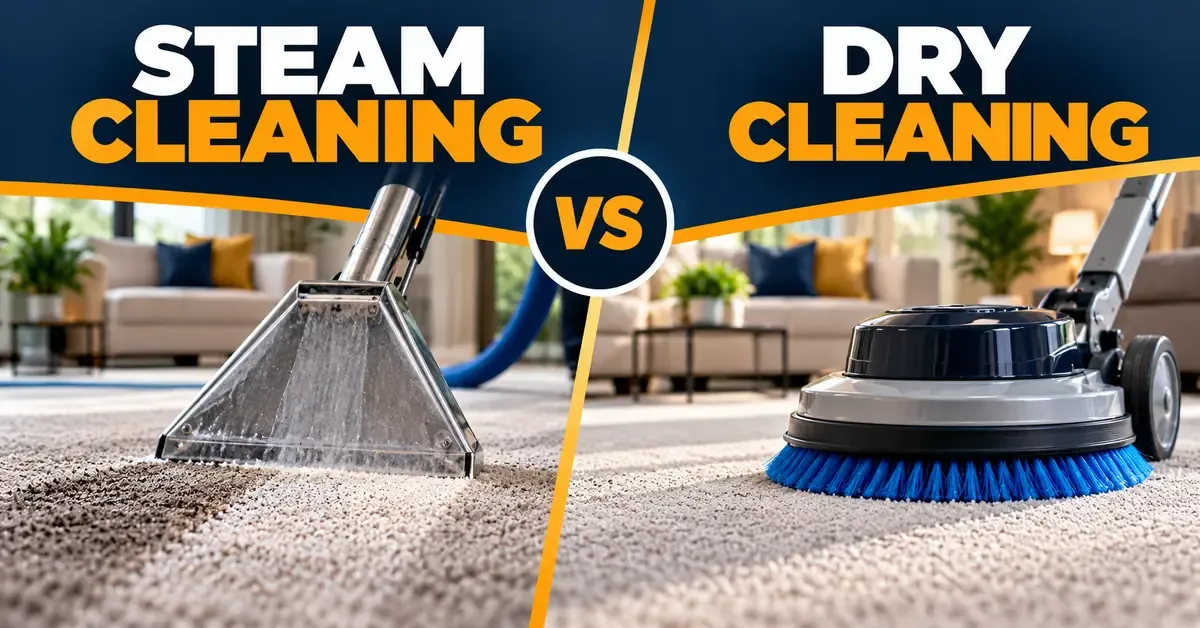
This article gives you the neutral answer. You will see how the two methods actually compare, which one fits your specific situation, which costs less over a full year, and the mistakes that lead homeowners to pick the wrong one.
Steam cleaning removes deep, embedded soil and is required by some carpet warranties, but takes hours to dry. Dry cleaning uses minimal moisture, usually dries faster, and works best as maintenance between deep cleans. Many homes benefit from using both on a schedule that fits their carpet and household.
Steam Cleaning vs Dry Cleaning Carpet: What Is Each One Really?
Both method names are misleading, which causes most of the confusion in this debate. Steam cleaning uses no actual steam, and dry cleaning is almost never fully dry.
What the industry calls steam cleaning is hot water extraction: heated water and cleaning solution injected into the carpet under pressure, then vacuumed back out along with the loosened soil. The visible vapor rising from the wand gave the method its nickname decades ago, and the name stuck.
Dry cleaning is really very low moisture cleaning in most cases. Dry compound powder is the only truly waterless option. Encapsulation and bonnet methods, which also get sold under the dry label, apply small amounts of liquid solution that dry fast. So the real comparison is not wet versus dry. It is deep extraction versus low moisture surface cleaning.
How Do the Two Methods Compare Head to Head?
Extraction wins on depth and warranty compliance, while dry methods win on speed, drying time, and price per visit. Here is the factor by factor scorecard.
| Steam | Dry | |
|---|---|---|
| Cleaning depth | Flushes the full pile down to the backing | Cleans the surface and mid-fiber level only |
| Drying time | Several hours or more, depending on carpet and airflow | Usually faster; confirm before using the room |
| Cost per visit | Higher, reflecting equipment and job time | Varies by provider, room size, and method; compare local quotes |
| Residue left behind | Minimal when properly rinsed and extracted | Varies, from near zero with encapsulation to moderate with bonnet pads |
| Mold and moisture risk | Higher if carpet is over-wet or left damp for too long | Uses less moisture, but carpet still needs to dry fully |
| Warranty compliance | Required by some product-specific warranties | May not satisfy warranties that specify professional extraction |
No single column wins every row. That is exactly why the next section matters more than any general verdict.
Hot Water Extraction vs Dry Carpet Cleaning: Which Fits Your Situation?
The right choice between hot water extraction vs dry carpet cleaning depends on your household, not on which method is better in the abstract. Match your situation below.
Pets with accidents or odor: First identify how far the urine has spread. Targeted enzyme treatment and sub-surface extraction may be needed where contamination reaches the backing or pad; a routine low-moisture pass may leave the source behind.
Allergy or asthma concerns: Extraction wins for allergen removal, since it physically pulls dust mites and dander out of the pile rather than cleaning over them.
Wool or delicate natural fiber: Dry methods win. Low moisture and low heat protect fibers that hot water and aggressive extraction can shrink or distort.
Rental turnover or quick refresh: Dry methods win on speed. A unit can be cleaned and shown the same day.
Basements and humid rooms: Faster-drying methods can be useful where airflow is limited. If you choose extraction, plan ventilation and confirm the carpet dries fully.
Newer carpet under warranty: Check the product's cleaning requirements. Shaw advises professional hot water extraction every 6 to 18 months depending on traffic, while Mohawk's cited warranty requires it every 18 months.
The Best Carpet Cleaning Method Comparison for Busy Households
For homes that cannot lose a room for a day, the best carpet cleaning method comparison comes down to dry time. Low-moisture methods generally return a room to use sooner, while extraction may need several hours or longer to dry depending on the carpet and airflow.
A family cleaning the living room on a Saturday morning may prefer a faster-drying method. Schedule deeper extraction for a day the household can work around, and ask the provider when normal use can resume.

Which Method Costs Less Over a Full Year?
The cheaper quote on one visit may not be the cheaper plan over a year. Prices vary by location, carpet area, condition, and the exact method used, so compare written local quotes for the same rooms and scope of work.
Add up the visits your carpet actually needs: any deep cleaning required by its warranty, plus optional interim cleaning for busy areas. A low-moisture visit can help a hallway look better between deep cleans, but it does not replace a warranty-required extraction. Ask each company to explain its method, drying plan, and total annual cost before deciding.
Can You Use Both Methods Together?
Yes, and the combination beats loyalty to either method alone. Professionals call it a maintenance rotation, and it is how commercial buildings keep carpet presentable for years.
The structure is simple. Hot water extraction on the schedule specified by your carpet maker does the restorative deep work. Shaw advises every 6 to 18 months depending on traffic, and Mohawk's cited warranty requires every 18 months. Low moisture cleaning every 3 to 6 months between extractions handles appearance, surface soil, and traffic lanes.
Picture a home with a hallway that turns gray four months after every deep clean. The owner could add one encapsulation visit between deep cleans to refresh the traffic lane while keeping the manufacturer's recommended deep-clean schedule. Compare the cost of that plan with other local quotes before booking.

What Homeowners Get Wrong When Choosing Between These Methods
The three most expensive mistakes in this decision have nothing to do with the methods themselves. They come from how the choice gets made.
Mistake one: judging by surface appearance. Carpet can look clean after a bonnet or encapsulation pass while holding years of grit at the fiber base. Looking clean and being clean are different conditions, and only extraction addresses the second one.
Mistake two: choosing by per-visit price alone. Compare the annual cleaning plan, the services included in each quote, and any requirements in your carpet warranty.
Mistake three: letting the company's equipment decide. A business that only owns low moisture gear will recommend low moisture cleaning for every job, including the pet-soaked carpet that needs flushing. Think of a homeowner with a dog odor problem who accepts a cheap dry cleaning quote. The smell fades for a week, returns, and the money is gone. Ask any company what method they recommend and why before telling them what you want. The reasoning in their answer reveals whether they serve the carpet or the sales script.
What the Numbers Say About Wet and Dry Carpet Cleaning
Standards and health data draw the real boundary lines in this debate. These facts explain why neither method can fully replace the other.
The EPA's general guidance for wet materials says to dry them within 24 to 48 hours to help prevent mold growth. That guidance concerns moisture problems such as leaks; it is a reminder to avoid leaving freshly cleaned carpet damp, not a measured mold-risk window for routine extraction. Drying time depends on the cleaning method, equipment, carpet, and airflow. The Carpet and Rug Institute describes interim cleaning as a way to maintain appearance between deeper cleanings. Shaw advises professional extraction every 6 to 18 months depending on traffic, while Mohawk's cited warranty requires it every 18 months. Check your own carpet warranty before choosing a schedule.
Common Questions About Steam vs Dry Carpet Cleaning, Answered
Is steam cleaning good for carpets, or can it cause damage?
+
Steam cleaning is safe and beneficial for most synthetic carpet when done correctly. Damage happens mainly from overwetting, excessive heat on delicate fibers like wool, or poor extraction that leaves carpet wet too long.
What is dry steam cleaning, and is it a real method?
+
Dry steam cleaning uses vapor with very low water content and is real, but rare in carpet care. Most companies advertising it are actually offering standard hot water extraction or low moisture cleaning.
Which method removes pet urine better?
+
For pet urine that has soaked below the carpet surface, targeted enzyme treatment and sub-surface extraction can reach contamination that a low-moisture surface clean may miss. If the pad or subfloor is affected, it may need separate treatment or replacement.
Which method is better for people with allergies or asthma?
+
Extraction removes more allergens because it physically pulls dust mites, dander, and fine particles out of the pile. Fast-drying methods help too, since they avoid the humidity spikes that let dust mites thrive.
Is Chem-Dry the same as dry carpet cleaning?
+
Chem-Dry is a brand using a low moisture carbonated cleaning process, not a fully dry method. It uses far less water than extraction but still applies liquid solution to the carpet.
How long does each method take from start to finish?
+
Cleaning and drying times vary with room size, carpet, equipment, and airflow. Low-moisture cleaning generally dries faster than hot water extraction. Ask the provider when normal use can resume for your specific job.
Which method is safer for wool and natural fiber carpet?
+
Dry and low moisture methods are safer for wool because they avoid high heat and saturation. Wool can be extraction cleaned, but only with lower temperatures and wool-safe solutions.
Do landlords and property managers prefer one method?
+
Many prefer low moisture cleaning for turnovers because units can be shown the same day. For move-out cleanings with pet damage or heavy soil, extraction is usually required.
Which method kills bacteria and dust mites better?
+
Hot water extraction can remove soil, allergens, and some microorganisms from carpet, while low-moisture methods can help with routine surface cleaning. Neither method should be described as disinfecting carpet without a validated process and product-specific evidence.
How do I know which method a company will actually use?
+
Ask directly what equipment and process they use, and whether it is truck mounted extraction, portable extraction, or low moisture. A trustworthy company explains the method and why it fits your carpet before quoting.
Conclusion
The most useful shift in the steam cleaning vs dry cleaning carpet debate is to stop treating it as a rivalry at all. The two methods answer different questions. One restores carpet, the other maintains it, and a home that uses each for its actual job can keep carpet clean between deep visits. Decide your rotation based on your carpet's needs and warranty, then compare providers willing to explain that plan.
Need a carpet cleaning company you can trust? We handle residential and commercial carpet cleaning, rug cleaning, upholstery cleaning, and pet stain and odor removal —our team is ready to help.

Michael Sanders
Michael Sanders is a home care and cleaning industry writer covering carpet maintenance, flooring care, and household cleaning practices across the United States. His work focuses on practical, research-backed guidance — from stain and odor removal to deep extraction methods and indoor allergen prevention. Michael collaborates with cleaning professionals to ensure accuracy, and his writing reflects a genuine interest in helping homeowners make informed decisions about caring for their homes.