

Blog · Cleaning Methods
Dry Carpet Cleaning Method: How It Works
The dry carpet cleaning method uses little to no water to lift dirt out of carpet fibers, unlike steam cleaning which soaks the carpet and takes hours to dry. Homeowners hear "dry cleaning" and assume there is zero moisture involved at all, then get confused when a technician still sprays something onto the carpet.
Updated October 22, 20269 min read
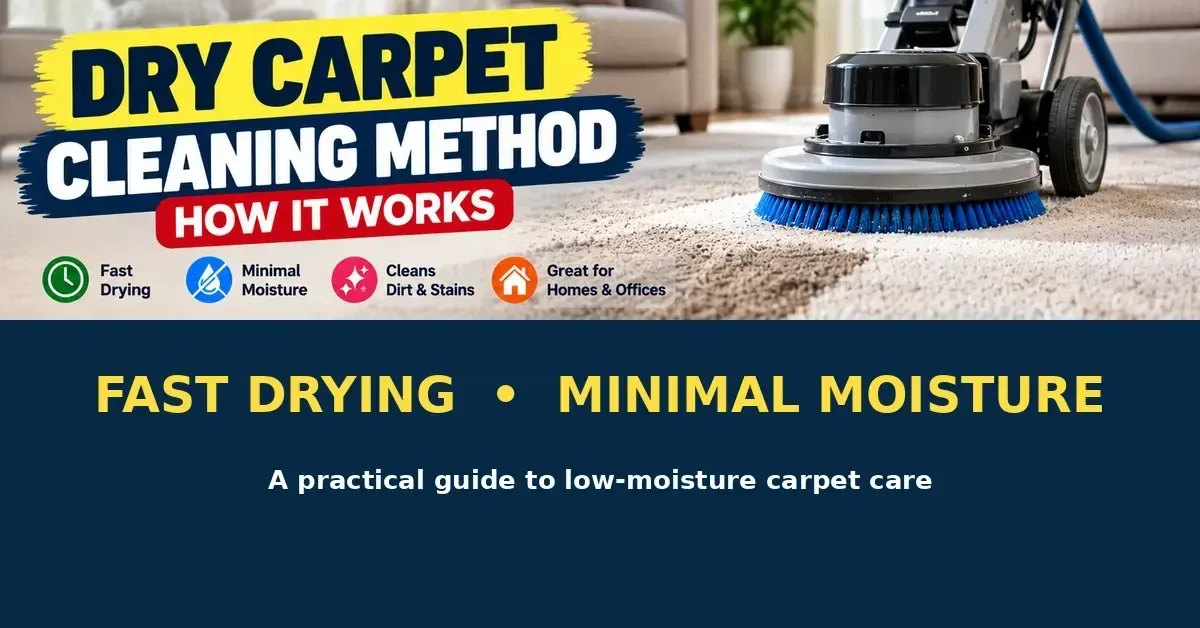
This article breaks down what dry carpet cleaning actually means, the different methods that fall under that name, and how the process compares to hot water extraction so you can pick the right one for your home.
Dry carpet cleaning uses minimal moisture, usually a powder, foam, or crystallizing solution, to break down dirt in carpet fibers without soaking the backing or pad. Most carpets are ready to walk on within an hour, making it a strong choice for busy households or commercial spaces that cannot afford long downtime.
What Is the Dry Carpet Cleaning Method?
The dry carpet cleaning method cleans carpet using a small amount of moisture instead of soaking the fibers with water. A cleaning agent, whether powder, foam, or liquid solution, works into the carpet, binds to dirt, and gets removed by brushing or vacuuming.
The term "dry" is a bit misleading. Most dry methods still involve some moisture, just far less than hot water extraction. The goal is to clean the surface and upper fiber layer without ever pushing water down into the backing or pad underneath.
This matters because moisture trapped in carpet backing is what leads to mold risk, odor, and delamination over time. Dry cleaning sidesteps that problem entirely by design, which is why it has become popular for commercial spaces that need carpet back in service fast.
What Are the Different Types of Dry Carpet Cleaning?
Dry carpet cleaning covers four distinct methods: dry compound, encapsulation, bonnet cleaning, and solvent or dry steam extraction. Each uses a different technique to lift dirt with minimal water.
Dry compound cleaning spreads an absorbent powder across the carpet, works it into the fibers, and vacuums it out along with the dirt it collected. Encapsulation uses a liquid polymer solution that crystallizes around soil particles as it dries, turning dirt into brittle residue that lifts out with normal vacuuming.
Bonnet cleaning relies on a rotating absorbent pad soaked lightly in cleaning solution to wipe soil off the carpet surface. Solvent extraction, sometimes marketed as dry steam cleaning, uses a chemical solvent instead of water to dissolve oily soil. Each method suits a different situation, which the sections below cover in more depth.
How Does Dry Compound Carpet Cleaning Work, Step by Step?
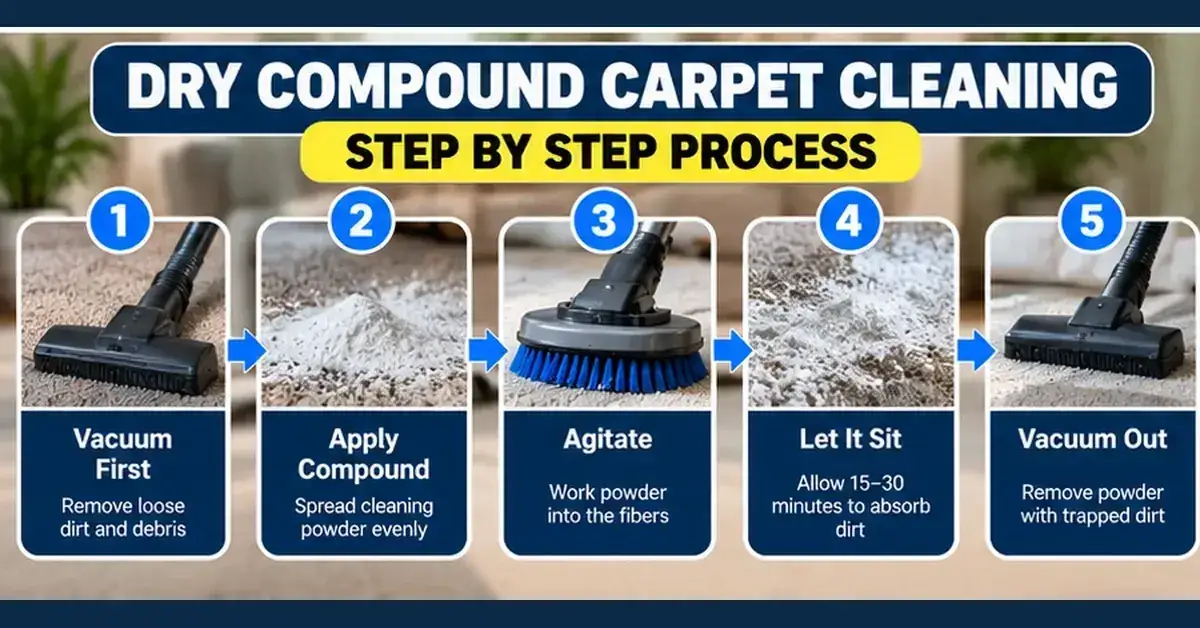
Dry compound carpet cleaning works by spreading an absorbent powder across the carpet, brushing it into the fibers, letting it sit, then vacuuming it out with the trapped dirt. The entire process typically takes under an hour for an average room.
First, the carpet gets vacuumed to remove loose surface debris. Next, the dry compound powder gets spread evenly and worked into the pile using a machine with rotating brushes, which pushes the powder down to where embedded dirt collects.
The powder needs dwell time, usually 15 to 30 minutes, to fully absorb oils and soil from the fibers. A final thorough vacuum pass removes the powder along with everything it picked up. No drying time is needed since there was never enough moisture to require it.
What Is Low Moisture Carpet Cleaning, and How Is It Different From Fully Dry Cleaning?
Low moisture carpet cleaning uses a small, controlled amount of liquid, while fully dry methods like dry compound use no liquid at all. Both fall under the "dry cleaning" umbrella, but they are not identical processes.
Encapsulation and bonnet cleaning count as low moisture methods because they apply a liquid solution, just far less than hot water extraction uses. Dry compound cleaning is the only method that uses zero liquid, relying entirely on powder and mechanical agitation.
This distinction matters when comparing products or services. A homeowner searching for carpet cleaning without water should look specifically for dry compound cleaning, since low moisture methods still introduce some liquid into the carpet, even if drying time stays short.
Dry Carpet Cleaning vs Hot Water Extraction: How Do You Choose?
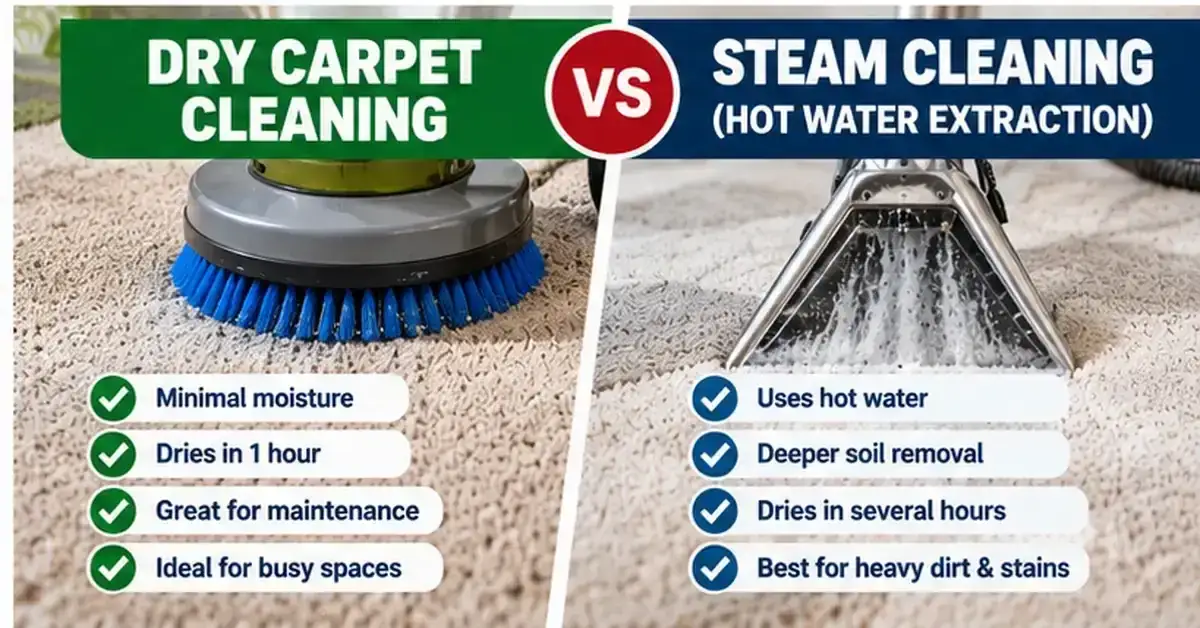
Dry carpet cleaning works best for light maintenance and fast turnaround, while hot water extraction handles deep, embedded soil that dry methods cannot fully reach. The right choice depends on how dirty the carpet actually is and how much downtime you can afford.
A family that vacuums regularly and wants a quick refresh between deeper cleans gets excellent results from dry cleaning, especially encapsulation. A household with pets, young kids, or carpet that has not been professionally cleaned in over a year usually needs the deeper soil removal that only hot water extraction under pressure can provide.
Think about an office that needs carpets cleaned over a weekend without shutting down Monday morning. Dry cleaning fits that schedule perfectly since there is no multi-hour drying window to plan around. A home with years of embedded grit in high traffic areas needs the flushing action hot water extraction provides instead.
For a broader look at drying time, warranty requirements, and yearly cost, see our full steam-versus-dry comparison.
Is Dry Carpet Cleaning a Deep Clean, or Just Maintenance?
Dry carpet cleaning works best as an interim maintenance method, not a full replacement for periodic deep cleaning. It keeps carpet looking fresh between deeper cleanings but does not reach soil trapped deep in the backing.
Dry methods clean the top and middle layers of carpet fiber effectively. They do not flush contamination out of the carpet backing the way hot water extraction does, since there is no water pressure or extraction step pulling soil out from the base of the fibers.
This distinction has real consequences for warranty coverage. Most carpet manufacturers, including Shaw and Mohawk, still require periodic hot water extraction every 12 to 18 months to keep a warranty valid, even in homes that rely on dry cleaning for regular upkeep. Skipping that requirement can void wear and stain coverage regardless of how often dry cleaning gets done.
What Are the Pros and Cons of Dry Carpet Cleaning?
Dry carpet cleaning offers fast turnaround and low mold risk, but it cannot match the deep soil removal power of hot water extraction. Weighing both sides helps you decide if it fits your specific situation.
On the plus side, dry cleaning gets carpet back in use almost immediately, which matters for busy households and commercial spaces alike. The minimal moisture also means little to no mold risk, since there is rarely enough water present to create a problem even in humid climates.
On the downside, dry methods struggle with heavy, deeply embedded soil and cannot flush contamination from the carpet backing. Some dry compound residue can remain in the carpet if vacuuming is rushed or incomplete, which over time can dull the carpet's appearance rather than restore it.
What Dry Carpet Cleaning Data Tells You About Indoor Air and Carpet Care
Data from cleaning industry standards and health organizations explains why the method you choose affects more than just how the carpet looks. These facts show the reasoning behind when dry cleaning makes sense and when it does not.
The IICRC S100 standard specifies performance outcomes rather than one required method, allowing technicians to choose hot water extraction, low moisture cleaning, or dry compound cleaning depending on the carpet and situation. Encapsulation cleaning uses up to 80 to 90 percent less water than hot water extraction and can return carpet to service in under an hour, compared to 6 to 24 hours for full extraction. The EPA notes that wet materials, including carpet, should dry within 24 to 48 hours to prevent mold growth, a risk dry and low moisture methods largely avoid by using far less water in the first place. Most manufacturer warranties, including Shaw and Mohawk, still require hot water extraction every 12 to 18 months even in homes that use dry cleaning regularly for maintenance.
Common Questions About Dry Carpet Cleaning, Answered
What is dry carpet shampoo, and is it the same as dry compound cleaning?
+
Dry carpet shampoo usually refers to the same powder product used in dry compound cleaning. Both terms describe an absorbent compound that gets worked into carpet fibers, left to dwell, then vacuumed out with the dirt it absorbed.
Does dry carpet cleaning really work as well as wet cleaning methods?
+
Dry cleaning works well for surface and mid-layer soil, but it does not match hot water extraction for deeply embedded dirt. It works best as regular maintenance between full deep cleans rather than a complete replacement for them.
How long does dry carpet cleaning take to dry?
+
Most dry carpet cleaning methods leave carpet ready to walk on within 30 minutes to an hour. This is one of the biggest reasons commercial spaces and busy households choose dry cleaning over hot water extraction.
Can dry carpet cleaning remove pet stains and odor?
+
Dry cleaning can handle light, surface level pet odor and fresh stains reasonably well. Deep set urine that has reached the carpet backing usually needs an enzyme treatment along with hot water extraction for a full fix.
Is dry carpet cleaning safe for all carpet types?
+
Dry cleaning is generally safe for most carpet types, including wool, since it avoids the temperature and moisture extremes that can damage delicate fibers. Always check with the manufacturer or a technician if the carpet has a specific care requirement.
How much does dry carpet cleaning cost?
+
Dry carpet cleaning typically runs slightly less than hot water extraction, often between 20 and 60 cents per square foot depending on the method and region. Encapsulation tends to cost less than dry compound cleaning in most markets.
Can I dry clean carpet myself at home?
+
Homeowners can dry clean carpet using retail dry compound powders and a rental machine with rotating brushes. Results depend heavily on proper dwell time and thorough vacuuming, so professional equipment still tends to outperform DIY kits.
Does dry carpet cleaning leave residue behind?
+
Properly done dry cleaning should not leave noticeable residue, since the vacuuming step is designed to remove all of the compound along with the dirt it absorbed. Residue usually means the vacuuming pass was rushed or incomplete.
How often should you use dry carpet cleaning?
+
Dry carpet cleaning works well every 3 to 6 months as a maintenance step between deeper cleans. High traffic homes with pets or kids may benefit from more frequent dry cleaning sessions to keep surface soil under control.
Is a homemade dry carpet cleaner as effective as professional products?
+
Homemade options like baking soda can freshen carpet and handle mild odor, but they lack the soil binding chemistry professional dry compounds use. For real cleaning power, a purpose built dry compound product performs significantly better.
The real value of the dry carpet cleaning method is speed without sacrificing the health of your carpet backing. It will not replace a full deep clean forever, but it fills the gap between deep cleanings better than almost any other option available. Pay attention to which specific method a company uses, since dry compound, encapsulation, and bonnet cleaning all perform differently depending on your carpet and situation.
Need a carpet cleaning company you can trust? We handle residential and commercial carpet cleaning, rug cleaning, upholstery cleaning, and pet stain and odor removal —our team is ready to help.

Michael Sanders
Michael Sanders is a home care and cleaning industry writer covering carpet maintenance, flooring care, and household cleaning practices across the United States. His work focuses on practical, research-backed guidance — from stain and odor removal to deep extraction methods and indoor allergen prevention. Michael collaborates with cleaning professionals to ensure accuracy, and his writing reflects a genuine interest in helping homeowners make informed decisions about caring for their homes.