

Blog · Cleaning Methods
Bonnet Carpet Cleaning: How It Works and Its Limits
Bonnet carpet cleaning gets described two completely different ways depending on who you ask. Some cleaning companies call it fast, affordable, and effective. Others call it surface-only cleaning that can actually harm your carpet. Both camps are usually selling something, which makes the truth hard to find.
Updated October 22, 202610 min read
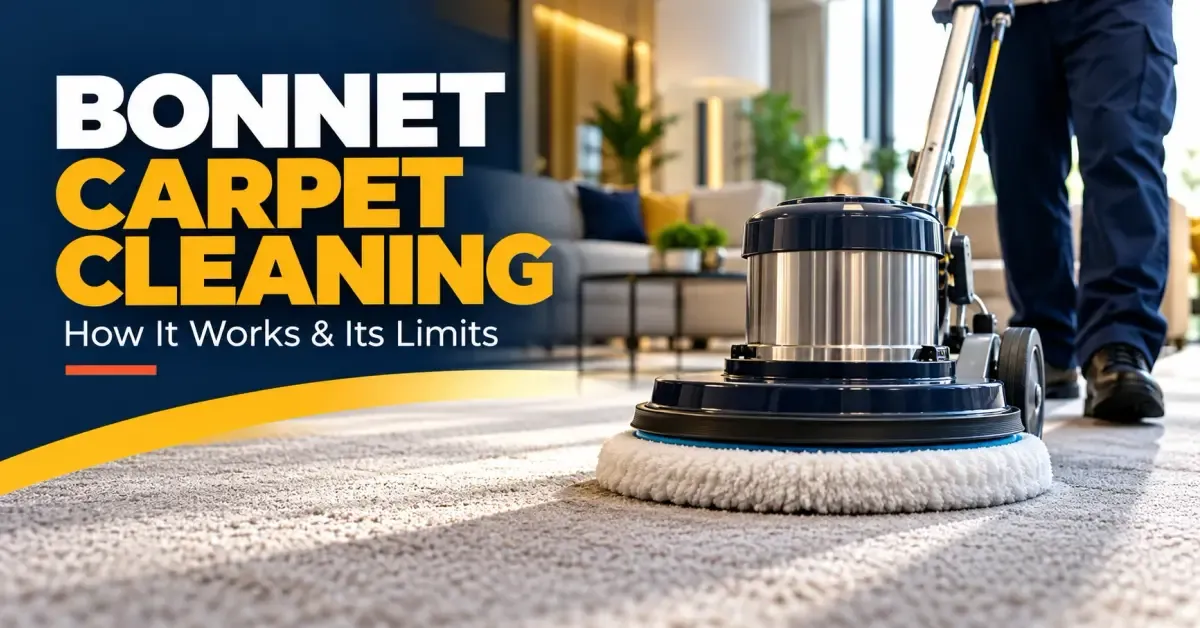
This article explains what bonnet cleaning actually is, how the process works, why it only cleans the upper portion of the carpet, when it can cause damage, and why hotels still use it everywhere despite its limits. By the end, you will know exactly when this method makes sense and when it does not.
Bonnet carpet cleaning uses a rotary floor machine with a spinning absorbent pad to lift surface soil from carpet after a cleaning solution is sprayed on. It dries in about 30 minutes and costs less than any other professional method, but it only cleans the top third of the carpet pile.
What Is Bonnet Carpet Cleaning?
Bonnet carpet cleaning is a low moisture method where a rotary machine spins an absorbent pad across pre-sprayed carpet, transferring surface soil from the fibers onto the pad. The dirty pad gets flipped or swapped as it loads up with soil.
The method borrows its equipment from hard floor care. The same rotary buffer that polishes tile gets fitted with a cotton or microfiber pad, called a bonnet, and run across the carpet. This makes it the cheapest professional method to set up and among the fastest to perform.
Bonnet cleaning belongs to the same low moisture family as encapsulation, but the two work differently. Encapsulation traps soil in crystals for later vacuuming. Bonnet cleaning physically wipes soil onto a pad in real time, more like mopping a floor than deep cleaning it.
How Does the Bonnet Cleaning Method Work on Carpet, Step by Step?
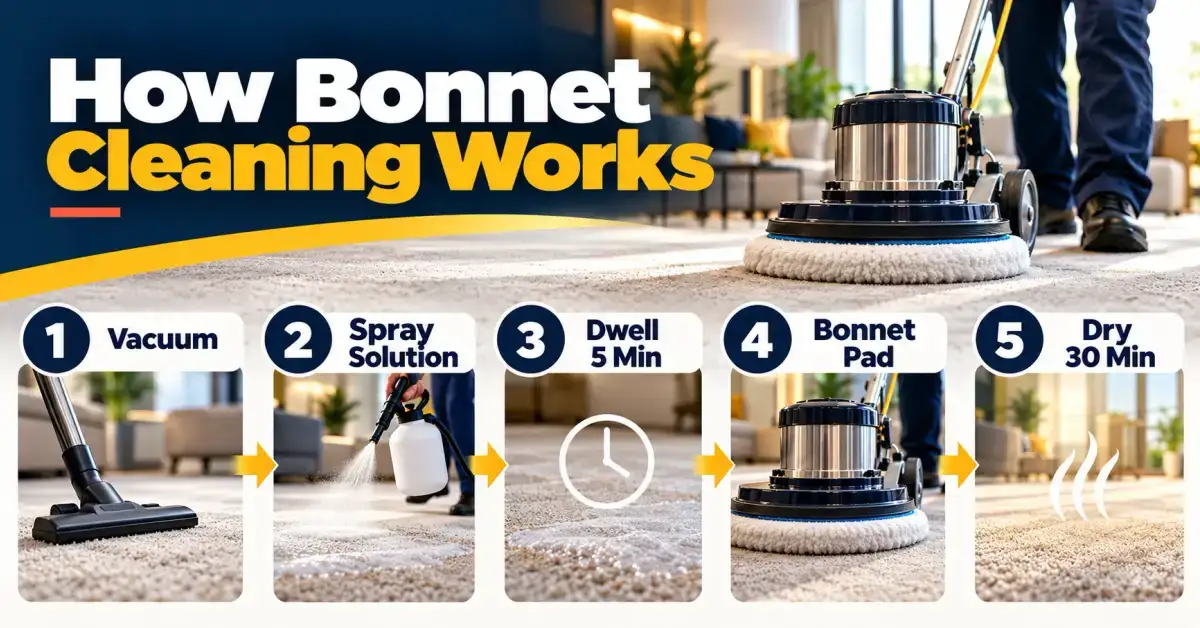
The bonnet cleaning method works in five steps: vacuum the carpet, spray a diluted cleaning solution, let it dwell, run the rotary machine with a damp pad, and let the carpet dry. Active cleaning covers large areas fast, which is a big part of its appeal.
The pre-vacuum removes loose dry soil first. Then a pump sprayer applies the solution across a work area, typically covering 600 to 1,000 square feet per diluted gallon according to Hillyard industry documentation. A dwell time of about five minutes lets the chemistry loosen surface grime.
The machine pass comes next. The spinning pad absorbs the loosened soil as it glides across the fibers. Technicians flip the pad once one side loads up with dirt, then switch to a fresh pad entirely. A dirty pad stops cleaning and starts redistributing soil, so pad management separates good bonnet work from bad.
Why Rotary Bonnet Carpet Cleaning Only Reaches the Top Third of the Pile
Rotary bonnet carpet cleaning only cleans the top third of the pile because a pad can only absorb what it physically touches. The pad glides across the fiber tips and never reaches the soil packed at the base.
Hot water extraction flushes the full pile depth with water and pulls contamination out with vacuum suction. A bonnet pad has no flushing action and no suction. Whatever sits below the surface stays there, which is why bonnet cleaned carpet can look clean while holding years of grit at the root level.
What Are the Real Pros and Cons of Bonnet Cleaning?
Bonnet cleaning trades depth for speed, cost, and fast drying. Neither the companies attacking it nor the ones defending it give the full scorecard, so here it is.
The genuine advantages: carpet dries in about 30 minutes, among the fastest of any wet method according to industry cleaning standards. Equipment costs stay low, jobs move fast, and the price per square foot beats every other professional option. For surface appearance, results are immediate and visible.
The genuine drawbacks: soil below the surface never gets touched. Detergent residue stays in the fibers since there is no rinse or extraction step, which can speed up resoiling. And the spinning pad creates friction that carries real risks for certain carpet types, which the next section covers.
Can Bonnet Cleaning Damage Carpet?
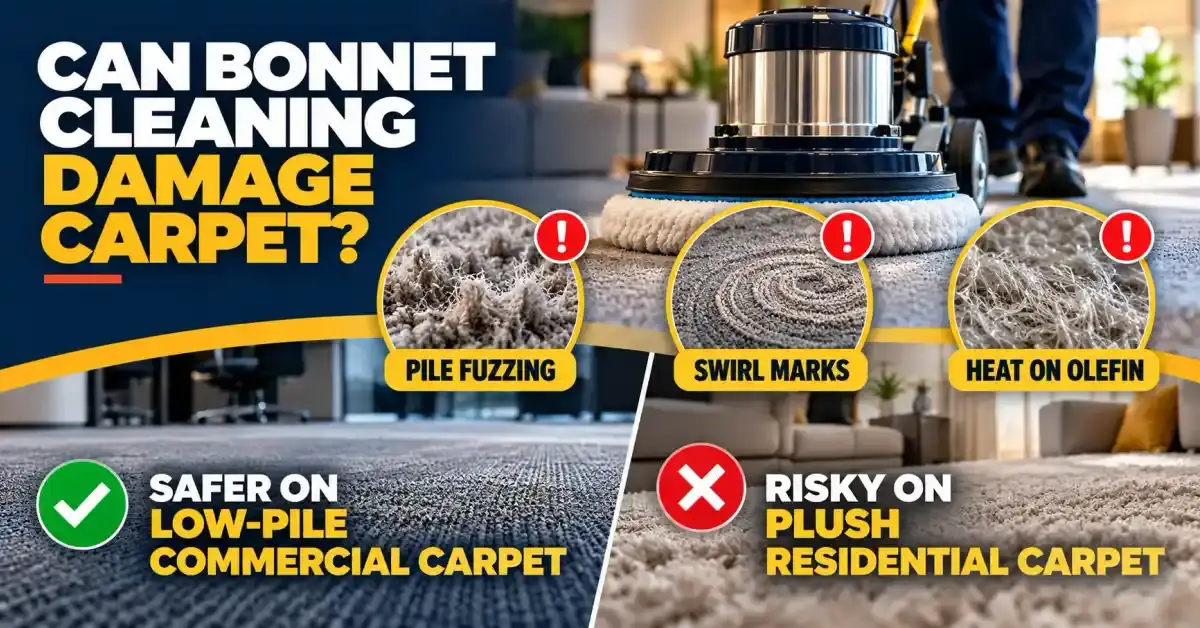
Yes, bonnet cleaning can damage some carpet types, which is a risk almost no company explains upfront. The spinning pad creates friction, and friction causes three specific problems on the wrong carpet.
First, pile distortion. Rotary pads spinning at 175 to 300 RPM, per industry equipment standards, can untwist and fuzz the tips of cut pile carpet, leaving a worn, blurry look that does not recover. Second, swirl marks. An overly aggressive pass or a dry pad can leave visible circular patterns. Third, heat. Friction on olefin fiber can actually distort it, since olefin has a low melting point.
This is why some carpet manufacturers restrict or warn against rotary pad cleaning on residential cut pile. Picture a homeowner who hires the cheapest quote for their plush bedroom carpet and ends up with fuzzy, swirled traffic lanes that no future cleaning can fix. On top of that, brands including Shaw and Mohawk require hot water extraction every 12 to 18 months for warranty coverage, so bonnet cleaning alone leaves a warranty exposed.
Why Do Hotels and Offices Still Use Bonnet Cleaning Everywhere?
Hotels and offices still use bonnet cleaning because their carpet and their schedules are built for it. The method's limits matter far less in commercial settings than they do in homes.
Commercial carpet is usually low pile, glue-down, tightly looped construction. There is no thick cut pile to distort, no deep cushion holding contamination, and the tight loops tolerate rotary friction well. The soil that matters in a hotel corridor is surface soil, exactly what a bonnet removes.
The schedule matters just as much. A hotel cannot close a hallway for hours while carpet dries, and an office cannot shut down a floor midweek. Bonnet cleaning runs during business hours, and the carpet is walkable in half an hour. Think of a hotel keeping 10 floors of corridors presentable year round. Nightly vacuuming plus regular bonnet passes handles appearance, and periodic extraction handles the deep work.
Is Bonnet Cleaning Ever Right for Your Home?
Bonnet cleaning fits a home only in narrow situations: durable low pile carpet that needs a fast cosmetic refresh between real deep cleans. For most residential carpet, other methods serve better.
If a finished basement has tight loop carpet and guests arriving this weekend, a bonnet pass delivers a fast visible improvement at low cost. That is the honest use case. A homeowner with plush or frieze carpet in living areas should skip it entirely, since the distortion risk outweighs the savings.
The warranty math seals the decision. Since manufacturers require periodic hot water extraction anyway, bonnet cleaning in a home can only ever be a supplement, never the plan. Most homeowners get better supplemental value from encapsulation, which cleans slightly deeper and carries no rotary friction risk on cut pile.
For the broader choice beyond bonnet cleaning, compare deep and low-moisture cleaning across common household situations.
What Bonnet Cleaning Facts Reveal About Surface vs Deep Cleaning
Industry standards data draws a clear line between appearance cleaning and restorative cleaning, and bonnet cleaning sits firmly on the appearance side. These facts show where that line runs.
The IICRC S100 standard classifies bonnet cleaning as an interim maintenance method, not a restorative deep cleaning process. Rotary machines spin bonnet pads at roughly 175 to 300 RPM according to industry equipment standards, generating the friction that transfers soil but also creates distortion risk on cut pile. Drying takes about 30 minutes per industry cleaning data, the fastest turnaround of the wet methods. Pre-spray dilution covers 600 to 1,000 square feet per gallon per Hillyard documentation, a fraction of the water extraction uses. And manufacturers including Shaw and Mohawk require hot water extraction every 12 to 18 months for warranty coverage, confirming that no interim method replaces the deep clean.
Common Questions About Bonnet Cleaning, Answered
How long does carpet take to dry after bonnet cleaning?
+
Carpet dries in about 30 minutes after bonnet cleaning, since very little moisture goes into the fibers. This makes it the fastest drying wet method available.
What are bonnet pads made of, and does the material matter?
+
Bonnet pads come in cotton, microfiber, and synthetic blends, and the material genuinely matters. Cotton absorbs the most soil, while microfiber grabs finer particles and cleans slightly more aggressively.
How often should bonnet pads be changed during cleaning?
+
A pad should be flipped or changed as soon as one side shows heavy soil loading, often every 100 to 200 square feet in dirty areas. A saturated pad stops absorbing and starts smearing soil around.
Is bonnet cleaning the same as encapsulation cleaning?
+
No, bonnet cleaning wipes soil onto an absorbent pad in real time, while encapsulation traps soil in crystals that get vacuumed out later. Some cleaners combine both by using encapsulation chemistry with a bonnet machine.
Does bonnet cleaning remove stains?
+
Bonnet cleaning removes light surface spots but not true stains that have penetrated the fiber. Deep staining needs targeted spot treatment or hot water extraction.
How much does bonnet carpet cleaning cost?
+
Bonnet cleaning typically runs 8 to 20 cents per square foot, the lowest of any professional method. The low price reflects fast job times and minimal equipment, not deep results.
Can you bonnet clean carpet yourself with a home buffer?
+
Technically yes, but it is risky without training. Wrong pad choice, too much speed, or a dry pad can distort carpet fibers permanently, so DIY bonnet work is not recommended on cut pile.
Does bonnet cleaning leave residue in carpet?
+
Yes, some detergent residue stays behind since there is no rinse or extraction step. Choosing low residue solutions and periodic extraction cleanings keeps buildup under control.
How often can carpet be bonnet cleaned safely?
+
Commercial low pile carpet tolerates monthly or even weekly bonnet cleaning. Residential cut pile should see it rarely, if ever, because repeated rotary friction accelerates fiber wear.
What is the difference between bonnet cleaning and carpet shampooing?
+
Shampooing scrubs a foaming detergent into the pile with brushes, while bonnet cleaning wipes surface soil onto an absorbent pad. Shampooing agitates deeper, and bonnet cleaning dries much faster.
The smartest way to judge bonnet carpet cleaning is by the carpet it was built for, not the marketing around it. On commercial low pile, it is a legitimate workhorse that keeps busy buildings presentable at unbeatable speed and cost. On residential cut pile, the same spinning pad becomes a liability. Ask any company quoting you this method one question: what carpet construction do you think I have? The quality of that answer tells you whether they should touch your floors.
Need a carpet cleaning company you can trust? We handle residential and commercial carpet cleaning, rug cleaning, upholstery cleaning, and pet stain and odor removal —our team is ready to help.

Michael Sanders
Michael Sanders is a home care and cleaning industry writer covering carpet maintenance, flooring care, and household cleaning practices across the United States. His work focuses on practical, research-backed guidance — from stain and odor removal to deep extraction methods and indoor allergen prevention. Michael collaborates with cleaning professionals to ensure accuracy, and his writing reflects a genuine interest in helping homeowners make informed decisions about caring for their homes.