
Blog · Carpet Cleaning Guide
How to Get Mildew Smell Out of Carpet, Step by Step
A musty smell coming from your carpet almost always means moisture got trapped somewhere it shouldn't have, whether from a spill, a leak, high humidity, or carpet that didn't dry fully after cleaning. If you're searching more broadly for how to get smell out of carpet, the short answer is the same: dry it fast, find the real cause, and treat it accordingly.
Published November 13, 202613 min read
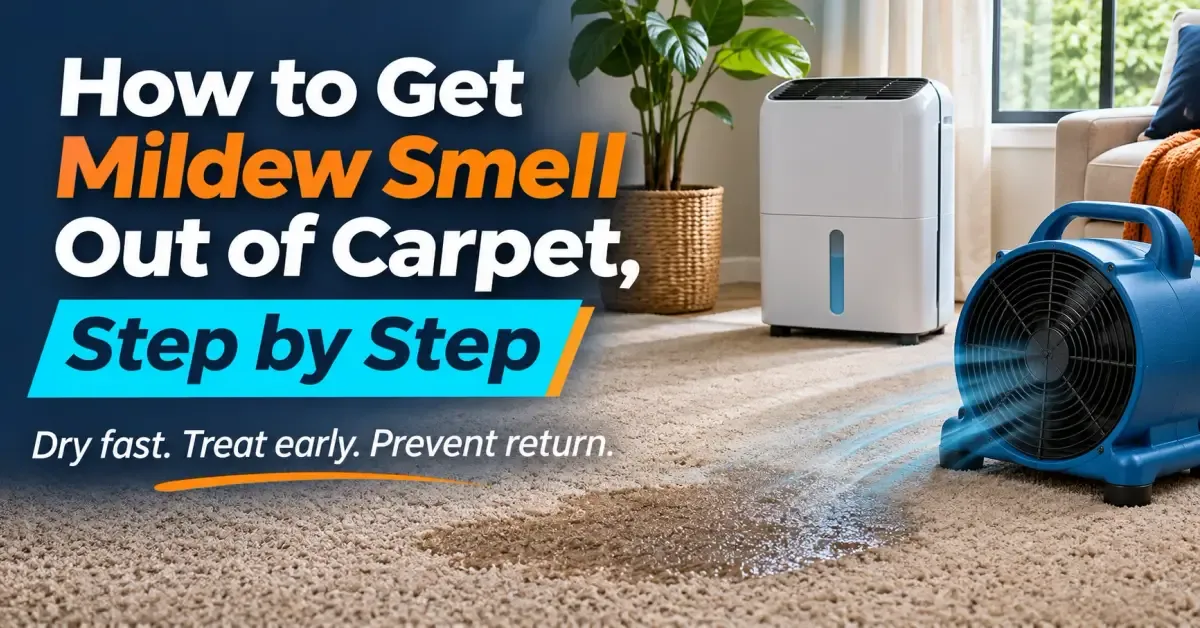
Getting mildew smell out of carpet for good comes down to three things. You need to dry the carpet and padding completely within roughly 24 to 48 hours, figure out whether you're dealing with simple dampness or something deeper, and treat the odor in a way that actually matches the cause. This guide covers how to tell what you're dealing with, the step-by-step method, why carpet sometimes smells worse right after cleaning, and the signs that mean cleaning alone won't be enough.
Is It Mildew, Mold, or Just a Damp Carpet?
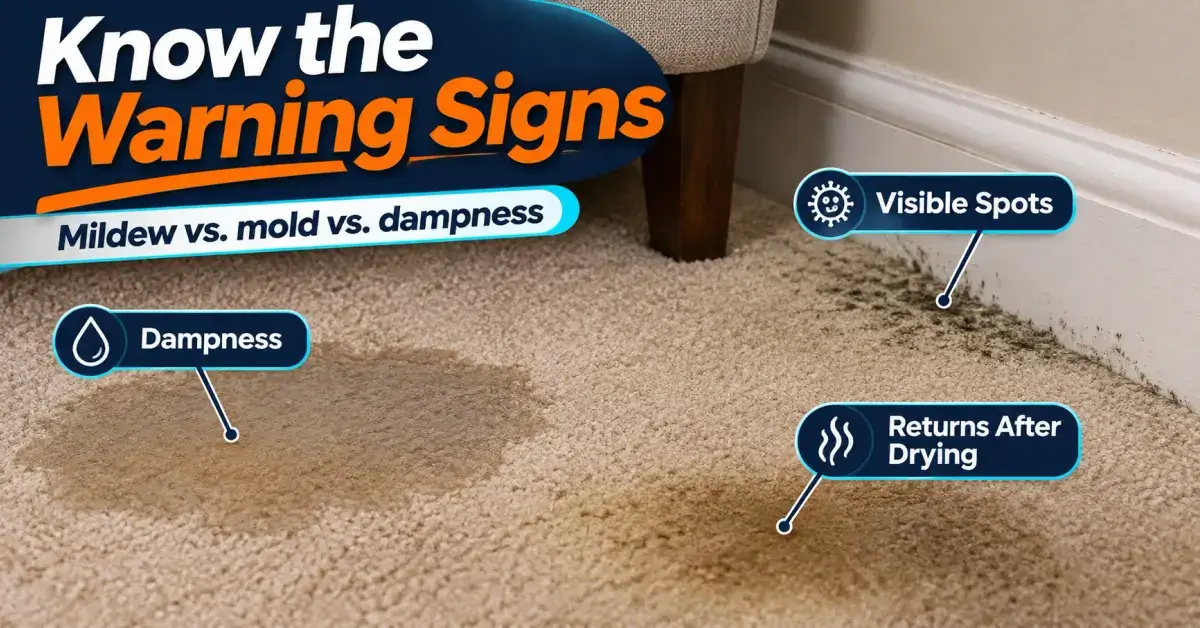
Not every musty carpet smell means the same thing. A flat, earthy odor with no visible spots usually points to mildew or plain dampness sitting in the fibers or backing. Visible black, white, gray, or green spots suggest mold has started growing, which calls for more caution than a quick vacuum and a box of baking soda. As a practical rule of thumb rather than a strict scientific definition, mildew tends to describe a surface-level, early-stage growth, while mold covers a broader range of fungi that can work deeper into carpet and padding. If the odor returns after the carpet has fully dried, or the carpet was soaked rather than just lightly dampened, treat it as a more serious case.
Key Takeaway: A musty smell with no spots is often just dampness or early mildew. Visible discoloration, or a smell that returns after drying, points to mold.
| Sign | Likely Cause | What to Do |
|---|---|---|
| Flat musty smell, no visible spots | Trapped moisture or surface mildew | Dry fully, vacuum, treat with baking soda or vinegar |
| Visible black, white, gray, or green spots | Mold growth | Wear PPE, limit DIY to small areas, consider a professional |
| Smell returns after thorough drying | Moisture reached the padding or backing | Check the padding, consider professional extraction |
| Carpet was soaked or flooded | Deep saturation, possibly contaminated water | Call a professional; porous padding often needs replacing |
If you're cleaning anything beyond a small, surface-level spot yourself, wear an N95 respirator, gloves, and non-vented goggles. It's a basic precaution, not a sign that every musty carpet is dangerous.
The 24- to 48-Hour Rule That Decides Everything
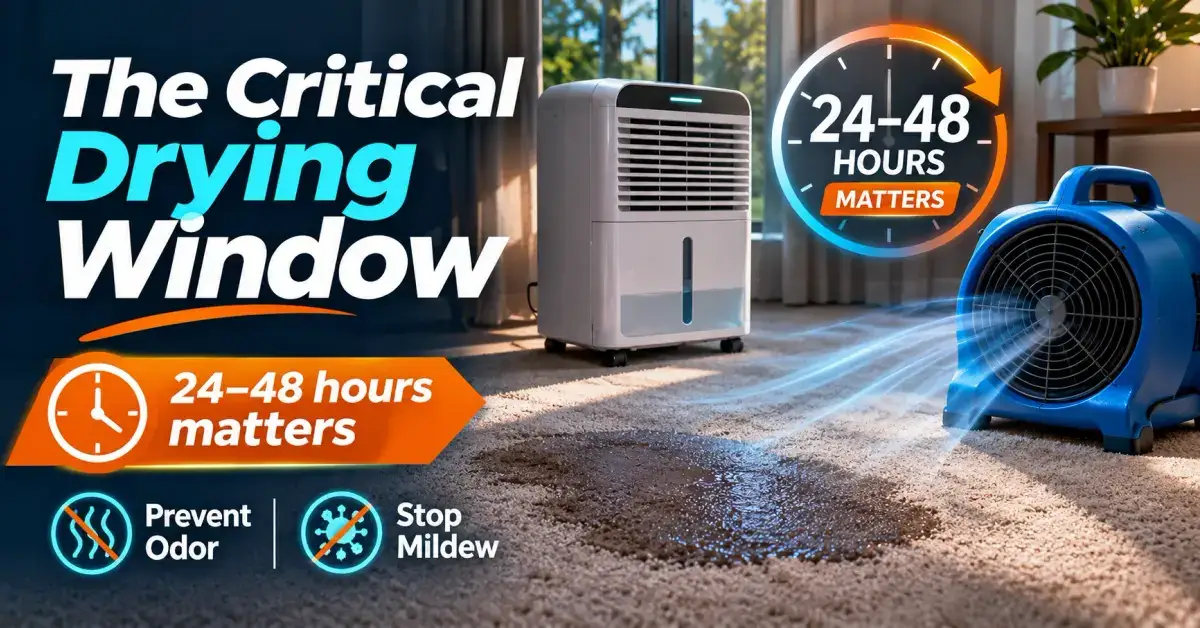
Carpet and the padding underneath it need to dry out within about 24 to 48 hours of getting wet. Past that window, conditions become favorable for mold and mildew to establish themselves, according to public health guidance on indoor moisture control. This single number is the reason some musty-carpet situations clear up in a day with a fan and a dehumidifier, while others turn into a padding-replacement job. It also matters what kind of water caused the problem. Clean water, like a spilled drink or a supply-line leak caught quickly, is far easier to fully dry and salvage than water from a sewage backup, flooding, or anything that sat for days before anyone noticed.
Key Takeaway: Wet carpet and padding need to dry within about 24 to 48 hours. Clean water is easier to salvage than water from flooding or sewage.
How to Get Mildew Smell Out of Carpet, Step by Step
Once you've identified the moisture and ruled out a deep flooding situation, the actual removal process is short and doesn't require anything exotic.
Check for Moisture First
Before treating anything, confirm how wet the carpet still is below the surface. Press a folded paper towel or the flat of your palm firmly into the area for about 30 seconds. If it comes away damp or cool, the carpet and likely the padding underneath are still holding moisture, even if the top feels dry to a quick touch. Skipping this check is one of the most common reasons a "finished" cleaning job still smells musty a day or two later.
Dry the Carpet Completely
Open windows if humidity outside is lower than indoors, run fans aimed across the wet area, and use a dehumidifier if you have one. For anything beyond a small spill, a wet-dry vacuum to pull up standing moisture first will cut drying time significantly. Keep air moving continuously rather than for just an hour or two; this is the step that decides whether you're inside or outside the 24- to 48-hour window.
Vacuum Before You Treat Anything
Once the carpet is dry, vacuum thoroughly with a HEPA-filter vacuum if you have one, going over the area slowly in a few directions. This pulls out loose debris and any dried mildew residue before you apply any cleaning solution, so you're not just pushing dirt deeper into the fibers.
Treat the Odor: Baking Soda, Vinegar or Enzyme Cleaner
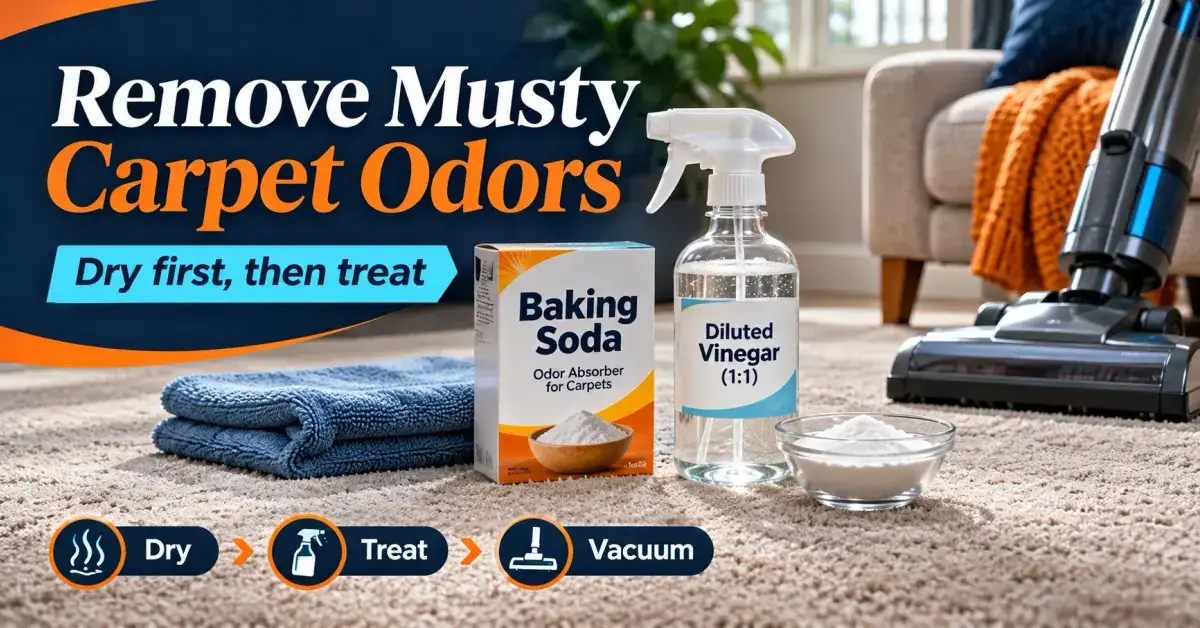
For light, surface-level odor, sprinkle baking soda generously over the area, let it sit for several hours or overnight, then vacuum it up. For a bit more cleaning power, mist (don't soak) a solution of roughly one part white vinegar to two parts warm water over the fibers; vinegar's acidity is commonly cited as effective against many common mold and mildew species, though it isn't a guaranteed fix for deeper growth. Let it air dry fully afterward. If the smell is tied to a pet accident rather than plain water, an enzyme-based cleaner formulated for pet urine will usually outperform vinegar or baking soda, since it breaks down the organic matter causing the odor instead of just masking it. If you want to try hydrogen peroxide on a stubborn spot, test it on a hidden patch of carpet first, since it can lighten some dyes, and keep the amount small and localized rather than soaking the area.
Key Takeaway: Baking soda handles light odor, vinegar adds more cleaning power, and enzyme cleaners work best on pet-urine-driven smells. Spot-test anything new before applying it broadly.
Why Does Carpet Smell Worse After Cleaning or Shampooing?
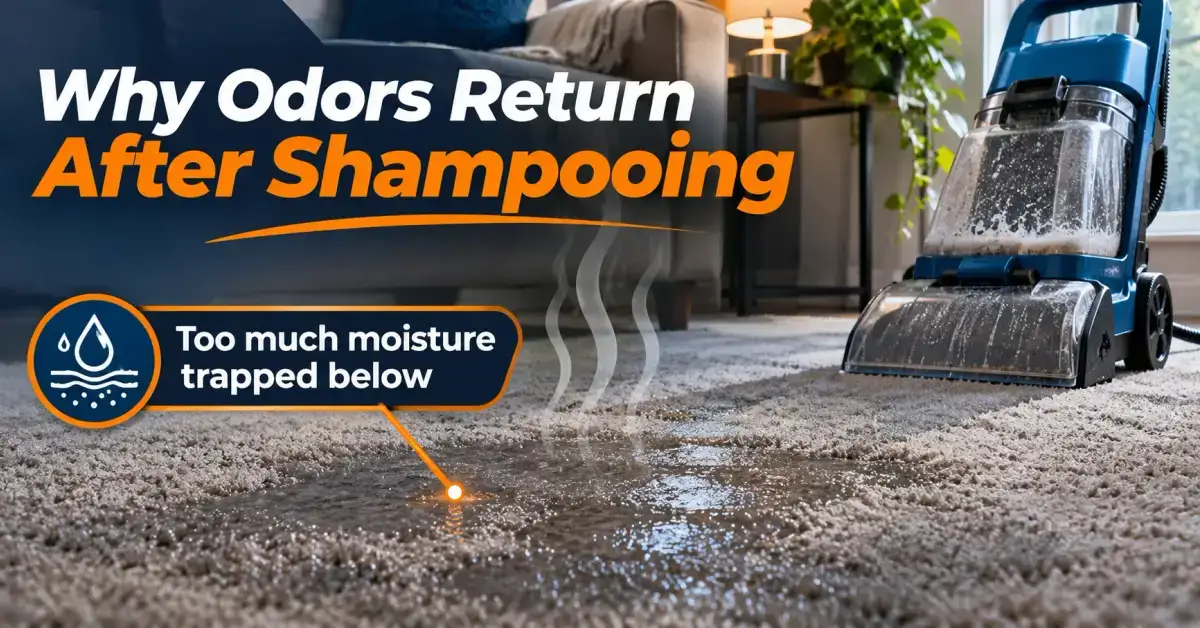
It's a common and frustrating pattern: you shampoo the carpet to get rid of a smell, and a day later it smells worse, sometimes described as a "wet dog" odor. The usual explanation is straightforward. Cleaning adds a significant amount of water to the carpet and padding, and if that moisture doesn't fully evaporate within roughly the same 24- to 48-hour window as any other spill, the smell comes back stronger than before rather than fading. Rental carpet-cleaning machines are a frequent culprit, since they can oversaturate the carpet more than professional equipment does, and leftover detergent residue left in the fibers can also attract dirt and trap moisture against the backing. If the carpet had an old pet-urine stain before you cleaned it, shampooing can sometimes reactivate that smell rather than create a new one, which is why "I shampooed my carpet and now it smells" and "why does my carpet smell worse after shampooing" are both such common questions.
Key Takeaway: Shampooing adds moisture; if it doesn't dry within 24 to 48 hours, the smell returns stronger. Old pet odors can also resurface after cleaning.
Check the Padding Before You Celebrate
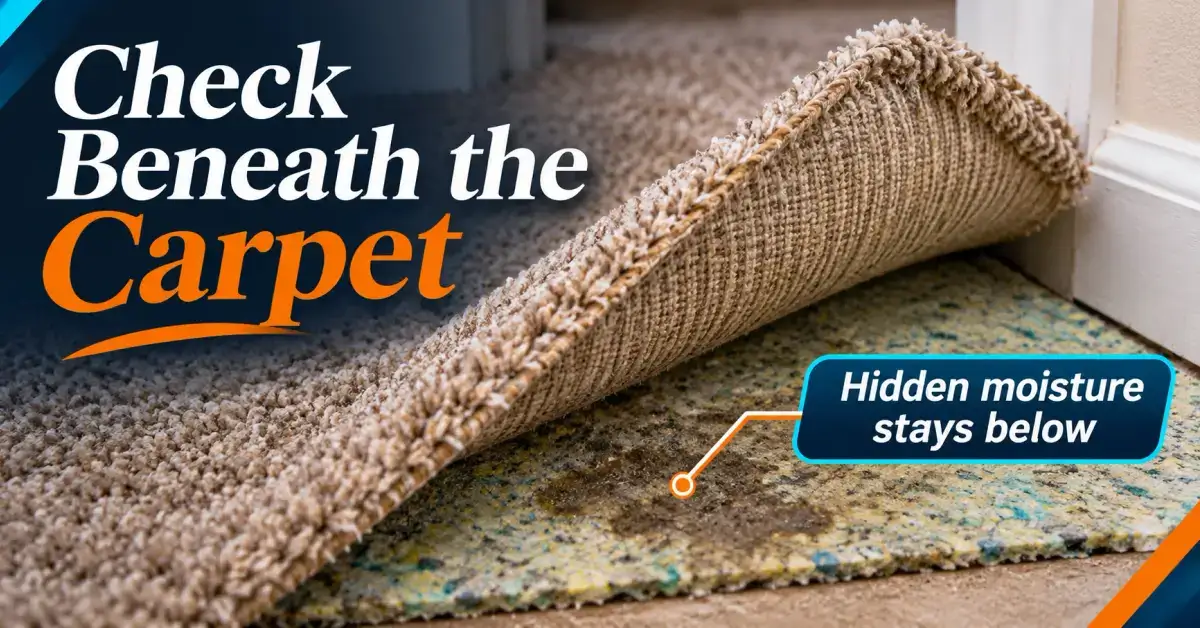
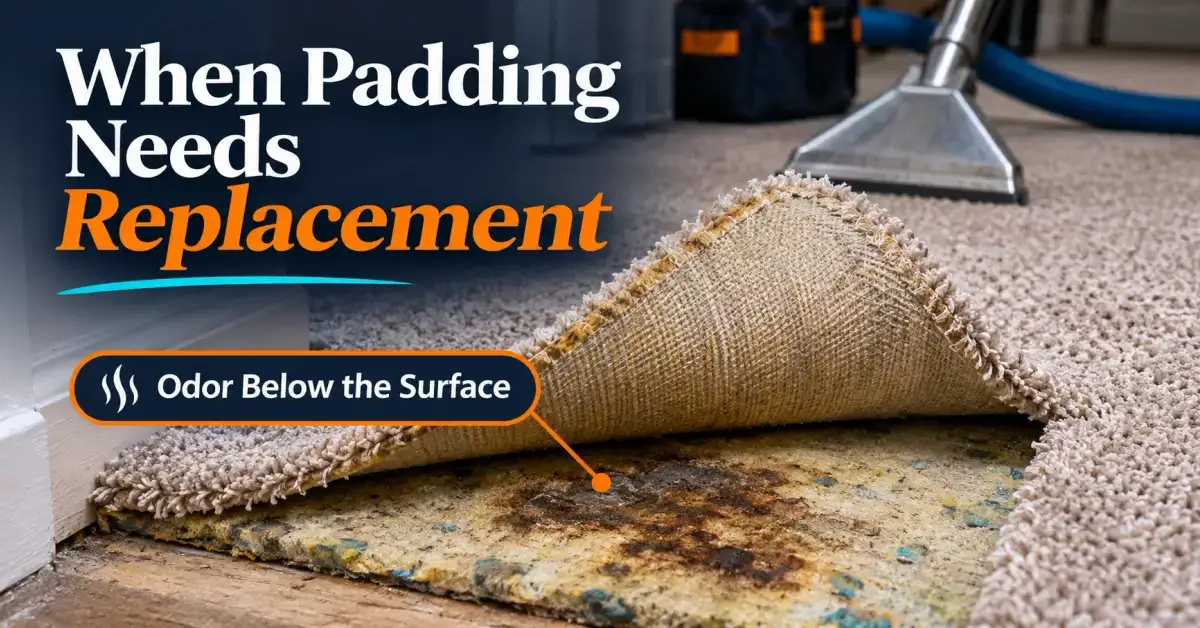
A carpet that looks and smells fine on the surface can still have a problem underneath. Carpet padding acts like a sponge: it's often where moisture settles and lingers long after the visible carpet fibers feel dry. To check it, pick a hidden spot such as a closet corner. Use a utility knife to cut a small slit in the carpet, peel it back a few inches, and look and smell for staining, dampness, or a musty odor at the backing. If the padding is discolored, damp, or clearly the source of the smell, cleaning the carpet surface again won't fix it. That section of padding, and sometimes the carpet above it, needs to be cut out and replaced rather than treated.
Key Takeaway: Cut a small hidden slit to check if the padding underneath is still damp, stained, or smelly. If it is, that section needs replacing, not just more cleaning.
Mildew Smell in Car Carpets, Pet Messes and Basements
The same basic principles apply to a few common variations on this problem, with a couple of adjustments.
Car Carpet
A car's small, enclosed space makes drying harder, so park with doors open in a dry, shaded spot and point a fan or your car's own defrost setting at the wet area. Baking soda left overnight works well in this confined space, and a portable dehumidifier made for vehicles can speed things along if the problem keeps recurring.
Pet Accidents and "Wet Dog" Smell
If the smell shows up after a pet accident, or that familiar "wet dog" odor keeps returning, an enzyme cleaner matched to pet stains is usually more effective than vinegar or baking soda alone, since it targets the organic compounds urine leaves behind rather than just covering the smell.
Basements and Other High-Humidity Rooms
Basement carpet often smells musty simply because the room itself runs humid year-round, not because of a one-time spill. A dehumidifier running consistently, combined with the same drying and treatment steps above, addresses the ongoing cause rather than just the current smell.
What Doesn't Actually Work
A few popular carpet-odor tips circulate widely but don't hold up well.
| Claim | Why It Falls Short |
|---|---|
| Vodka kills odor-causing bacteria on contact | No real evidence supports this; it's an unproven home remedy |
| A halved onion in the room “draws out” musty air | Anecdotal with no supporting evidence |
| Bleach on carpet removes mildew smell | Can discolor or damage fibers, and generally can't reach mold trapped in the backing or padding |
| Air freshener or scented powder fixes the smell | Masks odor temporarily without addressing trapped moisture or growth |
If a method sounds too easy for a problem caused by trapped moisture, it's worth being skeptical of it.
When to Call a Professional or Replace the Carpet
Some situations are genuinely beyond a DIY fix. Call a professional, or plan on replacing the carpet or padding, if any of the following apply: the odor returns quickly even after you've thoroughly dried and treated the area, you find visible discoloration on the padding itself, the carpet was soaked by contaminated water such as a sewage backup, or the musty smell persists after two full dry-and-treat cycles. Many homeowners choose professional steam cleaning once a musty problem has lingered, since DIY methods often aren't enough on their own at that point. For persistent cases, some professionals also use EPA-registered antimicrobial sprays or commercial-grade odor neutralizers rather than household products, though no single product is a guaranteed fix. According to the EPA's own guidance on mold cleanup, porous materials like carpet and padding may have to be thrown away once mold has taken hold, since mold can grow into the small spaces and crevices of porous material in a way that's difficult or impossible to fully remove.
Key Takeaway: If odor keeps returning, the padding is discolored, or the water was contaminated, cleaning likely won't be enough. The EPA notes porous carpet with real mold growth may need to be discarded.
How to Keep Mildew Smell From Coming Back
Prevention is mostly about controlling moisture before it becomes a problem. Keep indoor humidity below roughly 50 to 60 percent, ideally with a dehumidifier in consistently damp rooms like basements. Blot spills immediately rather than letting them sit, and avoid walking wet shoes or boots across carpeted areas.
If you have a choice when replacing carpet in a moisture-prone room, synthetic fibers like nylon or polypropylene resist mildew better than wool. Scheduling professional cleaning every 12 to 18 months, rather than only when a smell shows up, also helps catch problems early. Staying ahead of moisture, not masking odor after the fact, is the real way to make carpet smell good long-term.
Mildew Smell in Carpet FAQs
Will damp carpet smell go away on its own?
+
No. A damp carpet smell typically doesn't resolve on its own and tends to get worse the longer moisture sits. The smell usually goes away once the carpet and padding are fully dried and the area has been properly cleaned.
Does vinegar actually get rid of mildew smell in carpet?
+
Vinegar can help with light, surface-level odor, since its acidity is commonly cited as effective against many common mold and mildew species. It works best as part of a full process that includes drying the carpet completely, not as a stand-alone fix for deeper growth.
Can I use bleach on carpet to remove mildew smell?
+
It's generally not recommended. Bleach can discolor or weaken carpet fibers, and it typically can't reach mold or mildew that's taken hold in the padding or backing beneath the surface.
How long does it take to get mildew smell out of carpet?
+
For light, surface-level cases, the smell can clear up within a few hours to a couple of days once the carpet is fully dry and treated. Deeper cases involving the padding may take longer, or may need professional extraction or replacement instead.
Conclusion: How to Get Mildew Smell Out of Carpet for Good
Getting mildew smell out of carpet for good really comes down to speed and accuracy: dry the area within that 24- to 48-hour window, figure out honestly whether you're dealing with light dampness or something that's reached the padding, and treat it with the method that actually matches the cause. When DIY steps don't hold, or the water involved wasn't clean, replacing the padding or carpet is often the more practical answer than repeated rounds of cleaning.
Need a carpet cleaning company you can trust? We handle residential and commercial carpet cleaning, rug cleaning, upholstery cleaning, and pet stain and odor removal —our team is ready to help.

Michael Sanders
Michael Sanders is a home care and cleaning industry writer covering carpet maintenance, flooring care, and household cleaning practices across the United States. His work focuses on practical, research-backed guidance — from stain and odor removal to deep extraction methods and indoor allergen prevention. Michael collaborates with cleaning professionals to ensure accuracy, and his writing reflects a genuine interest in helping homeowners make informed decisions about caring for their homes.