
Blog · Stain Removal Guide
How to Remove Pet Urine From Carpet: Full Guide
If you want to know how to remove pet urine from carpet, the real challenge isn't the stain, it's the smell that keeps coming back even after the spot looks clean. Blotting alone rarely finishes the job, and the advice online contradicts itself. Vinegar, baking soda, and steam cleaners all get recommended by someone, and not all of it holds up.
Published October 25, 202610 min read
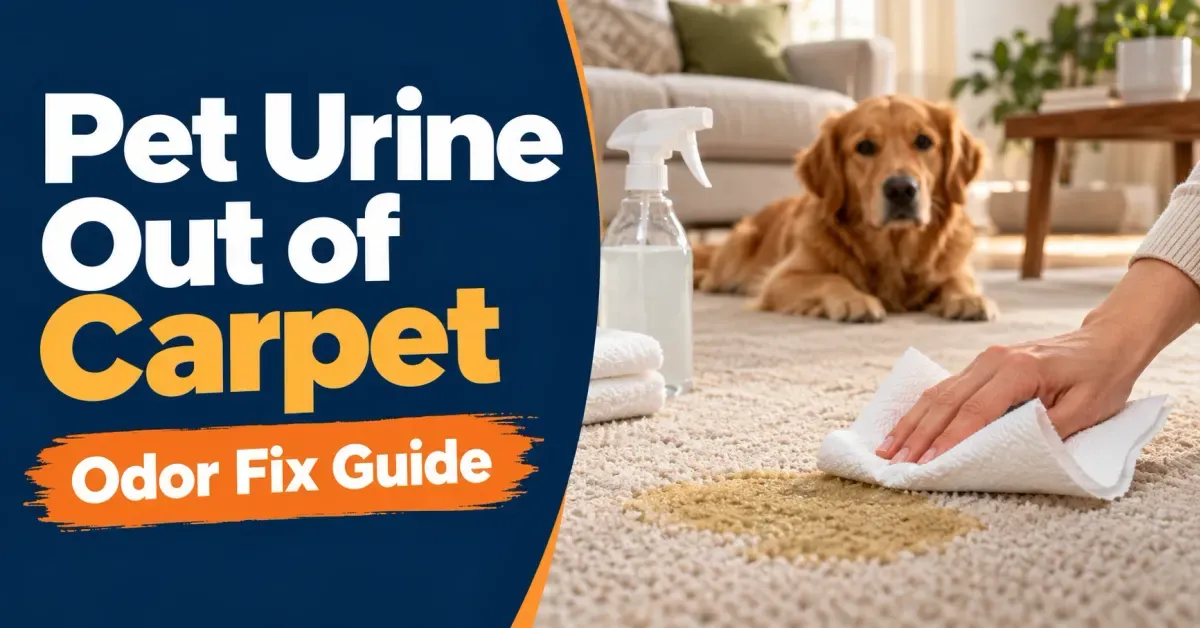
This guide explains the actual chemistry behind why urine odor persists, why it can permanently damage carpet in some cases, and which treatments genuinely work versus which ones just mask the problem temporarily.
Blot fresh urine immediately, then treat with an enzymatic cleaner that breaks down uric acid rather than just masking odor. Let it sit and air dry. Dried stains need rehydration first. Avoid steam cleaners, since heat can permanently set both the stain and the smell.
How Do You Remove a Fresh Pet Urine Stain From Carpet?
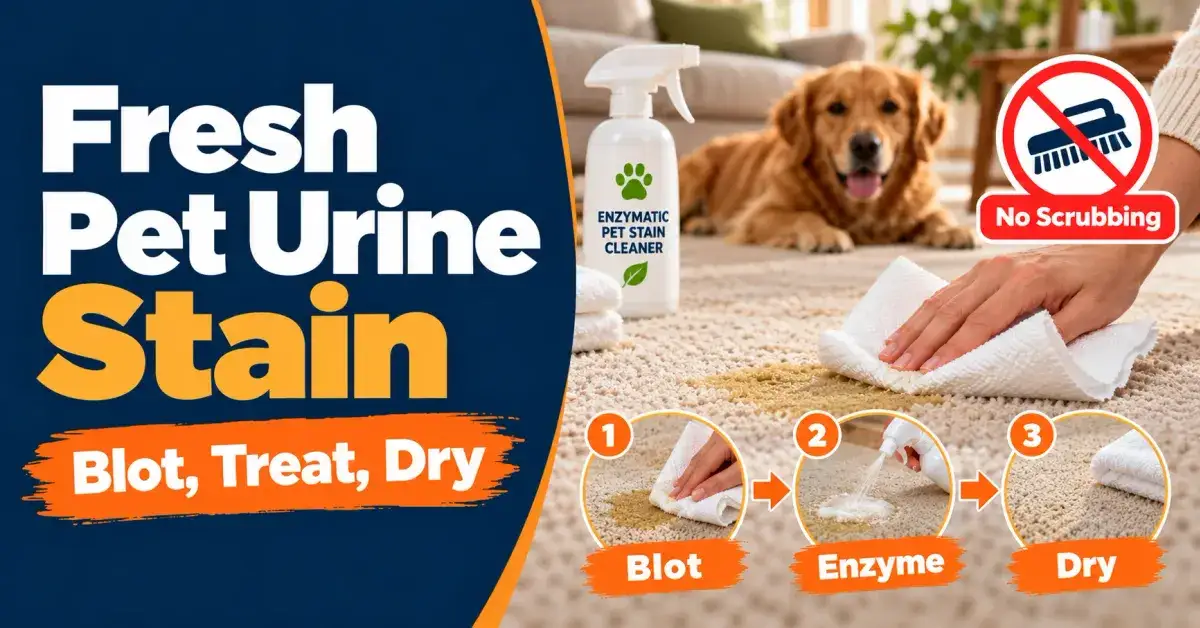
Blot immediately with a thick layer of paper towels or a clean cloth, pressing down firmly. Standing on the towels adds pressure and pulls up more liquid than blotting by hand alone.
Once you've absorbed as much as possible, apply an enzymatic cleaner directly to the spot, covering slightly more area than the visible stain since urine spreads beneath the surface. Let it sit for the time listed on the product, usually ten to fifteen minutes, then blot again. Avoid scrubbing, which pushes urine deeper into the padding instead of lifting it out.
Why Does Carpet Trap Urine Odor So Well?
Pet urine contains uric acid, which breaks down into ammonia and sulfur-based compounds called mercaptans, the same class of compound used to make natural gas detectable. That's why even a small, dried spot can smell disproportionately strong.
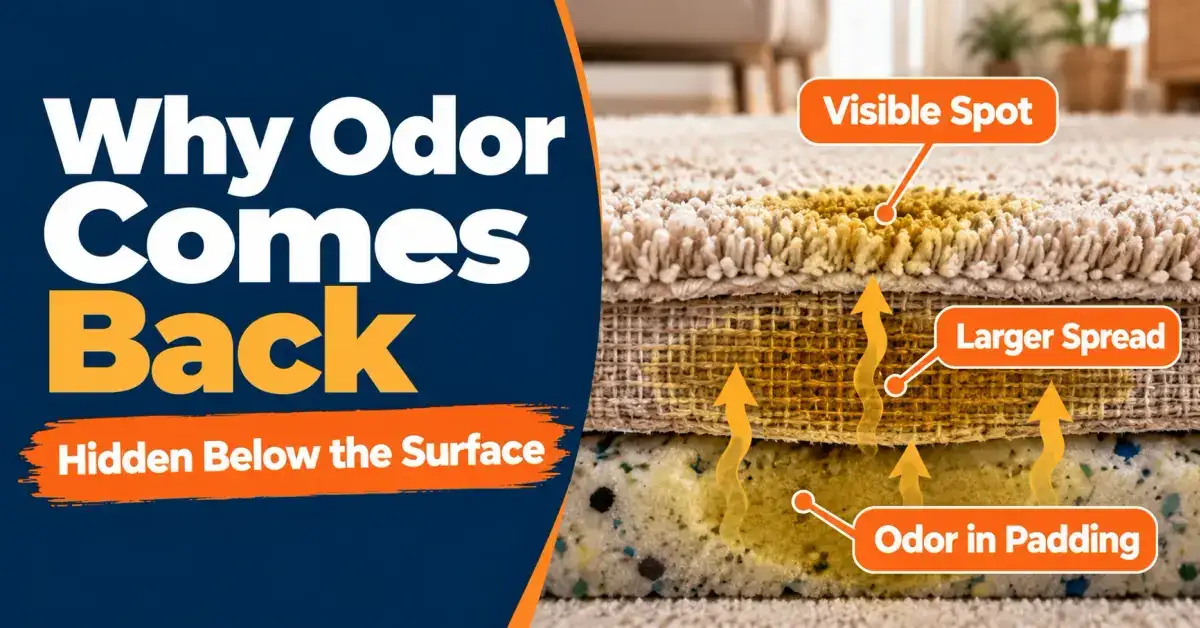
Liquid stains like urine also spread beneath the surface to an area five to ten times larger than what's visible on top. This means the smell you're chasing often comes from urine sitting in the carpet backing or padding, well outside the spot you can see and treat directly.
How Do You Get Pet Urine Out of Old, Dried Carpet Stains?
Dried urine stains need rehydration before an enzymatic cleaner can work. Enzymes need moisture to activate and reach the uric acid crystals that have already dried into the fiber.
Mist the area with water, then apply the enzymatic cleaner and let it sit for the full recommended dwell time, often thirty minutes or longer for set-in stains. Blot dry and repeat if odor remains. Older accidents frequently need two or three treatment cycles, since dried uric acid crystals resist breaking down in a single pass.
Can Pet Urine Permanently Stain or Damage Carpet?
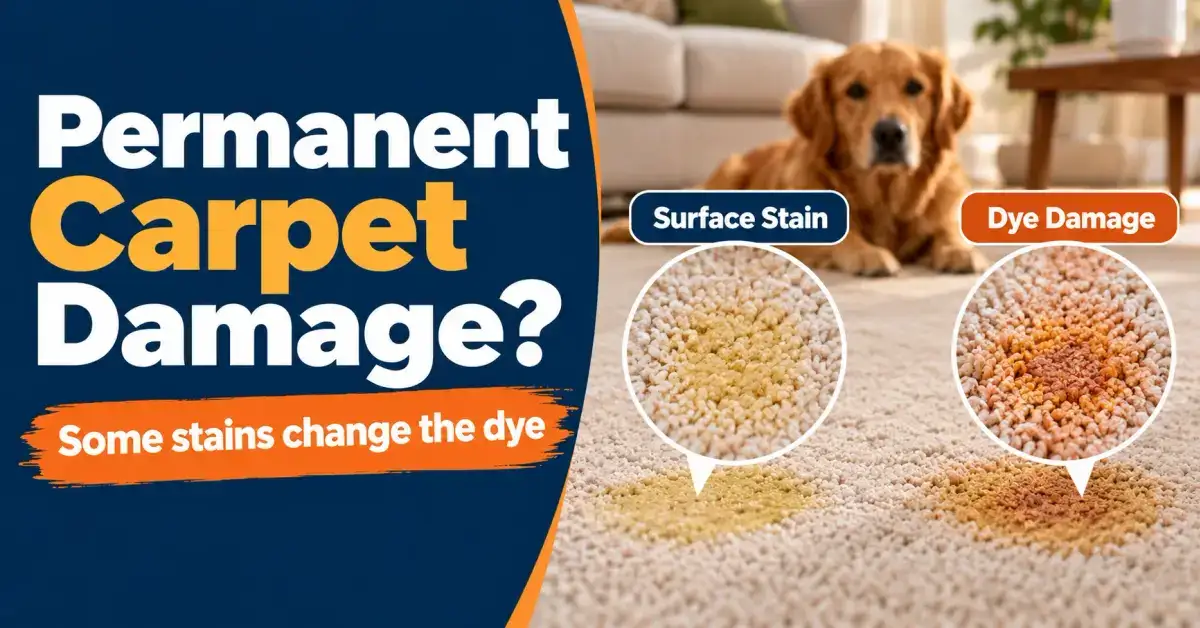
Yes, in some cases. Pet urine can chemically attack the dyes used in carpet manufacturing. On beige carpet specifically, it can strip blue dye and leave behind a red, yellow, or orange discoloration that no cleaning product will reverse.
Whether this becomes permanent depends on the urine's composition, which changes throughout a pet's life based on diet, age, health, medication, and reproductive cycle. This is part of why one accident cleans up completely while another, from the same pet months later, leaves a lasting mark. Left untreated long enough, urine can also weaken the bond between carpet layers, allowing the backing to separate, particularly along seams.
What Actually Gets Urine Smell Out of Carpet, and What Doesn't?
Enzymatic cleaners are the most reliable option, since they use enzymes and beneficial bacteria to actually break down uric acid rather than covering the smell. Vinegar has some mild odor-neutralizing effect from its acidity, but it doesn't break down uric acid the way enzymes do, so it often only masks odor temporarily.
Baking soda absorbs surface moisture and some odor molecules, which makes it a reasonable follow-up step after cleaning, but it does nothing to address uric acid that's already bonded to fiber. A homeowner who relies on baking soda alone typically finds the smell returns within days, especially in humid weather when the crystals reactivate.
Should You Use a Steam Cleaner on Pet Urine?
No. Steam cleaners should be avoided on pet urine because the heat can permanently set both the stain and the odor by bonding urine protein directly into man-made carpet fibers.
Consider a pet owner who steam cleans a urine spot expecting a deep clean, only to find the smell intensifies on humid days afterward. The heat cooked the protein into the fiber structure instead of lifting it out, turning a fixable problem into a permanent one. Cold or room-temperature enzymatic treatment is the safer approach every time.
How Do You Find Old Urine Stains You Can't See?
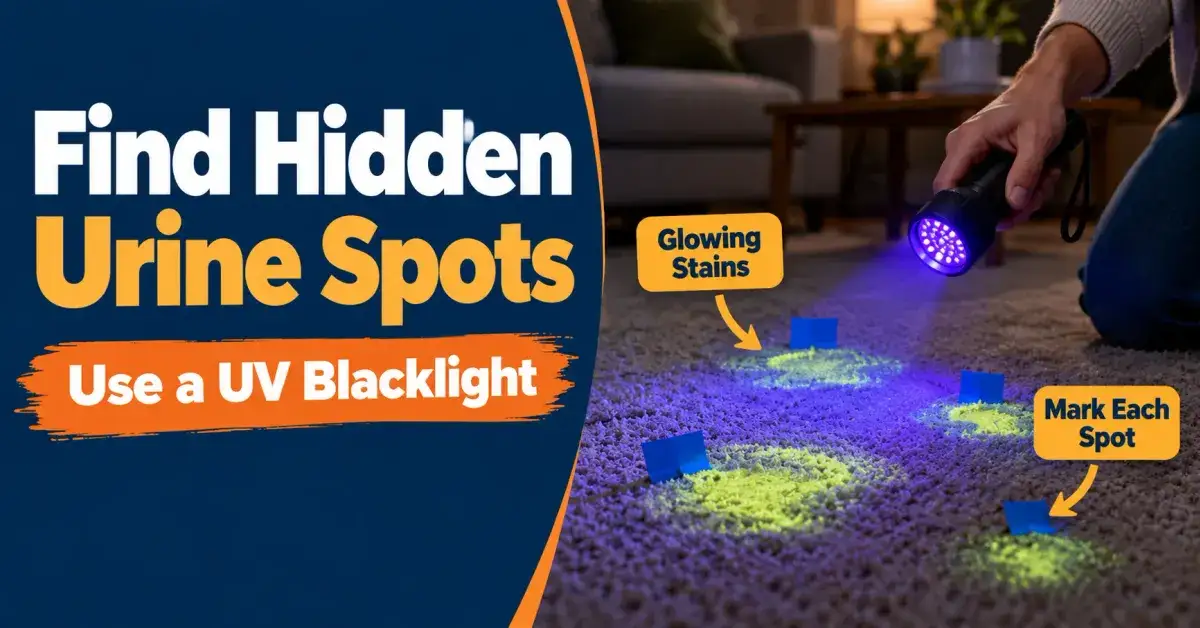
A UV blacklight is the most reliable way to locate dried urine that's no longer visible under normal light. Uric acid crystals fluoresce under UV light, showing up as a bright yellow-green glow even when the carpet looks completely clean.
Turn off the lights, close curtains for a dark room, and sweep the blacklight slowly across the carpet, particularly along baseboards and in corners where pets often return. Mark any glowing spots with painter's tape before turning the lights back on so you can treat each one directly rather than guessing at the boundaries.
Why Pet Urine Needs Fast, Correct Treatment
Liquid stains like urine can spread beneath carpet to an area five to ten times larger than what's visible on the surface, which is why treating only the visible spot often leaves lingering odor behind (Source: BISSELL, citing principal chemist Jay Kellis). The Carpet and Rug Institute's technical bulletin confirms that pet urine can chemically alter carpet dyes and, over time, weaken the adhesive bond between carpet backing layers, particularly at seams (Source: Carpet and Rug Institute).
Humane World for Animals specifically warns against steam cleaning pet urine, since heat can permanently bond urine protein into synthetic fiber (Source: Humane World for Animals). The ANSI/IICRC S100 standard also identifies prompt spot response as a defined part of proper carpet maintenance, not an optional step, which is especially true for urine given how quickly it spreads and sets (Source: ANSI/IICRC S100).
Common Questions About Pet Urine Removal, Answered
Does vinegar actually get rid of urine smell in carpet?
+
Vinegar has mild odor-neutralizing properties from its acidity, but it doesn't break down uric acid the way enzymes do. It often masks odor temporarily rather than resolving it.
Why doesn't baking soda remove urine odor by itself?
+
Baking soda absorbs moisture and some odor molecules on the surface, but it has no effect on uric acid crystals that have already bonded to carpet fiber below the surface.
What is the best type of enzyme cleaner for pet urine?
+
Look for a cleaner specifically labeled enzymatic or bio-enzymatic, since these use live bacteria and enzymes to digest uric acid rather than simply masking it with fragrance.
Is hydrogen peroxide safe for pet urine stains on carpet?
+
It can work in small, diluted amounts, but test a hidden spot first, since it can lighten colored carpet if left on too long or used at high concentration.
How is cat urine different from dog urine on carpet?
+
Cat urine is typically more concentrated in uric acid and mercaptans, which is why cat urine odor often smells stronger and proves harder to fully eliminate than dog urine.
How do you stop a pet from remarking the same spot?
+
Fully eliminate the odor at the source with an enzymatic cleaner, since pets can detect residual scent trails invisible to humans and will return to remark them.
Can pet urine damage carpet padding or backing?
+
Yes. Urine that reaches the padding can saturate it permanently, and prolonged exposure can weaken the adhesive bond holding carpet backing layers together.
Is it safe to mix cleaning products when treating pet urine?
+
No. Never mix ammonia-based products with bleach or other chemical cleaners, since this can create dangerous fumes. Stick to one product at a time.
When should carpet padding be replaced after a pet accident?
+
If urine has soaked through to the padding and odor persists after multiple enzymatic treatments, the padding usually needs replacement rather than continued surface cleaning.
When should you call a professional for pet urine odor?
+
Call a professional if odor persists after repeated treatment, covers a large area, or if urine has reached the subfloor, since these situations often need equipment beyond home use.
Getting pet urine out of carpet for good comes down to treating the chemistry correctly, not just the smell you can notice in the moment. Enzymatic cleaning, fast response, and avoiding heat are what actually resolve the problem instead of masking it temporarily.
Need a carpet cleaning company you can trust? We handle residential and commercial carpet cleaning, rug cleaning, upholstery cleaning, and pet stain and odor removal —our team is ready to help.

Michael Sanders
Michael Sanders is a home care and cleaning industry writer covering carpet maintenance, flooring care, and household cleaning practices across the United States. His work focuses on practical, research-backed guidance — from stain and odor removal to deep extraction methods and indoor allergen prevention. Michael collaborates with cleaning professionals to ensure accuracy, and his writing reflects a genuine interest in helping homeowners make informed decisions about caring for their homes.