
Blog · Equipment Guide
What Do Professional Carpet Cleaners Use? Full Breakdown
A rental machine and a professional cleaning service look similar on the surface. Both spray solution, both suck it back out, both leave carpet visibly cleaner. Yet the results almost never match, and nobody explains why. The honest answer has two parts most homeowners never see broken down together.
Published October 24, 202611 min read
This article covers exactly what do professional carpet cleaners use, the equipment inventory and the chemical system that work together, how that compares to a rental machine, and whether the products involved are actually safe around kids and pets.
Professional carpet cleaners use truck-mounted or high-powered portable extraction equipment paired with a system of specialized chemicals, including a pre-spray, a neutralizing rinse, targeted spotters, and enzyme treatments. No single tool or bottle does the whole job. The equipment and chemistry work together as one system.
What Do Professional Carpet Cleaners Use? The Two-Part System
Professional carpet cleaners use two things working in tandem: powerful extraction equipment and a matched system of cleaning chemicals. Neither one alone produces professional results.
Equipment provides the heat, pressure, and suction that physically move soil out of carpet fiber. Chemistry provides the science that breaks soil down in the first place, so the equipment has something loosened to remove. A powerful machine running plain water still leaves oily, protein-based soil behind. A perfect chemical solution applied by hand cannot flush deep into the pile or extract itself back out.
This two-part framing explains almost every gap between DIY and professional results. The sections below break down each half of the system.
What Equipment Do Professional Carpet Cleaners Bring to a Job?
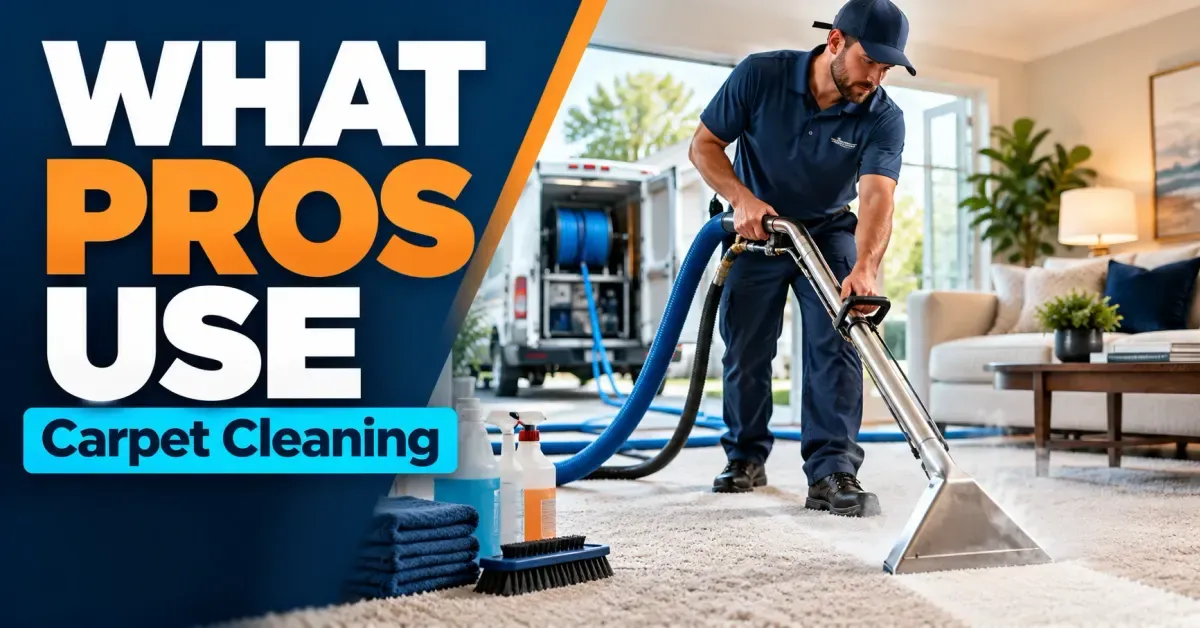
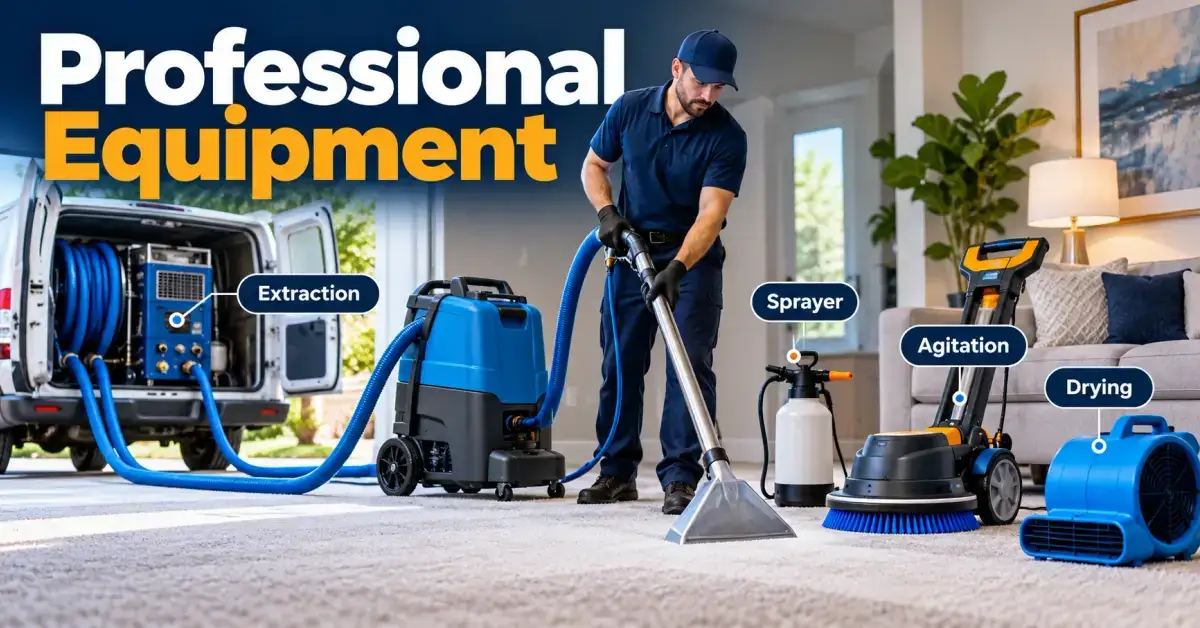
Professional carpet cleaners bring extraction machines, agitation tools, and drying equipment, each doing a specific job in the cleaning sequence. A typical job uses four to five separate pieces of equipment.
Truck-mounted extraction units generate water temperatures between 150 and 210 degrees Fahrenheit under sustained pressure, per industry equipment standards, running off the vehicle's engine or an onboard generator. Portable extractors do the same job on a smaller scale for jobs a hose cannot reach. Counter-rotating brush machines agitate encapsulation or shampoo solutions deep into the pile when a method calls for scrubbing rather than pure extraction.
Pump sprayers apply pre-treatment evenly before the main cleaning pass, and air movers speed drying once extraction finishes. Each tool exists because one machine cannot heat water, agitate fiber, extract soil, and dry carpet all at once.
What Carpet Cleaning Chemicals Do Professionals Actually Use?
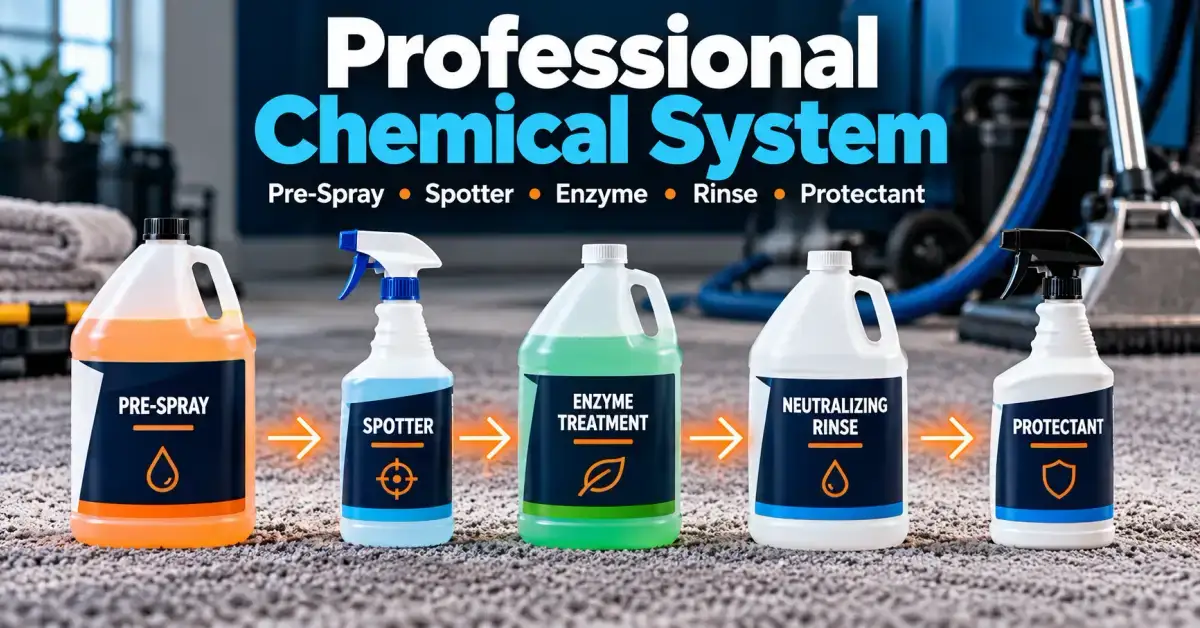
Professionals use a system of five to seven chemical products, not one all-purpose solution. Each product targets a different stage of the cleaning process or a different type of soil.
The sequence starts with a pre-spray, or preconditioner, that breaks down soil before extraction even begins. A defoamer keeps suds from overwhelming the recovery tank during extraction. A neutralizing rinse follows the main pass to remove leftover detergent and restore the carpet's natural balance.
Beyond that base sequence sit the specialists. Spotters target specific problem stains like ink, grease, or rust that the general solution cannot handle alone. Enzyme treatments break down pet urine and other organic contamination at the protein level. Deodorizers address odor sources directly instead of masking them. An optional fiber protectant gets reapplied after cleaning to help carpet resist future staining. Store-bought products almost always compress this entire system into one bottle, which is a major reason DIY results fall short.
Why Professional Solutions Use Different pH Levels for Different Jobs
Professional pre-spray and rinse products use opposite pH levels on purpose. Pre-spray solutions run alkaline, which is effective at breaking down oily and protein-based soil. The follow-up rinse runs mildly acidic, which neutralizes leftover alkaline residue and helps prevent rapid resoiling.
This alkaline-then-acidic sequence is standard practice across the industry. Skip the acidic rinse and alkaline residue stays behind, attracting new dirt within weeks, similar to the resoiling problem that comes from over-diluted shampoo left in carpet.
How Is Professional Equipment Different From a Rental or Store-Bought Machine?
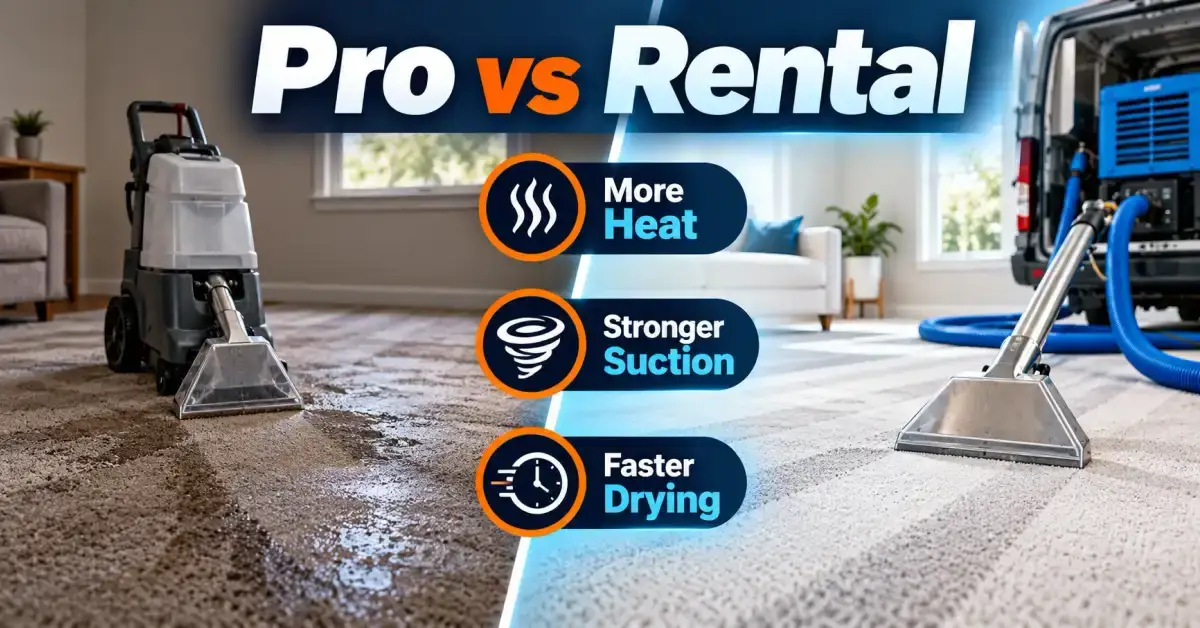
Professional equipment outperforms rental and store-bought machines mainly in three areas: sustained heat, vacuum recovery power, and consistent pressure. These three factors matter more than any marketing language about "professional grade."
A truck-mounted system holds temperature throughout an entire job because it draws power from the vehicle itself. A rental unit's small internal heater cools as the tank empties, so the last room cleaned gets noticeably cooler water than the first. Vacuum recovery follows the same pattern. Professional equipment pulls enough water back out to leave carpet only lightly damp, while rental machines often leave carpet wetter for longer, since they cannot generate comparable suction.
Picture two homeowners cleaning identical hallways the same weekend. One rents a machine and finishes with carpet still damp the next morning. The other hires a truck-mounted service and walks on dry carpet within hours. Both used chemical solutions. The equipment made the difference.
Are the Chemicals Professionals Use Safe for Kids and Pets?
Most professional carpet cleaning chemicals are safe for kids and pets once dry, and independent certification programs exist specifically to verify that claim rather than take a company's word for it.
The CRI Seal of Approval program independently tests cleaning solutions and equipment for soil removal effectiveness and resistance to resoiling before certifying them, giving homeowners a concrete way to check a product's real performance. CRI Green Label Plus certifies low-VOC carpet and related products through independent lab testing, and many professional cleaning companies favor products aligned with those low-emission standards.
The honest safety window is drying time, not the chemistry itself. Solution residue on damp carpet is what poses any contact risk, which is why keeping kids and pets off freshly cleaned carpet until it dries matters more than which specific brand of solution gets used.
How Do Professionals Decide Which Chemicals and Equipment to Use for a Job?
Professionals choose their chemical and equipment combination based on three factors: carpet fiber type, soil type, and the carpet's cleaning history. This decision logic is what turns a generic process into a job matched to your actual carpet.
Wool carpet calls for lower temperatures and near-neutral pH solutions to avoid fiber damage, while durable synthetic carpet tolerates standard hot water extraction without concern. Oily kitchen soil needs a stronger degreasing pre-spray than a lightly trafficked bedroom. Carpet with a known pet accident history gets an enzyme pass regardless of how it currently smells, since surface odor can mask backing-level contamination.
A technician walking into a home with a dog, light-colored wool area rugs, and one stubborn hallway stain does not run one generic process across the whole house. Fiber determines temperature and pH, soil type determines the pre-spray strength, and stain history determines which spotter comes out of the truck.
What the Standards Say About Professional-Grade Cleaning
Industry standards explain why the equipment and chemistry described above are not arbitrary choices but a documented system. These facts show where that system comes from.
The IICRC S100 standard outlines the professional cleaning sequence, including a preconditioning step and a rinse or neutralizing step, as core parts of a proper deep clean. The CRI Seal of Approval program independently tests cleaning solutions and equipment for soil removal effectiveness and resistance to resoiling before granting certification. CRI Green Label Plus certifies low-VOC carpet and related products through independent lab testing, giving homeowners a verified low-emission standard to look for. Truck-mounted extraction systems generate water temperatures between 150 and 210 degrees Fahrenheit under sustained pressure, delivering heat consistency rental units cannot match. And professional pre-spray solutions run alkaline while rinse solutions run mildly acidic, a sequence built specifically to prevent the residue and resoiling that plague many DIY jobs.
Common Questions About What Professionals Use to Clean Carpet, Answered
Do professional carpet cleaners use the same chemicals as store-bought products?
+
No, professionals use a multi-product system, while store-bought options usually compress pre-treatment, cleaning, and rinsing into one all-purpose bottle. That compression is a major reason DIY results fall short of professional ones.
What is hot carbonating extraction, and do professionals use it?
+
Hot carbonating extraction uses carbonated bubbles to lift soil to the surface before extraction, and some professional companies use it as their signature method. It reduces the amount of solution needed but works through the same extraction principle as standard hot water cleaning.
Can I buy the same cleaning solutions professionals use?
+
Some professional-grade solutions are sold to consumers, though often in less concentrated form. Look for CRI Seal of Approval certification on the label as a sign of tested performance.
Do professional carpet cleaners use bleach?
+
No, reputable professionals avoid bleach on carpet since it strips color and can damage synthetic fibers. Stain and odor problems get handled with pH-balanced spotters and enzyme treatments instead.
What machine do most professional carpet cleaners use?
+
Truck-mounted hot water extraction units are the most common professional equipment, chosen for their sustained heat and strong vacuum recovery. Portable extractors fill in for jobs a hose cannot reach.
Do professional carpet cleaning chemicals leave a strong smell?
+
Properly rinsed professional cleaning should leave carpet smelling neutral or mildly fresh, not strongly chemical. A heavy lingering smell usually means the neutralizing rinse step was skipped or rushed.
What is a carpet spotter, and how is it different from the main solution?
+
A spotter is a concentrated, targeted treatment for a specific stain type like ink, rust, or grease that the general pre-spray cannot fully break down. Technicians apply it only where needed, not across the whole carpet.
Do professionals use different products for pet stains than regular soil?
+
Yes, pet contamination gets an enzyme treatment that breaks down the proteins and uric acid in urine, which general cleaning solutions cannot fully address. Regular soil only needs the standard pre-spray and rinse sequence.
Why do some professional cleaners charge more even with similar-looking equipment?
+
Equipment that looks similar can vary widely in heat output, vacuum power, and maintenance condition, all of which affect results. Pricing differences often reflect real gaps in equipment quality and product selection, not just labor cost.
Is professional carpet cleaning solution safe with a crawling baby in the house?
+
Yes, once the carpet is fully dry, since dried residue poses far less contact risk than damp solution. Keep the baby off the carpet until it passes the standard drying window, typically a few hours with proper airflow.
The real answer to what do professional carpet cleaners use is a coordinated system, not a single product or machine. Heat, pressure, and extraction power come from the equipment. Soil breakdown, pH balance, and stain-specific treatment come from the chemistry. Understanding both halves explains why professional results are hard to replicate with a single rental machine and a jug of all-purpose solution, and it gives you real questions to ask any company before they clean your carpet.
Need a carpet cleaning company you can trust? We handle residential and commercial carpet cleaning, rug cleaning, upholstery cleaning, and pet stain and odor removal —our team is ready to help.

Michael Sanders
Michael Sanders is a home care and cleaning industry writer covering carpet maintenance, flooring care, and household cleaning practices across the United States. His work focuses on practical, research-backed guidance — from stain and odor removal to deep extraction methods and indoor allergen prevention. Michael collaborates with cleaning professionals to ensure accuracy, and his writing reflects a genuine interest in helping homeowners make informed decisions about caring for their homes.