
Blog · Stain Removal Guide
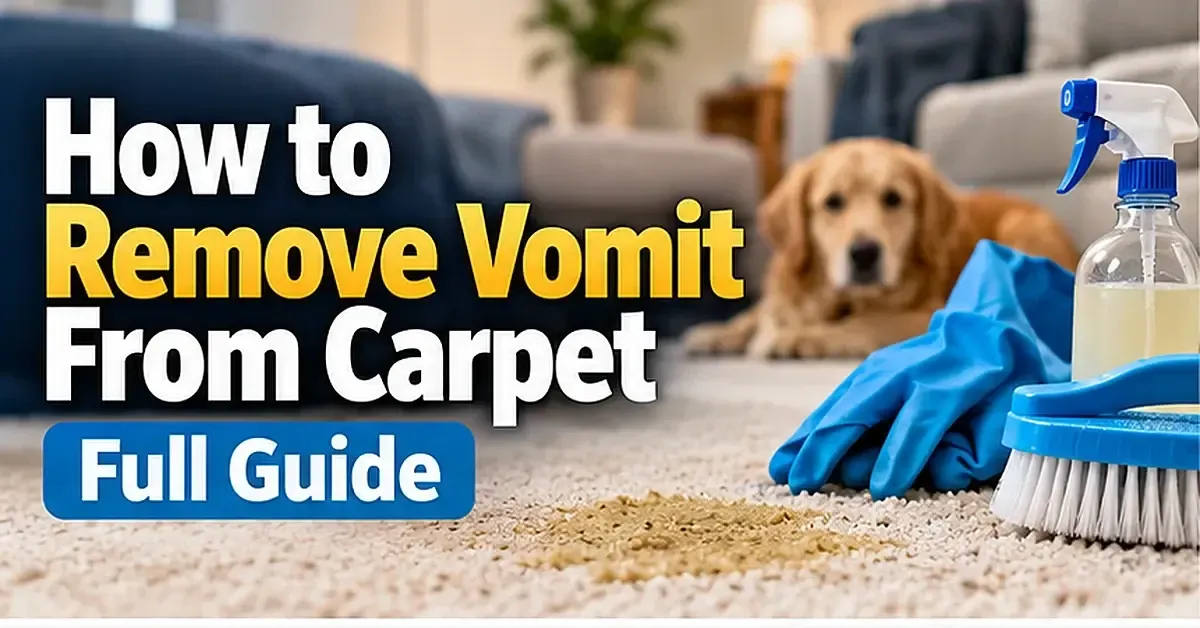
How to Remove Vomit From Carpet: Full Guide
If you want to know how to remove vomit from carpet, the advice online contradicts itself constantly. Some sources swear by vinegar, others warn it's not reliable enough. What almost nobody mentions is that vomit carries real health considerations worth understanding before you start cleaning.
Published October 28, 20267 min read
This guide covers the actual method, resolves the vinegar debate honestly, and explains what's in vomit that makes gloves and prompt cleanup more than just a suggestion.
Scrape up solids first, then blot with cold water. Treat with an enzyme or oxygen-based cleaner rather than plain vinegar, since these break down proteins and acids more reliably. Wear gloves, since vomit can carry pathogens that survive in carpet fiber for weeks if untreated.
How Do You Remove Vomit From Carpet?
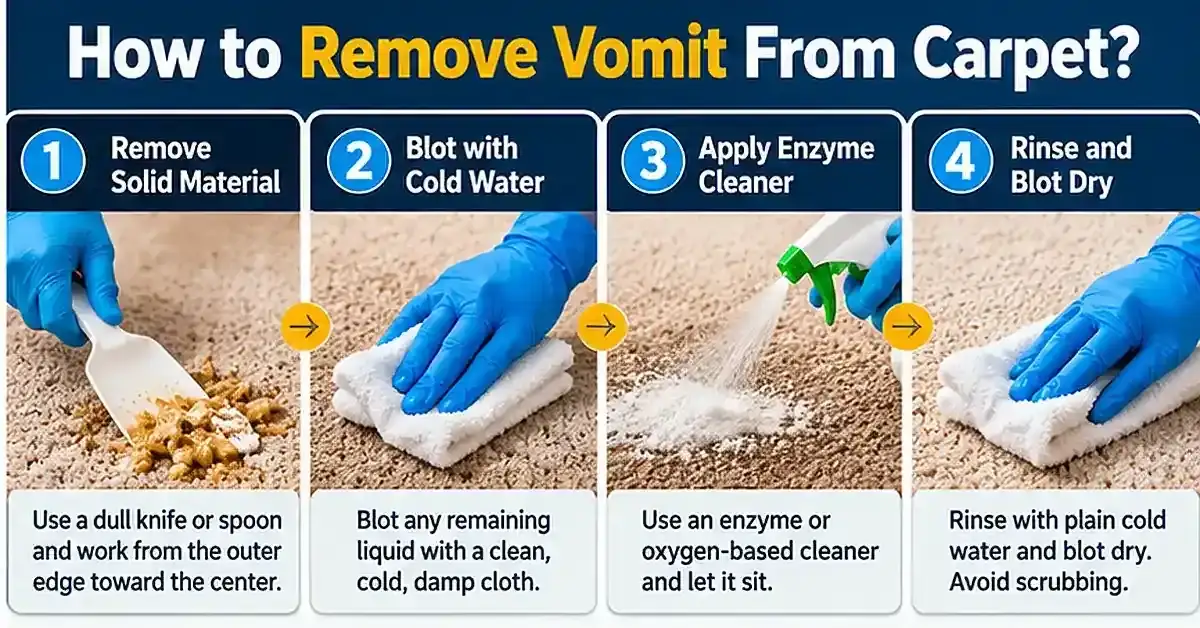
Scrape up solid material first using a dull knife or spoon, working from the outer edge toward the center so you're not spreading it further. Blot any remaining liquid with a cold, damp cloth.
Once the bulk is removed, apply an enzyme or oxygen-based cleaner directly to the area, letting it sit for the time listed on the product. Blot again, then rinse with plain cold water and blot dry. Avoid scrubbing, since it pushes residue deeper into the fiber and padding instead of lifting it out.
Is Vomit a Biohazard, and How Should You Protect Yourself While Cleaning It?
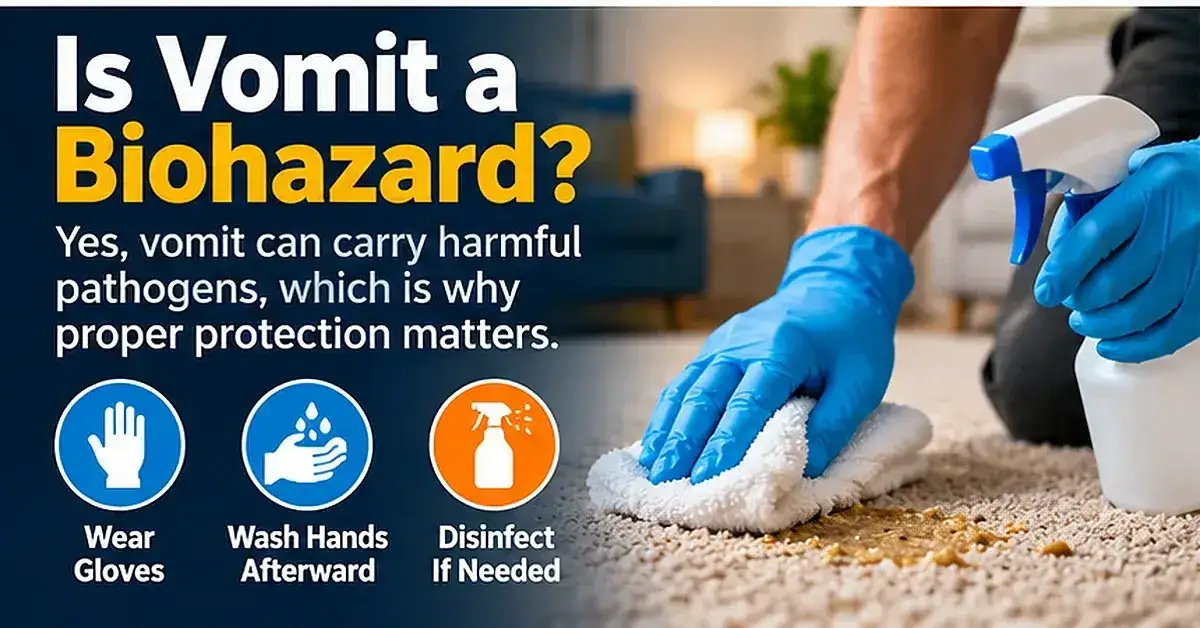
Yes, vomit is considered a biohazard and can carry pathogens, which is why wearing gloves during cleanup is a reasonable precaution, not an overreaction. Norovirus, a common cause of stomach illness, can survive in carpet fibers for up to two weeks if the area isn't properly cleaned.
For a typical household incident, gloves and thorough cleaning with an enzyme-based product are sufficient precaution. Wash your hands afterward even if you wore gloves the whole time. If the vomit is from someone with a known contagious illness, treating the area more thoroughly and disinfecting afterward reduces the risk of that window turning into an actual reinfection source in your home.
What Is the Best Carpet Cleaner for Vomit?
Enzyme and oxygen-based cleaners consistently outperform plain vinegar on vomit, since they break down the proteins and acids directly rather than just neutralizing surface odor. This matters because vomit contains gastric acid and digestive enzymes that vinegar's mild acidity doesn't fully address.
Vinegar isn't dangerous to use, and it does offer some mild odor control, but it's simply less reliable than an enzyme-based product designed specifically to digest organic, protein-based residue. Look for a cleaner labeled enzymatic or bio-enzymatic for the best results, especially on any stain that's had time to set before you got to it.
How Do You Clean Pet Vomit From Carpet?
Pet vomit is often yellow or bile-heavy, especially when a dog or cat vomits on an empty stomach, since bile is what comes up when there's no food present. This yellow bile can stain more noticeably than food-based vomit and sometimes needs extra treatment to fully clear.
Treat pet vomit the same way as human vomit: scrape solids, blot with cold water, then apply an enzyme cleaner and let it sit. For yellow bile stains specifically, a second treatment round is common, since bile pigment can be more stubborn than typical stomach contents. Enzyme cleaners remain the most reliable choice here too, since they're built to break down organic matter regardless of the source.
Why Does Vomit Smell Linger Even After the Stain Is Gone?
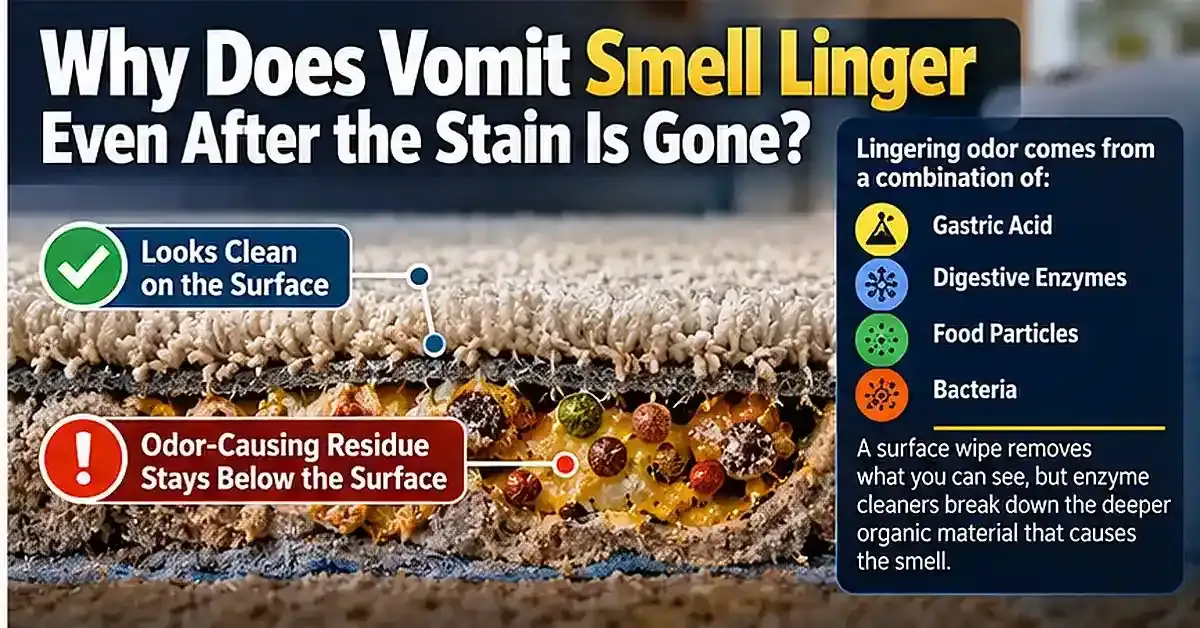
Lingering odor comes from a combination of gastric acid, digestive enzymes, food particles, and bacteria working together, not just one leftover substance. This is why a stain can look completely clean while the smell persists.
A surface wipe or a quick blot only addresses what's visible, leaving the deeper mixture in the padding or backing to keep producing odor. This is exactly why enzyme cleaners matter more here than on many other stains: they actually break down the organic material causing the smell instead of just masking it with fragrance.
How Do You Get Old, Dried Vomit Stains Out of Carpet?
Dried vomit needs rehydration before an enzyme cleaner can work effectively. Mist the area with cold water and let it sit for several minutes to soften the dried residue.
Once damp, apply the enzyme cleaner and let it sit for the full recommended dwell time, often longer than for a fresh stain. Blot dry and repeat if odor or discoloration remains. Older, fully set stains frequently need two or three treatment cycles, since dried residue resists breaking down in a single pass.
What Mistakes Make a Vomit Stain Worse?
Using hot water is the most common mistake, since heat can set proteins into the fiber instead of loosening them. Scrubbing is the second, pushing residue deeper into the padding rather than lifting it out.
Relying on vinegar alone for a stain that's already set is the third mistake, since it often only masks odor temporarily rather than resolving the underlying cause. Delaying cleanup is the fourth, since the longer vomit sits, the more time bacteria and pathogens have to establish themselves in the fiber and padding beneath.
Why Acting Fast on Vomit Stains Actually Matters
Vomit is considered a biohazard and can carry hazardous pathogens, which is why gloves are recommended any time it's handled directly (Source: BISSELL, citing test engineer Megan Klein-Wassink). Norovirus specifically can survive in carpet fibers for up to two weeks if left untreated, which is part of why prompt, thorough cleanup matters beyond just appearance.
Hot water should be avoided on vomit stains, since heat can set proteins into carpet fiber rather than loosen them (Source: BISSELL). Lingering odor comes from a combination of gastric acids, enzymes, food particles, and bacteria working together, which is why a simple surface wipe often fails to fully resolve it (Source: BISSELL). The ANSI/IICRC S100 standard identifies prompt spot-and-stain response as a defined part of proper carpet maintenance, directly applicable to biological, protein-based stains like vomit (Source: ANSI/IICRC S100).
Common Questions About Vomit Stain Removal, Answered
Does vinegar actually work on vomit stains?
+
It offers mild odor control from its acidity, but it doesn't break down proteins and acids the way an enzyme cleaner does. It often masks odor rather than resolving it.
Does baking soda help with vomit odor?
+
Yes, as a follow-up step. Baking soda absorbs residual odor well after the area has been cleaned with an enzyme cleaner, but it doesn't address the underlying residue on its own.
Does hydrogen peroxide work on vomit stains?
+
It can help with discoloration in small, diluted amounts, but always test a hidden spot first, since it carries bleaching risk on colored carpet.
Can vomit carry norovirus, and how long does it survive on carpet?
+
Yes. Norovirus can survive in carpet fibers for up to two weeks if the area isn't properly cleaned and treated.
Should you clean vomit wet or let it dry first?
+
Clean it as soon as possible rather than letting it dry. Unlike mud, vomit sets and its odor deepens the longer it sits untreated.
How do you get yellow bile stains out of carpet?
+
Treat the same as any vomit stain, but expect to repeat the enzyme cleaner treatment, since bile pigment tends to be more stubborn than food-based residue.
How do you clean up vomit without gagging or getting sick yourself?
+
Cover the area with baking soda first to reduce the smell, breathe through your mouth rather than your nose while working, and take short breaks if needed.
How do you get dog or cat vomit smell out of carpet specifically?
+
Use an enzyme cleaner formulated for pet messes, since these are built to fully break down the organic and bile content common in pet vomit.
Can you vacuum up dried vomit?
+
Once fully dried and any solid material is gone, light vacuuming of loose residue is fine, but any remaining stain or odor still needs enzyme treatment.
When should you call a professional for a vomit stain?
+
Call a professional if odor or discoloration persists after repeated treatment, covers a large area, or has soaked into the padding beneath the carpet.
Knowing how to remove vomit from carpet properly comes down to using the right cleaner for the job and treating it as more than just an appearance problem. Enzyme-based treatment, prompt action, and basic precaution resolve most vomit stains completely.
Need a carpet cleaning company you can trust? We handle residential and commercial carpet cleaning, rug cleaning, upholstery cleaning, and pet stain and odor removal —our team is ready to help.

Michael Sanders
Michael Sanders is a home care and cleaning industry writer covering carpet maintenance, flooring care, and household cleaning practices across the United States. His work focuses on practical, research-backed guidance — from stain and odor removal to deep extraction methods and indoor allergen prevention. Michael collaborates with cleaning professionals to ensure accuracy, and his writing reflects a genuine interest in helping homeowners make informed decisions about caring for their homes.