


Blog · Stain Removal Guide
How to Get Blood Out of Carpet: Full Guide
If you want to know how to get blood out of carpet, the first move matters more than any product you reach for. Blood reacts differently than most stains, and one wrong step, like grabbing hot water, can set it into the fiber permanently instead of lifting it out.
Published October 26, 202610 min read
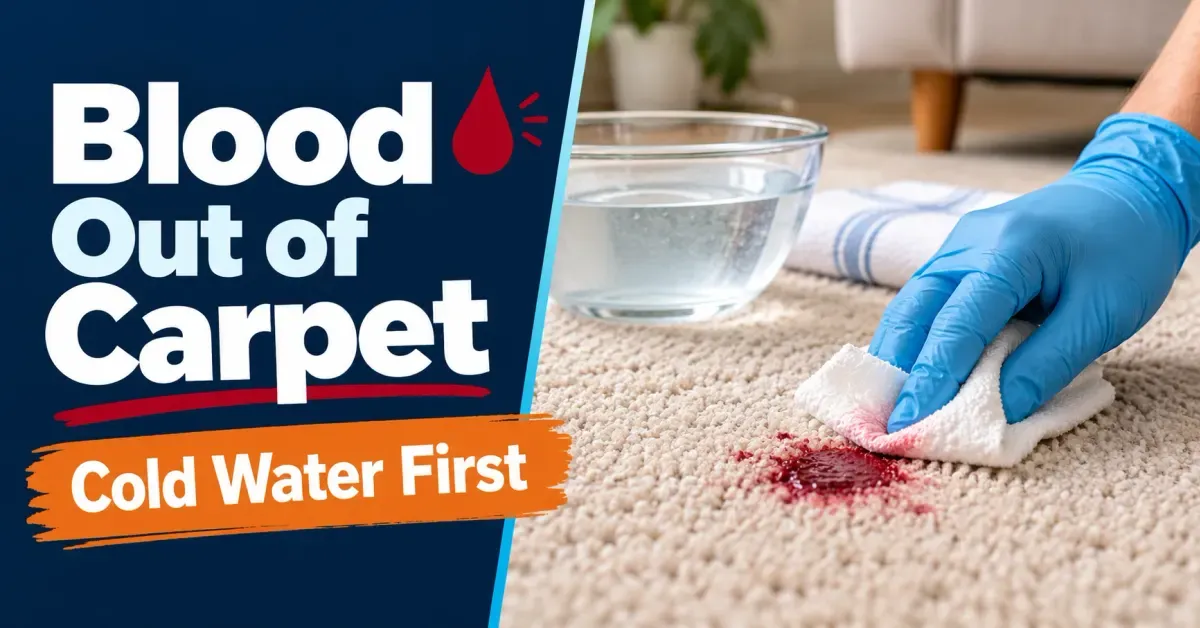
This guide covers the real method for fresh and dried blood, an honest look at whether hydrogen peroxide or OxiClean actually works, and a section nobody else covers: how to handle blood cleanup safely at home.
Blot fresh blood with cold water immediately, never hot. Apply a dish soap solution or diluted hydrogen peroxide, working from the outside in, then rinse and blot dry. Dried stains need rehydration first. Wear gloves during cleanup, since blood can't be visually confirmed safe to touch.
How Do You Get Blood Out of Carpet?
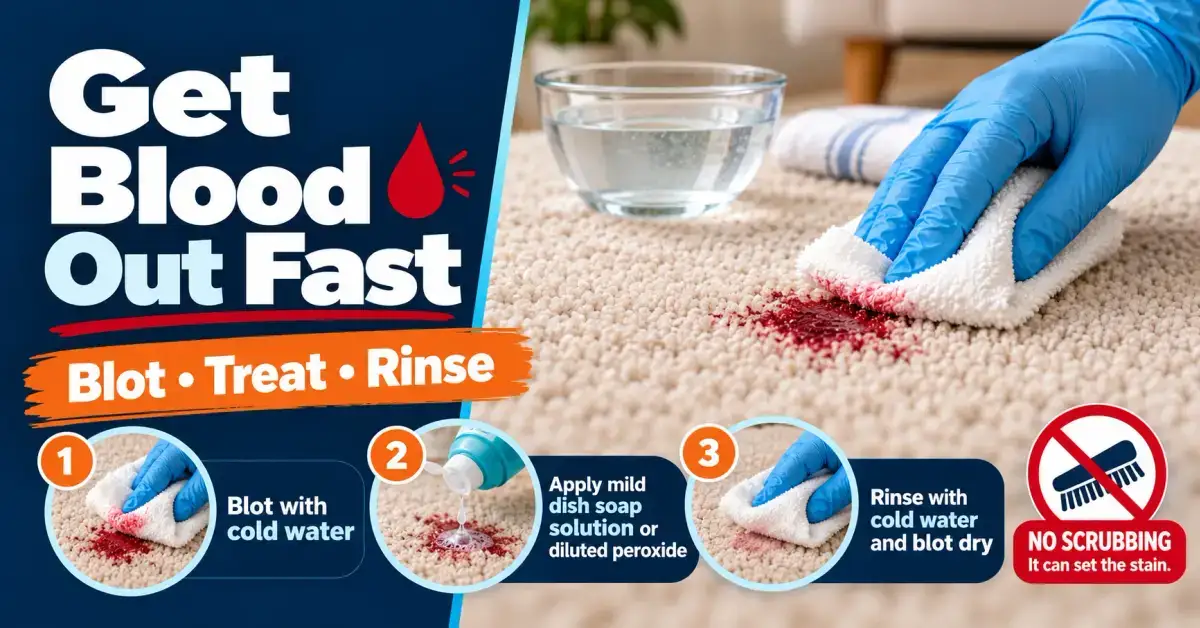
Blot immediately with a cold, damp cloth. Cold water is essential here, since heat causes blood's proteins to coagulate and bond into the fiber instead of loosening.
Once you've lifted as much as possible, mix a few drops of dish soap with cold water and apply with a clean cloth, working from the outer edge of the stain toward the center. This keeps it from spreading outward. Rinse with a cloth dampened in plain cold water, then blot dry with a fresh towel. Never scrub, since scrubbing pushes the stain deeper into the pile and can damage fiber texture.
Why Does Blood Stain Carpet So Fast?
Blood contains proteins that begin coagulating almost immediately after contact with air, which is part of what makes fresh blood so different to treat than dried blood. This is the same clotting process that seals a wound, just happening on your carpet instead.
Heat accelerates coagulation, which is why hot water is the single worst thing to use on a fresh blood stain. Cold water keeps the proteins loose enough to lift out, while hot water essentially cooks them into the fiber, turning a removable stain into a much harder problem.
How Do You Get Old, Dried Blood Stains Out of Carpet?
Dried blood needs rehydration before any cleaning solution can work. Mist the area with cold water and let it sit for several minutes so the dried proteins soften and loosen their grip on the fiber.
Once the spot is damp, apply your cleaning solution and let it sit for a few minutes before blotting. Rinse with cold water and blot dry. Older, more deeply set stains often need two or three rounds of this cycle. If color remains after multiple attempts, the protein has bonded deep enough that a stronger enzymatic or oxygen-based product is the more reliable next step.
Does Hydrogen Peroxide or OxiClean Actually Work on Blood?
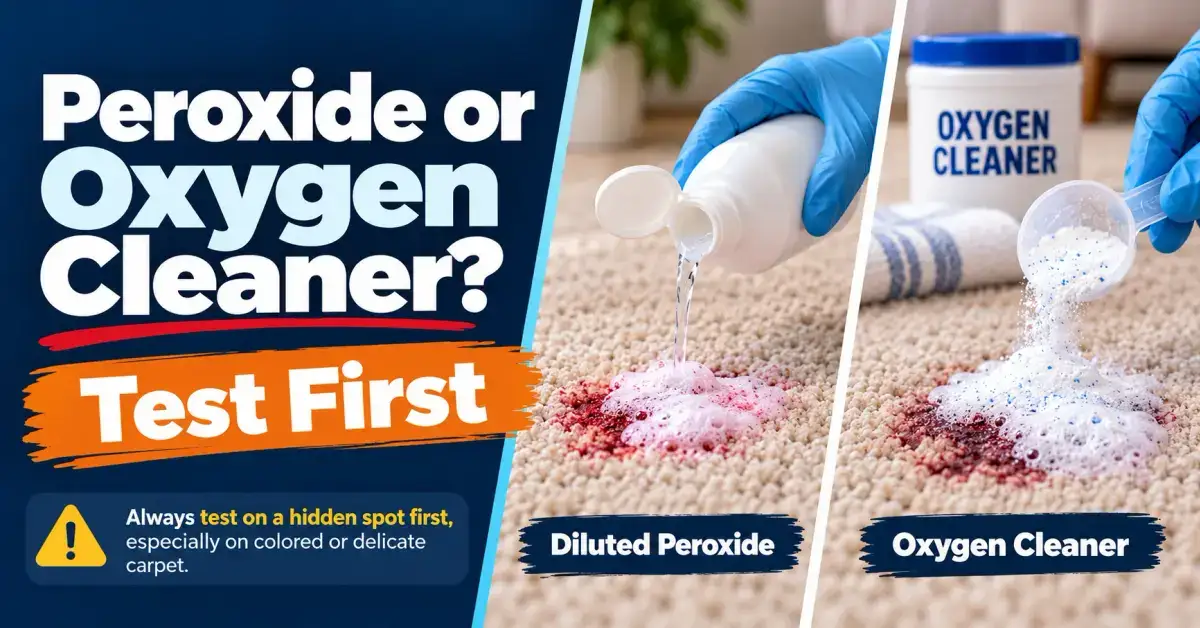
Both work, but through different mechanisms, and one is generally safer for colored carpet. Hydrogen peroxide reacts with an enzyme in blood called catalase, causing visible foaming as it breaks the stain down chemically, which makes it genuinely effective rather than just folk wisdom.
OxiClean and similar oxygen-based cleaners use a milder version of the same oxidizing action, which makes them a safer first choice on colored carpet since full-strength peroxide carries more bleaching risk. For fresh stains, a diluted peroxide solution tends to work fast. For dried, set-in stains, an oxygen-based cleaner with a longer dwell time usually performs better.
How Do You Get Blood Out of White or Wool Carpet?
White and wool carpet both need a more cautious approach than synthetic fiber. Always test any solution on a hidden patch first, since both are more prone to visible damage.
Hydrogen peroxide works well on white carpet specifically because bleaching isn't a concern there, but it should still be diluted rather than used at full strength. Wool reacts poorly to high-alkaline cleaners, so stick to a neutral dish soap solution instead of stronger commercial removers. On both fiber types, several gentle treatment rounds outperform one aggressive attempt.
Is It Safe to Clean Up Blood at Home?
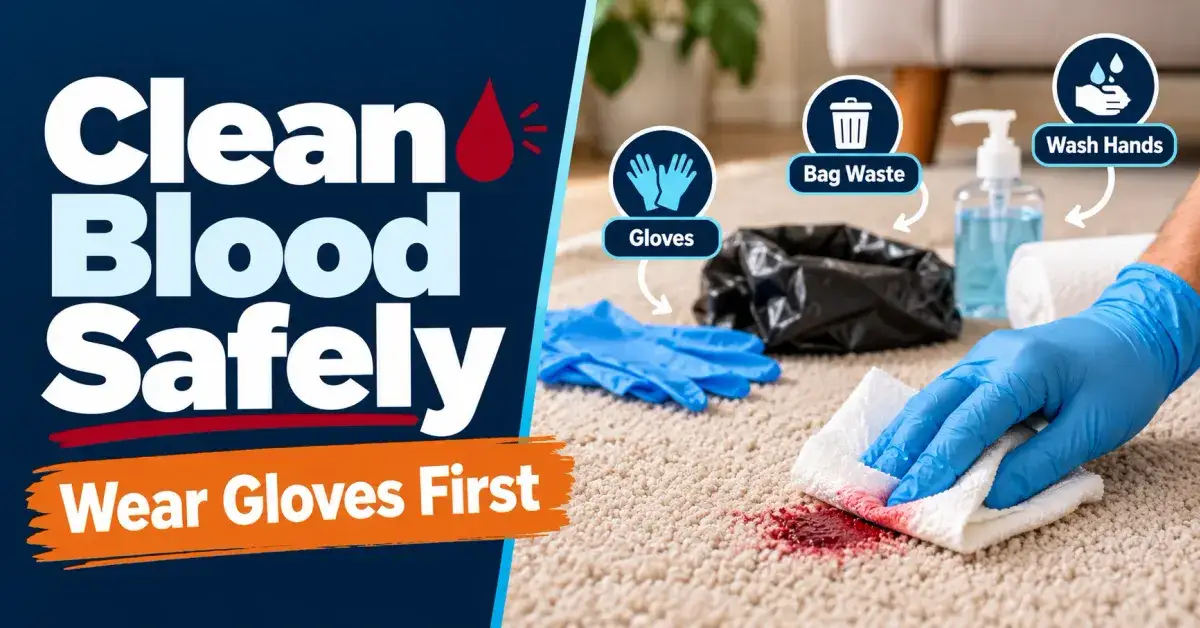
Basic precautions matter here that most guides skip entirely. Wear disposable gloves before touching any blood stain, and wash your hands thoroughly afterward, even if gloves were worn the whole time.
Blood can't be visually confirmed as safe, since bloodborne pathogens aren't detectable by sight (Source: CDC general bloodborne pathogen guidance). For a small household stain, like a minor cut or a nosebleed, gloves and hand washing are sufficient precaution. For a larger spill or one involving an unknown source, treat it more cautiously and consider professional cleaning rather than handling it directly.
What Mistakes Make a Blood Stain Worse?
Hot water is the most common mistake, since it sets the protein into the fiber instead of loosening it. This applies to washing, rinsing, and even the water temperature in a carpet cleaning machine.
Scrubbing is the second mistake, spreading the stain and roughing up the pile. Using bleach on colored carpet is the third, since it can strip dye along with the stain. Skipping the final cold water rinse is the fourth, leaving behind cleaning residue that attracts new dirt and dulls the spot again within days.
Why Acting Fast on Blood Stains Actually Matters
Dried blood is significantly harder to remove than fresh blood, since the proteins bond with fabric fibers as they dry, making the stain far more resistant to lifting (Source: BISSELL, citing Senior Chemist Jim Pell). Blood can also spread beneath the visible surface, meaning the actual contaminated area is often larger than what appears on top, which is why treatment should extend past the visible edges (Source: BISSELL).
The ANSI/IICRC S100 standard identifies prompt spot-and-stain response as a defined part of proper carpet maintenance, which applies directly to protein-based stains like blood (Source: ANSI/IICRC S100). Basic precautions like gloves and hand washing are recommended any time blood is handled, since it can carry pathogens that aren't visible or detectable by sight (Source: CDC).
Common Questions About Blood Stain Removal, Answered
Does baking soda remove blood stains from carpet?
+
Baking soda absorbs some moisture and odor but has little chemical effect on blood proteins. It works better as a follow-up freshener than a main treatment.
Can you use salt to get blood out of carpet?
+
Salt can absorb a small amount of surface liquid if applied within the first minute, but it doesn't lift protein that's already bonded to the fiber.
Does vinegar work on blood stains?
+
Vinegar has mild cleaning action from its acidity, but it's less effective than hydrogen peroxide or dish soap on protein-based stains like blood.
Can you use bleach on a blood stain?
+
Avoid bleach on colored carpet, since it can strip dye along with the stain. It may be an option on solid white carpet after testing a hidden spot.
How do you get period blood out of carpet?
+
Treat it the same as any blood stain: cold water first, then a dish soap or diluted hydrogen peroxide solution, blotted and rinsed rather than scrubbed.
How do you get dog, pet, or fake blood out of carpet?
+
Pet blood follows the same cold-water, protein-based approach. Fake blood, often dye-based rather than protein-based, may respond better to a dish soap and cool water solution alone.
Does hydrogen peroxide bleach colored carpet?
+
It can, especially at full strength or left on too long. Dilute it and test a hidden spot first on any colored or patterned carpet.
How do you get blood out of carpet fast?
+
Blot immediately with cold water, then apply a dish soap or diluted hydrogen peroxide solution while the stain is still fresh. Speed matters more than the specific product.
Can a blood stain be removed after several days?
+
Often yes, though it takes more effort. Rehydrate the area first, then apply your cleaning solution and repeat the cycle two or three times if needed.
When should you call a professional for a blood stain?
+
Call a professional if the stain persists after repeated treatment, covers a large area, or involves a source you'd rather not handle directly yourself.
Getting blood out of carpet the right way comes down to two things done in the right order: cold water first, and treating the stain before it has time to set. Handled quickly and safely, most blood stains come out completely.
Need a carpet cleaning company you can trust? We handle residential and commercial carpet cleaning, rug cleaning, upholstery cleaning, and pet stain and odor removal —our team is ready to help.

Michael Sanders
Michael Sanders is a home care and cleaning industry writer covering carpet maintenance, flooring care, and household cleaning practices across the United States. His work focuses on practical, research-backed guidance — from stain and odor removal to deep extraction methods and indoor allergen prevention. Michael collaborates with cleaning professionals to ensure accuracy, and his writing reflects a genuine interest in helping homeowners make informed decisions about caring for their homes.