

Blog · Stain Removal Guide
How to Remove Grease From Carpet: Full Guide
If you want to know how to remove grease from carpet, the first thing to understand is that oil-based stains don't behave like food or drink spills. Water alone won't touch them, and the wrong first move, like scrubbing hard or grabbing the wrong cleaner, can spread a small spot into a much bigger ring.
Published October 26, 202610 min read
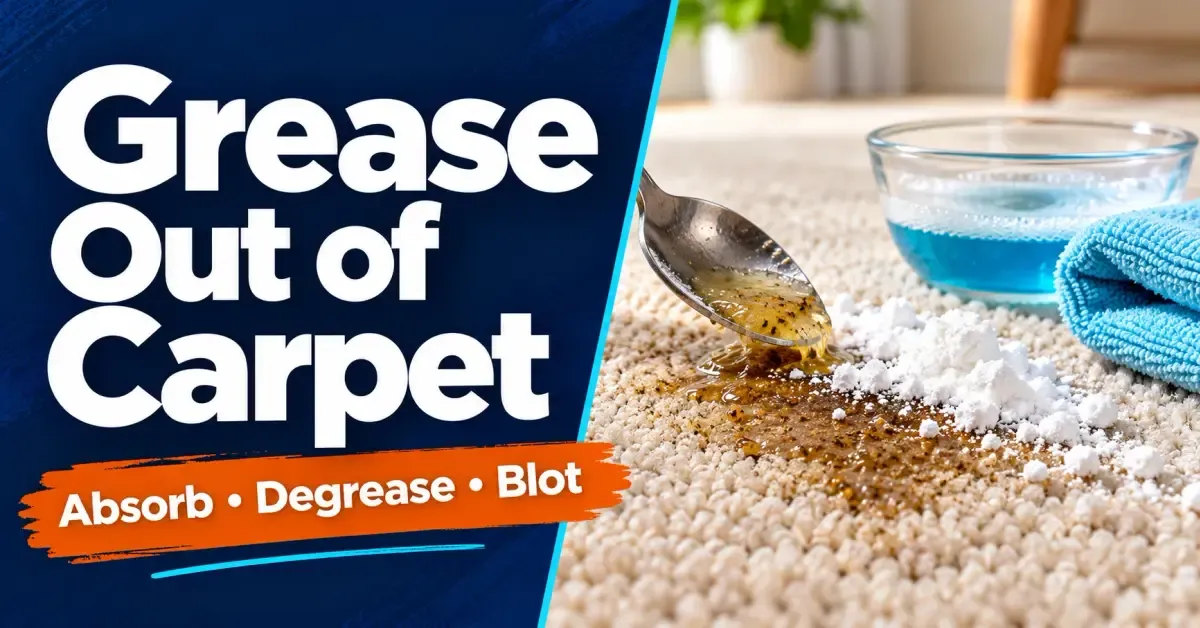
This guide covers the real chemistry behind why oil resists cleaning, a clear breakdown of cooking oil versus motor grease since they're not the same problem, and how to stop that halo ring from forming around the spot as you clean it.
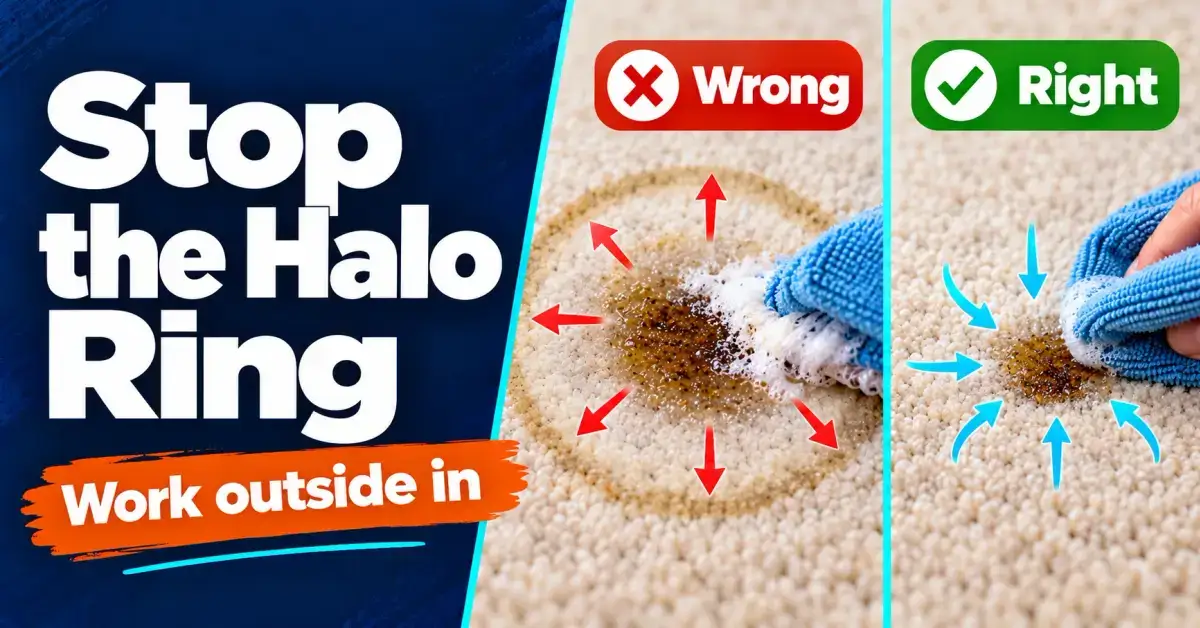
Absorb loose grease first with a dull knife or spoon, then apply an absorbent powder like baking soda or cornstarch to pull out excess oil. Follow with a dish soap solution, since dish soap's surfactant action is what actually breaks oil down. Blot, don't scrub, and work from the outside in to avoid spreading a ring.
How Do You Remove Grease From Carpet?
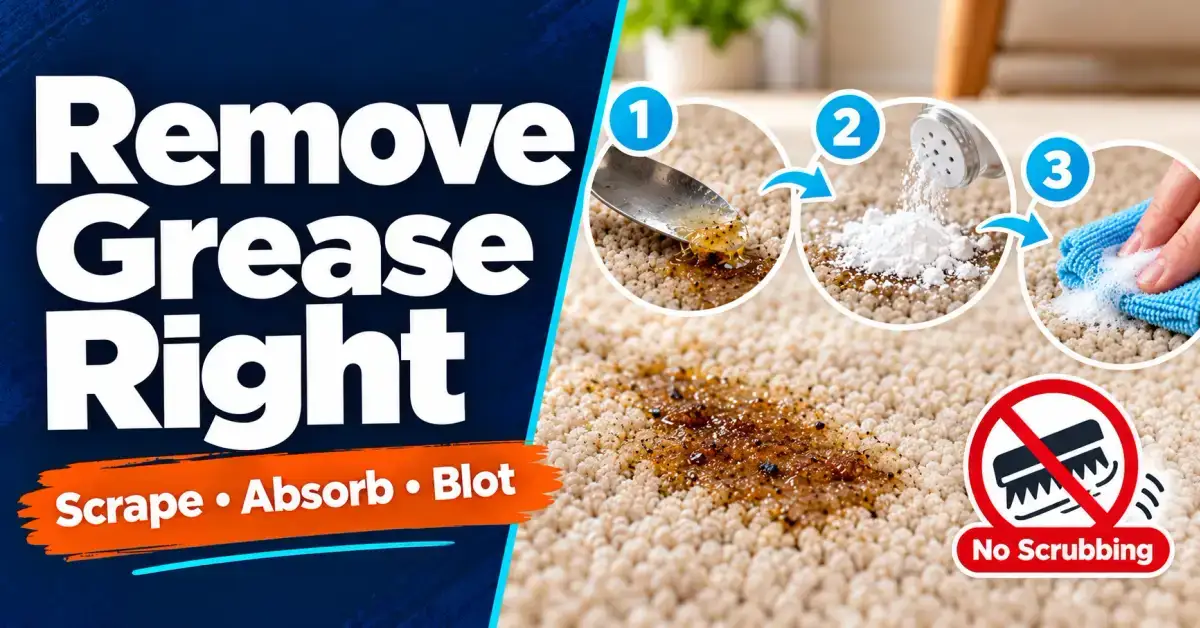
Scrape or blot away any solid grease first using a dull knife or spoon, taking care not to press it further into the fiber. This removes the bulk before you introduce any liquid.
Sprinkle a generous layer of baking soda or cornstarch over the remaining stain and let it sit for fifteen to twenty minutes. The powder absorbs oil out of the fiber rather than pushing it around. Vacuum up the powder, then apply a few drops of dish soap mixed with warm water, working from the outer edge of the stain toward the center. Blot with a clean cloth, rinse with plain water, and blot dry.
Why Is Oil and Grease So Hard to Remove From Carpet?
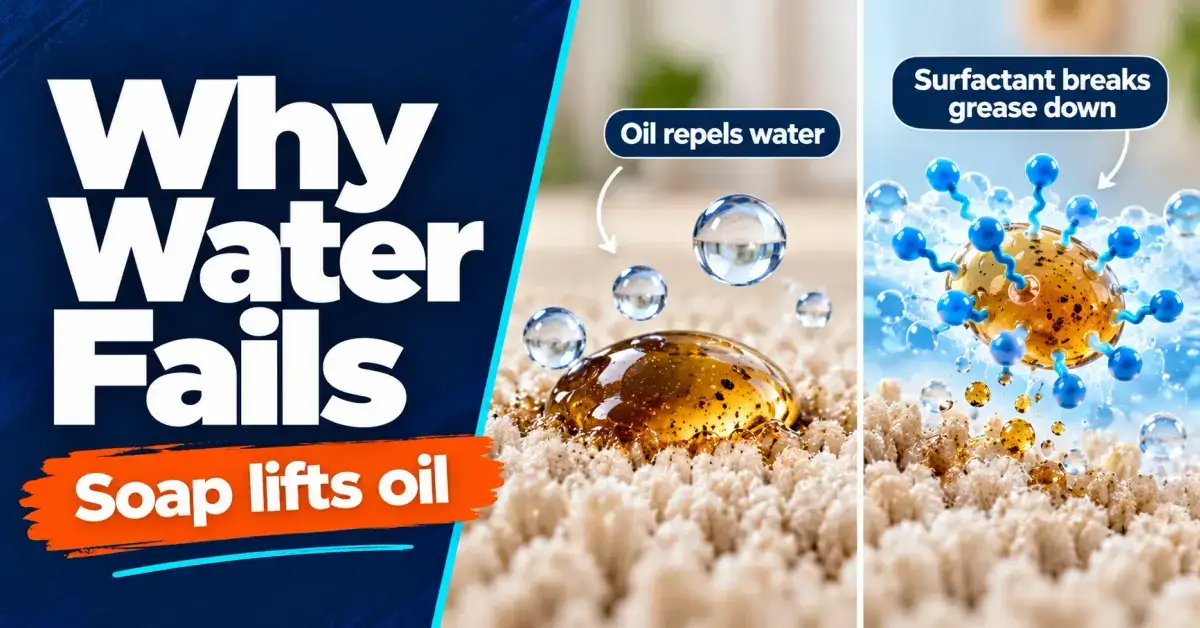
Oil and grease are hydrophobic, meaning they repel water instead of dissolving in it. This is the core reason plain water, no matter how much you use, can't lift an oil-based stain on its own.
Dish soap works because it's a surfactant. One end of the soap molecule binds to oil, the other end binds to water, which lets the oil be lifted away and rinsed out instead of just pushed around the fiber. This is the same reason dish soap cuts through grease on dishes, and it's the actual mechanism at work on carpet too, not just a home remedy that happens to help.
How Do You Get Oil Out of Carpet?
The core method for any oil spill is absorb first, then break it down with dish soap. Blot excess liquid immediately with a clean cloth, pressing rather than wiping so the oil doesn't spread further.
Apply an absorbent powder and let it draw out what's soaked into the fiber before vacuuming it away. Then treat with a dish soap and warm water solution, working in small circles from the edges inward. Repeat the powder-then-soap cycle if the stain is large or has had time to spread, since one pass often isn't enough on a fully saturated spot.
How Do You Get Cooking Oil Out of Carpet?
Cooking oil responds well to the same absorb-then-degrease method, but it behaves differently than petroleum-based oil since it's organic and breaks down more easily with heat and soap alone. Olive oil, vegetable oil, and coconut oil all fall into this category.
Coconut oil is worth calling out specifically, since it solidifies at room temperature. If a coconut oil spill has hardened, warm the area slightly with a hair dryer on low before blotting so the oil liquefies and lifts more easily. Because cooking oils don't contain the added detergents or graphite found in motor oil, they typically respond faster to dish soap treatment and rarely need a solvent-based product.
How Do You Get Motor Oil or Grease Out of Carpet?
Motor oil and automotive grease need a stronger approach than cooking oil, since they often contain additives like detergents and graphite that cooking oil doesn't have. These additives are part of why motor oil leaves a darker, more stubborn mark than a cooking oil spill of the same size.
After absorbing excess with powder, use a dish soap formulated for cutting grease, applying a bit more concentrated than you would for cooking oil. For black or axle grease specifically, a small amount of degreasing laundry detergent worked in with a soft brush can help before you rinse. Avoid petroleum-based solvents like brake cleaner directly on carpet, since they can damage synthetic fiber and backing.
How Do You Get Old, Dried Grease Stains Out of Carpet?
Dried grease stains need to be softened before they'll respond to cleaning. Warm the area gently with a hair dryer on low heat, which helps loosen oil that's hardened into the fiber.
Once softened, treat with dish soap and warm water the same way you would a fresh stain, expecting to repeat the cycle two or three times. Older grease stains that have had weeks to set sometimes leave a faint shadow even after the oil itself is gone, since dirt trapped in the oil can remain behind. A final pass with an oxygen-based cleaner often clears this residual shadow.
How Do You Prevent a Ring From Forming Around a Grease Stain?
A ring forms when oil spreads outward faster than it's absorbed, especially if too much liquid solution is applied at once. Working from the outside edge of the stain inward, rather than starting in the center, keeps the oil contained instead of pushing it further out.
Picture someone treating a grease spot by pouring dish soap solution directly onto the center and scrubbing. The oil spreads outward under pressure, and a faint ring appears around the original spot as it dries. Using a small amount of solution at a time, blotting frequently, and always moving inward from the edges prevents this from happening in the first place.
Why Acting Fast on Grease Stains Actually Matters
Oil and grease are hydrophobic, which is why plain water cannot lift an oil-based stain and why a surfactant like dish soap is necessary to break it down chemically rather than just push it around. The ANSI/IICRC S100 standard identifies prompt spot-and-stain response as a defined part of proper carpet maintenance, and this applies directly to oil-based stains, which spread and set faster the longer they sit untreated (Source: ANSI/IICRC S100).
Motor oil and grease often contain additives such as detergents and graphite beyond the base petroleum, which is part of why an automotive stain can leave a darker, more persistent mark than a cooking oil spill of similar size (Source: Zerorez Carpet Cleaning). Products carrying the CRI Seal of Approval have been verified not to damage carpet fiber or leave harmful residue, an important consideration since some solvent-based degreasers are aggressive on certain fiber types (Source: Carpet and Rug Institute). Most major carpet manufacturers also require documented use of approved cleaning methods to keep stain warranties valid, which applies to oil-based stains the same as any other (Source: manufacturer warranty documentation).
Common Questions About Grease Stain Removal, Answered
Does baking soda actually absorb grease and oil from carpet?
+
Yes, baking soda genuinely absorbs oil out of carpet fiber rather than just deodorizing it. It works best as the first step, before any liquid cleaning solution.
Does WD-40 remove oil stains from carpet, or cause them?
+
WD-40 is itself a petroleum-based product and can cause an oil stain if used on carpet. It's not recommended as a stain remover here, since it adds oil rather than removing it.
Does vinegar work on grease stains?
+
Vinegar has mild degreasing properties from its acidity, but it's much less effective than dish soap on oil-based stains since it doesn't have the same surfactant action.
How do you get oil out of car carpet?
+
Use the same absorb-then-degrease method, but work in smaller sections since car carpet has less airflow underneath and takes longer to dry.
How do you get black or axle grease out of carpet?
+
Absorb excess first, then treat with a concentrated dish soap or degreasing laundry detergent worked in with a soft brush before rinsing thoroughly.
How do you get the smell of oil or grease out of carpet?
+
Once the stain is treated, a light baking soda application left on for twenty minutes and vacuumed up helps absorb any lingering odor.
Are oil stains on carpet permanent?
+
Rarely, if treated promptly with the right method. Older, fully set stains sometimes leave a faint residual shadow even after the oil itself is removed.
How do you get hair oil out of carpet?
+
Hair oil responds to the same dish soap and warm water method used for cooking oil, since it's typically a light, organic oil rather than petroleum-based.
Does hot or cold water work better on grease stains?
+
Warm water works better than cold for oil-based stains, since the dish soap's surfactant action is more effective at slightly warmer temperatures.
When should you call a professional for a grease or oil stain?
+
Call a professional if the stain persists after repeated treatment, covers a large area, or has fully dried into the padding beneath the carpet.
Learning how to remove grease from carpet successfully comes down to understanding what you're actually fighting: an oil-based stain that needs a surfactant, not just water, and a method that works from the outside in. Handled this way, most grease and oil stains come out completely.
Need a carpet cleaning company you can trust? We handle residential and commercial carpet cleaning, rug cleaning, upholstery cleaning, and pet stain and odor removal —our team is ready to help.

Michael Sanders
Michael Sanders is a home care and cleaning industry writer covering carpet maintenance, flooring care, and household cleaning practices across the United States. His work focuses on practical, research-backed guidance — from stain and odor removal to deep extraction methods and indoor allergen prevention. Michael collaborates with cleaning professionals to ensure accuracy, and his writing reflects a genuine interest in helping homeowners make informed decisions about caring for their homes.