
Blog · DIY Guide
How to Clean Carpet Without a Machine: Full DIY Guide
Learning how to clean carpet without a machine saves real money, since rental units run $30 to $50 a day and professional visits cost several times that. The problem is that most online advice stops at "sprinkle baking soda and vacuum," which barely scratches the surface of what dirty carpet actually needs.
Published October 22, 202611 min read
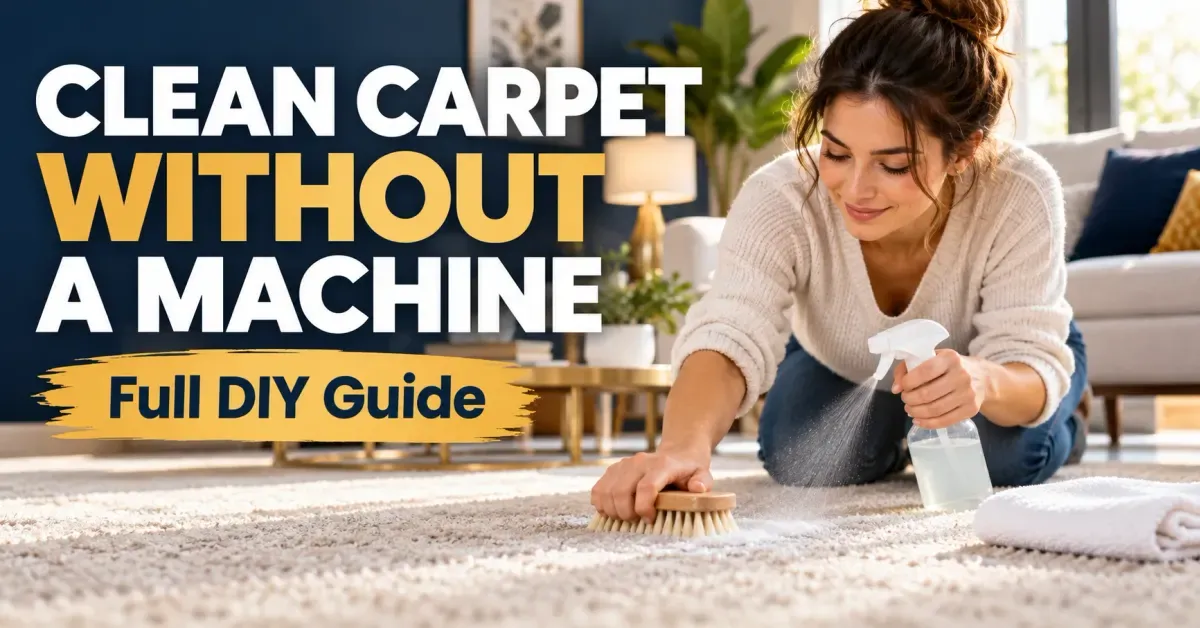
This article gives you the complete hand cleaning process: the supplies that work, the step by step method, real stain treatments, and the one mistake that ruins more DIY carpet jobs than everything else combined. You will also learn what hand cleaning honestly cannot fix, so you know when to stop scrubbing.
Clean carpet without a machine by vacuuming first, pre-treating stains, applying a diluted vinegar and dish soap solution lightly, scrubbing with a stiff brush, then blotting moisture out with towels until nearly dry. Use minimal liquid, since there is no machine to extract it back out.
What Do You Need to Clean Carpet Without a Machine?
Seven basic items handle almost every hand cleaning job: white vinegar, clear dish soap, baking soda, a spray bottle, a stiff bristle brush, a stack of white microfiber towels, and a fan. Most homes already own everything on this list.
Each item has a specific job. Vinegar cuts through residue and mild grime. A few drops of dish soap lift oily soil. Baking soda absorbs odors. The spray bottle controls how much liquid touches the carpet, which matters more than anything else in this process. The brush agitates, the towels extract, and the fan drives drying.
One warning on towels: use white or light colored ones only. Colored towels can transfer dye into damp carpet fibers, turning a cleaning job into a new stain. The same rule applies to colored sponges and rags.
How to Clean Carpet Without a Machine, Step by Step
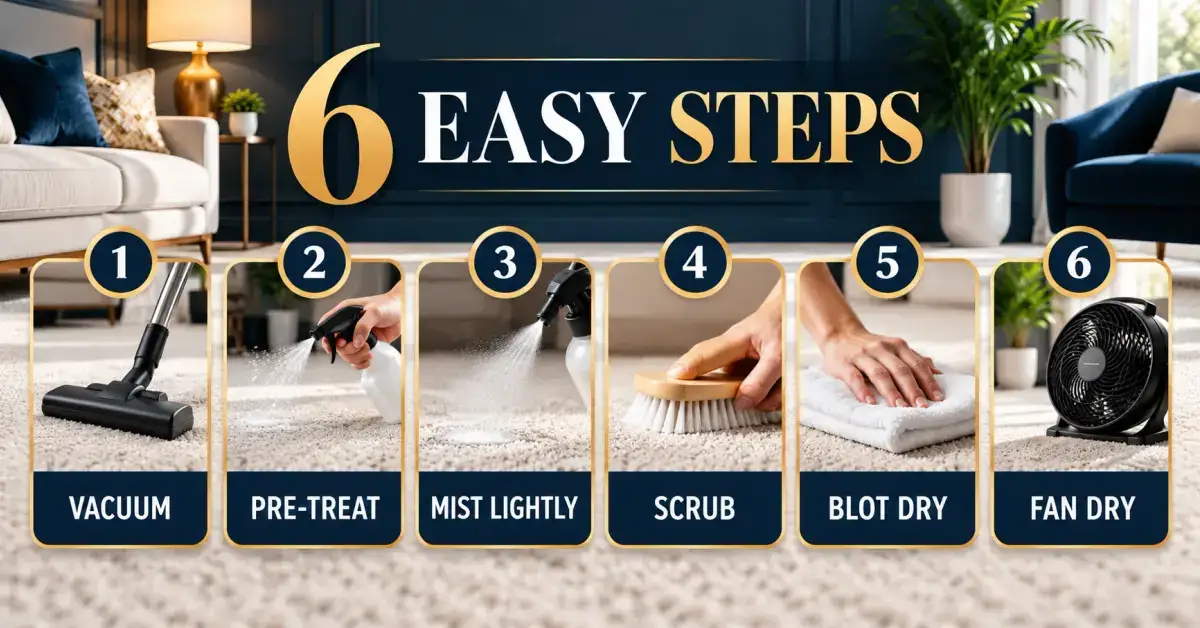
The full process runs in six steps: remove dry soil, pre-treat spots, apply solution lightly, scrub in sections, blot until nearly dry, then speed the drying with airflow. Done right, a room takes about an hour of work.
Step one, remove every bit of dry soil first. Vacuum slowly, or use a stiff broom and dustpan if no vacuum is available. Wet cleaning over loose dirt creates mud inside the pile.
Step two, pre-treat visible spots with your solution and let them sit 10 minutes. Step three, mix one part white vinegar, three parts water, and a few drops of dish soap in the spray bottle. Mist a 3 by 3 foot section lightly. Damp, never soaked.
Step four, scrub each section with the brush in one direction, then the opposite direction. Step five, press clean dry towels firmly into the carpet and blot until they stop pulling up moisture and dirt. Repeat with fresh towels. Step six, run a fan across the floor and keep foot traffic off until fully dry.
How to Shampoo a Carpet by Hand
To shampoo a carpet by hand, whip a teaspoon of dish soap in a bowl of warm water until thick suds form, then apply only the foam to the carpet with a brush. The foam does the cleaning while keeping liquid out of the backing.
Work the suds in with circular strokes, let them sit five minutes, then scrape the dirty foam up with a spatula or squeegee. Follow with a towel dampened in plain water to rinse, then blot dry. This foam-only trick is how cleaners handled carpet before machines existed, and it still works.
Does Baking Soda Actually Clean Carpet?
Baking soda deodorizes carpet, but it does not clean it. That distinction matters, because millions of people sprinkle it expecting dirt removal and get none.
Baking soda absorbs odor molecules sitting in the fibers, which is why carpet smells fresher after a treatment. What it cannot do is break down oily soil, lift stains, or remove grime bonded to fibers. Odor is chemistry baking soda can handle. Dirt is not.
Use it correctly and it earns its place: sprinkle a light, even layer, let it sit 30 minutes to overnight, then vacuum thoroughly. Go heavy on thick pile and the powder sifts to the base where vacuums struggle to retrieve it, leaving gritty residue. Light application, full removal, every time.
How Do You Get Stains Out of Carpet by Hand?
Blot stains, never rub them. The Carpet and Rug Institute recommends blotting because rubbing pushes the spill deeper and permanently distorts fiber twist. Work from the stain's outer edge toward the center to stop it spreading.
Match the treatment to the stain. Coffee and wine respond to the vinegar solution, applied and blotted repeatedly. Grease needs dish soap solution, since soap is built to break down oil. Pet accidents need an enzyme cleaner, which digests the odor-causing proteins that vinegar only masks. Mud should dry completely first, then get scraped, vacuumed, and spot treated.
For stubborn old stains on light carpet, hydrogen peroxide works, but test it on a hidden corner first. Peroxide can bleach dark carpet visibly. Picture a homeowner treating a years-old mystery stain on navy carpet with straight peroxide: the stain lifts, and a pale ghost spot takes its place permanently. Test first, always.
The Biggest DIY Cleaning Carpet Mistake: Too Much Water
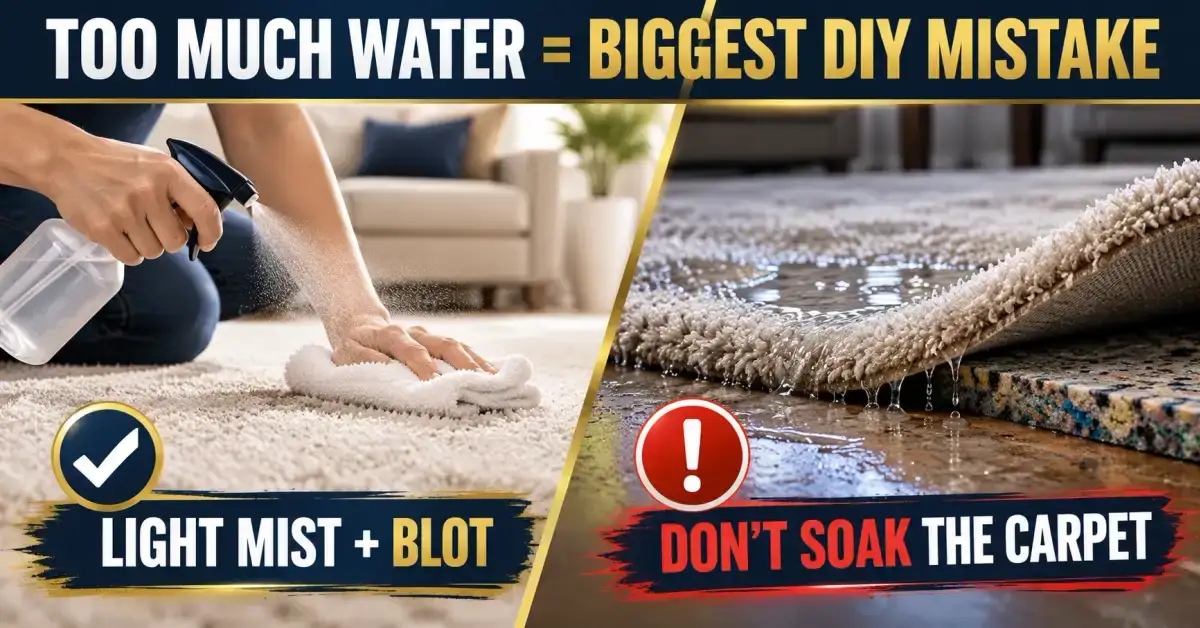
Oversaturation ruins more diy cleaning carpet attempts than every other mistake combined. A machine injects water and immediately pulls it back out. Your hands cannot. Every drop you pour in must come out through towel pressure alone.
Soaked carpet creates four problems at once. Leftover soap residue stays sticky and attracts new dirt fast. Moisture reaches the backing and pad, where towels cannot follow. Mildew starts, and the EPA warns wet materials should dry within 24 to 48 hours to prevent mold growth. Dissolved deep soil also wicks up the fibers as carpet dries, making stains reappear a day later.
Think of a homeowner who dumps a bucket of soapy water on a filthy hallway, scrubs hard, and towels the surface. The hallway looks great that evening. Within a week it smells musty and the traffic lanes look worse than before. Mist lightly, blot obsessively, and the same hallway stays clean instead.
How to Freshen and Sanitize Carpet Without a Steam Cleaner
Freshening carpet without steam takes three tools: baking soda for odor, a vinegar mist for light sanitizing, and enzyme cleaner for anything organic. Together they handle routine upkeep between deep cleans.
Vinegar's acidity reduces some bacteria on fiber surfaces, though it is a mild helper, not a true disinfectant. Enzyme cleaners handle pet accidents, food spills, and body soils by breaking down the organic matter itself. Small rugs get a bonus option: a few hours in direct sunlight, since UV light naturally reduces microbes and odor.
One hard safety rule: never mix cleaning chemicals. Bleach combined with vinegar or any acid releases chlorine gas, which the CDC warns is dangerous to breathe even in small amounts. One product at a time, rinsed before trying another.
What Hand Cleaning Can Fix and What It Cannot
Hand cleaning handles surface soil, fresh spills, odors, and overall appearance. It cannot fix contamination below the fiber level, and knowing that line saves money and frustration.
Pet urine that reached the pad, years of embedded grit grinding at fiber roots, and deep set odor in the backing all sit beyond towel reach. No amount of scrubbing gets there, because the problem is physically below where hands can work. The IICRC S100 standard draws the same line, treating spot cleaning as maintenance and periodic deep extraction as the restorative process.
There is also a warranty angle. Manufacturers including Shaw and Mohawk require professional hot water extraction every 12 to 18 months to keep coverage valid. A homeowner who spends every weekend fighting a recurring pet odor spot with vinegar is often better served spending once on extraction that removes the source, then hand cleaning to maintain the result.
Why Careful Technique Matters More Than Cleaning Products
The data behind carpet care shows technique, not product choice, decides whether DIY cleaning helps or hurts. These facts explain the rules above.
The EPA states wet materials, including carpet, should dry within 24 to 48 hours to prevent mold and mildew growth, which is why moisture control is the core skill of hand cleaning. The CDC warns that mixing bleach with vinegar or other acids releases chlorine gas, dangerous even in small exposures. The Carpet and Rug Institute recommends blotting over rubbing because rubbing permanently distorts carpet fiber twist. The IICRC S100 standard classifies hand and spot cleaning as interim maintenance, with deep extraction as the restorative step. And manufacturer warranties from brands like Shaw and Mohawk require professional extraction every 12 to 18 months, meaning hand cleaning preserves appearance but not coverage.
Common Questions About Cleaning Carpet by Hand, Answered
How do you clean a rug without a carpet cleaner?
+
Take the rug outside, shake or beat it to remove dry soil, then spot clean with a vinegar and dish soap solution. Small synthetic rugs can dry in sunlight, which also helps kill odor.
How do you clean white or light-colored carpet at home?
+
Use the standard vinegar solution but blot with extra care, since white carpet shows every missed spot. Hydrogen peroxide is safe on most white carpet and lifts yellowing and old stains well.
What can you use if you ran out of carpet cleaning solution?
+
Mix one part white vinegar, three parts water, and a few drops of clear dish soap. This homemade mix handles most routine cleaning and costs pennies per bottle.
How do you clean very dirty or heavily soiled carpet by hand?
+
Work in small sections with repeated light passes instead of one heavy soaking. Vacuum, treat, scrub, blot, and repeat on the worst areas over two sessions if needed.
Can you clean car carpet without a machine?
+
Yes, the same spray, scrub, and blot method works on car carpet. Use even less liquid, since car carpet sits over foam and metal that must not stay wet.
How long does carpet take to dry after cleaning by hand?
+
Properly blotted carpet dries in 2 to 6 hours with a fan running. If carpet stays damp past 24 hours, too much liquid went in.
Is vinegar safe on every carpet type?
+
Vinegar is safe on synthetic fibers like nylon, polyester, and olefin. Use it sparingly on wool and natural fibers, since repeated acid exposure can weaken them over time.
How do you clean carpet on stairs without a machine?
+
Work one stair at a time from top to bottom with a spray bottle and brush. Keep moisture minimal so stairs stay safe to walk on while drying.
How do you get dirt out of carpet without a vacuum?
+
Sweep the carpet with a stiff broom in short strokes, collecting soil in a dustpan. A rubber squeegee also pulls up embedded hair and dust surprisingly well.
How often should carpet be deep cleaned by hand?
+
Every 3 to 6 months works for most homes, with spot cleaning as spills happen. High traffic homes with kids or pets benefit from quarterly sessions.
The real skill in how to clean carpet without a machine is restraint. Anyone can pour solution and scrub. The homeowners who get professional-looking results are the ones who use the least liquid possible and put their effort into blotting it back out. Master that one discipline and every method in this guide works better, dries faster, and keeps carpet cleaner for longer.
Need a carpet cleaning company you can trust? We handle residential and commercial carpet cleaning, rug cleaning, upholstery cleaning, and pet stain and odor removal —our team is ready to help.

Michael Sanders
Michael Sanders is a home care and cleaning industry writer covering carpet maintenance, flooring care, and household cleaning practices across the United States. His work focuses on practical, research-backed guidance — from stain and odor removal to deep extraction methods and indoor allergen prevention. Michael collaborates with cleaning professionals to ensure accuracy, and his writing reflects a genuine interest in helping homeowners make informed decisions about caring for their homes.