
Blog · Cleaning Methods
Carpet Shampooing Method: How It Works and When to Use It
The carpet shampooing method is the oldest wet cleaning technique still in use, and it leaves homeowners genuinely confused. Machine brands promote it as a deep clean anyone can do at home. Professional cleaners often call it outdated. Both sides have a point, and neither tells the full story.
Published October 20, 202610 min read
This article explains exactly how shampooing works, the step by step process to do it right, why carpets often get dirty again fast after shampooing, and how it stacks up against steam cleaning so you know which one your carpet actually needs.
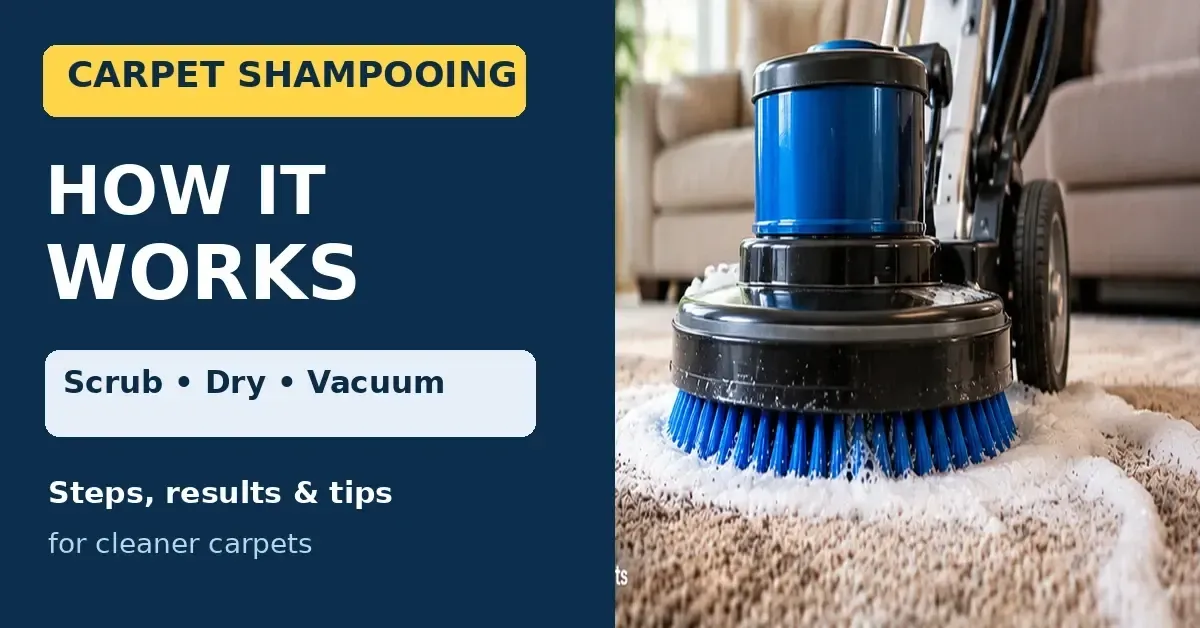
The carpet shampooing method uses a rotary brush machine to scrub a foaming detergent solution into carpet fibers, loosening embedded dirt. The foam and soil get vacuumed away after drying. It cleans heavily soiled carpet well, but leftover detergent residue is its biggest weakness if the carpet is not rinsed properly.
What Is the Carpet Shampooing Method?
The carpet shampooing method is a wet cleaning process where a foaming detergent gets worked into carpet fibers with a rotating brush, then removed by vacuuming once dry. The scrubbing action is what sets it apart from every other cleaning method.
Shampooing dates back decades and was the standard way to clean carpet before hot water extraction equipment became widely available. The rotary machines used for shampooing spin brushes at roughly 175 RPM, according to industry equipment standards, which delivers more direct agitation than almost any other method.
That agitation is both the strength and the story of this method. Aggressive scrubbing breaks up soil that gentler methods leave behind. The trade off comes after the scrubbing, which the sections below cover in detail.
How Do You Shampoo Carpet Step by Step?
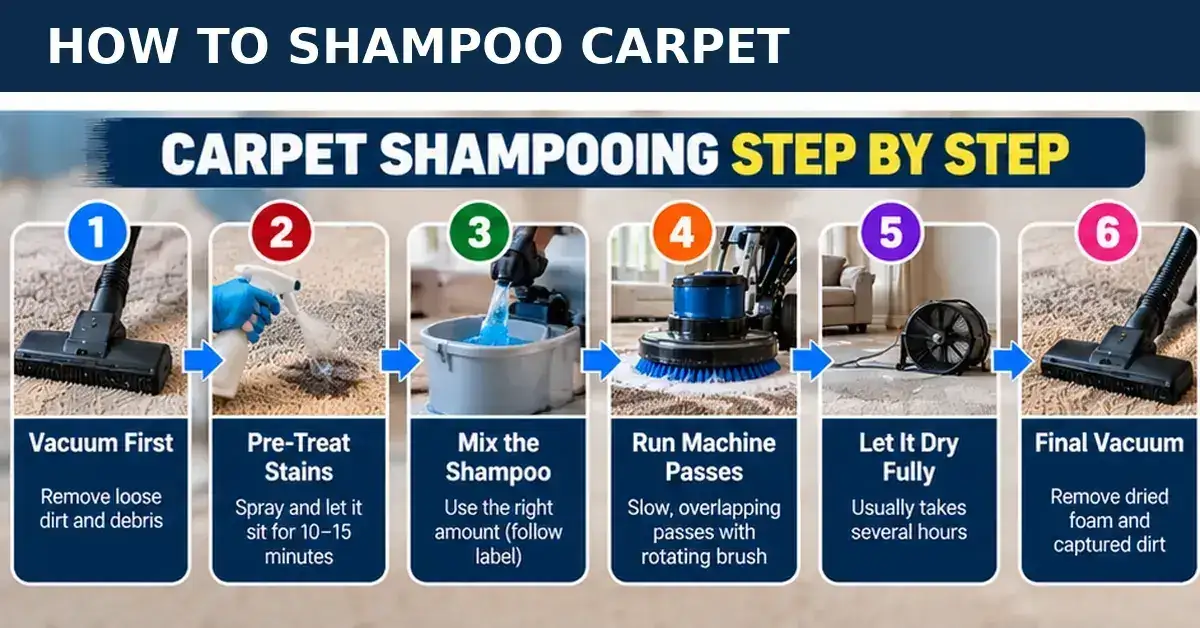
Shampooing carpet correctly takes six steps: vacuum first, pre-treat stains, mix the solution properly, run slow machine passes, let the carpet dry fully, then vacuum again. Skipping any step is why most DIY shampooing jobs disappoint.
Start with a slow, thorough vacuum pass to remove dry surface soil. Shampooing over loose dirt just turns it into mud inside the fibers. Next, spray a pre-treatment on traffic lanes and visible spots, giving it 10 to 15 minutes of dwell time to break down oily buildup.
Mix the shampoo exactly as the label directs. More detergent does not mean more cleaning, it means more residue. Run the machine in slow, overlapping passes, letting the brushes do the work rather than pressing down hard.
Let the carpet dry completely, which can take several hours with fans and open windows. Finish with a final vacuum pass to lift out the dried foam along with the soil it captured. This last vacuum matters as much as the shampooing itself.
Is Carpet Shampooing Effective, or Is It Outdated?
Carpet shampooing is still effective for heavily soiled carpet because no other method matches its scrubbing power, but it has real limits that newer methods were designed to fix. Calling it outdated is not quite fair. Calling it a complete solution is not honest either.
The strength is agitation. A carpet caked with ground-in dirt from years of neglect responds to rotary scrubbing better than it responds to spray and extract methods alone. This is why some professionals still shampoo first as a pre-treatment step before extracting.
The weakness is what stays behind. Traditional shampooing has no built-in rinse step, so detergent remains in the fibers after cleaning. The IICRC S100 standard recognizes shampooing as a legitimate professional method, but specifies performance outcomes rather than endorsing any single approach. In practice, that means shampooing works best either on durable, heavily soiled carpet or as one stage in a larger cleaning process, not as the only method a home ever uses.
Why Does Carpet Get Dirty Faster After Shampooing?
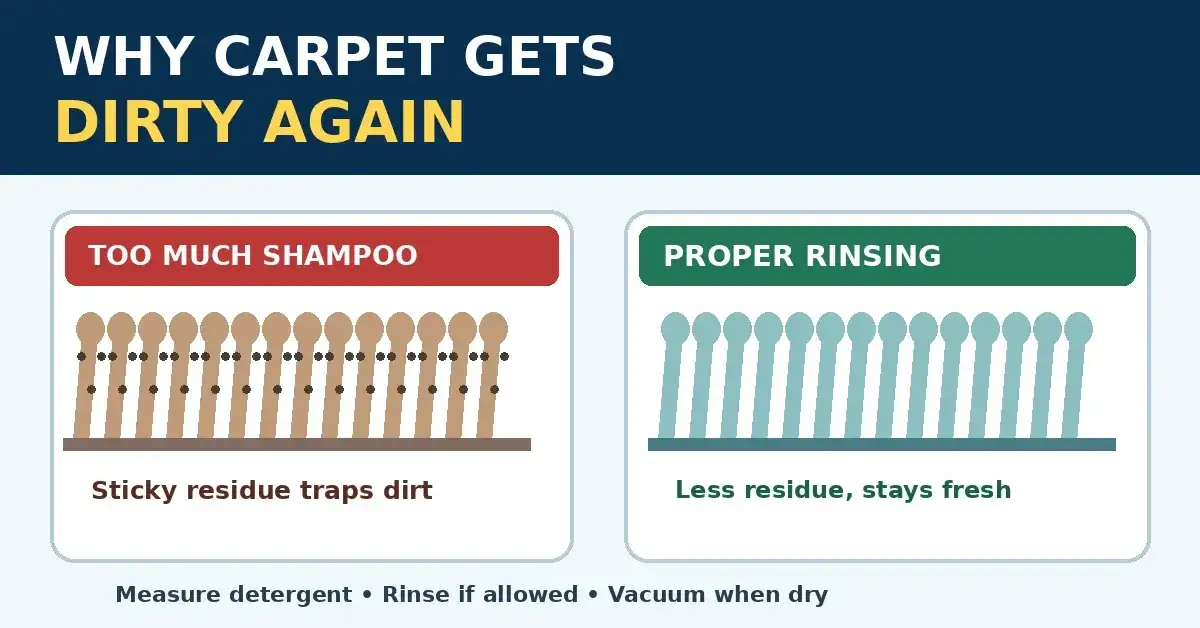
Carpet gets dirty faster after shampooing because leftover detergent residue is sticky, and sticky fibers grab and hold new soil from every foot that crosses them. This is the single most common complaint with this method, and almost nobody explains it upfront.
Carpet shampoo is built from surfactants, the same chemistry that makes soap work. Surfactants bond to oily soil so it can be removed. When too much shampoo is used, or the dried foam is not fully vacuumed out, those surfactants stay in the carpet and keep doing their job, bonding to fresh dirt week after week.
Picture a homeowner who rents a shampooer, doubles the detergent hoping for a deeper clean, and admires the results for about three weeks. Then the traffic lanes turn gray faster than ever before. The carpet is not dirtier than normal. It is stickier than normal. Prevention comes down to three habits: measure detergent exactly, vacuum thoroughly after drying, and rinse with clean water when the machine allows a rinse pass.
Carpet Steam Cleaning vs Shampooing: Which Should You Choose?
Steam cleaning, meaning hot water extraction, is the better choice for most homes because it rinses and removes what it puts in, while shampooing wins when heavy soil needs serious scrubbing first. The decision comes down to what your carpet needs most: rinsing or agitation.
Here is how they compare on the factors that matter:
Carpet Shampooing vs Steam Cleaning
| Factor | Shampooing | Steam Cleaning |
|---|---|---|
| Soil removal depth | Strong on surface and embedded soil through scrubbing | Strong through the full pile, flushes soil out of the base |
| Residue left behind | Moderate to high without a rinse step | Low, since extraction pulls solution back out |
| Drying time | Several hours, foam holds moisture in fibers | 2 to 12 hours depending on equipment |
| Warranty compliance | Does not satisfy most manufacturer requirements | The method most warranties specifically require |
For a family deciding between renting a shampooer or hiring an extraction service, the practical answer is this: shampoo when the carpet is durable and visibly filthy, extract when the carpet needs a genuine deep clean that leaves nothing behind. Homes with allergy concerns or newer carpet under warranty should lean toward extraction every time.
What Should You Put in a Carpet Shampooer?
Only use a cleaning solution made specifically for carpet shampoo machines, measured at the exact ratio on the label. What people actually pour into these machines causes most of the problems blamed on the method itself.
Laundry detergent and dish soap are the two most common substitutes, and both are a mistake. They produce far more foam than carpet machines are designed to handle, and that foam carries high levels of surfactant that never fully comes out of the fibers. Dish soap in particular can leave carpet feeling stiff and looking dull within weeks.
Think about a homeowner who runs out of carpet solution mid-job and tops off the tank with dish soap. The machine overflows with suds, the recovery tank fills with foam instead of dirty water, and the carpet takes twice as long to dry. Products carrying the CRI Seal of Approval are tested by the Carpet and Rug Institute for both soil removal and resoiling performance, which makes that label the simplest way to pick a solution that will not haunt the carpet later.
How Often Should You Shampoo Your Carpet?
Most homes only need shampooing once or twice a year, with high traffic households topping out around once per quarter. More frequent shampooing adds residue faster than it adds cleanliness.
A quiet two-person home can go 12 months between sessions with regular vacuuming in between. Homes with kids, pets, or constant guests benefit from a session every 3 to 6 months, focused on traffic lanes and entry areas rather than full wall to wall passes every time.
One thing shampooing frequency cannot fix is warranty compliance. Major manufacturers including Shaw and Mohawk require professional hot water extraction every 12 to 18 months to keep wear and stain warranties valid. Shampooing between those extractions is fine as maintenance, but it does not replace the required deep clean no matter how often it happens.
What Shampooing Does to Your Carpet Over Time
Data from industry and health organizations shows why technique matters more than effort with this method. These facts explain the long-term picture most shampooing guides skip.
Rotary shampoo machines agitate carpet at roughly 175 RPM according to industry equipment standards, which cleans aggressively but can distort or fuzz delicate fibers like wool with repeated use. The EPA advises that wet materials, including carpet, should dry within 24 to 48 hours to prevent mold growth, and shampooed carpet that stays damp in a closed room can cross that line. The IICRC S100 standard defines proper professional cleaning practices and treats residue management as a core part of an effective clean, not an optional extra. The CRI Seal of Approval program specifically tests solutions for resoiling performance, because residue-driven resoiling is common enough that the industry built a certification around measuring it.
Common Questions About Carpet Shampooing, Answered
Should you rinse carpet after shampooing?
+
Yes, rinsing with clean water after shampooing removes leftover detergent and is the single best way to prevent rapid resoiling. If your machine has a rinse setting, run a plain water pass after the shampoo pass.
Can you vacuum right after shampooing carpet?
+
No, wait until the carpet is fully dry before vacuuming, which usually takes 4 to 12 hours. Vacuuming damp carpet spreads soil around and can damage some vacuum motors.
How long does carpet take to dry after shampooing?
+
Shampooed carpet typically dries in 6 to 12 hours, longer in humid conditions. Fans, open windows, and air conditioning all shorten that window considerably.
How do you get old shampoo residue out of carpet?
+
A hot water extraction with plain water or a mild rinse solution pulls old detergent residue out of fibers. Several rinse passes may be needed if years of shampoo buildup exist.
Can you use laundry detergent or dish soap in a carpet shampooer?
+
No, both create excessive foam and leave heavy residue that carpet machines cannot remove. Only use solutions formulated for carpet shampoo machines at the labeled dilution.
Does carpet shampooing remove pet stains and odors?
+
Shampooing removes surface level pet stains and mild odor reasonably well. Urine that has soaked into the backing or pad needs enzyme treatment and extraction to fully resolve.
Is it better to rent or buy a carpet shampooer?
+
Renting makes sense for once-a-year cleaning, while buying pays off for homes shampooing quarterly or more. Rental units are often more powerful than budget consumer machines.
Can you shampoo carpet by hand without a machine?
+
Yes, a soft brush and properly diluted carpet shampoo can clean small areas by hand. Work the foam in gently, blot with clean towels, and keep moisture minimal.
What is the difference between a carpet cleaner and a carpet shampooer?
+
A carpet shampooer scrubs foam into fibers with brushes, while most machines sold as carpet cleaners spray solution and extract it back out. The extraction step is the key difference between them.
How long does it take to shampoo one room?
+
Shampooing an average room takes 20 to 40 minutes of active work, plus several hours of drying time. Slow, overlapping machine passes produce better results than rushing.
The thing that decides whether the carpet shampooing method helps or hurts your carpet is not the machine or even the shampoo. It is discipline with dilution and the willingness to rinse. A carefully measured, properly rinsed shampoo job on filthy carpet delivers results that surprise people. A heavy-handed one creates a resoiling cycle that makes the carpet worse with every session. Treat the label ratio as law and the rinse pass as mandatory, and this old method still earns its keep.
Need a carpet cleaning company you can trust? We handle residential and commercial carpet cleaning, rug cleaning, upholstery cleaning, and pet stain and odor removal —our team is ready to help.

Michael Sanders
Michael Sanders is a home care and cleaning industry writer covering carpet maintenance, flooring care, and household cleaning practices across the United States. His work focuses on practical, research-backed guidance — from stain and odor removal to deep extraction methods and indoor allergen prevention. Michael collaborates with cleaning professionals to ensure accuracy, and his writing reflects a genuine interest in helping homeowners make informed decisions about caring for their homes.