
Blog · DIY Guide
How to Clean My Carpet at Home Like a Professional
If you have ever searched how to clean my carpet at home, you know the advice is scattered. One page says sprinkle baking soda. Another says rent a machine. None of them explain the full system professionals actually follow, which is why so many DIY jobs end with damp, sticky, or dingy carpet.
Published October 23, 202611 min read
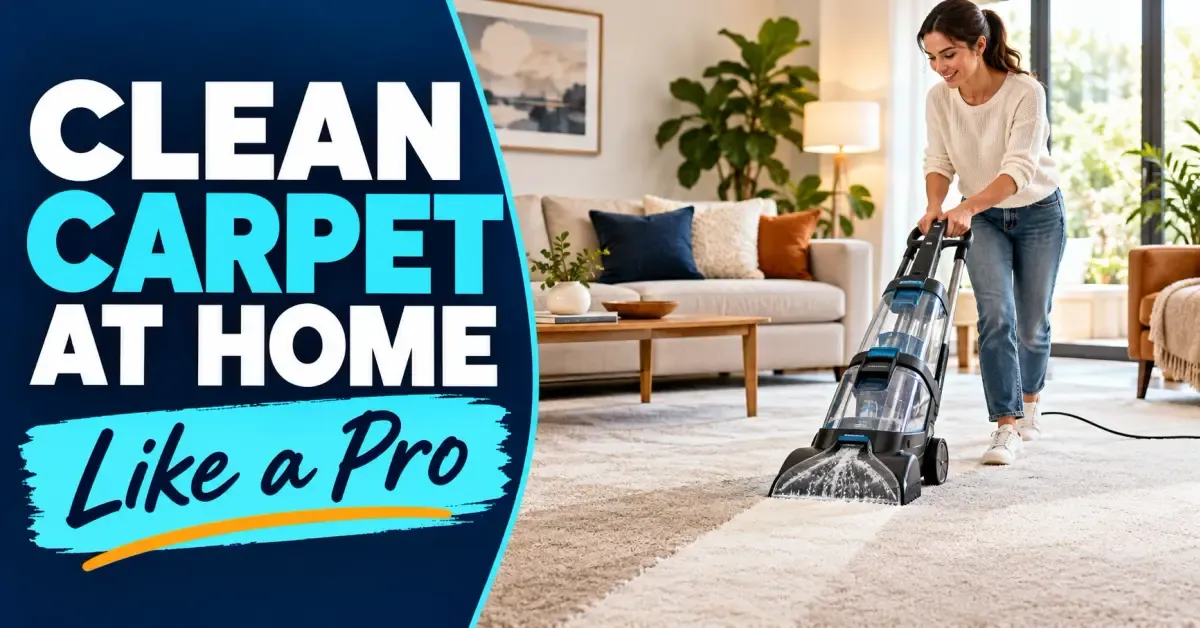
This article gives you that complete system: how to prep the room the right way, the exact machine technique that separates good results from soaked carpet, when disinfecting actually matters, and what to do after the cleaning is done. Follow it start to finish and your results will rival a paid service.
Clean carpet at home by vacuuming slowly first, pre-treating spots and traffic lanes, then running a carpet machine with one slow wet pass followed by two or more dry passes per section. Keep moisture low, dry with fans within 24 hours, and vacuum again once fully dry.
What Are the Three Levels of Cleaning Carpet at Home?
Cleaning carpet at home happens on three levels: routine vacuuming, spot response, and scheduled deep cleaning. Matching your effort to the right level saves hours of wasted work.
Routine vacuuming is the foundation. Industry data cited by the Carpet and Rug Institute indicates up to roughly 80 percent of carpet soil is dry particulate matter, and a slow vacuum pass removes it before it grinds into fibers. Spot response means treating spills within minutes, when almost anything comes out easily.
Deep cleaning is the third level: a full extraction session with a machine that flushes embedded soil from the pile. Most homeowners jump straight to this level for problems the first two levels would have prevented. A dingy hallway usually needs a deep clean once, then better vacuuming habits, not repeated deep cleans.
How Should You Prep Carpet Before Deep Cleaning?
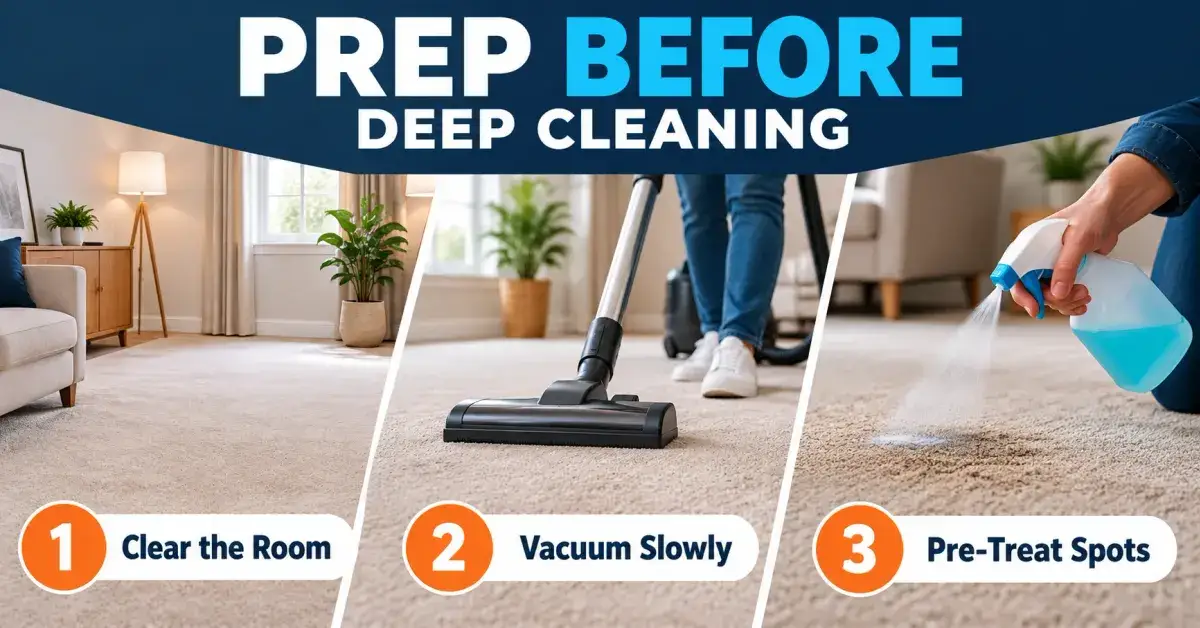
Prep decides half the result before the machine ever turns on. Three steps come first: clear the room, vacuum slowly, and pre-treat problem areas.
Move furniture out or to one side of the room. Cleaning around furniture legs leaves dirty halos that show once everything dries. Then vacuum the entire area at a slow walking pace, going over each strip twice. Deep cleaning over loose dry soil turns that soil into mud inside the pile.
Pre-treatment goes on last, 10 to 15 minutes before the machine runs. Spray traffic lanes, entry paths, and visible spots with a carpet pre-spray or a diluted solution. That dwell time lets the chemistry break down oily buildup so the machine can lift it instead of fighting it. Yes, professionals vacuum and pre-treat first, and skipping either step is the most common reason rental machine results disappoint.
Home Carpet Deep Cleaning Steps With a Machine
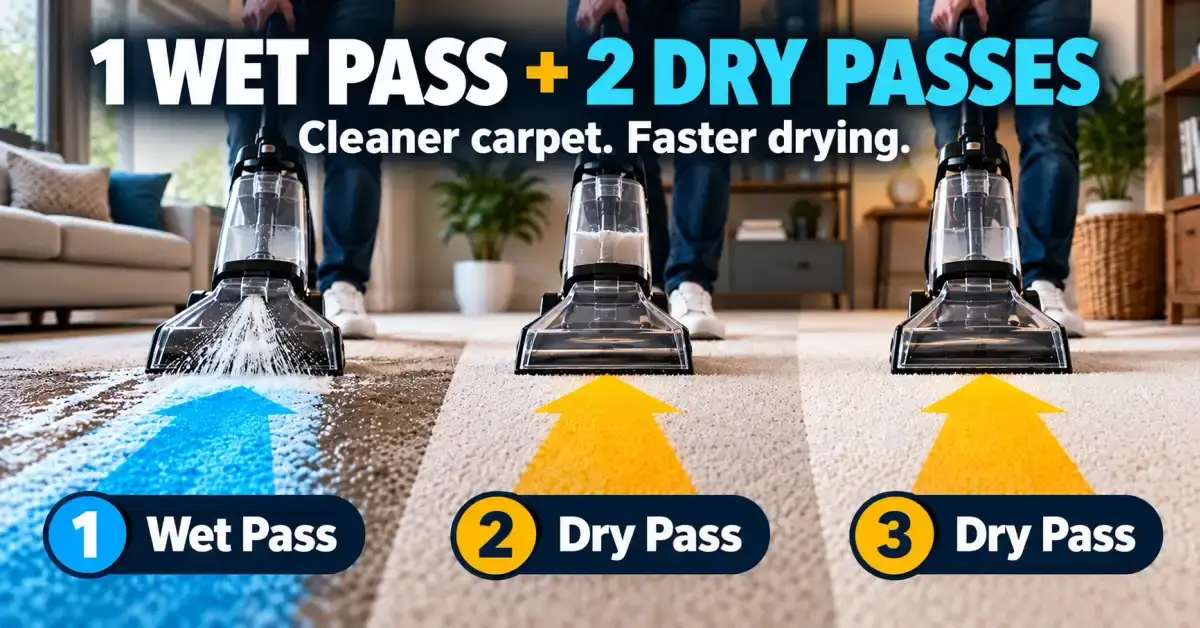
The core of home carpet deep cleaning steps is one rule: one slow wet pass, then multiple dry passes. Wet passes put solution in. Dry passes pull moisture out. Most people get the ratio backward.
Fill the machine with hot tap water and a low-suds carpet solution at the exact labeled dilution. Work in sections about 3 feet wide. Make one slow pass while spraying solution, moving at about half your normal walking speed so the machine has time to work.
Then release the spray trigger and make two or three passes over the same section with suction only. Keep going until the machine stops pulling up visible water. Overlap each new section slightly onto the last one, and plan your path so you finish at the doorway instead of trapped in a wet corner.
A homeowner who rushes wet passes and skips dry passes leaves a gallon or more of water in an average room. That water breeds odor and wicks old stains back to the surface within a day.
Should You Keep Cleaning Until the Water Runs Clear?
No, and chasing clear water is one of the most damaging habits in DIY carpet cleaning. Rinse water almost never runs completely clear, even on carpet a professional just cleaned.
Carpet holds trace soil, dye, and old cleaning residue that tint the water almost indefinitely. Homeowners who keep adding wet passes to reach clear water end up oversaturating the carpet and pushing moisture into the pad. Stop when the water runs mostly clear and noticeably lighter than when you started. That is the realistic finish line.
DIY Deep Clean Carpet: Machine, Rental, or By Hand?
For a DIY deep clean, carpet owners have three real options: buy a machine, rent one, or work by hand. The right pick depends on how often you clean and what you are cleaning up.
An owned machine costs $100 to $300 and pays for itself within a few uses for homes with kids or pets that need cleaning several times a year. Rentals run $30 to $50 a day plus solution, and rental units are often more powerful than budget consumer machines, making them the smart pick for once-a-year cleaning. Hand methods cost almost nothing and handle spots and small areas, but they cannot extract, so whole-room hand cleaning takes serious labor and drying discipline.
Think of a family with two dogs and a toddler. They deep clean four times a year, so an owned machine beats paying rental fees eight times over two years. A couple in a low-traffic condo cleaning annually does better renting a stronger unit once and storing nothing.
When Does Carpet Actually Need Disinfecting, and How Do You Do It at Home?
Most carpet never needs true disinfecting, because regular deep cleaning already removes the bulk of bacteria and allergens along with the soil they live in. Disinfecting matters in three situations: after household illness, after pet accidents, and after any water leak or flooding.
Here is the honest limit: genuine sanitizing comes from sustained heat. Professional hot water extraction systems run water between 150 and 210 degrees, per industry equipment standards, and that heat does the real killing. Home machines cannot hold those temperatures.
What works at home is targeted treatment. Enzyme cleaners break down the organic matter in pet accidents and body soils, which removes what bacteria feed on. A vinegar solution offers mild surface reduction. For illness recovery or flood contamination, a professional hot water extraction is the tool that actually reaches disinfection territory. Skip carpet sprays labeled as disinfectants that require soaking, since saturating carpet creates a mold problem worse than the germ problem.
What Should You Do After Deep Cleaning Your Carpet?
The job is not done when the machine shuts off. Drying, furniture timing, and one final vacuum decide whether the results last.
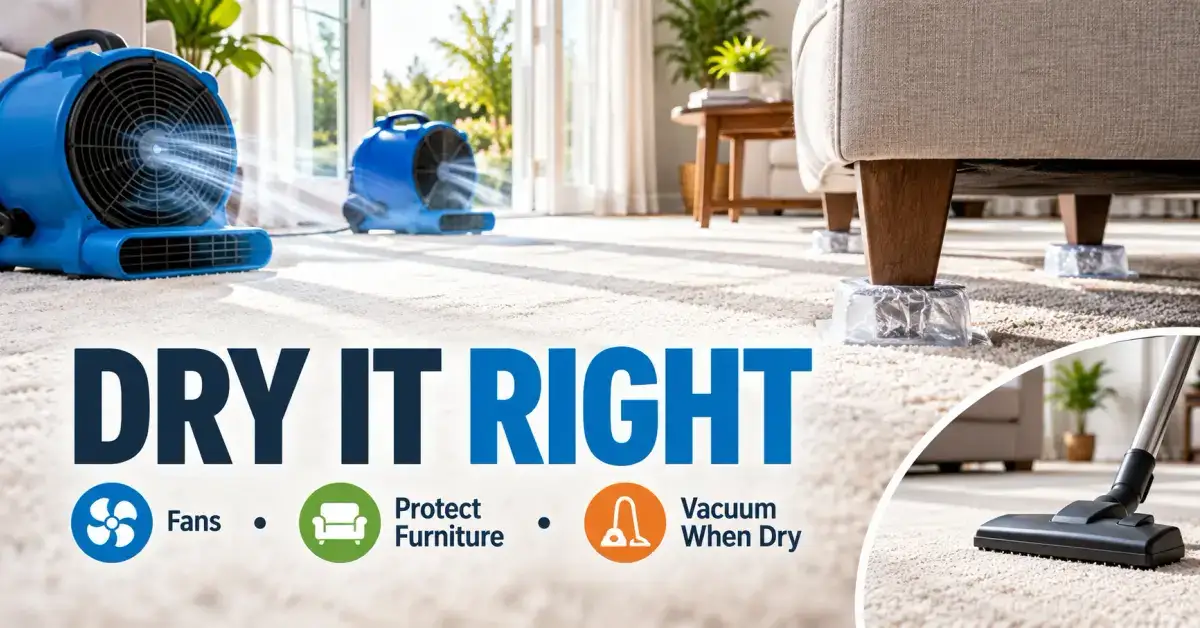
Start airflow immediately: fans across the floor, windows open in dry weather, or air conditioning running in humid weather. The EPA advises that wet materials, including carpet, should dry within 24 to 48 hours to prevent mold growth, and properly extracted carpet with fans dries well inside that window. Keep foot traffic off until the carpet feels dry to a firm hand press, usually 4 to 8 hours.
Wait until fully dry before returning furniture, or place foil squares or plastic blocks under legs to stop wood stain and rust marks from transferring into damp fibers. Once dry, vacuum one more time. This lifts the pile back up and removes any soil that wicked to the surface during drying. If a spot reappears a day later, that is wicking from below, and one targeted blot treatment usually finishes it.
Why Deep Cleaning Matters More Than Most Homeowners Realize
The numbers behind carpet care show deep cleaning is about more than looks. These facts explain what is actually at stake.
Up to roughly 80 percent of carpet soil is dry particulate, per industry data cited by the Carpet and Rug Institute, and that grit abrades fiber bases with every footstep until traffic lanes go permanently dull. The EPA states wet materials should dry within 24 to 48 hours to prevent mold, which is why extraction technique and airflow matter as much as soap. The IICRC recommends deep cleaning every 12 to 18 months for typical homes, and more often with kids, pets, or heavy traffic. Professional systems sanitize through sustained 150 to 210 degree heat, per industry equipment standards, a capability home machines do not match. And manufacturers including Shaw and Mohawk require professional hot water extraction every 12 to 18 months to keep warranties valid, so home cleaning maintains appearance while professional cleaning maintains coverage.
Common Questions About Cleaning Carpet at Home, Answered
Should you vacuum after deep cleaning your carpet?
+
Yes, vacuum once the carpet is completely dry. This lifts flattened pile and removes soil that wicked to the surface during drying.
How long does carpet take to dry after a deep clean at home?
+
Properly extracted carpet dries in 4 to 12 hours with fans running. If it stays damp past 24 hours, too much water went in during cleaning.
What is the best homemade cleaner for a carpet machine?
+
Mix one gallon of hot water with a quarter cup of white vinegar and a teaspoon of clear dish soap. Keep soap minimal, since excess suds damage machines and leave residue.
How do you neutralize carpet after cleaning?
+
Run a rinse pass with plain water mixed with a splash of white vinegar. The mild acid neutralizes alkaline detergent residue so fibers stay soft and resist resoiling.
What is carpet pre-treatment, and do you really need it?
+
Pre-treatment is a solution sprayed on traffic lanes and spots before machine cleaning. It breaks down oily soil during a 10 to 15 minute dwell, and skipping it cuts your results roughly in half.
Do professional carpet cleaners vacuum before they start?
+
Yes, reputable professionals always vacuum first because wet cleaning over dry soil creates mud. If a company skips this step, that is a red flag.
How do you clean old, worn carpet at home?
+
Use gentler technique: less solution, softer agitation, and thorough dry passes. Old carpet has weakened fiber twist, so aggressive scrubbing accelerates the wear you are trying to hide.
Can a vacuum alone deep clean carpet?
+
No, vacuuming removes dry soil but cannot touch the oily grime bonded to fibers. Deep cleaning needs solution, agitation, and extraction working together.
What is the difference between deep cleaning and regular carpet cleaning?
+
Regular cleaning means vacuuming and spot treatment, which handles surface soil. Deep cleaning uses hot water and extraction to flush embedded dirt from the full pile depth.
How do you keep carpet clean longer after a deep clean?
+
Vacuum twice weekly, treat spills the day they happen, and put walk-off mats at every entrance. Those three habits double the time between deep cleans.
The single best upgrade to how to clean my carpet at home is thinking in passes, not products. Almost every DIY failure traces back to too much solution going in and too little coming out. Count your dry passes, respect the drying window, and even a modest rental machine delivers results most people assume require a professional truck.
Need a carpet cleaning company you can trust? We handle residential and commercial carpet cleaning, rug cleaning, upholstery cleaning, and pet stain and odor removal —our team is ready to help.

Michael Sanders
Michael Sanders is a home care and cleaning industry writer covering carpet maintenance, flooring care, and household cleaning practices across the United States. His work focuses on practical, research-backed guidance — from stain and odor removal to deep extraction methods and indoor allergen prevention. Michael collaborates with cleaning professionals to ensure accuracy, and his writing reflects a genuine interest in helping homeowners make informed decisions about caring for their homes.