

Blog · Stain Removal Guide
How to Remove Old Stains From Carpet: Full Guide
Learning how to remove old stains from carpet starts with an uncomfortable truth: the recipes that failed on the stain when it was fresh will not suddenly work now. Age changes a stain chemically, and old stains need a different sequence, not just a stronger spray.
Published October 31, 202610 min read
The internet hands out the same five mixtures without explaining why a six-month-old spot resists them, when a mystery mark is not even a spill, or when a "stain" is actually damage no cleaner can touch. This guide covers the science of why stains set, the revival sequence professionals use, how to identify brown, black, and dark mystery marks before treating them, an honest product verdict, and the point where cleaning should stop.
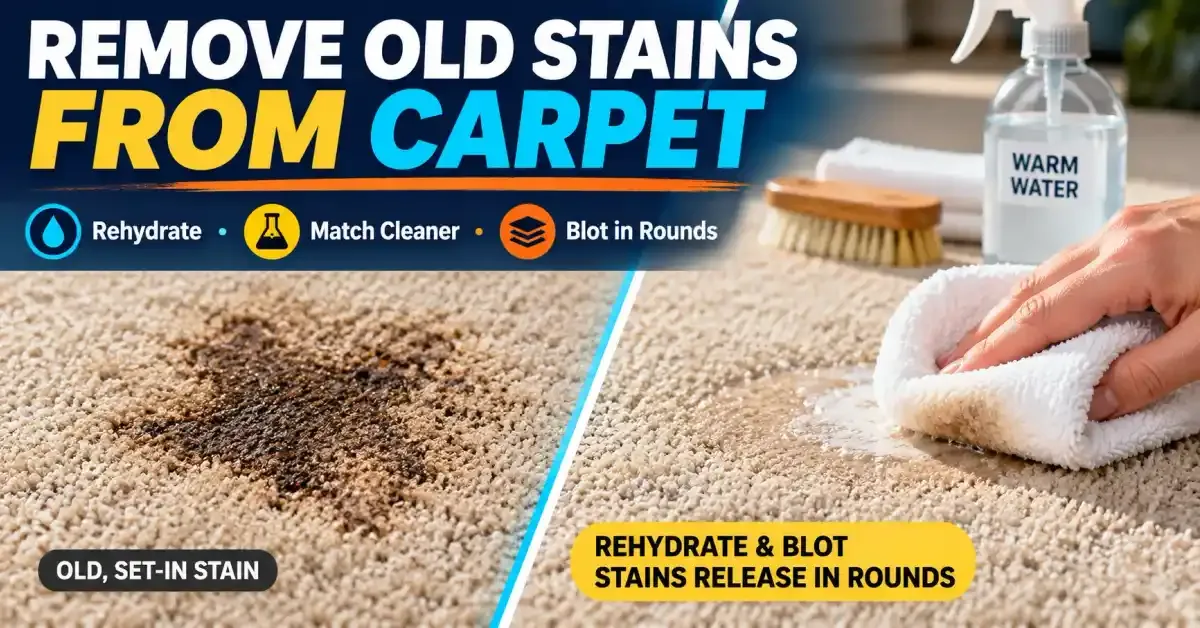
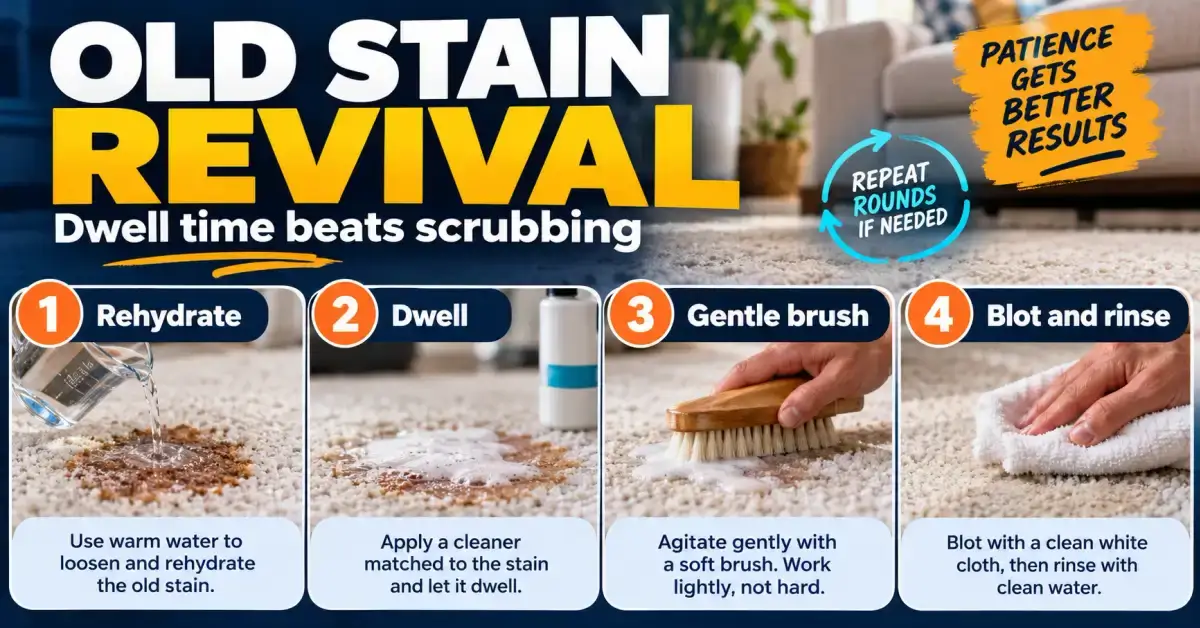
Rehydrate the old stain with warm water and let it sit ten minutes. Apply a cleaner matched to the stain type, give it dwell time, agitate gently with a soft brush, and blot. Rinse with cool water, blot dry, and repeat in rounds. Old stains release in layers, not in one pass.
How Do You Remove Old Stains From Carpet?
Rehydrate first, then clean in rounds with real dwell time. This sequence is what separates old-stain removal from fresh-spill cleanup, and skipping the first step is why most attempts fail.
A dried stain is locked in place. Cleaners cannot penetrate what water cannot reach, so dampen the stain with warm water and wait ten minutes before any product touches it. Then apply the matched cleaner, let it dwell five to ten minutes, work it gently with a soft brush, and blot with a white cloth.
Rinse with cool water, blot until nearly dry, and assess. One round rarely finishes an old stain. Two or three rounds across a day usually do. Patience replaces force here, because force destroys fiber and dwell time dissolves stains.
Why Do Old Stains Get Harder to Remove Over Time?
Old stains resist cleaning because three things changed while the stain sat there. Understanding them explains every step in the revival sequence.
First, oxidation. Exposure to air chemically alters many stains the same way a cut apple browns. The oxidized stain is a different compound than the original spill, often yellowed or darkened, and harder to dissolve.
Second, dye bonding. Colorants in the stain keep bonding deeper into the fiber with time, warmth, and foot traffic pressing them in. Third, residue layering. Every failed cleaning attempt leaves detergent film that seals the stain underneath and grabs new soil on top.
| Factor | Fresh Stain | Old Stain |
|---|---|---|
| State | Liquid or damp, mobile | Dried, oxidized, locked in fiber |
| Bond to fiber | Weak, surface level | Deep, chemically set |
| What it needs | Fast blotting | Rehydration plus dwell time |
| Rounds required | Usually one | Usually two or more |
This is why old stains need rehydration and repetition. You are reversing months of chemistry, not wiping a spill.
How Do You Identify a Mystery Stain Before Cleaning It?
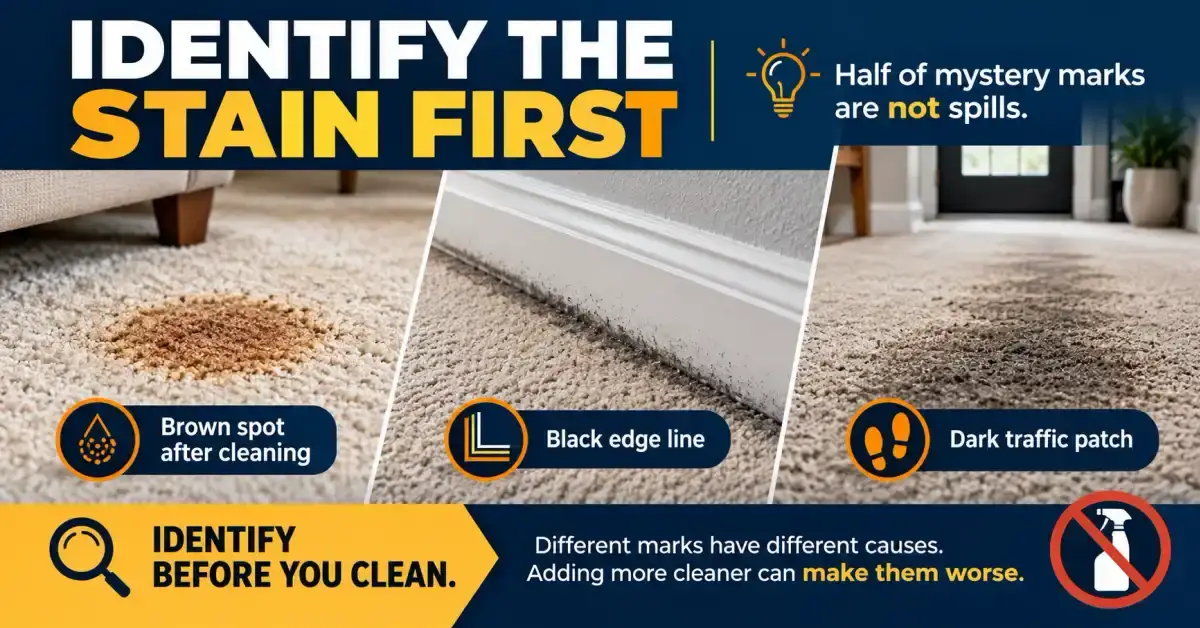
Match the treatment to the cause, because half of all mystery marks are not spills at all. Professionals identify before they treat, and the appearance tells most of the story.
Brown spots that appeared after a past cleaning are usually wicking or cellulosic browning: moisture pulled old soil or backing discoloration up to the surface as the carpet dried. Black lines along baseboards and under doors are filtration soiling, airborne particles filtered through the carpet edge by airflow, not a spill. Dark patches in walkways are typically soil bonded to old detergent residue.
| Appearance | Likely Cause | Right Treatment |
|---|---|---|
| Brown spot after cleaning | Wicking or browning from overwetting | Mild acidic rinse, blot, dry fast |
| Black lines at edges | Filtration soiling from airflow | Dry soil removal, then solvent spotting |
| Dark walkway patches | Soil stuck to detergent residue | Plain water extraction, no more soap |
| Sticky, dull spot | Cleaner residue buildup | Rinse with water only and blot |
| Colored defined spot | True spill stain | Matched cleaner from the next section |
Treating a residue problem with more detergent makes it worse. Identify first, and the right fix is often gentler than expected.
What Is the Best Carpet Stain Remover for Old Stains?
There is no single best product, only the right chemistry for each stain family. Anyone hunting for the best carpet stain remover for old stains should shop by category, not by marketing claims.
| Remover | Best On | Caution |
|---|---|---|
| Dish soap solution | General food, drink, soil | Rinse fully or residue grays the spot |
| Oxygen-based cleaner | Set-in organic stains, tannins like coffee and juice | Colorfast test first |
| Enzyme cleaner | Pet accidents, protein stains, anything organic with odor | Needs long dwell, no heat |
| Rubbing alcohol | Ink, dye, marker family | Test on hidden spot, blot only |
| Hydrogen peroxide 3% | Last resort on light carpet | Can bleach, always test and dilute |
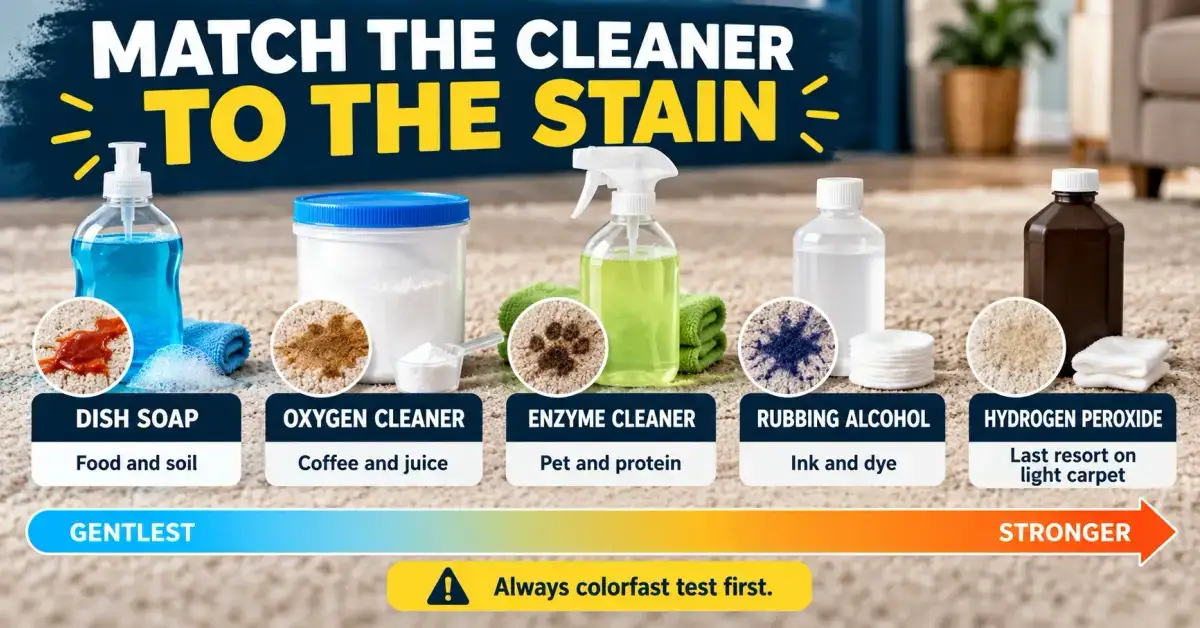
Work up the ladder, not down. Start with the gentlest option matched to the stain family and escalate only if a full round fails. Jumping straight to peroxide risks trading a stain for a bleach spot. And skip actual bleach entirely, since it destroys carpet dye on contact.
How Do You Remove Set-In and Stubborn Stains Step by Step?
Set-in stains surrender to dwell time, not muscle. Here is the full revival sequence for the stubborn spot that has survived earlier attempts.
Dampen the stain with warm, not hot, water and wait ten minutes. Apply your matched cleaner from the table above and let it dwell another five to ten minutes. Agitate gently with a soft-bristle brush, working from the stain's outer edge toward the center. Blot with a white cloth, rotating as the stain transfers.
Rinse with cool water, then blot with dry towels under a weight for an hour to pull moisture up. Assess in good light. If the stain faded, run the same round again. Fading proves the chemistry works and only repetition remains.
A homeowner fighting a year-old juice spot ran three rounds of oxygen cleaner across a weekend. Round one faded it, round two shrank it, round three erased it. The same spot scrubbed hard for twenty minutes would have frayed the pile and stayed brown.
How Do You Clean Stained Carpet When Stains Cover a Large Area?
Spot-treat the worst stains first, then extract the whole surface. Knowing how to clean stained carpet at scale is a different job than chasing one spot, because badly stained carpet usually has two problems layered together: individual stains and an overall grayness.
Treat the defined stains using the revival sequence. Then run a hot water extraction machine, rented or owned, across the entire carpet with minimal detergent. Slow wet passes, then multiple dry-only passes to pull moisture out.
Here is the counterintuitive part: heavily cleaned carpet often looks stained because of soap, not soil. Years of spray cleaners leave a sticky film that darkens traffic areas. A plain-water extraction pass with no added detergent rinses that film out, and the carpet visibly brightens. If wall-to-wall staining or odor persists after that, widespread contamination has likely reached the pad, and professional extraction is the efficient next step.
Which Old Stains Cannot Be Removed, and What Are Your Options?
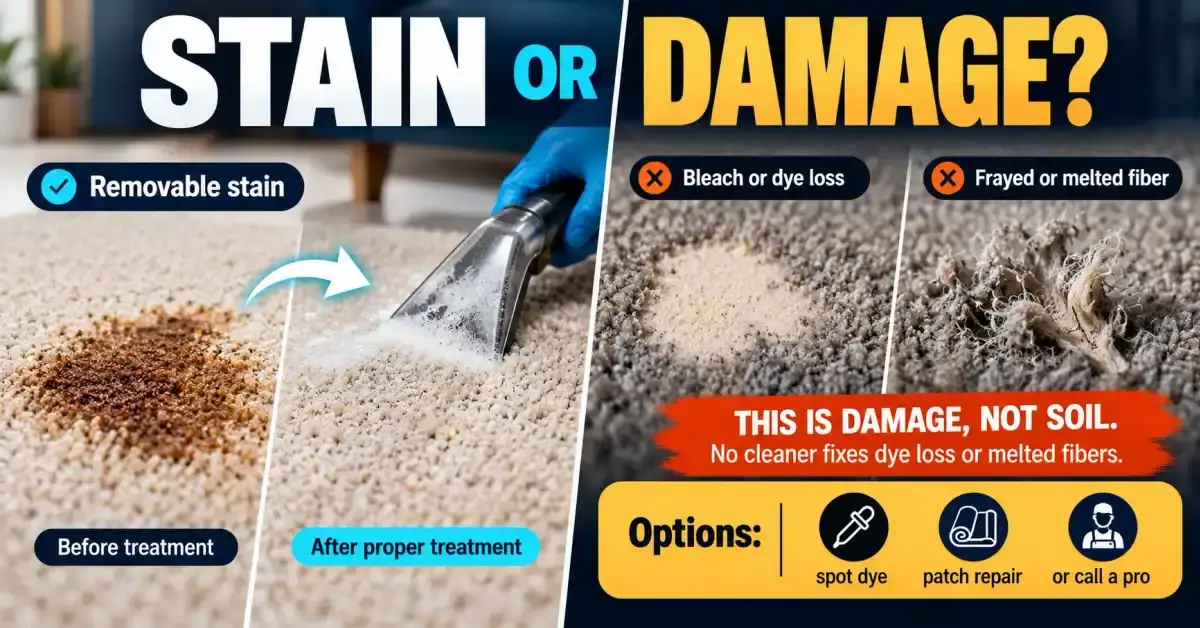
Some marks are damage, not soil, and no cleaner on earth removes damage. Recognizing the difference saves money, effort, and further harm.
Dye loss looks like a stain but is the opposite: bleach splashes, acne medication with benzoyl peroxide, and sun fading strip color out of the fiber. Melted or frayed fiber from heat or scrubbing is structural. And aggressive chemical mixing creates new damage, like the well-documented cases of peroxide and ammonia combinations turning carpet orange-pink. If a spot loses no color to a damp white cloth and never fades across treatment rounds, suspect damage.
Real options remain. Spot dyeing by a carpet color repair technician restores small bleached areas. Patch repair swaps the damaged section with a remnant from a closet. A well-placed rug costs less than either. A homeowner who spent weeks scrubbing what turned out to be a benzoyl peroxide bleach spot got it fixed in one hour by a dye technician.
What Mistakes Make Old Stains Permanent?
Heat is the most dangerous mistake, because it permanently sets protein and dye stains. Hot water, steam, or an iron on an unidentified stain can lock it in forever. Warm water only, until you know what you are treating.
Scrubbing hard frays fiber tips into a fuzzy patch that reads as a stain even after the soil is gone. Over-wetting drives the stain into the pad and invites it to wick back up as a brown ring. Stacking product on product without rinsing builds the residue layer that seals stains in.
Mixing chemicals is never worth it. And quitting after one round abandons stains that were one treatment away from gone. Fading means working, so keep going.
Why Treating Old Stains Correctly Actually Matters
Time is the single biggest predictor of stain removal success, and the clock keeps running. University of Georgia Extension stain testing found some aged stains, particularly synthetic dyes, may never fully release from carpet fiber, which is exactly why every additional month matters.
The IICRC S100 professional standard is built on matching cleaner chemistry to stain category, protein, tannin, dye, or oil, before any product touches the carpet, the identification-first approach this guide follows. The Carpet and Rug Institute adds the ground rules: blot rather than rub, pretest every agent in a hidden area, and avoid over-wetting, which causes the wicking and browning that create new stains while removing old ones.
The EPA's indoor environment guidance sets the moisture limit: carpet left damp beyond 24 to 48 hours risks mold growth, so drying is part of the treatment, not an afterthought. And manufacturer warranty documents from brands like Shaw and Mohawk list improper chemicals, bleach, and excessive heat as standard coverage exclusions, one more reason gentle and correct beats aggressive and fast.
Common Questions About Old Stain Removal, Answered
How do you remove old stains from carpet with vinegar?
+
Mix equal parts white vinegar and water, spray the rehydrated stain, and let it dwell ten minutes before blotting. Vinegar works best on tannin stains and residue film. Rinse with plain water afterward so the smell does not linger.
Can old stains be removed without vinegar?
+
Yes, dish soap solution, oxygen-based cleaners, and enzyme cleaners all work without vinegar. Match the cleaner to the stain family instead of any single ingredient. Vinegar is one tool, not a requirement.
What home remedies work on old carpet stains?
+
Dish soap solution, baking soda for odor absorption, and diluted hydrogen peroxide on light carpet are the reliable ones. Club soda is mostly just water with fizz. Home remedies work on organic stains but rarely beat enzyme or oxygen cleaners on set-in spots.
How do you get dried red stains out of carpet?
+
Rehydrate, then treat with an oxygen-based cleaner in repeated dwell-and-blot rounds. Red dyes are the most stubborn colorants in carpet and often need professional heat-transfer dye treatment if two rounds fail. Never apply heat yourself, since it sets red dye permanently.
Why did my carpet cleaner leave my carpet looking stained?
+
Almost always detergent residue or wicking. Leftover soap film collects soil into dark patches, and overwetting pulls old soil up from the pad as brown rings. A plain-water extraction pass usually fixes both.
Do old stains come back after cleaning, and why?
+
Yes, through wicking: stain material deep in the pad rides moisture back to the surface as the carpet dries. Place a weighted stack of dry towels on the damp spot overnight. Repeat treatment with less moisture if it returns.
Is hydrogen peroxide safe on dark carpet?
+
It is risky, because peroxide can lighten dark dyes visibly. Test on a hidden patch and wait fifteen minutes before deciding. On dark carpet, oxygen-based cleaners formulated for carpet are the safer route.
How many treatment rounds should an old stain take?
+
Expect two to three rounds, with visible fading after each. If a stain shows zero change after two full rounds of the correct cleaner, escalate to a professional rather than stronger chemicals. No fading at all can also signal damage rather than a stain.
Will renting a carpet machine remove old stains by itself?
+
No, machines extract loosened soil but do not break stain bonds on their own. Spot-treat stains first, then use the machine to rinse and extract. Running a machine over untreated set-in stains mostly just wets them.
When should you call a professional for old stains?
+
Call when a stain survives two correct treatment rounds, covers a large area, involves pet contamination in the pad, or turns out to be dye loss needing color repair. Professionals carry category-specific spotters, heat-transfer tools, and dye kits. One visit costs less than replacing carpet damaged by DIY escalation.
The habit that changes everything is diagnosis before treatment, because knowing how to remove old stains from carpet is really knowing what you are removing: an oxidized spill, a residue problem, or damage wearing a stain's disguise. Rehydrate, match the chemistry, let dwell time work, and stop at the point where a professional's tools take over.
Need a carpet cleaning company you can trust? We handle residential and commercial carpet cleaning, rug cleaning, upholstery cleaning, and pet stain and odor removal —our team is ready to help.

Michael Sanders
Michael Sanders is a home care and cleaning industry writer covering carpet maintenance, flooring care, and household cleaning practices across the United States. His work focuses on practical, research-backed guidance — from stain and odor removal to deep extraction methods and indoor allergen prevention. Michael collaborates with cleaning professionals to ensure accuracy, and his writing reflects a genuine interest in helping homeowners make informed decisions about caring for their homes.