

Blog · Stain Removal Guide
How to Get Red Wine Out of Carpet: Full Guide
If you want to know how to get red wine out of carpet, the good news is most stains come out fully if you act in the first few minutes. The panic is real, but the fix isn't complicated. What makes it confusing is the advice online. Salt, club soda, baking soda, more wine to "dilute" the stain, nearly every source recommends something different, and not all of it actually works.
Published October 25, 202610 min read

This guide gives you the real sequence, an honest verdict on which home remedies help and which don't, and one thing almost nobody explains: why a wine stain that looked gone can reappear the next day.
Blot fresh wine immediately with a dry cloth, then treat with a mild dish soap and hydrogen peroxide solution or an oxygen-based cleaner, working from the outside in. Rinse with cold water and blot dry. Skip salt and club soda unless you're doing it for lack of anything better. Dried stains need rehydration before treatment.
How Do You Remove a Fresh Red Wine Stain From Carpet?
Blot immediately with a dry, absorbent cloth. Press straight down instead of wiping, since wiping spreads the wine into a wider ring and pushes it deeper into the pile.
Once you've lifted as much liquid as possible, mix a few drops of dish soap with a small amount of hydrogen peroxide and cool water. Apply a small amount with a clean cloth, working from the edges toward the center so the stain doesn't expand outward. Rinse with a cloth dampened in plain cold water, then blot dry with a fresh towel. Never scrub. Scrubbing forces the pigment deeper into the fiber and can damage the pile.

Why Does Red Wine Stain Carpet So Easily?
Red wine stains fast because it contains both tannins and anthocyanins, the deep-red pigments that give wine its color. Anthocyanins act like a natural dye and bond to carpet fiber almost on contact, which is why a stain can darken within seconds.
Wine's acidity makes this worse. The acid opens up the fiber slightly, giving the pigment an easier path in. This is also why white wine, lower in anthocyanins but still acidic, can leave a faint stain of its own even though it looks colorless.
How Do You Get Old or Dried Red Wine Stains Out of Carpet?
Dried wine stains need rehydration before any cleaning solution works. Mist the area with cool water and let it sit for several minutes so the dried pigment softens.
Once the spot is damp, apply your cleaning solution and let it sit for three to five minutes before blotting. Rinse with a cold, damp cloth. Older stains typically need two or three rounds of this cycle. If color remains after multiple attempts, the pigment has bonded deep enough that an oxygen-based product or professional treatment is the more reliable next step.
Does Salt or Club Soda Actually Work on Red Wine Stains?
Salt and club soda offer limited help at best. Salt can absorb a small amount of surface liquid before it sets, but it doesn't lift pigment that's already bonded to the fiber, and leftover salt residue can attract dirt later.
Club soda's carbonation was once thought to "lift" stains, but the fizzing action does very little beyond what plain water does. It won't hurt to try either one in the first thirty seconds after a spill, but neither replaces a real cleaning solution. Dish soap combined with hydrogen peroxide or a dedicated oxygen-based cleaner consistently outperforms both.
How Do You Get Red Wine Out of White or Wool Carpet?
White and wool carpet need gentler, tested treatment. Always test any solution on a hidden patch first, since both are more prone to visible color change than synthetic fiber.
Wool reacts poorly to high-alkaline cleaners, so a neutral dish soap solution is safer than stronger commercial spot removers. Hydrogen peroxide works well on white carpet for lifting anthocyanin pigment, but it should be diluted and tested first since high concentrations can lighten surrounding fiber along with the stain. On both fiber types, several gentle rounds of treatment beat one aggressive attempt.

Why Does a Wine Stain Come Back the Next Day?
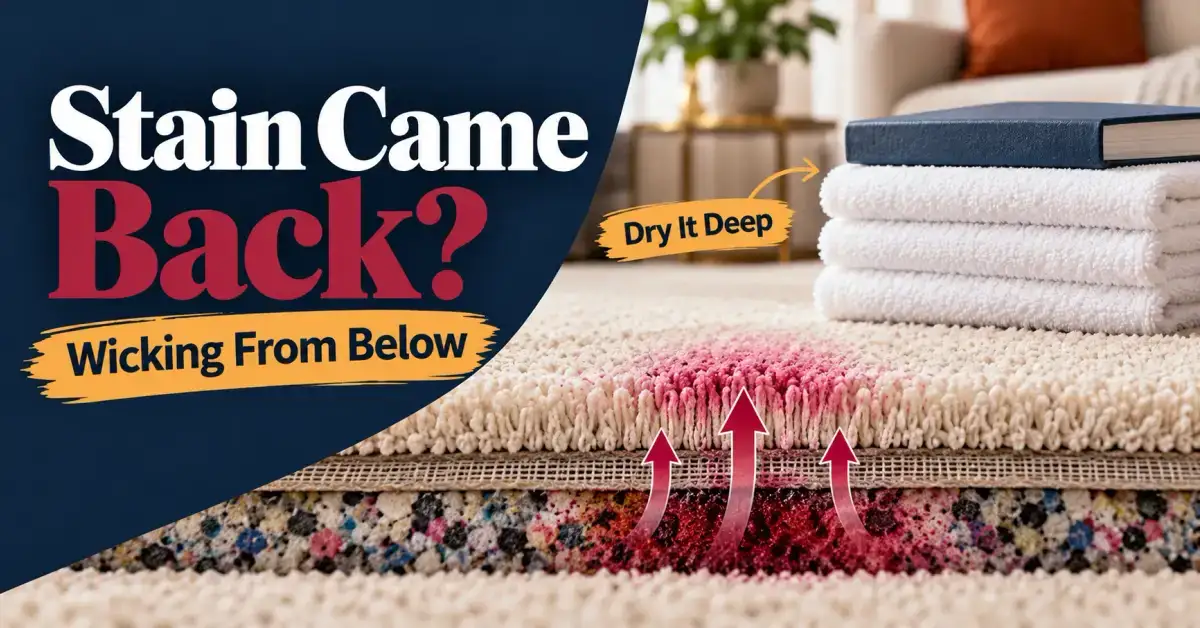
A wine stain that reappears is usually a sign of wicking, not a failed cleaning job. Wicking happens when pigment left in the carpet backing or padding travels back up through the fiber as the area dries.
Picture a homeowner who blots and cleans a spill thoroughly, sees no color left, and moves on. The next morning, a faint pink ring has appeared in the same spot. The surface fiber was clean, but pigment that soaked down to the backing worked its way back to the top as moisture evaporated. Placing a stack of clean, dry towels weighted down over the spot for several hours after cleaning helps pull residual moisture out before it can wick back up.
What Mistakes Make a Red Wine Stain Worse?
Using hot water is the most common mistake. Heat can help set the pigment into the fiber instead of loosening it, the opposite of what you want in the first few minutes.
Scrubbing is the second mistake, since it spreads the stain and roughs up the pile. Mixing vinegar and baking soda together is the third. The two neutralize each other into mostly salt water, so combining them wastes both products instead of boosting their effect. Skipping the final cold water rinse is the fourth, since leftover cleaning solution attracts new dirt and can leave the spot looking dull again within days.
Why Acting Fast on Red Wine Stains Actually Matters
The ANSI/IICRC S100 standard, the primary reference for professional carpet cleaning, defines spot and stain removal as a standard part of proper carpet maintenance, not an optional extra. IICRC consumer guidance recommends the same blot-first, rinse-second sequence for organic, pigment-based spills like wine that this guide follows.
IICRC also warns that many off-the-shelf and homemade spotting products leave sticky residue or cause color loss, and recommends testing any product by letting a small amount evaporate in a glass to check for stickiness before using it on carpet. Products carrying the CRI Seal of Approval have been verified not to damage fiber or leave harmful residue. Most major carpet manufacturers also require documented use of approved cleaning methods to keep stain warranties valid, so an unauthorized DIY chemical treatment can create a bigger problem than the wine itself.
Common Questions About Red Wine Stain Removal, Answered
What's the fastest way to remove a red wine stain from carpet?
+
Blot immediately with a dry cloth, then apply a dish soap and hydrogen peroxide solution while the spill is still wet. Speed matters more than any specific product.
Does baking soda actually work on red wine stains?
+
Baking soda absorbs some moisture and odor but does little to lift the pigment itself. It works best as a follow-up freshener, not the main treatment.
Is hydrogen peroxide safe for red wine on carpet?
+
It works well when diluted and tested first, especially on white carpet. Avoid full-strength peroxide on colored or wool carpet without a hidden-spot test.
Can you mix vinegar and baking soda for wine stains?
+
Not effectively. The two react and largely cancel each other out, leaving mostly salt water instead of a stronger cleaning solution.
What is the best red wine stain remover for carpet?
+
An oxygen-based cleaner or a dish soap and hydrogen peroxide mix consistently performs best on set-in wine stains, since both break down pigment rather than just lifting surface color.
How do you get red wine out of carpet without vinegar?
+
A dish soap and hydrogen peroxide solution works well without vinegar and carries less risk of affecting dye in colored carpet.
How do you get white wine out of carpet?
+
Treat it the same way as red wine. White wine's acidity can still leave a faint stain that darkens over time if untreated, even without visible pigment.
How do you get wine smell out of carpet after cleaning?
+
A light baking soda application after the area is fully dry helps absorb any lingering odor. Vacuum it up after twenty minutes.
Will removing a wine stain myself void my carpet's warranty?
+
Using an unapproved chemical cleaner can affect stain warranty coverage on some carpet brands. Check your manufacturer's approved product list before going beyond mild dish soap.
When should you call a professional for a red wine stain?
+
Call a professional if the stain persists after two or three treatment attempts, covers a large area, or is on delicate wool or antique carpet.
A red wine stain rarely has to become permanent, and knowing how to get red wine out of carpet really comes down to two things: how fast you blot, and how well you dry the area afterward to stop wicking before it starts.
Need a carpet cleaning company you can trust? We handle residential and commercial carpet cleaning, rug cleaning, upholstery cleaning, and pet stain and odor removal —our team is ready to help.

Michael Sanders
Michael Sanders is a home care and cleaning industry writer covering carpet maintenance, flooring care, and household cleaning practices across the United States. His work focuses on practical, research-backed guidance — from stain and odor removal to deep extraction methods and indoor allergen prevention. Michael collaborates with cleaning professionals to ensure accuracy, and his writing reflects a genuine interest in helping homeowners make informed decisions about caring for their homes.