
Blog · Carpet Cleaning Guide
How to Get Mold Out of Carpet: Clean, Patch or Replace
Small, surface-level mold on carpet can often be cleaned, but mold in the padding or across a large area usually means replacing the carpet.
Published November 7, 202615 min read
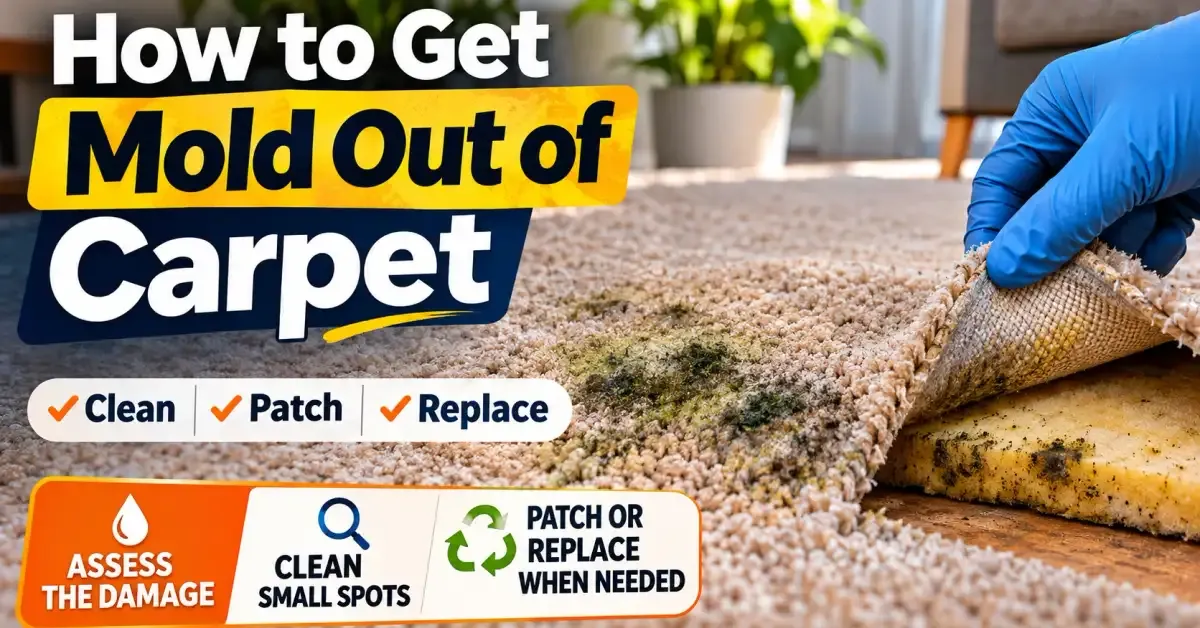
This guide shows how to get mold out of carpet when the problem is small, and how to spot cases where cleaning will fail. The EPA says most people can handle moldy areas under about 10 square feet, roughly a 3-by-3-foot patch. One rule beats any cleaner: fix the moisture and dry the carpet fast, or the mold comes back.
How to Tell If You Have Mold on Carpet
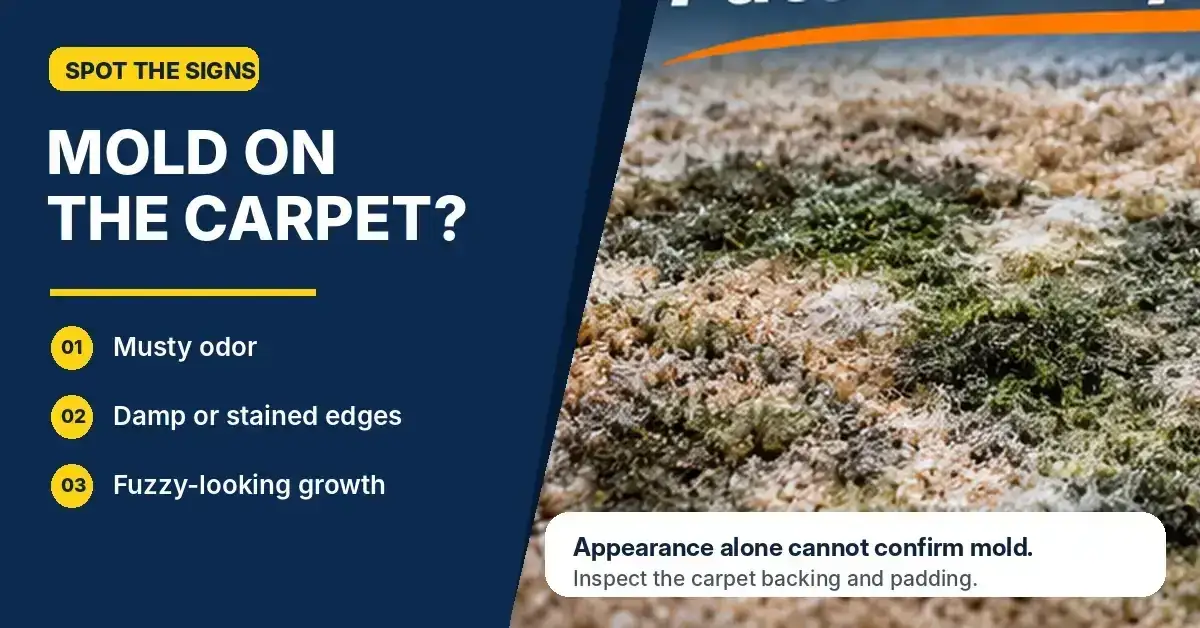
A musty smell is usually the first clue. Mold on carpet can look fuzzy, powdery or flat, in black, green, white or gray, and color alone does not show how risky it is. Also check for damp spots, discolored edges, lifted carpet and allergy-like symptoms such as sneezing or itchy eyes indoors.
Stains can mislead. A dark mark may be dirt or old water damage, so press a white cloth on it. A damp, smelly or fuzzy spot points to live mold. A musty odor with nothing visible still calls for a look under the carpet, because mold can hide on the underside of carpet and padding.
Can You Save Moldy Carpet or Should You Replace It?
Carpet is porous, so mold can grow into its fibers and backing. The EPA warns that moldy carpet may need to be thrown away because the mold may never come out completely. Use this table before you buy any cleaner.
Clean, Patch or Replace?
| Situation | What to do |
|---|---|
| Under 10 sq ft, mold on the surface, padding dry | Clean it yourself using the steps below |
| Mold on the carpet backing or in the padding | Replace the padding and patch or replace the carpet |
| Carpet stayed wet longer than 24 to 48 hours | Lift a corner and inspect; replacement is likely |
| Sewage or floodwater | Hire a professional; do not clean it yourself |
| Mold covers more than 10 sq ft, or returns after cleaning | Call a professional or replace |
| Someone at home has asthma, allergies or weak immunity | Have someone else clean it, or hire a professional |
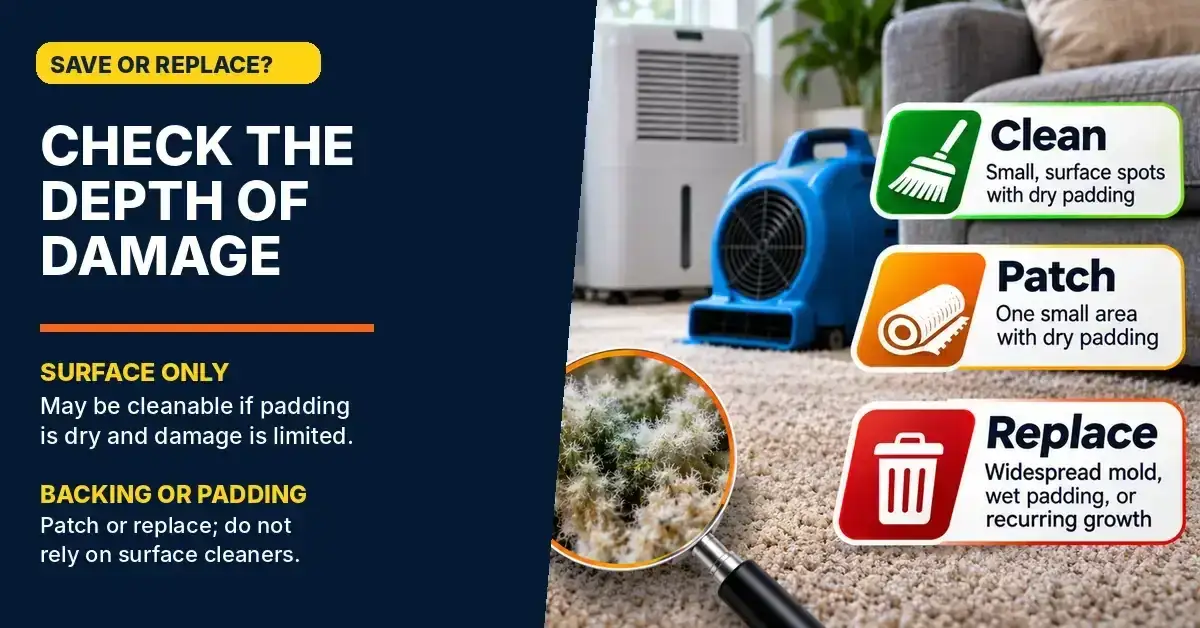
Patching is a middle path. When mold sits in one small section and the padding below is dry, an installer can cut out that section and splice in matching carpet. If the carpet is old or a patch will not match, replacing the room is usually better.
Key Takeaway: Clean only small, surface-level mold on carpet when the padding is dry. Patch or replace when mold reaches the backing or padding, the carpet stayed wet, or the area tops about 10 square feet.
Before You Start: Protect Yourself and Fix the Moisture
Find and stop the water source first, whether it is a leaking pipe, a window leak or constant humidity. The EPA says moisture control is the key to mold control, so cleaning without a fix only buys time. Keep indoor humidity under 60 percent, ideally between 30 and 50 percent.
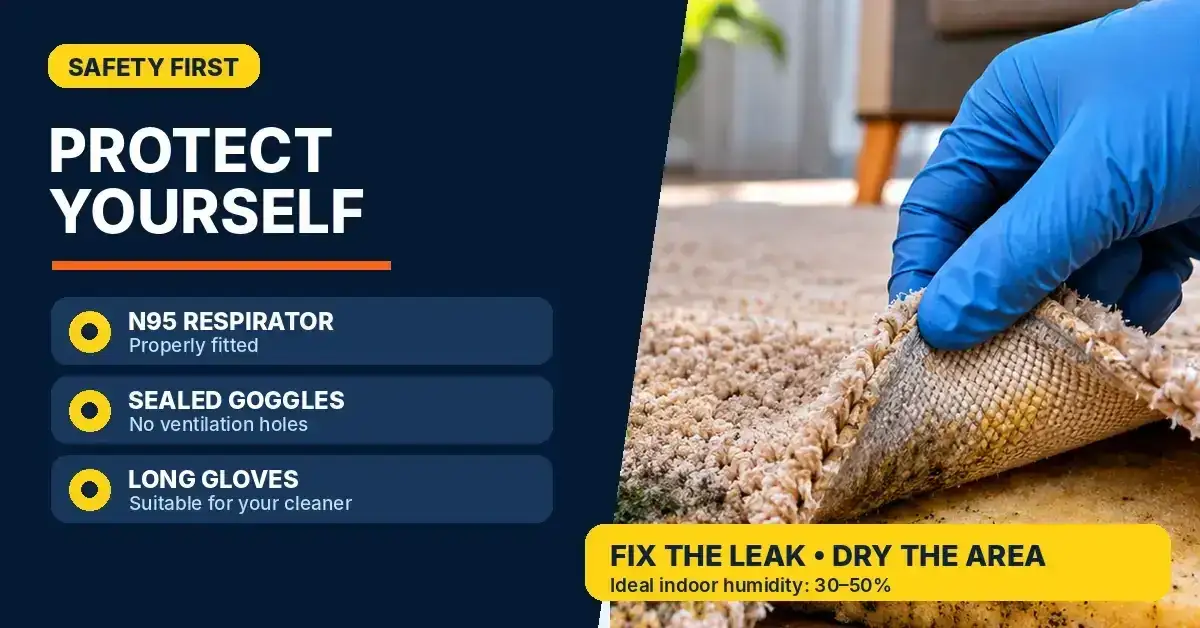
Then gear up. The EPA's guidance covers three basics:
- A properly fitted N95 respirator
- Long gloves: household rubber for mild detergent, nitrile, neoprene or PVC for stronger products
- Goggles without ventilation holes
Keep children, pets and anyone with asthma, allergies or a weakened immune system out of the room. The EPA also advises people with health concerns to talk to a health professional before cleanup.
How to Get Mold Out of Carpet: 5 Steps for Small Surface Spots
These steps suit a spot under about 10 square feet where the padding is dry. Work in one room with the door closed and a window open.
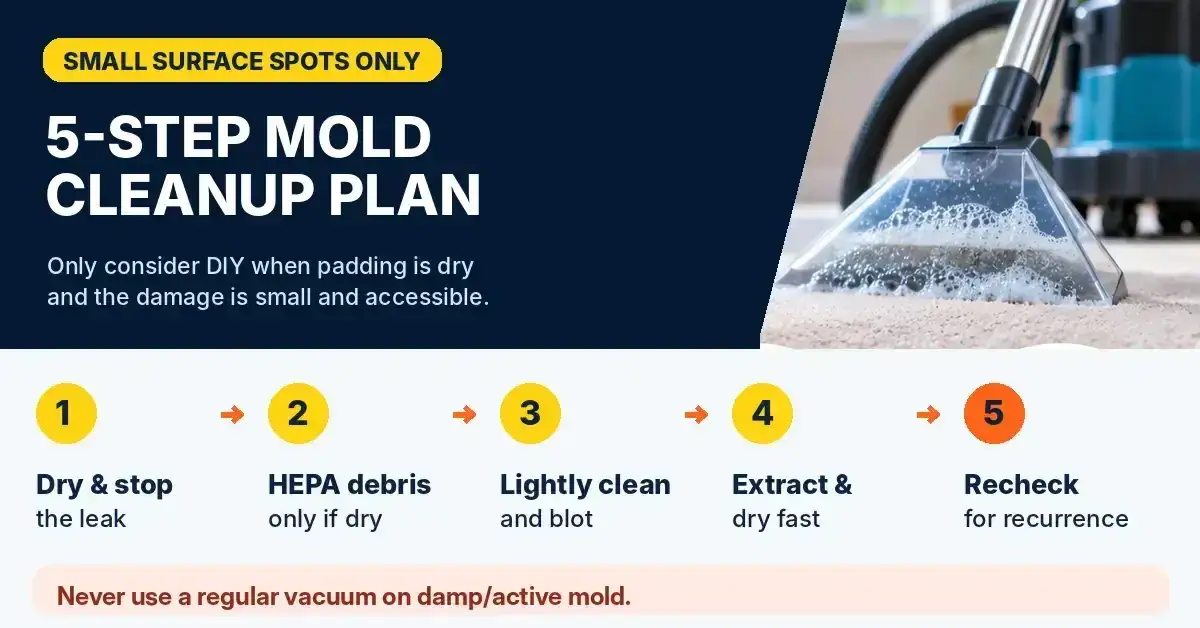
Step 1: Dry the Carpet and Keep Air Moving
Soak up standing water with a wet/dry vacuum. Then run a dehumidifier and a fan. Aim the fan across the carpet and, if you can, push the air out a window so spores do not drift into other rooms. Continue until the carpet feels dry to the touch.
Step 2: Remove Loose Debris Without Spreading Spores
Use a HEPA vacuum on dry, loose mold debris only. Never vacuum damp or active mold with a regular vacuum, because it can blow spores through the house. No HEPA vacuum? Skip this step. Seal any debris in a bag and carry it outside.
Step 3: Clean the Spot With Detergent or an Antimicrobial Cleaner
Test your cleaner on a hidden corner first. Mist the spot with mild detergent solution or an antimicrobial carpet cleaner, following the label. Mist instead of soaking, because extra liquid sinks into the padding. Blot with a white cloth instead of rubbing, which pushes mold deeper. Bag the cloth afterward.
Step 4: Extract, Rinse Lightly and Dry Fast
Rinse lightly with clean water, then pull out moisture with a wet/dry vacuum or carpet extractor. Run fans and a dehumidifier right away. Aim for fully dry carpet and padding within 24 to 48 hours, the window the EPA gives for drying wet materials.
Step 5: Recheck the Spot for Several Weeks
Check the spot every few days for several weeks. Sniff for odor and look for discoloration. If the smell or growth returns, mold probably sits in the padding or subfloor, so do the under-carpet check below.
What Kills Mold in Carpet and What Doesn't
Most mold products are made for hard, nonporous surfaces. Carpet is the opposite, so results differ.
What Kills Mold in Carpet
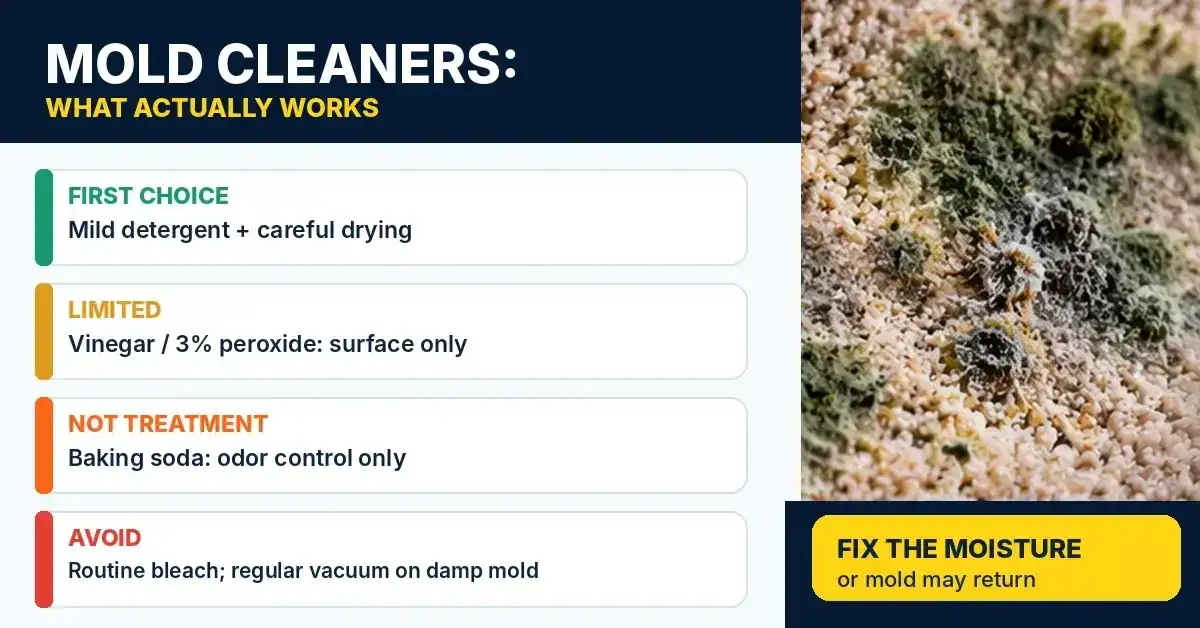
| Method | Verdict | Why |
|---|---|---|
| Detergent and water | Best first choice | Lifts mold off fibers; use lightly on carpet |
| Antimicrobial carpet cleaner | Reasonable | Follow the label and test first |
| White vinegar | Limited | Struggles to reach backing and padding |
| 3% hydrogen peroxide | Limited | Surface only; can lighten color |
| Chlorine bleach | Not advised | EPA does not recommend routine use; can discolor; never mix with ammonia |
| Baking soda | Odor only | Absorbs moisture and smell; not a mold treatment |
| Steam or hot-water extraction | Only if it dries fast | Adds moisture; see the note below |
| Regular vacuum on damp mold | Avoid | Can spread spores |
Steam is less clear-cut. A 2014 lab study funded by the Carpet and Rug Institute found that steam vapor cut a common indoor mold on wet carpet by over 99 percent after 24 hours, but it tested one mold species in the lab. A second 2014 lab study found no clear difference between steam and other treatments for mold on carpet. Steam that leaves carpet damp can also invite new growth.
Does Vinegar Kill Mold in Carpet?
Vinegar can kill some mold on hard surfaces, but home-improvement and restoration sources say it works less well on porous materials like carpet. It may help on a small surface spot, yet it cannot reach mold in the backing or padding. Never use it as a reason to keep damp carpet in place.
Key Takeaway: Detergent, light extraction and fast drying do the real work on small spots. Vinegar, peroxide and baking soda are limited on carpet, and bleach is not advised.
How to Get Rid of Mold Under Carpet
Mold under carpet often starts at the padding or subfloor after a leak, a flood or long stretches of humidity. You may smell it long before you see it.
How to Check Under the Carpet
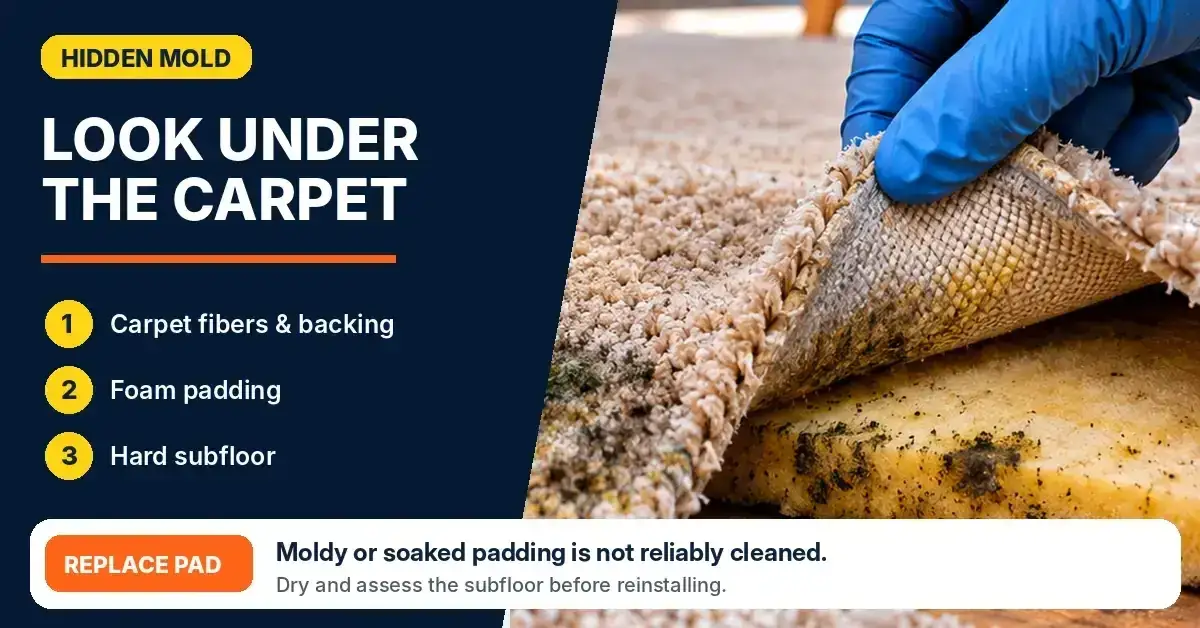
Put on your N95, gloves and goggles. In the damp area, pull a corner of carpet off the tack strip with pliers. Inspect the backing, padding and subfloor for dark spots, crumbling padding, a musty odor or a damp feel. A moisture meter can confirm hidden dampness. Photograph what you find before you cut anything out.
What to Do With Moldy Padding and Subfloor
Padding soaks up water like a sponge, so replace moldy or soaked padding instead of cleaning it. Bag it as you cut to limit spores. Wash a hard subfloor with detergent and water, then dry it completely before laying new padding. If mold has spread beyond 10 square feet, call a professional.
How to Get Mold Out of Carpet After Water Damage
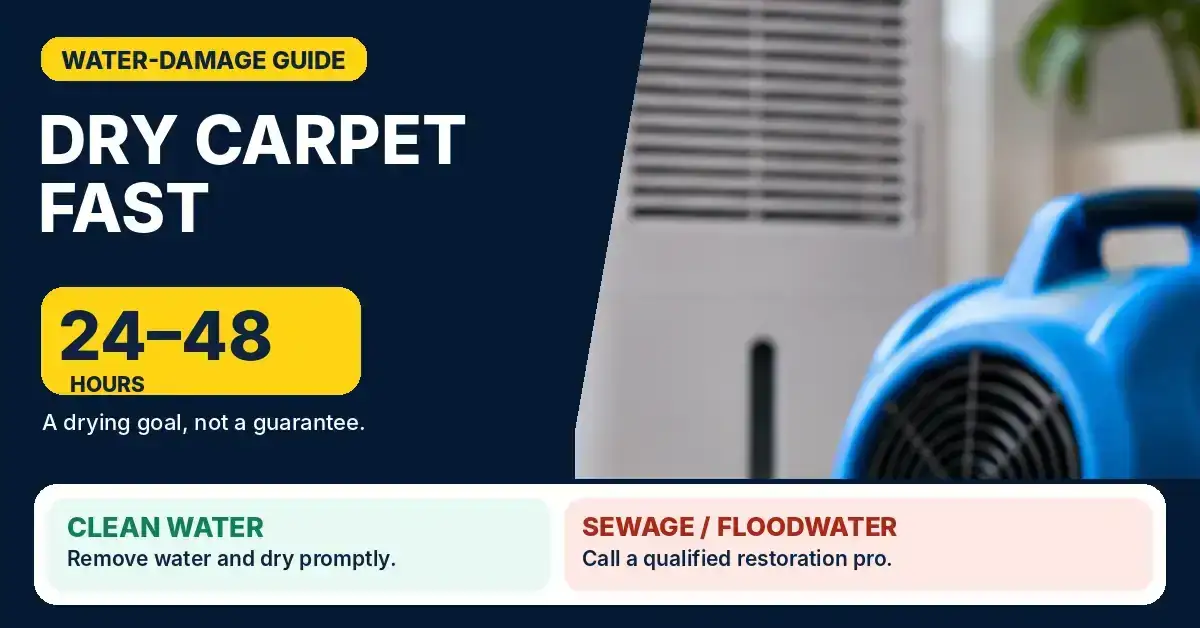
Speed decides the outcome. The EPA says to dry water-damaged areas and items within 24 to 48 hours to prevent mold growth. That window is a guideline, not a guarantee. Remove standing water first, lift the carpet and padding so air reaches both sides, then run fans and a dehumidifier. Throw away padding that stayed soaked.
The type of water matters more than the clock. Clean water from a supply line can often be dried in place. For sewage or floodwater, the EPA says to hire a professional with contaminated-water experience.
How to Get Mildew Out of Carpet (and What About Pink Stains?)
Mildew is not a separate problem. The EPA says mildew refers to certain kinds of mold or fungus, and people often use the word for flat mold growth. So how to get mildew out of carpet follows the same plan as mold: protect yourself, fix the moisture, clean lightly and dry fast. A musty smell that lingers usually points to the padding.
Is Pink Mold on Carpet Really Mold?
Often not. Pink or orange slime is usually a bacterium called Serratia marcescens, which cleaning sources describe mostly on bathroom surfaces. Evidence for carpet is thin. Treat it as a sign of lasting moisture, wear gloves, clean it with detergent and water, and dry the area well.
Why Stains Can Remain After Cleaning
Mold can leave dark or colored marks after the growth is gone. A stain with no odor, fuzzy texture or dampness is usually discoloration, not active mold. Do not scrub harder or add bleach to chase it. If it stays after the carpet is fully dry, ask a carpet cleaning professional.
How to Keep Mold From Coming Back
Keep humidity between 30 and 50 percent, fix leaks quickly and dry spills the same day. Run exhaust fans in humid rooms, and avoid wall-to-wall carpet in bathrooms and damp basements.
When to Stop and Call a Professional
Call a professional when any of these apply:
- Mold covers more than about 10 square feet
- Sewage or floodwater caused the damage
- Mold in the padding or subfloor keeps returning
- You smell mold but cannot find it
- Anyone at home has asthma, allergies or a weakened immune system
- You suspect mold in the HVAC system (the EPA says not to run it)
Choose someone experienced in mold cleanup and check references before you hire.
FAQs About Mold in Carpet
Is carpet mold harmful or toxic?
+
According to the CDC, mold can cause a stuffy nose, sore throat, coughing, wheezing, burning eyes or a rash. People with asthma or mold allergies can react severely, and people with weakened immune systems or chronic lung disease can develop lung infections. You do not need to identify the type: remove any mold you see or smell.
Should I test my carpet for mold?
+
No. The CDC does not recommend mold testing, because health effects differ from person to person and test results cannot show who will get sick. If you see or smell mold, remove it and fix the moisture.
Does baking soda kill mold in carpet?
+
No. Baking soda absorbs moisture and odor, so it can freshen carpet after cleaning, but it is not a mold treatment. Vacuum it up fully afterward.
Does Lysol kill mold spores on carpet?
+
Check the label. Mold and mildew claims on Lysol labels refer to hard, nonporous surfaces, and some product listings warn against contact with carpet. Disinfectant sprays also do not remove dead mold, which can still trigger allergic reactions.
Can I use a steam cleaner on moldy carpet?
+
Only on a small spot, and only if the carpet will dry within 24 to 48 hours. Both steam and hot-water extraction add moisture, so skip them for moldy padding or large areas.
Why does my carpet still smell musty after cleaning?
+
The mold or dampness is probably still in the padding or subfloor. Dry the area, lift a corner to inspect it, and replace padding that smells or feels damp. A smell that lingers after thorough drying calls for a professional.
Conclusion
Knowing how to get mold out of carpet starts with knowing what you are cleaning. Treat small, surface-level patches under about 10 square feet with protective gear, light cleaning and fast drying. Replace the padding or carpet when mold goes deeper, and call a professional for large areas, sewage or floodwater. Above all, fix the moisture source so the mold stays gone.
Need a carpet cleaning company you can trust? We handle residential and commercial carpet cleaning, rug cleaning, upholstery cleaning, and pet stain and odor removal —our team is ready to help.

Michael Sanders
Michael Sanders is a home care and cleaning industry writer covering carpet maintenance, flooring care, and household cleaning practices across the United States. His work focuses on practical, research-backed guidance — from stain and odor removal to deep extraction methods and indoor allergen prevention. Michael collaborates with cleaning professionals to ensure accuracy, and his writing reflects a genuine interest in helping homeowners make informed decisions about caring for their homes.