

Blog · Carpet Cleaning Guide
How to Clean Carpets With Baking Soda: A Safe Step-by-Step Method
Here is how to clean carpets with baking soda: vacuum, sprinkle a thin layer on dry carpet, wait, then vacuum slowly.
Published November 7, 202614 min read
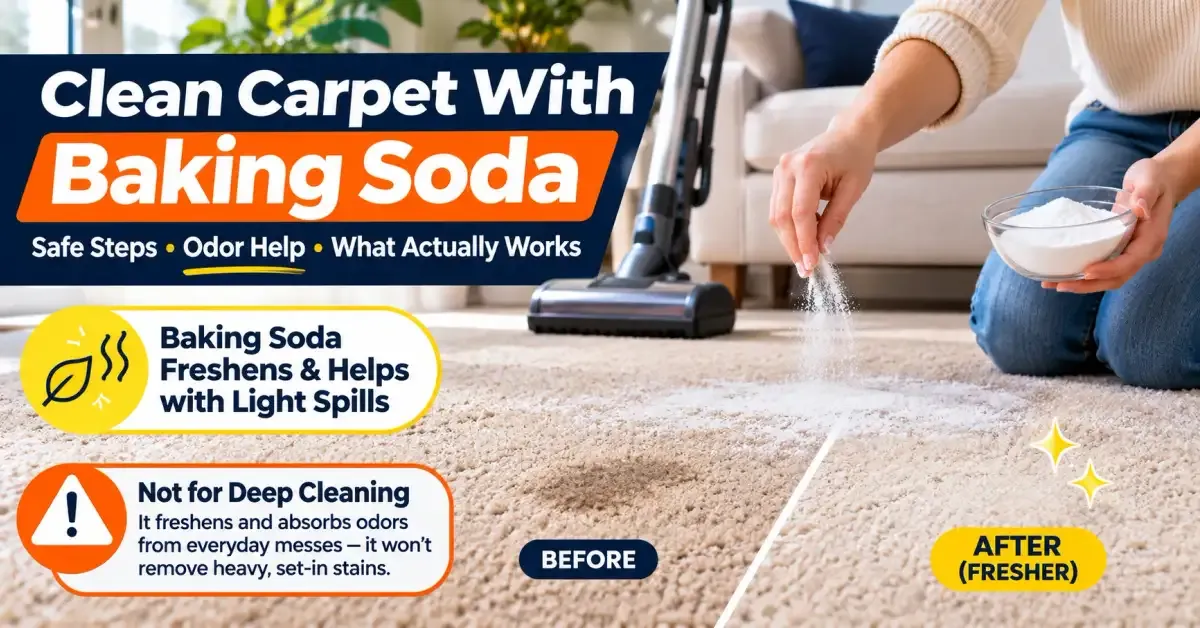
The wait runs from 15 minutes to overnight. Baking soda on carpet absorbs odors, light moisture, and fresh grease. It does not deep clean or disinfect, and too much powder can clog some vacuums. Below you will find wait times, stain fixes, safe mixes, rug care, and signs you need something stronger.
Does Baking Soda on Carpet Really Work?
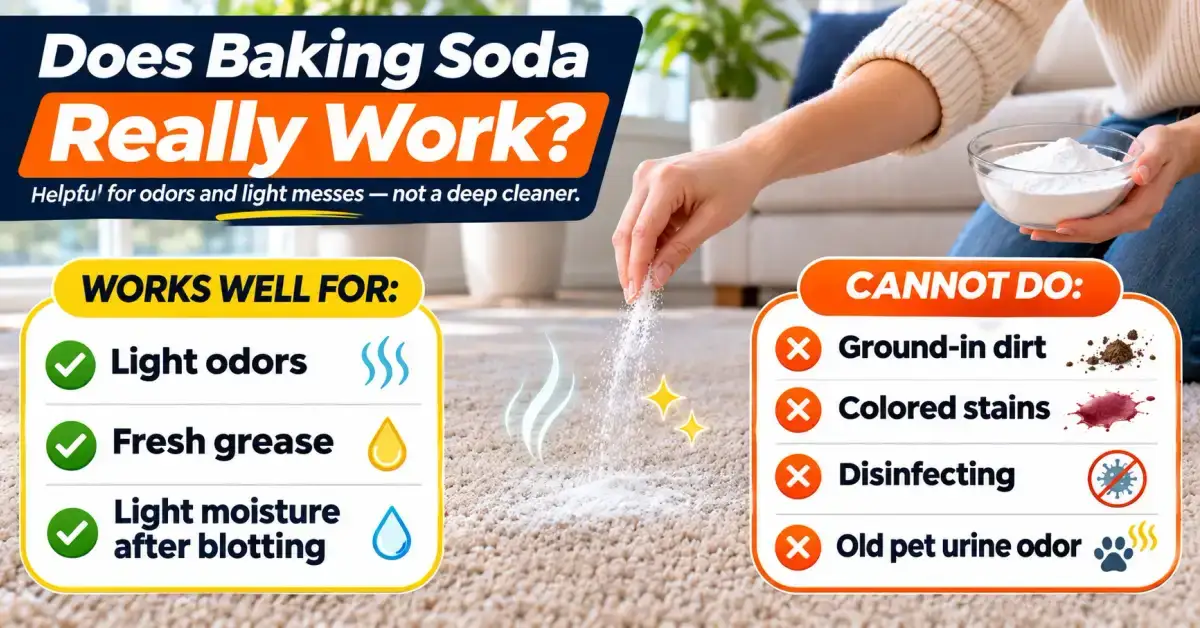
So, does it work? Yes for odors and light spills, but it is not a deep cleaner. Baking soda is a mild alkali that absorbs moisture and oils and neutralizes some acidic smells.
What baking soda does well
The benefits of sprinkling baking soda on carpet are practical. Here is what it does: it soaks up light moisture after you blot a spill and draws fresh grease into the powder. It also works as a deodorizing step for stale rooms and cooking smells. Bicarbonate of soda on carpet is the same product under its UK name.
What baking soda cannot do
What Baking Soda Cannot Do
| Job | What to expect |
|---|---|
| Light odors (stale, cooking) | Works well |
| Fresh grease | Helps absorb it |
| Ground-in dirt | Does not lift it |
| Colored stains (wine, coffee, juice) | Limited effect |
| Disinfecting | Not a disinfectant |
| Old pet urine odor | Masks it briefly; the source stays |
Pros disagree about routine use. The cleaning company Zerorez says baking soda freshens light odors but will not deep clean carpet. A Cleanfax trade article goes further. It calls baking soda abrasive, warns of vacuum damage and high-pH residue, and says vacuuming removes only about 65% of a typical powdered deodorizer. Treat it as an occasional freshener, not a replacement for a full cleaning.
What to Check Before You Start
Is baking soda safe to use on your carpet?
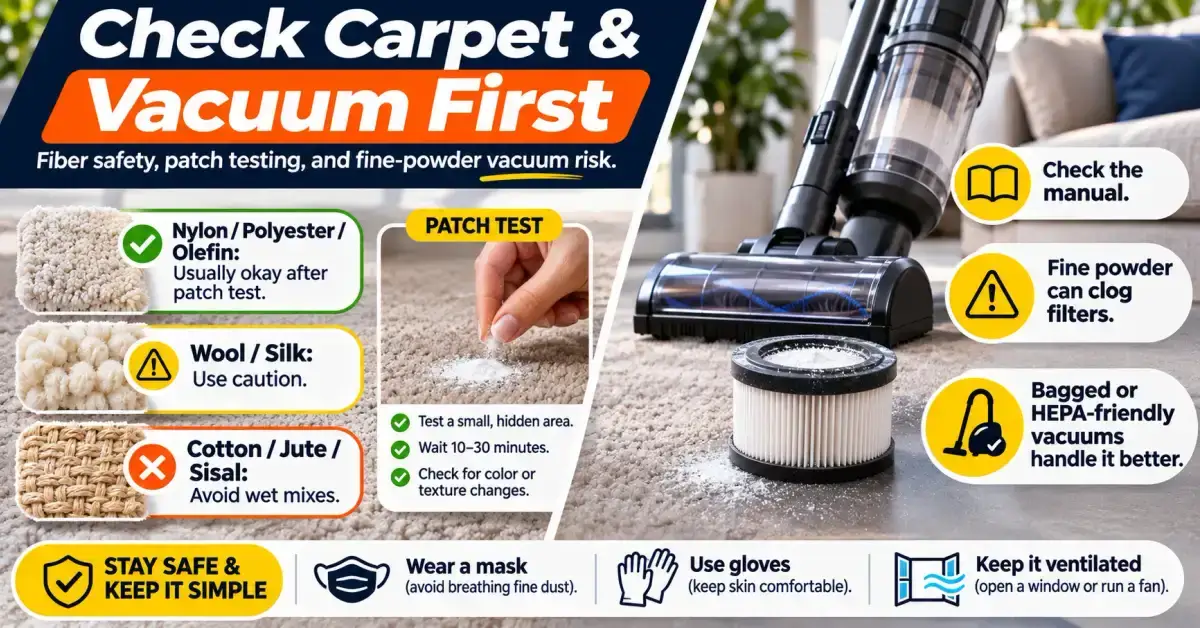
The Spruce says a baking soda and peroxide mix is safe for most synthetic carpet, including nylon, polyester, and olefin. Wool is different. An expert quoted by Grazia warns that absorbent fibers like wool can suffer damage, so read the care label first.
Is Baking Soda Safe for Your Carpet Fiber?
| Fiber | What to do |
|---|---|
| Nylon, polyester, olefin | Usually fine after a patch test |
| Wool, silk | Read the care label first; absorbent fibers can suffer damage |
| Cotton, jute, sisal | Avoid wet baking soda and peroxide mixes |
Run a patch test in a hidden corner first. Arm & Hammer suggests mixing half a tablespoon of baking soda into half a cup of water. Pour a little on the spot, let it dry, vacuum, and check for color change. Cleaning expert Jacqueline Stein, quoted by Grazia, also advises gloves, a mask, and ventilation, because airborne powder can irritate lungs.
Check your vacuum first
Baking soda is a very fine powder, and some vacuums handle it poorly. Dyson's manuals tell owners to vacuum fine dust such as plaster dust or flour only in very small amounts. Baking soda is similar, so check your own manual. Stein recommends a bag-in vacuum, because fine particles can reach a bagless motor and filter. Homes & Gardens quotes an expert who says a HEPA filter helps.
How to Clean Carpets With Baking Soda, Step by Step
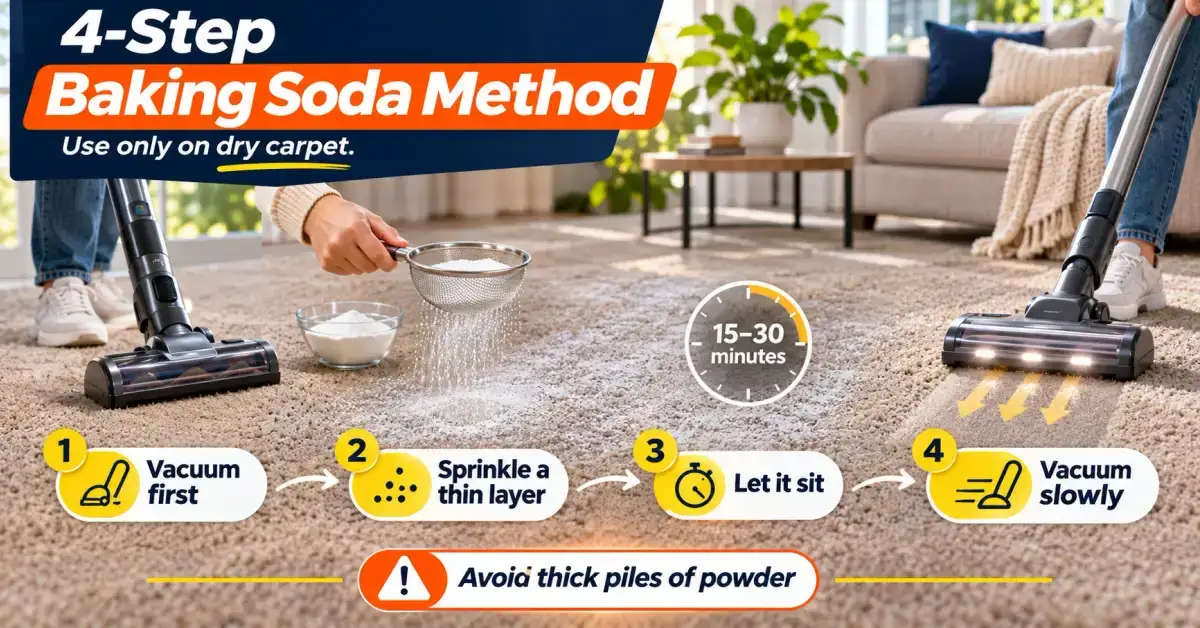
Work on dry carpet and follow the four steps in order.
Step 1: Vacuum the carpet first
Vacuum the whole area to remove hair, grit, and loose soil. Never apply baking soda to a damp or dirty carpet. Dreame explains that moisture makes the fine crystals clump and cling to the fibers, which makes them harder to remove.
Step 2: Sprinkle a thin, even layer
Fill a shaker or fine sieve with baking soda. Sprinkling baking soda on carpet works best as a thin film where the carpet still shows through. Do not dump it in piles, because a thick layer makes vacuuming harder. On longer-pile carpet, Stein notes the powder gets lost in the fibers, so plan extra vacuuming time.
Step 3: Let it work
Wait at least 15 minutes for a quick refresh. Stronger smells need more time, and the next section gives a simple guide. Keep pets and children away while the powder sits.
Step 4: Vacuum slowly and thoroughly
Vacuum slowly so the machine can pull powder out of the pile. Make several passes in different directions. The vacuuming process matters most here, because leftover powder can cling to the backing and feel gritty underfoot. Empty the bin or replace the bag right away, and clean the filter.
How Long to Leave Baking Soda on Carpet
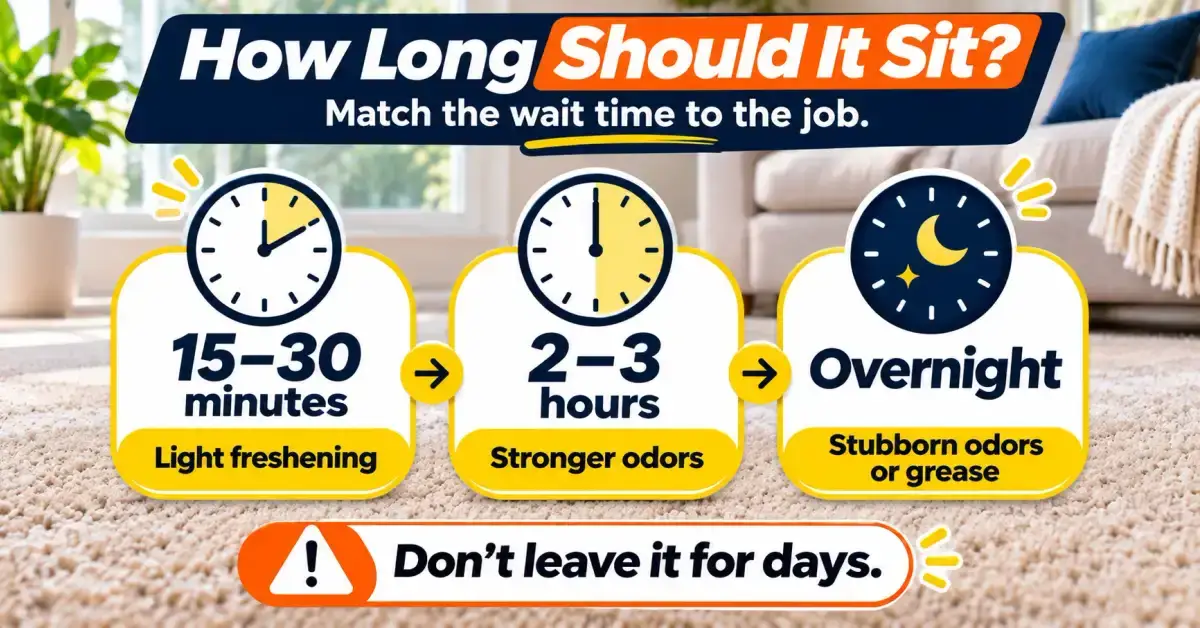
No official standard exists, so use a practical range. Arm & Hammer says 15 minutes is enough for a basic refresh and suggests overnight for stains. Dreame suggests two to three hours for stronger smells.
How Long to Leave Baking Soda on Carpet
| Goal | Suggested wait |
|---|---|
| Light freshening | 15 to 30 minutes |
| Stronger odors | 2 to 3 hours |
| Stubborn odors or grease | Overnight |
Can you leave baking soda on carpet overnight?
Yes, in most cases. Arm & Hammer recommends leaving it overnight on stains so the powder can absorb more oil. Vacuum it up in the morning. Do not leave it for days. Ideal Home says a long wait can make it harder to vacuum and may slightly discolor carpet.
How to Clean Carpets With Baking Soda for Stains
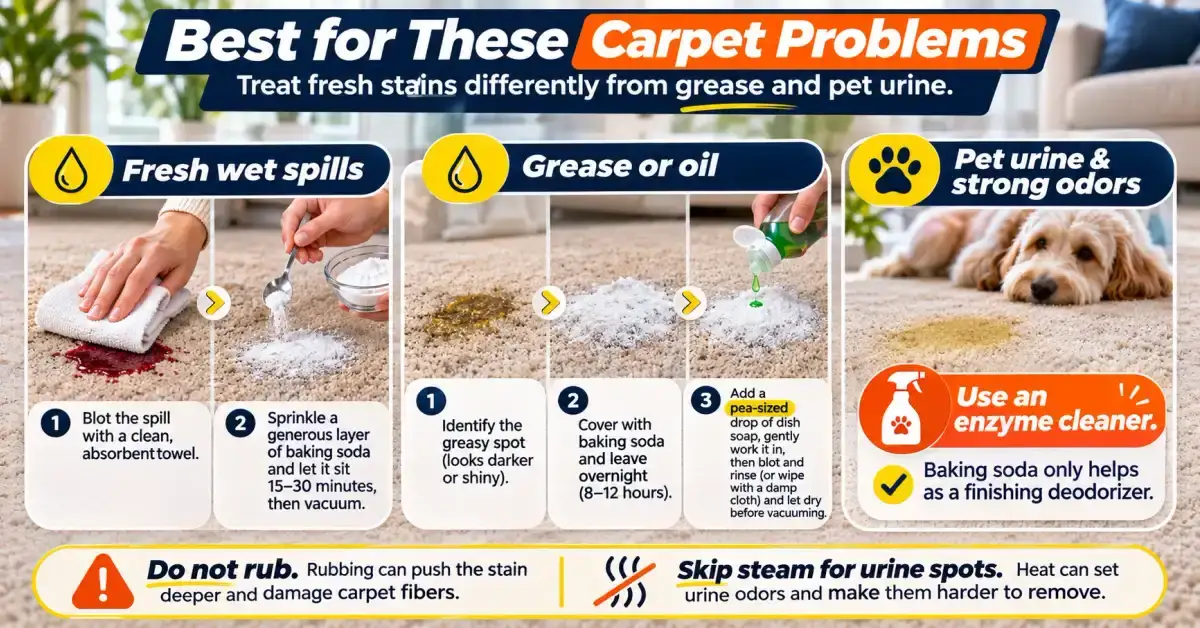
Fresh stains respond best, and the method depends on whether the stain is wet or greasy.
Fresh wet spills and non-greasy stains
Blot the spill first with a clean cloth, and do not rub. Cover the spot with baking soda, then lay a warm, damp cloth over it. Skip pouring water onto the stain, because a damp cloth gives enough moisture. Wait at least an hour, then vacuum along the direction of the pile. Repeat if needed.
Grease and oil stains
Blot up as much grease as you can. For grease only, cover the stain with a generous layer of baking soda and leave it overnight. Vacuum the powder. If a mark remains, blot it with one pea-sized drop of dish soap, then blot with clean water. Add fresh baking soda for at least three hours and vacuum again.
Pet urine and strong odors
Baking soda can soften mild urine odor, but it cannot break down uric acid. Hill's Pet says baking soda, vinegar, soap, and peroxide may only neutralize the smell briefly, and humid days can bring it back. Its advice is to use an enzyme cleaner. Humane World adds two warnings. Skip steam cleaners, because heat sets the stain and odor. Skip vinegar, because strong smells may draw pets back to the spot.
Key Takeaway: For pet urine, blot first and use an enzyme cleaner. Baking soda only helps as a finishing deodorizer.
Baking Soda Carpet Cleaner Mixes: Vinegar, Dish Soap and Peroxide
A baking soda carpet cleaner can be a dry powder, a paste, or a light spray. Each mix has limits, so test every one on a hidden spot first.
Baking soda with vinegar
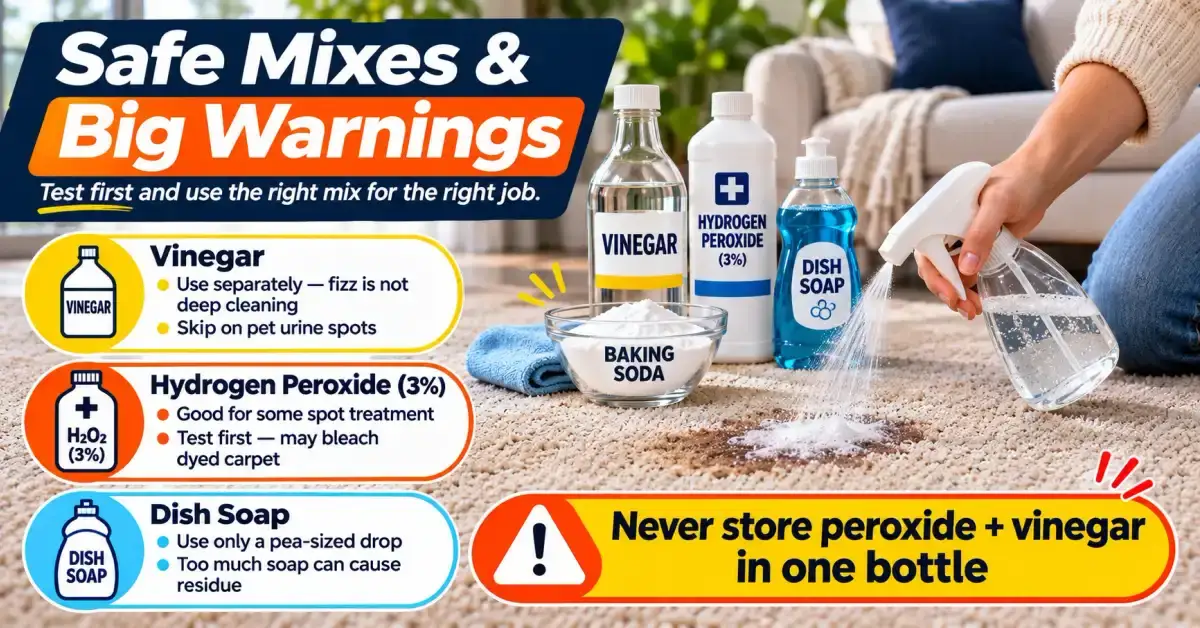
Baking soda and vinegar fizz, but the fizz is not deep cleaning. The two react and leave mostly water, carbon dioxide, and sodium acetate, a salt. Virginia Tech chemist Amanda Morris told Cubby that the fizzing stops quickly and leaves what she calls glorified water. Use them separately instead of premixing. Skip vinegar on pet urine spots, and be cautious on wool.
Baking soda with hydrogen peroxide
The Spruce shares a gentle spray from cleaning experts. Mix 2 to 3 tablespoons of baking soda, 1 cup of 3% hydrogen peroxide, and 2 cups of water in a spray bottle. Test a hidden spot first. Mist the stain until the carpet is damp, not soaked. Let it sit for five to 10 minutes, then blot and wipe with a damp cloth. Vacuum once dry.
Use it only for specific stains or strong local odors, because frequent use can fade and weaken fibers.
Peroxide can bleach dyed carpet, so stay at 3% or lower. Never store peroxide and vinegar in one bottle. Safety guides warn the mix can form peracetic acid, an irritant.
Baking soda with dish soap
Use dish soap sparingly. One pea-sized drop is enough for a grease mark. The Carpet and Rug Institute describes resoiling as residue that attracts dirt faster, so blot the spot with clean water afterward. Extra soap can stay in the pile as residue.
Cleaning Rugs With Baking Soda
A baking soda rug cleaner follows the same dry method. Test a corner and use a thin layer. Baking soda for rugs suits dry, synthetic rugs best. A Spruce expert warns to be careful with antique or delicate rugs, and to avoid wet mixes on wool, silk, jute, and sisal.
Can Baking Soda Damage Your Vacuum or Carpet?
Vacuum and filter risk
Fine powder can clog filters and cut suction, especially in bagless vacuums. Homes & Gardens quotes experts who say damage depends on your model and how often you vacuum powder. So use a thin layer, vacuum slowly in several directions, and clean the filter afterward.
Does baking soda stain carpet?
Dry baking soda is white and does not dye carpet. The real risks are leftover powder and moisture, since damp powder clumps and clings to fibers. Ideal Home adds that leaving it for days may slightly discolor carpet. Cleanfax reports that baking soda can dry into a white film after wet cleaning. A patch test answers the question for your carpet.
When Baking Soda Is Not Enough
Call for stronger help if the smell returns, the stain is old or colored, or pet urine soaked the padding. A baking soda carpet cleaner cannot extract deep soil, but hot-water extraction can. Vacuum out every trace of powder before any extraction, and check your carpet's care guide and warranty.
FAQs About Baking Soda and Carpet
Can I sprinkle baking soda on carpet and then vacuum?
+
Yes. Apply a thin layer to dry carpet, wait, then vacuum slowly. Check your vacuum manual first, because fine powder can clog filters.
Does baking soda disinfect carpet?
+
No. Baking soda deodorizes and absorbs, but it is not a disinfectant. If germs are the concern, use a product labeled for disinfecting and follow its directions.
Can I use baking soda on a damp carpet?
+
Avoid it. Moisture makes the powder clump and cling to fibers. If a carpet is wet from a spill, blot it and dry it within 24 to 48 hours. The EPA says mold usually will not grow if damp materials dry in that window.
How much baking soda should I use?
+
Use a thin, even layer where the carpet still shows through. Sources give no standard amount, so less is better. A heavy layer is harder to vacuum out.
Can I clean carpet with baking soda without a vacuum?
+
It is possible, but not ideal. Brush most of the powder into a dustpan and blot the rest with a damp cloth. Some stays in the pile, so a vacuum gives a better finish.
Is baking soda safe for wool or natural-fiber carpet?
+
Use caution. A Grazia expert says wool can suffer damage. The Spruce advises skipping wet baking soda mixes on wool, silk, cotton, jute, and sisal. Read the care label and test a hidden spot.
How often can I use baking soda on carpet?
+
Use it occasionally. Stein suggests treating a whole carpet no more than once every three months, because excess powder can build up. Stop if your vacuum filter clogs fast or powder lingers.
Conclusion: Clean Carpets With Baking Soda the Right Way
To clean carpets with baking soda the right way, vacuum first, sprinkle a thin layer on dry carpet, wait, and vacuum slowly. Cleaning carpet with baking soda freshens odors and lifts light grease, but it does not replace deep cleaning. Test first, protect your vacuum, and call a pro when the smell returns.
Need a carpet cleaning company you can trust? We handle residential and commercial carpet cleaning, rug cleaning, upholstery cleaning, and pet stain and odor removal —our team is ready to help.

Michael Sanders
Michael Sanders is a home care and cleaning industry writer covering carpet maintenance, flooring care, and household cleaning practices across the United States. His work focuses on practical, research-backed guidance — from stain and odor removal to deep extraction methods and indoor allergen prevention. Michael collaborates with cleaning professionals to ensure accuracy, and his writing reflects a genuine interest in helping homeowners make informed decisions about caring for their homes.