
Blog · Carpet Cleaning Guide
Homemade Carpet Cleaner Solution for Machines: What to Mix and What to Skip
You ran out of carpet cleaner halfway through the room, and now you need a homemade carpet cleaner solution your machine can handle.
Published November 6, 202613 min read
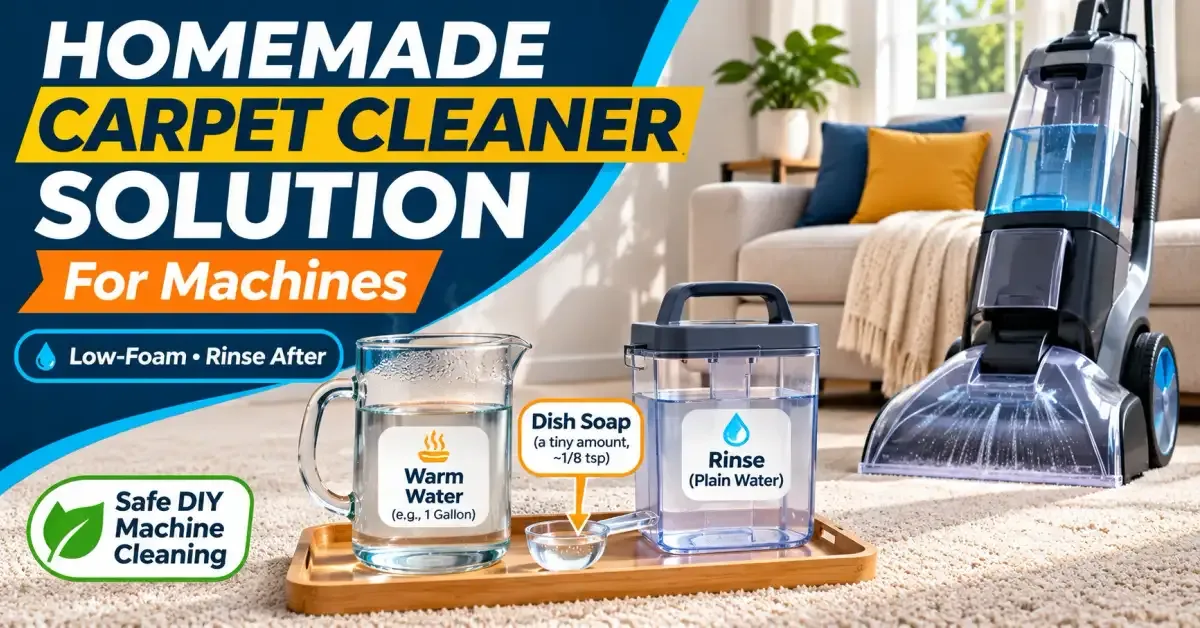
Here is the short answer. The lowest-risk mix is warm water with a tiny amount of clear dish soap, followed by a plain-water rinse pass. Machine makers such as Bissell and Rug Doctor tell owners to use their own formulas, so check your manual before you pour anything in. This guide covers what you can use, how to run it, what never belongs in the tank, and where homemade mixes fall short on pet urine. Too much soap is the most common mistake, because leftover residue can make carpet attract dirt faster.
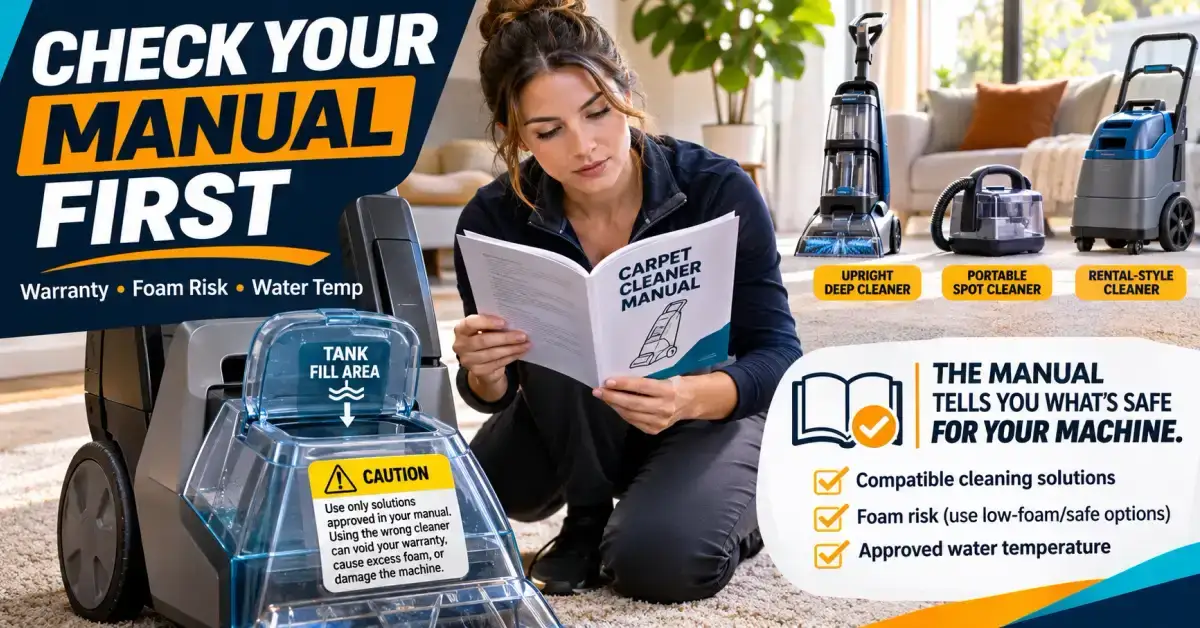
Check Your Machine Before Using a Homemade Carpet Cleaner Solution
The machine decides what is safe, so start with the manual. A homemade mix can foam too much, leave residue, or put your warranty at risk, depending on the brand. A few minutes of reading prevents most of those problems.
What Bissell and Rug Doctor Say About DIY Mixes
Bissell manuals tell owners to use genuine Bissell formulas and warn that other formulas may harm the machine. They also say to fill the tank with warm tap water at 140°F (60°C) or less, and never to use boiling water or heat the tank in a microwave. Rug Doctor goes further. Its manuals say other cleaning solutions may harm the machine and void the machine and carpet warranties. Its support pages add that other products can cause leaks. Both brands sell solutions, so their advice is not neutral, but it is the rule your warranty follows. Other brands publish their own rules, so read yours.
Key Takeaway: Bissell and Rug Doctor both tell owners to use their own formulas. Bissell warns that other formulas may harm the machine, and Rug Doctor says they may void the warranty. Keep tank water at or below your manual's limit (140°F for Bissell).
Which Type of Machine Do You Have?
Your machine type changes how careful you need to be.
- Upright shampooer or deep cleaner: The most common home machine. Many people call these shampooers, and the manual still decides what goes in the tank.
- Hot-water extractor: Often sold as a steam cleaner. It sprays hot water and detergent, then pulls both back out, so the steam clean method is really hot-water extraction.
- Portable spot cleaner: Small machines like the Bissell Little Green have small tanks, so dosing mistakes happen fast. Measure carefully.
- Rental machine: Rug Doctor rentals say to use only Rug Doctor solutions, so a homemade mix is a bigger risk here.
What Is the Best Homemade Carpet Cleaning Solution for Machines?
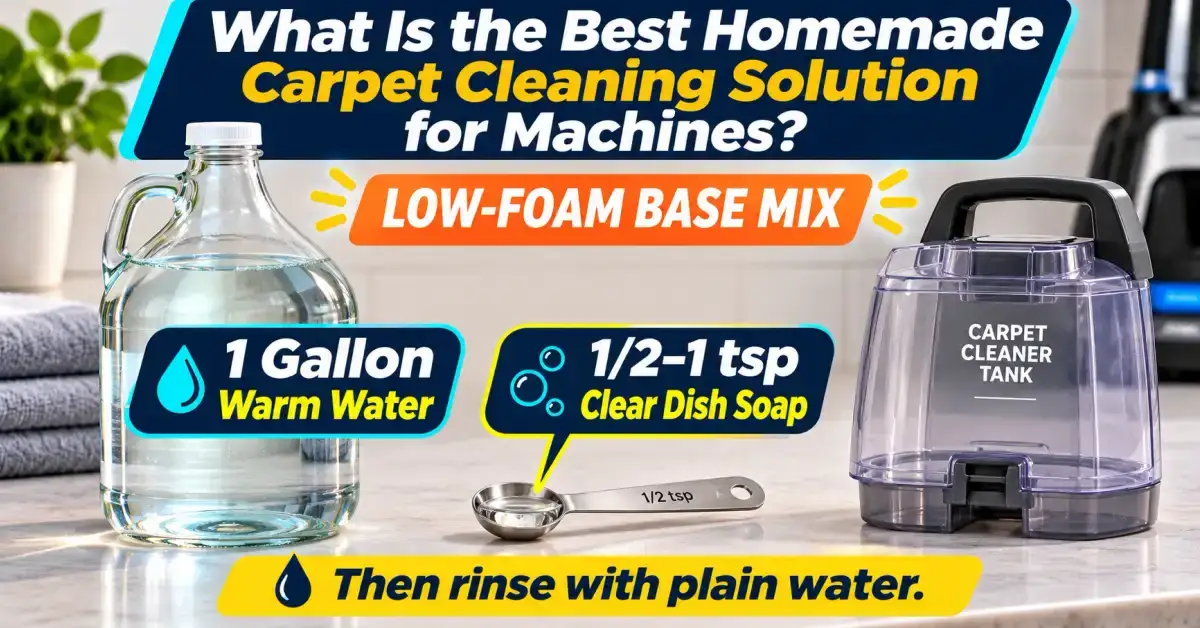
The best homemade carpet cleaning solution for machines is also the simplest: warm tap water with a very small amount of clear, dye-free dish soap, then a rinse pass with plain water. Skip fabric softener, bleach and strong blends. Fewer ingredients mean less foam and less residue left in the pile.
The Low-Foam Base Mix
Treat these amounts as a common starting point, not a lab-tested formula. Your manual overrides them.
- 1 gallon of warm tap water, within your machine's temperature limit
- 1/2 to 1 teaspoon of clear, dye-free dish soap
- Nothing else for the first run
Start at the low end. Heavy foam interferes with extraction and leaves more soap behind, which is the opposite of what you want. This homemade carpet cleaner for machine tanks works best on fresh, light soil. A diy carpet cleaner for machine use will not match a rental extractor on deep, old dirt.
Natural Carpet Cleaner Add-Ins and What Each One Does
A natural carpet cleaner sounds gentle, but natural does not mean machine-safe or residue-free. Each common ingredient has a job and a catch.
Natural Carpet Cleaner Add-Ins
| Ingredient | What it does | Risk | Best use |
|---|---|---|---|
| Distilled white vinegar | Acid that helps with odor and some alkaline residue | Some makers restrict non-brand additives | Optional rinse only, about 1/4 cup per 2 gallons of water, if your manual allows |
| Baking soda | Absorbs odor | Undissolved powder can clog a tank | Dry method with baking soda: sprinkle, wait, vacuum. Never pour it into the tank |
| 3% hydrogen peroxide | Mild oxidizer for some stains | Can lighten dyed carpet | Spot test first. Never mix with vinegar |
| Clear dish soap | Lifts oily soil | Leaves residue if overused | Base mix only, in tiny amounts |
Cleaning with vinegar and baking soda together is a popular idea, but they cancel each other out when mixed, so use them in separate steps. People often ask whether you can put vinegar and Dawn in a carpet cleaner. Some do, but Dawn is still dish soap, so the same residue rules apply, and your manual has the final word.
How to Use Homemade Carpet Cleaner Solution in a Machine
The machine mostly rinses and extracts, so the prep and the rinse decide the result.
Pretreat Stains First
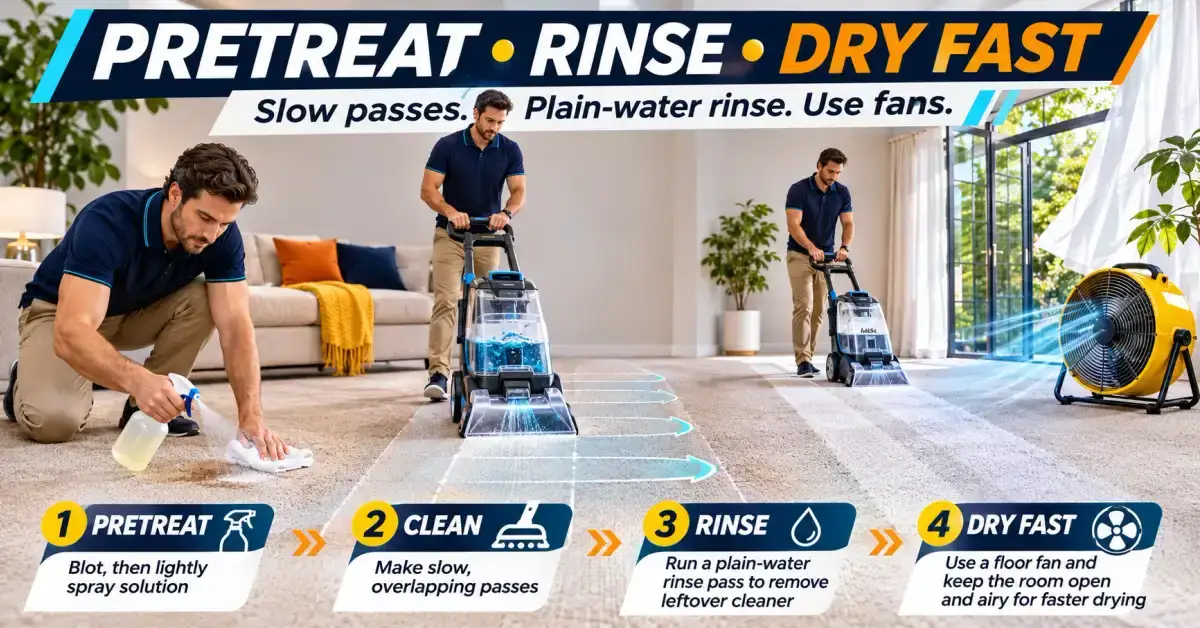
Pretreatment does most of the work on stains. For a carpet stain remover diy, blot the spot first, then mist it lightly with the base mix from a spray bottle. Wait about five minutes before running the machine. For odor, try the dry (no-water) method: sprinkle baking soda, let it sit, then vacuum. No homemade mix is truly heavy-duty. For old, set-in stains, a product labeled for carpet stains will usually do better than any diy carpet stain remover.
Run the Machine, Rinse and Dry
- Vacuum the carpet and remove solids. Bissell manuals call for a dry vacuum pass first.
- Test the mix on a hidden spot. Let it dry and check for color change.
- Fill the tank with warm tap water within your manual's limit, then add the mix.
- Clean in slow, overlapping passes. Release solution on the forward pass only, and avoid over-wetting.
- Rinse. Refill with plain warm water and repeat. Yes, rinsing matters, because leftover soap is what makes carpet sticky.
- Dry fast. Use fans, open windows and a dehumidifier if you have one.
The EPA says that in most cases mold will not grow if wet or damp items dry within 24 to 48 hours. That guidance covers water damage, but it makes a sound target after cleaning too. If the carpet still feels damp after two days, call a professional.
The Carpet and Rug Institute tests cleaning products through its Seal of Approval program. It has reported that some products increase resoiling, which means the carpet attracts new dirt faster. A plain-water rinse helps remove what soap leaves behind.
What Not to Put in a Carpet Cleaner Tank
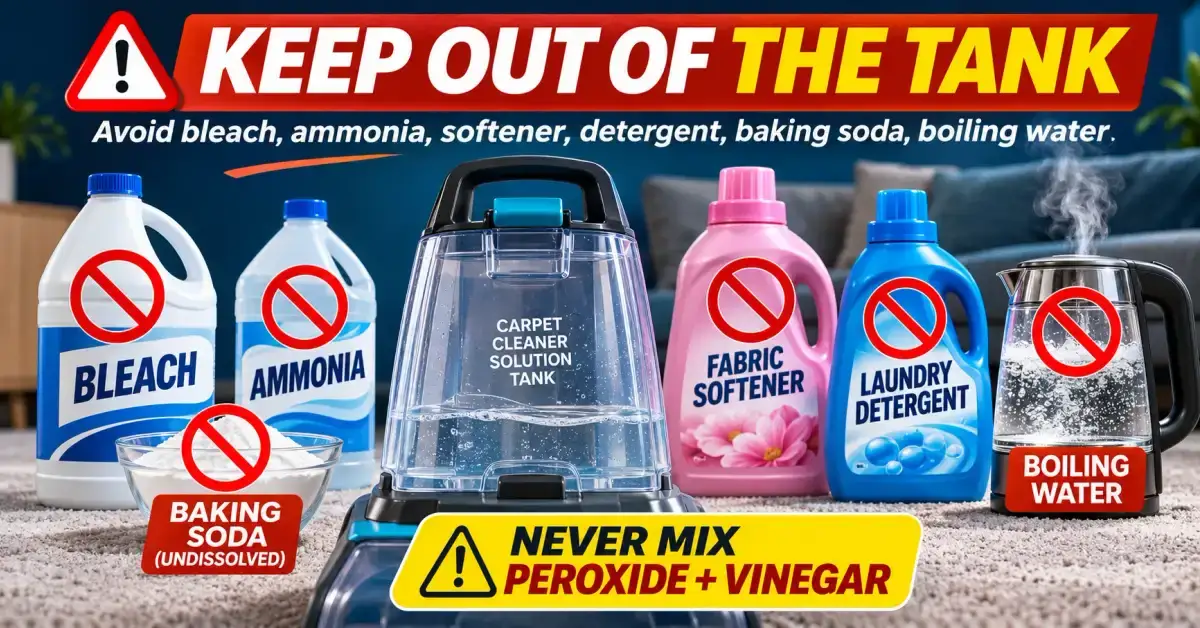
Some ingredients damage the machine, the carpet, or your lungs. Keep these out of the tank.
- Bleach: Rug Doctor manuals say not to put bleach, dye or other products in the machine. The CDC also says never to mix bleach with ammonia or other cleaners.
- Ammonia: Bleach and ammonia release toxic gas together. Pet urine also contains small amounts of ammonia, so bleach has no place near it.
- Hydrogen peroxide plus vinegar: This pair can form peracetic acid, which NIOSH describes as irritating to the eyes, skin and respiratory tract. Never combine them in one container.
- Fabric softener: It coats fibers and can leave a film that holds dirt.
- Laundry detergent: It is a high-foam detergent that rinses poorly in a carpet cleaner machine. Skip it unless your manual allows it.
- Undissolved baking soda: It can clog tanks and hoses.
- Boiling water: Bissell manuals prohibit it.
Key Takeaway: Never put bleach, ammonia, fabric softener or undissolved baking soda in a carpet cleaner tank. Never combine hydrogen peroxide and vinegar. Use warm tap water within your manual's limit, never boiling water.
Homemade Carpet Cleaner for Pet Urine and Pet Stains
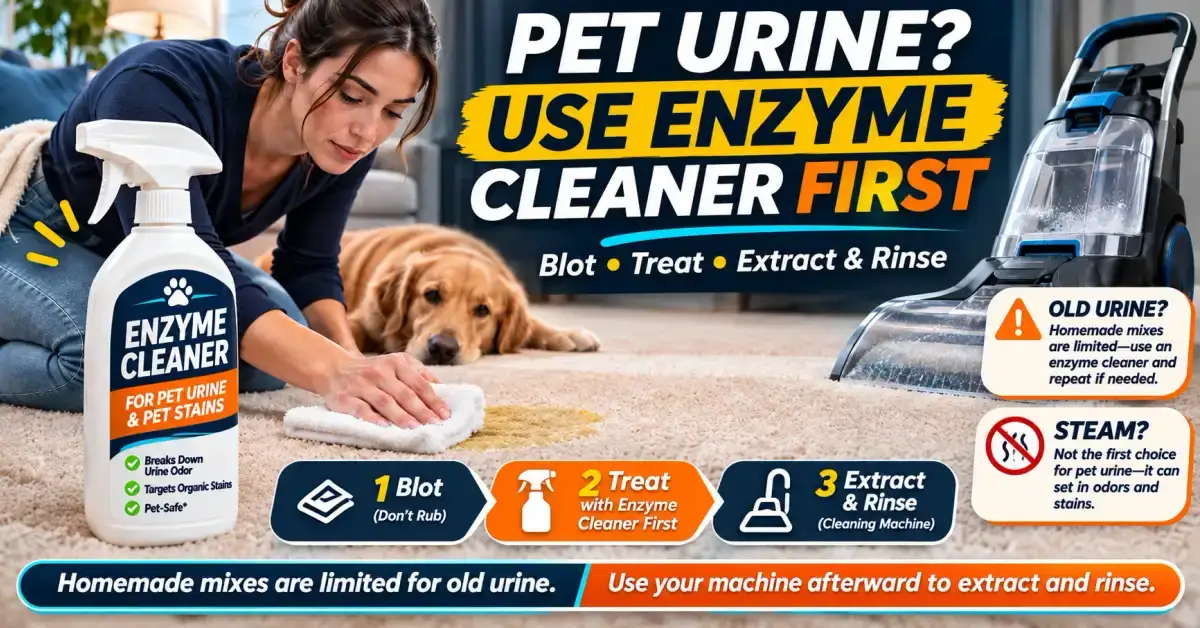
Homemade mixes have a real limit here. Vinegar and baking soda can ease odor, but they do not break down uric acid crystals in dried urine. Extension Foundation guidance, quoted by Hunker, notes those crystals are not water-soluble, which explains why the smell returns on humid days. An enzymatic cleaner is the better first step for pet urine.
Shelter guides also warn against steam cleaners on urine odors, because heat can set the stain and smell into the fibers. Humane World for Animals adds that urine soaked into the padding may force you to replace part of the carpet and pad. For pet stains, blot first and apply the enzyme cleaner according to its label. Use the machine afterward to extract and rinse. A homemade pet carpet cleaner for machines suits fresh messes and surface soil, not old urine.
Key Takeaway: For pet urine, use an enzymatic cleaner first. Vinegar and baking soda only ease odor. Skip steam on urine, then use your machine with the base mix to extract and rinse.
How to Fix a Sticky Carpet, Heavy Foam or Slow Drying
Fixing Common Homemade Carpet Cleaner Problems
| Problem | Likely cause | Fix |
|---|---|---|
| Sticky or stiff carpet | Soap left in the pile | Run extra rinse passes with plain warm water, then use less soap next time |
| Heavy foam | Too much soap or detergent | Empty the tank, refill with plain water, and rinse the area |
| Fast re-soiling | Residue attracting dirt | Rinse again and extract slowly |
| Still damp after a day | Over-wetting or high humidity | Make dry passes without releasing solution, add fans and a dehumidifier |
| Musty smell | Moisture trapped in carpet or pad | Dry faster. Call a professional if it lasts past 48 hours |
For white carpet, use clear soap with no dyes. Test peroxide first, because it can lighten color.
Check your carpet fiber before using hot water. Bissell's own wool-care guidance says never to use hot water on wool, because heat can shrink and felt the fibers. Use cool or warm water only, and test for colorfastness in a hidden spot first.
Frequently Asked Questions
Can I make my own carpet shampoo for a machine?
+
Yes, but the risks are warranty, foam and residue. People also ask what can I use to shampoo carpet, and what to use in a shampooer. The base mix above is the lowest-risk start. Check your manual first.
What can I use instead of carpet cleaning solution?
+
Warm tap water alone often works for light soil. Add a tiny amount of clear dish soap if needed, then rinse with plain water. If you ran out of carpet cleaner, this beats guessing with strong chemicals.
Can I use apple cider vinegar in a carpet cleaner?
+
It is not the best pick. Apple cider vinegar is brown and contains sugars, so distilled white vinegar is the safer choice. Use it only for a rinse and only if your manual allows it.
Can I use OxiClean or laundry detergent in a carpet cleaner?
+
Rug Doctor manuals prohibit products other than its own, and detergent foams heavily. Unless your manual says otherwise, skip both. Use the base mix for light cleaning and a carpet-labeled product for hard stains.
Is homemade carpet cleaner safe for kids and pets?
+
Simple mixes are gentler than strong chemicals, but keep kids and pets off until the carpet dries, and ventilate the room. For any accidental swallowing, call Poison Help at 1-800-222-1222.
What can I use in a carpet cleaner without vinegar?
+
Use the base mix: warm water and a tiny amount of clear dish soap, then a plain-water rinse. Vinegar is optional. Baking soda belongs in the dry method only, never in a carpet cleaner machine tank.
Final Thoughts on Choosing a Homemade Carpet Cleaner Solution
A good homemade carpet cleaner solution is simple, low-foam and always followed by a rinse. Check your manual, use the base mix sparingly, and keep bleach, ammonia and softener out of the tank. For pet urine and old stains, bring in an enzymatic cleaner or a carpet-labeled product instead of pushing a homemade mix past its limits.
Need a carpet cleaning company you can trust? We handle residential and commercial carpet cleaning, rug cleaning, upholstery cleaning, and pet stain and odor removal —our team is ready to help.

Michael Sanders
Michael Sanders is a home care and cleaning industry writer covering carpet maintenance, flooring care, and household cleaning practices across the United States. His work focuses on practical, research-backed guidance — from stain and odor removal to deep extraction methods and indoor allergen prevention. Michael collaborates with cleaning professionals to ensure accuracy, and his writing reflects a genuine interest in helping homeowners make informed decisions about caring for their homes.