
Blog · Carpet Cleaning Guide
Carpet Stain Remover Guide: How to Choose and Use One That Works
A carpet stain remover works best when it matches the stain, the carpet fiber, and the age of the mark.
Published November 6, 202614 min read
Scoop up solids, blot the liquid, test the product on a hidden spot, then apply it and blot again. That routine handles most fresh spills. Old or heavy marks need more. In a 2026 lab test, Consumer Reports tried nine products on ten stains. None excelled on heavier messes, so expect to repeat steps. This guide shows how to get stains out of carpet with the right product type, a safe method, and fiber warnings. It also explains when to stop and call for help.
What a Carpet Stain Remover Can and Cannot Do
A carpet spot remover treats one small area. It loosens a stain so you can blot it away. It does not clean a whole room, and it cannot restore dye that the stain already stripped from the fibers.
Timing matters. One trade source puts the line between a spot and a stain at about 24 hours. After that, the mark bonds more firmly to the fibers. Bleach spots and dye stains are usually permanent, because the color is gone from the fibers. Some old or oily stains may never lift fully either, no matter which carpet stain cleaner you try.
The Carpet and Rug Institute (CRI) runs a Seal of Approval program for spot removers. It tests cleaning effectiveness, pet stain and odor removal, resoiling, pH, optical brighteners, and colorfastness. CRI also notes that some spot removers clean no better than water.
Carpet Stain Remover Types and What Each One Fits
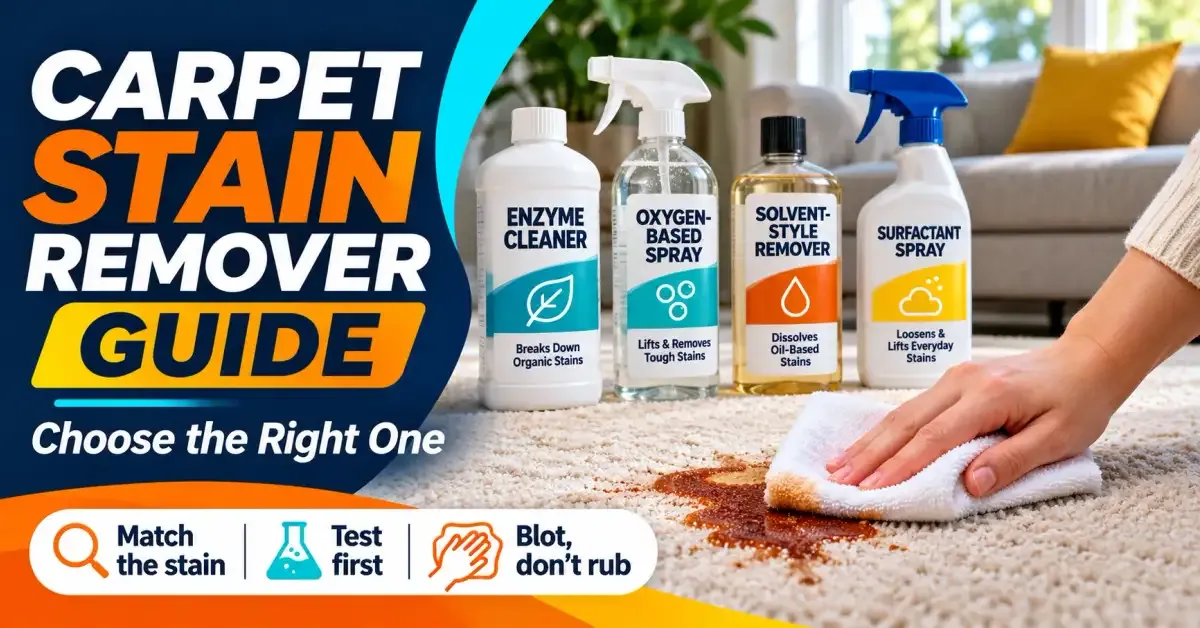
Four chemistries cover most products on the shelf. Pick the one that fits your stain first, and the brand second.
Carpet Stain Remover Types
| Type | Works best on | Watch out for |
|---|---|---|
| Enzyme | Pet urine, food, other organic stains | Needs time to work; check the label on wool |
| Oxygen-based | Coffee, wine, juice, other color stains | Can lighten dye; test first |
| Solvent | Grease, oil, cosmetics | Fumes; use with ventilation |
| Surfactant | Light everyday soil | Residue if you skip the final blot |
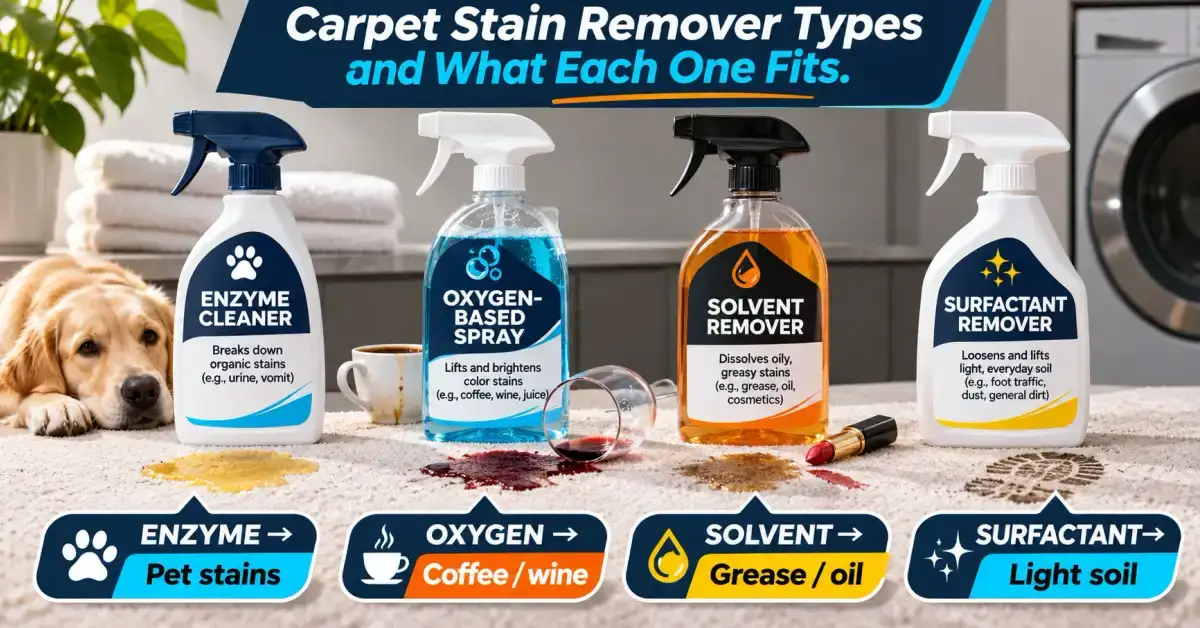
Key Takeaway: Match the chemistry to the stain: enzymes for pet messes, oxygen for color, solvents for grease, surfactants for light soil.
Enzyme Cleaners for Pet Stains and Odor
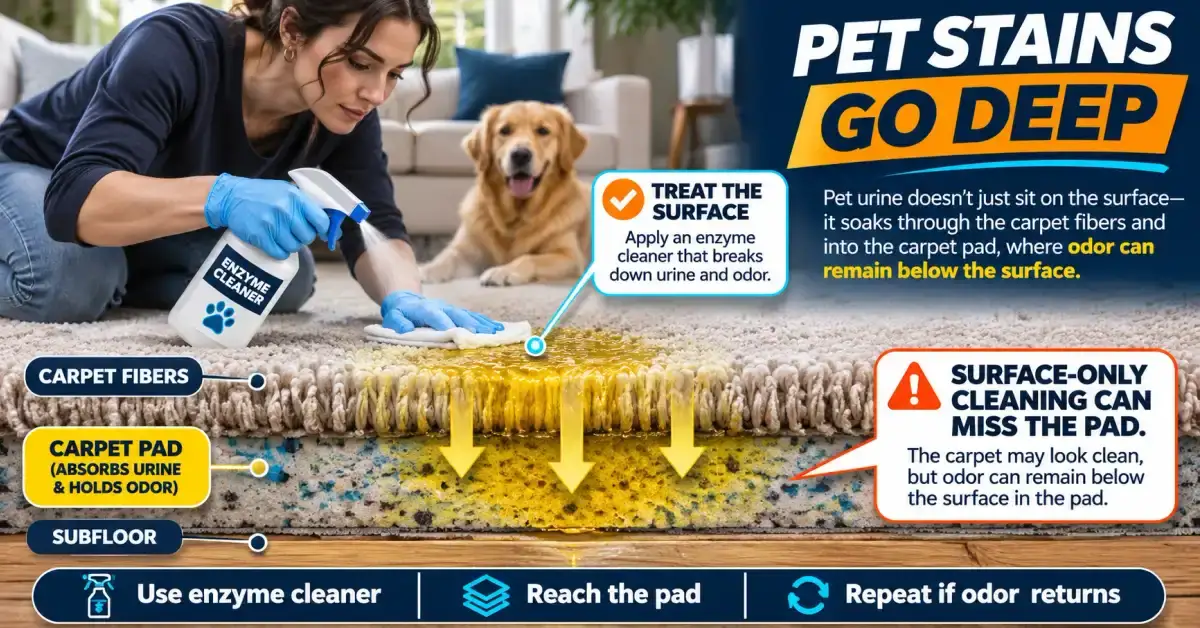
Enzyme cleaners use proteins that break down organic matter, which is why they suit pet stains and odor. Urine often soaks through to the pad, so the product must reach as deep as the urine did. Trade sources also advise skipping ammonia-based cleaners on urine spots, since the smell can draw pets back.
Oxygen-Based Sprays for Color Stains
Oxygen-based sprays lift color from tough stains such as coffee, wine, and juice. OxiClean's label, for one, warns against use on wool, leather, and silk. Hydrogen peroxide can also lighten dye, so a hidden-spot test matters.
Solvent and Surfactant Spot Removers for Grease
Grease and oil resist water-based cleaners. Solvent spotters dissolve them, while surfactants loosen light soil. Work in a ventilated room, and avoid soaking the carpet, because extra liquid pushes the stain toward the backing.
Carpet Cleaner Spray, Foam and Spray Can: Which Format?
A trigger carpet cleaner spray lets you control how much liquid reaches the carpet. A foam or spray can uses less liquid and suits quick jobs. It can leave residue that attracts soil if you skip the blot. When you compare any best carpet cleaner spray, check the active ingredient first and the format second.
How to Use Carpet Stain Remover Step by Step
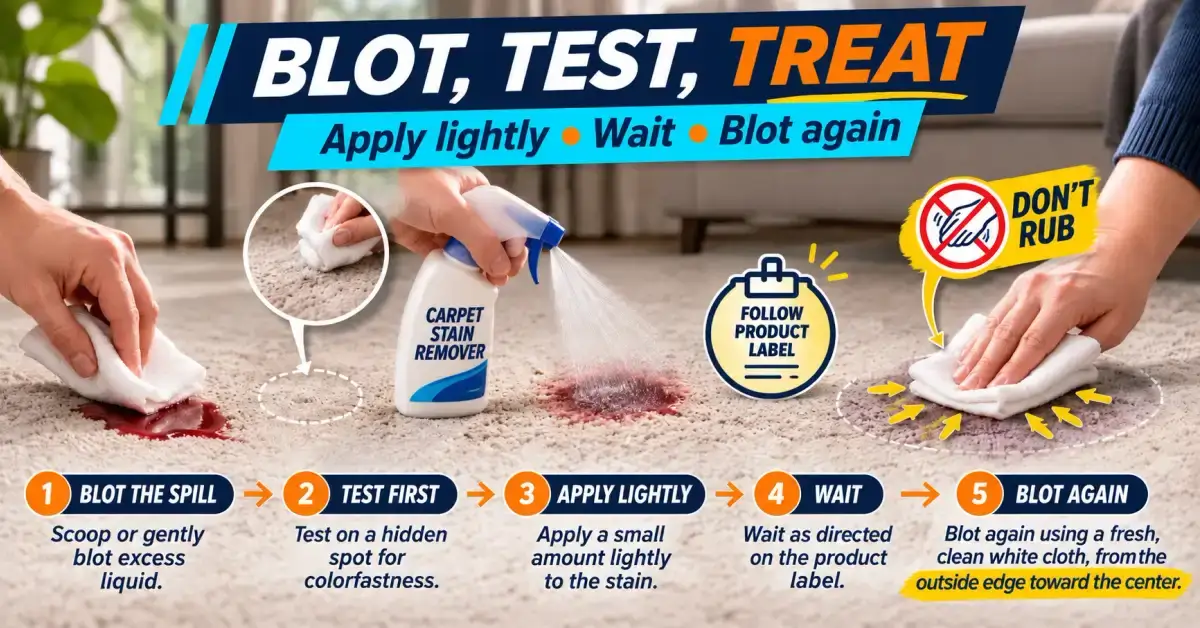
Use this routine to clean carpet stains on most synthetic carpet. Product labels vary, so the directions on your bottle override anything here.
- Scoop or scrape up solids with a spoon. Do not press them into the pile.
- Blot liquid with a clean white cloth, moving from the outer edge toward the center.
- Test the remover on a hidden spot, such as inside a closet. Let it dry and check for color change.
- Pretreat the stain with a light application. Start small, because you can always add more.
- Wait the time the label specifies.
- Blot with a fresh section of cloth. Keep lifting until no more stain transfers.
- Repeat if needed, blot away residue, let the carpet dry fully, then vacuum.
This sequence is the core of reliable carpet stain removal. Skipping the test or the final blot causes much avoidable damage.
Should You Blot or Rub a Carpet Stain?
Blot. Rubbing pushes the stain deeper and can fray the pile. Press a clean cloth down, lift it, and move to a dry section. Working from the outside in keeps the stain from spreading.
How Long Should the Remover Sit?
Follow the label. OxiClean's carpet spray, for example, calls for about 10 minutes, while some products advertise no waiting at all. Longer is not always better. A product that dries on the carpet can leave sticky residue.
How to Remove Old, Set-In and Pet Stains
Older marks need patience more than strength. Plan several light rounds, not one heavy application.
Old, Set-In and Deep Stains
Old stains and set in stains bond to the fibers, so one pass rarely works on a stubborn stain. Dampen the area lightly, apply the remover, allow the full label time, and blot. Repeat several rounds. Deep stains that reached the backing may need hot water extraction. Consumer Reports found that no tested product excelled on heavier messes, so a faint shadow after treatment is common. Stop when the mark stops improving.
Pet Stains and Odor in the Carpet Pad
Pet stains and odor live below the surface. Urine soaks through the fibers into the pad, so surface cleaning leaves the smell behind. Find old spots with a black light in a dark room. Saturate the area with an enzyme cleaner so it reaches the same depth, then keep it damp for the time on the label. Let it dry. If the odor returns, the pad may hold urine, and replacing it may be the only fix.
Carpet Stain Remover Safety by Carpet Type
Fiber decides which chemistry is safe. Synthetic fibers such as nylon, polyester, and olefin generally tolerate more products, but the label and a hidden-spot test still make the call.
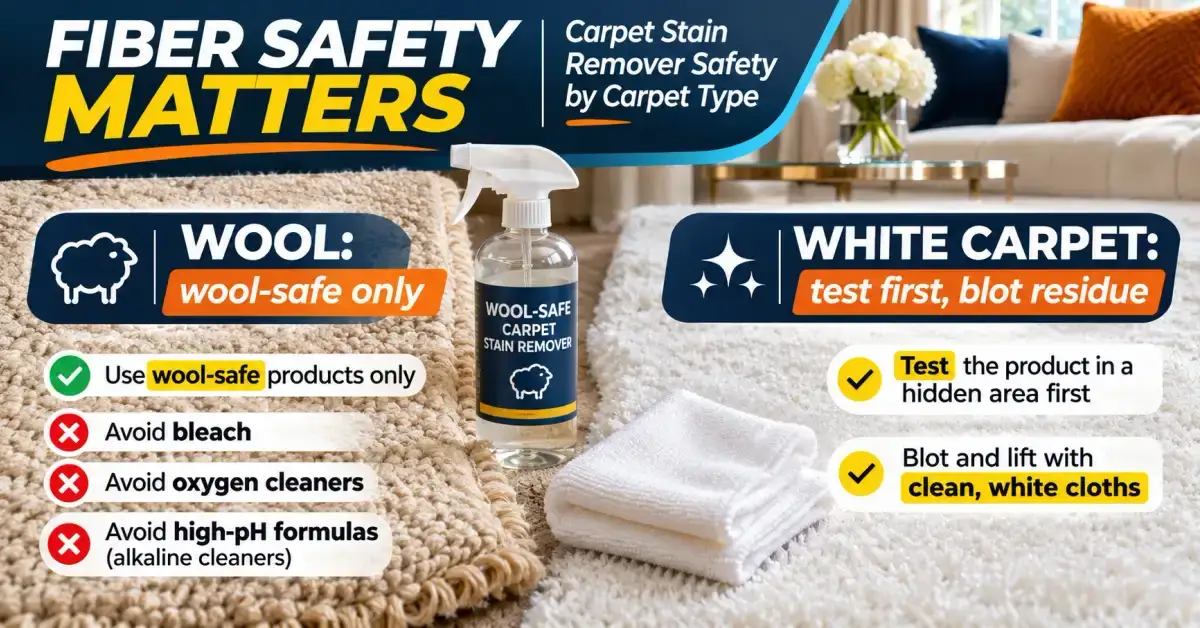
Wool Carpet
Wool carpet reacts badly to bleach, oxygen products, and high-pH cleaners, generally those above about pH 8. Use only products labeled wool-safe, and look for WoolSafe approval. Some wool guides also warn against enzyme cleaners, so skip general-purpose sprays unless the label names wool. Carpets with a stain-resistant treatment may also have product restrictions, so check the manufacturer's care guide first.
Key Takeaway: For wool, use only products labeled wool-safe, and avoid bleach, oxygen cleaners, and high-pH formulas.
White Carpet
White carpet shows every shadow and every bit of residue. Use a white cloth, because colored cloths can transfer dye. Test peroxide-based products for fading, and blot away soap, since leftover soap attracts dirt.
Home Remedy vs Commercial Carpet Stain Remover
A home remedy costs little and uses items you already own. It also has limits. Brand and professional sources call vinegar and baking soda a weak stain remover that can leave residue, so it rarely fixes old stains.
People also ask about dish soap mixed with 3% hydrogen peroxide. That mix can work on some stains, but peroxide can bleach colored carpet, so test it first. Commercial formulas are made for carpet, and CRI-approved ones have passed independent testing.
Home Remedy vs. Commercial Carpet Stain Remover
| Option | Good for | Risk |
|---|---|---|
| Vinegar and baking soda | Light odor, absorbing a fresh spill | Weak on stains; residue or clumps |
| Dish soap and warm water | Light food and grease marks | Residue attracts soil unless blotted away |
| 3% hydrogen peroxide | Some color stains on light carpet | Can lighten dye; test first |
| Commercial remover | Specific stain types | Must suit your fiber; read the label |
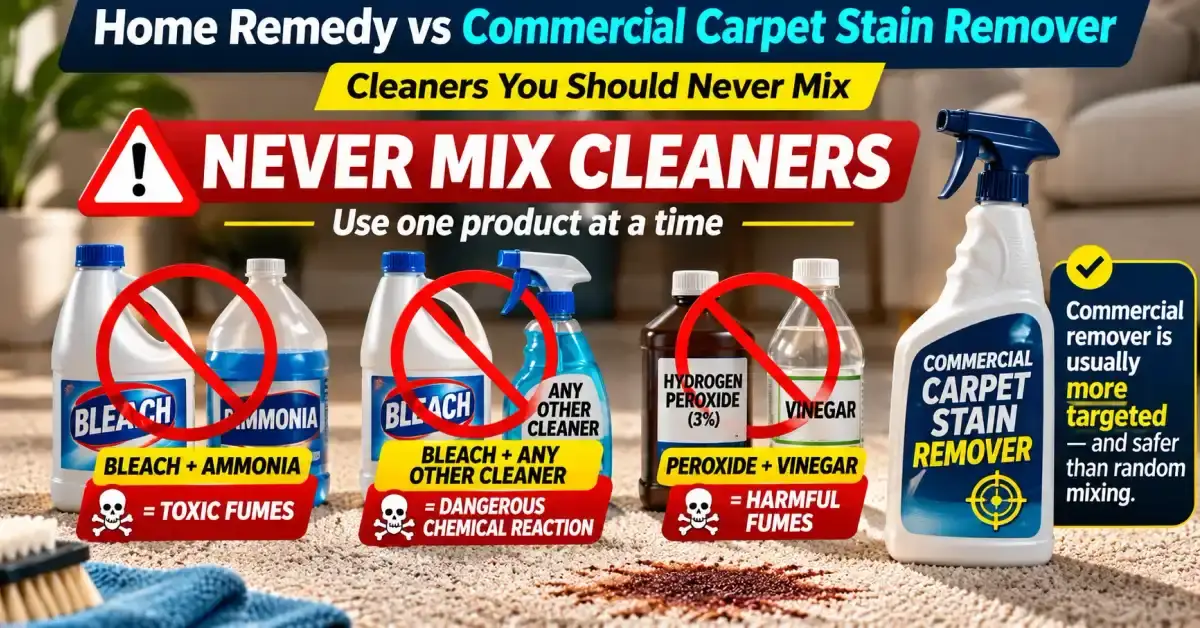
Cleaners You Should Never Mix
The CDC says never mix bleach with ammonia or any other cleaner. Combining products can release toxic gas. Safety sources add that peroxide and vinegar react to form peracetic acid, an irritant to skin, eyes, and lungs.
- Bleach with ammonia
- Bleach with any other cleaner, vinegar included
- Peroxide with vinegar in one bottle
Use one product at a time, blot between products, and ventilate the room. After any swallowing or fume exposure, call Poison Control at 1-800-222-1222.
Key Takeaway: Use one cleaner at a time. Never combine bleach with ammonia or any other cleaner, and never pair peroxide with vinegar.
Why Carpet Stains Keep Coming Back
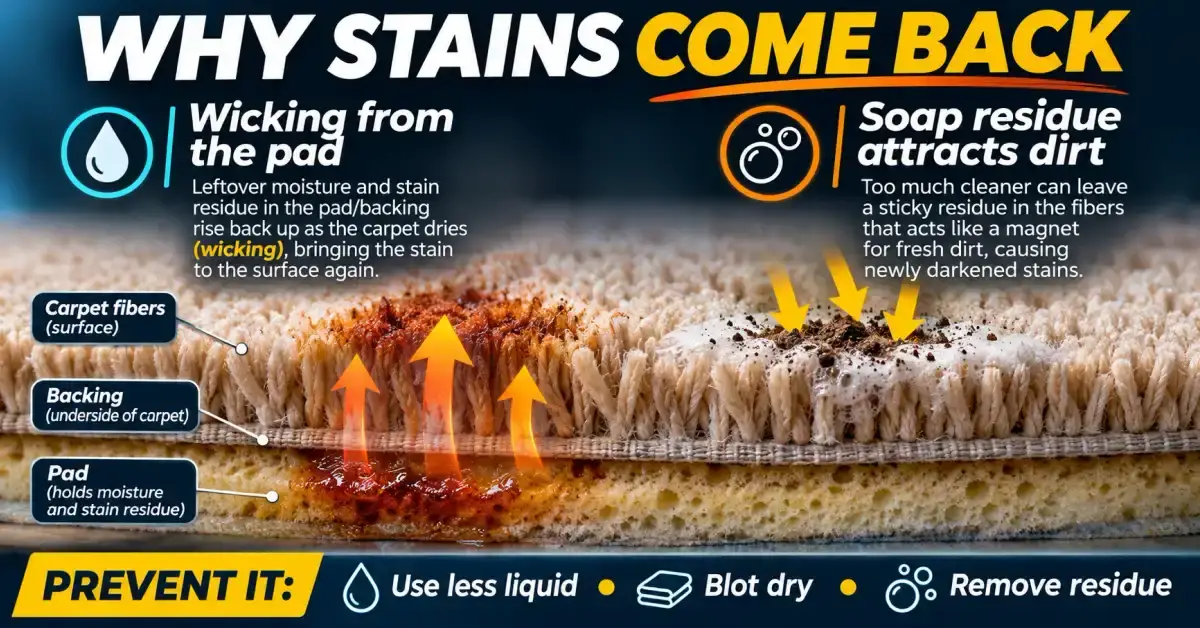
Wicking causes many returning carpet stains. Moisture soaks into the pad, and as the carpet dries, it pulls the stain back to the surface. Residue is the second cause. Leftover soap or spray attracts fresh dirt to the same spot.
To prevent both, use less liquid, blot until the area feels nearly dry, and remove product residue. One trade supplier also suggests setting a folded dry white towel on the spot with a weight on top to draw up moisture. If a stain returns after three rounds, the pad or backing probably holds it.
Key Takeaway: Stains return from wicking or residue. Use less liquid, blot thoroughly, and remove leftover product.
How to Choose the Best Carpet Stain Remover
The best carpet stain remover depends on the stain, the fiber, and the age of the mark, not on a brand name. Match the type: enzyme for pet messes, oxygen for color, solvent for grease. Then check the label for your fiber. Look for the CRI Seal of Approval, especially if your warranty requires it.
No single product is the most powerful carpet stain remover for every stain. Heavy duty and commercial-grade spotters may clean harder, but read the label and safety data sheet first. Independent tests name different winners, so treat them as a guide. Ignore promises that a product removes everything forever.
Key Takeaway: Choose by stain type, fiber, and age, check for CRI approval, and treat any claim of removing everything as marketing.
When to Call a Professional
Call a professional when a stain is large, returns after two or three attempts, or leaves odor in the pad. Wool and silk carpets also deserve expert care. A professional uses extraction equipment that reaches deeper than a spot remover. A professional can also tell you whether the pad needs replacing, which no spot treatment can fix.
Carpet Stain Remover FAQs
Is carpet stain remover safe for kids and pets?
+
It depends on the product. Keep children and pets off the area until it dries completely. Store products out of reach, and call Poison Control at 1-800-222-1222 after any swallowing.
Do I need to rinse after using it?
+
Check the label. Many sprays say no rinse, but soap-based mixes leave residue, so blot with a cloth dampened with plain water afterward.
Will a spot remover void my carpet warranty?
+
It can. Some carpet makers require CRI-approved products, so read your warranty before using a stronger formula.
What is the difference between a carpet stain remover and a carpet cleaner?
+
A stain remover treats one spot. A carpet cleaner solution cleans a larger area, usually through an extraction machine.
Conclusion: Match the Remover to the Stain
The right carpet stain remover matches the stain, the fiber, and the age of the mark. Blot, test, treat, and repeat, then stop once a mark stops improving. That approach is how to get rid of carpet stains without damaging the carpet. For wool, heavy marks, or stains that keep returning, a professional is the safer next step.
Need a carpet cleaning company you can trust? We handle residential and commercial carpet cleaning, rug cleaning, upholstery cleaning, and pet stain and odor removal —our team is ready to help.

Michael Sanders
Michael Sanders is a home care and cleaning industry writer covering carpet maintenance, flooring care, and household cleaning practices across the United States. His work focuses on practical, research-backed guidance — from stain and odor removal to deep extraction methods and indoor allergen prevention. Michael collaborates with cleaning professionals to ensure accuracy, and his writing reflects a genuine interest in helping homeowners make informed decisions about caring for their homes.