


Blog · Carpet Education
Hypoallergenic Carpet: Fibers, Allergens, and What Works
Hypoallergenic carpet is one of the most misunderstood categories in flooring. Allergy sufferers are told to remove all carpet, then told to buy hypoallergenic carpet, with little explanation of what the evidence actually shows or what separates a carpet that genuinely reduces allergen exposure from one that just carries the label.
Published October 17, 202612 min read

The answer depends on which allergen you are dealing with, which fiber and pile you choose, and more than either of those, how consistently you maintain the carpet after installation.
This article covers the allergen science, the carpet-versus-hard-floor debate with real data, fiber and pile guidance for allergy and asthma sufferers, and a maintenance protocol that actually keeps hypoallergenic carpet performing.
The Short Answer: Low-pile carpet in a certified low-VOC fiber, maintained with a HEPA vacuum three or more times per week and professional cleaning every 6 to 12 months, reduces allergen exposure more effectively than most people expect. The key variables are pile height, humidity control, and maintenance frequency, not just fiber choice.
Is Carpet Actually Good or Bad for Allergies?
The evidence-based answer runs counter to the advice many allergy sufferers receive.
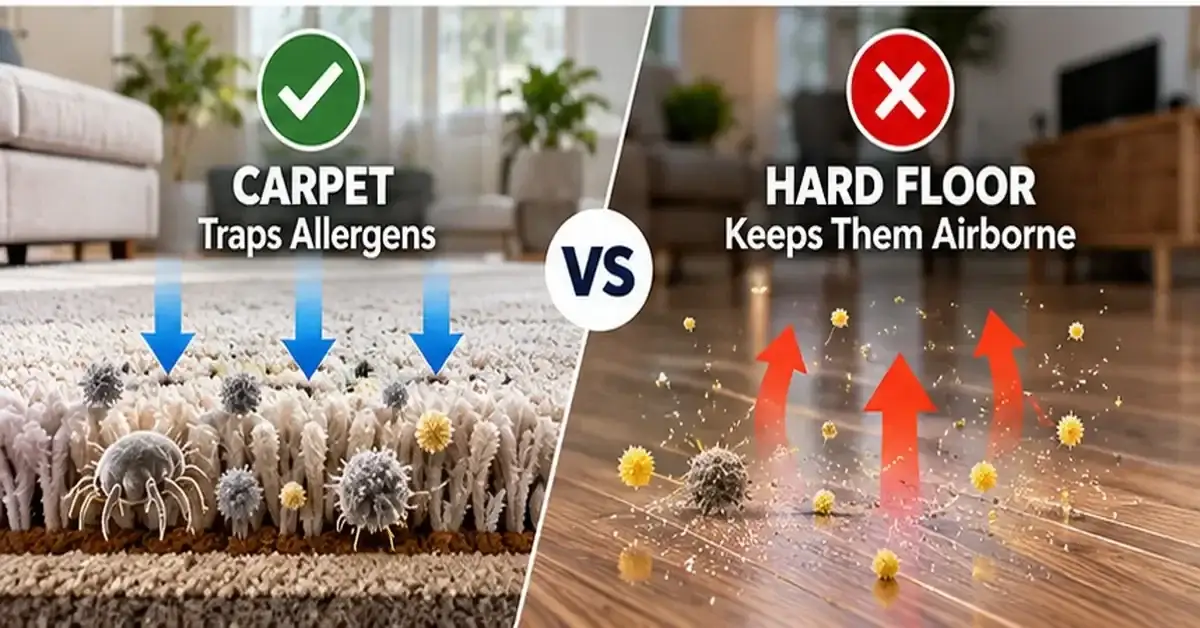
The American Lung Association notes that carpet traps common allergens including dust mites, pet dander, and pollen, keeping them at floor level rather than allowing them to circulate in the breathing zone. Hard flooring allows the same particles to remain airborne and re-circulate with every footstep, air current, or door opening. A well-maintained carpet can actually reduce the concentration of allergens in the air you breathe compared to hard flooring in the same room.
The critical word is maintained. Carpet that is not vacuumed frequently enough stops acting as a trap and starts acting as a reservoir. Allergens accumulate past the point where normal activity keeps them settled and begin releasing back into the air.
A homeowner with dust mite allergies who replaced bedroom carpet with hardwood found symptoms worsened rather than improved. The dust mites that had been settled in carpet fiber were now on the hard floor surface, redistributed into the air with every step. The carpet was not the problem. Infrequent vacuuming was.
The question is not carpet versus hard floor. The question is whether you will maintain the carpet at the frequency that keeps allergens trapped rather than released.
Dust Mites, Mold, Pollen, and Pet Dander: How Each Allergen Behaves in Carpet
Each allergen behaves differently in carpet and each has a different solution. No competitor covers this distinction.
Dust Mites
Dust mites live in fiber, feeding on shed skin cells, and reproduce rapidly in warm, humid conditions. The EPA reports that dust mite populations thrive when indoor humidity exceeds 50%. Below that threshold, dust mite reproduction slows significantly regardless of carpet type. The fiber choice matters less than the humidity level in the room.
Mold Spores
Mold requires moisture to grow, not carpet specifically. Carpet in a humid basement or near a water source creates conditions for mold growth. The same carpet in a dry, well-ventilated room does not. The solution for mold in carpet contexts is moisture control and ventilation, not automatic carpet removal. Olefin fiber resists mold growth better than wool or natural fibers in humid environments.
Pollen
Pollen does not originate from carpet. It enters from outside and settles on any surface. Carpet traps pollen effectively, preventing it from circulating in the air. Regular vacuuming removes settled pollen before it re-enters the breathing zone. For pollen allergy sufferers, carpet is an asset, not a liability, when vacuumed consistently.
Pet Dander
Pet dander is a protein-based allergen that bonds to surfaces differently than inorganic particles like pollen. It penetrates deeper into carpet fiber and requires more aggressive vacuuming and professional extraction to remove effectively. For pet dander specifically, low pile carpet and frequent HEPA vacuuming matter more than for any other allergen type.
What Carpet Fiber Works Best for Allergy and Asthma Sufferers?
Fiber choice for allergy sufferers differs from fiber choice for asthma sufferers in one important way: VOC sensitivity.
General allergy sufferers need fiber that resists allergen buildup and cleans effectively. Asthma sufferers additionally need fiber with the lowest possible VOC emissions, because chemical off-gassing from new carpet installation triggers asthma symptoms in ways that do not affect general allergy patients.
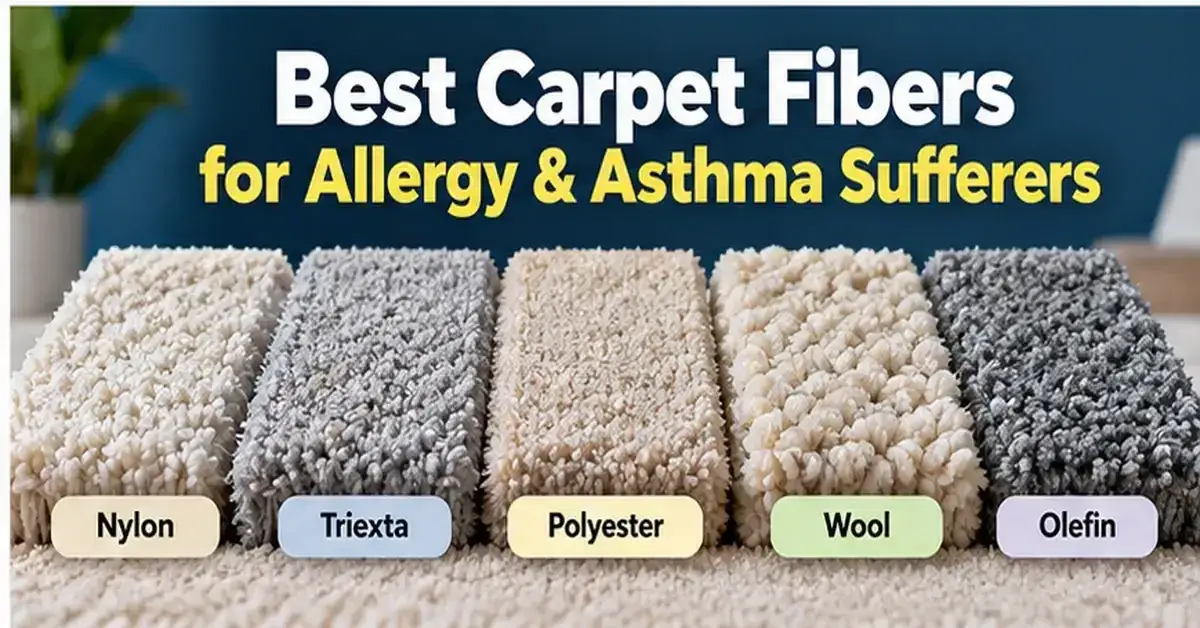
Carpet Fiber Comparison for Allergy and Asthma Sufferers
| Fiber | Allergy Performance | Asthma VOC Risk | Cost Range | Verdict |
|---|---|---|---|---|
| Nylon (Green Label Plus) | Excellent | Low when certified | $2.50 to $7.50/sqft | Best all-around for both conditions |
| Triexta | Excellent | Low | $2.29 to $4.48/sqft | Strong alternative to nylon |
| Polyester | Good | Low to moderate | $1 to $4/sqft | Acceptable, verify certification |
| Wool | Good, natural resistance | Moderate, check certification | $5 to $15/sqft | Good for allergy, verify VOC for asthma |
| Olefin | Good, moisture resistant | Low | $1 to $2/sqft | Best for humid environments |
For asthma sufferers specifically, Green Label Plus certification is non-negotiable. The Carpet and Rug Institute's Green Label Plus program verifies that certified products emit VOCs below specific threshold limits tested by an independent laboratory. No certification means no verified VOC control.
For general allergy sufferers without asthma, nylon and triexta both clean effectively, resist moisture and mildew, and do not support dust mite growth the way natural fibers can in humid conditions.
What Pile Height and Construction Reduce Allergen Load?
Pile height is one of the most directly measurable variables in hypoallergenic carpet performance.
According to the American College of Allergy, Asthma, and Immunology, low-pile carpet retains approximately 40% fewer allergen particles per square foot compared to high-pile carpet under equivalent use conditions. Shorter fibers have less surface area for particles to attach to, and a vacuum head reaches the base of the fiber more effectively in low-pile constructions.
For carpet allergy asthma sufferers, choose carpet with a pile height under 1/2 inch. This range includes level loop, low cut pile, and textured cut pile constructions. All three allow vacuum suction to reach closer to the backing where allergens settle between individual fiber tufts.
Plush and high-pile carpet above 3/4 inch trap significantly more allergens, require more aggressive vacuuming to clean effectively, and provide more surface area for dust mite colonization. For any household where a member has allergies or asthma, high pile and shag constructions are the wrong choice regardless of fiber certification.
Cut pile in a low to medium height offers the best balance of allergy performance and comfort underfoot. Level loop performs similarly for allergen retention but carries snag risk in pet households as covered in Article 16.
How Do You Maintain Hypoallergenic Carpet to Actually Stay Hypoallergenic?
Buying the right carpet is step one. Maintaining it at the right frequency with the right equipment determines whether it stays hypoallergenic over time.
HEPA Vacuum Specification
A standard vacuum with a non-HEPA filter captures large particles but exhausts fine allergen particles back into the air during vacuuming. A HEPA filter vacuum captures particles down to 0.3 microns, which includes the fine allergen particles that cause allergic and asthmatic reactions. For allergy and asthma households, HEPA filtration is not optional.
Vacuuming Frequency
The IICRC cites research indicating that vacuuming with a HEPA vacuum three or more times per week reduces dust mite allergen levels significantly compared to once-weekly vacuuming. Frequency matters more than vacuum quality up to the HEPA threshold.
Professional Cleaning Interval
The IICRC recommends professional hot water extraction cleaning every 6 to 12 months for allergy and asthma households. Professional extraction removes allergens that HEPA vacuuming cannot reach, particularly pet dander and dust mite matter that has settled deep into pile and backing.
Humidity Control
Keeping indoor humidity below 50% is as important as vacuuming frequency for dust mite allergy sufferers. EPA data confirms dust mite populations decline significantly below this threshold. A dehumidifier in humid climates or seasons addresses the root condition that allows dust mites to thrive regardless of carpet type.
New Installation Ventilation
New carpet off-gasses VOCs most heavily in the first 48 to 72 hours after installation. For asthma sufferers, ventilate the room aggressively during this window. Open windows, run exhaust fans, and if possible avoid sleeping in a freshly carpeted bedroom for 48 hours. Green Label Plus certified carpet minimizes but does not entirely eliminate this off-gassing window.
Two households with identical low-pile nylon carpet, one vacuumed three times per week with a HEPA vacuum in a humidity-controlled room and one vacuumed weekly with a standard vacuum in a 60% humidity home, will have completely different allergen levels at the two-year mark. The carpet is the same. The outcomes are not.
What Allergy Sufferers Should Know About Carpet and Indoor Air
These facts ground the hypoallergenic carpet decision in real data.
The American Lung Association confirms that properly maintained carpet traps allergens at floor level, reducing their airborne concentration compared to hard flooring where particles remain suspended in the breathing zone.
The EPA reports that dust mite populations thrive above 50% indoor humidity, making humidity control as important as any carpet specification for dust mite allergy sufferers.
The Carpet and Rug Institute's Green Label Plus program sets independently verified VOC emission thresholds for certified carpet products, the most relevant certification for asthma sufferers choosing new carpet.
The IICRC cites data indicating that HEPA vacuuming three or more times per week significantly reduces dust mite allergen levels in carpet compared to less frequent or non-HEPA vacuuming.
The American College of Allergy, Asthma, and Immunology reports that low-pile carpet retains approximately 40% fewer allergen particles per square foot than high-pile carpet, making pile height one of the most directly actionable spec choices for allergy households.
Common Questions About Hypoallergenic Carpet, Answered
Is wool carpet hypoallergenic?
+
Wool has natural properties that resist dust mites to some degree. Its dry, coil-shaped fiber structure is less hospitable than synthetic fiber in humid conditions. However, wool can absorb moisture in high-humidity environments, which increases dust mite risk. Asthma sufferers should verify Green Label Plus certification for any wool carpet before purchasing, as VOC emissions vary by manufacturer and finishing treatments.
What carpet padding is best for allergy sufferers?
+
A dense, firm padding with an antimicrobial treatment is the best choice for allergy households. Avoid very thick, soft padding that traps more debris at the carpet-pad interface. For households with pets or high allergen load, a moisture barrier pad prevents liquid penetration that can lead to mold growth in the padding itself.
Can carpet trap allergens and improve air quality?
+
Yes, when properly maintained. The American Lung Association notes that carpet keeps allergens at floor level rather than airborne. The trap function only works when vacuuming frequency is high enough to remove accumulated allergens before they release back into the air. Low pile carpet with HEPA vacuuming three or more times per week is the combination that delivers genuine air quality benefit.
What is Green Label Plus certification?
+
Green Label Plus is the Carpet and Rug Institute's indoor air quality certification for carpet products. It verifies through independent laboratory testing that the certified carpet emits VOCs below specific thresholds established by the CRI. For asthma sufferers, this is the single most important label to look for when selecting new carpet, beyond fiber type or pile height.
How do I reduce dust mites in carpet?
+
Three actions have the most impact: keep indoor humidity below 50%, vacuum with a HEPA filter vacuum three or more times per week, and schedule professional hot water extraction cleaning every 6 to 12 months. Low pile carpet and nylon or triexta fiber reduce the surface area available for dust mite colonization compared to high pile or natural fiber alternatives.
Is low pile carpet better for allergies than high pile?
+
Yes. The American College of Allergy, Asthma, and Immunology reports that low-pile carpet retains approximately 40% fewer allergen particles per square foot than high-pile carpet. Shorter fibers mean less surface area for allergen attachment and more effective vacuum penetration to the fiber base. For any allergy or asthma household, pile height under 1/2 inch is the practical recommendation.
What VOC levels should allergy sufferers look for in carpet?
+
Look for Green Label Plus certification, which is the verified standard for low VOC carpet emissions. For general allergy sufferers, VOC levels are less critical than for asthma patients. For asthma sufferers, Green Label Plus certified carpet is the only way to verify that VOC emissions meet a tested, independent standard rather than relying on unverified manufacturer claims.
What is the best carpet for dust mite allergies specifically?
+
Low-pile nylon or triexta with Green Label Plus certification, installed over a dense antimicrobial pad, in a room where indoor humidity is controlled below 50%. This combination addresses every variable that affects dust mite populations, including fiber surface area, cleaning effectiveness, moisture conditions, and chemical off-gassing.
Does carpet affect asthma differently than general allergies?
+
Yes. General allergy sufferers react primarily to allergen particles themselves, including dust mites, pollen, and dander. Asthma sufferers have an additional sensitivity to airborne chemical irritants including VOCs from new carpet installation. For asthma patients, Green Label Plus certification addresses a risk that does not significantly affect general allergy sufferers, making it more important than fiber type alone.
How often should allergy sufferers have carpet professionally cleaned?
+
Every 6 to 12 months for allergy and asthma households, compared to 12 to 18 months for standard households. Professional hot water extraction removes allergens that HEPA vacuuming cannot reach, particularly fine dust mite matter and pet dander that settles deep into pile and backing over time.
The detail most allergy sufferers overlook entirely is indoor humidity. Hypoallergenic carpet in a room where humidity consistently exceeds 50% will harbor significantly more dust mites than the same carpet in a controlled, drier environment, regardless of fiber certification, pile height, or vacuuming frequency. Humidity control is the foundation that makes everything else work. The right carpet, the right maintenance habits, and humidity below 50% together create a genuinely allergen-reduced environment.
If you are in the Las Cruces NM area and need professional carpet cleaning to reduce allergen load in your home, our team at Bliss Carpet Cleaning is ready to help.

Michael Sanders
Michael Sanders is a home care and cleaning industry writer covering carpet maintenance, flooring care, and household cleaning practices across the United States. His work focuses on practical, research-backed guidance — from stain and odor removal to deep extraction methods and indoor allergen prevention. Michael collaborates with cleaning professionals to ensure accuracy, and his writing reflects a genuine interest in helping homeowners make informed decisions about caring for their homes.


Want Help Reducing Allergens in Your Carpet?
Professional HEPA-filtered extraction removes what vacuuming alone can't reach. Serving Las Cruces, NM and the surrounding areas.
Call Now — Free Quote