

Blog · Carpet Cleaning Guide
Carpet Glue Remover: How to Pick One and Remove Old Glue Safely
A carpet glue remover works best when it matches both your adhesive and your subfloor, and in an older home you should rule out asbestos before scraping anything. This guide shows how to remove carpet glue by identifying the adhesive, choosing a remover type, and following safe steps for concrete or wood.
Published November 15, 202614 min read
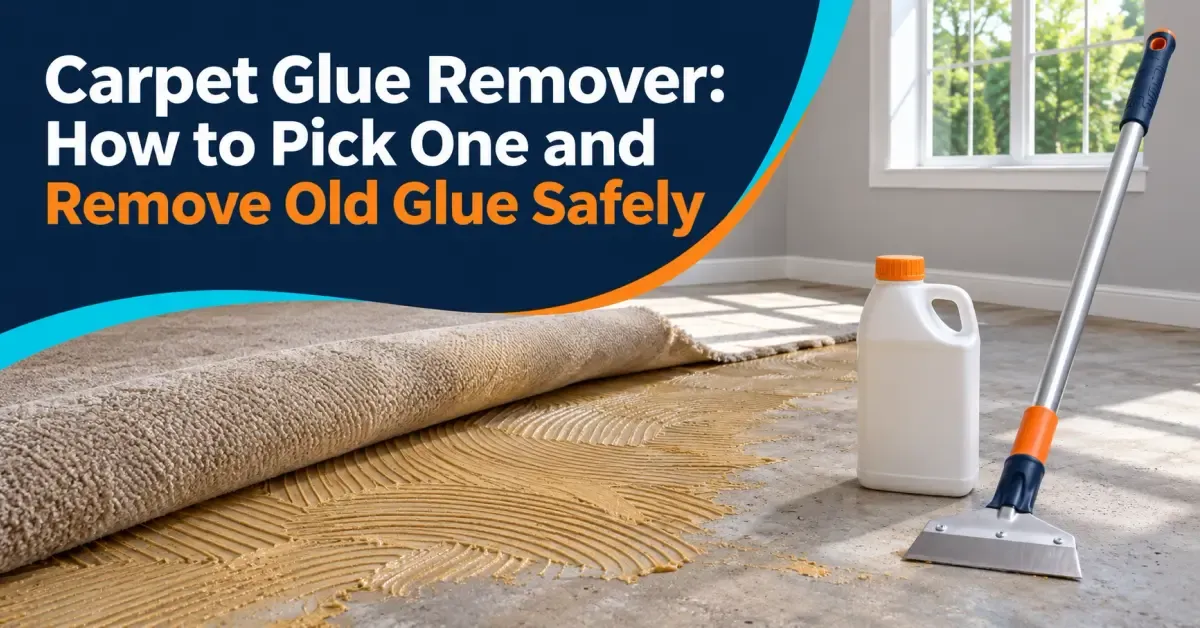
The EPA says you cannot identify asbestos by looking at it, and old adhesives are among the places it can appear, so start with that check.
Check for Asbestos Before You Touch Old Carpet Glue
Does carpet glue contain asbestos? Some old flooring adhesives can. The EPA lists vinyl floor tiles, the backing on vinyl sheet flooring, and adhesives among the places asbestos may be found. The agency also says you cannot tell by sight. Only a qualified lab can confirm it, and the EPA recommends sampling by a trained, accredited professional when a remodel will disturb the material.
The Resilient Floor Covering Institute (RFCI) tells installers not to sand, dry sweep, dry scrape, drill, saw, or mechanically chip old adhesive. It may contain asbestos fibers or crystalline silica.OSHA's interpretation on wet-scraping mastic residue covers workplaces, not your own house. Federal asbestos rules also do not cover a homeowner's work in their own home, though state or local rules may apply.
Black, tar-like glue is the usual suspect, but color proves nothing. If your home is older or you cannot date the glue, stop and test first. If the result is positive, hire a licensed professional.
Key Takeaway: Test old glue before you disturb it. Never dry scrape, sand, or grind suspect adhesive, and call a professional if the lab finds asbestos.
What Removes Carpet Glue? Match the Remover to Your Adhesive
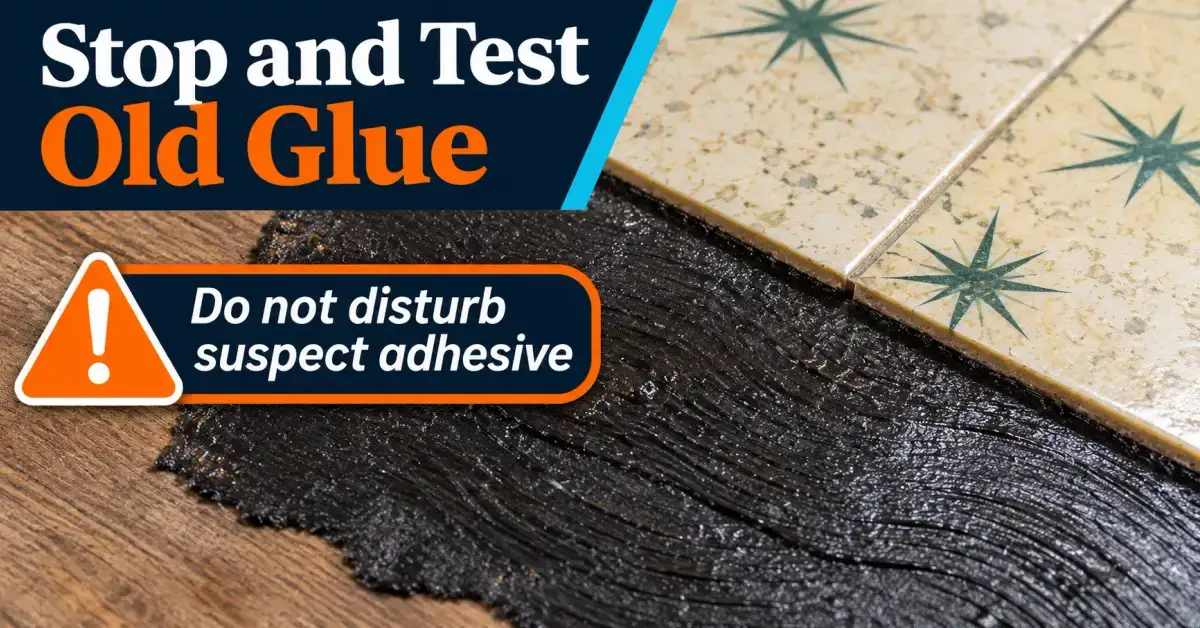
What removes carpet glue depends on the glue type and the floor under it. Water-based glue softens with water. Cutback and urethane glue need different treatment.
| Adhesive | Typical clues | What usually works | Caution |
|---|---|---|---|
| Water-based latex or acrylic | Tan, white, or clear; tacky or crumbly | Hot water, steam, or a water-based remover | Keep water off wood |
| Black cutback mastic | Black, tar-like, brittle or gummy | Wet scraping, soy-based remover | Treat as suspect until tested |
| Urethane or solvent-based | Hard, amber, often bonded to wood | Urethane remover or mechanical removal | Flammable solvents; read the label |
| Pressure-sensitive (carpet tile) | Tacky film, often peach or blue | Remover rated for pressure-sensitive glue | Test a small spot first |
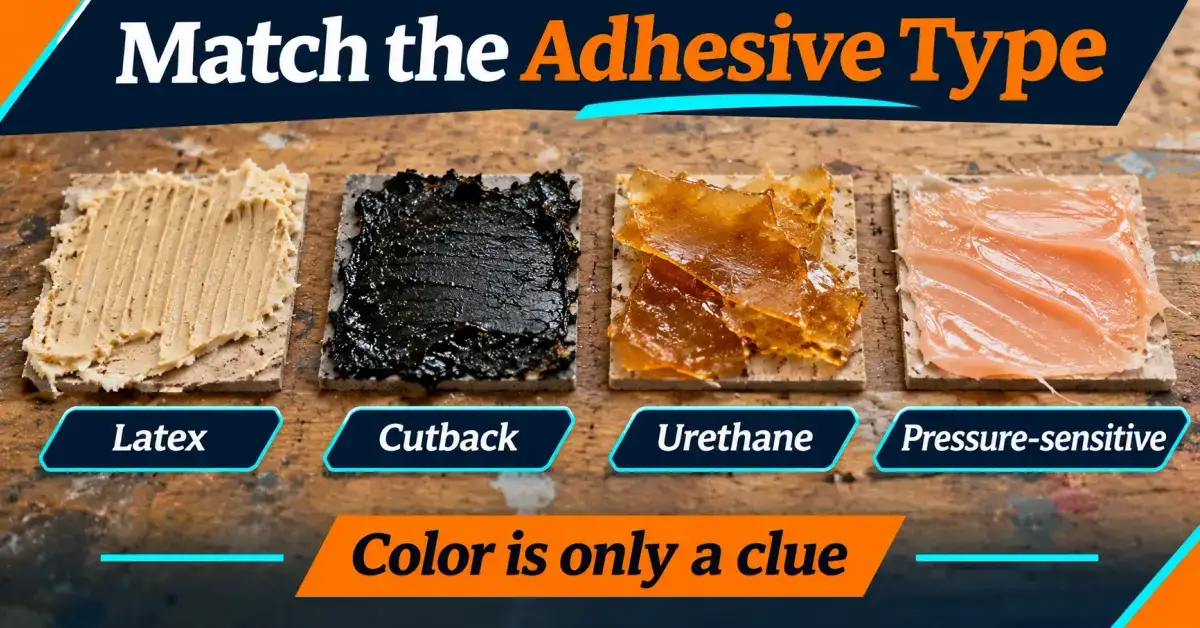
Color is only a hint, and it cannot show whether glue contains asbestos.
Water-Based Latex or Acrylic Glue
Hot water with dish soap, or a steamer, softens this glue on concrete. If it resists, use a water-based remover such as Sentinel 626, which its maker's copy says handles yellow interior carpet glue but not black mastic or outdoor carpet adhesive.
Henry EasyRelease is built to be diluted and applied over the carpet before you pull it, and its label warns it may not remove hot-melt, urethane, or non-latex adhesives. A distributor's chart of Sentinel data lists about 35 to 60 minutes of soak for tan or clear latex under carpet.
Black Cutback Mastic
Treat black mastic as suspect until a lab says otherwise. If it tests negative, wet scraping and a soy-based remover are common choices. Distributor listings say Blue Bear 500MR softens black mastic in about one to two hours. Some makers claim their removers soften asbestos-containing mastic, but a test and your local rules still come first.
Urethane and Other Hard-to-Remove Glue
Urethane glue cures hard and often sits on wood. Water-based removers rarely touch it. Sentinel sells a separate urethane remover, 922, and a solvent such as mineral spirits or acetone may soften some solvent-based glue. Solvents are flammable, so ventilate, keep ignition sources away, and read the safety data sheet (SDS). If the glue will not move, a professional with grinding equipment may be the better call, but only after asbestos is ruled out.
Types of Carpet Glue Remover: Water-Based, Soy, Citrus, and Solvent
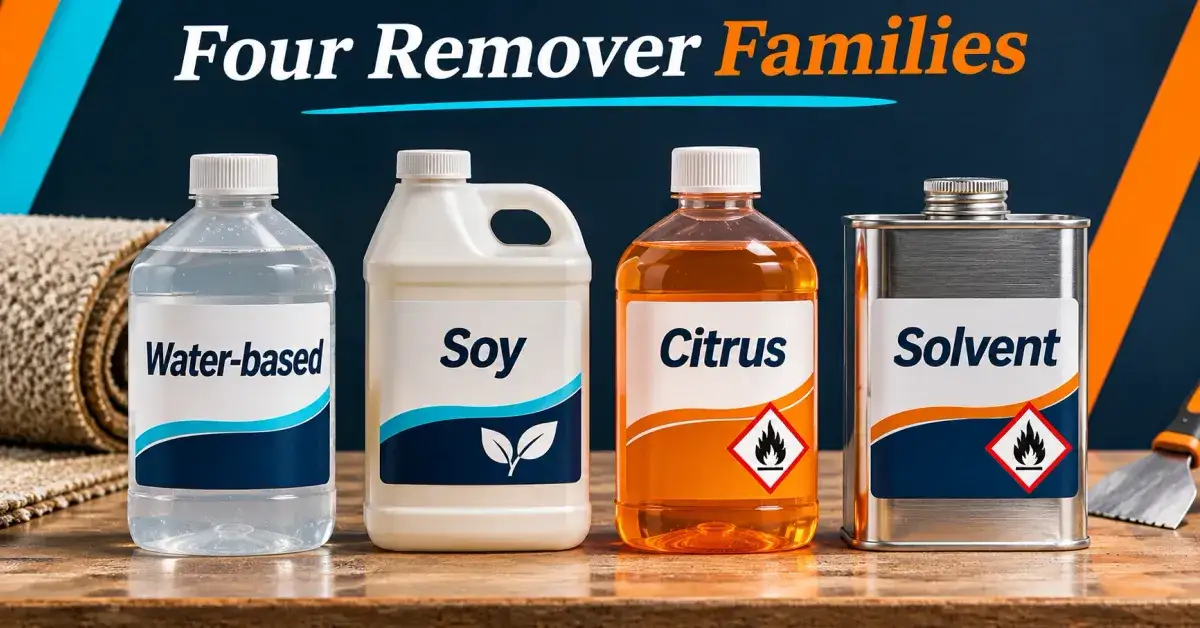
Every carpet adhesive remover falls into one of four families.
- Water-based: Concentrates such as Sentinel 626, Henry EasyRelease, and SureCrete GlueRemove. Sentinel 626 and SureCrete describe non-flammable formulas, and Henry calls EasyRelease solvent-free. They suit latex and acrylic glue but work slowly.
- Soy methyl ester: Blue Bear 500MR and Sentinel 922. These suit mastic and urethane, with low odor.
- Citrus (d-limonene): Goo Gone Pro-Power. It suits small spots, and retail specifications list it as flammable.
- Solvent: Mineral spirits and acetone. They act fast but burn easily and can damage finishes.
Products sold as a carpet glue stripper vary, so check the label for the base chemical. Follow the SDS and local rules for disposing of solvent-soaked rags, which can start fires. Dwell times vary too. Goo Gone's page says 5 to 10 minutes, SureCrete lists 20 to 45 minutes, and Henry needs 2 to 4 hours through carpet.
Key Takeaway: Choose the remover family by adhesive and surface, not by strength. Water-based suits latex, soy suits mastic, citrus suits small spots, and solvents demand ventilation.
Best Carpet Glue Remover by Situation
The best carpet glue remover depends on your adhesive and floor, so this table compares label specs instead of naming one winner. It draws on manufacturer labels and retail listings, not hands-on testing. Prices come from listings checked on Nov. 7, 2026, and they change often.
| Product | Type | Best for | Surface limits | Label coverage and dwell |
|---|---|---|---|---|
| Sentinel 747 Plus | Low-odor, biodegradable | Mastic, vinyl-tile glue, wood-floor glue | Label covers wood flooring | 100 to 200 sq ft/gal; 10 to 20 min on mastic, 1 hour on wood or outdoor glue; about $40/gal |
| Sentinel 626 | Water-based | Yellow carpet glue, latex, acrylic | Lists concrete, tile, or wood; not for black mastic or outdoor carpet glue | About 65 to 85 sq ft/gal; about $24/gal |
| Henry EasyRelease | Water-based concentrate | Releasing carpet and latex glue on concrete | Not for plywood, OSB, or particleboard | 45 to 54 sq ft per quart mixed 1:4; 2 to 4 hours through carpet; about $30/gal |
| Blue Bear 500MR | Soy methyl ester | Black mastic, carpet glue | Concrete only, not wood | Up to about 200 sq ft/gal |
| SureCrete GlueRemove | Water-based | Carpet and vinyl adhesive | Check SDS | About 150 sq ft/gal; 20 to 45 min |
| Goo Gone Pro-Power | Citrus | Small spots | Check label | 5 to 10 min |
For latex glue on a slab, a water-based remover carries the least risk. For black mastic that tests negative, a soy-based or 747-type remover fits. On wood, skip any product whose label excludes it. For a few spots, Goo Gone Pro-Power is enough. By simple math, Sentinel 747 Plus costs roughly $0.20 to $0.40 per square foot per coat, and stubborn areas often need a second coat.
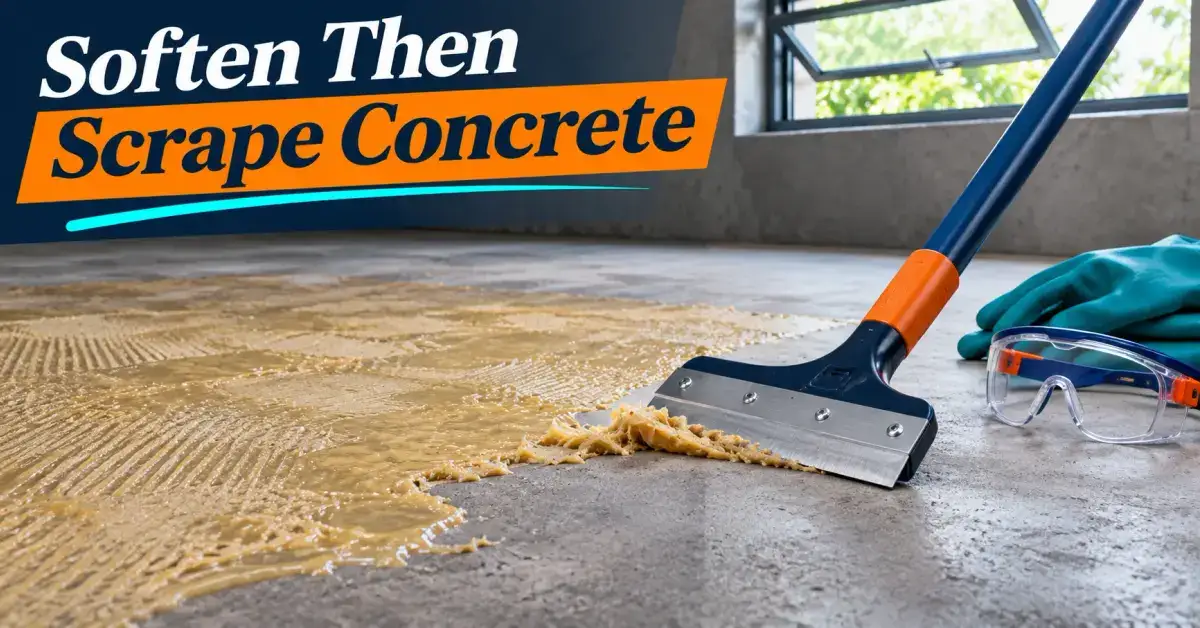
How to Remove Carpet Glue From a Concrete Floor
Professionals disagree on where to start. Some begin with a long-handled floor scraper and spare blades, some with a soy-based remover, and one major home-improvement site discourages chemical strippers because of fumes. Let the adhesive type and room size decide.
Tools and Safety Gear
- Long-handled floor scraper, razor scraper, and plastic scraper for edges
- Pump sprayer and tack strip remover
- Gloves and eye protection, plus a respirator if the SDS calls for one
- HEPA vacuum or wet vacuum
- Open windows and a fan for airflow
Step-by-Step Removal
- Pull tack strips and staples with a tack strip remover, wearing gloves.
- Settle the asbestos question first. If a test is pending, stop here.
- Scrape off loose ridges, then apply remover to one small section at a time.
- Keep the section wet. If the label allows, cover it with plastic so the remover does not dry before you scrape.
- Wait the time on the label, then scrape the softened glue.
- Repeat on leftover patches. A stronger solvent will not speed this up and adds fire risk.
- Rinse and wet-vacuum as the label directs. The floor will feel slippery, so walk carefully.
- Fill tack strip holes and cracks with patching compound if the new floor needs a smooth base.
How long should carpet glue remover sit? Follow the label, which ranges from minutes for citrus products to hours for Henry through carpet.
Grinding makes sense for large areas only after asbestos and silica are handled, with HEPA dust control. Practitioners also report that gummy glue can clog grinding discs.
How to Remove Carpet Glue From Plywood or Hardwood
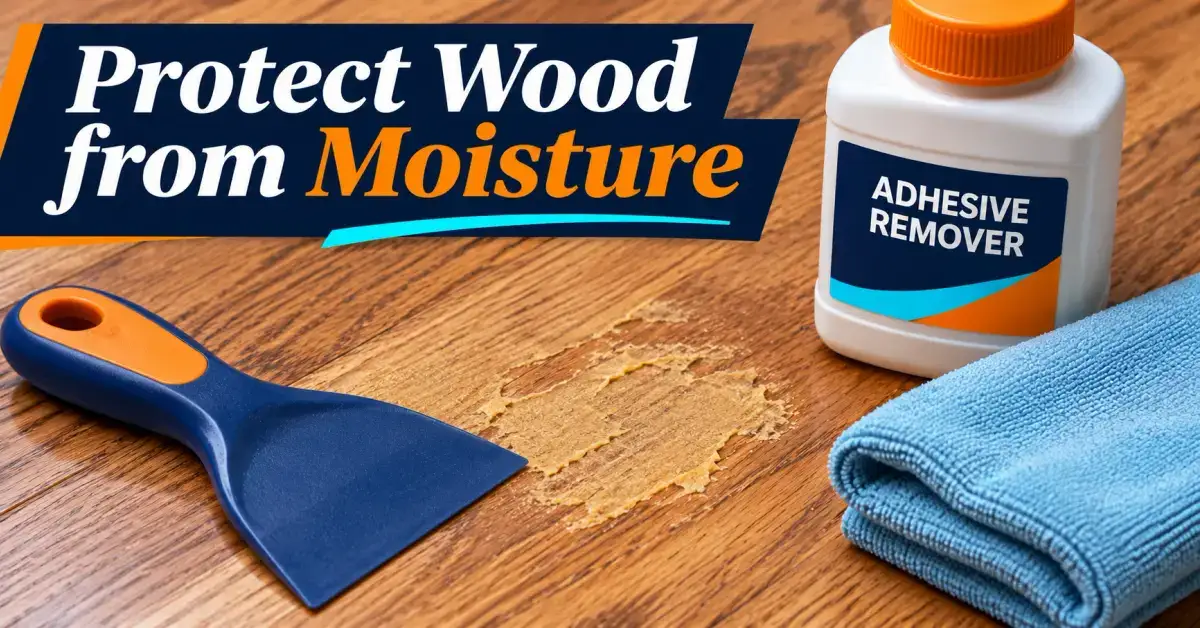
How to remove carpet glue from a plywood or wood subfloor starts with using less water. Henry's label bars use over plywood, OSB, and particleboard, and Blue Bear says not to use it on wood. Sentinel 626's data sheet lists wood as an acceptable substrate. Always read the label for your product.
Moisture is the main risk on wood, so wipe up remover instead of letting it pool. Test a hidden spot first.
Work with the grain using a plastic scraper so you do not gouge the surface. Use citrus or mineral spirits sparingly, as the SDS and the finish allow. On plywood, some remodelers cover the leftover glue with underlayment instead of removing it. Confirm that approach with the new floor's maker before you try it.
Carpet Tile Residue
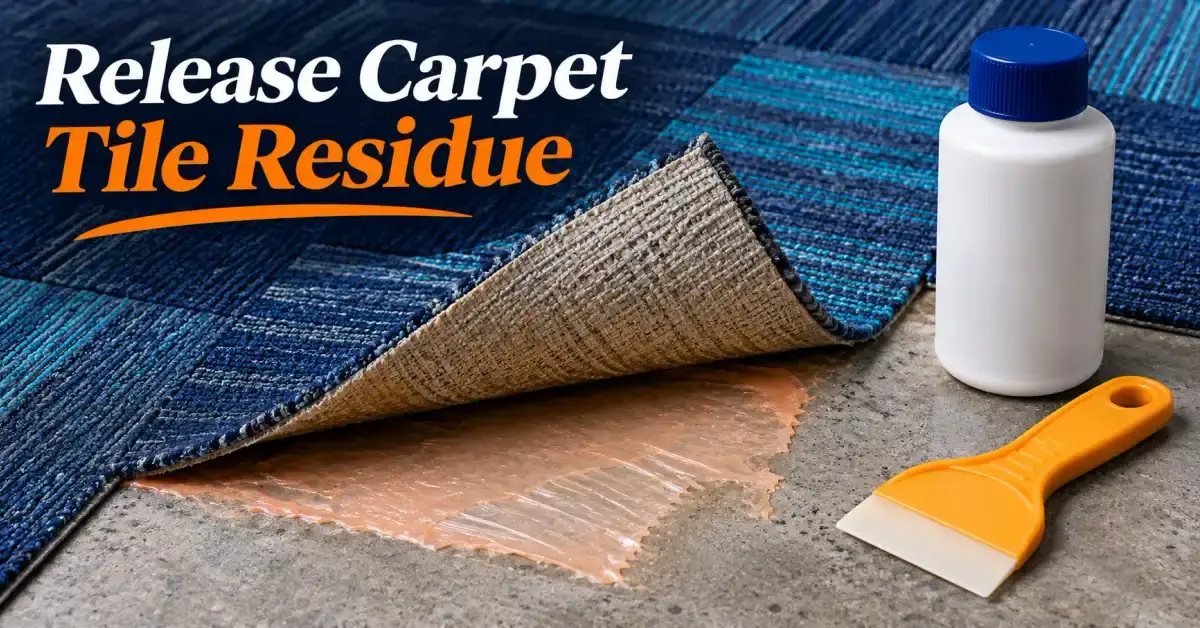
What dissolves carpet tile glue? Carpet tile usually leaves a pressure-sensitive adhesive, a tacky film that stays soft by design. A distributor's Sentinel chart pairs peach or blue carpet tile adhesive with 747-type removers, about 75 to 100 sq ft per gallon, and a 35 to 45 minute soak. Test a small area, scrape, and rinse.
Prep the Floor After Removing Carpet Glue
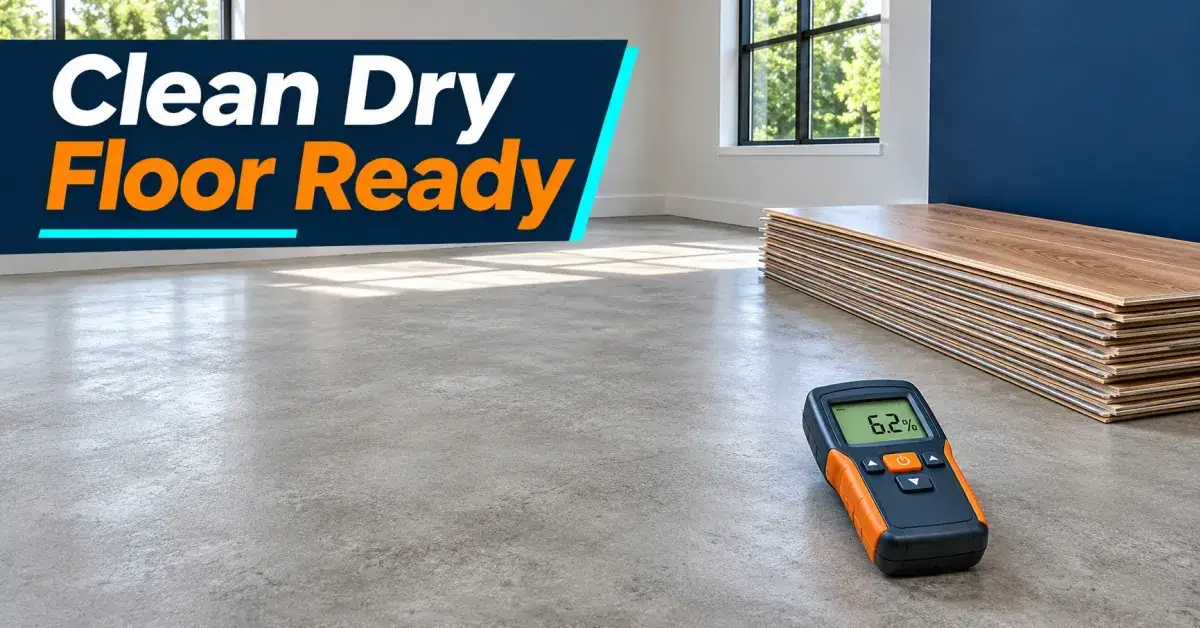
How to remove glue from the floor after removing carpet ends with the new floor's installation guide, because standards differ. Armstrong's guidance allows a thin, smooth film for some resilient floors, with no ridges or puddles. Other products require removing all glue. Armstrong also warns against encapsulating asphaltic adhesive. Rinse as the remover label says, since leftover remover can make new flooring fail. Let the slab dry fully, vacuum, and check moisture before moisture-sensitive flooring.
Key Takeaway: Follow the new floor's installation guide for how much glue can stay, rinse per the label, and let the slab dry before installing.
Carpet Glue Remover FAQs
What solvent dissolves carpet glue?
+
Mineral spirits and acetone can soften solvent-based glue, but they do little to water-based glue. Both are flammable and can damage finishes. Ventilate, avoid sparks and flames, and read the SDS.
Does WD-40 remove carpet glue?
+
WD-40's official uses list includes removing glue from carpet fibers and glue deposits from linoleum, with a spot test first. It does not list carpet adhesive on concrete or plywood. For subfloors, use a remover matched to the adhesive, and check that no oily film remains.
Does vinegar remove carpet glue?
+
Vinegar may soften some water-based glue, but test a small spot first. It is unlikely to affect cured urethane or cutback mastic.
Will Goo Gone remove carpet glue?
+
Goo Gone's carpet glue page says to apply Pro-Power, wait 5 to 10 minutes, scrape, and wash. It suits small spots. Large floors usually call for a floor adhesive remover.
Can I grind carpet glue off concrete?
+
Grinding works on some slabs, but only after asbestos and silica risks are handled. Hire a professional if a test is positive, the area is large, or grinding is needed.
Choosing a Carpet Glue Remover That Fits Your Floor
Test old glue before disturbing it, match the remover to the adhesive and subfloor, and follow the label's dwell time and surface limits. Start with a small patch, then work in sections. With the right carpet glue remover and a clean, dry floor, the new flooring has a solid base.
Need a carpet cleaning company you can trust? We handle residential and commercial carpet cleaning, rug cleaning, upholstery cleaning, and pet stain and odor removal —our team is ready to help.

Michael Sanders
Michael Sanders is a home care and cleaning industry writer covering carpet maintenance, flooring care, and household cleaning practices across the United States. His work focuses on practical, research-backed guidance — from stain and odor removal to deep extraction methods and indoor allergen prevention. Michael collaborates with cleaning professionals to ensure accuracy, and his writing reflects a genuine interest in helping homeowners make informed decisions about caring for their homes.