
Blog · Carpet Cleaning Guide
Peel and Stick Carpet Tiles: What Works, What Fails and How to Install
Peel and stick carpet tiles are carpet squares with a pre-applied adhesive strip on the back. You remove the liner and press each tile onto a clean, dry, smooth floor. They suit dry, low-to-moderate traffic rooms such as bedrooms, offices and playrooms, and tiles typically cost roughly $1 to $4 per square foot.
Published November 22, 202614 min read
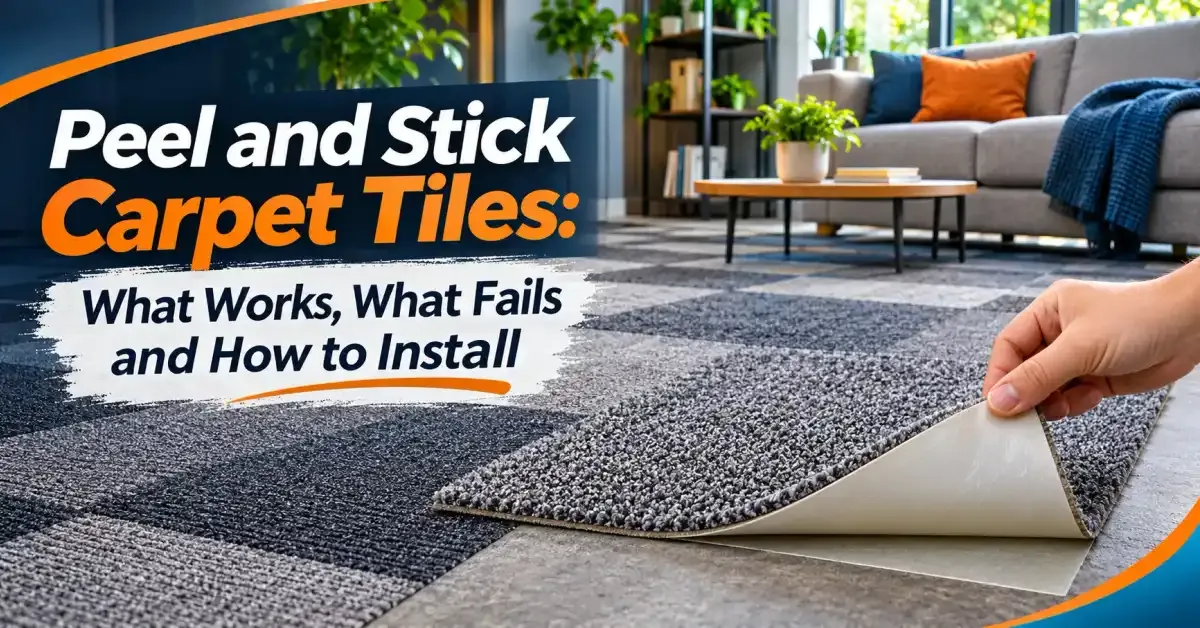
Floor type, moisture and prep decide whether they stay put. This guide covers peel and stick carpet tiles with padding, peel and stick carpet tiles for stairs, installation steps, and a worked cost example.
What Are Peel and Stick Carpet Tiles?
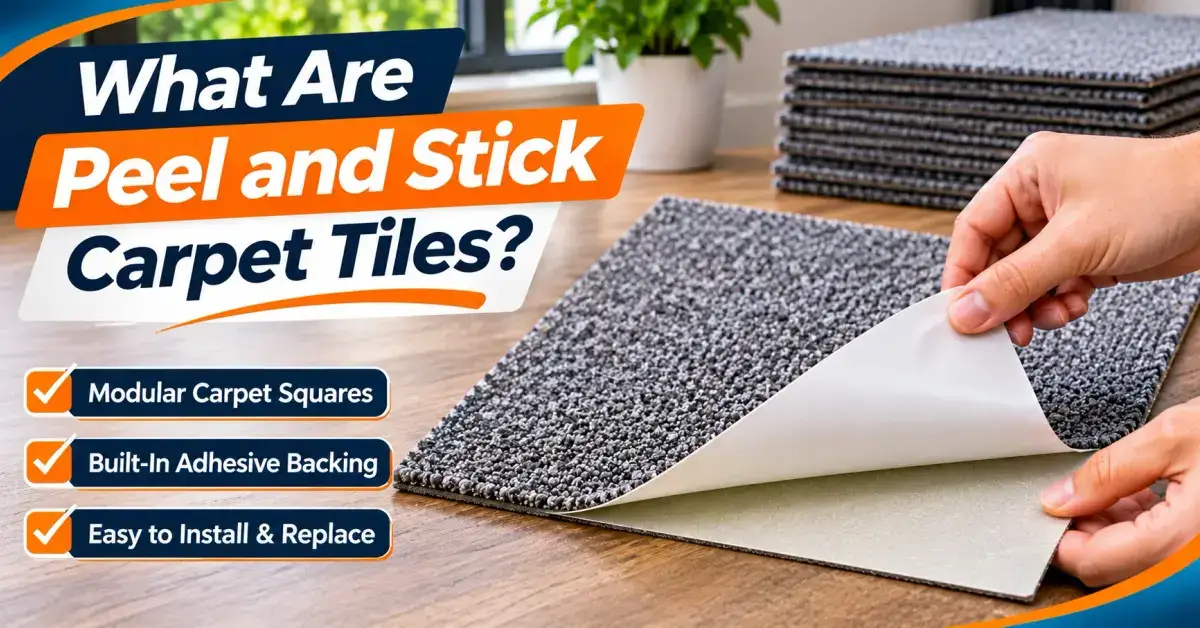
Peel and stick carpet tiles are modular carpet pieces, usually 12x12, 18x18 or 24x24 inches. Shoppers also find them as peel and stick carpet squares, self adhesive carpet tiles, self stick carpet tiles or stick on carpet tiles. A pressure-sensitive adhesive on the backing grips the floor, so you skip wet glue, trowels and tack strips.
Each tile stands alone, so you can replace one stained square instead of a whole room. Some stores list them as carpet tiles peel and stick, so search both phrasings.
Peel and stick is only one attachment style. Interlocking tiles snap together, loose-lay tiles rely on friction pads, and glue-down tiles use mastic. Peel and stick removes most of the mess, but it depends most on the floor underneath.
Where Peel and Stick Carpet Tiles Work (and Where They Fail)
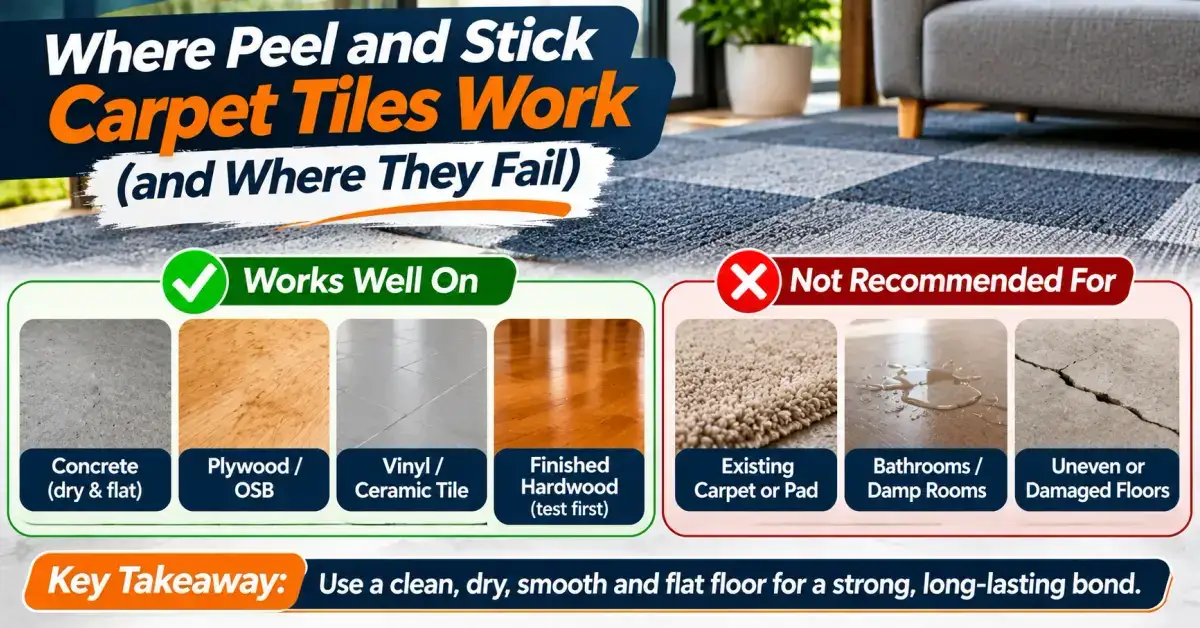
The adhesive needs a firm, clean, dry, flat surface. Dust, oil, moisture and uneven spots break the bond first.
Which Floors Work
| Surface | Works? | What to know |
|---|---|---|
| Concrete | Yes, if dry and flat | Test moisture first. Some makers require primer. |
| Plywood, OSB, particleboard | Yes | Listed as acceptable subfloors in the Greatmats Smart install spec. |
| Vinyl, ceramic, laminate | Usually | The same spec lists finished, secure surfaces like these. |
| Hardwood | Possible | Greatmats lists finished hardwood, but Home Depot warns some adhesives can permanently damage it. Test a hidden spot. |
| Painted or varnished floor | After curing | Let the finish cure fully before pressing tiles down. |
| Existing carpet or pad | Usually no | The Greatmats Smart spec bans carpet, padding and floating floors. Another Greatmats sheet allows carpet under 3 mm pile. Follow your product's sheet. |
| Bathrooms and damp rooms | No | Carpet is not waterproof. |
| Heavy commercial traffic | Limited | Choose commercial-grade tiles with heavy backing. |
Concrete and Moisture
Moisture is the main threat on a slab. Manufacturers such as Shaw and Interface call for moisture testing on concrete before carpet tile, using ASTM F1869 (calcium chloride) or ASTM F2170 (in-situ relative humidity). A plastic sheet taped to the slab for 24 to 48 hours is only a quick field check, because condensation underneath signals a problem. Shaw's commercial peel-and-stick line also requires latex primer. Fill cracks and level low spots, since tiles cannot bridge them.
Key Takeaway: Test concrete for moisture before you lay any tiles, and level it first. Wet or uneven slabs are a common reason peel and stick carpet tiles lift.
Peel and Stick Carpet Tiles With Padding
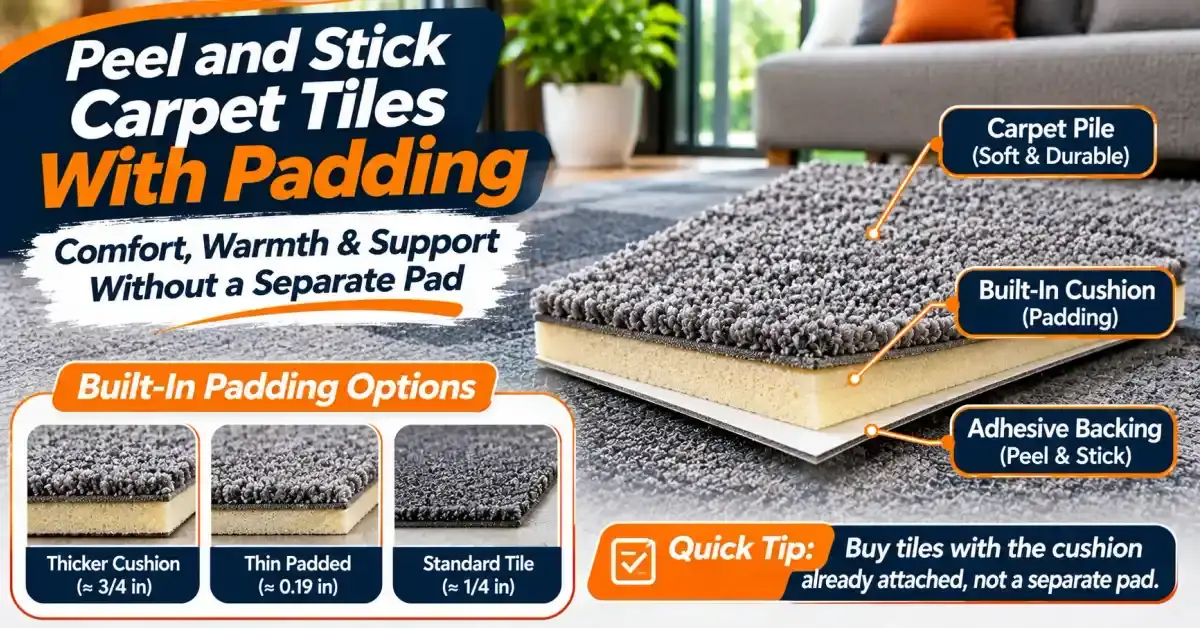
Most people want padding for comfort and warmth underfoot. The better answer is to buy tiles with the cushion already attached, because a separate pad does not work with this adhesive.
Types of Built-In Padding
- Polyurethane cushion: the Greatmats In a Snap spec sheet lists a 1/2 inch pile bonded to a 1/4 inch polyurethane cushion, 3/4 inch overall, with a 10-year warranty.
- Thin budget padding: a Home Depot 24x24 padded listing shows 0.19 inch thickness at about $1.19 per sq ft.
- Thin tiles without extra cushion: a Greatmats Couture tile measures 1/4 inch, and the Foss range runs about 3 mm to 1/4 inch.
Padded tiles raise the floor height, so check door clearance and transitions before you buy.
Can You Add a Separate Pad?
No. Greatmats says to avoid installing peel and stick carpet tiles over padding, and most carpet tile instructions agree. A loose pad shifts, and the adhesive needs a firm base to grip. If you want a softer feel, pick a padded peel and stick tile or an interlocking foam-backed tile.
Peel and Stick Carpet Tiles for Stairs
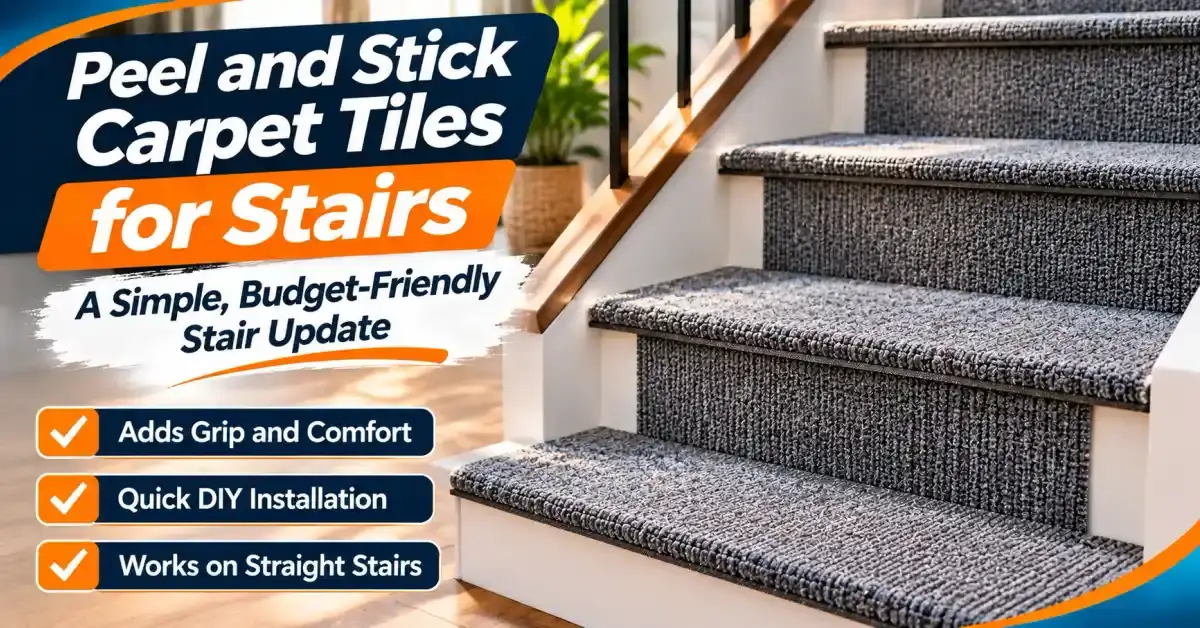
No official standard approves or bans peel and stick carpet tiles for stairs, and advice conflicts. One flooring site says they are generally a poor choice, while sellers offer padded tiles and pre-cut treads. Stairs add two problems: foot traffic that peels edges, and step height.
The International Residential Code limits stair risers to 7-3/4 inches and requires treads of at least 10 inches. It also allows no more than 3/8 inch difference between the largest and smallest riser in a flight (City of Boise and other code guides; local codes may differ). This is an inference from that geometry, not a quoted rule. Tile on every tread makes the bottom riser taller and the top riser shorter by the tile thickness. A 3/4 inch padded tile breaks the 3/8 inch limit, while a tile up to 1/4 inch thick stays inside it.
Key Takeaway: Thin tiles (about 1/4 inch or less) are the safer choice on stairs. Cover every step or none, and check local code and the warranty first.
Tiles vs Pre-Cut Stair Treads
Pre-cut peel and stick stair treads fit the tread depth, so you avoid trimming tiles at the nosing. One seller, Oak Valley Designs, claims about 20 minutes of work per staircase, which is a vendor claim. On painted or varnished stairs, wait until the finish cures. Clean bare wood, press firmly along the edge, and avoid loose rugs on top.
How to Install Peel and Stick Carpet Tiles
Prep the Floor and Tiles
Keep the floor between 65 and 95 degrees Fahrenheit, and let the tiles sit in the room for 24 hours, as the Greatmats Smart spec advises. Another Greatmats sheet says above 50 degrees, so follow your own product's instructions.
Remove baseboards or plan for trim, clean the surface, and vacuum dust. Mix tiles from several boxes so dye lots blend. Gather a utility knife, straightedge, chalk line, tape measure and a floor roller.
Lay the Tiles Step by Step
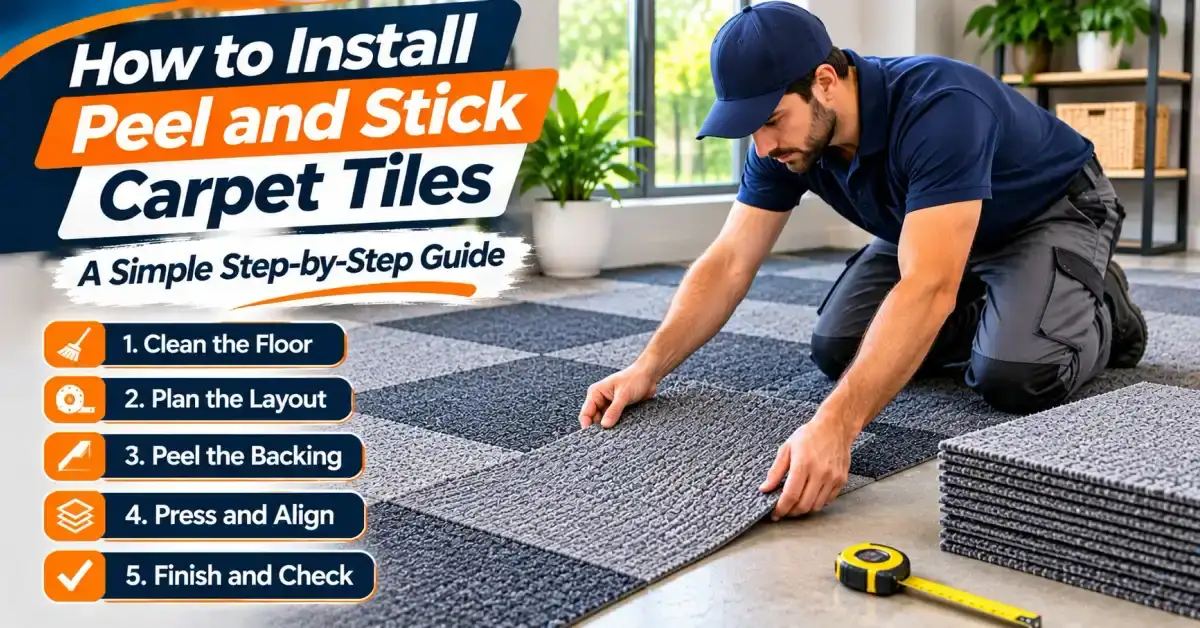
- Snap chalk lines from the midpoints of opposite walls to form a cross at the room center.
- Dry-lay a row each way to check the edge tiles. Aim for cuts wider than half a tile.
- Peel the liner from the first tile and press it into one quadrant against the lines.
- Check the pile arrows on the back. Align them for a uniform look or turn them for a patterned look, then stay consistent.
- Work outward, butting tile edges tight without sliding them.
- Flip edge tiles upside down, mark the gap, and cut with a utility knife and straightedge. Use a paper template for odd corners.
- Roll the whole floor with a heavy roller. Home Depot recommends 75 pounds.
- Replace baseboards or add trim, and install a transition strip where the tiles meet other flooring.
How Many Tiles to Buy and What They Cost
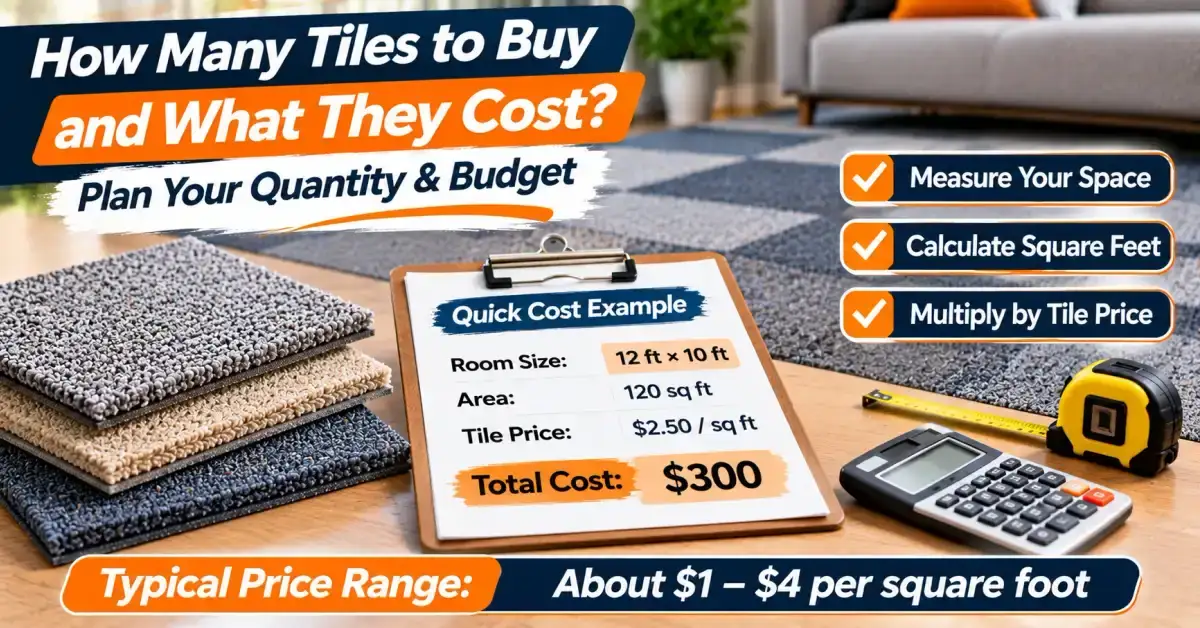
Buy 10 percent extra for cuts and mistakes, as Home Depot advises. Here is a 12 by 12 foot room.
| Step | Result |
|---|---|
| Floor area | 144 sq ft |
| Add 10% waste | 158.4 sq ft |
| 18x18 tiles, 10 per case (22.5 sq ft) | 7.04 cases, so buy 8 cases |
| 24x24 tiles (4 sq ft each) | 39.6 tiles, so buy 40 tiles |
| Tile cost at $1 to $4 per sq ft | about $158 to $634 |
Prices vary by brand and padding. In November 2026, Greatmats showed In a Snap padded tiles on sale at $49.51 per 22.5 sq ft carton, about $2.20 per sq ft, so 8 cartons would cost around $396. A Home Depot listing showed Foss tiles at about $1.01 per sq ft. Check current prices before ordering, and get local quotes if you hire an installer.
Choosing Size, Fiber and Commercial-Grade Tiles
Here is how the three attachment styles compare.
| Style | Holds with | Removal | Best use |
|---|---|---|---|
| Peel and stick | Pressure-sensitive adhesive | Peels up, may leave residue | Dry rooms, quick DIY |
| Interlocking or loose-lay | Snap edges or friction pads | Easy, no residue | Rentals, floors you cannot stick to |
| Glue-down | Mastic | Hard, scraping needed | Permanent installs |
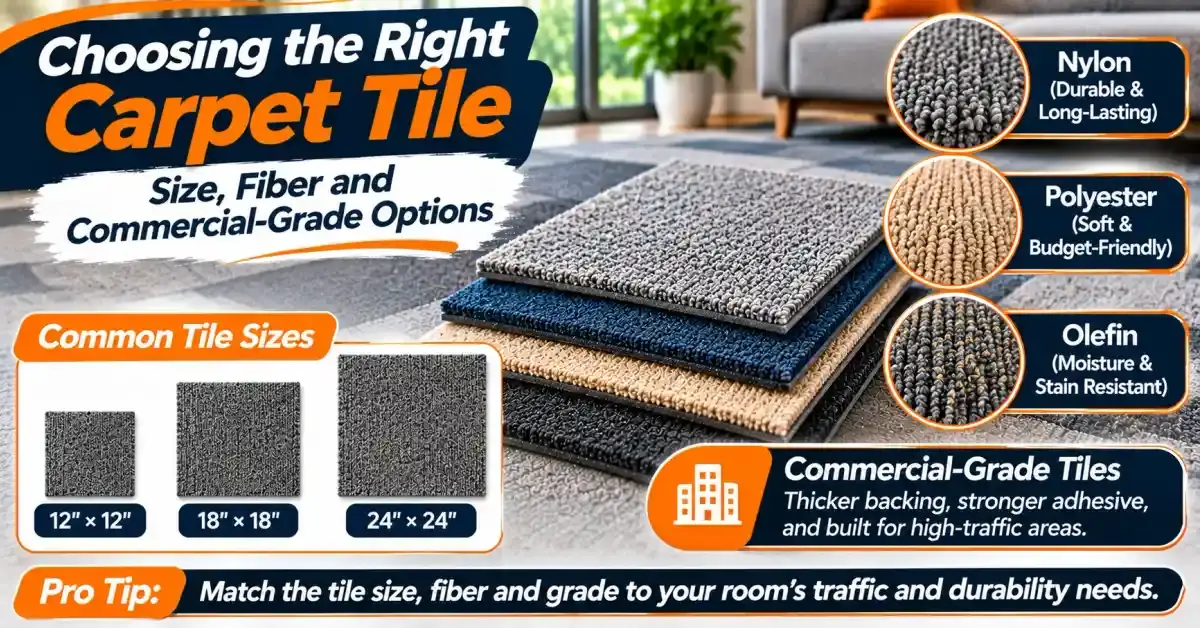
Larger 24x24 tiles mean fewer seams and faster coverage, while 12x12 tiles cut easier in small rooms. Choose commercial-grade tiles for offices, shops and busy hallways, because heavy backing and dense fiber hold up better than residential styles. Light-traffic bedrooms rarely need that expense.
Fiber matters too. Floor Trends magazine names nylon, polyester, olefin and triexta as the main synthetic carpet fibers. Nylon is the most common choice for commercial carpet. Polyester is generally less durable than nylon, and olefin can attract oil, so makers do not recommend it for high traffic. Triexta is softer than polyester and resists stains well.
Pet owners should look for stain-resistant fiber and buy spare tiles. Accidents can soak through to the adhesive. Some indoor/outdoor tiles claim to be waterproof and rinsable, but that is a seller claim, so confirm it on the product page.
Removal, Residue and How Long They Last
Most tiles peel up, but pressure-sensitive adhesive can leave residue. A Lowe's associate answer in its product Q&A says residue can remain and suggests an adhesive remover. Rubbing alcohol is another common cleaner. Test it on a hidden spot, because some adhesives and cleaners can damage finishes. Renters should test a small area before committing.
Lifespan depends on traffic and prep. Home Depot and Lowe's say carpet tiles last up to about 8 years, and other sites cite 3 to 8 years. A 10-year warranty, like the one on In a Snap, covers defects and does not promise how long a floor will last.
Peel and Stick Carpet Tiles FAQs
Can you replace a single tile?
+
Yes. Lift the damaged tile, scrape off leftover adhesive, and press in a new one. Keep spare tiles from the same box, because dye lots can differ slightly.
Why do the edges lift or tiles shift?
+
Dust, moisture, uneven floors and skipped rolling are the usual causes. Clean the area, press firmly with a roller, and add carpet tape at problem edges.
Can you use them outdoors?
+
Only tiles labeled for indoor and outdoor use, which some sellers such as Greatmats offer. Indoor-only tiles are not built for wet conditions.
Are they a good choice for rentals?
+
They can be, because installation is quick and reversible. Residue and finish damage are possible, so read your lease and test a hidden spot first.
Can you glue down peel and stick carpet tiles?
+
You can, but gluing removes the easy removal. If edges will not hold, use the maker's recommended adhesive or tape. Mastic suits tiles made for glue-down.
What carpet tiles do not stick to the floor?
+
Interlocking, snap-together and friction-pad tiles stay in place without adhesive. They suit floors where you want no residue.
Conclusion
Peel and stick carpet tiles work best on dry, clean, flat floors in low-to-moderate traffic rooms. Choose built-in padding instead of adding a pad, keep tile thickness thin on stairs, and test concrete for moisture first. Measure your room, add 10 percent, and follow the manufacturer's instructions for your exact tile.
Need a carpet cleaning company you can trust? We handle residential and commercial carpet cleaning, rug cleaning, upholstery cleaning, and pet stain and odor removal —our team is ready to help.

Michael Sanders
Michael Sanders is a home care and cleaning industry writer covering carpet maintenance, flooring care, and household cleaning practices across the United States. His work focuses on practical, research-backed guidance — from stain and odor removal to deep extraction methods and indoor allergen prevention. Michael collaborates with cleaning professionals to ensure accuracy, and his writing reflects a genuine interest in helping homeowners make informed decisions about caring for their homes.