
Blog · Carpet Cleaning Guide
What Is Low Pile Carpet and When Should You Choose It?
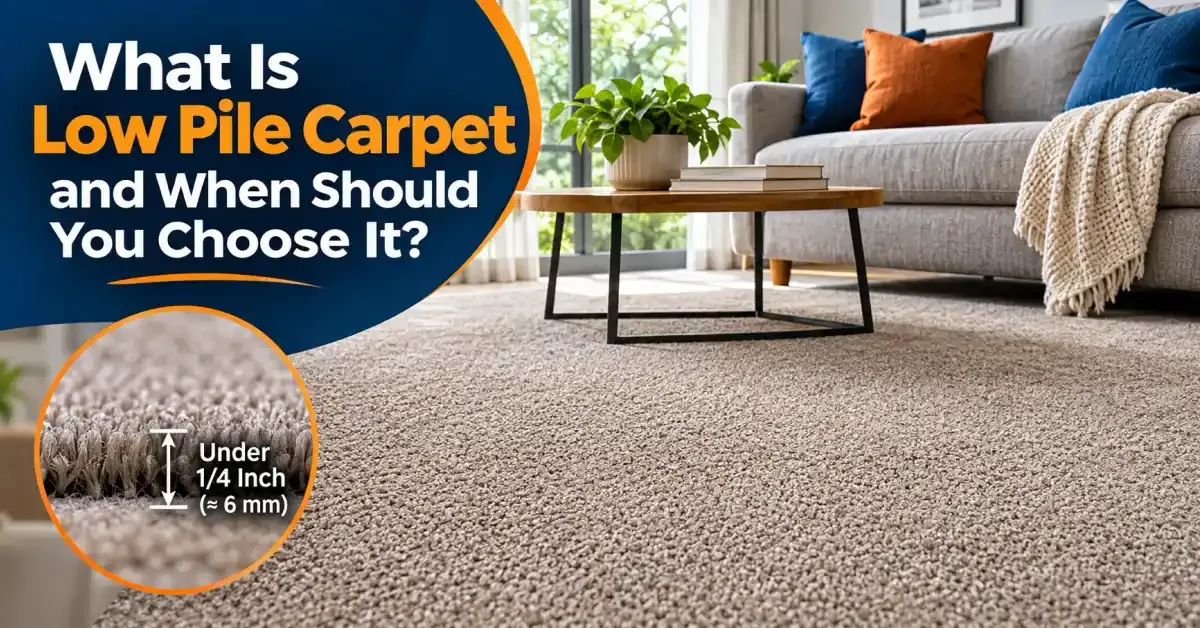
What is low pile carpet? It is carpet with short, dense fibers, generally under 1/4 inch (about 6 mm) tall, which feels firm and flat. People choose it for stairs, hallways and busy family rooms because it handles heavy traffic and cleans easily. The trade-off is a less plush feel, along with less insulation underfoot.
Published November 20, 202613 min read
Low pile can be cut or looped, so it does not simply mean cheap or Berber. Below, see how it compares with high pile and plush, and what to check before buying.
What Is Low Pile Carpet?
Pile is the visible layer of carpet fibers standing up from the backing, and low pile means those fibers are short. Most stores and guides draw the line at under 1/4 inch, or about 6 mm, although retailers set it a little differently. No single industry standard is widely published, so treat the number as a convention. You may also see it sold as short pile carpet, which means the same thing.
What does low pile carpet mean? It means the fibers sit close to the backing, so the surface feels firm, flat and dense instead of deep and soft.
Low Pile vs High Pile Carpet
Low vs high pile carpet comes down to fiber height, which shapes the feel, the cleaning and the best room for each. Medium pile sits in the middle and suits many living rooms and bedrooms. Treat the ranges below as a guide rather than a rule, because stores vary.
| Pile height | Inches | Millimeters | Feel | Best use |
|---|---|---|---|---|
| Low | Under 1/4 | Under 6 | Firm and flat | Stairs, hallways, offices |
| Medium | 1/4 to 1/2 | 6 to 12 | Balanced | Living rooms, bedrooms |
| High | Over 1/2 (some stores say 1/2 to 3/4) | Over 12 | Deep and soft | Low-traffic bedrooms |
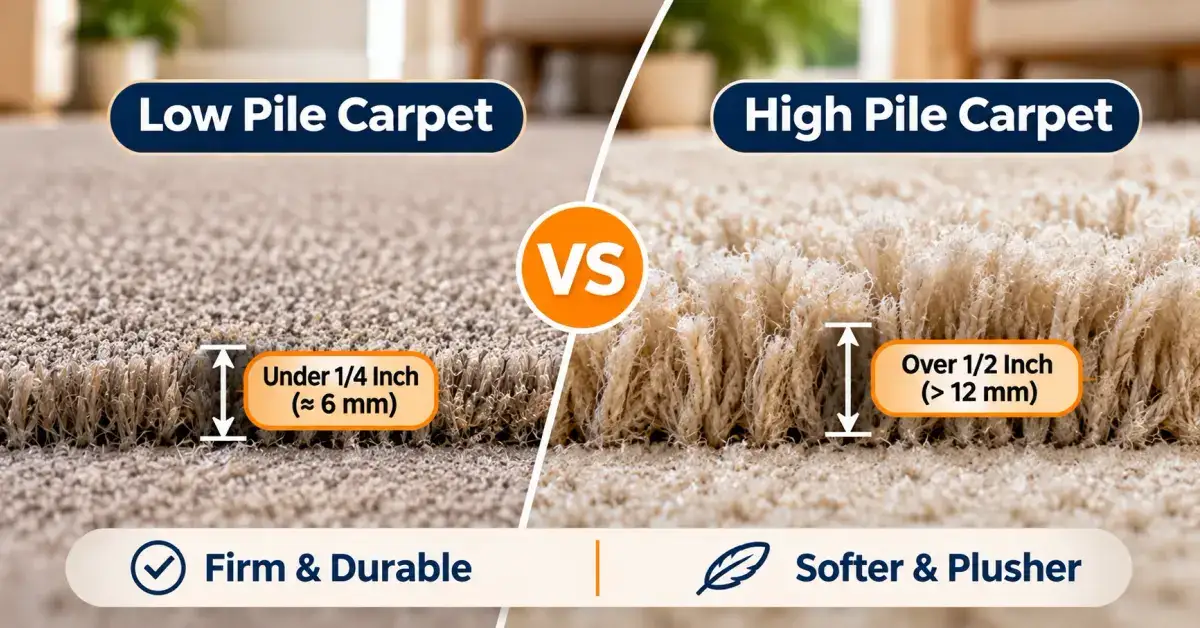
Is low pile or high pile carpet better? Neither wins everywhere, because the right choice depends on the room. Low pile suits heavy traffic and easy cleaning, while high pile suits low-traffic rooms where a deep, soft feel matters most. This Old House advises half an inch or less for high-traffic areas, which covers low and medium pile.
Low Pile Carpet vs Plush Carpet
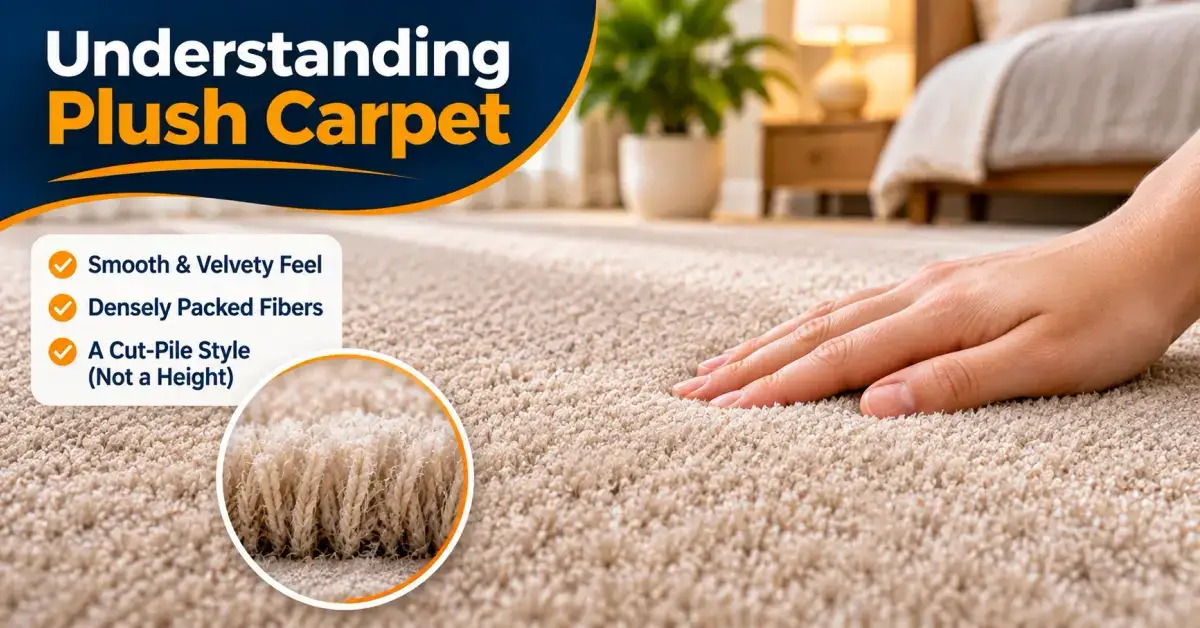
Pile height measures the fibers, while plush describes a style. Plush carpet uses densely packed, cut fibers of the same length, which creates a smooth, velvety surface. That makes plush a style, not a height class. Many plush carpets sit at medium or high pile, but a short plush can be low pile. Shag is a long cut-pile style that sits at the high end. Smooth plush shows footprints and vacuum marks more readily, while the Carpet and Rug Institute says textured plush hides them. When you compare low pile vs plush, ask two questions: how tall are the fibers, and are they cut smooth or looped?
Key Takeaway: Low pile describes fiber height, and plush describes a smooth cut-pile style, so a short plush carpet can be low pile.
Cut Pile or Loop Pile: How Low Pile Carpet Is Made
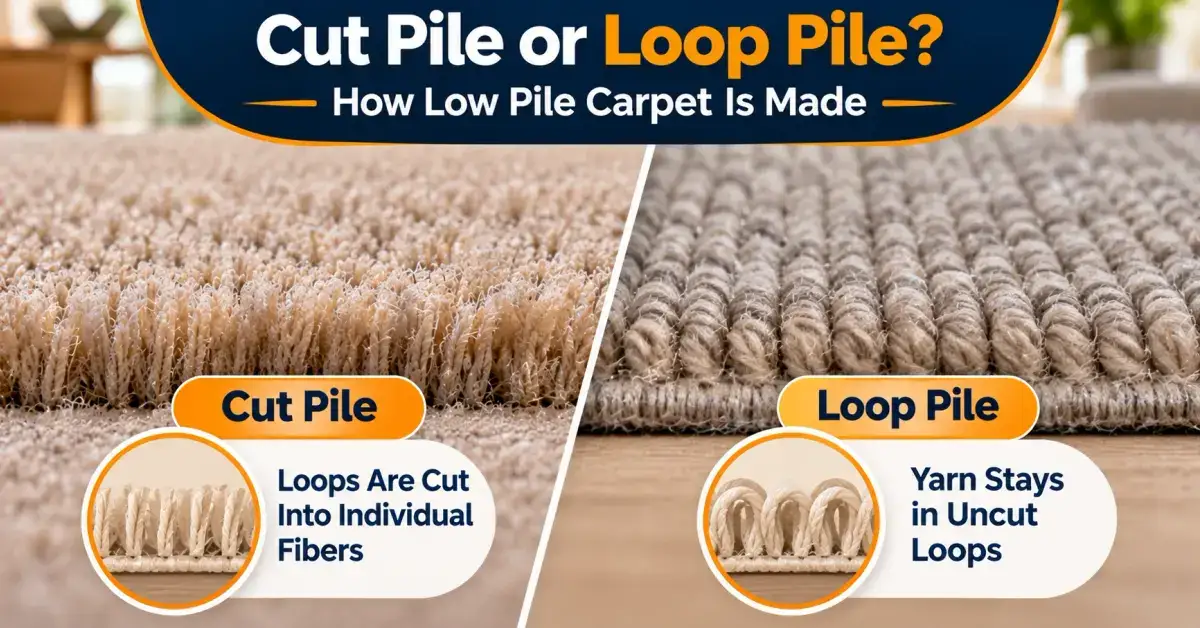
Low pile carpet comes in two constructions, and either can sit under 1/4 inch. Loop pile leaves the yarn in uncut loops, as in level loop and Berber styles. Cut pile snips the loops into single strands, and a tight twist helps those strands keep their shape. The Carpet and Rug Institute says same-height loops hold up well in high traffic. The catch is snagging, because loops can catch on pet claws.
Is low pile carpet the same as Berber? No, because Berber is one loop style, while low pile only describes height.
Pros and Cons of Low Pile Carpet
Low pile carpet trades some comfort for toughness, as these two lists show.
Pros:
- Holds up well in busy areas
- Keeps its shape longer than tall fibers, which crush more easily
- Easier to clean, because the shallow depth is simple to vacuum
- Often costs less per square foot, though fiber and style change the price
- Gives a sleek, modern look
Cons:
- Feels less soft and plush
- Insulates and dampens sound less than higher pile
- Can flatten over time
- Can show soil more readily on a smooth, flat surface
- Loop styles can snag claws
Pile height is not a quality grade, so compare fiber, density, twist and backing too.
What Is Low Pile Carpet Best For?
Best Rooms for Low Pile Carpet
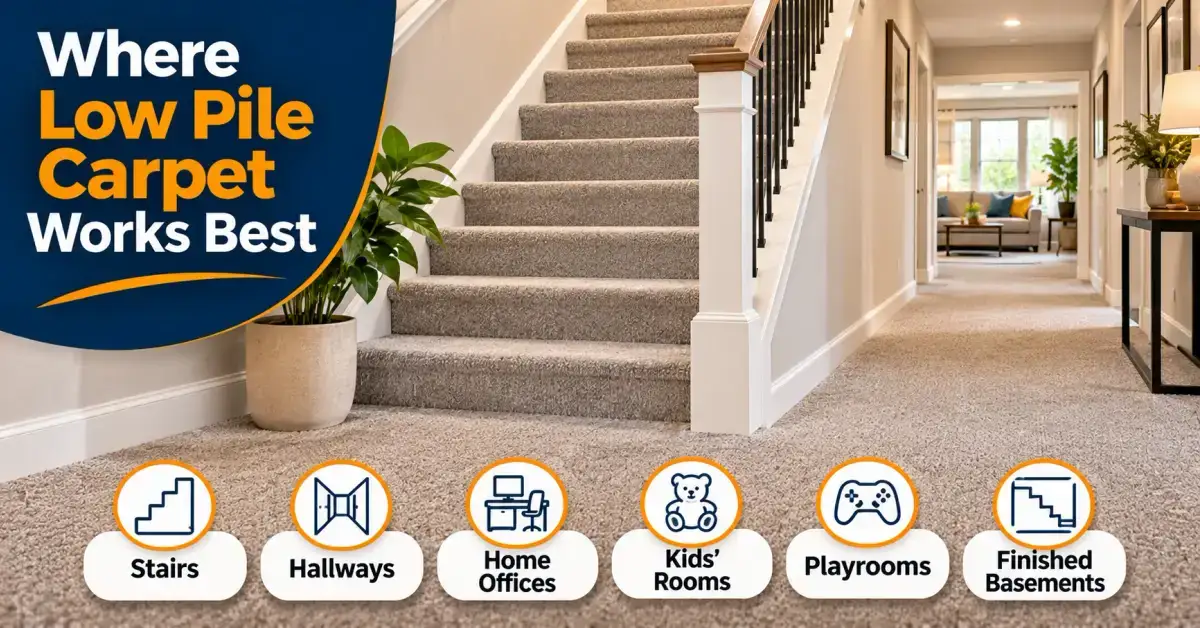
Low pile works best where traffic is heavy and cleaning must be quick. Good choices include stairs, hallways, entryways, home offices, kids’ rooms, playrooms and finished basements.
Is low pile carpet good for stairs? Yes. Stairs take heavy wear, and the Carpet and Rug Institute recommends a thinner, firmer cushion there, which suits low pile.
Where to Think Twice
Low pile may disappoint in rooms where softness matters most. It also insulates less, so it feels cooler underfoot than deeper carpet. In living rooms, medium pile often balances comfort and wear, and loop styles need care in homes with pets that scratch.
Is low pile carpet good for bedrooms? It can be if you like a firm, tailored feel. Many people prefer medium or high pile for bare feet, since HGTV suggests high pile for bedrooms and playrooms.
How to Tell If Carpet Is Low Pile
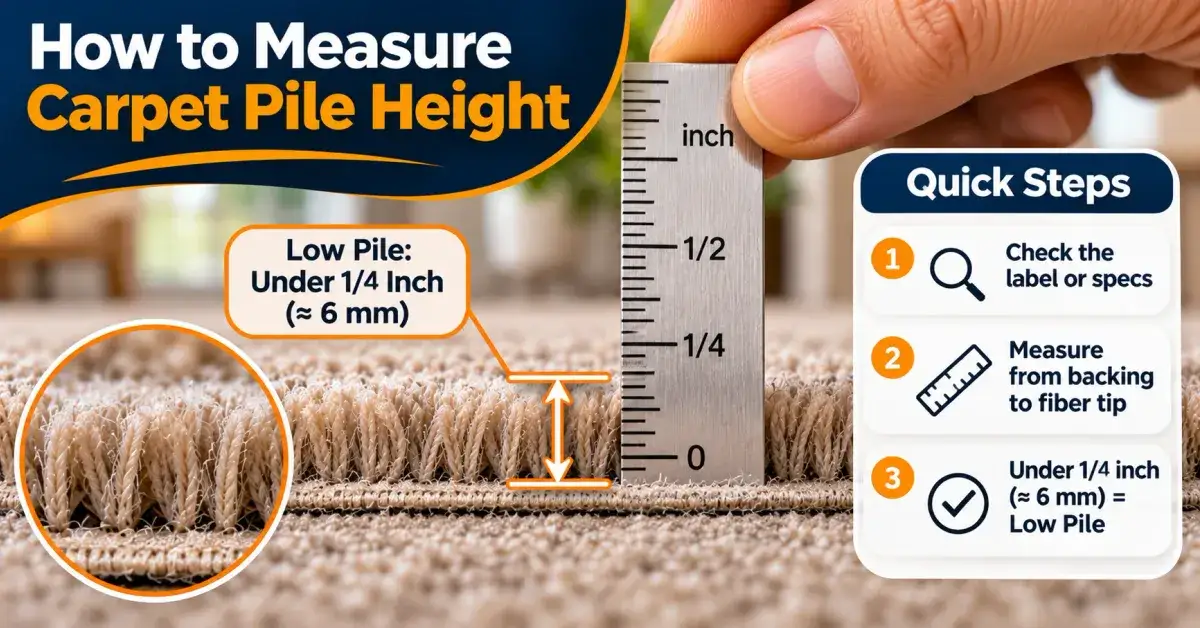
How do I know if my carpet is high or low pile? Measure the fibers from backing to tip by following these steps:
- Check the spec sheet or sample label for pile height in inches or millimeters.
- Part the fibers and hold a ruler against the backing, then read the height at the fiber tips.
- Compare the number with the table above, since anything under 1/4 inch (6 mm) is generally low pile.
- Use look and feel as a backup, because short pile carpet looks flat and feels firm, with little sink under your hand.
How to Choose Good Low Pile Carpet
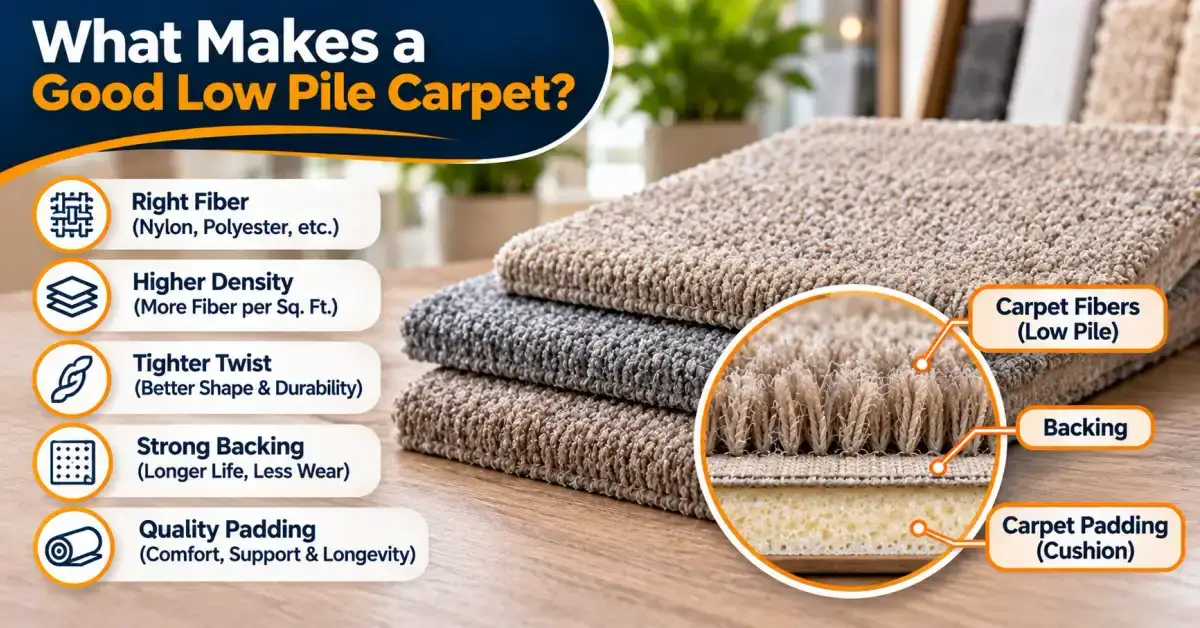
Height alone does not predict how a carpet will wear, so check these specs before you buy.
Density, Twist and Fiber
Density is how tightly the fibers are packed, so run your hand through the carpet and check that the backing stays hidden. In cut pile, look for a tight twist. Flooring America says most cut pile carpet has 3 to 6 twists per inch. In loop pile, This Old House recommends smaller, tighter loops. Compare face weight only between carpets of the same type, as Home Depot advises. Finally, look for a warranty of at least 7 to 10 years that covers stain and texture retention.
Key Takeaway: Check density, twist and warranty, because fiber height alone does not show how well low pile carpet will wear.
This Old House and Home Depot describe the main fibers this way:
| Fiber | Strength | Watch for |
|---|---|---|
| Nylon | Close to wool in performance, with excellent soil resistance and resilience | Usually costs more than polyester or olefin |
| Polyester | Soft feel and high resistance to water-based stains | Not as resilient as nylon |
| Olefin (polypropylene) | Water-resistant, stain resistant and affordable | Less resilient than nylon |
| Triexta | Soft, durable and stain resistant | Often costs more than basic polyester |
| Wool | Soft, natural and resists compressing | Higher price, and many stains and stain removers can damage it |
The Right Pad for Low Pile Carpet
Pad matters more with thin carpet. The Carpet and Rug Institute says Berber or low-profile carpet needs cushion no thicker than 3/8 inch at about 8 pounds density. These carpets need a stable base that flexes very little. Residential cut pile allows up to 7/16 inch at about 6 pounds. Always follow the carpet maker’s pad requirement.
Is a 1/2 inch carpet pad good for low pile carpet? Usually not, because it exceeds the Carpet and Rug Institute limits for both low-profile carpet and cut pile.
Low Pile Carpet Cost and Lifespan
Replacing carpet typically costs $3 to $11 per square foot, according to NerdWallet (page updated July 2025). Padding adds about $0.75 to $2 on top of that. Thumbtack, updated July 2026, lists a wider $2 to $13 per square foot. Angi puts low pile at $1 to $6 per square foot and high pile at $2 to $8.
Is low pile carpet cheaper than high pile carpet? Often, but fiber and style can change that. Angi also cites a common lifespan of 5 to 15 years, so treat that as a rough estimate.
How to Care for Low Pile Carpet
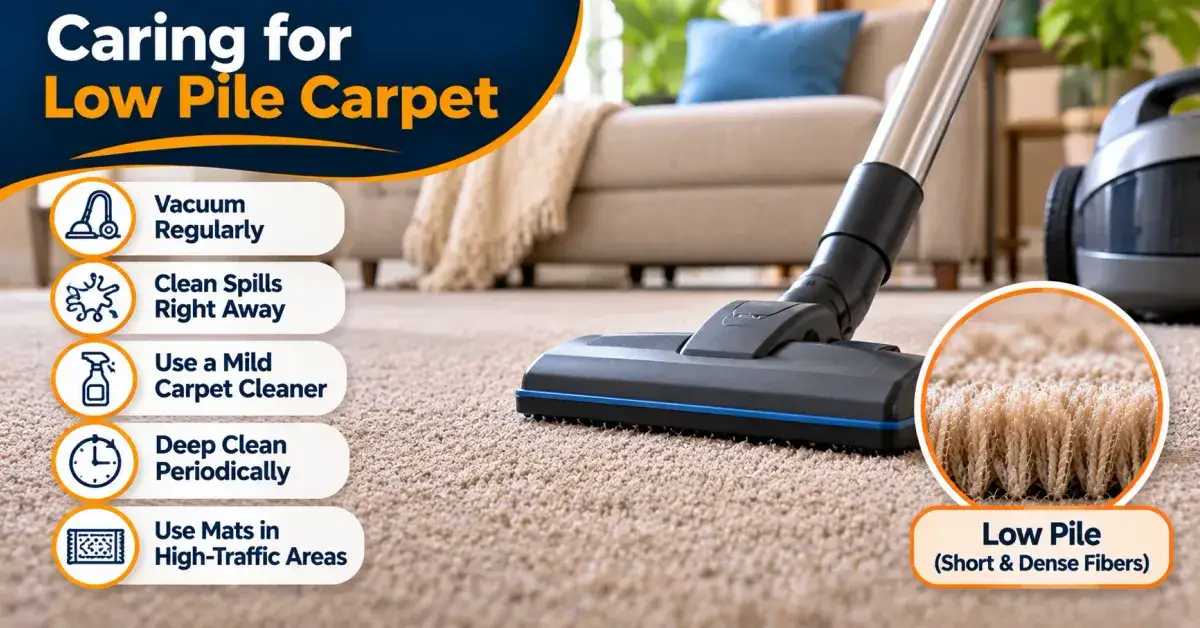
This Old House advises vacuuming at least once a week, and more often in high-traffic areas. Use a vacuum with adjustable height settings and lower the head for low pile. Place mats at entrances, blot spills quickly, use furniture pads to limit flattening, and deep clean as the manufacturer recommends.
Low Pile Carpet FAQs
Is short pile carpet the same as low pile carpet?
+
Yes. Short pile carpet is another name for low pile carpet, meaning fibers generally under 1/4 inch tall.
Does low pile carpet help with allergies?
+
It is easier to vacuum, so dust and dander come out faster, but no carpet is completely allergen-free. Regular vacuuming still matters.
Is low pile carpet good for pets and kids?
+
Yes for cleanup, since hair and crumbs stay near the surface. Choose cut pile over loops if pet claws tend to snag.
Is low pile carpet warm and quiet?
+
Less than higher pile, because shorter fibers insulate and absorb sound less. A suitable cushion helps, since the Carpet and Rug Institute says cushion adds insulation and quiets a room.
Conclusion
What is low pile carpet? It is short, dense carpet, generally under 1/4 inch, that trades softness for durability and easy cleaning. It suits stairs, hallways, offices and kids’ rooms best. Before you buy, confirm the pile height, density, twist and pad requirement. Then take a sample home to see how it looks and feels.
Need a carpet cleaning company you can trust? We handle residential and commercial carpet cleaning, rug cleaning, upholstery cleaning, and pet stain and odor removal —our team is ready to help.

Michael Sanders
Michael Sanders is a home care and cleaning industry writer covering carpet maintenance, flooring care, and household cleaning practices across the United States. His work focuses on practical, research-backed guidance — from stain and odor removal to deep extraction methods and indoor allergen prevention. Michael collaborates with cleaning professionals to ensure accuracy, and his writing reflects a genuine interest in helping homeowners make informed decisions about caring for their homes.