
Blog · Carpet Cleaning Guide
Textured Carpet: What It Is and How to Choose the Right Type
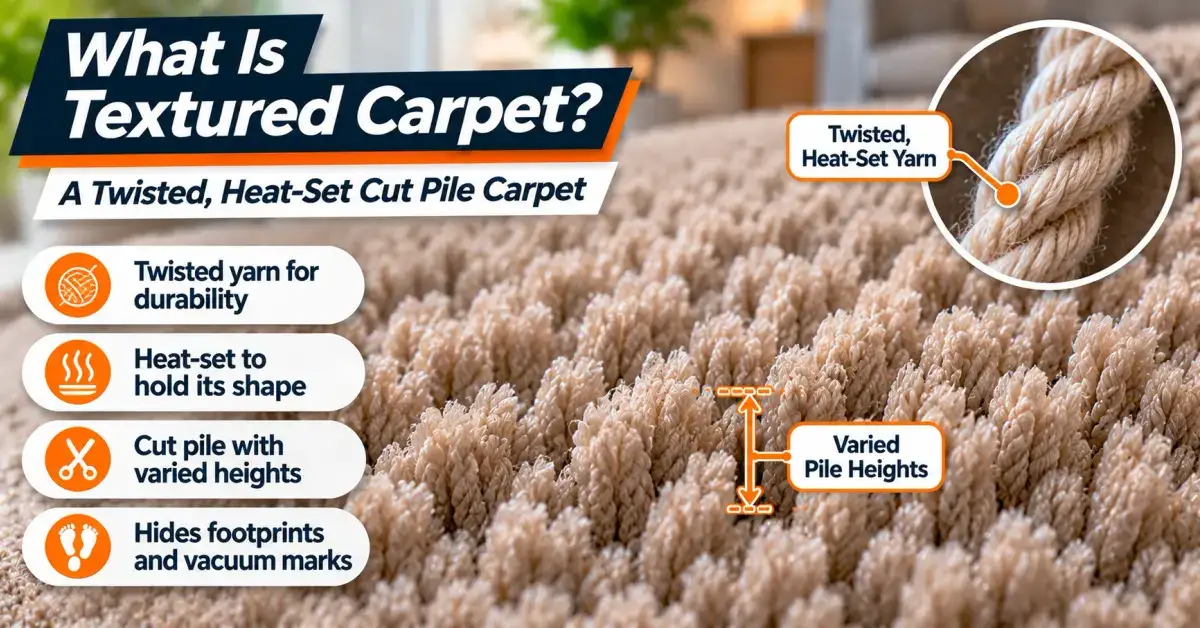
Textured carpet is cut-pile carpet made from twisted, heat-set yarn at slightly varied heights, so footprints and vacuum marks fade into the surface. Many stores also use “textured” for any carpet with visible surface interest, including loops and patterns, so check what a sample really is before you buy.
Published November 19, 202614 min read
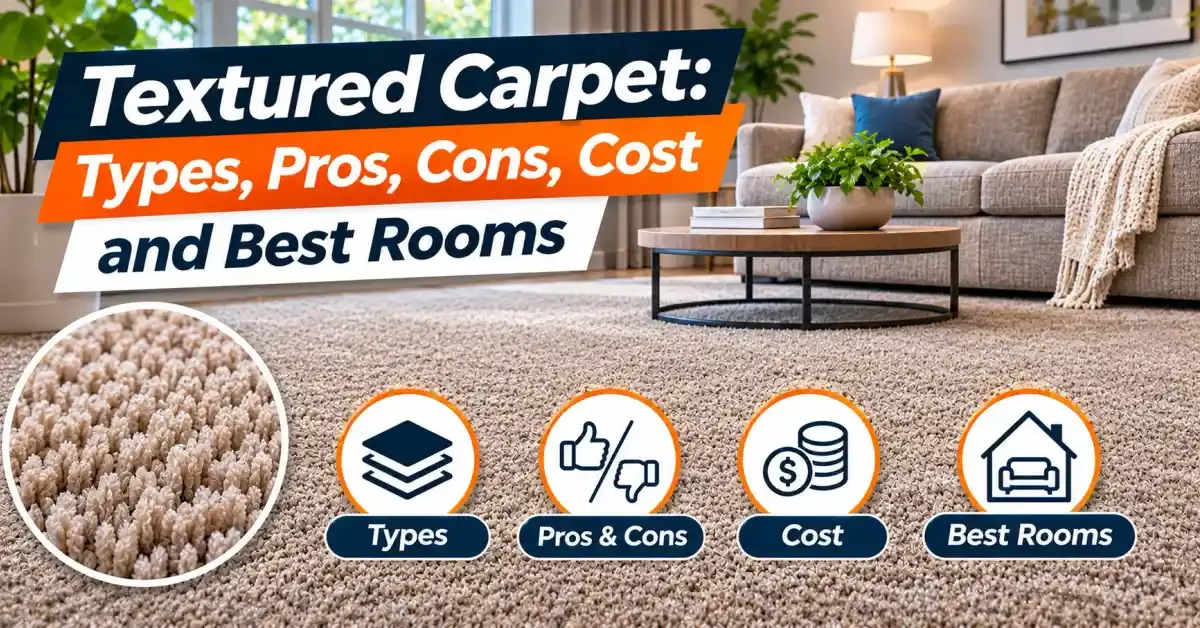
Retailers describe textured carpet as firmer than smooth plush, and it suits busy bedrooms and living rooms. This guide covers types, pros and cons, best rooms, specs, wall-to-wall installation, cost and care for a modern home.
What Is Textured Carpet?
Textured carpet is a cut-pile style. Manufacturers twist the yarn, heat-set it to lock in the twist, and cut the loops so the tips stand at slightly different heights and angles. Shoppers also see it called trackless carpet, twist carpet, textured cut pile, or texture carpet. Retailers such as Carpet One and Flooring America say the uneven tips scatter light and hide walking paths, so treat that as a seller explanation. The Carpet and Rug Institute (CRI) says textured surfaces help hide footprints and vacuum marks. Home Depot calls it the most popular indoor style.
Key Takeaway: Textured carpet is twisted, heat-set cut pile with uneven tips that hide footprints and vacuum marks. It is also sold as twist or trackless carpet.
The term has two meanings. In the narrow sense, textured carpet is the twisted cut-pile style above. In the broad shopping sense, it can include loop and patterned carpets, such as Berber or cut-and-loop designs. If a label says "textured," ask whether the pile is cut, looped, or both.
Types of Textured Carpet: Plush, Saxony, Frieze and Loop Looks
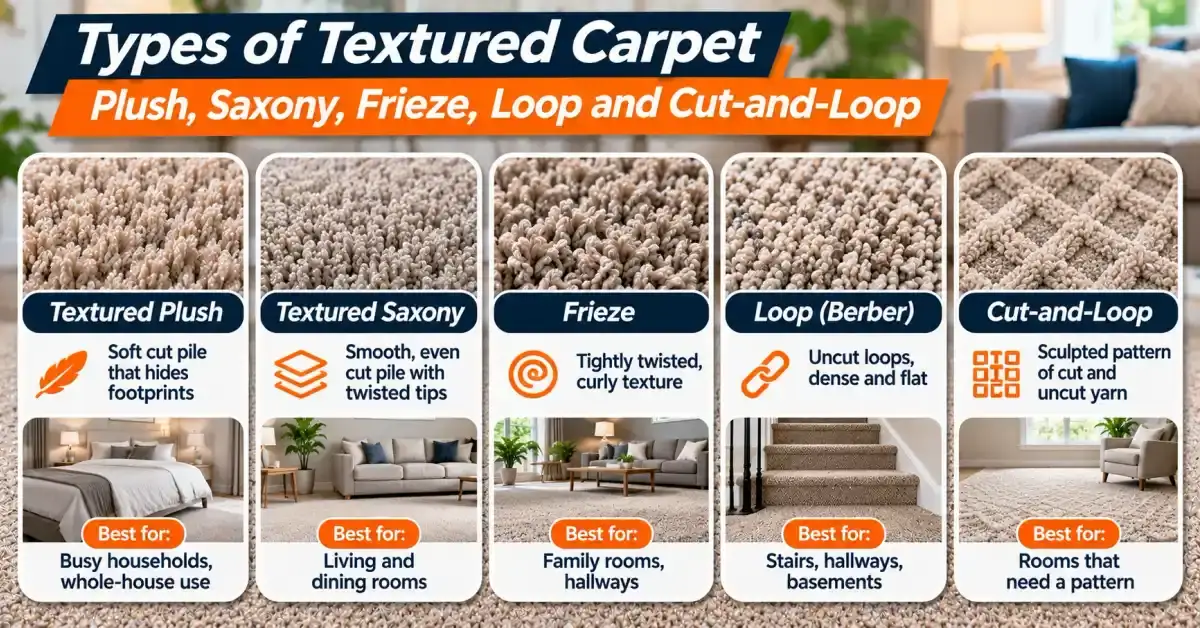
Most textured options fall into five groups. The table shows how they differ at a glance.
| Type | Look | Best for |
|---|---|---|
| Textured plush | Soft cut pile that hides footprints | Busy households, whole-house use |
| Textured saxony | Smooth, even cut pile with twisted tips | Living and dining rooms |
| Frieze | Tightly twisted, curly texture | Family rooms, hallways |
| Loop (Berber) | Uncut loops, dense and flat | Stairs, hallways, basements |
| Cut-and-loop | Sculpted pattern of cut and uncut yarn | Rooms that need a pattern |
Textured Plush Carpet
Textured plush carpet is what most homeowners mean when they ask for textured carpet. This Old House calls it a practical choice for busy households and whole-house use. It keeps the soft feel of cut pile while hiding marks better than a smooth surface.
Textured Saxony and Frieze
Textured saxony is a smooth, even cut pile whose twisted tips give it definition. Frieze is the tightest-twisted version. Flooring America's carpet guide puts frieze at about 7 to 9 twists per inch, while most cut pile runs between 3 and 6. This Old House says frieze's curly texture hides footprints and handles frequent traffic.
Loop and Patterned Textures
Loop carpets leave the yarn uncut, and cut-and-loop styles mix both to form patterned designs. They fit the broad meaning of textured, which is why textured and patterned carpet often get confused. Berber loops wear very well in high traffic, but Home Depot warns that pet claws can snag them.
Textured Carpet vs Plush Carpet
Both styles are cut pile, so the real difference is the surface. Smooth plush has an even, velvet-like finish that shows footprints and vacuum lines more. Textured carpet breaks up that pattern with uneven tips. Retailers also describe textured carpet as firmer and less velvety.
| Feature | Textured | Smooth plush |
|---|---|---|
| Surface | Varied heights and angles | Even, velvet-like |
| Footprints and vacuum marks | Hides them well | Shows them more |
| Feel | Firmer, less velvety | Softer, more luxurious |
| Busy households | Better suited | Better for low-traffic rooms |
| Best rooms | Family rooms, bedrooms, hallways | Adult bedrooms, formal rooms |
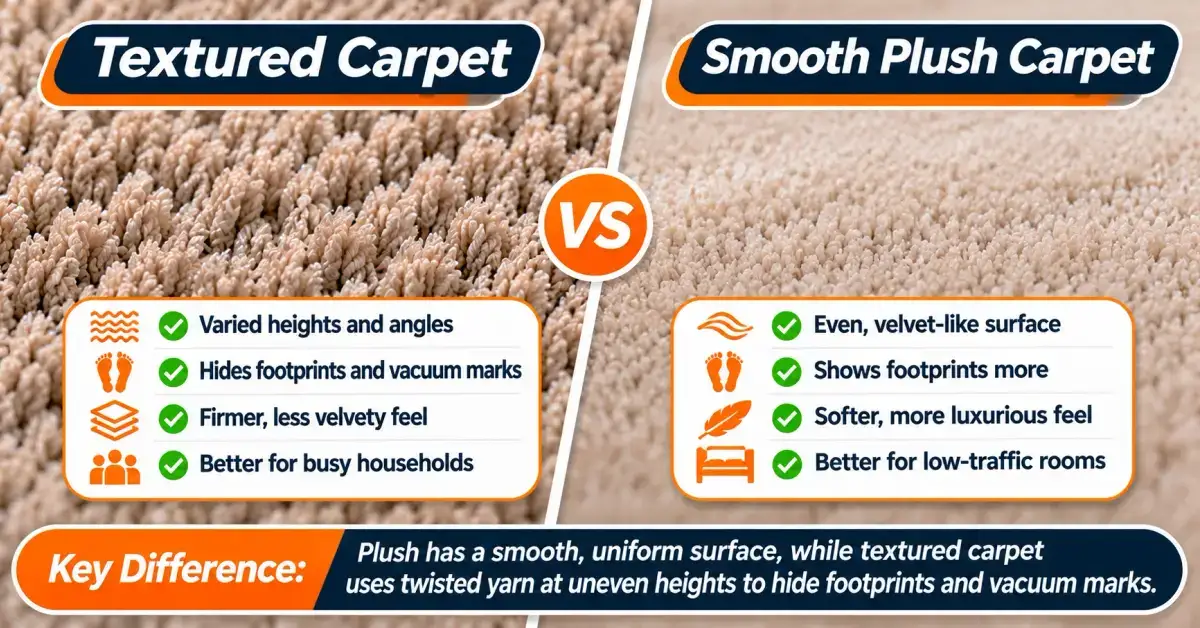
What is the difference between plush and textured carpet? Plush has a smooth, uniform surface, while textured carpet uses twisted yarn at uneven heights to hide footprints and vacuum marks.
Pros and Cons of Textured Carpet
Pros:
- Hides footprints and vacuum marks better than smooth plush.
- Suits busy households, according to CRI and This Old House.
- Textures and medium-to-dark colors hide soil well, per CRI.
- Comes in many colors, including modern neutrals.
Cons:
- Feels firmer and less velvety than smooth plush.
- Foot traffic can untwist the yarn and mat the pile, especially over the wrong cushion.
- Loop styles such as Berber wear better in the heaviest traffic.
- Quality varies widely, so a cheap sample may wear poorly.
Is textured carpet good? Yes, for most bedrooms and living rooms, if you pick a quality fiber and a tight twist. Skip it if you want a plush, velvet feel.
Best Rooms for Textured Carpet
Bedrooms
Textured plush carpet gives you a soft landing in the morning without showing every footprint. Home Depot names bedrooms and family rooms as common homes for textured carpet. This Old House reports that carpet is returning mainly in primary bedrooms and children's rooms.
Living Rooms and Family Rooms
Living rooms take more wear, so choose nylon or triexta in a multitone medium or dark shade. CRI notes that medium and darker colors, tweeds, and textures hide soil well. Add a tight twist and a firm pad.
Stairs and Hallways
Stairs and hallways are the hardest-working spaces. Flooring America recommends nylon in a tight loop or a low-pile textured build. This Old House advises a pile height of half an inch or less in high-traffic areas.

How to Choose Textured Carpet: Fiber, Pile Height and Specs
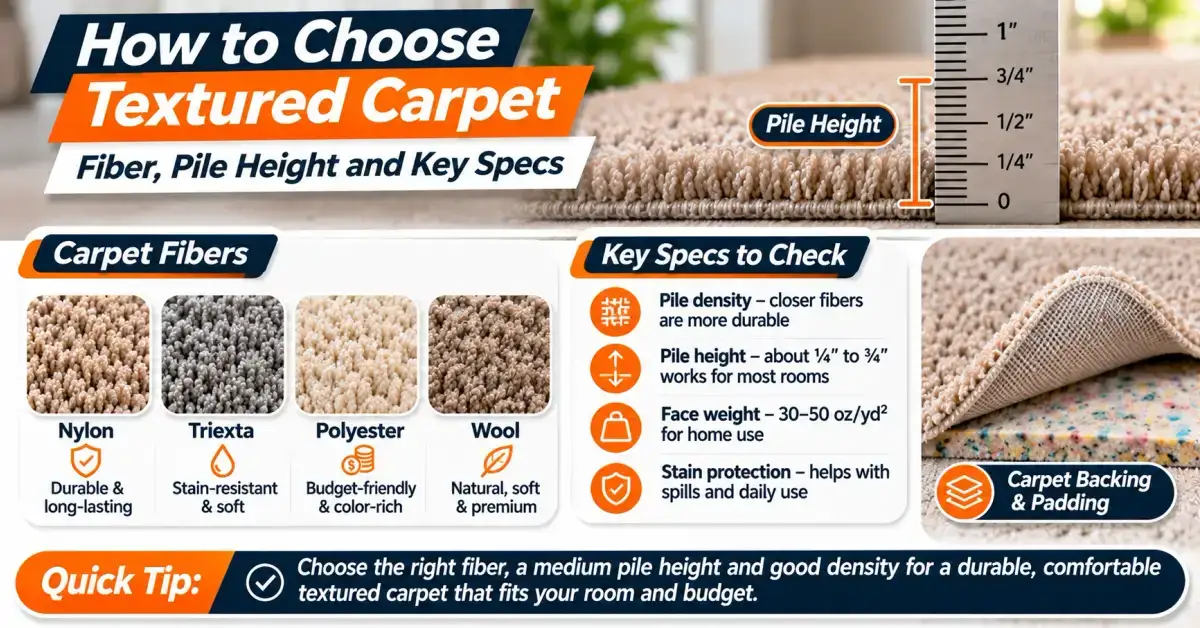
Fiber, pile height, twist, and density decide how well textured carpet holds up. Check each one before you pick a sample.
Best Fibers for Textured Carpet
| Fiber | Main strength | Best use |
|---|---|---|
| Nylon | Resilient, bounces back from crushing, resists soil | Almost any room, especially high traffic |
| Triexta | Durable, soft, resists stains, soil and fading | Family rooms, bedrooms |
| Polyester | Soft, good value, resists water-based stains | Bedrooms and playrooms |
| Wool | Resists compression, premium feel | Formal living areas, bedrooms |
This Old House notes that polyester is less resilient than nylon and that wool is the premium option. Polypropylene (olefin) suits low-pile styles such as Berber better than cut pile.
Low Pile, Twist and Density
Use this five-step check before you buy:
- Pile height: choose low pile, half an inch or less, in busy areas.
- Twist: highly twisted yarn holds its shape longer, per CRI.
- Density: run your fingers through the carpet. You should not see the backing.
- Face weight: compare it only between carpets of the same type, such as two textured cut piles.
- Warranty: look for at least 7 to 10 years, with stain and texture-retention coverage.
Color and a Modern Look
For a modern look, choose a neutral multitone with subtle texture. These colors hide soil and pair well with rugs. One designer, Room for Tuesday, recommends low pile and simple textures, and she advises against shag and larger loops in wall-to-wall carpet.
Textured Wall to Wall Carpet: Padding and Installation
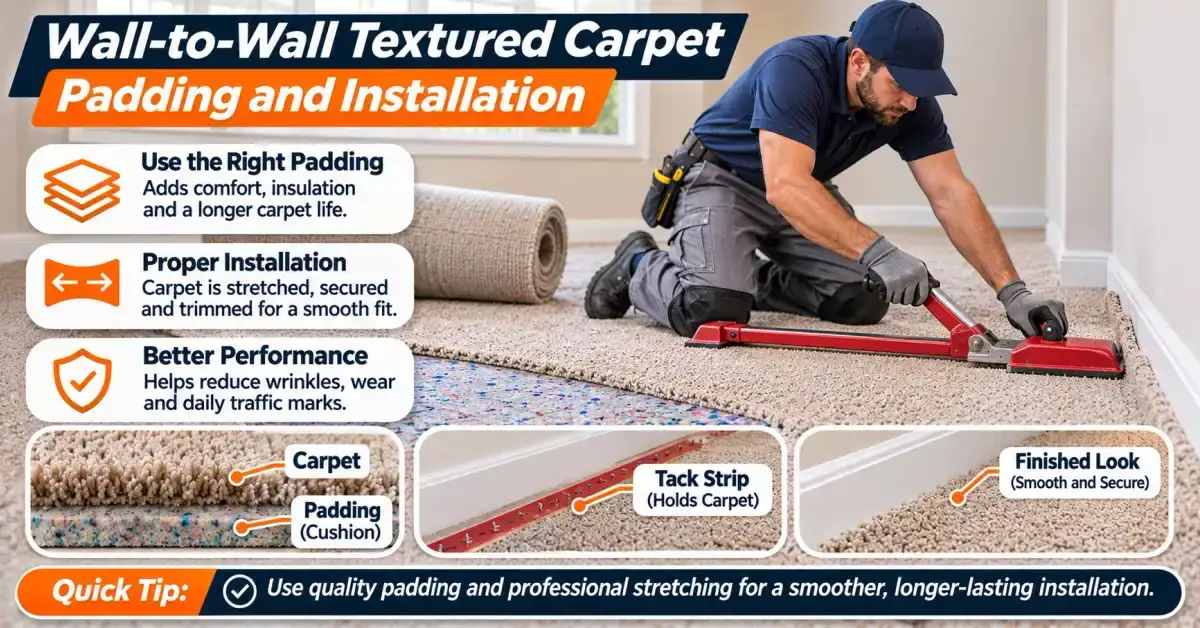
Textured wall to wall carpet covers the floor from edge to edge over a cushion. CRI advises a firm, resilient cushion between 1/4 and 7/16 inch thick with 6 pounds density for cut pile. Berber or low-profile carpet needs a cushion no thicker than 3/8 inch with 8 pounds density. Installers then stretch the carpet over tack strips, and CRI recommends hiring a contractor who follows the CRI 105 residential standard. That standard requires power stretching, which pulls the carpet 1 to 1.5 percent in length and width. Knee kickers position carpet but do not stretch it. Poor stretching causes ripples, and texture will hide footprints but not bad seams.
Key Takeaway: For cut pile, use a firm cushion 1/4 to 7/16 inch thick at 6 pounds density, and insist on power stretching to prevent ripples.
Textured Carpet Cost and Lifespan
NerdWallet's July 2025 update puts carpet replacement at about $3 to $11 per square foot, with padding at $0.75 to $2. Thumbtack, updated in July 2026, lists $2 to $13 per square foot. Prices change by region and fiber, so compare quotes with the same fiber, pile height, and pad. This Old House says carpet typically needs replacing every 5 to 15 years.
How to Care for Textured Carpet
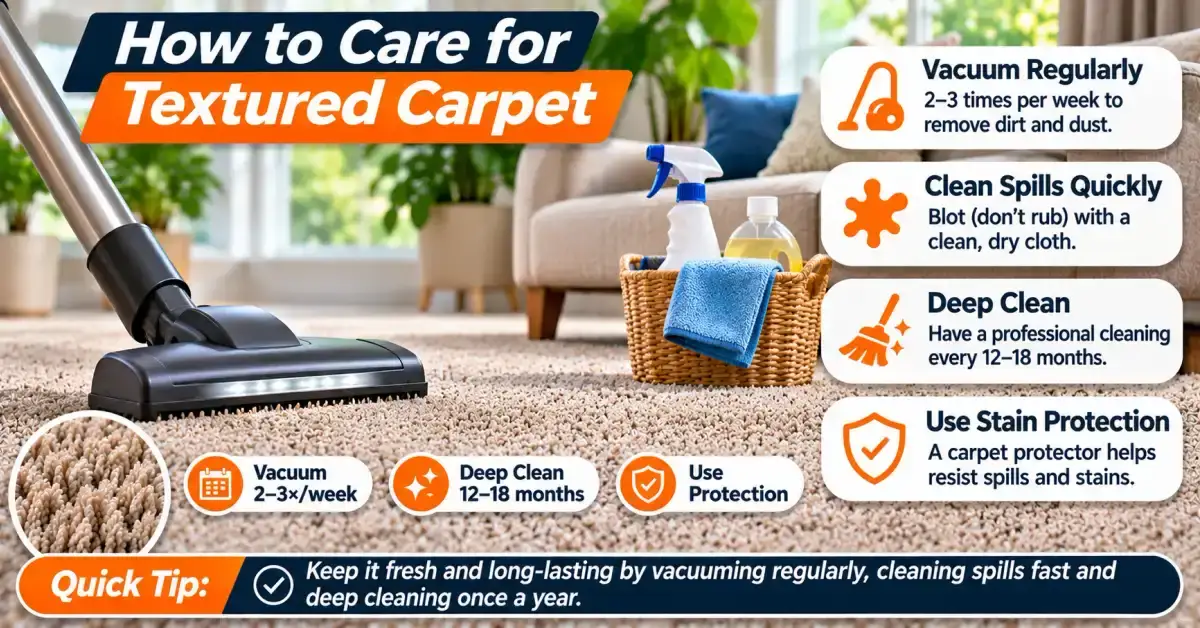
CRI suggests vacuuming at least twice a week and following the manufacturer's cleaning method about every 12 to 18 months. Use a vacuum with adjustable brushes so the beater bar does not rough up the tips.
Does textured carpet snag? A loose tuft can pop up now and then. CRI says to snip it level with scissors and never pull it out. Blot spills right away, and check your warranty before you choose a deep-cleaning method.
Textured Carpet FAQs
Does textured carpet show pet hair?
+
It can. A multitone shade close to your pet's coat hides hair best, though regular vacuuming still matters.
Is textured carpet good for allergies?
+
Any carpet holds dust until you vacuum it. CRI says vacuuming substantially reduces dust and dust mite allergens, so use a strong vacuum with adjustable brushes and a high-filtration bag.
Can you use textured carpet over radiant heat?
+
Often yes, but carpet and pad both insulate, and the cushion often adds more resistance than the carpet itself. Keep the combined insulation value low, choose a low-R-value pad, and check the manufacturers' limits first.
Is textured carpet in style?
+
Carpet is returning slowly, per This Old House, with modern styles and colors. Subtle neutral textures fit that trend.
Is wall-to-wall carpet outdated?
+
Not in bedrooms. It is less popular in living rooms, so choose it where comfort matters most.
Why does new carpet ripple, and can you fix it?
+
Ripples mean lost tension, usually from poor stretching. A pro can restretch it with a power stretcher.
Conclusion
Textured carpet works best when you match the room, traffic level, fiber, and pad. Choose textured plush for bedrooms and nylon or triexta for busy rooms. Ask for samples, then check twist, pile height, density, face weight, and warranty before you decide.
Need a carpet cleaning company you can trust? We handle residential and commercial carpet cleaning, rug cleaning, upholstery cleaning, and pet stain and odor removal —our team is ready to help.

Michael Sanders
Michael Sanders is a home care and cleaning industry writer covering carpet maintenance, flooring care, and household cleaning practices across the United States. His work focuses on practical, research-backed guidance — from stain and odor removal to deep extraction methods and indoor allergen prevention. Michael collaborates with cleaning professionals to ensure accuracy, and his writing reflects a genuine interest in helping homeowners make informed decisions about caring for their homes.