
Blog · Carpet Cleaning Guide
Carpet Protector Guide: How to Choose the Right Type and Use It Safely
A carpet protector can mean five different products, so the right pick depends on the job. For painting, moving or remodeling, self-adhesive carpet protection film is the usual choice. Roll it onto dry, synthetic carpet, then peel it up within the maker's limit, often 30 to 45 days.
Published November 18, 202613 min read
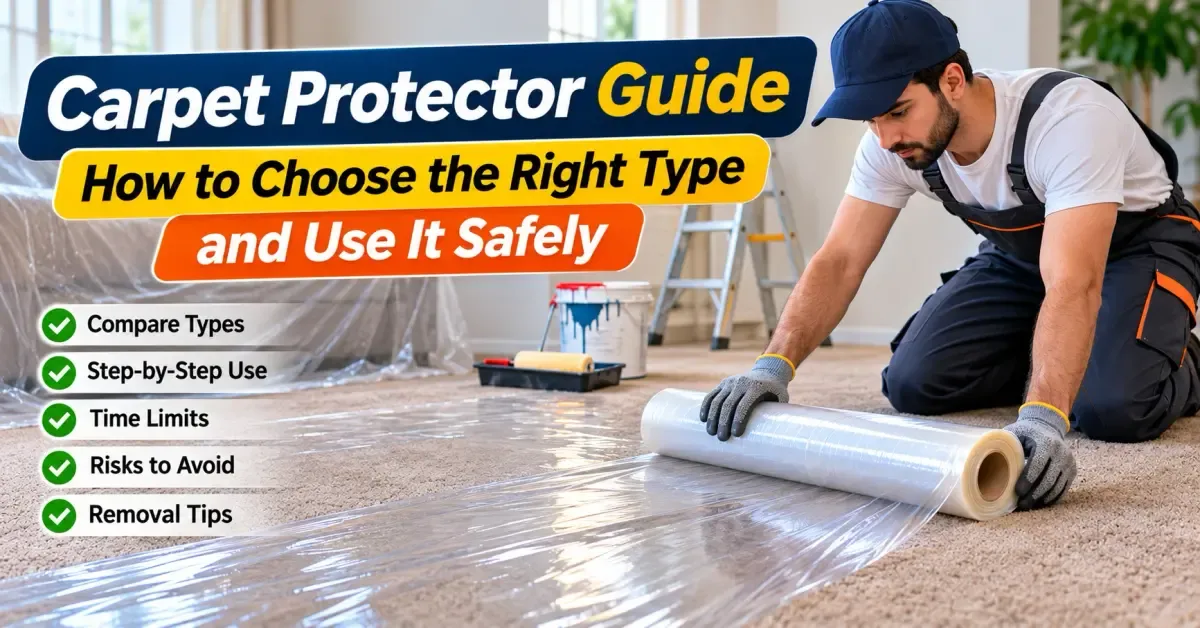
This guide compares each type and shows how to apply and remove film. It also explains the real time limits and risks, plus the price per square foot.
What Is a Carpet Protector and Which Type Do You Need?
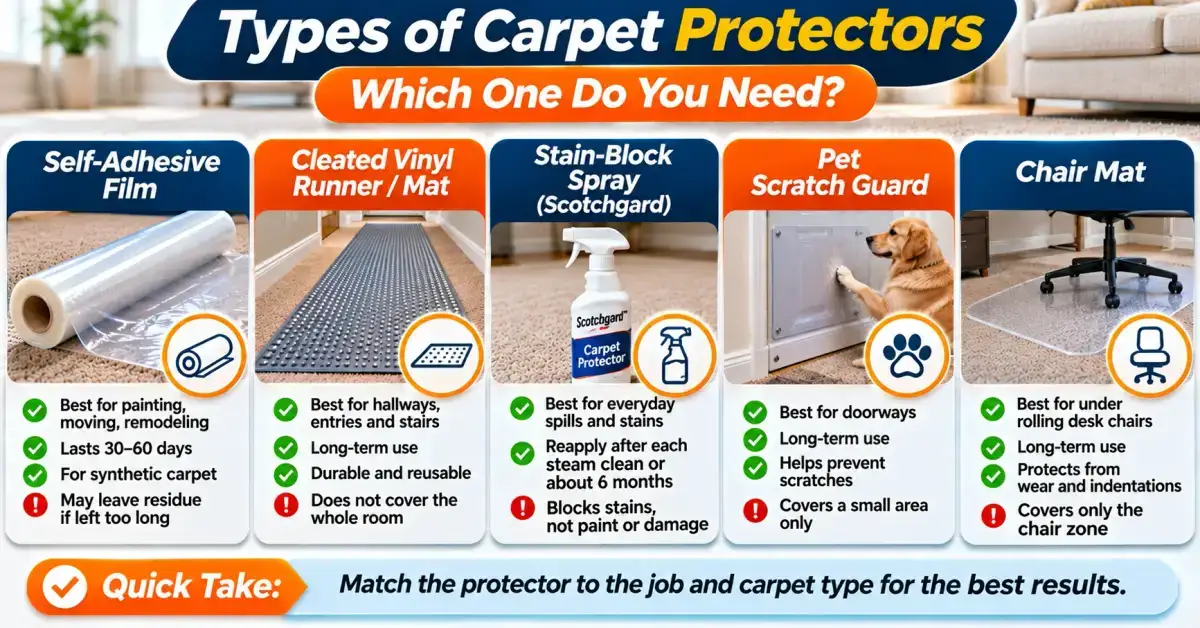
A carpet protector is any cover or treatment that shields carpet from dirt, spills or wear. Brand names such as Carpet Shield and Carpet Mask often stand in for the whole category. Does a carpet protector really work? Yes, when the type matches the job: a spray cannot stop paint drips, and a thin film cannot handle years of chair wheels.
| Type | Best for | Typical duration | Main limit |
|---|---|---|---|
| Self-adhesive film | Painting, moving, remodeling | Days to weeks (makers rate 30 to 60 days) | Synthetic carpet only; residue if left too long |
| Cleated vinyl runner or mat | Hallways, entries, stairs | Long term | Does not cover the whole room |
| Stain-block spray (Scotchgard) | Everyday spills | Reapply after each steam clean or about every six months | Blocks stains, not paint or damage |
| Pet scratch guard | Doorways | Long term | Covers a small area |
| Chair mat | Under rolling desk chairs | Long term | Covers only the chair zone |
Best Carpet Protector for Painting, Moving, Stairs and Pets
The best carpet protector depends on the job. These picks are practical suggestions, not manufacturer rules.
| Job | Better pick | Why |
|---|---|---|
| Rolling paint or cutting in | Canvas drop cloth or cardboard | Painters report that paint sits on top of film and spreads when stepped in |
| Spraying trim or heavy dust | Film with overlapped seams | It stays put and seals the seams |
| Moving day | Film, short term | Covers hallways; peel it up after the move |
| Stairs | Film made for carpet, or a cleated runner | Check that the roll is reverse-wound |
| Freshly installed carpet | Breathable building paper | CRI 105 recommends it; use film only if the carpet maker approves |
| Pets scratching at doors | Pet scratch guard | Built for doorways |
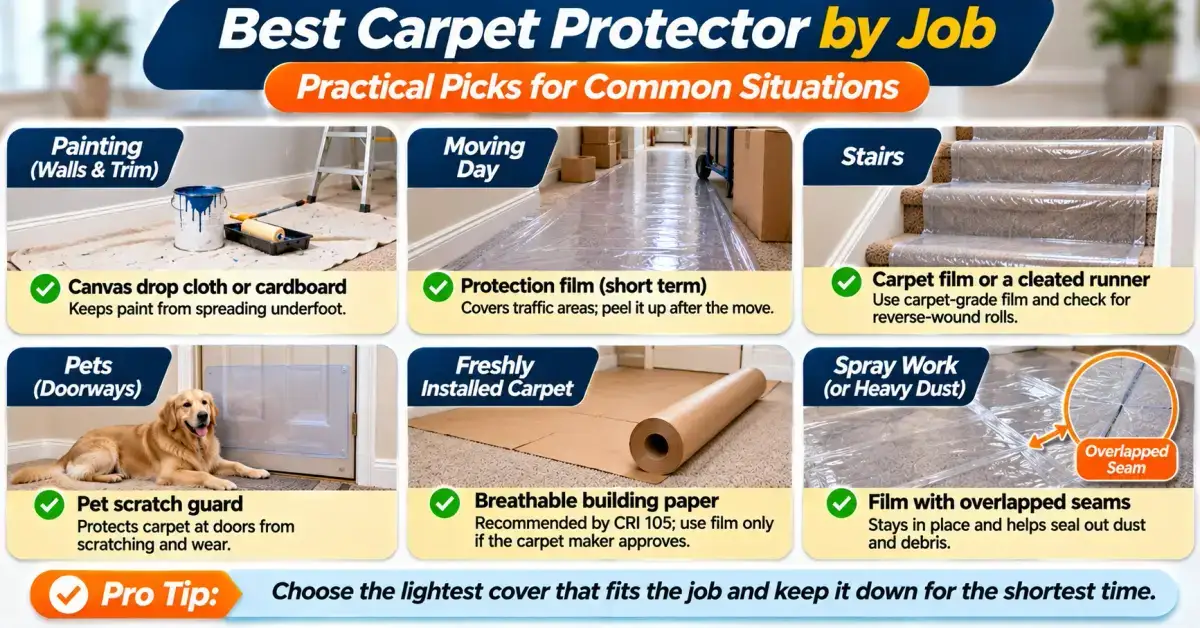
So what is the best way to protect your carpet? Choose the lightest cover that fits the job, and keep it down for the shortest time.
How Carpet Protection Film Works
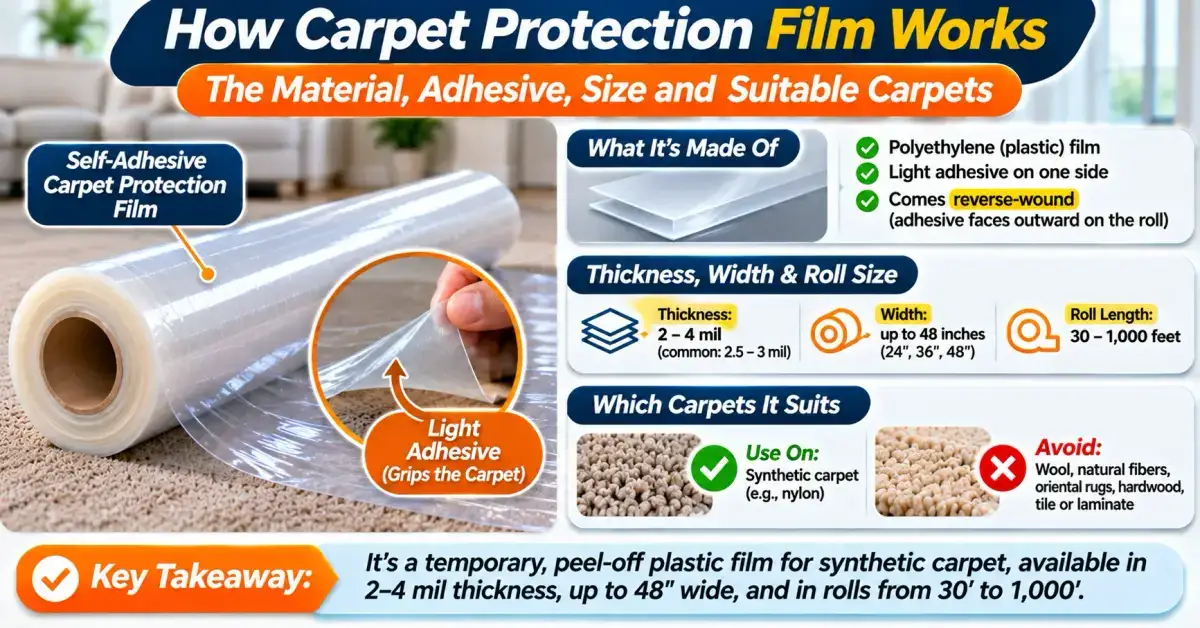
Carpet protection film is a temporary peel-off layer, so three details matter: what it is made of, how big the rolls are and which carpets it suits.
What the Film Is Made Of and How It Sticks
A roll of self adhesive carpet protection film is polyethylene plastic with a light adhesive on one side. Think of it as a sticky plastic sheet that grips the carpet surface. Rolls come reverse-wound, so the adhesive faces outward on the roll and lands face down as you unroll it.
Thickness, Width and Roll Size
Listings show film from 2 to 4 mil thick. Surface Shields Carpet Shield lists 3 mil at Home Depot and 2.5 mil at Lowe's, and Skudo's cover is 4 mil. Rolls run from 30 feet to 1,000 feet, and widths reach 48 inches. A 24-inch roll covers 2 square feet per foot, so a 50-foot roll covers 100 square feet.
Which Carpets It Suits
Use film only on synthetic carpet, such as nylon, and only when the carpet is completely dry. Makers say never use it on wool, natural fibers, oriental rugs, hardwood, tile or laminate. Some retailer listings say all carpet types, but makers' own pages say synthetic only. Deep plush or shag may wrinkle the film, so test first.
How to Apply Carpet Protection Film Step by Step
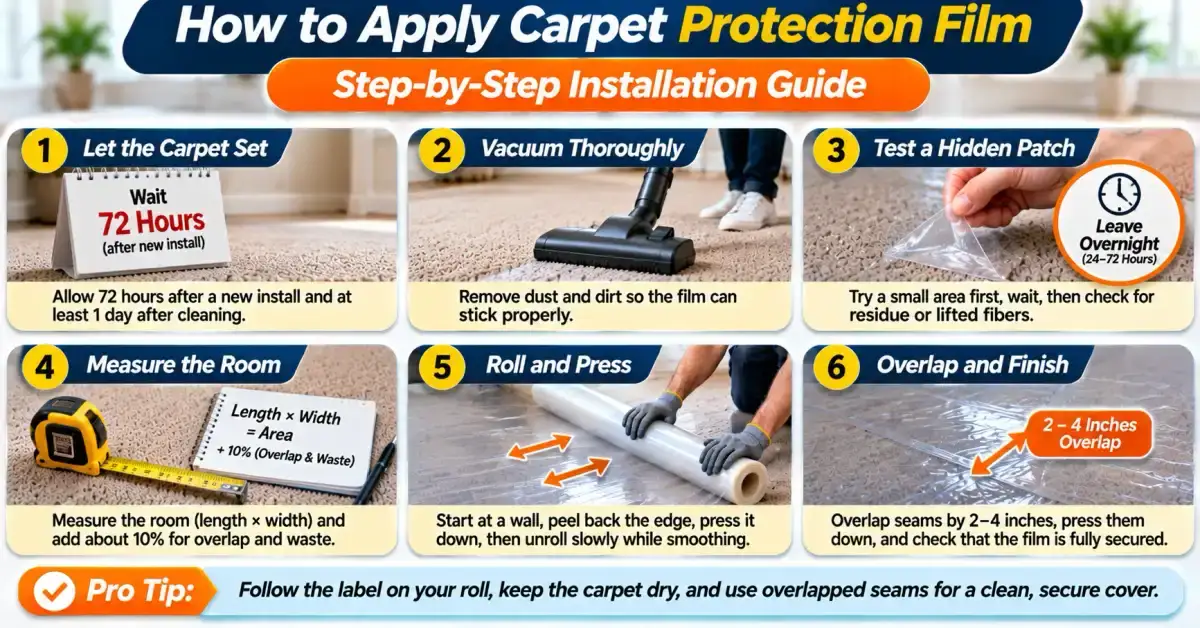
Follow the label on your roll first; these steps match instructions from Surface Shields, Trimaco and Home Depot's film guide.
- Wait for the carpet. Allow 72 hours after a new install and at least a day after cleaning.
- Vacuum the floor. Dirt keeps the adhesive from bonding.
- Test a hidden patch. Press on a small piece and leave it overnight, or 72 hours over glued-down carpet. Check for residue or lifted fibers.
- Measure the room. Multiply length by width and add about 10% for overlap and waste.
- Start at a wall. Peel back the edge, press it down, then unroll slowly while smoothing out air with your hand or a broom.
- Overlap each pass by at least an inch so paint cannot seep through the seams.
- Cut at the wall with a utility knife, then fold the loose edge back onto the roll.
- Keep the plastic away from babies and young children, because it poses a choking and suffocation risk.
Covering Stairs
Check that the roll is reverse-wound before you buy. Press the film into each tread and wrap it over the stair edge so it molds into the corners. Surface Shields advises extra protection on stairs.
How Long Can You Leave Carpet Protection Film Down?
Brand ratings run from 30 to 60 days, but the safest answer is the shortest time that does the job.
| Source | Stated limit |
|---|---|
| Surface Shields Carpet Shield | Up to 30 days |
| Trimaco Easy Mask | Up to 30 days |
| TapeManBlue | Up to 45 days |
| Plasticover | 60 days |
| Skudo Carpet Cover | Up to 3 months |
| AECOM Hunt construction bulletin | One week or less, depending on use |
| CRI 105 installation standard | No day limit; recommends breathable building paper on new installs |
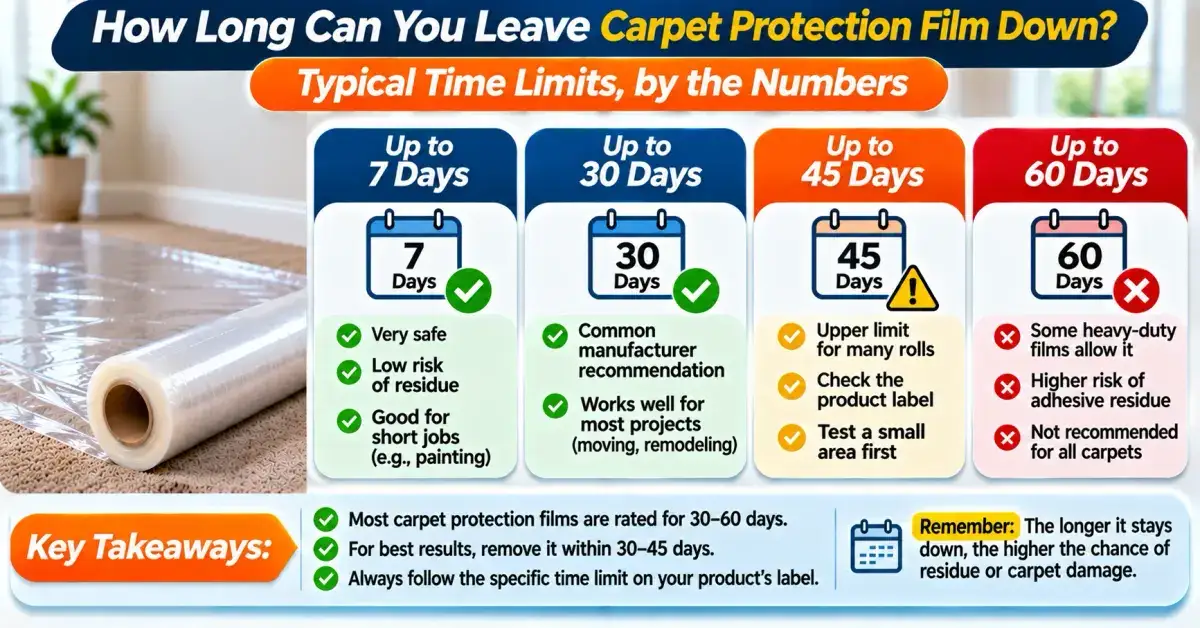
Heat, direct sun and damp carpet shorten the safe window, and TapeManBlue advises checking film every few days in sunny rooms. Residue becomes more likely once film passes its rating. On a long project, replace the film instead of stretching the limit, and follow your carpet maker's guidance.
Key Takeaway: Most brands rate film for 30 to 60 days, but one construction bulletin advises a week or less. Follow your label and replace film on long jobs.
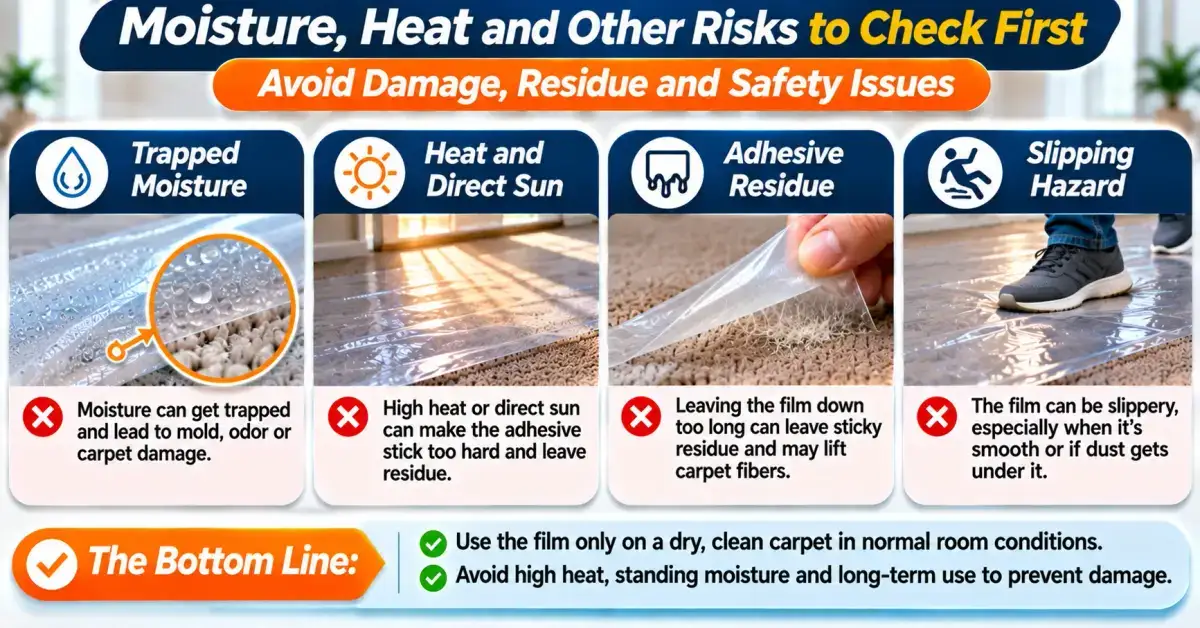
Moisture, Heat and Other Risks to Check First
- Trapped moisture. CRI 105 warns that plastic over a carpet installation can trap moisture, slow adhesive curing and may promote mold. Skip humid basements and damp carpet.
- Residue. Film left too long, applied to damp carpet or exposed to heat can leave sticky adhesive that attracts dirt.
- Wrong carpet. One Home Depot reviewer reported loose pile near an edge on Berber-type carpet, so test first.
- Slipping. CRI notes plastic sheeting can create a slip hazard, so keep edges flat.
Key Takeaway: Plastic blocks spills from above but can trap moisture below. Use film on dry synthetic carpet for the shortest time, after a hidden test.
Plastic Sheeting, Drop Cloths and Other Ways to Cover Carpet
Can you cover carpet with plastic? Yes, for a short job on carpet already in use, but loose plastic can slide, bunch and tear. CRI 105 recommends breathable building paper over plastic on freshly installed carpet. What can you put over carpet to protect it? Compare the options.
| Option | Good for | Watch out for |
|---|---|---|
| Carpet film | Foot traffic, spraying, moving | Time limit, residue, synthetic carpet only |
| Plastic sheeting with painter's tape | Short, dusty jobs | Slides and bunches without tape |
| Canvas drop cloth | Rolling paint, light drips, reuse | Absorbs small drips, but large spills can soak through, so heavier weights help |
| Building paper or Ram Board | Fresh carpet, longer jobs | Choose non-staining, breathable paper, as CRI 105 advises |
| Cardboard along baseboards | Cutting in | Painters also push the carpet back from the trim |
A plastic covering for carpet works best as a short-term layer. Hold the edges with low-tack painter's tape, whether you use plastic to cover carpet during dusty work or plastic to protect carpet from paint.
How to Remove Carpet Protection Film and Residue
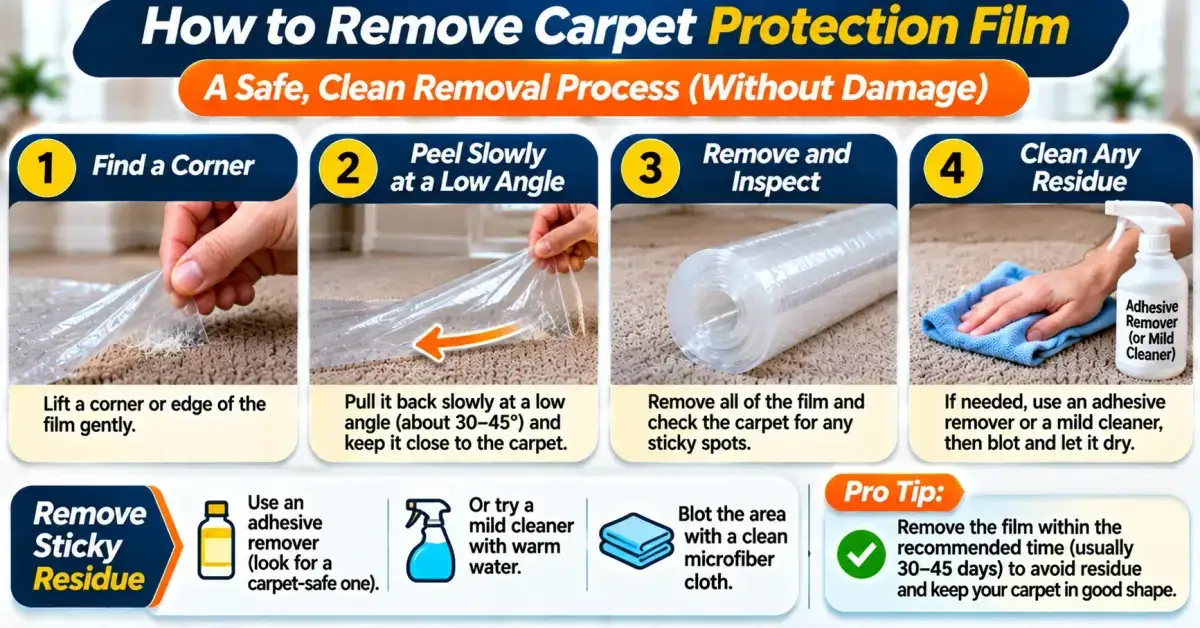
Lift one corner, then pull the film slowly at a low angle, close to the floor. Roll each section as you go so the sticky side does not reattach.
Does carpet protection film leave residue? Makers say no within the rated time on suitable carpet, but reviewers report sticky residue after longer use. Blot tacky spots with a cloth dampened in warm water and mild dish soap, then vacuum once dry. For stubborn residue, ask the film maker or carpet maker before using any solvent.
Carpet Protector Cost: Price per Square Foot
Retailers listed these prices on November 11, 2026, and they change often; the same roll showed different prices across stores. Price per square foot is calculated from each listing.
| Roll | Price | Coverage | Per sq ft |
|---|---|---|---|
| Surface Shields Carpet Shield, 24 in x 50 ft (Menards to Home Depot) | $12.98 to $22.00 | 100 sq ft | About $0.13 to $0.22 |
| TapeManBlue Premium, 24 in x 200 ft | $44.90 | 400 sq ft | About $0.11 |
| TapeManBlue Premium, 36 in x 200 ft | $62.90 | 600 sq ft | About $0.10 |
| TapeManBlue Premium, 48 in x 200 ft | $99.90 | 800 sq ft | About $0.12 |
Plasticover lists rolls from $48.20 to $209.40, depending on size. A 12 by 12 foot room covers 144 square feet. At $0.10 to $0.22 per square foot, film costs roughly $15 to $32.
Other Carpet Protectors in Brief
- Vinyl runners: Cleated mats suit hallways and stairs, and smooth-backed mats slide. One 24 by 72 inch runner listed at $9.97 at Walmart.
- Stain spray: Scotchgard blocks stains. It does not stop paint.
- Chair mats: Protect the area under rolling chairs.
- Pet scratch guards: A carpet guard at doorways stops digging.
- Furniture sliders: They protect carpet during moves.
Frequently Asked Questions
Is carpet protection film waterproof?
+
It blocks spills from above. Liquid can still pass through tears and open seams, and moisture cannot escape from below.
How much film do I need for a room?
+
Multiply length by width, then add about 10% for overlap. A 24-inch by 50-foot roll covers 100 square feet.
Does Scotchgard protect carpet from paint?
+
No. Scotchgard blocks stains and needs reapplying after each steam clean or about every six months, but it does not stop paint.
Can I use carpet film on hardwood floors?
+
No. Carpet film can leave stubborn residue on hardwood, tile or laminate. Use a film made for hard surfaces.
Can I use carpet film on loop or Berber carpet?
+
Makers say synthetic carpet only. One reviewer reported loose pile near an edge on Berber-type carpet, so test a hidden patch first.
Can I use painter's tape or duct tape to hold plastic on carpet?
+
Use low-tack painter's tape. Duct tape can damage the carpet backing and leave sticky residue.
Can I reuse or recycle carpet protection film?
+
Surface Shields lists Carpet Shield as recyclable but not reusable. The flooring company dgfloors says most areas treat used film as regular trash, so check local rules.
Choosing the Right Carpet Protector
The right carpet protector fits the job. Choose film for short, messy projects, runners and mats for long-term traffic, and spray for everyday stains. Apply film to dry synthetic carpet, test a hidden patch, and remove it when the work ends. On new carpet, follow CRI's advice and ask your carpet maker first.
Need a carpet cleaning company you can trust? We handle residential and commercial carpet cleaning, rug cleaning, upholstery cleaning, and pet stain and odor removal —our team is ready to help.

Michael Sanders
Michael Sanders is a home care and cleaning industry writer covering carpet maintenance, flooring care, and household cleaning practices across the United States. His work focuses on practical, research-backed guidance — from stain and odor removal to deep extraction methods and indoor allergen prevention. Michael collaborates with cleaning professionals to ensure accuracy, and his writing reflects a genuine interest in helping homeowners make informed decisions about caring for their homes.