


Blog · Carpet Cleaning Guide
How to Remove Pet Hair From Carpet: Loosen It First, Then Vacuum
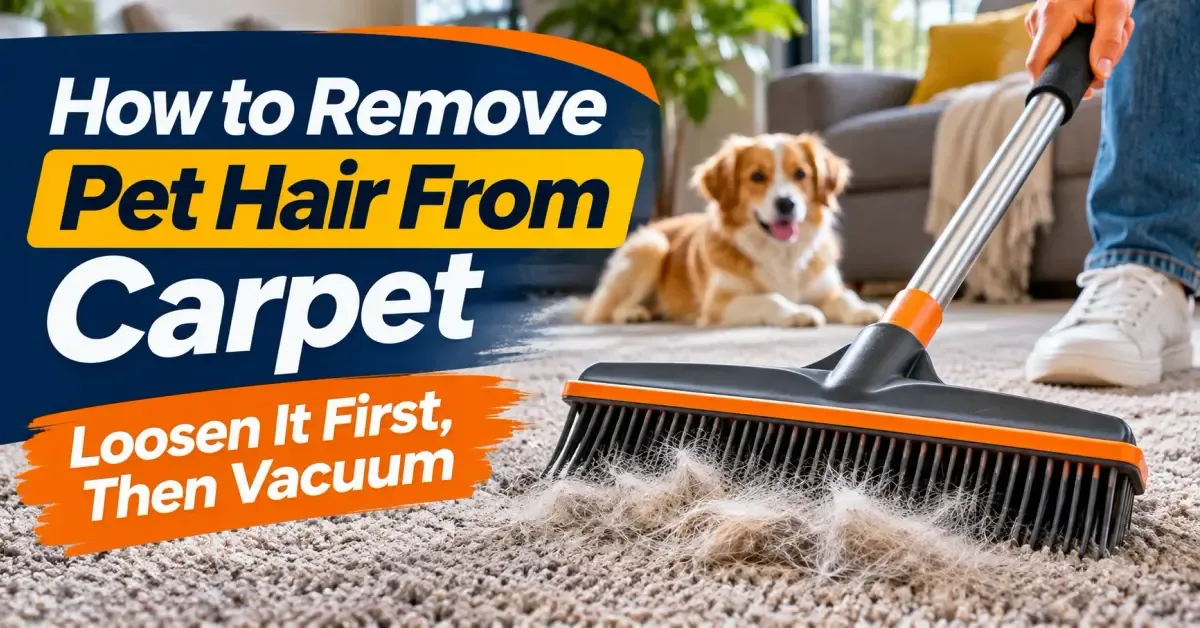
You vacuum twice, and the carpet still looks furry. Here is how to remove pet hair from carpet: loosen the hair with a rubber tool, gather it into piles, then vacuum slowly. A rubber broom, carpet rake or damp rubber glove all work. A vacuum alone lifts loose hair from the surface, but it often leaves hair that has worked into the pile. Loosening first is the best way to fix that.
Published November 9, 202612 min read
This guide covers a four-step routine, tools by pile type, a no-vacuum method, dog and cat tips, vacuum fixes and prevention.
How to Remove Pet Hair From Carpet in 4 Steps
This routine suits most carpets. Test any tool on a hidden corner first, and check your carpet's care label.
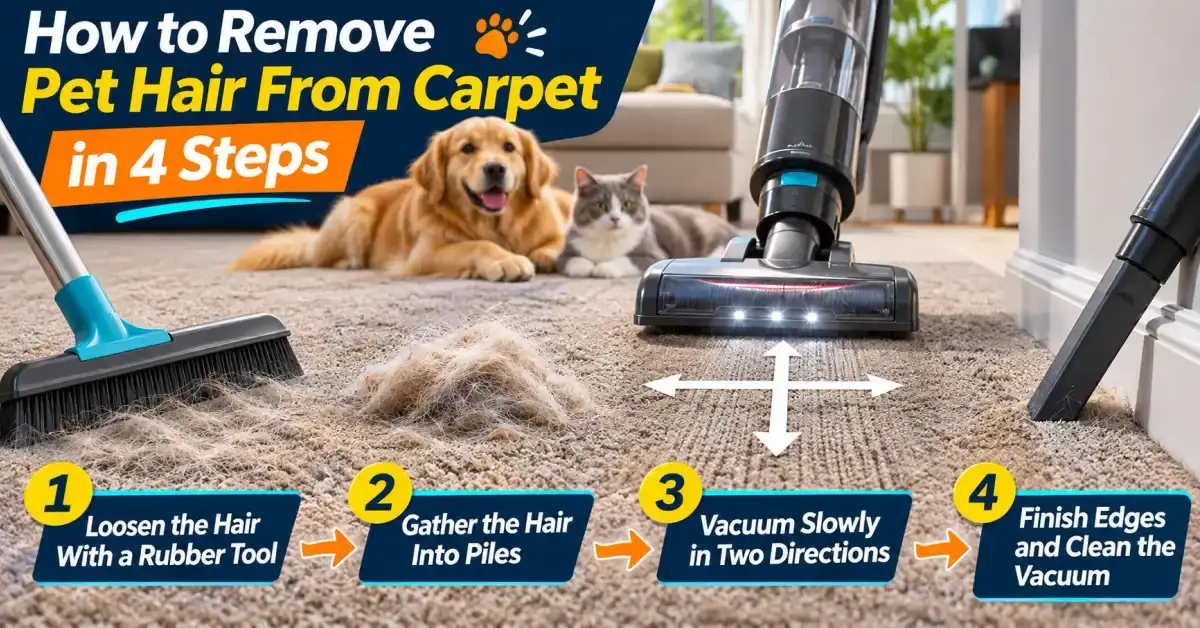
Step 1: Loosen the Hair With a Rubber Tool
Pull a rubber broom, carpet rake or squeegee toward you in short strokes. The rubber grips the hair and drags it up out of the pile. Work across a small section in one direction, then move on. In a large room, divide the floor into sections about the size of a bath mat, so you never lose track of what is done. Press firmly enough to reach the base of the pile, but not so hard that you snag the fibers.
Step 2: Gather the Hair Into Piles
The tool rolls hair into clumps and lines. Rake those into piles, then pick them up by hand or with a dustpan. Testers of rubber carpet rakes point out that the tool leaves the hair on the carpet, so you still need to collect it. Skipping this step makes the vacuum fight the clumps.
Step 3: Vacuum Slowly in Two Directions
Empty the bin first, then move the vacuum slowly. Fast passes only skim the surface. Make overlapping passes in one direction, then repeat at a right angle to catch hair lying at different angles. Use the rotating brush if your carpet allows it. Carpet maker Shaw recommends one to agitate the pile, but it advises suction only on long-yarn shag, where yarns can wrap around the brush.
Step 4: Finish Edges and Clean the Vacuum
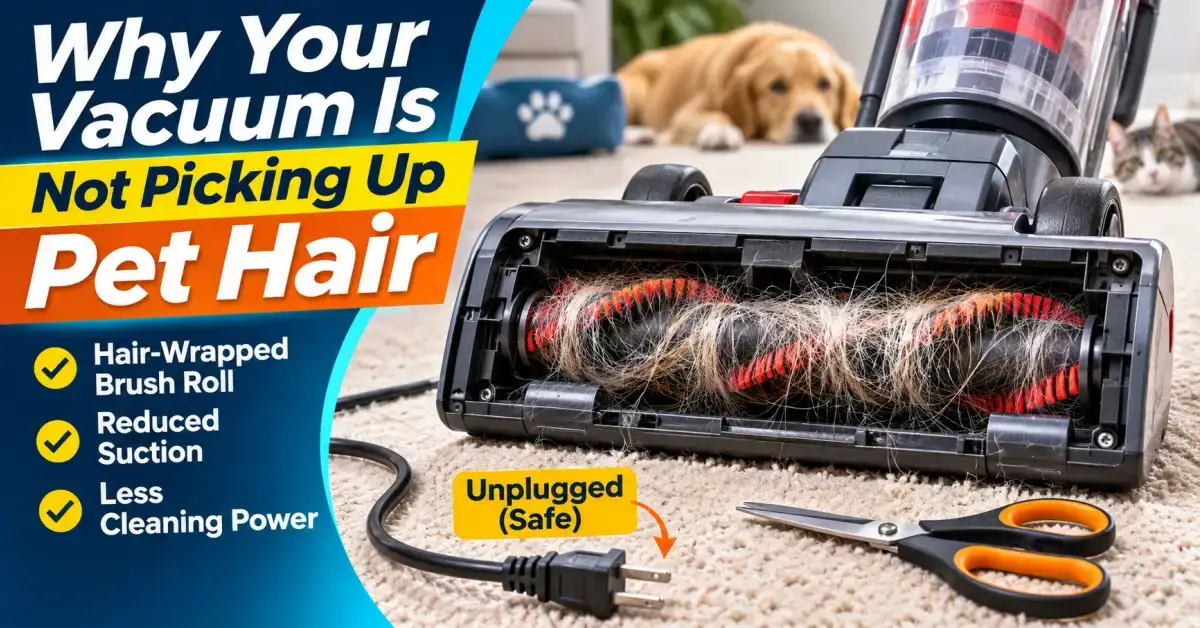
Switch to the crevice tool along baseboards and corners, where hair collects. When you finish, turn the vacuum off and unplug it, or remove the battery. Check the brush roll for wrapped hair and cut it free with scissors or a seam ripper. Empty the bin and clean the filter as your manual directs.
Why Pet Hair Sticks to Carpet
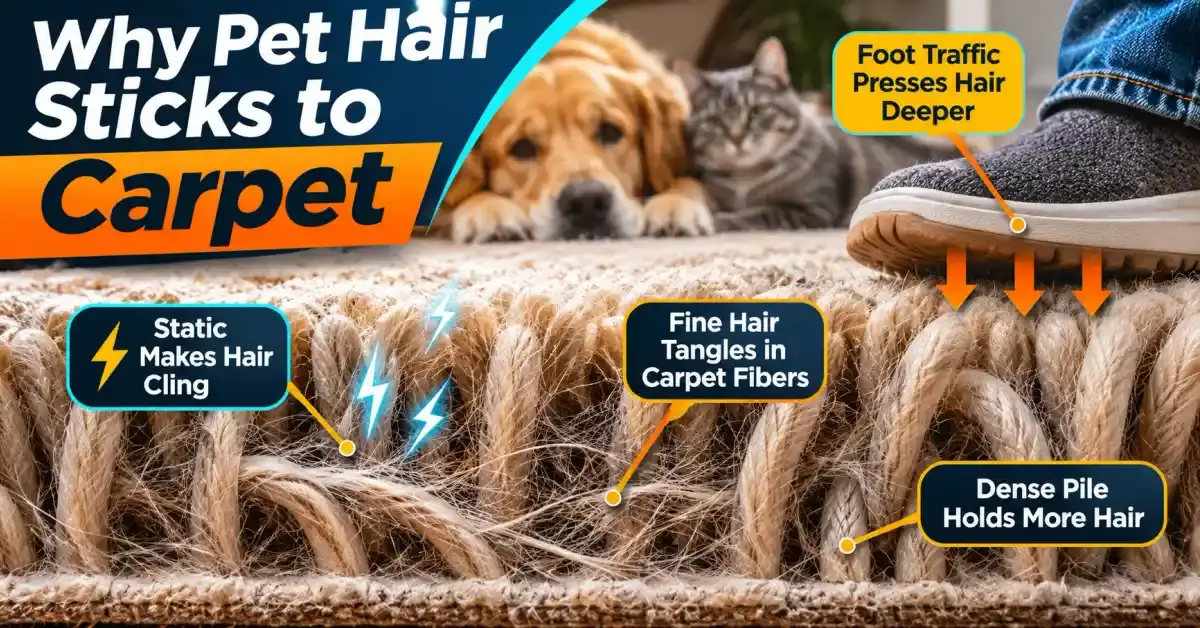
Pet hair is fine and flexible, so it tangles in carpet pile and settles near the base. Dry air adds static, which makes strands cling. Daily foot traffic then presses the hair deeper, and dense plush carpet can hold more of it than a low, flat weave. That is why vacuuming alone does not remove all pet hair from carpet. Rubber tools work because friction, and often static, help them grip strands that suction cannot lift.
Best Tools for Pet Hair on Carpet, by Pile Type
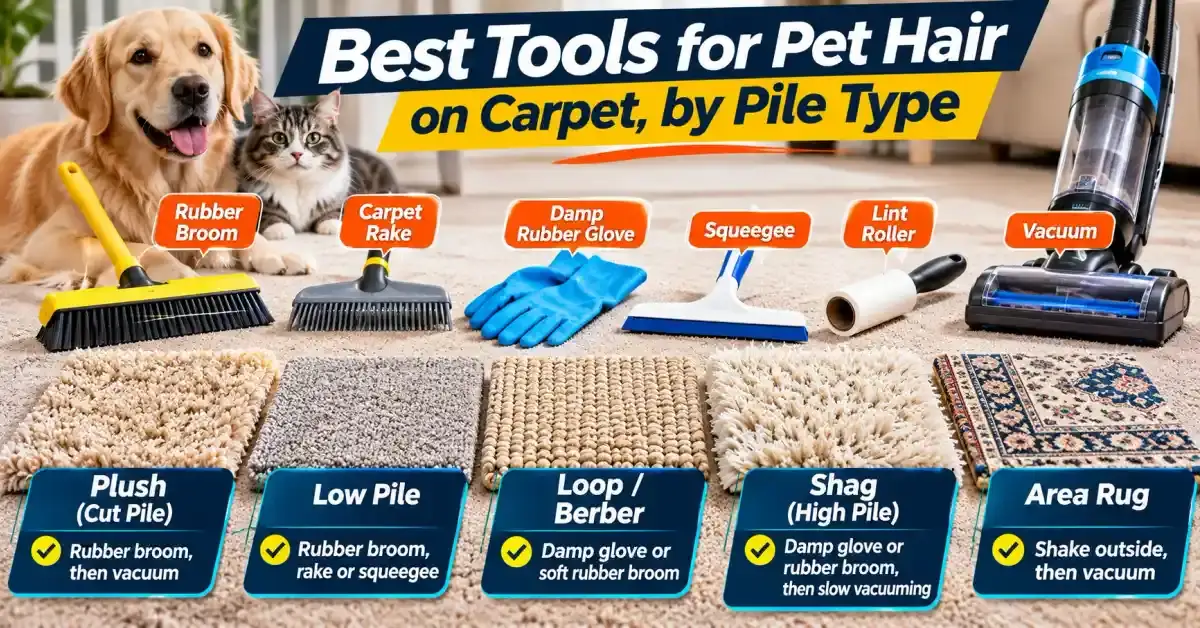
The best tool depends on how tall and how tightly looped your carpet is. Use this table as a starting point. If you are unsure of your pile, look closely: loop pile shows curved, uncut yarn, while cut pile shows separate yarn tips.
| Pile type | Start with | Be careful with |
|---|---|---|
| Cut pile or plush | Rubber broom, then vacuum | Pressing so hard that you fuzz the fibers |
| Low pile | Rubber broom, rake or squeegee | Stiff tines that pull at a thin weave |
| Loop or Berber | Damp glove or soft rubber broom | Rakes with hard tines that can catch loops |
| Shag or high pile | Damp glove or rubber broom, then slow vacuuming | Rotating brushes, which can wrap long yarns; short tools may not reach deep |
| Area rug | Shake outside, then vacuum | Fringe, delicate backing and the care label |
Rubber Broom or Carpet Rake
A rubber broom has soft bristles and suits most piles. Pull it toward your body in short strokes rather than pushing it, because pulling gives the rubber a better grip. A carpet rake has stiffer rubber or plastic tines that reach deeper, which helps on thick cut pile. Avoid rakes on twist and loop pile, where the tines can catch and pull fibers. Rinse the tool when hair builds up, then keep going.
Damp Rubber Glove and Squeegee
Wet a rubber dish glove, shake off the excess water, and rub the carpet in one direction. The damp rubber grabs hair and balls it up. Rug Doctor shares this trick and advises checking the tag or testing a hidden spot first. A window or shower squeegee does the same job on stairs and small patches. Drag it with moderate pressure.
Lint Roller, Tape and Dog Brush
A lint roller or wide packing tape picks up stray hair in small areas, but it is slow across a whole room. Keep spare sheets nearby, because the adhesive fills quickly with pet hair. Press tape lightly, because it can tug at loose fibers. A firm dog brush also works if you pull it toward one spot, so the hair collects in a single pile.
How to Remove Pet Hair From Carpet Without a Vacuum
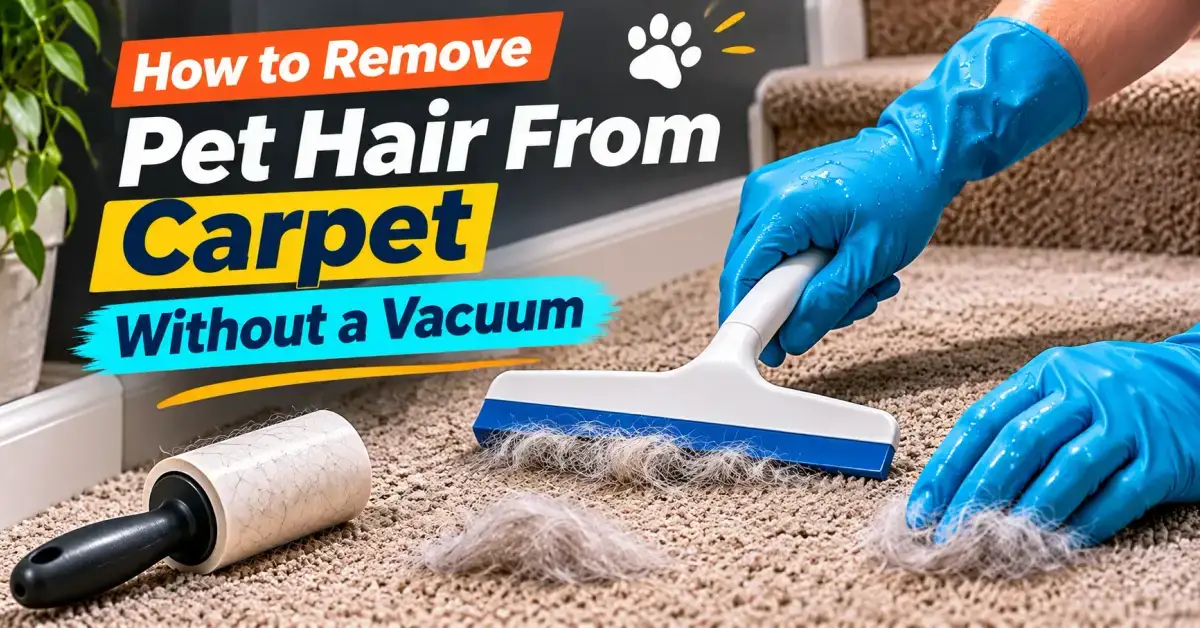
No vacuum on hand? These steps clear most visible hair with simple tools.
- Pull a rubber broom or carpet rake across the carpet in one direction.
- Rub a damp rubber glove over small areas to ball up the hair.
- Drag a squeegee along stairs, edges and tight corners.
- Press a lint roller or tape over any strays.
- Pick up the piles by hand and drop them in the trash.
Work from the far corner toward the door, so you never walk over cleaned carpet. Rinse the tool or glove whenever hair builds up. Thick carpet may need a second round. A vacuum still helps with the fine dust that these tools leave behind.
Fabric Softener and Baking Soda: Optional Add-Ons
Both are popular, and neither is required. Use them only if the basic routine leaves hair behind.
Fabric Softener Spray
Many cleaners say a light mist of diluted fabric softener reduces static, so hair releases more easily. Advice ranges from equal parts softener and water to one part softener in three parts water, with waits from a few minutes to half an hour. Start with the weaker mix. Mist lightly, never soak, let the carpet dry, then brush or vacuum. The Carpet and Rug Institute (CRI) warns that unapproved treatments or improper cleaning could void a carpet warranty. Check your care label first, test a hidden corner, and avoid repeating this often.
Key Takeaway: Fabric softener is optional. Dilute it, mist lightly, test a hidden spot, let it dry, and check your carpet's warranty before you use it.
Baking Soda
Baking soda mainly deodorizes. Most guides suggest sprinkling a thin layer, waiting about 10 to 15 minutes, then vacuuming. It may loosen hair slightly, but it does not pull hair out on its own. Fine powder can strain some vacuum filters, so check your manual and clean the filter afterward.
How to Get Dog Hair Out of Carpet vs. Cat Hair
How to get dog hair out of carpet depends partly on the coat, but the loosen-first routine works for both. Small differences help you choose a tool.
- Dog hair: Coats vary by breed, but heavy shedders leave hair in large amounts. A rubber broom or rake clears it fast. Brush the dog outside to cut the load.
- Cat hair: Often fine and clingy, so a damp glove or soft rubber broom tends to grip it better than a stiff rake. Vacuum slowly afterward.
Why Your Vacuum Is Not Picking Up Pet Hair
If you are stuck on how to get pet hair out of carpet because the vacuum seems to fail, run through this checklist.
- The brush roll is wrapped with hair. Long and fine hair often wraps the roller and cuts performance until you clear it by hand.
- The bin is full or the filter is dirty. Both reduce airflow.
- The height setting does not match your pile. Follow your manual.
- The brush action is too aggressive for your carpet. Shaw warns that some vacuums can damage the surface, so follow your carpet maker's advice.
- You are moving too fast. Slow passes lift more.
- The hair is embedded. Loosen it with a rubber tool first.
Stairs, Edges and Area Rugs
On stairs, drag a squeegee or damp glove across each step, then use a handheld vacuum or crevice tool. Start at the top and work down, so any hair that falls lands on steps you have yet to clean. Along baseboards, use the crevice tool and a short brush. For an area rug, shake it outdoors, rake the surface, then vacuum. Check the backing and fringe before using any tool.
How to Get Hair Out of Carpet When It Is Human Hair
The same steps on how to remove hair from carpet work for human hair. Long strands wrap tightly around a vacuum roller, so pick up loose ones by hand or with a damp glove before vacuuming. If a strand does wrap, cut it free instead of pulling. Run a rubber broom over the area to lift the rest.
How to Keep Pet Hair Out of Carpet Longer
Less hair on the pet means less hair on the floor. The American Kennel Club (AKC) says dogs that shed heavily may need brushing several times a week, or even daily during peak shedding periods. A Texas A&M veterinary technician recommends brushing at least three to four times a week for five to ten minutes, with weekly baths during shedding season. Brushing outdoors keeps loose hair out of the house entirely, and a steady habit, such as brushing after walks, makes it stick.
Then vacuum regularly. The CRI Care Guide advises vacuuming at least once a week, and homes with pets may need more. A HEPA filter, which the EPA says can remove at least 99.97 percent of particles 0.3 microns in size, also helps trap fine dander.
Key Takeaway: Brush your pet several times a week, vacuum at least weekly, and do it more often in shedding season.
When to Call a Professional Carpet Cleaner
Call a pro if hair, odor or dander keeps returning after repeated routines. The CRI recommends restorative cleaning about every 12 to 18 months, and hot water extraction is one common method. Follow your carpet maker's recommended cleaning method to protect your warranty. Ask any cleaner whether they follow that guidance and whether their methods suit your carpet fiber.
FAQs About Removing Pet Hair From Carpet
What removes dog hair from carpet?
+
A rubber broom, carpet rake, damp rubber glove or squeegee removes most dog hair. Loosen the hair, gather it into piles, then vacuum slowly.
Does a rubber glove really work on carpet?
+
Yes, especially on small areas and stairs. Dampen the glove, rub in one direction, and the hair balls up for easy pickup. Test a hidden spot first, and wash the glove afterward.
How often should I vacuum if I have pets?
+
At least once a week, according to the CRI Care Guide. Homes with pets may need more, especially during shedding season.
Are robot vacuums good for pet hair on carpet?
+
They help with daily upkeep, but they do not replace loosening embedded hair. Use a rubber tool first, then let the robot handle the maintenance.
Can I use duct tape, dryer sheets or a pumice stone?
+
Tape works for small spots, though it can tug fibers. Dryer sheets may cut static but can leave residue, so test first. Some brands suggest a pumice stone with light strokes, but it can damage delicate carpet, so skip it unless the carpet is sturdy.
How long does dog shedding season last?
+
The AKC says shedding season usually lasts a few weeks to a couple of months. Expect extra hair in that window and brush more often.
Conclusion: Remove Pet Hair From Carpet With a Simple Routine
To remove pet hair from carpet, loosen it with a rubber tool, gather the piles, then vacuum slowly in two directions. Match the tool to your pile, test any add-on first, and brush your pet often. Repeat the routine weekly, and shedding season becomes much easier to handle.
Need a carpet cleaning company you can trust? We handle residential and commercial carpet cleaning, rug cleaning, upholstery cleaning, and pet stain and odor removal —our team is ready to help.

Michael Sanders
Michael Sanders is a home care and cleaning industry writer covering carpet maintenance, flooring care, and household cleaning practices across the United States. His work focuses on practical, research-backed guidance — from stain and odor removal to deep extraction methods and indoor allergen prevention. Michael collaborates with cleaning professionals to ensure accuracy, and his writing reflects a genuine interest in helping homeowners make informed decisions about caring for their homes.