

Blog · Carpet Cleaning Guide
Frieze Carpet: What It Is, What It Costs and How to Care for It
Frieze carpet is cut-pile carpet made from tightly twisted, heat-set yarn that curls and lies in different directions. That bumpy surface hides footprints, vacuum marks and seams, and it feels soft underfoot. The trade-off is a casual look, and long fibers can let spills sink in. Fiber quality matters more than the style name. Material usually costs about $1 to $8 per square foot, according to The Spruce (2025), with nylon at the higher end. This guide covers fibers, cost, how frieze compares with plush, Berber and shag, the best rooms, colors, and a care routine based on the Carpet and Rug Institute.
Published November 27, 202611 min read

Key Takeaway: Frieze carpet is twisted, heat-set cut pile that hides footprints and seams, costs about $1 to $8 per square foot for material, and rewards a close look at fiber and warranty.
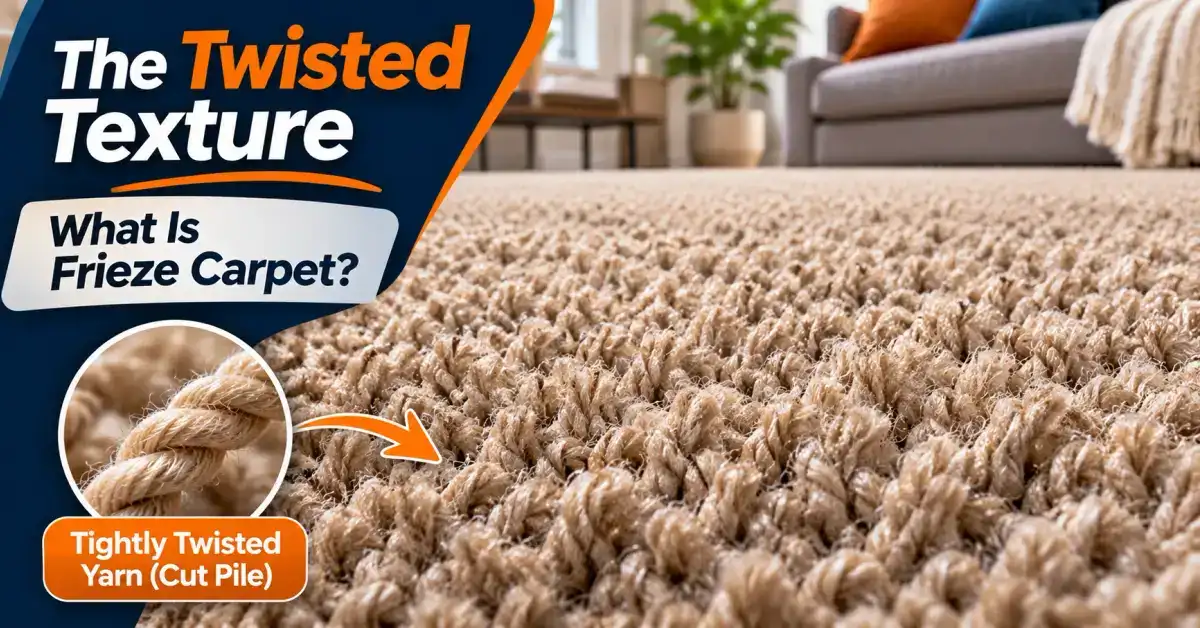
What Is Frieze Carpet?
Frieze carpet is a cut-pile carpet made from long yarn that is twisted tightly and set with heat. The twist makes the fibers curl and lie in different directions, which gives the surface a rough, nubby texture. Many people see it as a leaner, tidier cousin of 1970s shag. You may also see it sold as twist-pile carpet. The Carpet and Rug Institute (CRI) describes frieze as casual, informal carpet with a curly surface, and says its texture helps minimize footprints and vacuum marks.
Frieze Carpet Definition and Pronunciation
In the carpet trade, people usually say "free-ZAY." Merriam-Webster lists both "FREEZ" and "free-ZAY," so you will hear both. The dictionary also defines frieze as a pile surface of uncut loops, which differs from the cut-pile carpet that retailers sell under this name. When a store says frieze, expect cut pile with a tight twist.
How Frieze Pile Carpet Is Made
Makers twist the yarn tightly, then heat-set it with high-temperature steam under pressure so the twist keeps its shape. They then tuft the yarn into a backing as a cut-pile surface. A higher twist than plush or saxony creates the frieze look. Sources disagree on exact twist counts, so treat any single number with caution. The finished tips point in many directions, which scatters light and hides footprints and vacuum marks.
Frieze Carpet Pros and Cons
Frieze carpet suits busy, casual rooms, but it has real limits.
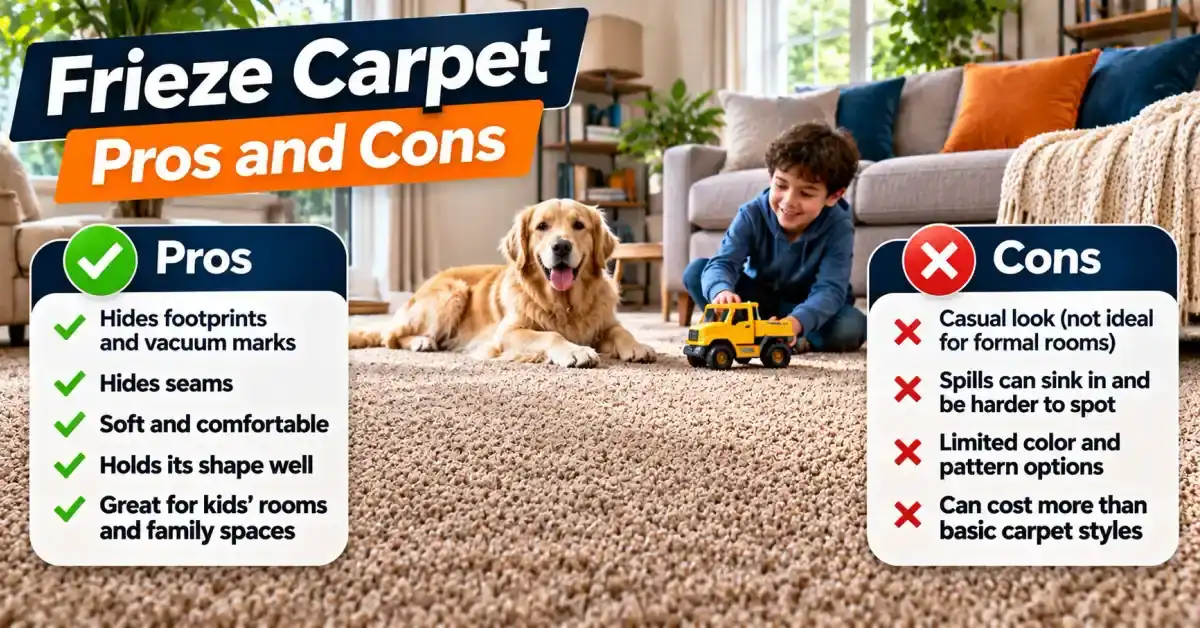
Pros:
- Hides footprints and vacuum marks, because the twisted tips point in different directions.
- Hides seams. The Spruce notes that 12-foot and 15-foot roll widths let many rooms avoid seams altogether.
- Feels soft and comfortable underfoot.
- Holds its shape well, because CRI says highly twisted yarn keeps its form longer.
- Fits kids' rooms and family rooms where a relaxed look works.
Cons:
- Looks casual, so it can feel out of place in formal rooms.
- Lets spills sink between long fibers, and uneven pile makes accidents harder to spot, according to Flooring America.
- Comes mostly in solid or flecked colors, with few patterns.
- Can cost a bit more than basic carpet styles, according to Flooring Expo.
Nylon Frieze Carpet and Other Fiber Choices
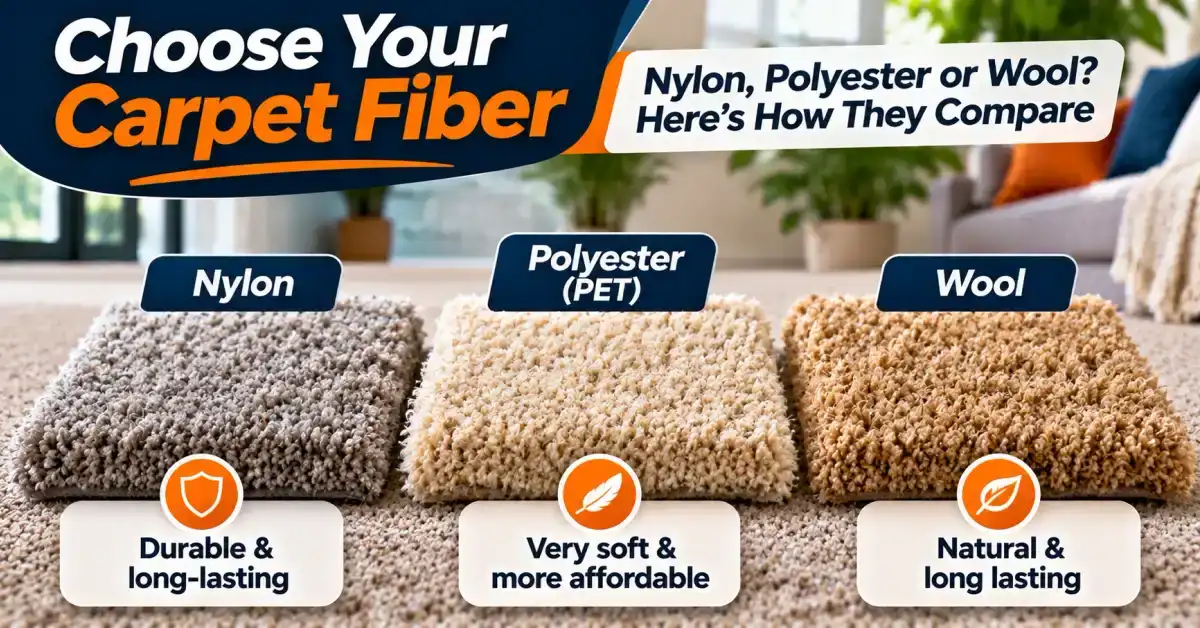
Fiber decides how frieze carpet wears, so check it before color. CRI says most U.S. carpet uses nylon, polyester, polypropylene (olefin), triexta or wool, and each differs in durability and stain resistance. For frieze, Georgia Carpet says polyester and PET feel very soft but protect less against stains and wear, and it points buyers who want longevity to nylon or wool. PET is not a separate fiber. It is a type of polyester. Face weight and twist level also affect price and wear, as The Spruce explains.
| Fiber | Typical strengths | Typical trade-offs | Price position |
|---|---|---|---|
| Nylon | Resilient, durable | Costs more than polyester | Higher |
| Polyester (including PET) | Very soft, lower cost | Less stain and wear protection than nylon | Lower |
| Wool | Natural, long lasting | Costs more, poor fit for damp basements | Higher |
Key Takeaway: Pick nylon frieze carpet for the hardest wear and polyester or PET for a softer, lower-cost option. Compare face weight and warranty within the same fiber, and ask about polypropylene or triexta if a store offers them.
How Much Does Frieze Carpet Cost?
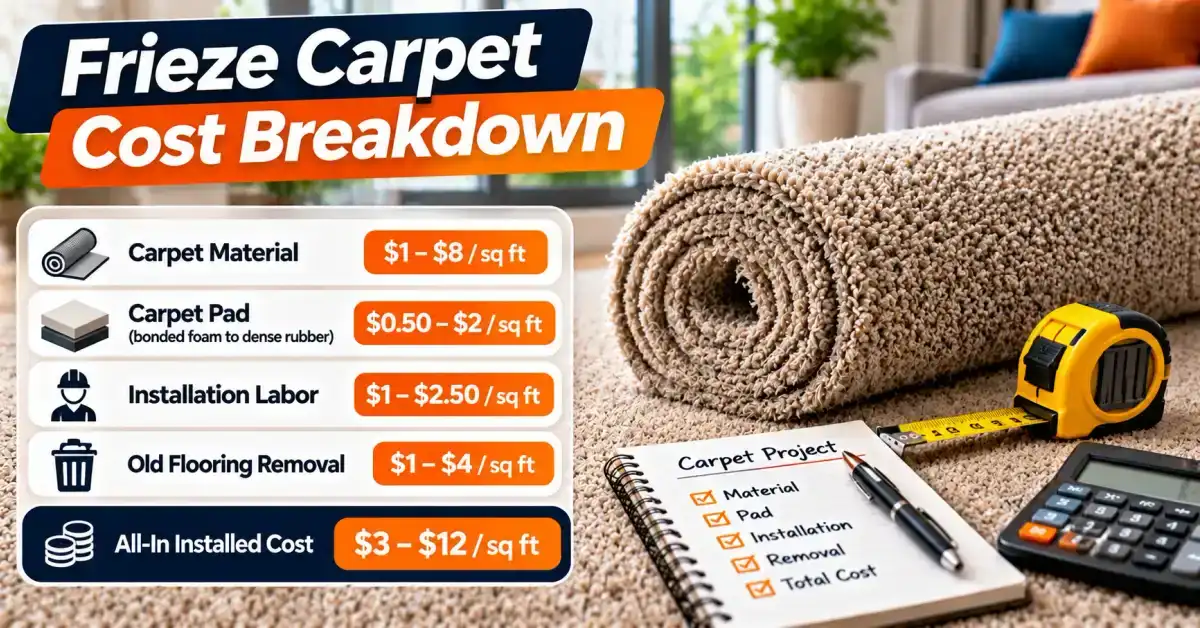
Frieze carpet material usually costs about $1 to $8 per square foot, with polyester at the low end and top-grade nylon frieze carpet at the high end. Installed totals run higher. ConsumerAffairs puts installed carpet at about $3 to $12 per square foot in its 2026 guide. Retail listings vary widely, so get local quotes before you budget.
| Cost item | Typical range per sq ft | Source |
|---|---|---|
| Carpet material | $1 to $8 | The Spruce, 2025 |
| Carpet pad | About $0.50 (bonded foam) to $2 (dense rubber) | The Spruce, 2025 |
| Installation labor | $1 to $2.50 | ConsumerAffairs, 2026 |
| Old flooring removal | $1 to $4 | ConsumerAffairs, 2026 |
| All-in installed | $3 to $12 | ConsumerAffairs, 2026 |
Frieze Carpet vs Plush, Berber, Shag and Textured Carpet
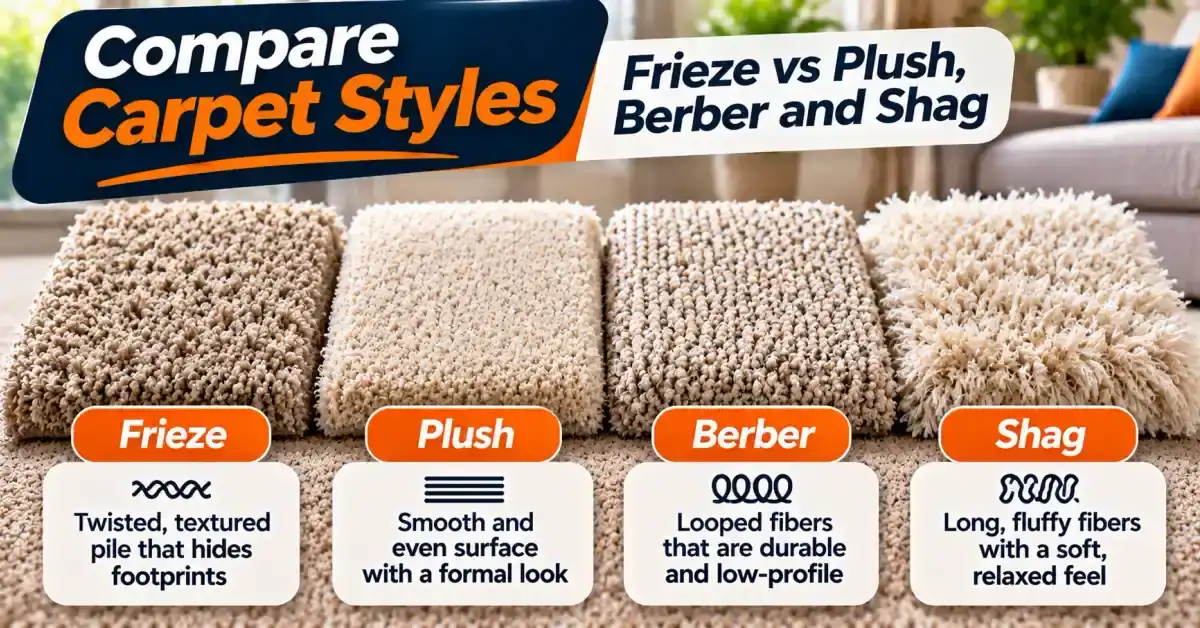
The biggest difference is surface. CRI says plush carpet suits formal rooms and shows footprints and vacuum marks easily, while saxony has a refined look for traditional living and dining rooms. Frieze pile carpet has twisted, uneven fibers that hide marks. All three are cut pile.
| Style | Pile and fibers | Look | Hides footprints | Best for |
|---|---|---|---|---|
| Frieze | Cut pile, tight twist, uneven tips | Casual, nubby | Very well | Bedrooms, family rooms |
| Plush | Cut pile, even and dense | Smooth, formal | Poorly | Formal, low-traffic rooms |
| Textured plush | Cut pile, subtle texture | Casual, versatile | Well | Busy households |
| Berber | Level loop pile | Clean, low profile | Moderately, and loops can snag | Heavy traffic, homes without big dogs |
| Shag | Very long, loose pile | Deep and retro | Varies | Soft accent rooms |
Best Rooms for Frieze Carpet
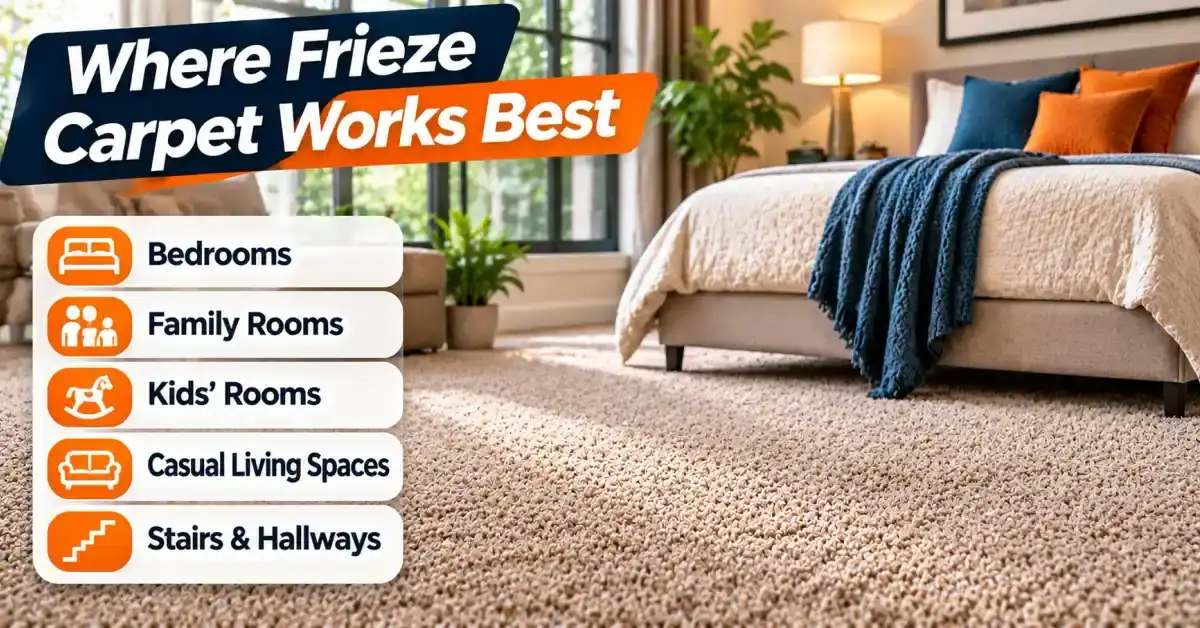
Frieze carpet works best where comfort and a relaxed look matter more than formality.
Bedrooms, Family Rooms and Kids' Rooms
The soft texture makes bedrooms comfortable, and the surface hides crumbs, footprints and vacuum lines in family rooms and playrooms. Carpet One also lists home offices as a good fit. These are the best rooms for frieze carpet, since daily wear stays moderate.
Stairs, Hallways and Basements
On stairs, the texture hides seams, staples and posts, according to Avalon Flooring. Some Houzz users still call wall-to-wall frieze on stairs dated, so match it to your style. In hallways, the twist resists crushing, but fiber and density decide real durability. Georgia Carpet rates frieze as average for very heavy traffic and Berber as better. For basements, flooring pros commonly advise testing slab moisture first, choosing synthetic fiber, and using a pad made for concrete. They generally avoid wool below grade.
Is Frieze Carpet Good for Pets?
Mostly yes. Frieze is cut pile, so claws do not snag loops, and the texture hides hair and paw prints. Carpet Corner favors frieze over Berber for big dogs for this reason. The uneven surface also hides accidents, so check often and clean fast. Never use a steam cleaner on pet urine, says the Carpet and Rug Institute.
Frieze Carpet Colors, Including White
Most frieze carpet comes in flecked neutrals such as beige, brown and gray, plus warm earth tones. CRI notes that medium and darker colors, tweeds and textures hide soil best in busy areas. White frieze carpet looks bright, and CRI says modern stain and soil treatments make light carpet easier to clean. Still, light shades show spills first, so blot fast. Many "white frieze" search results are polypropylene area rugs, not wall-to-wall carpet. Carpet looks different under different lighting, so take large samples home.
How to Clean Frieze Carpet
The Carpet and Rug Institute (CRI) and carpet makers agree on a simple routine.
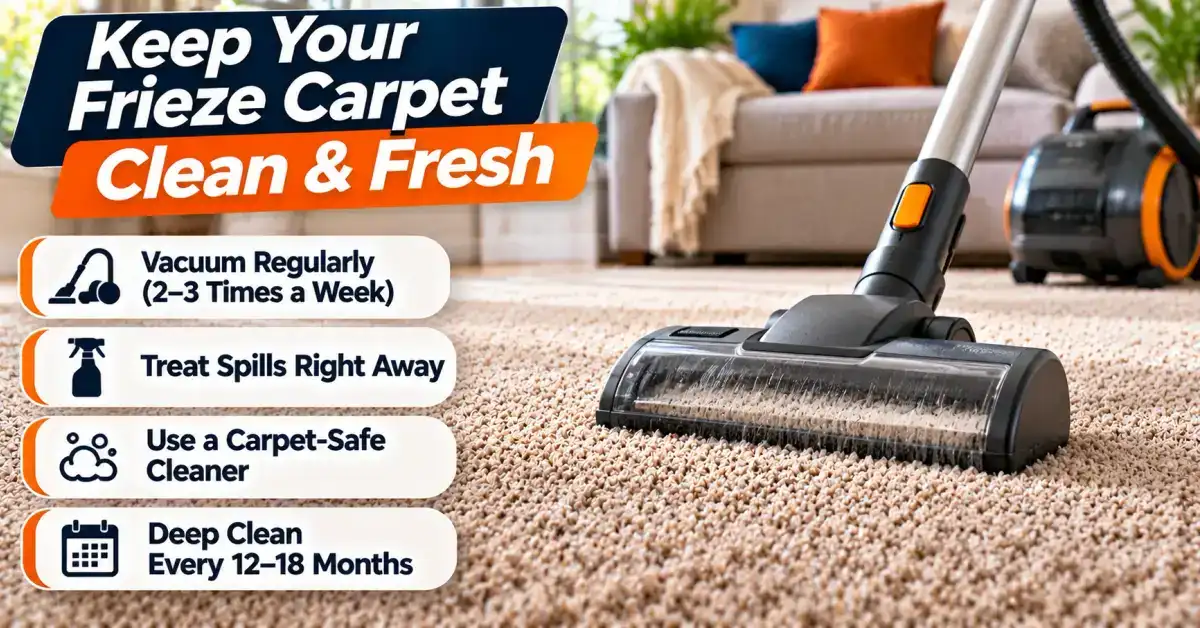
- Vacuum at least once a week with a vacuum that has the CRI Seal of Approval. Vacuum high-traffic areas more often.
- Use an adjustable-height vacuum and raise the brush. If fibers snag or fray, turn the beater bar off and use suction only, as Fabrica advises for casual frieze and other long-pile carpet. Always follow your carpet maker's guide.
- Blot spills right away with a clean white cloth. Do not scrub or rub the spot.
- Test any cleaner on a hidden spot first to check for color change.
- Skip steam on pet urine spots, per CRI.
- Book a professional deep clean every 12 to 18 months, as CRI recommends.
- Use furniture pads and rotate furniture now and then to spread out wear.
Key Takeaway: Vacuum weekly with the brush raised, blot spills without scrubbing, and schedule a professional clean every 12 to 18 months.
How to Buy Frieze Carpet: A Quick Checklist
- Fiber: choose nylon frieze carpet for hard wear or polyester for a lower price.
- Face weight and density: compare samples of the same fiber side by side.
- Twist: ask how tightly the yarn is twisted and whether it is heat-set.
- Warranty: read the stain, soil and wear terms, and the exclusions.
- Pad: CRI advises thinner, firmer cushion for heavy-traffic areas and stairs, and says the wrong cushion can void the carpet warranty. Bonded foam costs less than dense rubber.
- Colors: view large samples at home, in different light.
- Installer: get written quotes for labor and removal. Flooring America says professional installation protects the warranty.
Frieze Carpet FAQs
Frequently Asked Questions
Is Frieze Carpet Still in Style?
+
Opinions are mixed. The Spruce calls it still popular, and Sterling Carpet & Flooring lists it among favorite 2026 styles. Houzz users often see wall-to-wall frieze as dated in large rooms but fine as an area rug. Choose it for comfort and wear, not a trend.
How Can You Tell If Your Carpet Is Frieze?
+
Frieze shows short-to-medium cut fibers with curly, twisted tips that point in different directions, and no visible loops. Plush looks smooth and even. Berber shows small loops. The label or manufacturer sample book can confirm it.
How Long Does Frieze Carpet Last?
+
No independent source gives a firm lifespan. It depends on fiber, density, traffic and care. Georgia Carpet says nylon or wool should last longer than polyester or PET. Ask for the written wear warranty.
Can You Install Frieze Carpet Yourself?
+
Possible, but not ideal. The Spruce recommends professional installation, since stretching and seaming need specialty tools. Flooring America adds that professional installation protects the warranty, so check your terms first.
Is a Frieze Rug the Same as Frieze Carpet?
+
No. A frieze rug is a loose area rug, often polypropylene. Frieze carpet is wall-to-wall carpet installed over a pad. Wear, cost and cleaning differ.
Does Frieze Carpet Hide Stains?
+
It hides dirt and footprints, not spills. Carpet One notes that frieze fibers offer limited stain resistance, so blot quickly. A stain warranty and quick blotting help most.
Is Frieze Carpet Right for You?
Frieze carpet is a good fit if you want a soft, casual floor that hides footprints, vacuum marks and seams. Choose nylon frieze carpet for heavy use and polyester for budget rooms. Skip it for formal spaces or very damp basements. Check fiber, face weight and warranty, budget about $3 to $12 per square foot installed, and follow the CRI care routine to keep it looking good.
Need a carpet cleaning company you can trust? We handle residential and commercial carpet cleaning, rug cleaning, upholstery cleaning, and pet stain and odor removal —our team is ready to help.

Michael Sanders
Michael Sanders is a home care and cleaning industry writer covering carpet maintenance, flooring care, and household cleaning practices across the United States. His work focuses on practical, research-backed guidance — from stain and odor removal to deep extraction methods and indoor allergen prevention. Michael collaborates with cleaning professionals to ensure accuracy, and his writing reflects a genuine interest in helping homeowners make informed decisions about caring for their homes.