
Blog · Carpet Cleaning Guide
Can You Put a Rug on Carpet? Yes, and Here Is How to Do It Right
Can you put a rug on carpet? Yes, and it often looks better than bare wall-to-wall carpet. The catch is fit, because a flat rug suits soft, plush carpet while a thick rug needs low, firm carpet. Either one also needs a pad made for carpet, or it will creep and bunch within weeks.
Published November 24, 202611 min read

That movement is a safety issue too. A CDC-authored study of US data from 2001 to 2008 estimated that about 37,991 adults aged 65 and older were treated in emergency rooms each year for falls linked to carpets and rugs. Many injuries happened where a rug or carpet meets bare floor, and the study shows association, not proof of cause. This guide explains which rug suits your carpet, how to keep it flat, what size to buy, and whether the look works.
When a Rug on Carpet Works and When It Doesn't
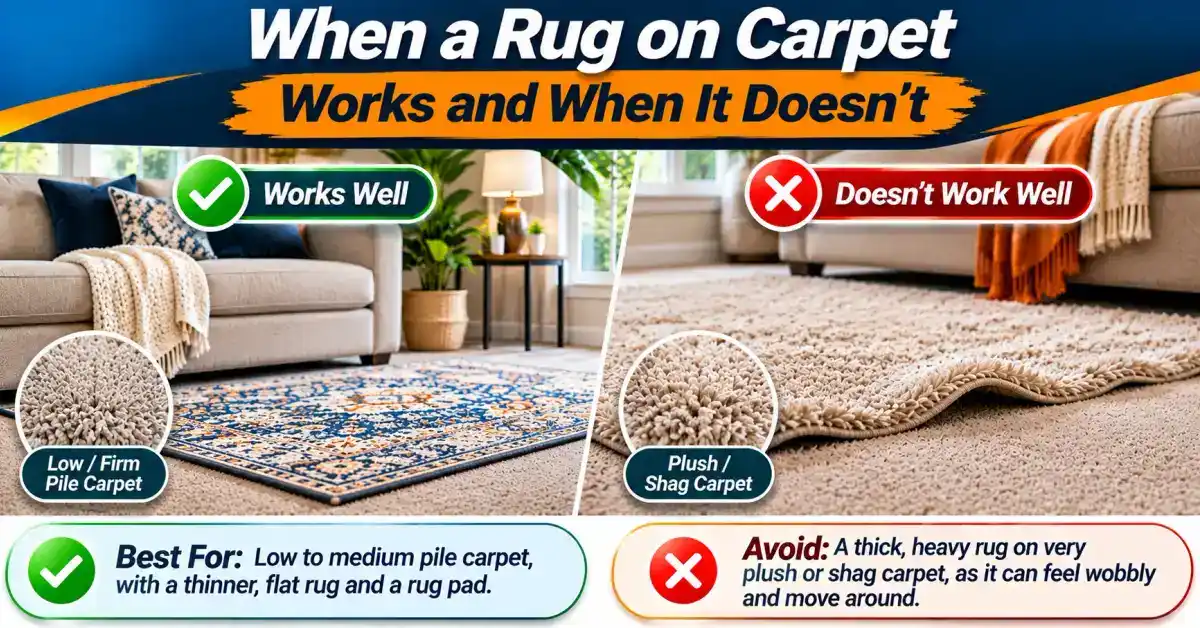
A rug on carpet works best over low or medium pile that feels firm underfoot. Designers use it to define a seating zone, add color or pattern, hide stains and worn spots, and give a busy walkway extra cushion. It also covers a carpet you dislike without a costly tear-out. So, can you put an area rug over carpet in almost any room? Yes, as long as the rug and carpet are matched and the rug is secured.
Rugs creep because carpet pile is soft. Each footstep flexes the fibers while the rug backing drags across them, so the rug shifts a little with every step and ripples build up over time.
Very plush carpet and shag are the hardest bases, because a thick rug on top feels spongy and wobbles. In those rooms, choose a thin, flat rug and a dense, thin pad.
Key Takeaway: A rug on carpet works when the rug is flatter than the carpet, large enough to sit under furniture, and held down by a carpet-to-carpet pad. The softer the carpet, the thinner the rug should be.
How to Match an Area Rug to Your Carpet
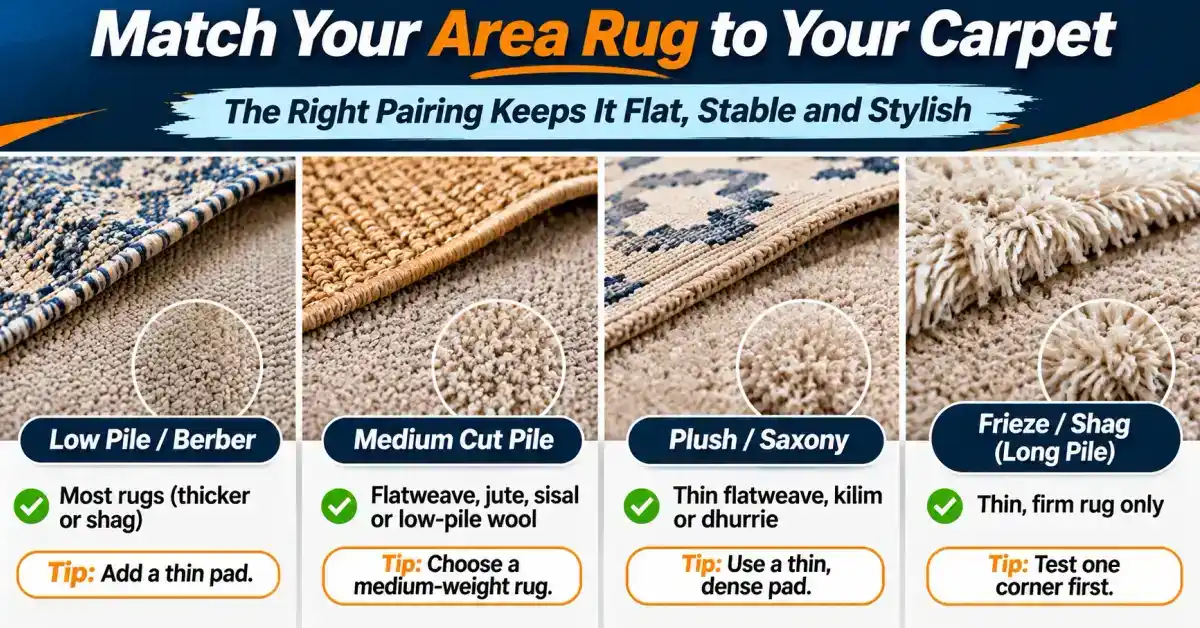
Think of the carpet and rug as a stack. The softer the carpet, the thinner and firmer the top rug should be. Retailers and designers agree on this pairing rule, though no guide gives exact thickness limits, so the table below is a general starting point.
Area Rug on Carpet by Pile Height: A Quick Match Table
| Carpet type | Best rug on top | Stability | Tip |
|---|---|---|---|
| Low pile, berber or commercial | Most rugs, including thicker or shag styles | High | Add a thin pad |
| Medium cut pile | Flatweave, jute, sisal or low-pile wool | Good | Choose a medium-weight rug |
| Plush or saxony | Thin flatweave, kilim or dhurrie | Fair | Use a thin, dense pad |
| Frieze or shag (long pile) | Thin, firm rug only | Low | Test one corner first |
Best Rug for Carpet: Weights and Materials That Stay Put
The best rug for carpet is usually a flat, low-profile weave. Jute, sisal, kilim, dhurrie and thin wool lie flat and grip a pad well. Heavier rugs, such as hand-knotted wool, also tend to stay put better than light ones, although none is immune to creeping.
A light accent rug or throw rug moves the most, so give it a pad and set furniture on one edge. Check the backing before you buy, because one rug retailer warns that rubber-backed rugs can bond to carpet and pull fibers. A rug without rubber backing plus a pad is the safer choice.
How to Keep a Rug From Moving on Carpet
Securing the rug solves most of the problems people have with a rug on carpet. Work through the steps below in order, starting with the pad, and check the corners now and then, since a curled edge is the easiest spot to trip on.
Start With a Carpet-to-Carpet Rug Pad
Do you need a rug pad on carpet? In most cases, yes. A carpet-to-carpet pad is a thin pad built to grip both a rug backing and carpet pile. Pads made for hardwood or tile often slide on carpet, because they were designed to grip a hard surface. Look for felt, natural rubber or a dry-grip carpet pad with a non-slip surface.
Cut the pad about 1 inch smaller than the rug on every side. A Home Depot rug pad catalog gives this rule, while Nampa Floors says 1 to 2 inches. The smaller pad keeps its edges hidden and helps stop the rug corners from curling.
Check the thickness before you buy, because the rug and pad together must still clear your doors. Pads reduce creeping, but results vary with the pad, carpet, rug backing and fibers, and many pad guides come from companies that sell pads.
Key Takeaway: Use a pad made for carpet, trim it about 1 inch smaller than the rug, and check that the doors still clear. A pad reduces creeping but may not stop it completely.
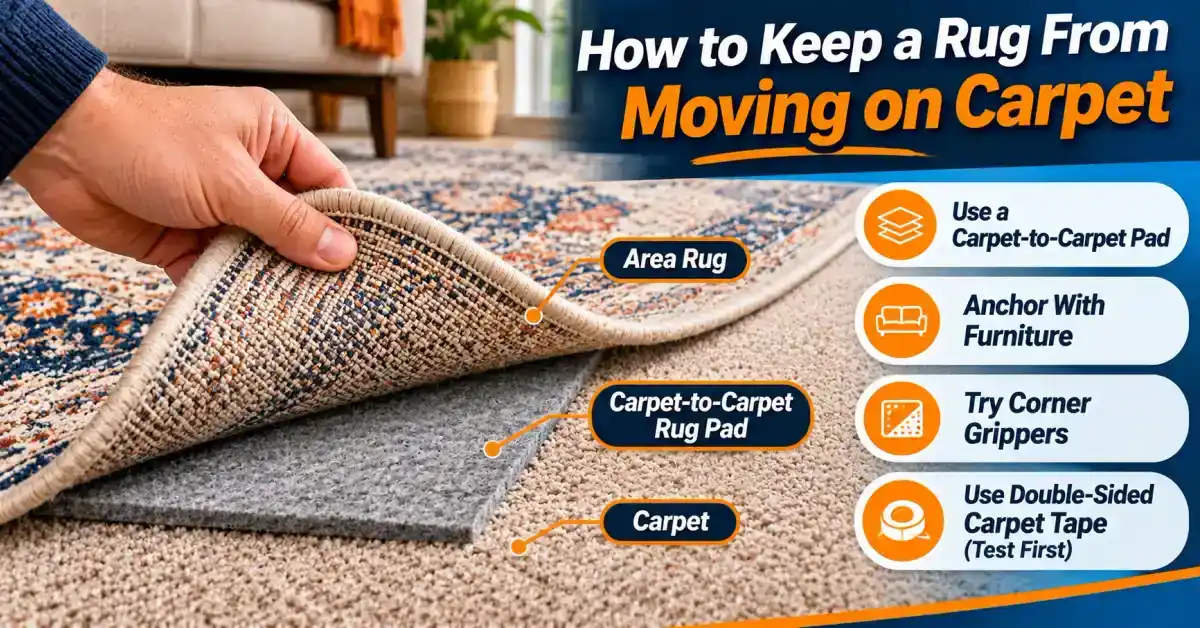
Other Ways to Hold a Rug: Furniture, Grippers and Tape
| Method | Best for | Main risk | Removable? |
|---|---|---|---|
| Heavy furniture on the edges | Living rooms and bedrooms | Leaves other edges free | Yes |
| Spiked corner grippers | Low to medium pile | Holds only the corners | Yes |
| Double-sided carpet tape | Corners in hallways | Residue or pulled fibers | Test first |
| A heavier rug | Low-traffic rooms | Still needs a pad | Yes |
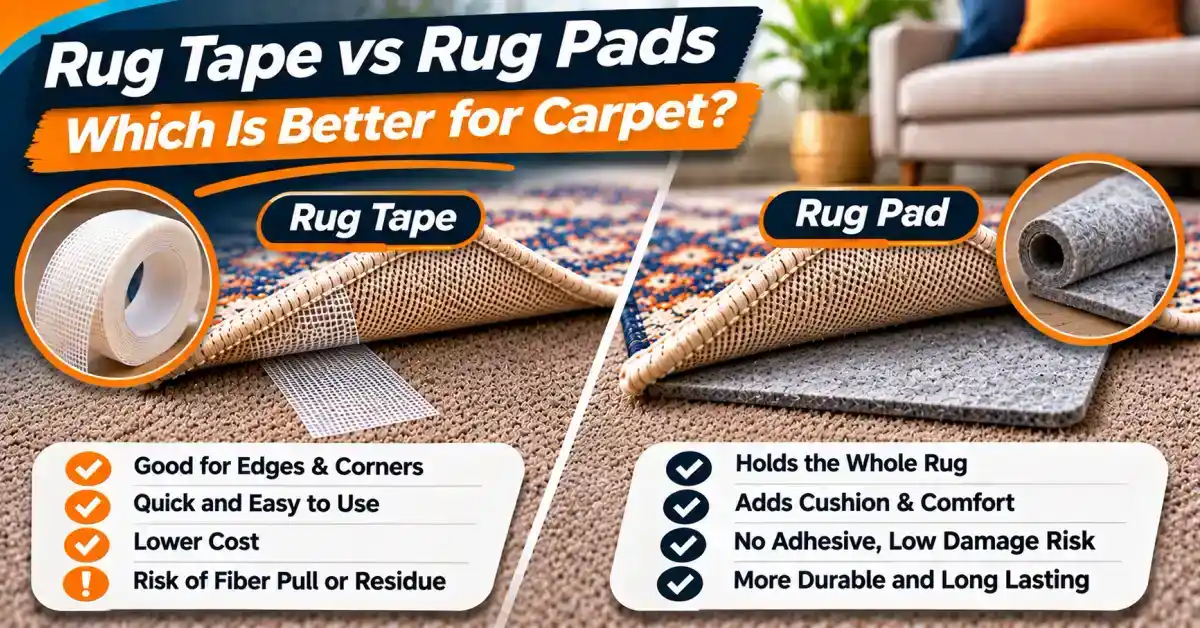
Tape deserves caution. The Spruce says rug tape works on carpet but is single use and can pull fibers when removed, while other sources warn that standard tape often fails on carpet. Test a hidden spot first, and see the separate guide to rug tape for carpet before you commit.
In a hallway or foyer, where furniture cannot anchor the rug, The Spruce advises relying on a carpet-to-carpet pad. Skip screws and nails, because they leave holes in the rug and the subfloor.
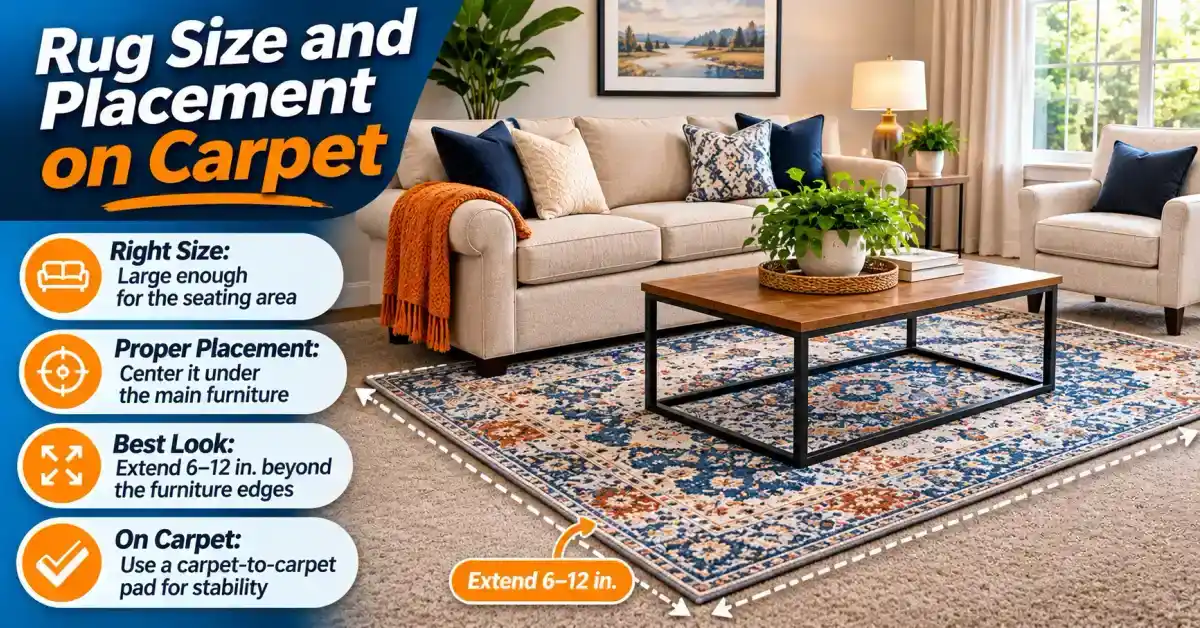
Rug Size and Placement on Carpet
Size makes a rug on carpet look intentional. A rug that is too small looks lost on a carpeted floor, and a larger rug can also make a small room feel bigger.
Living Room and Dining Room Sizes
| Room | Starting size | Placement |
|---|---|---|
| Living room | At least 5x8 feet | Extend 12 to 18 inches past the seating |
| Dining room | Large enough for the chairs | Keep chair legs on the rug when pulled out |
| Bedroom | 8x10 feet under a queen bed | See the bedroom section below |
| Home office or nook | A small accent rug | Place it under the desk chair |
Put at least the front legs of the sofa and chairs on the rug. Leave a border of carpet showing, anywhere from 6 inches to 24 inches depending on the room and your taste. The 70% rule says a rug should cover 70% of the seating area, but designers define it in different ways, so treat it as a loose guide.
Area Rug Over Carpet in Bedroom
For an area rug over carpet in a bedroom, an 8x10 rug suits a queen bed. Slide it under the bed so about one-third shows at the foot, with roughly 18 to 24 inches exposed on each side. Furniture on the rug edges adds weight and helps hold it down.
A bedside throw rug shifts easily, so add a pad and secure it so it will not wrinkle.
How to Put a Rug on Carpet in 5 Steps
- Measure the room and the furniture, then tape out the rug size on the carpet.
- Vacuum the carpet so no grit sits under the pad.
- Unroll the pad, trim it 1 inch smaller than the rug, and center it.
- Lay the rug on the pad and square up the edges and corners.
- Walk across the rug, then adjust it and add grippers or tape if any corner lifts.
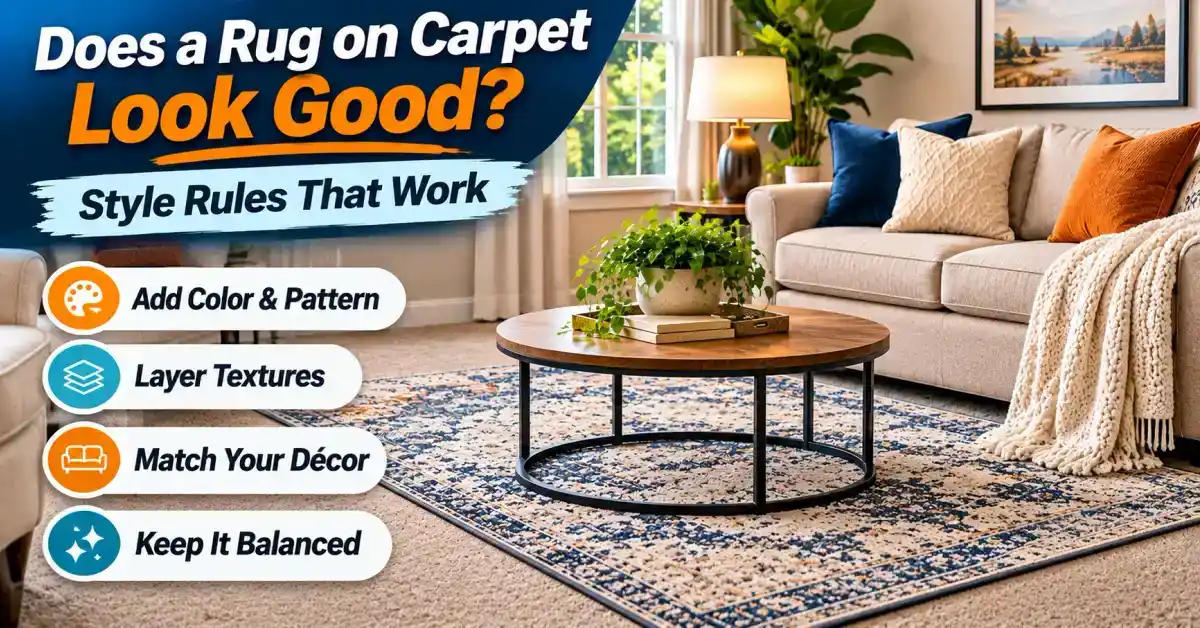
Does a Rug on Carpet Look Good? Style Rules That Work
A rug on carpet looks good when it adds contrast, fits the furniture and lies flat. The look goes wrong when a rug bunches, clashes or sits too small.
Is It Weird or Tacky to Put a Rug on Carpet?
Is it weird? Not really. Do people put rugs on carpet? Yes, it is common, and many designers recommend it. Is it normal? Yes. Is it OK? Yes, when the rug is sized well, lies flat and contrasts with the carpet. Is it tacky? Only when it is too small, wrinkled or clashing. Should you do it if you dislike the look? No, because The Spruce makes the point that your space should reflect your own taste.
Color, Pattern and How to Layer Rugs on Carpet
A patterned rug over a solid carpet is the safest combination. If both are solid, pick a complementary color or a different texture. A darker rug anchors a seating area, while a lighter rug makes the room feel more open.
For layering, start with one large, flat rug and add a smaller accent rug on top for texture. Keep the layers thin, and put the pad under the base rug.
Pictures and Ideas: Area Rugs Over Carpet in Every Room
Pictures of area rugs over carpet tend to repeat a few setups. These ideas work in most homes:
- A jute rug over neutral carpet in a living room
- A kilim or dhurrie over plush bedroom carpet
- A thin patterned rug under a dining table
- A runner over hallway carpet, held with a pad
- A small accent rug under a desk chair
- A large flatweave with a smaller rug layered on top

How to Care for a Rug and the Carpet Under It
Vacuum the rug and the carpet around it often, with the beater bar off on the rug. Lift the rug now and then to vacuum the carpet underneath, because dirt works down through the rug and pad.
Rotate the rug every few months to a year so it wears evenly. When you clean a spill on the rug, slip a folded towel between the rug and the pad so moisture does not reach the carpet.
A rug can press the pile over time, and heavy furniture can leave dents. Moving furniture a few inches and using caster cups both help.

Area Rug on Carpet FAQs
Can you put a shag rug on carpet?
+
Yes, but only on low, firm carpet. A shag rug on plush carpet can feel spongy and slide, so choose a thin rug there.
Can you put a rubber-backed rug on carpet?
+
It is risky. One rug retailer warns that rubber backing can bond to carpet and pull fibers, so use a rug without it.
Will a rug damage the carpet underneath?
+
Usually not, if you use a carpet pad and vacuum underneath. A pad cuts the friction that wears the pile.
Can you put a rug on patterned carpet?
+
Yes. Pick a solid or calm rug, since two busy patterns clash. This works on wall to wall carpet in any color.
Can you put a rug on carpet in a rental?
+
Yes. Use a pad and furniture, skip tape and screws, and photograph the carpet beforehand.
How often should you rotate a rug on carpet?
+
Sources range from every few months to once a year. Rotate whenever you notice uneven wear.
Final Thoughts on Putting a Rug on Carpet
A rug on carpet works when you match the rug to the pile, secure it with a pad made for carpet, size it to the furniture and keep it clean. Start with a flat rug, a carpet-to-carpet pad and a tape measure.
Need a carpet cleaning company you can trust? We handle residential and commercial carpet cleaning, rug cleaning, upholstery cleaning, and pet stain and odor removal —our team is ready to help.

Michael Sanders
Michael Sanders is a home care and cleaning industry writer covering carpet maintenance, flooring care, and household cleaning practices across the United States. His work focuses on practical, research-backed guidance — from stain and odor removal to deep extraction methods and indoor allergen prevention. Michael collaborates with cleaning professionals to ensure accuracy, and his writing reflects a genuine interest in helping homeowners make informed decisions about caring for their homes.