
Blog · Carpet Cleaning Guide
Rug Tape for Carpet: How to Choose a Safe Type and Use It
Rug tape for carpet works when you pick a double sided tape made for textiles, test it first, and press it onto a clean, dry surface. The wrong tape can pull carpet fibers or leave a stain, so the label matters more than the brand.
Published November 24, 202610 min read
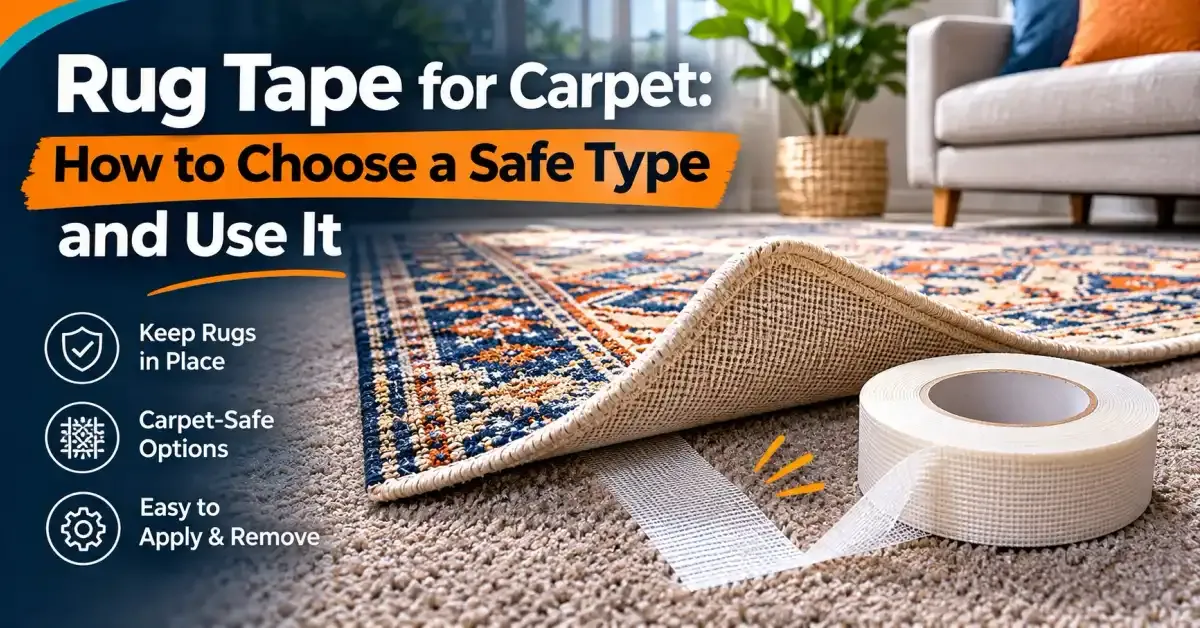
This guide shows which types suit an area rug on wall-to-wall carpet. It also covers how to apply and remove them, and when a rug pad is the safer choice. Roberts Customer Care says its standard carpet tape is meant for permanent installs. Scotch lists its anti-slip rug tape for hardwood, tile and laminate. Neither fits a sliding rug on carpet by default.
Does Rug Tape Work on Carpet?
Yes, in many cases. Rug tape for carpet is a double sided adhesive that holds an area rug in place. Carpet tape for rugs, made for textile surfaces, grips both the rug backing and the carpet fibers underneath. That stops sliding, bunching and curled corners.
Rugs creep on carpet for three common reasons. Foot traffic pushes them along. Slick or loose backings lack grip. The direction of the carpet pile can also nudge a rug the same way over time.
Pile depth matters. Tape grips fibers, not the subfloor, so it works best on low to medium pile. On shag or plush carpet the fibers are loose, and tape may not bond well. Flooring Clarity also notes that tape on top of carpet is uncommon and can pull out fibers, and it recommends a rug pad instead.
Is rug tape just double sided tape? Not quite. Many rug tapes have a cloth or fiberglass mesh core, so the tape does not tear underfoot. Ordinary double sided tape is a poor substitute because it can leave residue or rip fibers.
Key Takeaway: Rug tape works on carpet when it is double sided, made for textile surfaces and used on low to medium pile. It is a weaker choice on shag or plush carpet.
Types of Rug Tape for Carpet
Google's AI overview groups rug tape into carpet-to-floor tape, carpet-to-carpet tape and indoor/outdoor tape. Only some suit a rug on carpet. Check the surface list on the package before you compare prices.
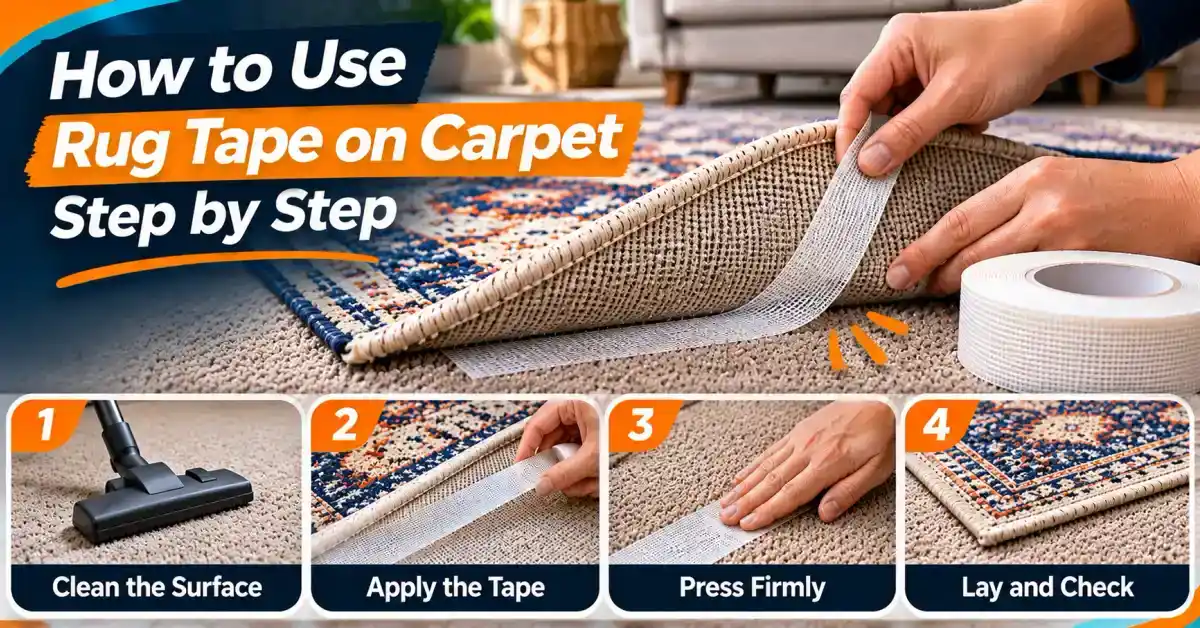
Double Sided Rug Tape for Carpet-to-Carpet Use
Double sided rug tape has adhesive on both faces. One face sticks to the rug backing, and the other grips the carpet. Many versions use a mesh or cloth core for strength, and some are sold as carpet-on-carpet tape.
Adhesive chemistry varies, and the experts disagree. RugPadUSA recommends silicone for carpet. Flooring Clarity says acrylic usually leaves less residue than rubber. XFasten says rubber adhesive can pull fibers on removal. These are brand and editorial claims, not lab results, so look for "carpet" and "removable" on the label.
Rug Gripper and Non Slip Tape
Rug gripper tape and other non slip tape mostly target hard floors. Scotch's Anti-Slip Rug Tape has adhesive on one side for the rug and an anti-slip face for the floor. Its product page lists hardwood, tile and laminate floors, indoor use only, between 50 and 105 degrees Fahrenheit.
Some silicone grippers wash clean and stick again, according to RugPadUSA. Confirm that any gripper lists carpet as a surface before you use it on carpet.
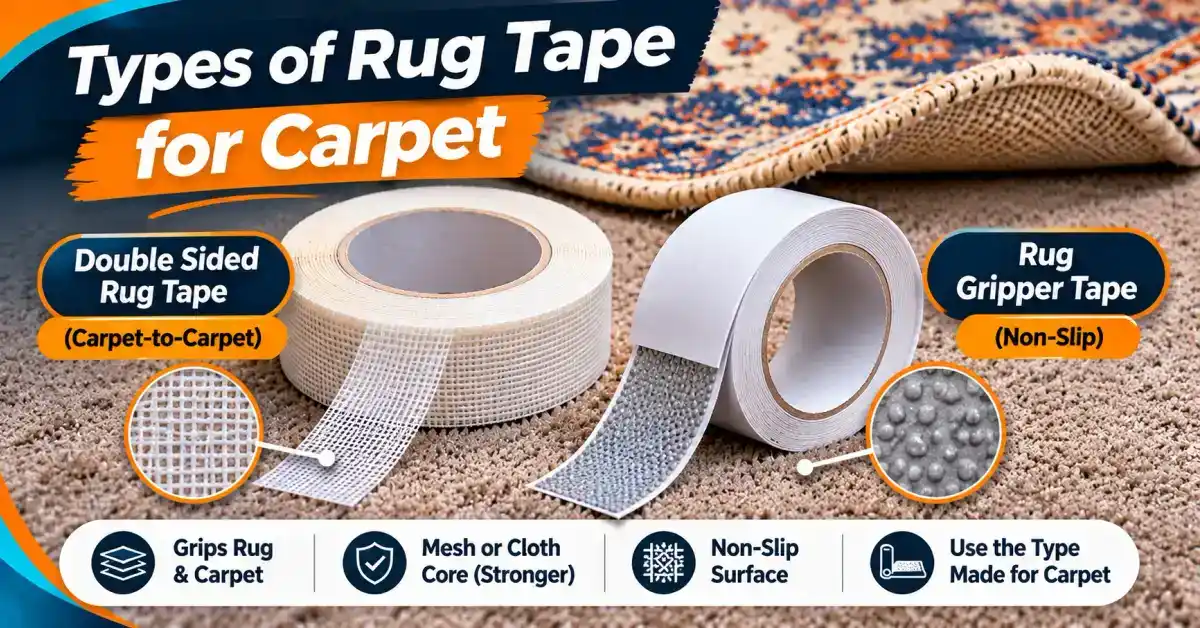
Permanent vs Removable Rug Tape: How to Avoid Carpet Damage
Permanent tape and removable rug tape are different products. Roberts Customer Care says its indoor/outdoor double sided carpet tape is meant for permanent installations of carpet. It does not recommend that tape on luxury vinyl plank. A permanent bond is the wrong goal for a rug you plan to lift and clean.
Will double sided tape damage carpet? It can. RugPadUSA says conventional double sided tape is too harsh and can rip carpet material. Zerorez warns that tape made for hard floors can pull carpet fibers on removal. Shoppers report mixed results, and one Home Depot Q&A answer described tape residue that left a dark stain on the carpet underneath.
Lower the risk in three steps:
- Choose a tape labeled removable and safe for carpet or textiles.
- Stick a short test strip in a hidden spot, such as under a sofa.
- Peel the test strip after a day and check the fibers and surface.
Key Takeaway: Permanent installation tape is not rug tape. Pick a removable, carpet-safe product, and test it on a hidden patch before you tape the whole rug.
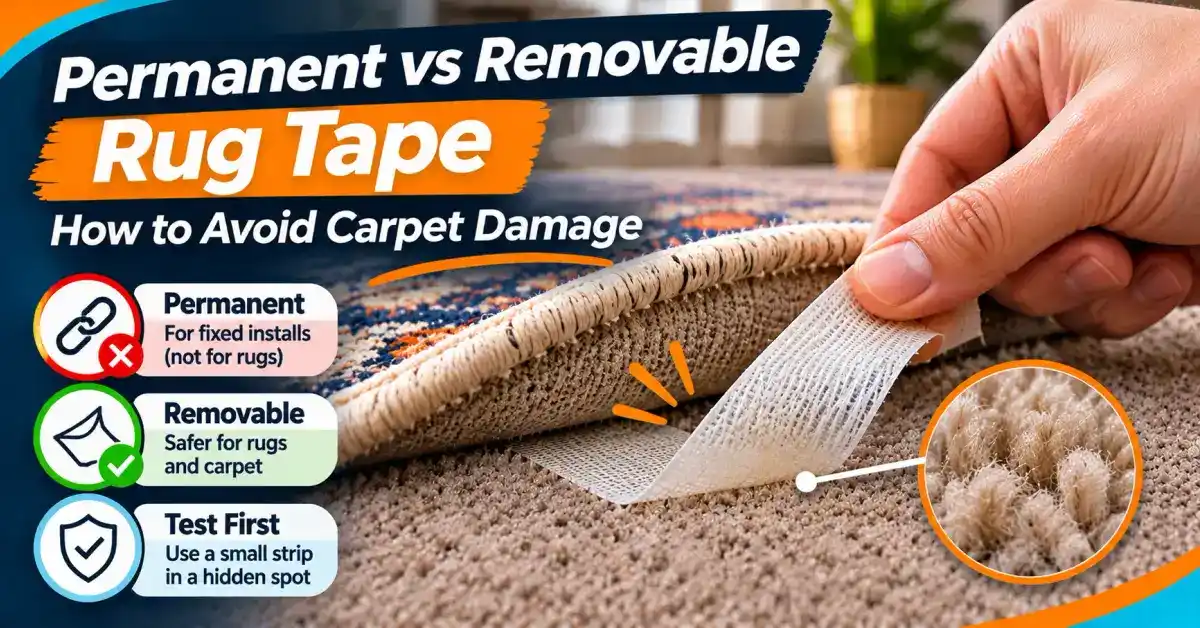
Rug Tape vs Rug Pads and Other Ways to Hold a Rug in Place
Google's own answers list a carpet-to-carpet rug pad ahead of tape. A felt and rubber pad grips the carpet, adds cushion and leaves no adhesive. RugPadUSA rates a pad as low damage risk and long lasting. It rates double sided rug tape on carpet as medium risk and shorter lived. That site sells rug pads, so weigh the bias.
| Method | Best for | Watch out for |
|---|---|---|
| Double sided rug tape | Edges and corners on low to medium pile | Fiber pull and residue |
| Carpet-to-carpet rug pad | Holding the whole rug | Higher cost |
| Spiked carpet gripper | Wall-to-wall carpet | Pick a version made for carpet |
| Hook-and-loop strips | Corners | Hooks can snag soft or shaggy carpet |
| Heavy furniture on the edges | Large rugs | Heavy pieces can dent carpet and rug |
| Non slip gripper tape | Hard floors | Confirm carpet is listed |
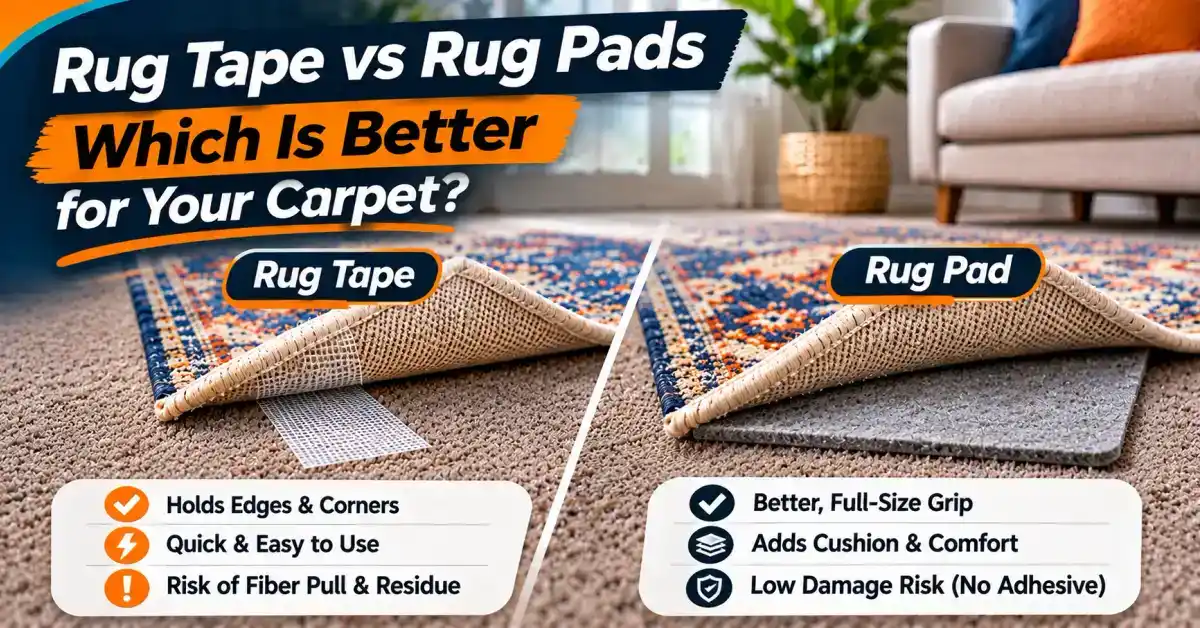
How to Use Rug Tape on Carpet Step by Step
Read the instructions on your roll first, because placement rules vary by product. These steps cover the usual process.
- Vacuum the carpet spot and wipe the rug backing, so both are clean and dry.
- Test the tape on a hidden patch, as described above.
- Cut strips and press them onto the rug underside along the edges and corners.
- Peel the liner from the exposed face of each strip.
- Set the rug in place and press firmly along every taped line.
- Check the edges after a day or two, and replace any strip that lifts.
How many strips? Zerorez advises keeping tape at the edges and corners, because tape in the middle can buckle. XFasten recommends more strips on carpet but gives no number. It also says to let the adhesive set for at least 12 hours. Follow your pack and add strips only as it says.
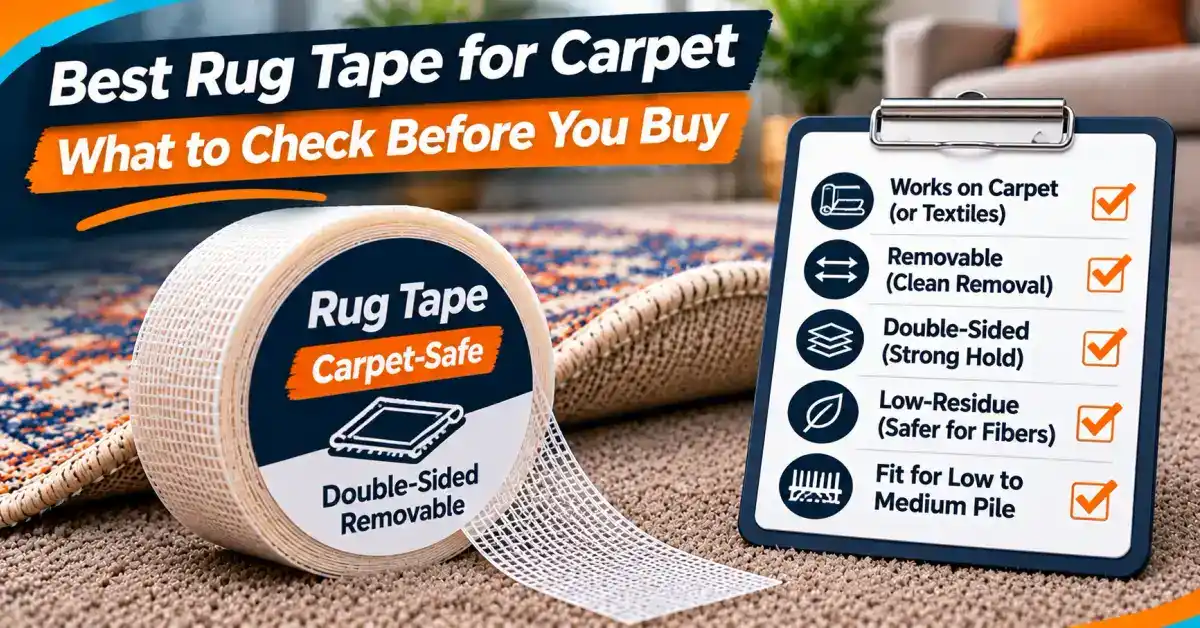
Best Rug Tape for Carpet: What to Check Before You Buy
Use this checklist when you compare products:
- Surface list: a rug to carpet tape should name carpet or textiles.
- Removable or permanent: avoid permanent installation tape for a rug you will lift.
- Width and length: listings range from 2 inch rolls, such as Scotch's 2 in. x 300 in., to 3 inch rolls.
- Indoor or outdoor: indoor only products suit most living rooms.
- Pile: expect better results on low to medium pile.
Some makers name rugs on carpet directly. XFasten, for example, says its tape is designed for textiles such as rugs and wall-to-wall carpets. That is a manufacturer claim, so still test a hidden spot.
Most mainstream rolls in US listings checked on November 13, 2026 cost about $5 to $22, with a few cheaper or pricier outliers. Examples include Duck's indoor/outdoor carpet tape at $6.99 at Target and Vevor's 2 in. x 30 yd roll at $9.90 at Lowe's. Prices change daily, so confirm before you buy.
How to Remove Rug Tape and Residue From Carpet
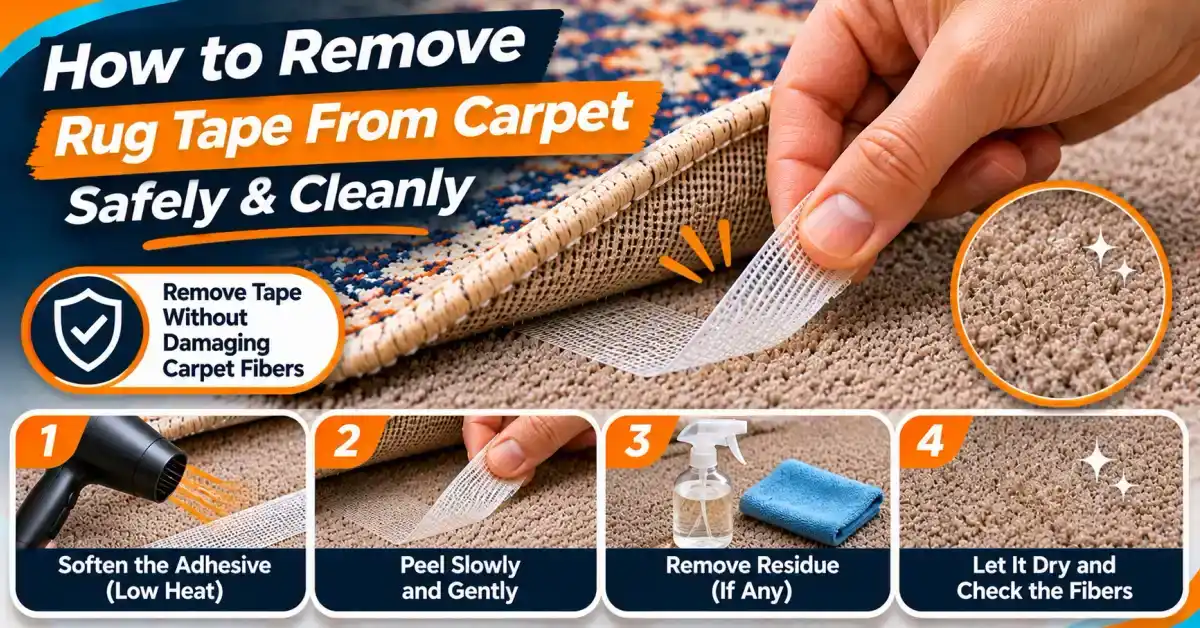
Lift the rug slowly and peel the tape at a low angle. If it resists, warm it with a hairdryer first. Dab leftover residue with warm water and dish soap. For stubborn spots, test a citrus-based solvent or isopropyl alcohol on a hidden area, then work in small amounts.
Skip kerosene and lighter fluid, even though one tape maker's guide suggests them. They are a fire risk and can harm carpet.
Special Cases: Runners, Thick Carpet, Stairs and Cold Rooms
- Runners: use the same tape rules, and press the ends firmly, because loose ends are a trip risk.
- Thick or shag carpet: choose a carpet-to-carpet rug pad first, since loose fibers give tape little to hold.
- Stairs: Roberts sells Max Grip, a permanent acrylic tape for carpet on stairs. That is installation tape, not rug tape.
- Cold rooms: Scotch lists 50 degrees Fahrenheit as the minimum operating temperature for its rug tape, so check the label for your room.
- Vinyl plank: Roberts does not recommend its standard carpet tape on luxury vinyl plank.
Rug Tape for Carpet FAQs
How long does rug tape last?
+
The adhesive wears down over time, and RugPadUSA says it will weaken eventually. Check it regularly and replace any strip that lifts at the edge.
Can you reuse rug tape?
+
Usually not. Standard adhesive tape is a one-time product. Washable silicone grippers are the exception, because RugPadUSA says water reactivates their grip.
Is there a renter-friendly way to hold a rug on carpet?
+
Start with a carpet-to-carpet rug pad, because it leaves no adhesive. If you use tape, choose a removable product, test it, and check your lease.
How do I stop rug corners from curling?
+
Press a strip of carpet-safe tape onto the underside of each corner, then press the rug down firmly. Edges and corners are where Zerorez recommends placing tape.
Is it okay to put an area rug over carpet?
+
Yes. Many homes layer an area rug over carpet, and guides from Zerorez and RugPadUSA treat creep as the main problem to solve. Match the fix to your pile with a rug pad or a removable tape.
Final Thoughts on Rug Tape for Carpet
Rug tape for carpet is a fair fix for a creeping rug on low to medium pile. The tape must be double sided, removable and made for carpet. Test a hidden spot, press down firmly and follow the pack. On shag or plush carpet, or in a rental, a carpet-to-carpet rug pad is usually the safer first choice.
Need a carpet cleaning company you can trust? We handle residential and commercial carpet cleaning, rug cleaning, upholstery cleaning, and pet stain and odor removal —our team is ready to help.

Michael Sanders
Michael Sanders is a home care and cleaning industry writer covering carpet maintenance, flooring care, and household cleaning practices across the United States. His work focuses on practical, research-backed guidance — from stain and odor removal to deep extraction methods and indoor allergen prevention. Michael collaborates with cleaning professionals to ensure accuracy, and his writing reflects a genuine interest in helping homeowners make informed decisions about caring for their homes.