
Blog · Carpet Cleaning Guide
The Right Carpet Cleaner Solution for Every Situation
Not every carpet cleaner solution works the same way, and the wrong one can hurt your machine instead of your stains.
Published November 5, 202614 min read
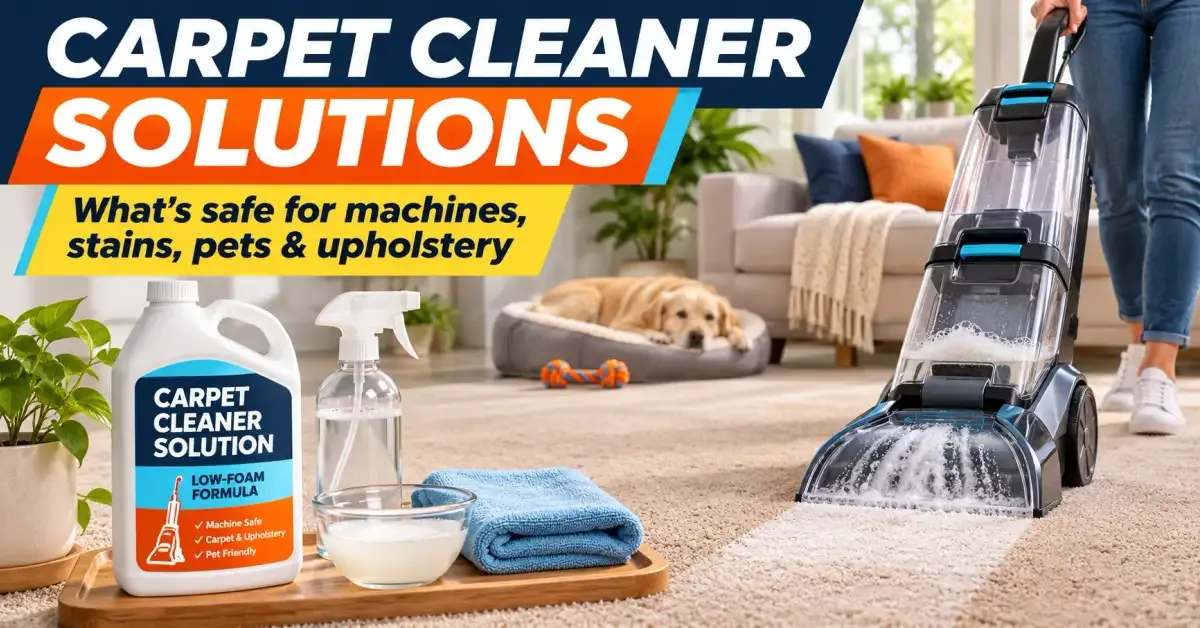
Maybe you just rented a carpet cleaner and aren't sure what to pour into the tank. Maybe you want a DIY option instead of buying a bottle. Or maybe you're trying to figure out why your carpet still smells after a full clean. This guide covers what's actually safe for a machine, which homemade recipes work without causing damage, what professional cleaners use differently, and whether you can actually disinfect a carpet naturally.
What Counts as a "Carpet Cleaner Solution"?
The term covers three different things, and mixing them up is where most confusion starts. There's the bottled, liquid, machine-specific solution sold alongside other carpet cleaning products at any store. There's homemade carpet cleaning solution made from pantry ingredients like vinegar and dish soap. And there's the commercial-grade formula a professional cleaner brings with their own equipment. All three can call themselves a "carpet cleaner solution," but they're formulated for different jobs, which is why something perfectly safe in one context can cause problems in another.
What Carpet Cleaner Solution to Put in Your Machine
Figuring out what to use in a carpet cleaning machine is trickier than it sounds, because what works in a spray bottle isn't automatically safe in a tank with a pump and sensors.
Why Dish Soap Can Damage a Carpet Cleaning Machine
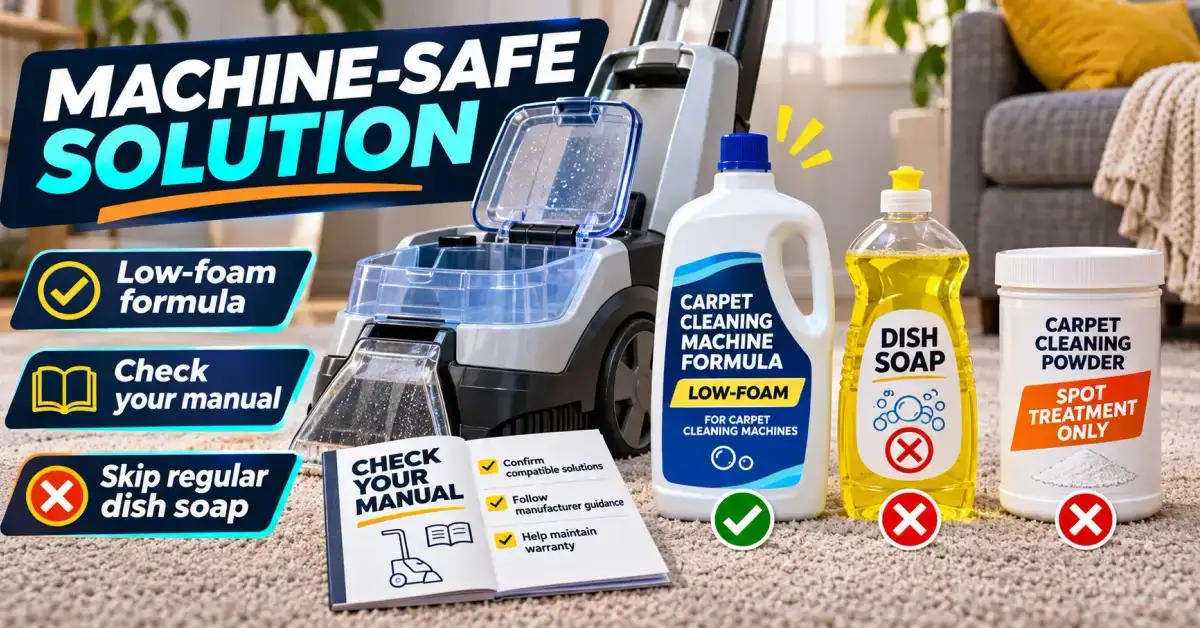
Dish soap seems like an obvious substitute because it's cheap and already in your kitchen. But most carpet cleaning machines aren't built to handle it. Dish soap foams heavily, and that foam does two things inside a machine: it fills the recovery tank faster than the suction can keep up, and it leaves a soapy film in the carpet fibers once the water dries. That film doesn't just feel sticky. It attracts new dirt faster than a carpet that was never cleaned, which is why some carpets look dirtier within weeks of a DIY wash. A small amount of low-foam dish soap, heavily diluted, won't ruin most machines. A generous squirt straight into the tank will.
Key Takeaway: Skip regular dish soap in a carpet cleaning machine. Its heavy foam strains the motor and leaves residue that attracts dirt faster than before you cleaned.
Can You Use OxiClean in a Carpet Cleaner?
Yes, but only one version of it. OxiClean makes two products people confuse constantly. The Large Area Carpet Cleaner is formulated specifically for machine use and is approved for any home-owned or rental carpet cleaner. The regular Versatile Stain Remover powder is meant for laundry and spot treatment, and using it in a machine risks the same excess-sudsing problem as dish soap. If the label doesn't say it's made for carpet machines, treat it as a spot treatment only.
Key Takeaway: OxiClean is machine-safe only in its Large Area Carpet Cleaner formula. The regular Versatile Stain Remover powder is for laundry and spot use, not for pouring into a tank.
Does the Solution Have to Match Your Machine's Brand?
Bissell and Rug Doctor both instruct owners, in their manuals, to use only their own branded solution in their machines. That's partly about performance, since their formulas are tuned to their machine's spray pattern and foam sensors, and partly about liability. Ignoring that instruction usually won't void your purchase outright, but some owners report denied warranty claims after a non-approved solution damaged internal components. If your machine is still under warranty, check the manual before experimenting. If it's an older machine you don't mind replacing, a generic low-foam solution is unlikely to cause problems.
Key Takeaway: Matching your machine's brand of solution isn't legally required, but it can affect warranty claims. Check your manual first if the machine is still covered.
Homemade Carpet Cleaning Solution Recipes
Homemade carpet cleaning solution works well for light stains and routine maintenance, as long as you keep the ratios machine-friendly. Here's how to clean at home without a bottled product, and how to adjust the mix for tougher jobs.
All-Purpose Vinegar and Dish Soap Solution
- 1 cup warm water
- 1 tablespoon white vinegar
- 1 teaspoon clear dish soap
This is the most common homemade carpet cleaner solution, and it works because vinegar's acidity breaks down mineral deposits and mild odors while dish soap lifts oily residue. Keep the soap to one teaspoon per cup if you're loading this into a machine. For hand-scrubbing with a cloth instead, you can double the soap without worrying about foam, since there's no pump to clog.
Matching the Recipe to the Stain
Not every stain responds to the same ingredients, and the wrong one can set a stain instead of lifting it.
Matching the Recipe to the Stain
| Stain type | Example | What works |
|---|---|---|
| Protein-based | Pet urine, blood, dairy | Enzyme cleaner, or vinegar and baking soda |
| Tannin-based | Coffee, wine, tea | Dish soap and hydrogen peroxide |
| Oil or grease-based | Butter, makeup, cooking oil | Dish soap alone; skip the vinegar |
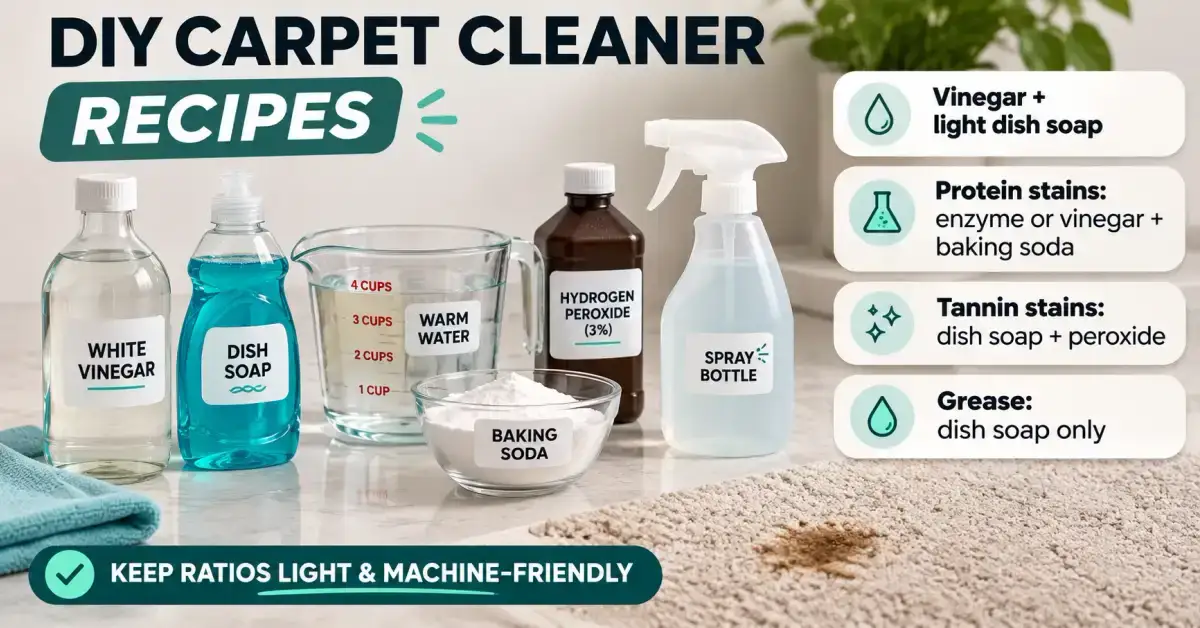
For protein stains, enzyme cleaners outperform anything homemade because they break down the actual proteins causing the smell. For grease, vinegar does nothing useful; dish soap's degreasing action does the work alone.
Non-Toxic and Pet-Safe Options
If you have kids, pets, or allergies in the house, skip ammonia and bleach entirely. A mix of castile soap, water, and a few drops of lemon essential oil cleans most light stains without harsh fumes. For pet accidents specifically, an enzyme-based cleaner still outperforms any homemade mix. Spray it on, let it sit for the time listed on the label, then blot instead of scrubbing.
How to Clean Carpet Without a Carpet Cleaner
If you're wondering what you can use as a stand-in for a machine, the answer is: you don't strictly need one. Mix one teaspoon of clear dish soap per cup of warm water, or use the vinegar recipe above. Spray it onto the stain, let it sit two to three minutes, then scrub gently with a soft-bristle brush or scrubber. A stiff brush can fray carpet fibers, so stick to something soft.
Blot with a clean, dry towel to pull up the moisture and loosened dirt, repeating until the towel comes up clean. This works for spot stains, but it won't deep-clean an entire room, since there's no suction to pull dirty water back out. For a quick refresh between deep cleans, sprinkle baking soda dry, let it sit 15 minutes, then vacuum it up.
What Professionals Use (and Why It's Different)
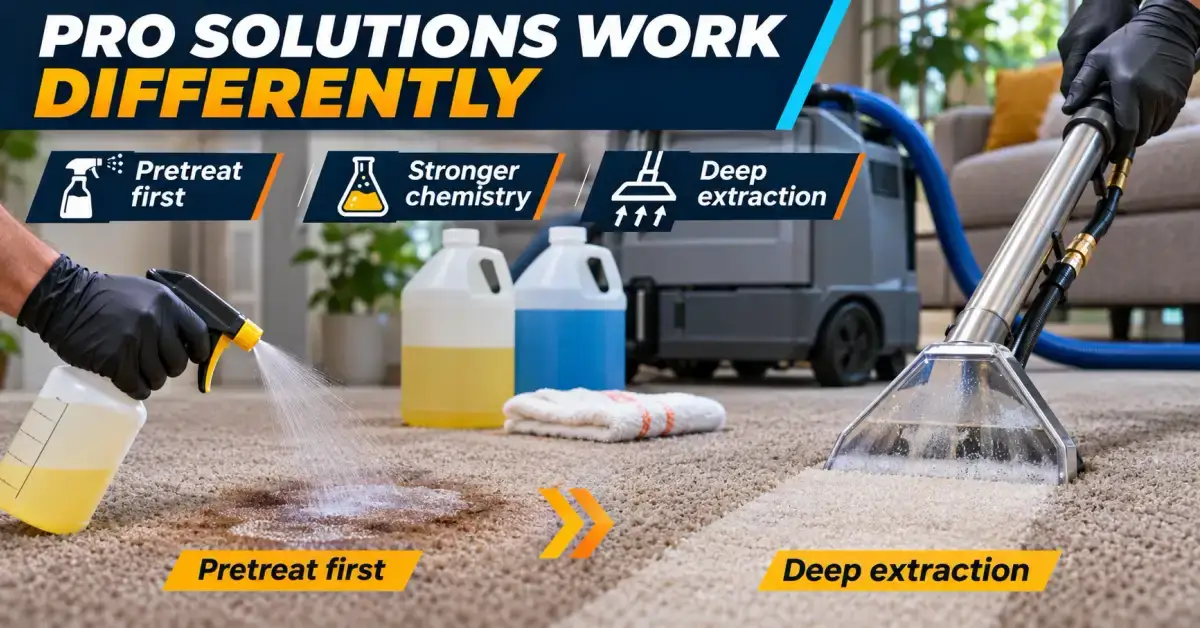
Professional carpet cleaners use commercial-grade chemicals that aren't sold in stores, which is part of why a professional cleaning often gets better results than a rental machine. Their formulas typically include stronger surfactants for grease, oxidizing agents for blood and wine stains, and enzyme-based solutions for pet messes.
Many professional products carry the Carpet and Rug Institute's Seal of Approval, a certification that tests cleaning effectiveness, pH balance, and resoiling rate. The IICRC, the Institute of Inspection, Cleaning and Restorative Certification, sets the training standards most certified cleaners are measured against. The real difference between a DIY clean and a professional one usually isn't effort. It's access to formulated chemistry you can't buy off a shelf.
What Pretreatment Is and Why It Matters
Pretreatment, sometimes called a prespray, is a cleaning solution applied before the main wash to loosen dirt and stains that plain water and agitation won't lift on their own. Professionals spray it on, let it dwell for a few minutes, then run the main extraction pass over the same area. You can do the same thing at home: spray your stain-matched solution from the table above, let it sit, then go over it with your machine or a damp cloth. Skipping this step on heavily soiled carpet is the most common reason a cleaning job looks disappointing afterward.
Key Takeaway: Pretreatment means spraying a stain-matched solution before the main clean and letting it dwell a few minutes. Skipping it on heavily soiled carpet is the most common reason results look disappointing.
Using Carpet Cleaning Solution on Upholstery
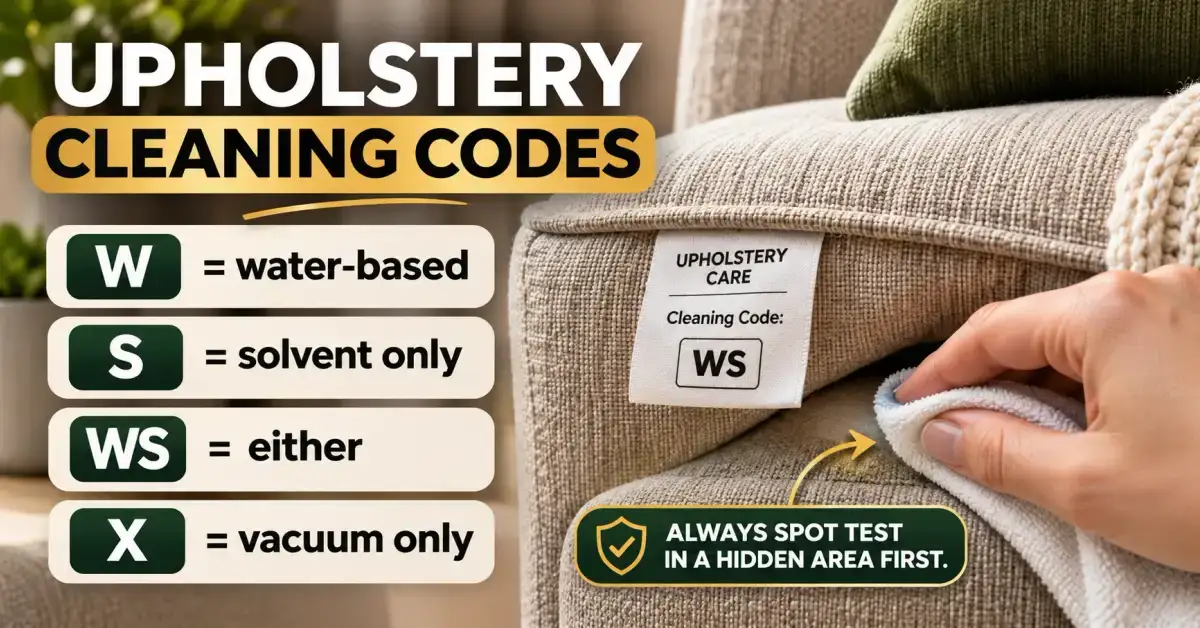
Many carpet cleaning solutions can be used on upholstery, but not all fabric is rated for it. Check the furniture's cleanability code tag, usually found under a cushion:
- W: safe for water-based cleaners
- S: solvent or dry-clean only, no liquid
- WS: either water-based or solvent cleaners
- X: vacuum only, no liquid cleaning at all
Using a liquid carpet solution on an X-coded or S-coded fabric risks staining, shrinking, or discoloring it permanently. When in doubt, test a hidden patch first and wait for it to dry before judging the result.
Can You Disinfect Carpet Naturally?
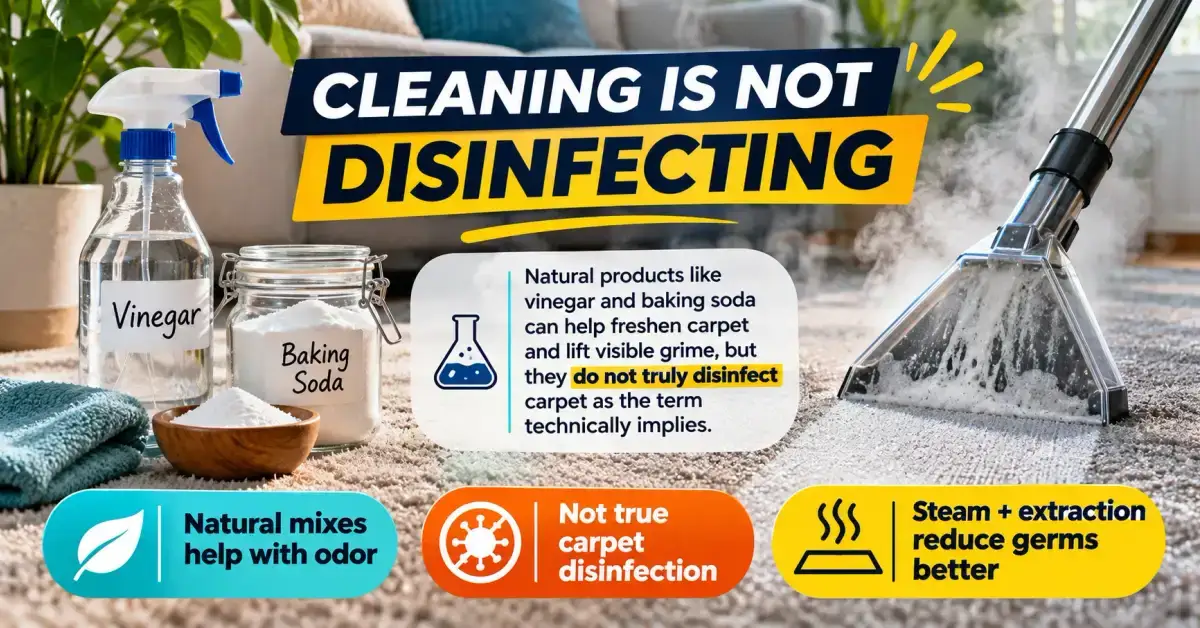
Not in the way the word "disinfect" technically means. According to the EPA's own framework, no disinfectant product, natural or chemical, can legally claim to disinfect a soft surface like carpet the same way it disinfects a hard countertop or floor. Carpet fibers trap bacteria too deep and unevenly for any spray to reach and kill it all. Vinegar, baking soda, and hydrogen peroxide can reduce odor-causing bacteria and lift visible grime, but none of them are registered disinfectants for soft surfaces, and claiming otherwise overstates what they do. If you genuinely need to reduce germs after illness or a pet accident, hot-water steam extraction gets closer to the goal than any spray, because heat does more of the real work than the ingredients in the bottle.
Key Takeaway: No product, natural or store-bought, is registered to "disinfect" carpet the way it disinfects a hard surface. Steam heat and thorough extraction reduce bacteria more reliably than any spray-on claim.
Best Carpet Cleaning Solution by Situation
There's no single best carpet cleaner solution. It depends on your machine, your carpet, and what you're actually cleaning up.
Best Carpet Cleaning Solution by Situation
| Situation | Best carpet cleaning solution |
|---|---|
| Pets in the house | Enzyme-based cleaner, store-bought or added to a vinegar base |
| Renting a machine | Whatever solution the rental company sells or approves |
| Wool or delicate carpet | pH-neutral, low-foam solution; skip vinegar and bleach |
| Large area, budget-conscious | Diluted homemade vinegar and dish soap solution |
| Deep-set or old stains | Professional cleaning, or a pretreatment step before DIY |
Frequently Asked Questions
What is the best carpet cleaning solution for machines?
+
A low-foam, machine-labeled solution is the safest default. If you're using a homemade mix, keep dish soap to about one teaspoon per cup of water to avoid oversuds.
Is homemade carpet cleaning solution safe to use in a machine?
+
Generally yes, in small, low-foam amounts. The risk isn't the vinegar or baking soda; it's using too much dish soap and overwhelming the machine's recovery tank.
Can I use laundry detergent in a carpet cleaner?
+
In small amounts, some people do this successfully, often using as little as a quarter cup per two gallons of water. It's not officially recommended by machine manufacturers, and too much causes the same foaming problem as dish soap.
Is it safe to use bleach or Lysol concentrate in a carpet cleaner?
+
Not unless your machine's manufacturer explicitly approves it. Some people report doing this, but bleach can discolor carpet, and most steam cleaner manufacturers advise against it entirely.
Is hydrogen peroxide safe to use on carpet?
+
Usually, in small diluted amounts, especially on lighter stains like wine or coffee. Test an inconspicuous spot first, since peroxide can lighten some dyed carpets.
How much carpet cleaning solution should I use per gallon of water?
+
Follow the bottle's ratio for a commercial product. For a homemade mix, scale up the one-teaspoon-per-cup ratio proportionally, which works out to roughly five tablespoons of dish soap per gallon for a machine.
Should I rinse the carpet with plain water after using a solution?
+
It helps, especially if you used more than a light amount of soap. A final pass with the machine on a water-only setting removes leftover residue that would otherwise attract dirt.
Can I use carpet cleaning solution in a wet or dry shop vac?
+
Only if the vac is specifically rated for it. Most wet/dry shop vacs aren't designed for the agitation and extraction a real carpet cleaner provides, and foaming solutions can damage the motor.
What carpet cleaning solution is safest for wool carpet?
+
A pH-neutral solution around 7 to 8, without vinegar or bleach. Wool is sensitive to strong acids and alkalis, so a mild, undyed, fragrance-free product is the safer default.
Does homemade carpet cleaning solution expire?
+
A vinegar-based mix stays usable for weeks if stored sealed. Anything with dish soap can separate or lose effectiveness after a couple of weeks, so make small batches instead of stockpiling.
The right carpet cleaner solution isn't one product. It's whichever option matches your machine, your carpet, and the mess in front of you, whether that's a store-bought formula, a stain-matched homemade mix, or knowing when to call a professional instead. Keep dish soap light in machines, match pretreatment to the stain type, and don't expect any natural recipe to disinfect the way a label might imply. Get those basics right, and the best carpet cleaning solution is simply the one you already know is safe to use.
Need a carpet cleaning company you can trust? We handle residential and commercial carpet cleaning, rug cleaning, upholstery cleaning, and pet stain and odor removal —our team is ready to help.

Michael Sanders
Michael Sanders is a home care and cleaning industry writer covering carpet maintenance, flooring care, and household cleaning practices across the United States. His work focuses on practical, research-backed guidance — from stain and odor removal to deep extraction methods and indoor allergen prevention. Michael collaborates with cleaning professionals to ensure accuracy, and his writing reflects a genuine interest in helping homeowners make informed decisions about caring for their homes.