


Blog · Pest Identification Guide
Mattress Signs of Carpet Beetles: How to Spot Them and What to Do
If you found carpet beetle larvae in bed or woke up itchy, bed bugs are probably your first worry. The two pests leave very different clues.
Published November 3, 202613 min read
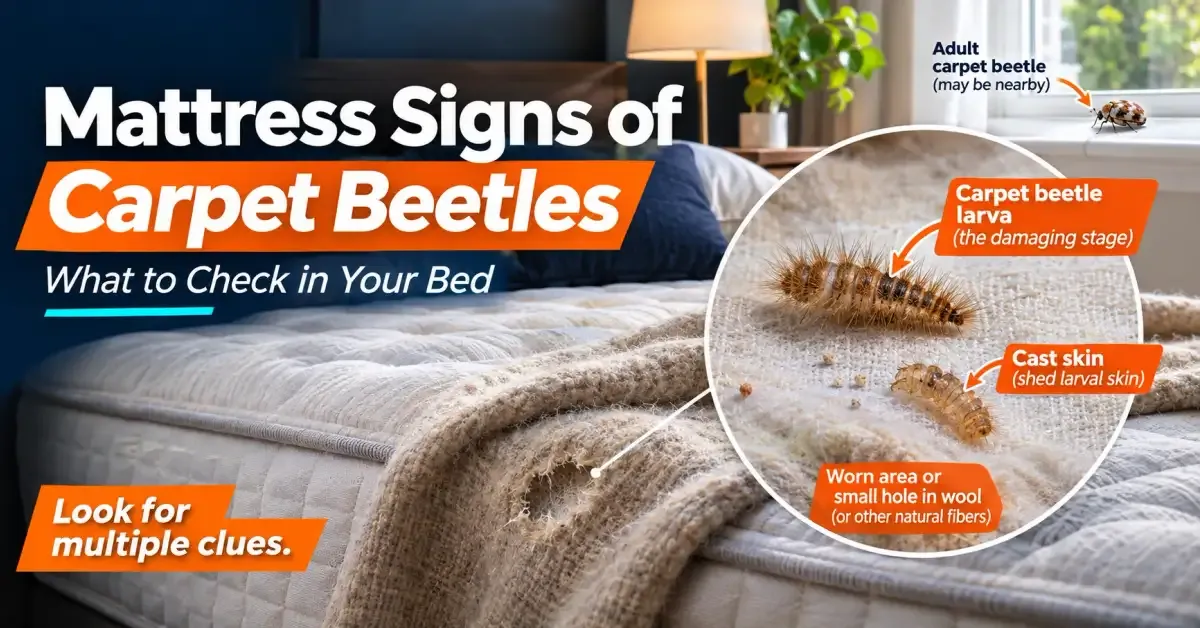
Yes, carpet beetles can turn up in a mattress, mostly as larvae that feed on lint, hair, and natural fibers. They do not bite. The most common mattress signs of carpet beetles are fuzzy larvae, brown shed skins, tiny dark droppings, and irregular holes in bedding. A 2021 CDC journal report found that carpet beetle rashes come from the larvae's tiny hairs, not from bites. This guide shows where to check your mattress, how to rule out bed bugs, and what to do tonight. It also explains when to keep the mattress and when to call a professional.
Do Carpet Beetles Live in Beds and Mattresses?
Carpet beetles can live in beds, but they rarely nest inside a mattress the way bed bugs do. Their larvae eat animal-based materials such as hair, wool, silk, feathers, and dead insects. Mississippi State University Extension notes that larvae turn up in bedrooms and sometimes in the bed itself.
A mattress offers small amounts of food. Lint, skin flakes, and pet hair collect along seams and under the bed, and wool toppers and feather pillows add more.
The adults do not feed on fabric at all, since they eat pollen outdoors. Fully grown larvae often wander off to find a spot to pupate, and that is usually when people first notice them. A larva on your sheet may have come from a rug or closet nearby.
Key Takeaway: Carpet beetle larvae can feed in and around a mattress, but the bed is usually one stop on their route.
7 Mattress Signs of Carpet Beetles to Look For
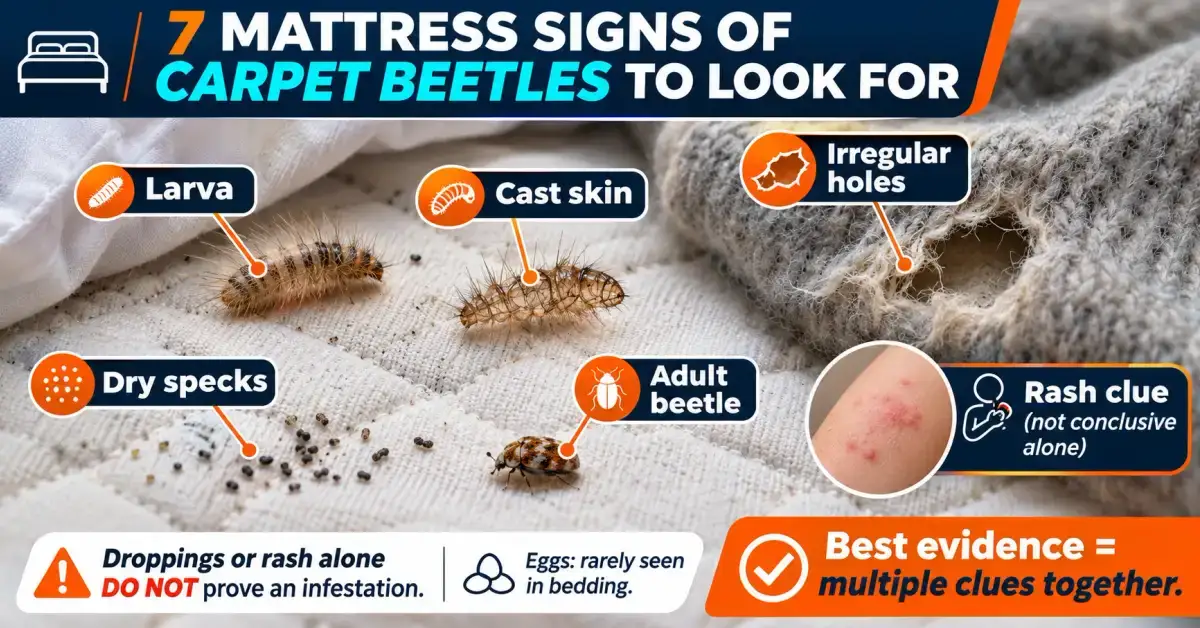
The main signs of carpet beetles in a mattress are live larvae, shed skins, droppings, irregular holes, nearby adults, an itchy rash, and rarely eggs.
Carpet Beetle Larvae in Bed
Carpet beetle larvae look like tiny fuzzy caterpillars. They measure roughly 1/8 to 5/16 inch and range from tan to dark brown. Varied carpet beetle larvae are wedge-shaped with banded hairs, while black carpet beetle larvae are carrot-shaped with a tail of long hairs. They avoid light and move slowly, so check seams, piping, and the underside of the mattress.
Shed Larval Skins
Larvae molt as they grow, leaving behind empty skins that are brown, shell-like, and bristly. UC IPM calls these skins, along with a lack of webbing, a good clue that carpet beetles are the cause. Clothes moth larvae, by contrast, leave silk webbing. Look along seams, tufts, and the bed frame, and check the folds of pillows and blankets.
Tiny Dark Droppings
Droppings look like tiny dark specks, about the size of salt grains. They collect wherever larvae feed. Bed bug stains differ because they often show up as rust-colored smears, sometimes with blood spots on sheets.
Irregular Holes and Thin Spots
Larvae chew small, uneven holes in wool blankets, feather pillows, silk, and some toppers. UC IPM says carpet beetle damage often concentrates in one area, while moth damage appears as scattered holes. Synthetic fabric is rarely harmed unless it is blended with wool or heavily soiled.
Adult Beetles Near the Bed
Adults are small, round, and black or mottled. They eat pollen, so they fly in from flowers and gather at windows. UC IPM says a few adults indoors are no cause for alarm, and they matter only if you also find larvae or skins.
Itchy Rash Without Bite Marks
Many people search for these mattress signs because of a rash. Carpet beetle rashes look like itchy red bumps, but they come from contact with larval hairs. The bed bug section below explains how to read the pattern.
Eggs: Why You Rarely See Them
Eggs are very small and laid near food such as wool, lint, and carpet. UC IPM lists about 40 eggs for the varied carpet beetle and 60 for the furniture carpet beetle. The black carpet beetle lays about 90. Eggs hatch in roughly 6 to 20 days. Because they are so hard to spot, treat larvae and skins as your real evidence.
Where to Check for Mattress Signs of Carpet Beetles
Grab a flashlight and a white sheet of paper. Larvae hide in dark, undisturbed spots, so inspect in this order and tap any debris onto the paper to see it clearly.
Where to Check for Mattress Signs of Carpet Beetles
| Where to check | What to look for | What it may mean |
|---|---|---|
| Seams and piping | Shed skins, dark specks, larvae | Larvae feeding on lint and skin flakes |
| Tufts, tags, and folds | Skins and droppings | A hidden feeding spot |
| Underside and box spring dust cover | Larvae, skins, small holes | Larvae wandered up from the floor |
| Bed frame joints and headboard gap | Larvae and skins | A hiding place |
| Pillows, blankets, and toppers on bed | Holes, thin patches in wool or feather items | Active fiber feeding |
| Rug and floor under the bed | Skins along the rug edge | A likely source |
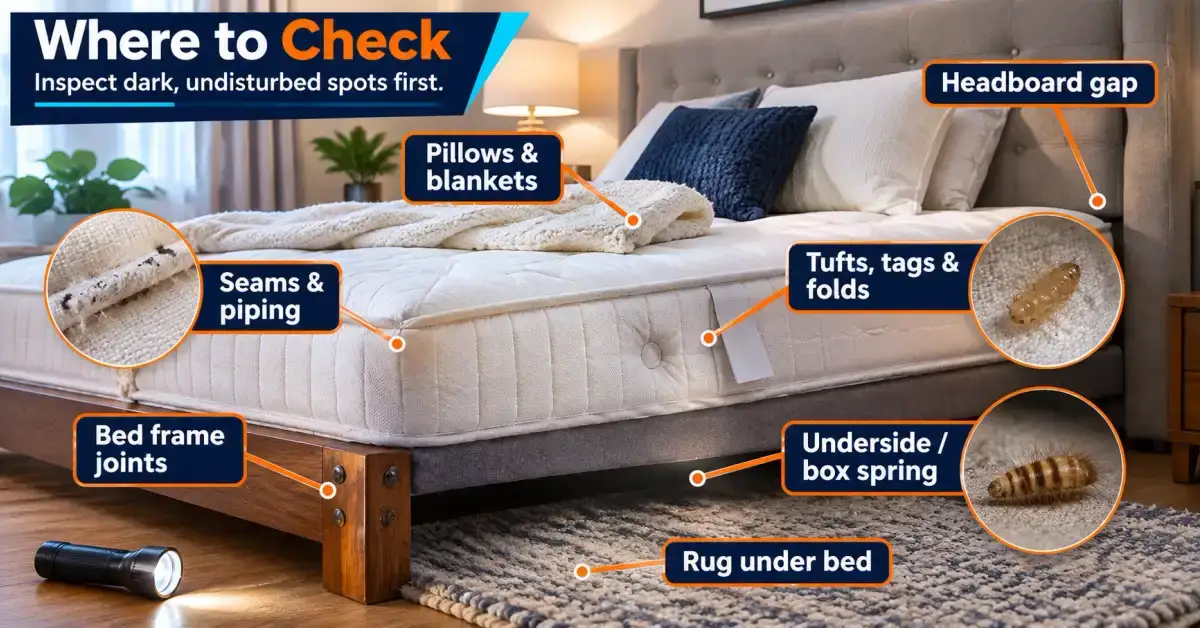
Photograph anything you find before you clean. A clear photo helps a pest professional or your local extension office confirm what you have.
Why Are Carpet Beetles in My Bed?
Carpet beetles in bed usually mean food and hiding places sit nearby. West Virginia University Extension notes that having them does not necessarily signal poor housekeeping.
Food Sources Near the Bed
Lint, pet hair, and skin flakes feed larvae, and so do wool, silk, and feather bedding. Dead insects in light fixtures and wall voids can also support a population. Larvae then wander toward the bed when they are ready to pupate.
How Carpet Beetles Get In
Adults fly in through windows or arrive on cut flowers. They also hitch a ride on secondhand clothing, upholstered furniture, and wool scraps, according to Oklahoma State University Extension. Screens and sealed gaps reduce how often adults get in.
Check the Rug and Carpet Near Your Bed
University of Kentucky Extension reports that carpet beetles often gather around rug and carpet edges. They also thrive on lint and hair under baseboards and inside floor vents. Lift the rug nearest the bed and check its underside, its edges, and the floor beneath. If skins or larvae appear there, the rug may be the source, not the mattress.
Carpet Beetles or Bed Bugs?
Bed bugs and carpet beetles share a bedroom, but not much else. This table shows the clues that separate them.
Carpet Beetles vs. Bed Bugs
| Feature | Carpet beetles | Bed bugs |
|---|---|---|
| Bites | No bites | Bite and feed on blood |
| Adult shape | Small, round, mottled or black | Flat, reddish-brown, apple-seed size |
| Young stage | Fuzzy, bristly larvae | Smooth, pale nymphs |
| Evidence on the bed | Shed skins, holes in natural fabric | Blood spots, dark stains, live bugs in seams |
| Flight | Adults can fly | Cannot fly |
| Rash pattern | Scattered bumps, often under clothing | Bites in lines or clusters on exposed skin |
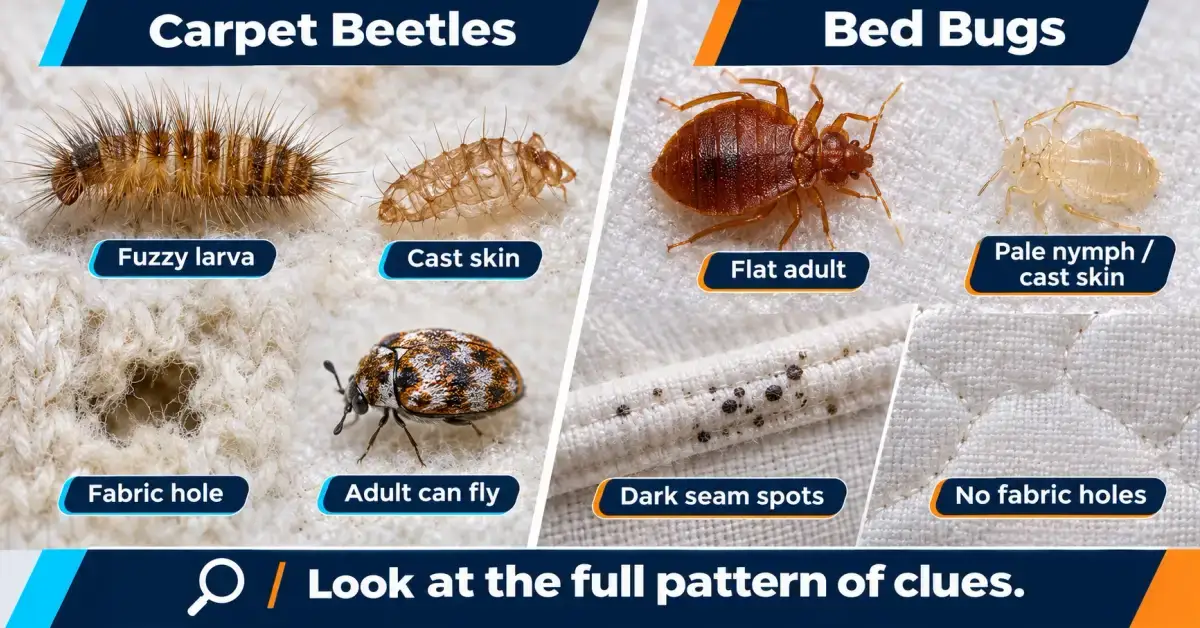
Look for live bed bugs, blood spots on sheets, and dark stains in the seams first. If a careful search finds none, carpet beetles become more likely. A pest professional can confirm which pest you have when you are unsure.
Why the Rash Is Not a Bite
Carpet beetle larvae carry two kinds of hairs, and only the fine, spear-shaped ones lodge in skin and trigger a reaction. The CDC journal report followed 11 people in 7 French households. Their itchy bumps were scattered, mostly under clothing, and investigators found no bed bugs or fleas.
Reactions also varied inside each home, and some family members had no symptoms. That pattern helps. If only one person in the bed itches, and you find no blood spots or live bugs, carpet beetles become more likely.
The study's households washed worn clothing, vacuumed mattresses, sealed the vacuum bag, and cleaned their air conditioning systems. Doctors also prescribed antihistamines and topical steroids, and no new lesions appeared a month later. See a doctor if your rash is severe or does not fade.
Key Takeaway: Carpet beetles do not bite. Their larval hairs cause scattered, itchy bumps, often under clothing, and not everyone in a home reacts.
Is It Safe to Sleep in a Bed With Carpet Beetles?
Carpet beetles do not bite, sting, or spread disease, according to West Virginia University Extension. The risk is irritation. Larval hairs can bother skin and, in heavy cases, the lungs, and the CDC report notes rare asthma cases that may link to them. If you react, wash your bedding, clean the room, and avoid sleeping in a heavily infested bed until you finish.
One Carpet Beetle in Bed or an Infestation?
One carpet beetle in bed, especially an adult near a window in spring, is common and usually not an infestation. UC IPM advises action only when larvae develop in fabrics or other items in your home.
Treat it as an infestation if you see any of these signs:
- Live larvae on more than one visit
- Brown shed skins in seams or on the frame
- Irregular holes in wool, feather, or silk items
- New adults indoors over several weeks
Pheromone-baited sticky traps can confirm progress. UC IPM suggests checking them once or twice a week, and the trap must match the species. Plain sticky traps on windowsills also catch adults.
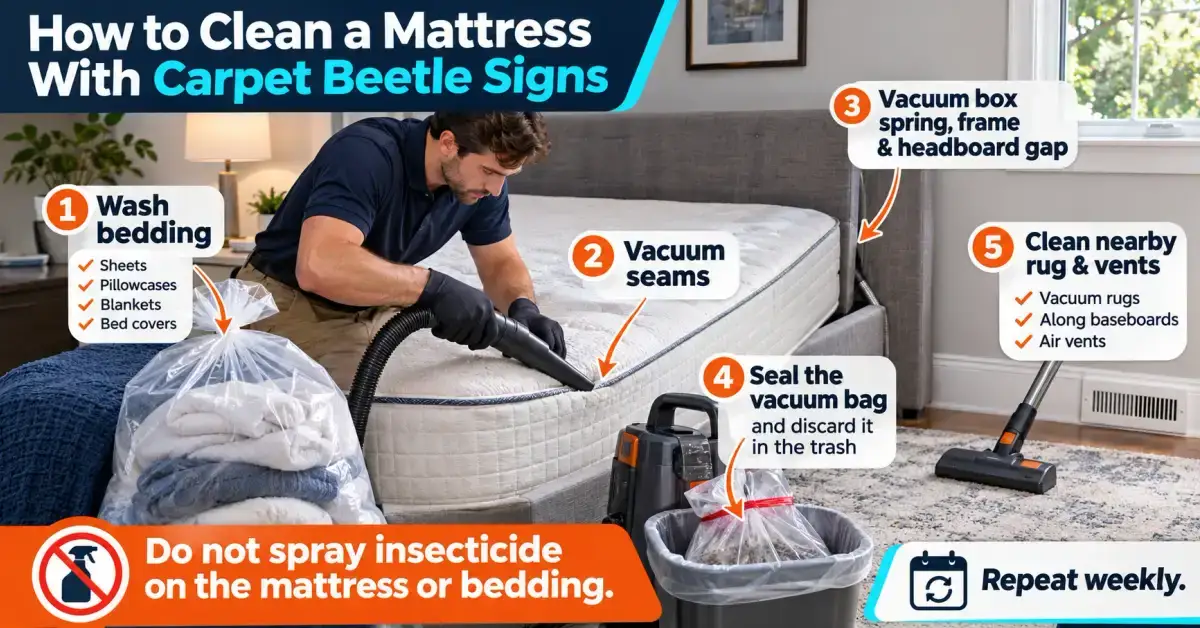
How to Clean a Mattress With Carpet Beetle Signs
Work through these steps in one session, then repeat weekly.
- Bag and wash all bedding. UC IPM says hot-water laundering kills every life stage, so follow each care label.
- Vacuum the mattress, box spring, frame, and headboard gap. Use a crevice tool on seams, piping, and tufts. A HEPA vacuum limits dust, as Mississippi State University Extension advises.
- Seal the vacuum bag in a plastic bag and discard it outside. Empty bagless canisters outdoors.
- Do not spray insecticide on the mattress or bedding. UC IPM warns against it, and surface sprays do not reach hair- or feather-stuffed fillings.
- Consider steam on the mattress surface. Some extension specialists suggest it after vacuuming, though UC IPM does not list it.
- Vacuum rugs, baseboards, and vents near the bed. Airflow can spread larval hairs, so clean the vents and air conditioning units, as the CDC study households did.
- Wear a dust mask or respirator during heavy cleanup, and recheck for skins and larvae each week.
A zippered mattress encasement is optional. It can keep dust and debris out of seams, but no official source shows that it kills carpet beetles.
Should You Replace the Mattress?
Usually not. Most mattresses recover once you remove the larvae, skins, and nearby source. This is practical guidance, not an official rule. A new mattress can pick up larvae from the same rug or closet, so fix the source first. Replace the mattress if it is damaged beyond use or you cannot clean it. For a mattress or pillow stuffed with hair or feathers, UC IPM says a licensed operator can fumigate it.
How to Keep Carpet Beetles Out of Your Bed
Vacuum weekly under the bed and along baseboards. Wash wool and feather items before storing them, and keep them in sealed containers. Remove dead insects from light fixtures, where larvae often feed unseen. Add window screens so adults cannot get in. Inspect secondhand furniture before it enters the bedroom, and wash used bedding first.
When to Call a Pest Professional
Call a professional if larvae keep returning after several weeks of cleaning, or you cannot find the source. Also call one if the problem spreads to several rooms, or if a hair-filled or feather-filled mattress cannot be cleaned. A professional can also confirm whether you have bed bugs.
Carpet Beetle FAQs
Can carpet beetles live in pillows and comforters?
+
Yes, if the filling or fabric contains feathers, down, wool, or silk. Larvae feed on these animal-based materials. Synthetic fillings are rarely a target unless they are soiled or blended with natural fibers.
Why do I suddenly have so many carpet beetles?
+
Larvae grow slowly and stay hidden, so a population can build for months before you notice it. UC IPM lists a larval stage of 220 to 630 days for the varied carpet beetle. New adults also fly in each spring.
How long does it take to get rid of carpet beetles?
+
No official timeline exists. It depends on how fast you find and remove the source. Keep cleaning weekly and check traps until you stop finding new skins or larvae.
Are carpet beetles more active in spring?
+
Adults often appear in spring, when they leave to feed on pollen and fly in through windows. Warm rooms also shorten the life cycle, according to Ohio State University Extension.
Next Steps If You Find Mattress Signs of Carpet Beetles
Start with the inspection table, photograph what you find, and wash your bedding in hot water. Vacuum the mattress and the rug nearest the bed, then seal and discard the bag. Skip sprays on bedding.
Carpet beetles in bed rarely mean you must throw the mattress away. Fix the source, keep the bedding clean, and recheck each week. If you still see mattress signs of carpet beetles after several weeks, bring in a professional. The same step makes sense if you cannot tell whether you have bed bugs.
Need a carpet cleaning company you can trust? We handle residential and commercial carpet cleaning, rug cleaning, upholstery cleaning, and pet stain and odor removal —our team is ready to help.

Michael Sanders
Michael Sanders is a home care and cleaning industry writer covering carpet maintenance, flooring care, and household cleaning practices across the United States. His work focuses on practical, research-backed guidance — from stain and odor removal to deep extraction methods and indoor allergen prevention. Michael collaborates with cleaning professionals to ensure accuracy, and his writing reflects a genuine interest in helping homeowners make informed decisions about caring for their homes.