


Blog · Pest Identification Guide
Black Carpet Beetle: How to Identify It and What to Do About It
You spot a tiny, shiny black beetle on a windowsill, or a fuzzy brown larva in a closet.
Published November 2, 202611 min read
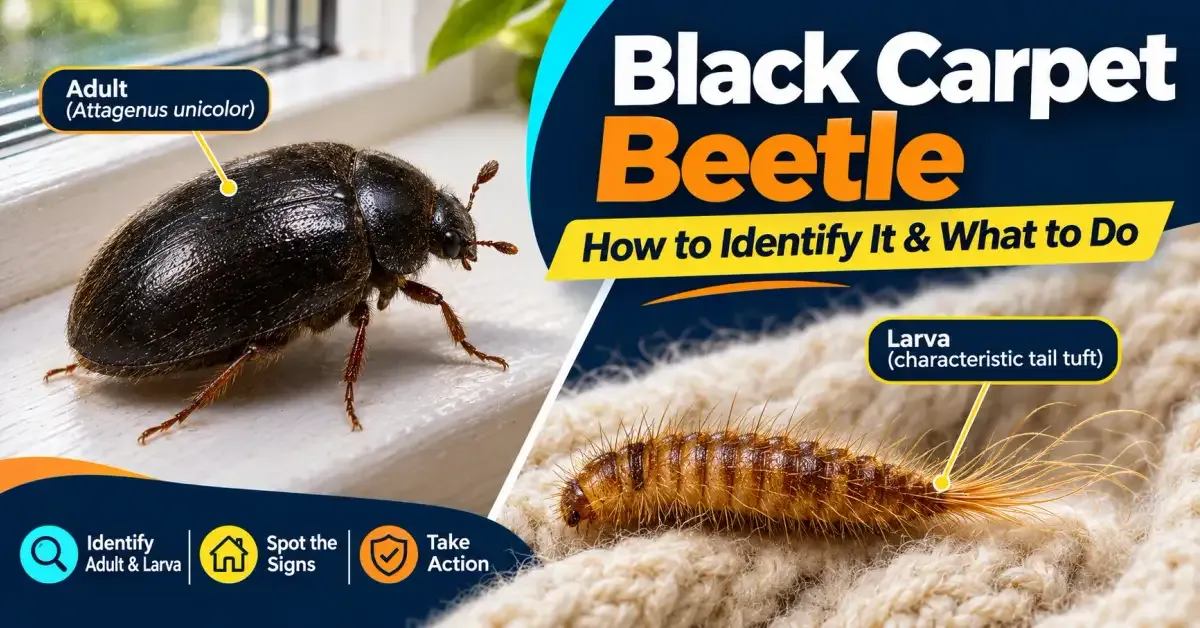
A black carpet beetle is a small pest, about 3 to 5 millimeters long, whose larvae eat wool, fur, feathers, and some stored foods, but it does not bite. Adults feed on pollen and wander in from outdoors, and one or two indoors is not unusual, says Penn State Extension. This guide shows how to identify each stage, tell it from look-alikes, spot the signs, and get rid of it.
What Is a Black Carpet Beetle?
A black carpet beetle (Attagenus unicolor) is a small, shiny black beetle whose larvae eat wool, fur, feathers, and other dried animal material. It belongs to Dermestidae, the skin beetle family. Rutgers Cooperative Extension calls it the most common carpet beetle species. Adults live outdoors much of the year and eat pollen. Larvae do the feeding indoors. They eat keratin, the protein in wool, silk, fur, feathers, and leather, plus dead insects and dried pet food. Penn State Extension adds that it also shows up in kitchen cupboards.
What Does a Black Carpet Beetle Look Like?
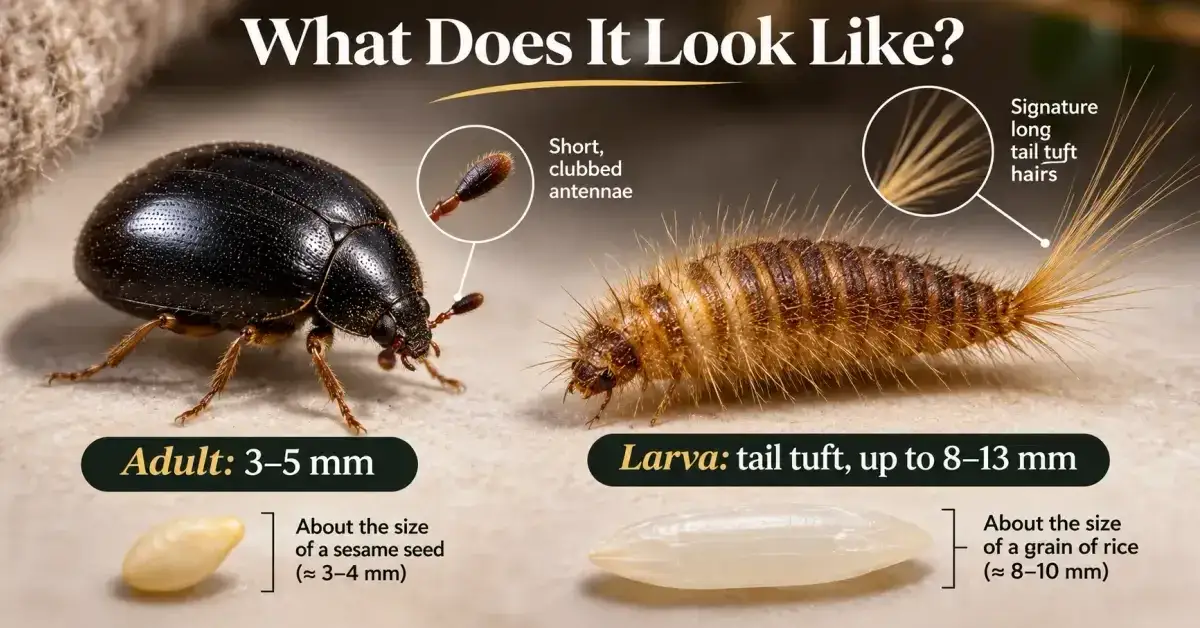
What do black carpet beetles look like? It depends on the stage. How big are black carpet beetles? Adults measure only 1/8 to 3/16 inch (3 to 5 mm), while the larvae grow longer.
Adult Black Carpet Beetle
A tiny black carpet beetle is oval and hard-shelled, with a shiny black to dark brown body and brown legs. Its short antennae end in a small club. Unlike other carpet beetles, it has no pattern of colored scales on its back. Adults fly toward light, so you often find them on windowsills in spring. They do not damage fabric, and most live only two to eight weeks. A small hand lens makes the black and brown details easier to see.
Black Carpet Beetle Size Comparison
The measurements below come from extension and reference sources. The comparisons are only rough guides.
Black Carpet Beetle Size Comparison
| Stage | Size | Rough comparison |
|---|---|---|
| Newly hatched larva | About 1 mm | A pinhead |
| Full-grown larva | About 5/16 to 1/2 inch (8 to 13 mm), depending on the source | A grain of rice or slightly longer |
| Adult | 1/8 to 3/16 inch (3 to 5 mm) | A sesame seed to a flaxseed |
Black Carpet Beetle Larvae (Baby Black Carpet Beetles)
The baby stage is the larva, and these larvae are carrot-shaped, golden to chocolate brown, and covered in short bristles. The best clue is a tuft of long, curled, golden-brown hairs at the tail end, according to Penn State Extension. The actual size of a baby black carpet beetle is about 1 mm at hatching, so you rarely notice it until it grows. Larvae avoid light and hide in dark, undisturbed spots, such as closets, baseboards, and under furniture. They molt several times and leave bristly shed skins behind.
Key Takeaway: A baby black carpet beetle is a golden-brown, carrot-shaped larva with a tail tuft, and it does all the damage. Adults are tiny, shiny, and harmless to fabric.
Black Carpet Beetle Eggs and Pupae
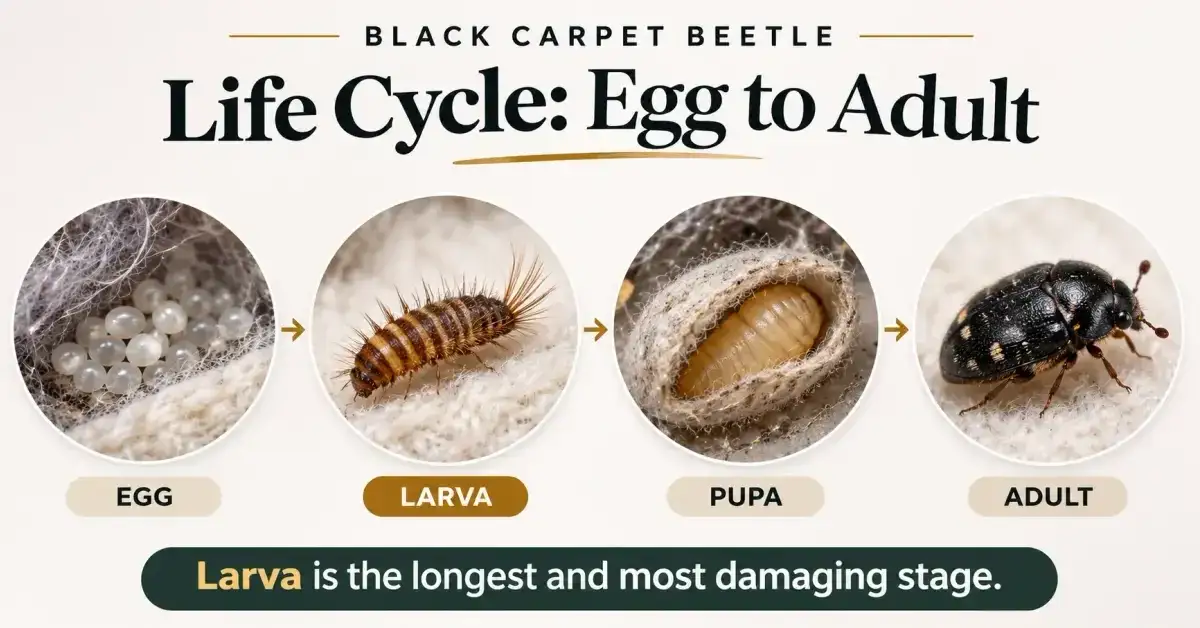
The eggs are small and pearly white. Females lay them in lint along baseboards, in furnace ductwork, and on stored woolens, where hatching larvae will find food (Penn State Extension). Eggs hatch in about one to two weeks. A larva then pupates in a hidden spot and becomes an adult in roughly 6 to 24 days, so you will rarely see either stage.
Black Carpet Beetle vs. Look-Alikes
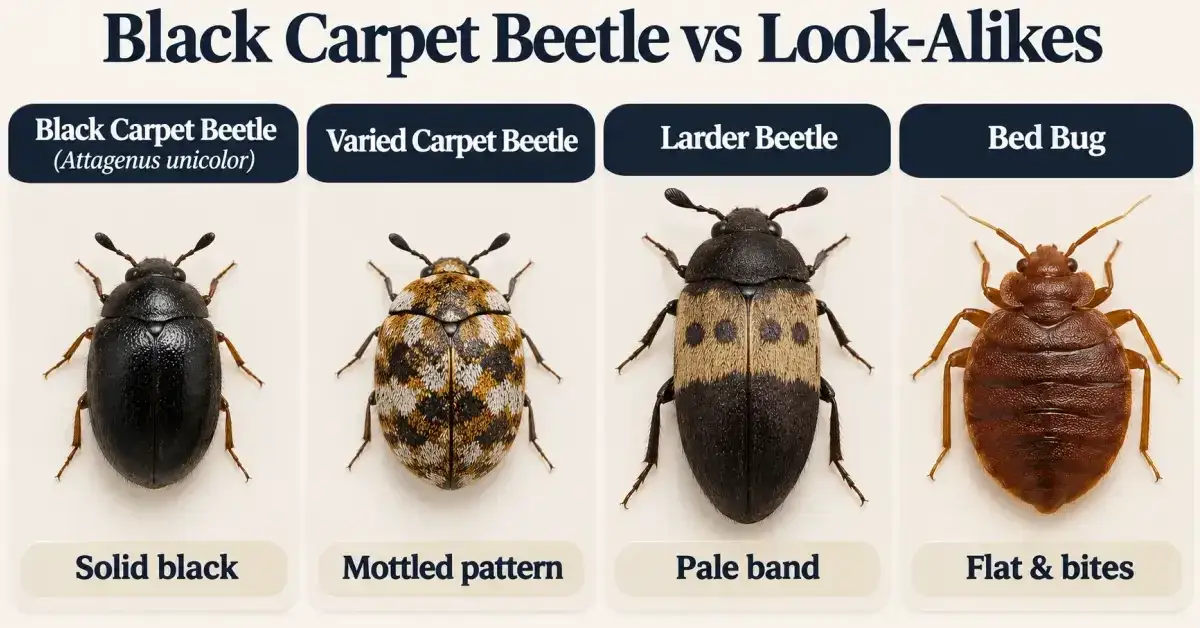
Several small beetles resemble this species, and bed bugs cause the most worry. Compare your find with pictures from extension sources such as Penn State and UC IPM, then use this table.
Black Carpet Beetle vs. Look-Alikes
| Insect | Size | Look | Key clue |
|---|---|---|---|
| Black carpet beetle | 3 to 5 mm | Shiny black to dark brown, brown legs | No pattern; larva has a tail tuft |
| Varied carpet beetle | About 1/10 inch | Mottled white, brown, and yellow scales | Patterned back |
| Furniture carpet beetle | About 1/8 inch | Black, white, yellow, and orange scales | Patterned back |
| Banded black carpet beetle | 3.6 to 5.8 mm | Close relative, named for its bands | Same genus, similar size |
| Larder beetle | About 1/4 to 1/3 inch | Yellow band with dark spots on the wing covers | Band across the back |
| Bed bug | About 1/4 inch | Flat, reddish brown | Feeds on blood and bites |
Black and White or Banded Beetles
A black and white beetle is usually a varied, furniture, or common carpet beetle, not this species. A banded one may be the banded black carpet beetle (Attagenus fasciatus), a close relative, or a larder beetle. Check the back for a pattern.
Black Carpet Beetle vs. Bed Bug
Bed bugs are flat and feed on blood, while a carpet beetle is rounder, flies, and never bites. Check the evidence instead of guessing. Bed bugs leave dark fecal spots and blood stains around mattress seams, while carpet beetles leave irregular holes in natural fabrics and bristly larval skins.
Black Carpet Beetle Life Cycle: Egg to Adult
These beetles go through four stages: egg, larva, pupa, and adult. A female lays roughly 40 to 115 eggs, depending on the source. UC IPM lists about 90, while Penn State lists 42 to 114 with an average near 50.
The larval stage is by far the longest. UC IPM puts it at 166 to 330 days, and Penn State at 258 to 639 days. Temperature, food quality, and humidity change the length, and a U.S. military public health fact sheet reports up to three years. Larvae molt 5 to 11 times, says Penn State, and often overwinter in this stage.
Adults live about two to eight weeks, just long enough to mate and lay eggs. Oklahoma State Extension says this species usually has only one generation per year.
Key Takeaway: Egg to adult takes months to more than a year. The larval stage is the longest and the only one that damages belongings.
Where Black Carpet Beetles Come From and Hide in Your House
Why are black carpet beetles in your house? They rarely start there. They arrive from outside or ride in on items you bring home.
How They Get Inside
Adults are drawn to flowers, and in spring they can fly through open doors and windows (Penn State Extension). Cut flowers, old woolens and carpeting, secondhand furniture, and dried dog food can also carry them in. Birds and other animals sometimes die in chimneys, and their carcasses feed larvae. Bird, wasp, and rodent nests are other hidden sources, according to UF/IFAS.
Where They Hide, Including Vents and Ducts
Larvae look for dark, quiet places with lint, hair, and food debris. University of Maryland Extension says they usually sit along baseboards, under large furniture, or in little-used drawers and storage areas. Penn State Extension says females lay eggs in lint around baseboards and in hot-air furnace ductwork. Rutgers advises inspecting heat ducts and cold-air return ducts. Shine a flashlight into vent openings and nearby lint. In the kitchen, check dried pet food, grains, and spices.
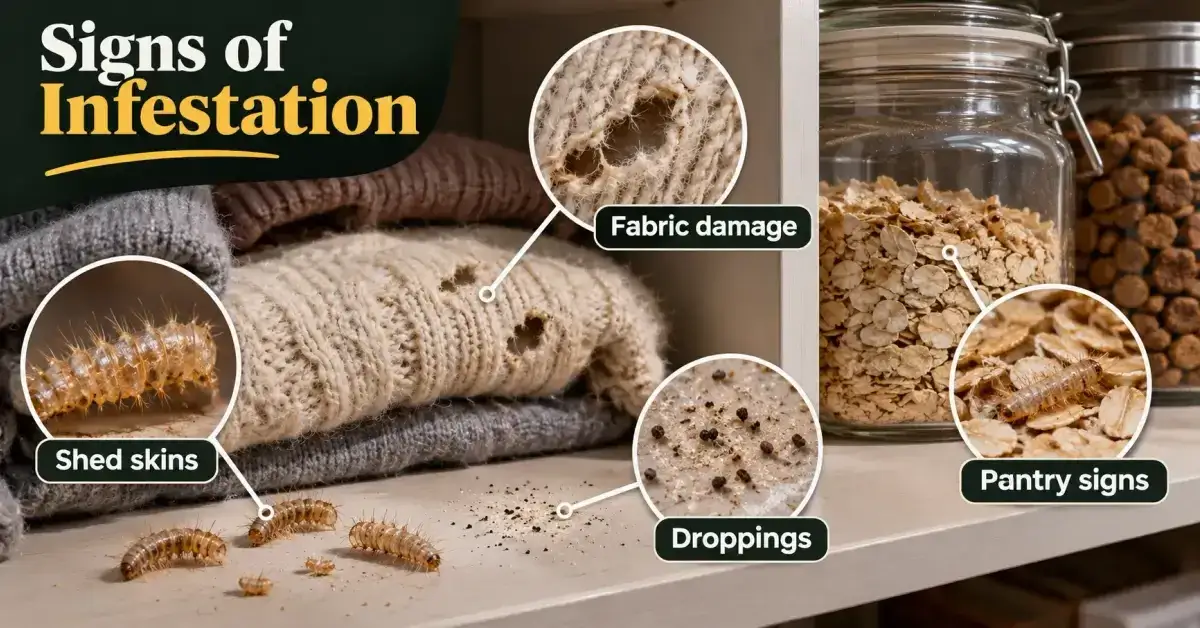
Signs of Black Carpet Beetles: Droppings, Shed Skins and Damage
Larvae stay hidden, so evidence is easier to find than the insects. Look for these signs:
- Shed skins: light brown, bristly, hollow casings left behind each time a larva molts. They are often the first clue, and carpet beetles leave no webbing.
- Droppings: tiny fecal pellets about the size of a grain of salt, according to UF/IFAS, usually near damaged items.
- Irregular holes in wool, fur, silk, or feathers, often in one concentrated spot.
- Adults on windowsills in spring, and wandering larvae in late winter and early spring.
- Contaminated pantry food, such as flour or cereal with shed skins and droppings.
Finding more than one sign means it is time to check storage areas, vents, and pantry shelves.
Are Black Carpet Beetles Harmful?
They harm belongings far more than people, but the larvae can irritate sensitive skin.
Do Black Carpet Beetles Bite?
No. WebMD explains that carpet beetles do not bite living things. The itchy welts some people get come from an allergic reaction to the larvae's hairs. Not everyone reacts, so one family member may itch while another does not. Penn State Extension notes that dermatologists have reported carpet beetle dermatitis cases since 1948. Over-the-counter antihistamines or anti-itch cream can help, and a doctor can prescribe stronger options.
Damage to Fabrics and Stored Food
Larvae damage wool, silk, fur, feathers, leather, and pet hair. Oklahoma State Extension adds that cotton, linen, and rayon are at risk mainly when stained with spilled food or body waste. The beetle also infests stored grains, flour, cereals, spices, and dried pet food. In California and other dry regions, UC IPM calls it a more serious pest of stored products than of fabrics.
Key Takeaway: Black carpet beetles do not bite. Larvae damage animal fibers and dried foods, and their hairs can cause an allergic rash in some people.
How to Get Rid of Black Carpet Beetles
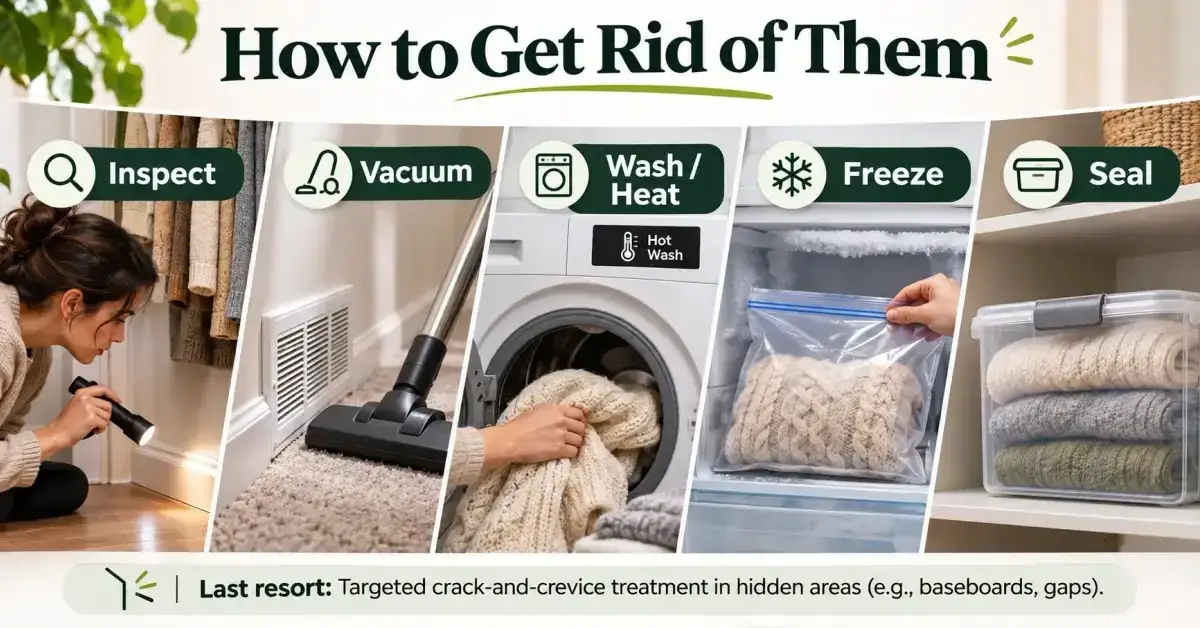
To get rid of black carpet beetle larvae, find what they are eating, then clean it out. Chemicals work best as a last step.
Steps That Work
- Find the source. Inspect closets, baseboards, vents, attics, and pantry shelves. Remove dead insects, nests, lint, and old pet food.
- Vacuum baseboards, carpet edges, vents, and furniture. Discard the bag right away.
- Wash fabrics in hot water and dry them on high heat, or dry-clean them.
- Seal items that cannot be washed in plastic bags and freeze them for two weeks.
- Seal gaps and store off-season woolens in airtight containers.
If larvae persist, Penn State Extension suggests a dry desiccant dust, such as diatomaceous earth, in cracks, or a labeled pyrethroid spray in crevices. Follow the label, and call a licensed pest professional if the problem keeps returning.
What Does Not Work
Rutgers Extension says aerosol bombs rarely reach hidden larvae, and red cedar chests do not repel carpet beetles.
Black Carpet Beetle FAQs
Should I be worried if I find one tiny black carpet beetle or a few larvae?
+
Not usually. Penn State says one or two adults are not unusual. Larvae mean food is nearby, so check closets, vents, and pantry shelves.
How long do black carpet beetles live?
+
Adults live about two to eight weeks. The larval stage lasts months, so the full cycle can take a year or more.
Do black carpet beetles fly?
+
Yes, adults fly toward light, which is why they gather on windowsills.
Is a black and white or banded beetle a black carpet beetle?
+
Usually not. Black and white points to a varied or furniture carpet beetle. A banded one may be the banded black carpet beetle or a larder beetle.
Do black carpet beetles get into pantry food?
+
Yes, larvae infest grains, flour, cereals, spices, and dried pet food, especially in dry regions, according to UC IPM.
Does washing, freezing, or vacuuming kill carpet beetles?
+
Hot washing, high-heat drying, and two weeks in the freezer kill them. Vacuuming removes eggs, larvae, and skins.
Do black carpet beetles eat synthetic fabric?
+
UC IPM says larvae do not feed on synthetic fibers, though a few other sources report some feeding.
What should I do if I find larvae near my bed?
+
Vacuum the area, wash bedding in hot water, and check nearby baseboards and closets for the source.
Final Thoughts on Black Carpet Beetles
A black carpet beetle looks alarming, but it is a manageable pest. Identify it by its solid black adult and its tail-tufted larva, remember that it does not bite, and find the food source. Vacuum, wash, freeze, and seal gaps before you try chemicals. If larvae keep returning, check ducts, attics, and pantry shelves.
Need a carpet cleaning company you can trust? We handle residential and commercial carpet cleaning, rug cleaning, upholstery cleaning, and pet stain and odor removal —our team is ready to help.

Michael Sanders
Michael Sanders is a home care and cleaning industry writer covering carpet maintenance, flooring care, and household cleaning practices across the United States. His work focuses on practical, research-backed guidance — from stain and odor removal to deep extraction methods and indoor allergen prevention. Michael collaborates with cleaning professionals to ensure accuracy, and his writing reflects a genuine interest in helping homeowners make informed decisions about caring for their homes.