


Blog · Pest Identification Guide
Signs of Carpet Beetles: How to Spot Them in Your Home
Maybe you found a hole in a sweater, odd specks under a rug, or itchy skin and worry about bed bugs. This guide shows what each sign looks like and where to find it.
Published November 3, 202612 min read
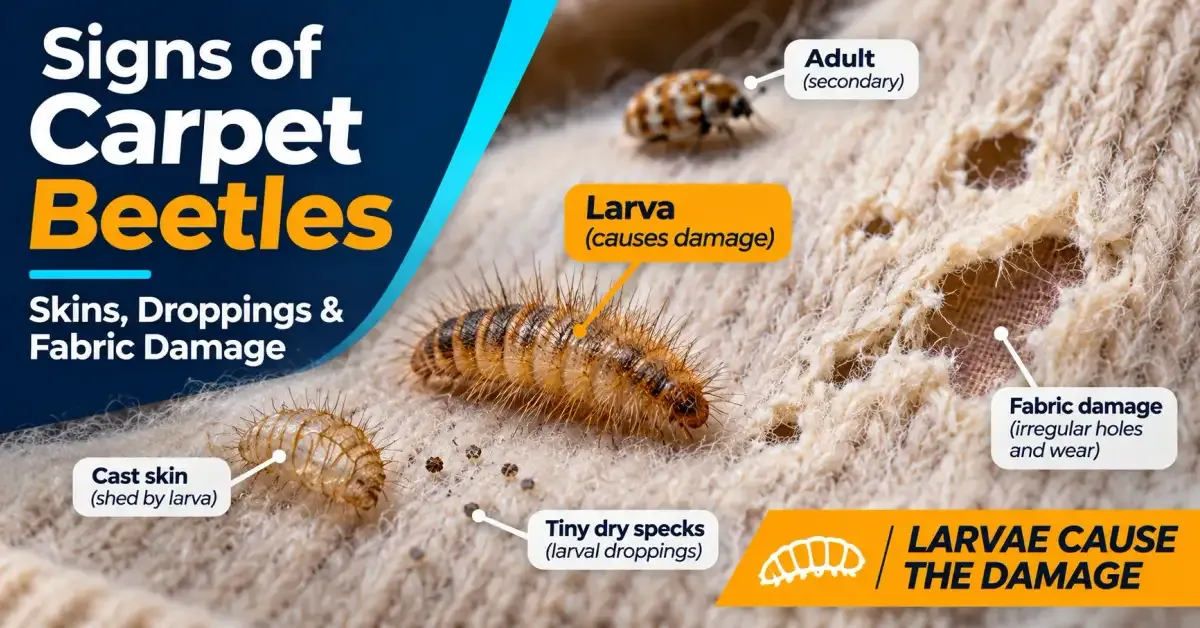
The clearest signs of carpet beetles are shed skins, tiny dry specks, and irregular grazed holes in wool or other natural fabric. These clues matter more than the small beetles you may spot near a window. Adults feed on pollen outdoors, while the fuzzy larvae do the damage and hide in dark places, according to UC IPM. This guide shows what each sign looks like and where to find it. It also explains how to tell carpet beetles from clothes moths and bed bugs.
Signs of Carpet Beetles at a Glance
Use this table to match what you found with the most likely cause. Signs of carpet beetle infestation vary in strength, so look for more than one.
Signs of Carpet Beetles at a Glance
| Sign | What it looks like | Where to look | How strong a sign |
|---|---|---|---|
| Shed skins | Hollow, bristly brown husks | Under rugs, in drawers, along baseboards | Strong |
| Droppings | Dry black or brown specks, about the size of a grain of salt | Near fabric the larvae fed on | Strong |
| Holes in clothes | Irregular holes or one grazed patch | Wool, silk, and fur items | Strong when grouped |
| Bare patches on rugs and furniture | Thin pile, slits, bald spots | Rug undersides, under heavy furniture | Strong |
| Fuzzy larvae | Bristly, striped brown, about 1/8 to 1/4 inch | Closets, drawers, under furniture | Strong |
| Adult beetles | Tiny, round, black or speckled | Windowsills and light fixtures | Weak alone |
| Itchy rash | Small red bumps with no clear bite pattern | Skin that touched infested fabric | Weak, many causes |
The Most Common Signs of Carpet Beetles
Larvae leave most of the evidence, so you often find the signs before you find a live insect.
Shed Skins and Casings
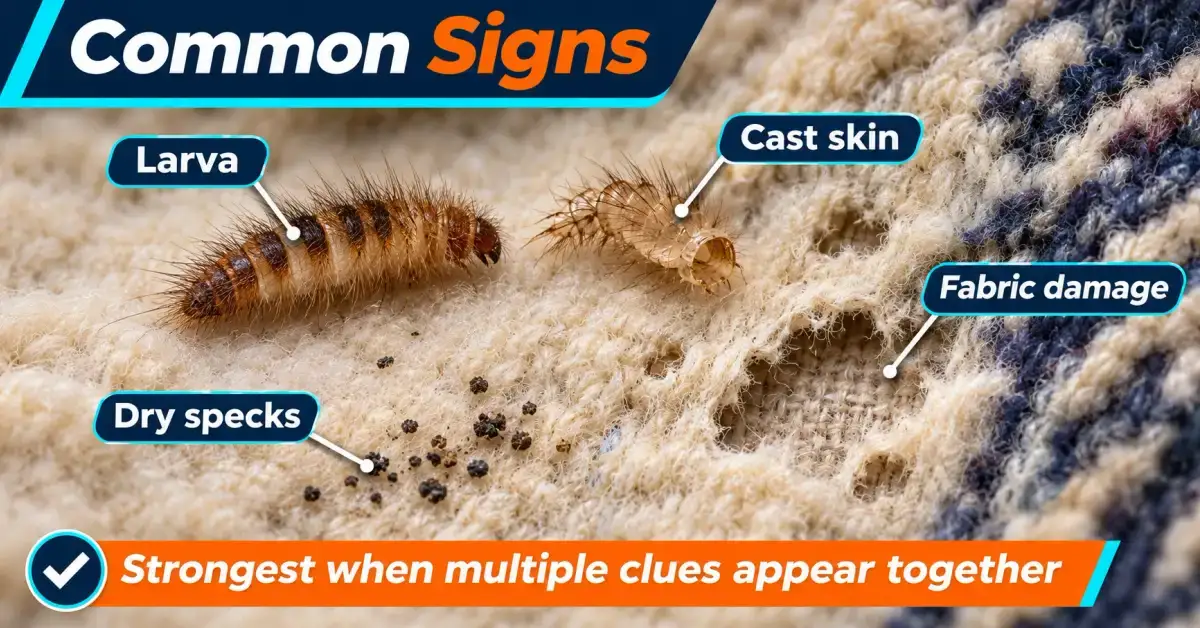
Carpet beetle larvae shed their skins several times as they grow. This carpet beetle shedding leaves hollow, bristly brown shells, often called casings. Each shell is an old exoskeleton that keeps the shape of the larva.
You will find them under rugs, in folds of wool blankets, in drawers, and along baseboards where lint collects. Virginia Tech and Colorado State note that old cast skins are often mistaken for live larvae. That can make an infestation look bigger than it is. Still, skins prove that larvae fed in that spot.
Carpet Beetle Poop and Droppings
Carpet beetle poop looks like tiny dry specks, black or brown, about the size of a grain of salt, according to UC IPM and UF/IFAS. The droppings are solid pellets, not smears.
You will find them near fabric the larvae fed on, such as the back of a rug or a pile of lint. Droppings alone do not prove carpet beetles, so match them with shed skins or damage before you decide. Bed bug stains look different, and a table below shows how.
Key Takeaway: Carpet beetle droppings are tiny, dry, grain-sized pellets found near damaged fabric. Treat them as a sign when you also find shed skins or damage.
Holes in Clothes and Clothing Damage
Holes in clothes are often the first sign people notice. Larvae eat wool, silk, fur, feathers, and leather. They usually leave one larger grazed patch or a cluster of holes, while clothes moths tend to leave scattered small holes, according to UC IPM. Cotton, linen, and synthetic fabrics are usually left alone, although synthetic blends with wool can still suffer clothing damage. Check sweaters, scarves, wool blankets, and any item stored for months without washing.
Damage to Rugs, Furniture and Other Natural Fibers
On rugs, larvae feed on the underside and deep in the pile, so the top may look fine until slits or bare patches appear. Ohio State notes that feeding often happens under heavy furniture and along carpet edges.
Furniture damage shows up as thin spots along upholstery seams or inside stuffing made of hair or feathers. Pest control experts add that furs and trophy mounts can lose hair at the base and develop bald spots. Loose hairs often collect on the floor below.
Fuzzy Larvae in Dark, Quiet Spots
Live larvae are fuzzy and striped brown, and most measure about 1/8 to 1/4 inch long. They avoid light, so you usually find them under furniture, along baseboards, in closets, and inside drawers. Larvae move slowly and do not spin webs, which separates them from clothes moth larvae.
Adult Beetles Near Windows and Lights
Adult carpet beetles are tiny and round, usually 1/16 to 3/16 inch long. UC IPM says they resemble lady beetles in shape but are much smaller. They head for light, so you may find live or dead adults on windowsills. Adults eat pollen, not fabric, and they often fly in from outside or arrive on cut flowers. A few adults alone are no cause for alarm. Large numbers can point to many larvae feeding somewhere in the home, says NC State Extension.
Early Signs of Carpet Beetles (and Are There More?)
You might see one or two adults on a windowsill in late winter or spring. Other early clues include a few specks in a closet corner or one thin patch on a wool rug. A single beetle does not mean you have an infestation. UC IPM says you only need to act when larvae are developing in fabric or other items.
So, are there more? Search for shed skins, droppings, and larvae in dark spots near your find. If you find none, the beetle probably wandered in. If you find several signs in one area, clean that spot thoroughly and keep checking through the season.
What Does Carpet Beetle Damage Look Like Compared With Moth Damage?
Carpet beetle damage and clothes moth damage can look alike at first. The pattern gives the best clue. Beetle larvae tend to damage one larger area, while moth damage often appears as scattered holes, according to UC IPM and UF/IFAS. Shed skins and a lack of webbing point to beetles.
Carpet Beetle Damage vs. Moth Damage
| Clue | Carpet beetles | Clothes moths |
|---|---|---|
| Hole pattern | One larger grazed area or grouped holes | Scattered small holes |
| Webbing | None | Silken tunnels, patches of webbing, or a portable case |
| Larvae | Fuzzy and bristly, about 1/8 to 1/4 inch | Creamy-white caterpillars up to 1/2 inch |
| Droppings | Dry black or brown specks | Tiny pellets close to the fabric's color |
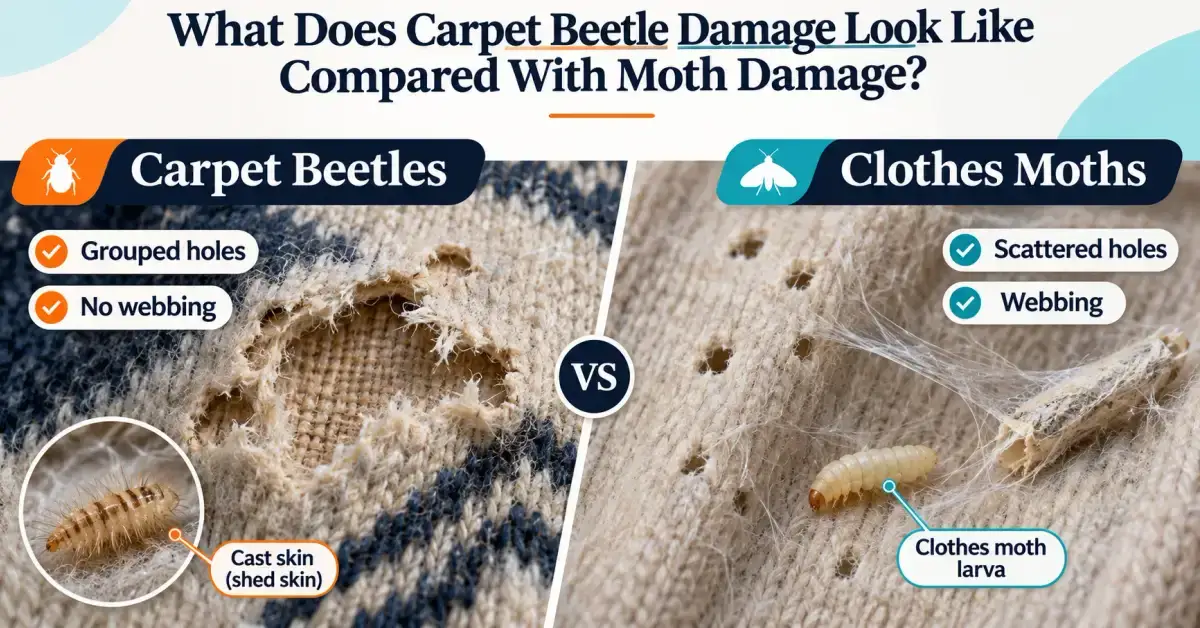
When you study damage photos, look for a grazed patch, nearby shed skins, and no webbing.
Key Takeaway: One grazed area with bristly husks nearby points to carpet beetles. Scattered small holes with silken webbing or cases point to clothes moths.
Mattress Signs of Carpet Beetles: What to Check in Your Bed
Mattress signs of carpet beetles are less common than signs in closets and rugs, but beds hold wool blankets, feather pillows, and lint. Pest control companies report that carpet beetles rarely live inside a mattress the way bed bugs do.
Where to Look on Your Bed and Bedding
Strip the bed and check these spots with a flashlight:
- Mattress seams and tufts. UC IPM warns that mattresses and pillows stuffed with hair or feathers can hold carpet beetles, and surface sprays will not reach inside.
- Down or feather pillows and wool or down comforters.
- The bed skirt, the carpet edge under the headboard, box spring edges, and the dust beneath the frame.
Look for shed skins, droppings, and thinned fabric. A Cutis review also suggests protective pillow and mattress covers to cut exposure to larval hairs. Do not spray bedding or clothing with insecticide, as UC IPM advises against it.
Carpet Beetle Signs vs. Bed Bug Signs
People often mistake a carpet beetle rash for bed bug bites. The damage and droppings tell the pests apart.
Carpet Beetle Signs vs. Bed Bug Signs
| Clue | Carpet beetles | Bed bugs |
|---|---|---|
| Skin marks | No bites. Larval hairs can cause an itchy rash | Real bites, though some people show no reaction |
| Droppings | Loose, solid pellets near fed-on fabric | Black spots in groups along mattress seams, the tag, box spring, and headboard |
| Shed skins | Bristly husks under rugs and in drawers | Cast skins along mattress seams and nearby cracks |
| Fabric holes | Yes, in wool, silk, and fur | No |
| Adults | Round, can fly, found at windows | Reddish brown, about 1/4 inch, found near the bed |
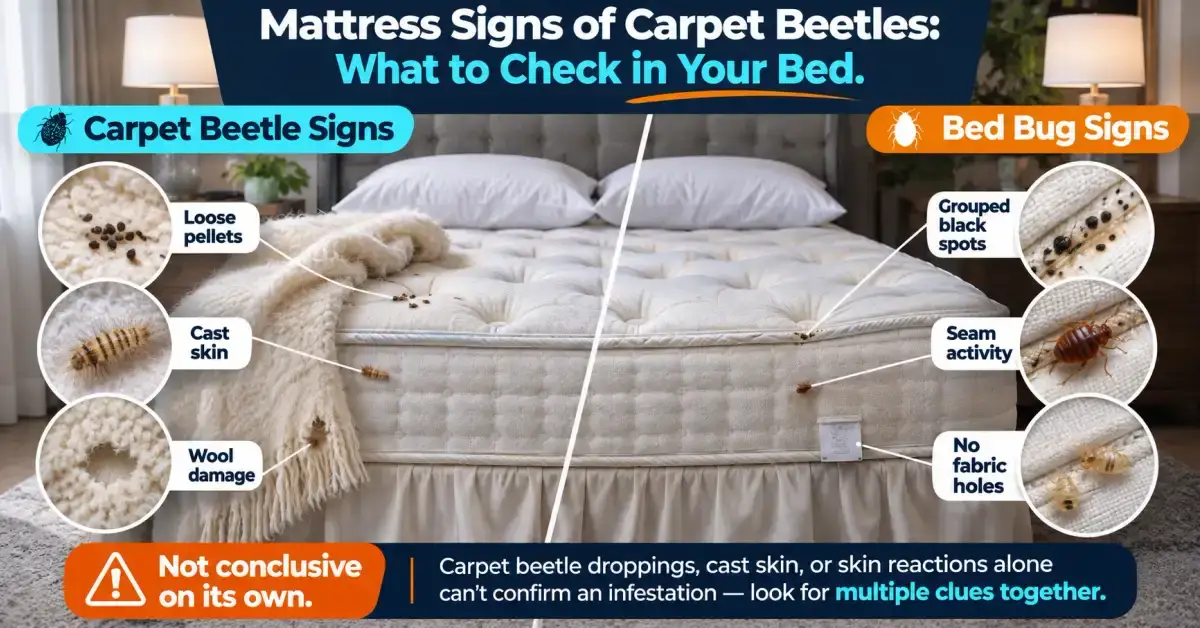
The best split is the damage. Bed bugs do not eat fabric, so holes in wool point to carpet beetles. Black spots grouped along mattress seams, with live bugs or skins, point to bed bugs.
Virginia Tech and VDACS list mattress seams, the tag, the box spring frame, and the headboard as places to find bed bug spots. VDACS describes them as black, not red, and smooth to the touch. A damp-cloth smear test appears on many pest sites, but extension sources do not confirm it. If you are unsure, seal a specimen in a bag and take it to your county Extension office.
Key Takeaway: Holes in wool and loose pellets point to carpet beetles. Grouped black spots on mattress seams with real bites point to bed bugs.
Do Carpet Beetles Bite? Skin Reactions Explained
No, carpet beetles do not bite people, and sleeping in a room with them is not dangerous for most people. Some people react to the tiny hairs on larvae, which causes itchy red bumps that look like bites. A 2024 review in Cutis says treatment is symptom based and thorough cleaning reduces exposure.
A 2021 report in Emerging Infectious Diseases described 11 patients with rashes from larval hairs. It noted that this dermatitis is often confused with bed bug or flea bites. Pest sources add that the beetles do not carry disease. See a doctor if a rash spreads or lasts.
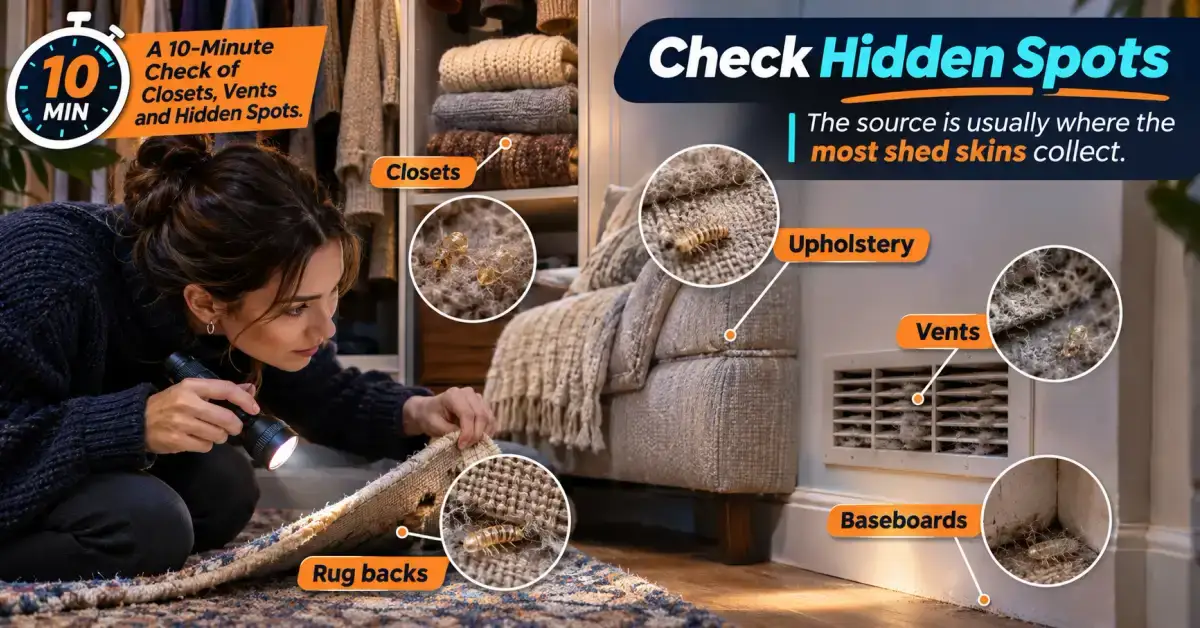
A 10-Minute Check of Closets, Vents and Hidden Spots
Use a flashlight and work through these steps to find the source faster:
- Check windowsills and light fixtures for live or dead adults and dead insects.
- Pull out wool, silk, fur, and rarely worn clothes. Shake each item over a white sheet to reveal skins and specks.
- Lift a corner of each rug and check the back, the pad, and the floor under heavy furniture.
- Look along upholstery seams and under cushions.
- Inspect floor and wall registers, vents, and duct openings. Lint, pet hair, and dead insects collect there, and UF/IFAS says regular cleaning does not remove dust and lint from air conditioning ducts. The University of Kentucky says vacuuming inside heating vents removes larvae, hair, and lint.
- Check the attic and eaves for old bird, wasp, or rodent nests, which are common sources.
Key Takeaway: The source is usually where you find the most shed skins, not where you first saw damage. Vents, rug backs, and attic nests are the spots people miss.
What to Do After You Find Signs of Carpet Beetles
When you confirm signs of a carpet beetle infestation, start with the source. Vacuum the area, including edges, under furniture, and inside floor vents. Throw out the vacuum bag promptly, since it can hold eggs and larvae. Wash washable items in hot water or dry clean them, which kills all stages, says UC IPM. Do not spray clothing or bedding.
If signs appear in many rooms or damage keeps returning, a licensed pest professional can locate hidden sources. Treatment is a bigger job than identification, so use a dedicated carpet beetle removal guide for step-by-step methods.
Carpet Beetle Signs FAQ
Why Do I Suddenly Have Carpet Beetles?
+
Adults usually fly in through open windows and doors or arrive on cut flowers, secondhand furniture, and rugs. Larvae can also spread from old bird, wasp, or rodent nests. Because larvae live for months, a sudden sighting often means they have been feeding for a while.
What Is Commonly Mistaken for Carpet Beetles?
+
Adults resemble tiny lady beetles and are often confused with bed bugs. Their damage is often mistaken for clothes moth damage, and the rash for bed bug or flea bites. Check the damage pattern, droppings, and shed skins to tell them apart.
Does Having Carpet Beetles Mean My House Is Dirty?
+
No. Virginia Tech reports that carpet beetles live in both clean and cluttered homes. Lint, pet hair, and dead insects can feed larvae even where people clean often.
Are Shed Skins a Sign of an Active Infestation?
+
Not always. Skins prove larvae fed in that spot, but old skins can remain after the larvae leave. Look for fresh droppings, new damage, or live larvae to confirm that activity continues.
Do 90% of Homes Have Carpet Beetles?
+
No source supports a 90% figure. One NC State study of 50 Raleigh-area homes found carpet beetles, mostly as larvae, in every home. That small sample from one region suggests they are common, not universal.
When Are Carpet Beetles Most Active?
+
Colorado State says adults and wandering larvae are most often seen in late winter and early spring. UC IPM notes adults at windows in spring or early summer. Larvae keep feeding indoors all year.
Conclusion: Check the Hidden Signs First
The most reliable signs of carpet beetles are hidden: shed skins, tiny droppings, and grazed patches in natural fibers. Adults at the window add context but prove little alone. Check closets, rug backs, beds, and vents, then compare what you find with the carpet beetle signs in the tables above. Matching two or three clues gives you a confident answer and shows you where to clean first.
Need a carpet cleaning company you can trust? We handle residential and commercial carpet cleaning, rug cleaning, upholstery cleaning, and pet stain and odor removal —our team is ready to help.

Michael Sanders
Michael Sanders is a home care and cleaning industry writer covering carpet maintenance, flooring care, and household cleaning practices across the United States. His work focuses on practical, research-backed guidance — from stain and odor removal to deep extraction methods and indoor allergen prevention. Michael collaborates with cleaning professionals to ensure accuracy, and his writing reflects a genuine interest in helping homeowners make informed decisions about caring for their homes.