
Blog · Carpet Cleaning Guide
Carpet Kicker: What It Is, How to Use It, and When It's Not Enough
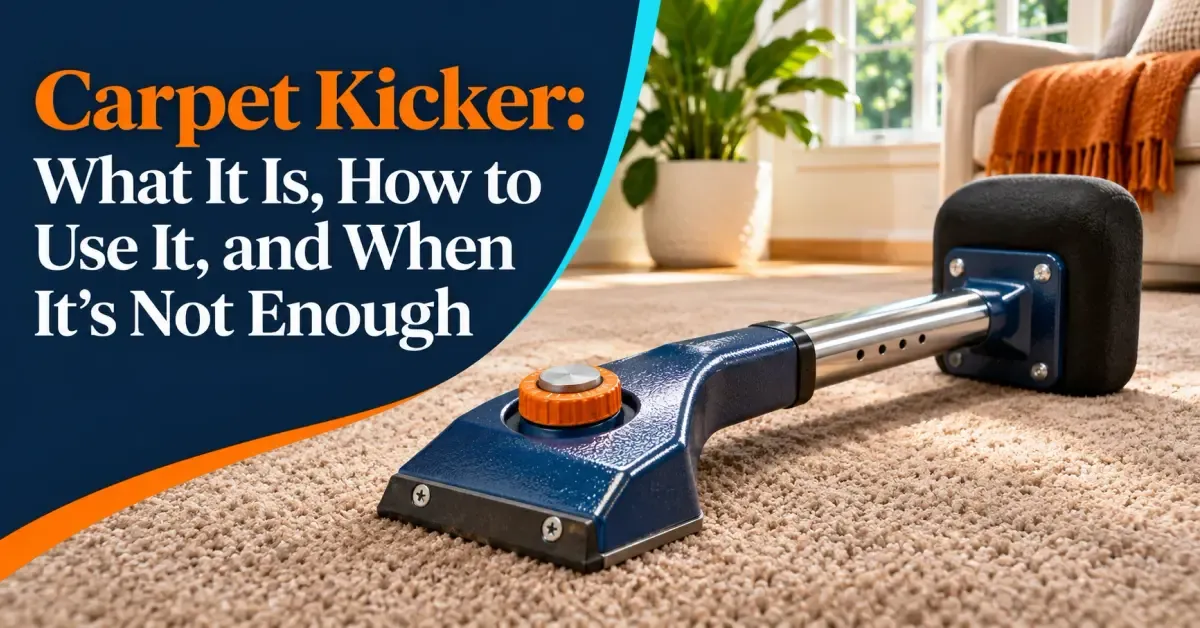
A carpet kicker, also called a knee kicker, is a hand tool with a toothed head and a padded end. You strike the pad with your knee to push carpet onto tack strips. If you searched “what is a knee kicker,” that is the answer: one tool, two names.
Published November 16, 202613 min read
It suits closets, stairs, and edges, but the Carpet and Rug Institute (CRI) says it cannot stretch a whole room. This guide covers how to use one, fix a loose edge, protect your knees, and compare prices.
What Is a Carpet Kicker? (Also Called a Knee Kicker)
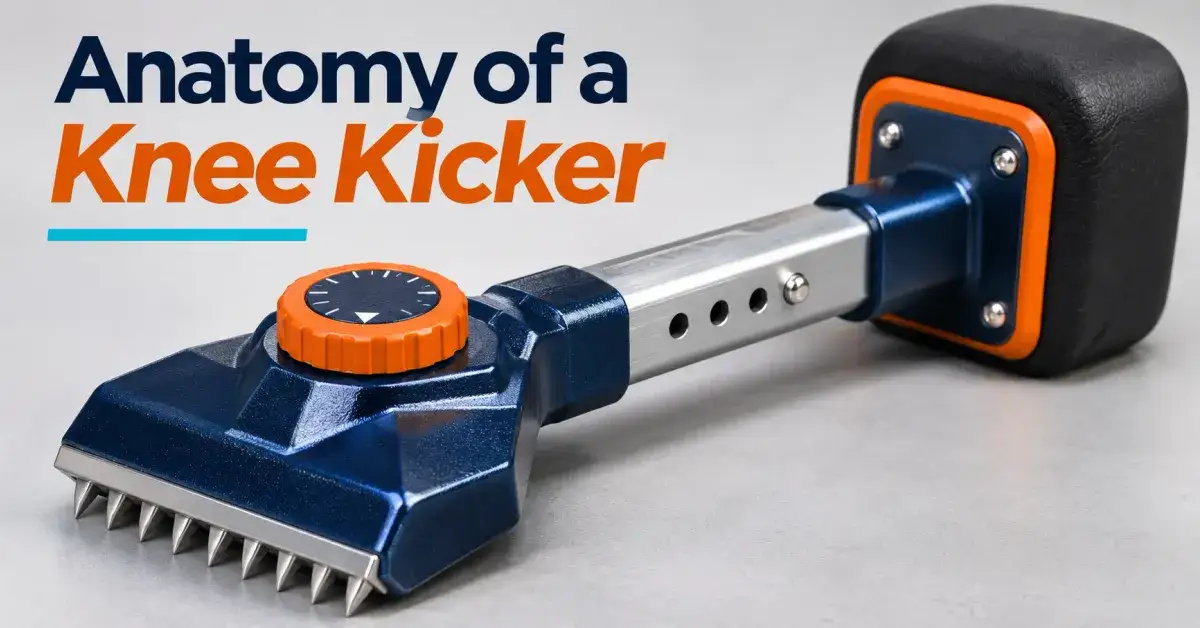
A carpet kicker is a hand-held tool that hooks carpet and pushes it onto the pins of a tack strip. Tack strips are narrow wood strips with angled pins that run along the base of each wall. A carpet knee kicker has a toothed head on one end and a padded bumper on the other. A telescoping handle, typically 17 to 21 inches long, lets you adjust the reach. A dial near the head sets how far the teeth extend.
What Does a Knee Kicker Do for Carpet?
A knee kicker positions carpet and hooks it onto tack strips. Bon-Tool's instruction sheet describes it as a tool for positioning, hooking, and light stretching in cramped areas. It is not built to tension an entire room.
Where a Knee Kicker Works Well
A knee kicker for carpet makes the most sense in closets, on stairs, and in small rooms. Wikipedia cites rooms up to 10 feet square. It also reaches tight corners where a power stretcher will not fit, and it can re-hook a loose edge along a wall. It only works on stretch-in carpet, which sits over tack strips. Glue-down carpet has no strips to hook onto.
Where It Falls Short
Large rooms, long wall runs, and seams are beyond what a kicker can handle. The CRI restretching bulletin says a knee kicker cannot produce enough stretch to prevent future wrinkles. If your carpet ripples across the middle of a room, a kicker will not hold the fix. Seams are also a job for a professional.
Carpet Kicker vs. Carpet Stretcher: Which Do You Need?
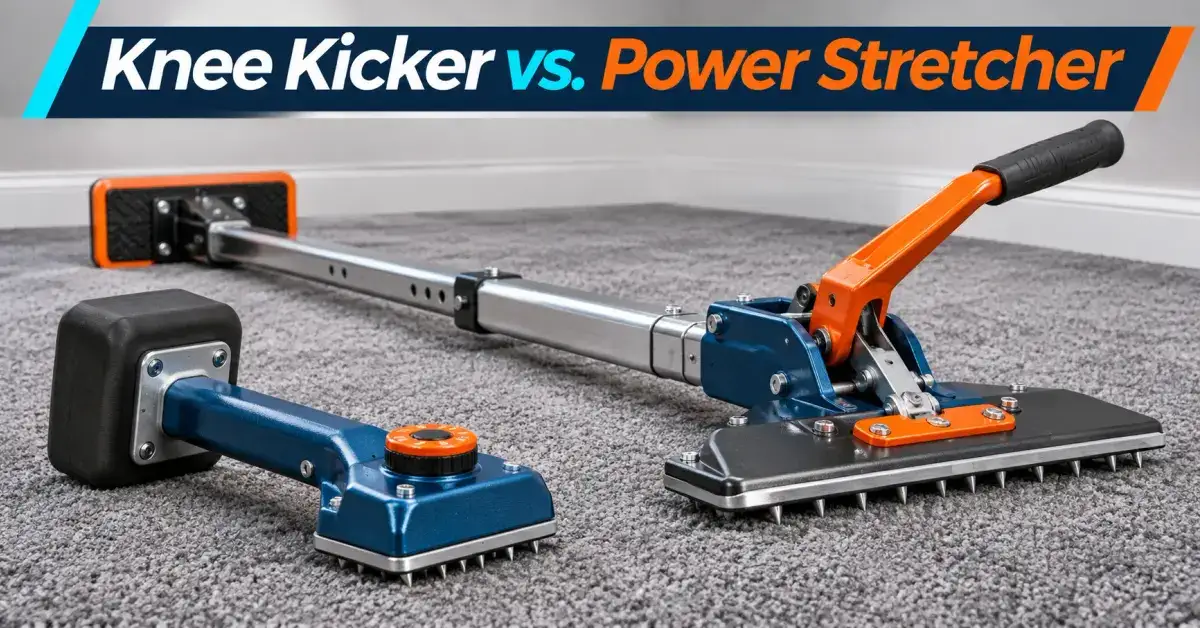
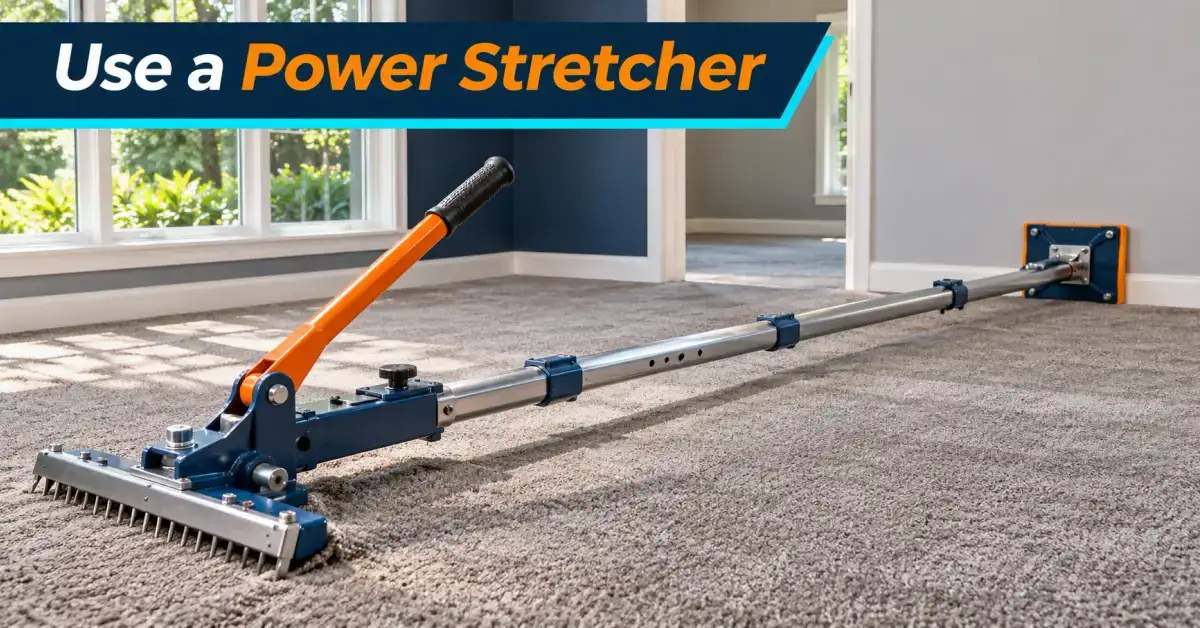
For a closet, a staircase, or a small loose edge, a carpet kicker is enough. For a whole room, you need a power stretcher, the other type of carpet stretcher.
The CRI is direct about this limit. Its restretching bulletin says to stretch carpet 1% to 1.5% in each direction using a power stretcher, not a knee kicker. The CRI 105 installation standard goes further and calls power stretching mandatory on stretch-in installations. Even so, the standard still uses the kicker to hook and secure carpet along the walls. In practice, the two tools work as a team. The kicker locks the first wall or corner, and the power stretcher pulls the rest of the room tight.
Key Takeaway: A carpet kicker hooks and positions carpet at the edges. CRI requires a power stretcher to tension a whole room.
| Feature | Knee kicker | Power stretcher |
|---|---|---|
| How it works | A knee strike pushes carpet onto the tack strip | A lever and telescoping tubes pull carpet across the room |
| Tension | Light | Full room tension |
| Best for | Closets, stairs, edges, small loose spots | Whole rooms, long runs, restretching |
| Room size | Small areas, up to about 10 feet square (per Wikipedia) | Any size; tubes extend to about 40 feet |
| Cost | Roughly $25 to $200 new | A professional tool that can cost several hundred dollars |
How to Use a Carpet Kicker, Step by Step
Set the pin depth, place the head a few inches from the wall, kick firmly, and press the carpet onto the strip. The sections below break that into a checklist and eight steps.
What You Need Before You Start
- Knee kicker
- Knee pads and work gloves
- Safety glasses
- Pliers, to lift carpet off the strip if needed
- Carpet knife and a stair tool or putty knife
A stair tool, also sold as a carpet tucker, is a flat steel tool that you tap with a mallet to tuck the trimmed edge between the tack strip and the baseboard. It is not a kicker. Also confirm the carpet is stretch-in over tack strips before you begin.
The 8 Steps
- Check that tack strips run along the wall and that the carpet is a stretch-in installation.
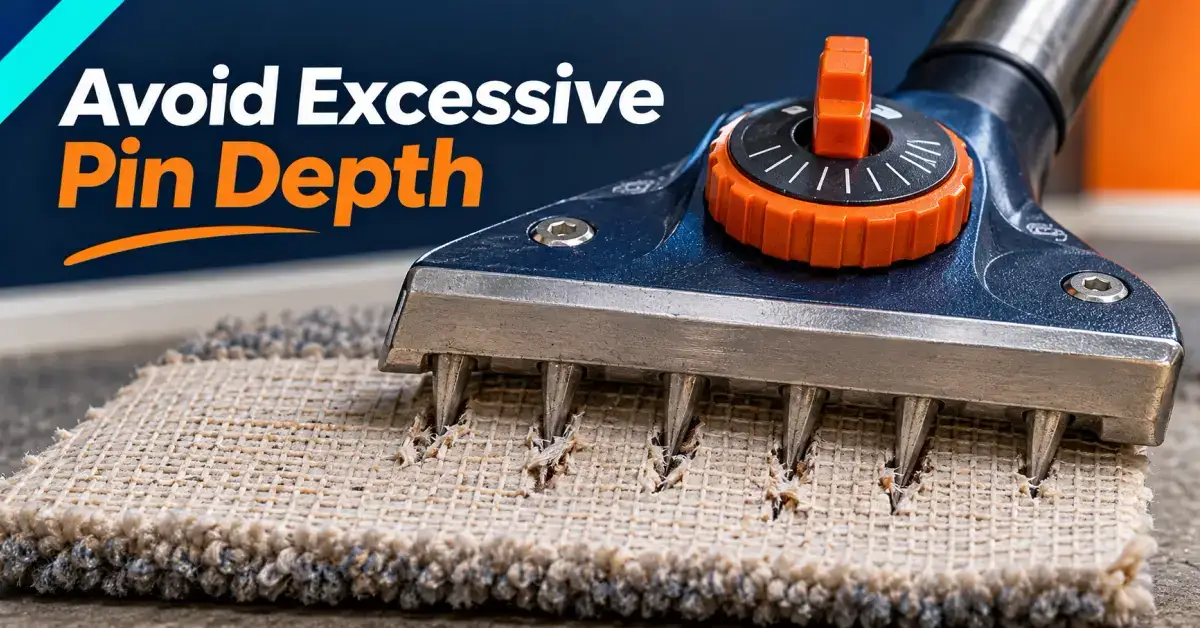
- Set the pin dial close to the carpet thickness. Bon-Tool says the pins should reach through the pile into the backing, but not through it. Thick plush needs a deeper setting than thin loop pile.
- Put on knee pads, gloves, and glasses. Smooth the carpet flat.
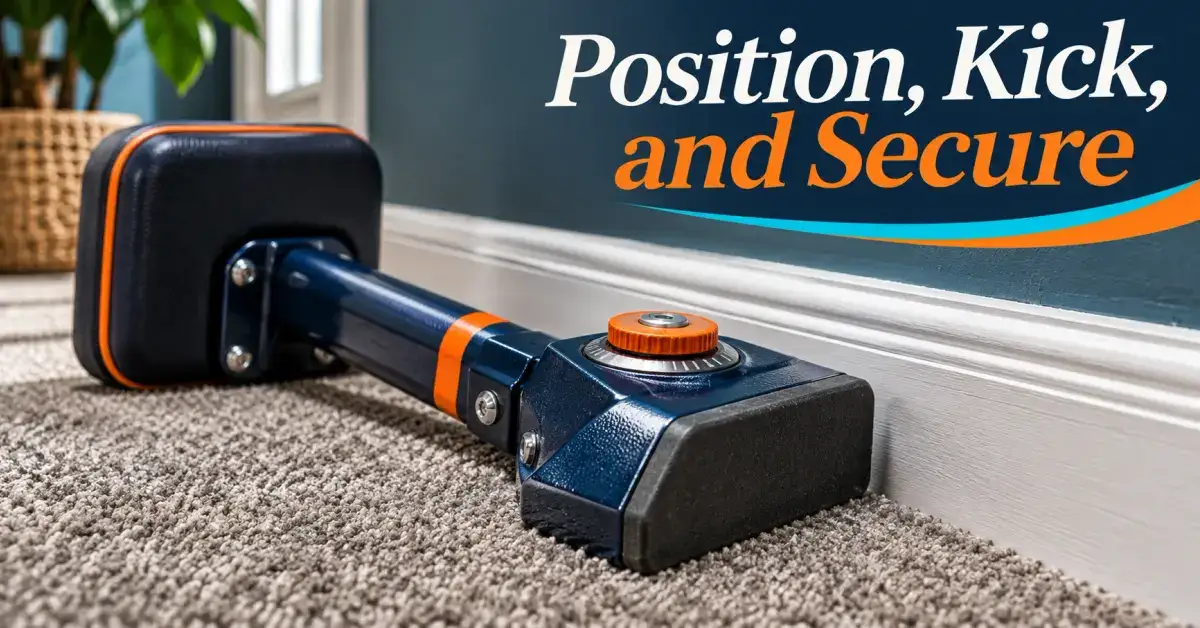
- Place the head about 3 inches from the wall. Tilt it 10 to 15 degrees toward the direction you plan to work. This comes from the Roberts/QEP manual, so check your own tool's manual too.
- Strike the padded end with your knee in a firm, controlled kick. Hard kicks can injure you and damage the carpet.
- Press the carpet onto the tack strip pins with your free hand, just behind the head.
- Move down the wall in the direction the head faces, repeating the kick and press.
- Trim the excess with a carpet knife, tuck the edge with a stair tool, and run your hand over the carpet to confirm it is tight.
Fixing a Bump or Loose Edge With a Knee Kicker
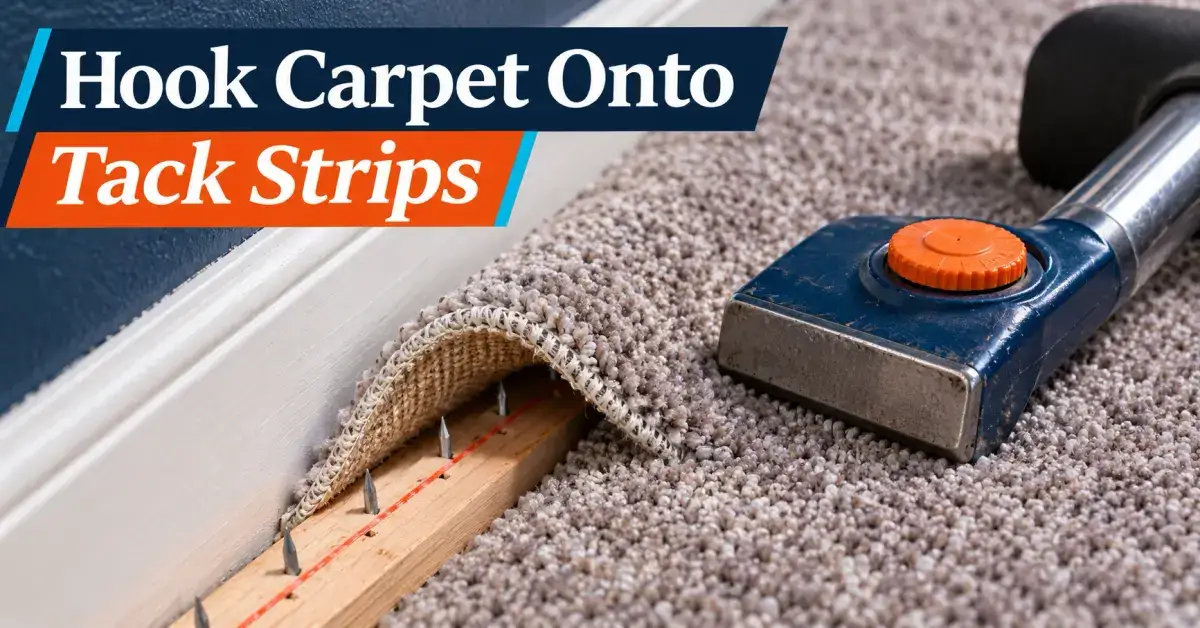
Lift the carpet off the tack strip along the loose section with pliers. Starting at one end of the loose section, place the head about 3 inches from the wall at a 10 to 15 degree angle, facing the direction you will work along the wall. Kick firmly, then press the carpet onto the pins by hand just behind the head. Repeat along the edge until it lies flat. If the bump sits in the middle of the room or keeps returning, you need a power stretcher.
Knee Kicker Safety: Protect Your Knees and Your Carpet
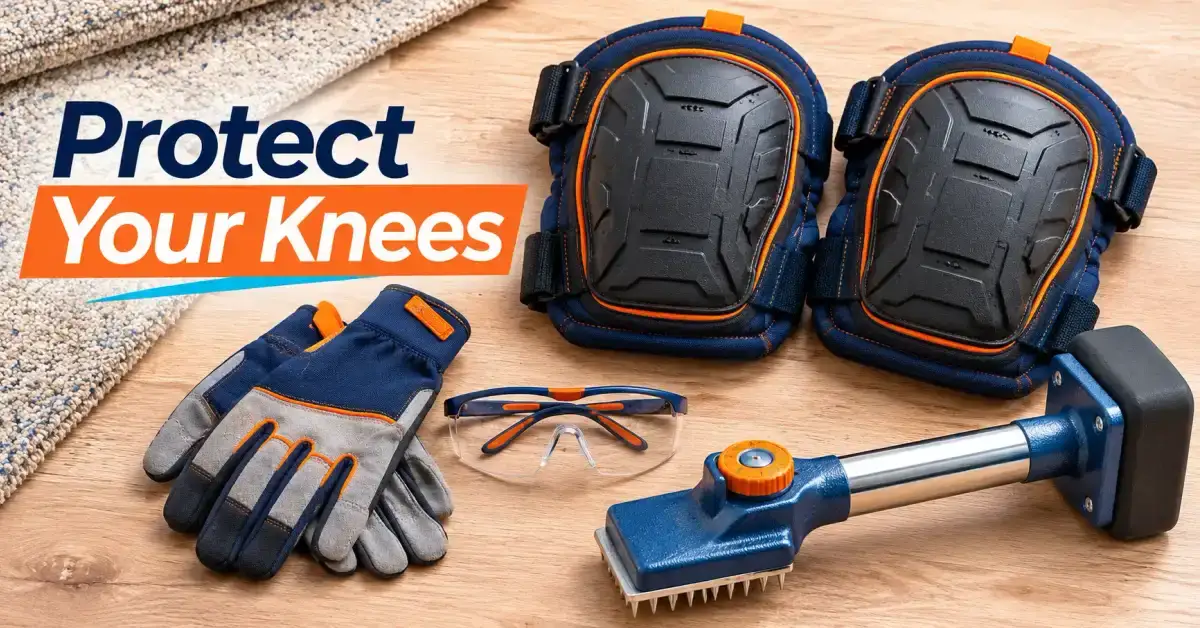
Repeated knee strikes take a toll on the body. The Center for Construction Research and Training (CPWR) lists acute knee injuries, fluid buildup, and bursitis among the risks carpet installers face. It recommends using a power stretcher in place of a knee kicker where possible, and wearing knee pads. Bon-Tool adds that hard kicking can injure you and damage carpet. For a small repair, firm and controlled kicks are enough. If you have knee problems, a kneeless carpet stretcher is an option. The Job Accommodation Network describes it as working on a leverage system instead of repeated impact. Wear gloves and safety glasses too, because the teeth and tack strip pins are sharp.
Key Takeaway: Wear knee pads, kick firmly but not with maximum force, and consider a power stretcher or kneeless tool for bigger jobs.
Common Knee Kicker Mistakes to Avoid
- Trying to stretch a whole room. The kicker cannot hold that tension, and wrinkles return.
- Setting the pins too deep, which can puncture the backing, or too shallow, which lets the carpet slip.
- Kicking as hard as possible. Bon-Tool warns against hard kicking.
- Kicking one side when the opposite side is already hooked on the tack strip, which AboutMechanics advises against.
- Using it on glue-down carpet, which has no tack strips to hold the carpet.
Buying or Renting a Knee Kicker
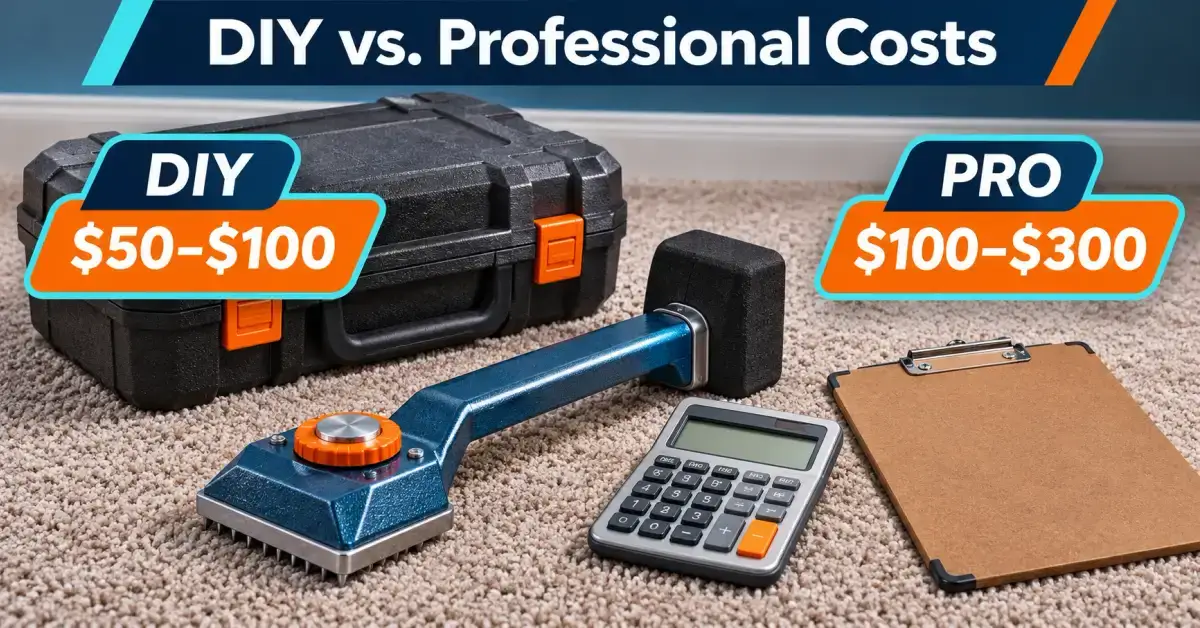
New knee kickers mostly run about $25 to $200, depending on the model. Renting makes sense if you only need it once.
Features That Matter in a Carpet Knee Kicker
When you shop for a carpet kicker tool, check four things. Look for an adjustable handle, since typical lengths run 17 to 21 inches and some models reach 23. Choose a clear pin depth dial. Check for a thick foam or gel bumper to cushion your knee. Finally, pick a sturdy metal build if you plan to use it often.
Knee Kicker Prices in 2026
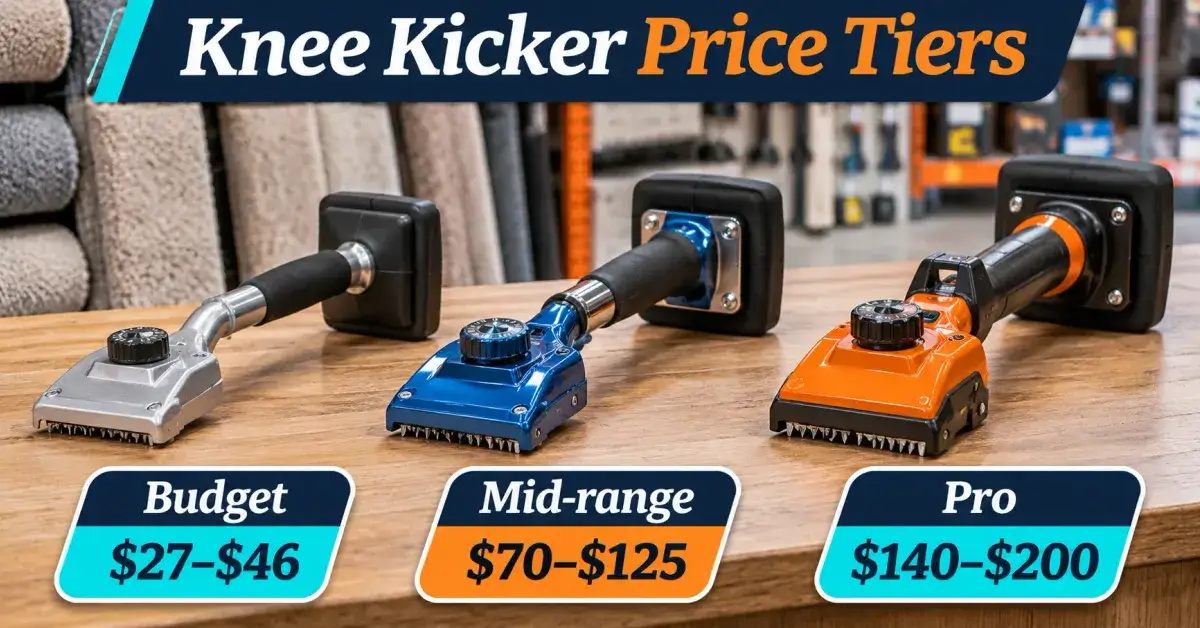
These prices come from Google Shopping and retailer listings on November 11, 2026. Prices change often.
| Tier | Example models | Price |
|---|---|---|
| Budget | Harbor Freight Finch & Mclay, Roberts/QEP Economy 10408 | About $27 to $46 |
| Mid-range | Roberts 10-410, Roberts Deluxe 10-412, Deluxe High Profile | About $70 to $125 |
| Professional | Roberts The General, Crain 605, Bon-Tool 24-612 | About $140 to $200 |
Renting a Knee Kicker
Home improvement stores and equipment rental shops, such as Home Depot, Lowe's, Sunbelt, and United Rentals, are common places to ask. Stock, deposits, and rates vary by store, so call ahead.
What to Use Instead of a Carpet Kicker
For a whole room, use a power stretcher. For less knee impact, use a kneeless carpet stretcher. Homemade kickers are not recommended. Call a professional installer in these cases:
- The carpet has seams that need work.
- Wrinkles keep coming back after a repair.
- The carpet has a pattern that must line up.
- The tack strips or padding are damaged.
- The area is too large for a kicker.
FAQs About Using a Knee Kicker
Can I use a carpet kicker on an area rug?
+
No. A kicker is for wall-to-wall carpet held by tack strips. Area rugs are not normally held by tack strips, so the tool does not apply.
Can I kick one side if the other is already hooked?
+
Avoid it. AboutMechanics advises against using a knee kicker on one side when the opposite side is already installed on a tack strip. Use a power stretcher instead.
How do I keep a knee kicker in good shape?
+
Clear lint from the teeth after each job and store the tool dry. Check that the handle locks and the bumper is intact.
Is a used knee kicker okay?
+
Yes, if it works. Used models sell for around $22 on resale sites. Check for bent pins, a worn bumper, and a handle that locks.
Where can I find a carpet kicker near me?
+
Check Home Depot, Lowe's, local flooring supply stores, and equipment rental shops. Call first to confirm they have one in stock.
The Short Version
A carpet kicker, or knee kicker, hooks carpet onto tack strips at the edges. It suits closets, stairs, and small loose spots. Set the pins to the carpet thickness, kick firmly, and wear knee pads. For a whole room, CRI says you need a power stretcher. New kickers cost about $25 to $200, and renting is an option.
Need a carpet cleaning company you can trust? We handle residential and commercial carpet cleaning, rug cleaning, upholstery cleaning, and pet stain and odor removal —our team is ready to help.

Michael Sanders
Michael Sanders is a home care and cleaning industry writer covering carpet maintenance, flooring care, and household cleaning practices across the United States. His work focuses on practical, research-backed guidance — from stain and odor removal to deep extraction methods and indoor allergen prevention. Michael collaborates with cleaning professionals to ensure accuracy, and his writing reflects a genuine interest in helping homeowners make informed decisions about caring for their homes.