
Blog · Carpet Cleaning Guide
Carpet Seam Tape: What It Is, Which Type to Use, and How to Apply It
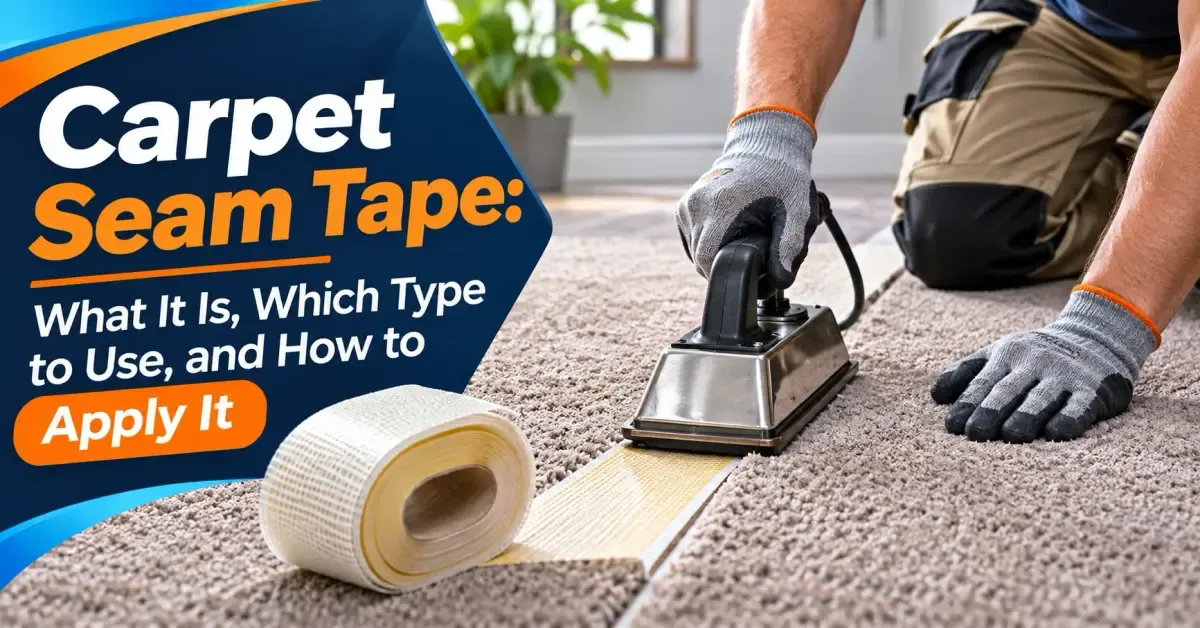
Carpet seam tape is the adhesive strip hidden under the join where two carpet pieces meet. Hot-melt tape, melted with a seaming iron, makes the strongest permanent seam. Pressure-sensitive tape needs no iron, but it only suits small, low-traffic spots.
Published November 18, 202614 min read
Your room may be wider than the carpet roll, you may be patching a hole, or an old seam may have split. In each case, the tape you pick and the method you follow decide whether the seam lasts. This guide explains the tape types, how to choose one, the tools you need, the steps to apply it, and why seams peak or split. Even a good seam shows a little. The Carpet and Rug Institute's CRI 105 installation standard says a properly built seam "will not be invisible," so aim for tight, flat and strong.
What Is Carpet Seam Tape and How Does It Work?
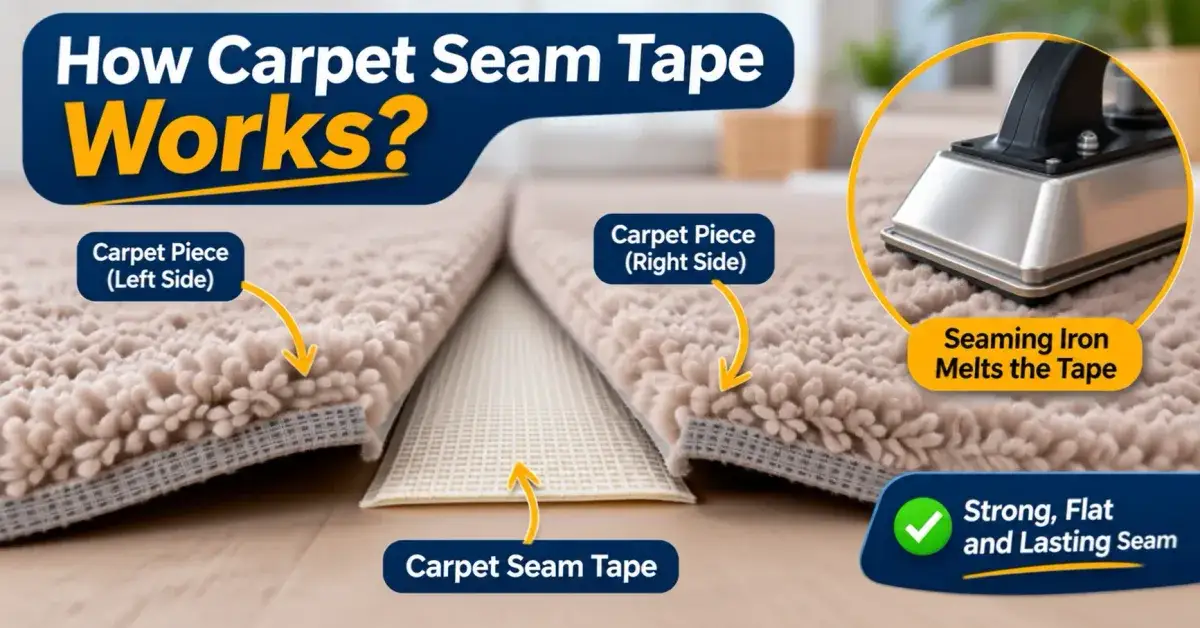
Carpet seam tape is a strip of woven mesh, called scrim, coated with adhesive. You place it under the cut edges of two carpet pieces so both edges bond to the tape and to each other. The tape does not hold the carpet to the floor. It only joins one piece to the next.
Most professional seams use hot-melt tape. CRI 105 describes a tape pre-coated with thermoplastic adhesive, centered under the seam. A seaming iron melts the adhesive, and the carpet backing presses into it and bonds as it cools. The standard says to build the seam over a hard, flat surface such as a seaming board. It also recommends premium tape with a strong scrim and an adhesive width of at least 2¾ inches.
Tape does not stretch, but stretched carpet pulls on the seam. A ProInstaller Magazine article by a flooring-supply manager says seams in stretch-in rooms must hold about 1 to 1.5 percent stretch. That is why a weak tape or a rushed iron pass fails first.
Key Takeaway: Carpet seam tape is an adhesive strip under the join of two carpet edges. Hot-melt tape, melted by a seaming iron over a flat board, bonds the backing and must resist stretching.
Types of Carpet Seam Tape (and What Is Not Seam Tape)
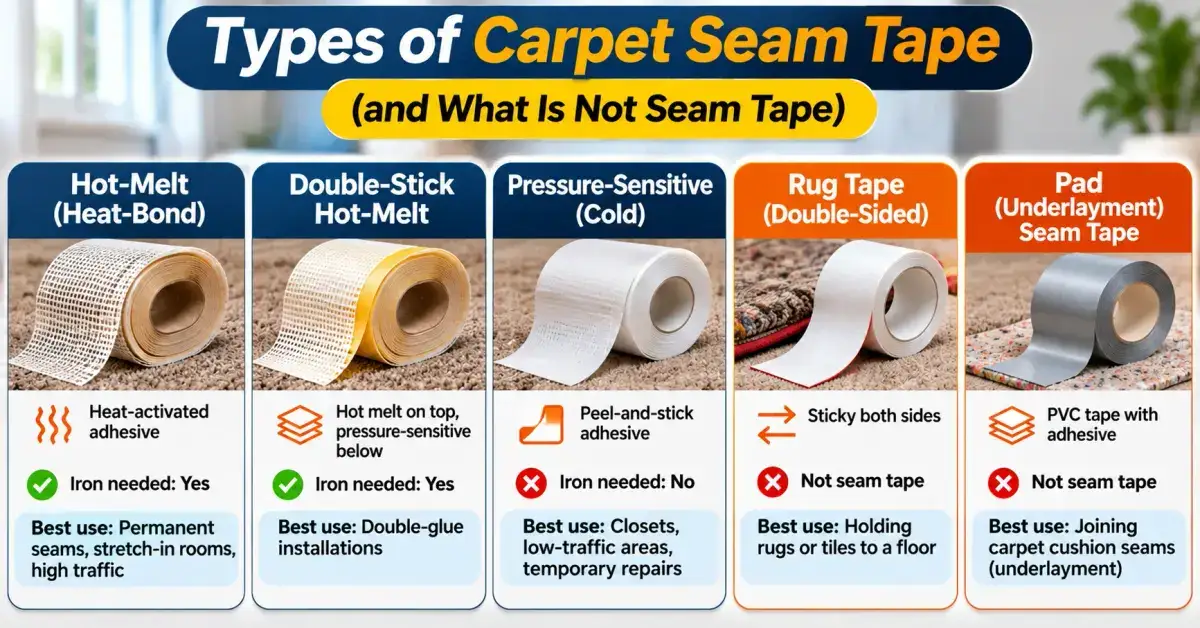
Carpet seaming tape comes in several forms, and shoppers often mix them up. The table separates the five products that people call "seam tape."
| Type | Adhesive | Iron needed | Best use | Limits |
|---|---|---|---|---|
| Hot-melt (heat-bond) | Heat-activated thermoplastic | Yes | Permanent seams, stretch-in rooms, high traffic | Needs a grooved iron and careful heat control |
| Double-stick hot-melt | Hot melt on top, pressure-sensitive adhesive below | Yes | Double-glue installations | Shaw calls for premium low-profile, non-silicone paper hot-melt tape |
| Pressure-sensitive (cold) | Peel-and-stick | No | Closets, low-traffic areas, temporary repairs | Weaker than hot melt for busy rooms |
| Rug tape (double-sided) | Sticky both sides | No | Holding rugs or tiles to a floor | Not seam tape; it does not join carpet pieces |
| Pad (underlayment) seam tape | PVC tape with adhesive | No | Joining carpet cushion seams | Do not use it to join carpet |
Hot-Melt (Heat-Bond) Seam Tape
Hot-melt tape is the standard for permanent seams. The tape stays dormant until the iron heats it, which gives you time to position the carpet. Widths run from about 3 inches to 6 inches, and common rolls are 60 to 66 feet long. Shaw recommends premium 3, 4 or 6 inch low-melt tape for stretch-in work and says 6 inch tape gives the best results against peaking.
Double-stick hot-melt tape adds a pressure-sensitive layer underneath for double-glue installations. For that method, CRI 105 requires hot-melt seaming unless the carpet maker says otherwise.
Key Takeaway: Hot-melt tape needs a seaming iron and gives the strongest seam. Choose wider, premium tape for stretch-in rooms, and double-stick hot-melt tape only for double-glue installs.
Pressure-Sensitive (Cold) Seam Tape
Do you need a seaming iron for carpet seam tape? Only for hot melt. Pressure-sensitive tape sticks when you press the carpet onto it. Capitol markets its E-Z Seam as cold tape for do-it-yourself work, and retailers list this kind of tape for closets and low-traffic spots. Treat it as a patch or small-job tape, and read the label for carpet backing limits.
Rug Tape and Pad Seam Tape
Is carpet tape just double-sided tape? Rug tape is double-sided, but its job is holding a rug or tile to the floor. It will not make a lasting carpet seam. Pad seam tape joins the cushion underneath. Should you tape pad seams? Yes, with pad or underlayment tape such as Roberts 50-040. Keep carpet seams from lining up with pad seams. Beaulieu and Shaw both say to cross them at right angles or offset them at least 6 inches.
How to Choose the Right Seam Tape for Carpet
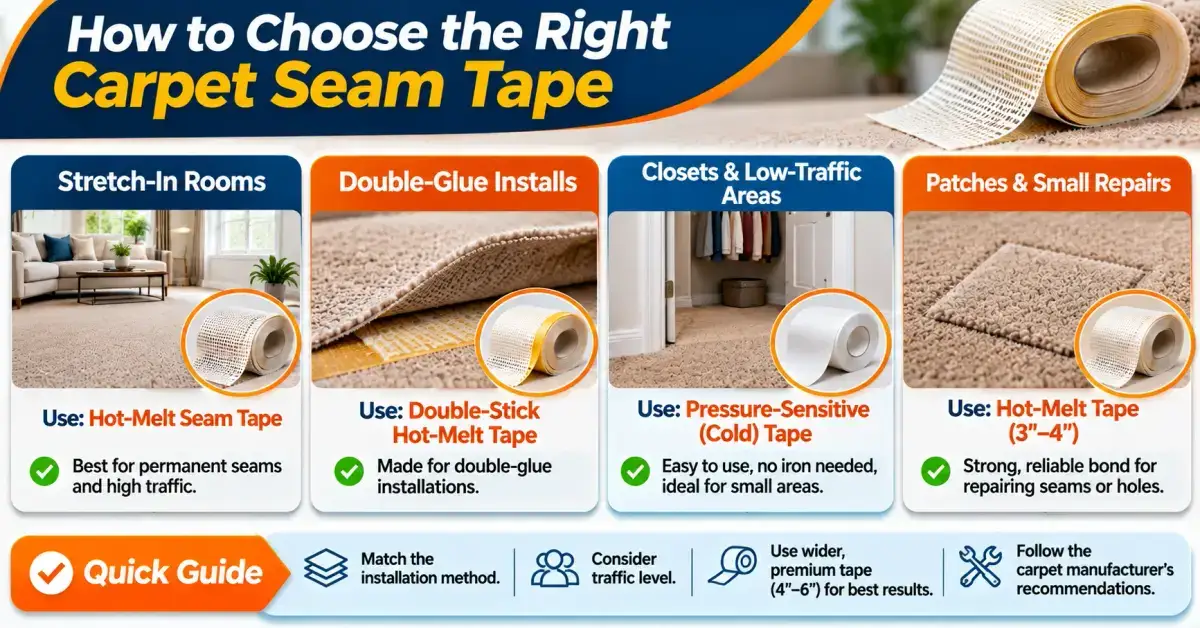
The best seam tape for carpet depends on how the carpet is installed, how much traffic the seam gets, and who is doing the work. Start with the installation method, then match the tape.
Match the Tape to the Installation and Traffic
| Situation | Tape to use | Why |
|---|---|---|
| Hallway or living room seam in a stretch-in install | Premium hot-melt, 4 to 6 inches wide | The seam must hold against stretching and daily traffic |
| Double-glue install | Double-stick hot-melt tape | CRI 105 requires hot-melt seaming unless the maker says otherwise |
| Small closet patch or low-traffic repair | Pressure-sensitive tape | No iron needed; limited to light use |
| Direct glue-down | Seam sealer on the cut edge | CRI 105 sets a seam adhesive step and does not name tape; follow the carpet maker |
| Split seam in a stretch-in room | New hot-melt tape | Reheating or replacing tape restores the bond |
The carpet label and the maker's instructions overrule general advice. If they name a tape, use that tape.
Tape Width, Brands and Typical Prices
Wider tape spreads the load. CRI recommends at least 2¾ inches of adhesive, and Shaw prefers 6 inches where peaking is a worry. Common brands include Capitol, Roberts, Premier, Traxx, Orcon and Duck. Prices checked on November 11, 2026, ran from about $7 to $27 per roll, for example Capitol Blueline 3 inch by 60 feet near $15 and Premier 4 inch by 66 feet near $10. Prices change often, so check the listing at Lowe's, Home Depot or Menards before you buy.
Tools and Materials You Need to Seam Carpet
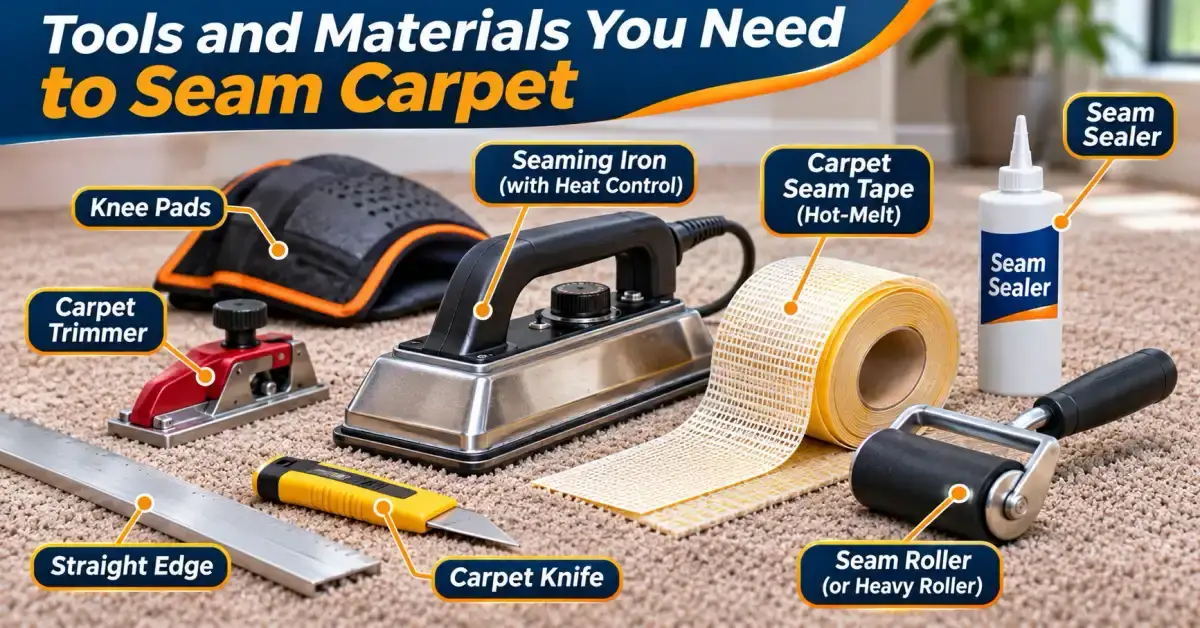
You need more than tape. A short kit prevents most failures, and these overlap with the broader carpet installation tools list:
- Seaming iron, ideally grooved, with a heat shield (about $110 to $132 new)
- Hot-melt seam tape sized to the job
- Latex seam sealer, such as Roberts 8015 or Shaw 4000 (about $6.49 to $19.60)
- Seaming board or another hard, flat surface
- Seam roller, about $22
- Straightedge, carpet knife and fresh blades
- Wood or other non-heat-conducting seam weights
Can you use a regular clothes iron? Sources disagree. Hunker shows how to do it with a towel, while The Carpet Guy Twin Cities warns it scorches and melts carpet. CRI 105 and Shaw call for a grooved seaming iron with a heat shield, so a household iron is a risk, not a method. A clothes iron offers no heat control and no groove to spread the adhesive evenly.
Key Takeaway: Use a grooved seaming iron with a heat shield, not a clothes iron. A household iron gives no heat control and risks scorching the carpet.
Roller choice matters too. CRI 105 does not recommend star or spike rollers on hot-melt seams, especially on cut or cut-loop carpet. Use a standard seam roller instead.
How to Use Carpet Seam Tape Step by Step
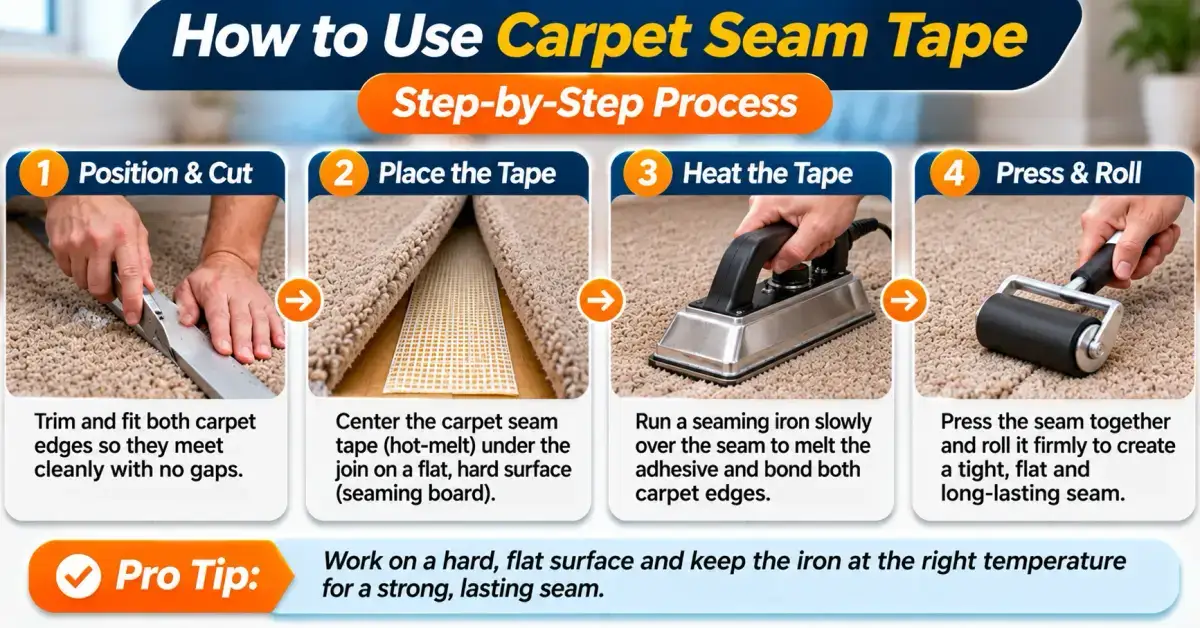
Carpet seaming tape goes adhesive side up under the cut edges, and the steps below follow CRI 105 and Shaw instructions for a hot-melt seam. Always check your tape and carpet maker's directions first, because heat settings differ by product.
Prepare, Cut and Seal the Edges
- Cut both edges straight with a straightedge and a fresh blade. Make sure the pile on both pieces lies in the same direction.
- Apply latex seam sealer to both cut edges, keep it off the pile, and let it dry until clear before you use the iron. Shaw and Beaulieu both require this drying time for stretch-in seams.
- If you have a choice, run the seam along the room's length and not perpendicular to a doorway.
Place the Tape and Heat It
- Lay the tape adhesive side up over the seaming board, centered under the seam line.
- Set the iron to the tape maker's heat setting. No single setting fits every tape. Shaw's own guides list different iron settings for different carpets, so test on a scrap piece first. Use a heat shield with the iron, as CRI requires.
- Slide the grooved iron along the tape in the pile direction. Move steadily, because stopping in one spot can scorch the backing.
- Press the carpet edges into the melted adhesive just behind the iron. Butt them tight, with no gap and no overlap.
Press, Roll and Let the Seam Cool
- Roll the seam with a seam roller so the adhesive soaks into the backing.
- Weigh the seam with wood or another non-heat-conducting weight while it cools. Avoid metal, which traps heat.
- Leave the seam alone until the carpet and tape feel cool to the touch, which Shaw requires before stretching. Then brush loose fibers out of the seam. Back-rolling and pre-stretching along the seam, as Shaw advises, helps keep it flat when you stretch the room.
Why Carpet Seams Peak, Split or Show, and How to Fix Them
Seam peaking is a ridge where the two carpet edges rise along the seam. It often shows up after the carpet is power stretched, because tape does not stretch with the carpet. Some peaking cannot be avoided. Shaw recommends wider tape, back-rolling and pre-stretching to reduce it, and overheating the backing can add to it. Poor edge sealing, rushed heat, and loose carpet cause most other failures.
| Problem | Likely cause | Fix |
|---|---|---|
| Peaking (ridge) | Stretching pulls on the seam; carpet loses tension | Re-stretch loose carpet; use wider tape on new seams |
| Split seam or gap | Adhesive failed or carpet loosened | Reheat or replace the tape, then re-stretch if loose |
| Scorched backing or hard line | Iron too hot or paused too long | Lower the heat; keep the iron moving |
| Fraying at the edge | Edges were not sealed | Seal both edges before seaming |
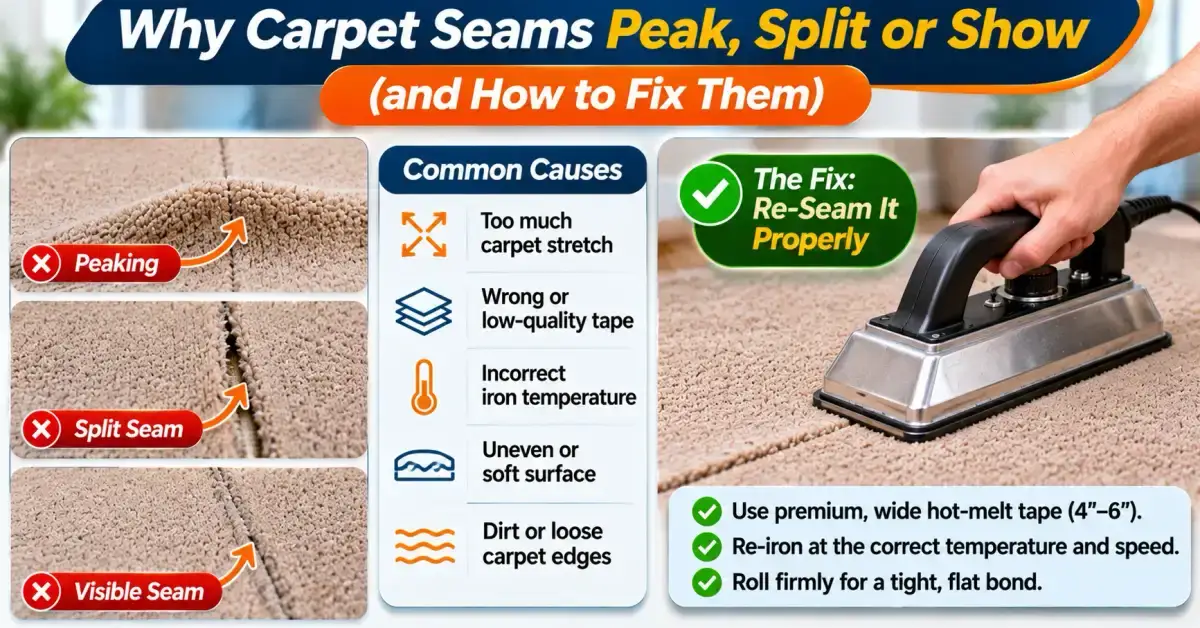
Key Takeaway: Seams peak mainly when stretched carpet pulls on tape that does not stretch. Wider tape, back-rolling, steady iron heat and sealed edges reduce the problem, but they cannot make a seam invisible.
Can You Repair a Split Seam With New Tape?
Yes. To fix a split carpet seam, pull back both loose edges and remove the failed tape. Seal any frayed edges and let the sealer dry. Slide new hot-melt tape under the gap, heat it, and press the edges into it as you would on a new seam. Then weigh the seam until it cools. If the carpet has lost tension, restretch it first. A professional can help when the backing is scorched or the carpet has pulled away from the edge.
Carpet Seam Tape FAQs
Where should carpet seams go in a room?
+
CRI 105 says to keep seams to a minimum. When you can, run them the length of the room, parallel to the main traffic path, away from pivoting traffic and doorways, and out of light that strikes across the seam.
Can I walk on or stretch a new seam right after ironing?
+
No. Shaw's installation guidelines say the carpet and tape must be cool to the touch before you stretch, or the seam can pull apart. Cooling times vary by tape, so follow the tape maker rather than a fixed number of minutes.
Can I use duct tape or double-sided carpet tape to seam carpet?
+
Not for a permanent seam. Duct tape and rug tape are not seam tape, and neither is built to bond two carpet backings the way scrim-reinforced seam tape is. Pressure-sensitive seam tape is the no-iron option for small, light-use jobs.
Is seam tape used for glue-down carpet or carpet tile?
+
For direct glue-down, CRI 105 calls for seam adhesive on the cut edge and does not name seam tape. Double-glue installs need hot-melt seaming unless the carpet maker says otherwise. The standard's carpet tile section does not mention seaming tape, so follow the tile maker's instructions.
Does hot-melt seam tape smell or smoke when heated?
+
Melting adhesive can give off fumes, and CRI 105 says to provide adequate ventilation. Some tapes are sold as low smoke and low odor. Visible smoke or a scorched backing suggests the iron is too hot or moving too slowly.
Carpet Seam Tape Quick Summary
Carpet seam tape joins two carpet edges, and the type you pick matters. Use hot-melt tape with a grooved seaming iron for permanent seams, pressure-sensitive tape for small low-traffic fixes, and never rug tape. Seal both edges, match the tape to the install, keep the iron moving, roll the seam and let it cool. Expect a seam that shows a little and fix peaking or splits by reheating or replacing the tape.
Need a carpet cleaning company you can trust? We handle residential and commercial carpet cleaning, rug cleaning, upholstery cleaning, and pet stain and odor removal —our team is ready to help.

Michael Sanders
Michael Sanders is a home care and cleaning industry writer covering carpet maintenance, flooring care, and household cleaning practices across the United States. His work focuses on practical, research-backed guidance — from stain and odor removal to deep extraction methods and indoor allergen prevention. Michael collaborates with cleaning professionals to ensure accuracy, and his writing reflects a genuine interest in helping homeowners make informed decisions about caring for their homes.