
Blog · Carpet Cleaning Guide
How to Patch Carpet: A Step-by-Step Guide for Small Holes, Burns and Tears
Can carpet be patched? Yes, and you can often do it yourself when the damage is small. To patch carpet, cut out the damaged spot, drop in a matching piece with the pile running the same way, and bond the edges with seam tape or adhesive. It works best on damage under about 1 square foot.
Published November 17, 202613 min read
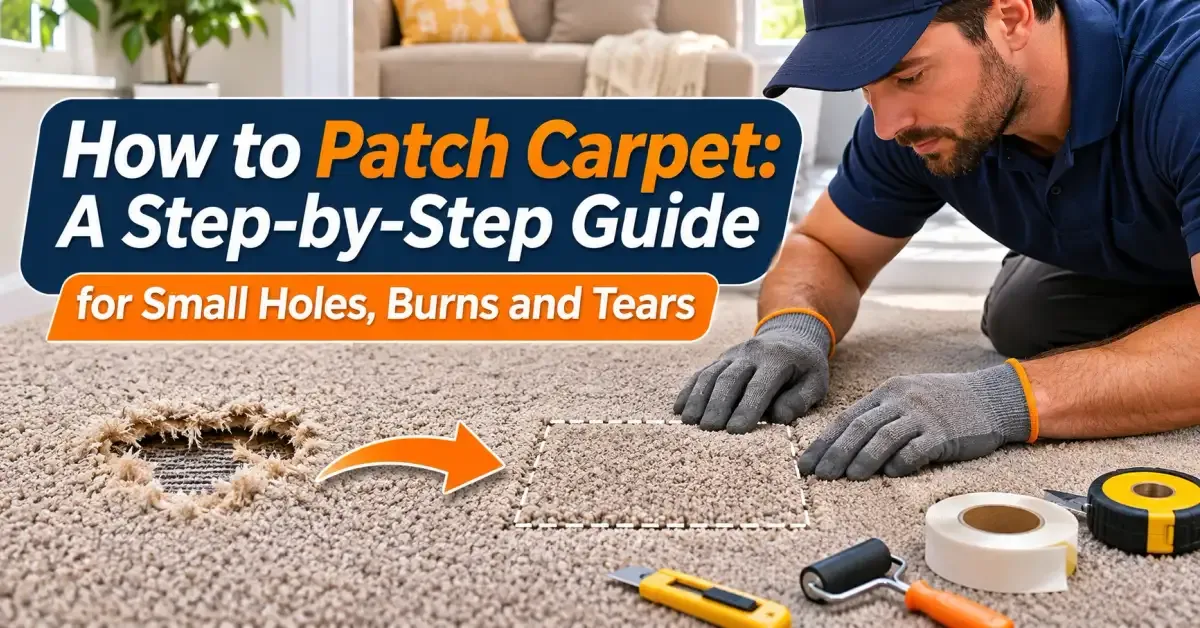
A DIY kit costs about $35 to $50, while a pro patch typically runs $150 to $250. This guide covers how to patch carpet step by step, how to find a match with no extra carpet, damage by pets, and DIY versus pro costs.
Can You Patch Carpet? What Can and Cannot Be Fixed
Can you patch carpet? Usually yes, as long as the damage is small and the carpet around it is in good shape. The Spruce, HGTV, Angi and Homedit all set the practical DIY limit at about 1 square foot. Larger or repeated damage points toward a pro or new carpet.
Damage a Patch Fixes Well
A patch suits localized damage where the surrounding carpet is still sound:
- Cigarette and ember burns
- Stains that cleaning cannot remove, such as bleach spots
- A torn or ripped corner, or a single tear from a snag
- Holes chewed or dug by a dog or cat
Deep burns may need a larger section replaced. If liquid reached the pad, replace the pad too.
Quick Check: Will Your Carpet Patch Show?
Pile height and style decide how well a patch hides. Barbra Wilson, manager of technical information at the Carpet and Rug Institute, told This Old House that shorter, tighter pile (generally half an inch or less) hides seams better than plush, long pile.
| Factor | Easier to hide | Harder to hide |
|---|---|---|
| Damage size | Under about 1 sq ft | Larger, or several spots |
| Pile | Short, dense cut pile | Plush, long pile |
| Pattern | Solid color | Patterned carpet |
| Style | Cut pile | Loop or Berber |
| Surrounding carpet | Tight and flat | Loose or rippled |
| Pad | Dry and intact | Damaged or soaked |
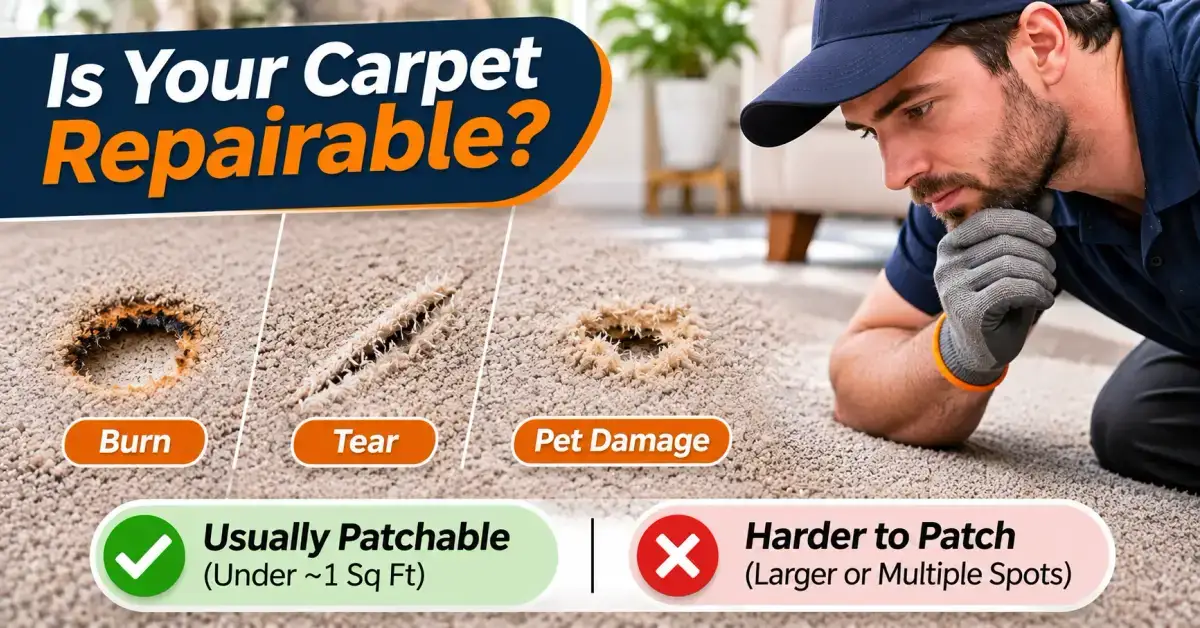
Even a careful patch can show on busy, plush or patterned carpet, and pros often do it better. Judge your skill honestly before you cut.
Key Takeaway: DIY patching works best on damage under about 1 square foot, in short, dense, solid-color cut pile with tight, flat carpet around it.
How to Patch Carpet Without Extra Carpet
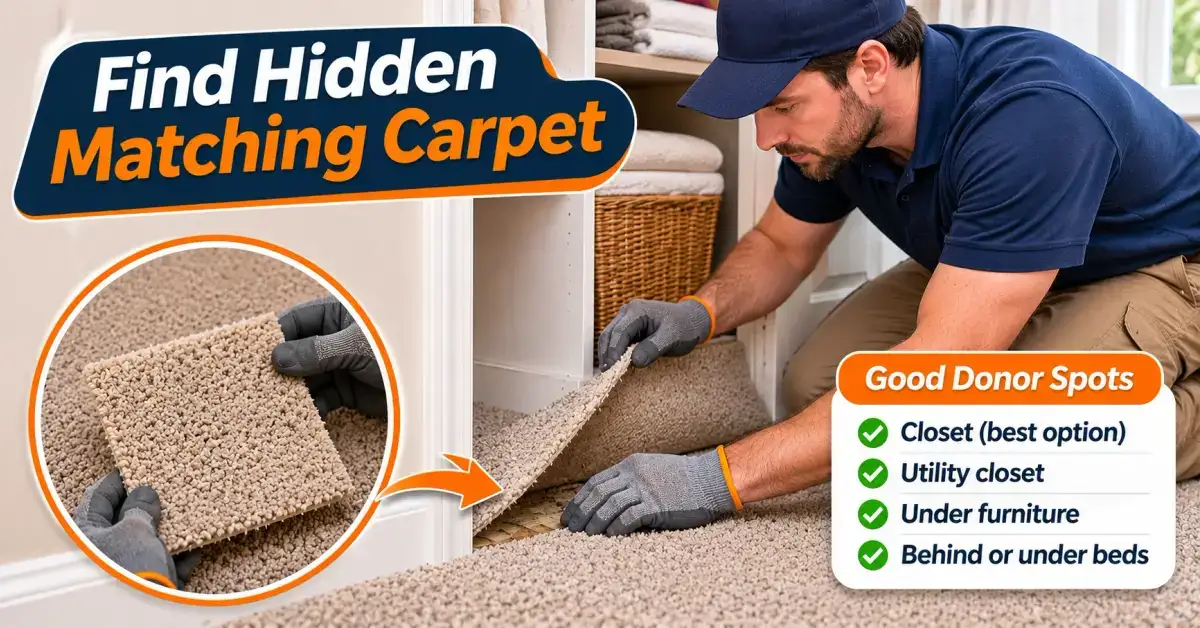
Most homes have no leftover carpet from the installation, so the match has to come from a hidden spot. A patch of carpet cut from an out-of-sight area matches best because it is the same carpet.
Where to Find a Matching Piece
The Spruce ranks the best donor sources in this order:
- A leftover remnant from the original install, often stored in a garage, attic or basement
- A clothing or linen closet
- A utility closet, such as a water heater or furnace closet
- Under an enclosed staircase
- Under furniture that will not move, like a media cabinet
- Behind or under beds and desks
If the room needs stretching anyway, a repair pro can use the trimmings for a small patch. A store remnant only works if you know your carpet's brand and style, because matching by eye is unreliable.
What to Do About the Hole You Leave Behind
The Spruce says the better method is to fill the donor spot with a best-match remnant. It may not match perfectly, but a closet spot is usually out of sight.
How to Match Carpet Pile Direction Before You Cut
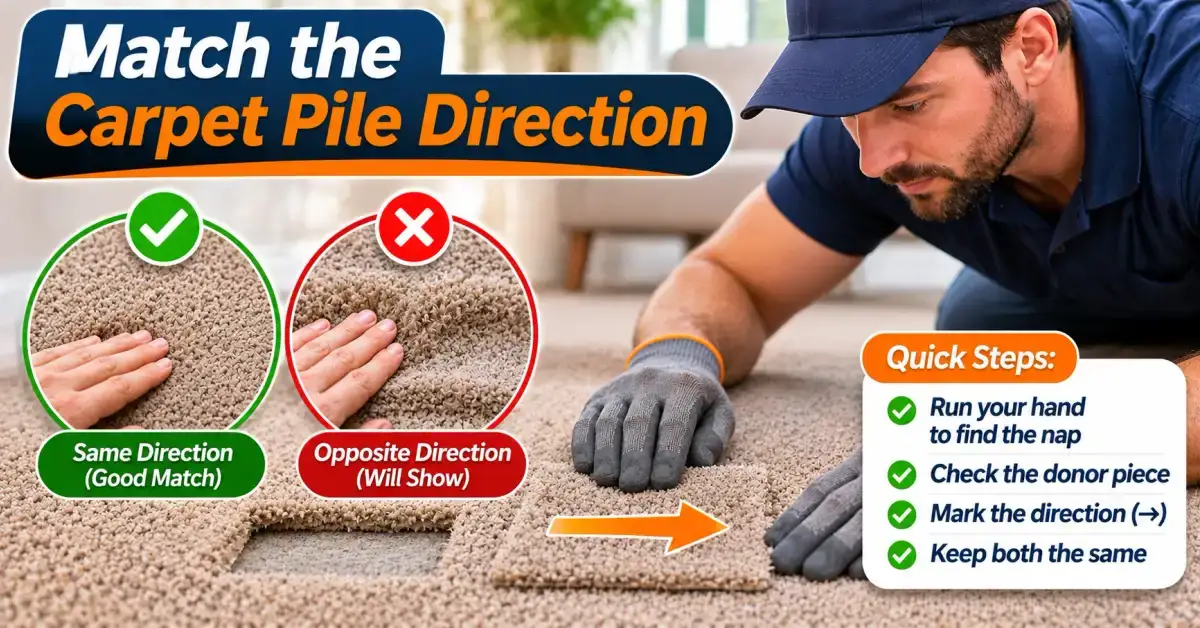
Pile direction decides whether a patch blends in. A patch turned the wrong way can look like a different shade, even from the same carpet. The Carpet and Rug Institute's installation standard (CRI 105) calls for the same pile direction in adjacent pieces.
Here is how to match the nap:
- Run your hand across the carpet in several directions. The smoother direction is the way the pile lies.
- Repeat on the donor piece.
- Draw an arrow on the back of the patch, or on tape stuck to it, pointing the same way.
- Skip the hand test on low-pile Berber, where direction may not show, The Spruce says.
- If the donor's nap runs opposite the cutout's, rotate it 180 degrees and check again.
Adhesive Disks, Seam Tape or Heat-Bond Tape: Which Method to Use
Carpet patching comes down to how you bond the edges. Pick the method that fits your tools and skill.
| Method | Iron needed? | Best for | Notes |
|---|---|---|---|
| Adhesive disk (patch kit) | No | Beginners, small spots | Dampen to activate, wait 3 to 5 minutes until tacky, then about 15 minutes to adjust |
| Cold seam tape | No | Small patches without heat | Sticks on contact and cannot be repositioned |
| Heat-set seam tape | Yes | Busier areas, pro repairs | Heat bonds the backing to the tape |
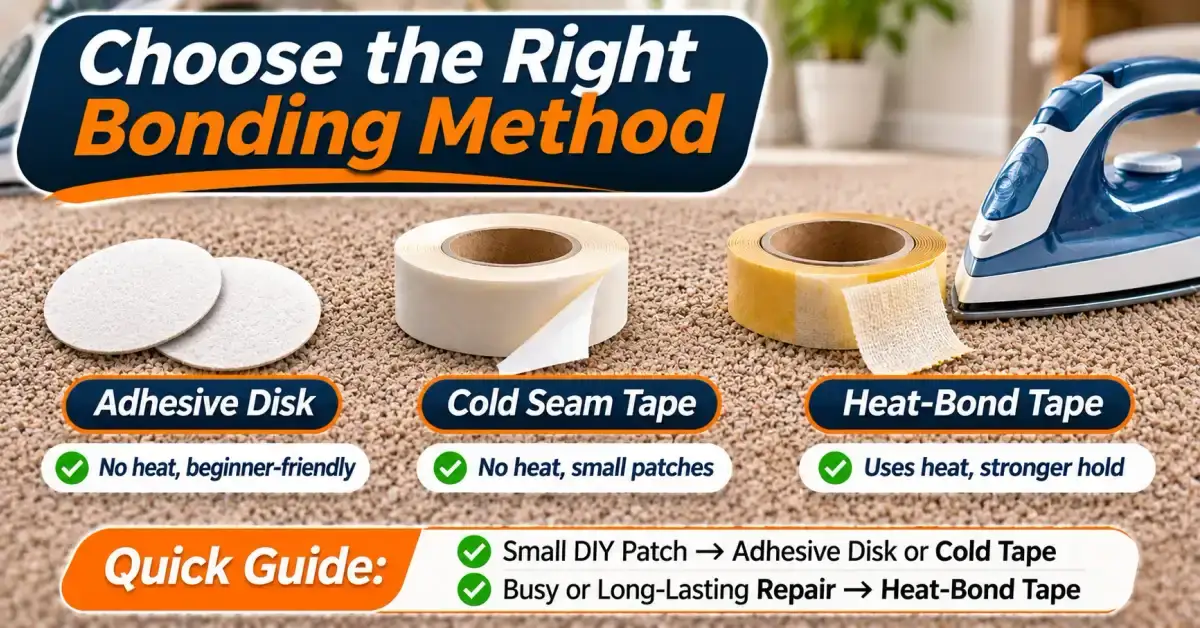
Wondering how to patch carpet without a seam iron? Adhesive disks and cold seam tape need no heat. A 2018 Ottawa Citizen home-repair column describes setting heat-set tape with a household iron on high, pressed through a damp towel.
Tape type is debated. Many DIY guides call for double-sided carpet tape, while the Ottawa Citizen column prefers seam tape with adhesive on one side, so the patch floats above the pad. WikiHow warns that gluing a patch to the pad makes the pad hard to salvage.
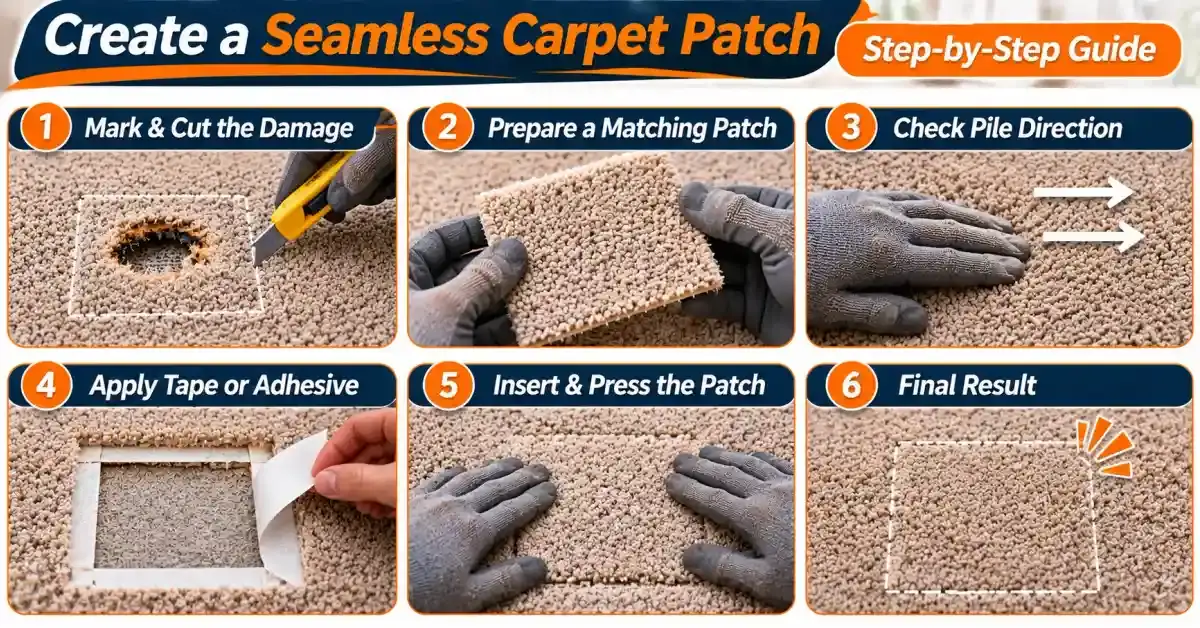
How to Patch Carpet Step by Step
Tools and Materials You Need
- Utility or carpet knife with fresh blades, plus sharp scissors
- Screwdriver or awl, and a straightedge
- Donor carpet, plus matching pad if the old pad is damaged
- Seam tape or an adhesive disk kit
- Star wheel seam roller, or a comb or stiff brush
- A heavy weight, such as a stack of books
A repair kit costs about $35 to $50, according to Angi. This Old House puts a full DIY patch, with kit, glue and star roller, at about $40.
The 8 Steps to Replace a Piece of Carpet
- Clean the spot. Remove debris, loose fibers and charred material.
- Mark the cut. Part the fibers with a screwdriver or awl, so your square or rectangle sits at least half an inch from the damage.
- Cut out the damage. Use a new blade, keep your free hand out of its path, and cut only the backing, not the pad. Cut stray fibers rather than pulling them.
- Cut the patch. Turn the donor face down and trace the cutout onto its back, keeping the nap direction matched. If the patch runs slightly big, trim one row of fibers.
- Place the tape. Slide strips halfway under the edges of the opening, adhesive side up. Tape cannot be repositioned once it sticks.
- Set the patch. Press it in from the center outward, with the nap arrow matching the surrounding carpet.
- Blend the seam. Roll the seam in all directions, working gently so you do not rip edge tufts. Trim raised fibers level with sharp scissors.
- Let it set. Weight the patch overnight, as Family Handyman suggests.
Adhesive disks and seam glue give about 15 minutes to adjust. Then keep traffic off the patch, and skip vacuuming, for up to 24 hours, or follow your tape or kit directions.
How to Patch Carpet Damaged by Pets
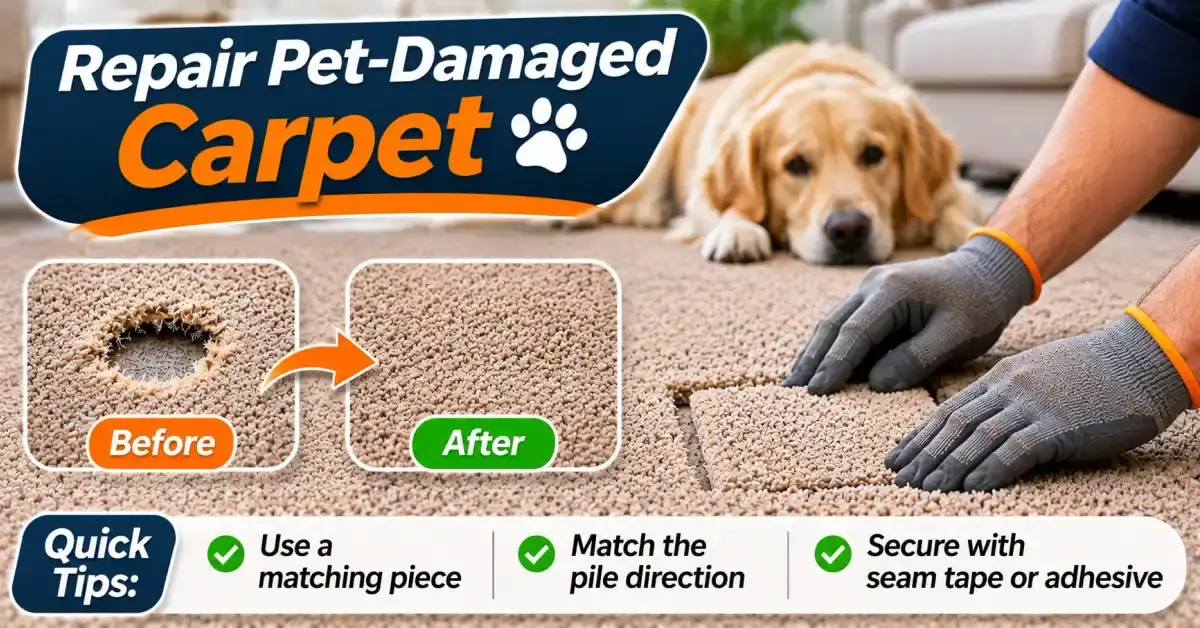
Damage by pets, usually claw tears and dug holes, takes more than a patch. The problem often reaches the pad, the tack strip and the subfloor.
How to Patch a Hole in Carpet Dug by a Dog
A dog-dug hole is usually a ripped or torn spot, often at a doorway or corner. Follow the same eight steps, but cut a clean square around the whole damaged area, not just the visible hole. If the pad is chewed, replace it with matching pad before you set the patch.
For a simple snag or pull, trim the loose fiber and use a dab of fabric glue instead of cutting a patch. Keeping your pet's nails trimmed helps prevent repeats.
Check the Pad, Tack Strip and Odor First
Urine usually soaks a wider area than the stain, so a patch hides the spot without removing the smell. Treat or replace the soaked pad first. A dog that digs at a doorway may damage the tack strip too, which is usually a job for a professional.
Key Takeaway: With pet damage, stop the digging, treat any urine, check the pad and tack strip, and only then patch. Otherwise the smell or damage can return.
Carpet Patch Repair Cost: DIY vs Professional
Carpet patch repair costs less than replacing carpet in most cases. These are recent national figures, and prices vary by region.
| Option | Typical cost | Source |
|---|---|---|
| DIY repair kit | $35 to $50 | Angi |
| Full DIY patch (kit, glue, star roller) | About $40 | This Old House |
| Professional patch (burn or hole) | $150 to $250 | HomeAdvisor |
| Professional hole patch | $140 to $200 | Thumbtack |
| Professional repair (burns, tears, snags) | $130 to $300 | Angi |
| Professional labor | $60 to $80 per hour | HomeAdvisor |
HomeAdvisor labels its figures as 2025 prices, and Thumbtack's page was updated in April 2026. Replacing carpet means paying for removal, about $180 according to Angi, plus new carpet and installation. For one or two damaged spots, patching usually costs far less. Replacement makes sense when damage spreads across a whole room.
When to Call a Professional
- The damage is bigger than about 1 square foot, or there are several spots
- It sits in a doorway, hallway or the middle of a room
- The carpet is patterned, Berber or loop
- The damage is at a seam or a transition to hard flooring
- The pad or tack strip is damaged too
- You have no donor piece, or the carpet is under warranty
Stretch any ripples near the damage before or during the repair.
Why Carpet Patches Show and How to Avoid It
Most visible patches trace back to a few repeat mistakes:
- Wrong pile direction, which makes the patch look like a different shade
- Ragged cuts that fray at the edge
- A donor that is close in color but not the same carpet
- Glue alone instead of tape, or loose carpet that keeps pulling on the seam
- Glue on the pile, which can leave a hard or white spot
Round kit cutters suit beginners, but some repair pros warn that a round cut can ignore pile direction and fray. A straight-sided square lets you mark the nap clearly.
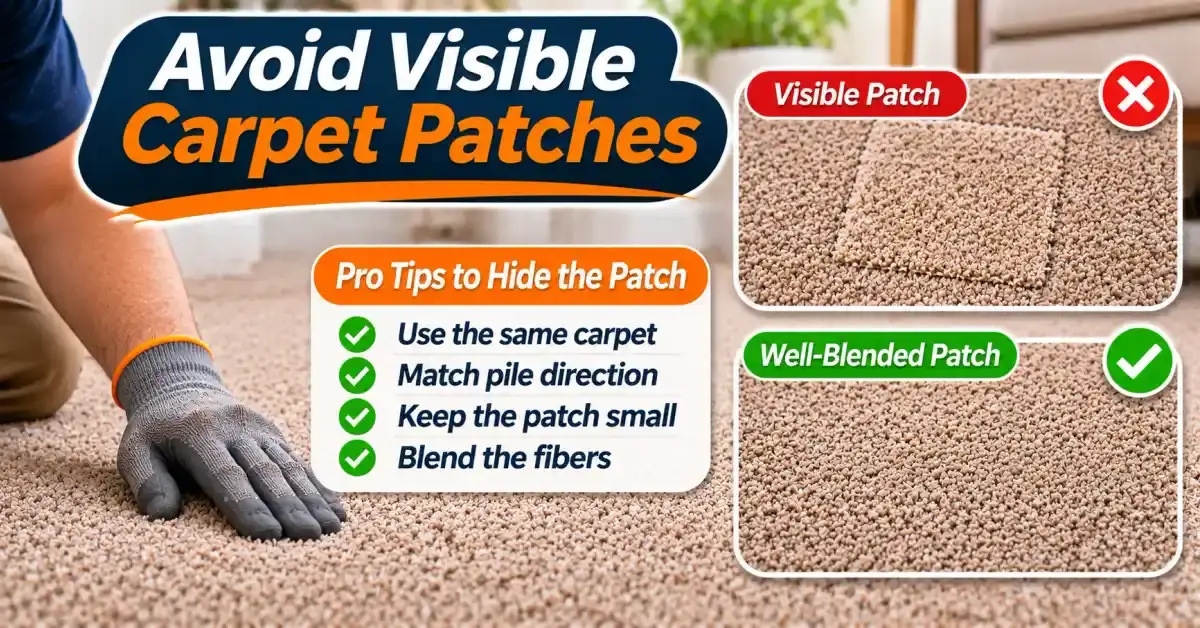
Before and After: What a Good Patch Looks Like
Check your finished repair against this list:
- The patch sits flush, with no ridge or gap
- The fibers lean the same way from every angle, with no darker or lighter square
- The seam line is hard to find from a few feet away
- You cannot feel a stiff glue spot underfoot
- The edges are not fraying or lifting after normal foot traffic
How to Repair Carpet When a Patch Is Not Enough
When damage is too big or sits in a bad spot, how to repair carpet depends on the problem. An area rug can cover it, and professional dyeing can even out large discolored areas. Loose or rippled carpet needs stretching or re-securing, not a patch. If damage covers the room, replacement is the honest answer.
Carpet Patching FAQs
Can I patch carpet myself?
+
Yes, if the damage is under about 1 square foot and you can find a matching piece. Cut carefully, match the pile direction, and call a pro for patterned carpet, seams or doorways.
Can you patch Berber or patterned carpet?
+
Yes, but it is harder. Loops in Berber can run, and a pattern must line up as well as the pile direction. Both are signs to consider hiring a pro.
How long does a carpet patch last?
+
A properly bonded patch can last as long as the carpet itself, according to This Old House. Angi puts carpet glue life at roughly 5 to 15 years. Patches fail when they are glued only, or when loose carpet around them keeps pulling on the seam.
Can you patch carpet without a seam iron?
+
Yes. Adhesive disks and cold seam tape need no heat. Heat-set tape does, and one home-repair column describes using a household iron through a damp towel.
Can you use super glue or duct tape on carpet?
+
Not as a real fix. Angi says super glue works briefly in a pinch, but it breaks down and the patch can shift. Seam tape or seam glue is made for the job, and duct tape is not.
What if the patch looks darker or lighter than the carpet?
+
Check the pile direction first, since a turned patch reflects light differently. Wear and fading can also make a newer piece look different, so choose a donor spot with a similar tone.
Final Thoughts on How to Patch Carpet
Learning how to patch carpet comes down to a few choices: check the damage size and pile, find a donor piece, match the nap, and bond the edges cleanly. Skip the DIY route for big, patterned or doorway damage. If you doubt your cuts, a pro patch at $150 to $250 beats a visible mistake.
Need a carpet cleaning company you can trust? We handle residential and commercial carpet cleaning, rug cleaning, upholstery cleaning, and pet stain and odor removal —our team is ready to help.

Michael Sanders
Michael Sanders is a home care and cleaning industry writer covering carpet maintenance, flooring care, and household cleaning practices across the United States. His work focuses on practical, research-backed guidance — from stain and odor removal to deep extraction methods and indoor allergen prevention. Michael collaborates with cleaning professionals to ensure accuracy, and his writing reflects a genuine interest in helping homeowners make informed decisions about caring for their homes.