


Blog · Stain Removal Guide
How to Get Chocolate Out of Carpet: Full Guide
If you want to know how to get chocolate out of carpet, the first thing to understand is that chocolate isn't one substance. It's fat, protein, and sugar working together, and each form it takes, melted, powdered, syrupy, or frozen, needs a slightly different first move.
Published October 28, 20267 min read

This guide covers the real method for every form, including cocoa powder, which almost nothing else online actually addresses, despite behaving completely differently than a melted spill.
Scrape or vacuum away solids first, never wipe them. For melted or liquid chocolate, blot with cool water, then treat with a dish soap solution. For dry cocoa powder, vacuum thoroughly before any water touches it, since wetting the powder first turns it into a spreading stain.
How Do You Get Chocolate Out of Carpet?
Start by identifying the form. Hardened or solid chocolate should be scraped away with a dull knife, working from the outer edge inward. Melted or liquid chocolate should be blotted immediately with a clean, cool, damp cloth instead.
Picture a chocolate bar left on a couch cushion that melts against body heat and lands on the carpet below when someone stands up. Scraping it first while it's still cool and semi-solid, before it fully liquefies into the fiber, makes a real difference in how much comes up in that first pass. Once solids are removed, apply a few drops of dish soap mixed with cool water, blotting from the outside of the stain toward the center. Rinse with a clean, damp cloth and blot dry. Never use hot water, since heat sets the protein component into the fiber rather than loosening it.

Why Is Chocolate So Hard to Remove From Carpet?
Chocolate contains fat from cocoa butter, protein from milk solids, and sugar, three components that each interact with carpet fiber differently. The fat doesn't dissolve in plain water, which is why a damp cloth alone often smears a chocolate stain rather than lifting it.
Chocolate also contains tannins, the same compound found in coffee, tea, and red wine, which is responsible for the dark brown color it leaves behind in carpet fiber. This combination of oily fat and staining tannin is why chocolate needs a proper degreasing solution, not just water, to fully lift.
How Do You Get Cocoa Powder Out of Carpet?
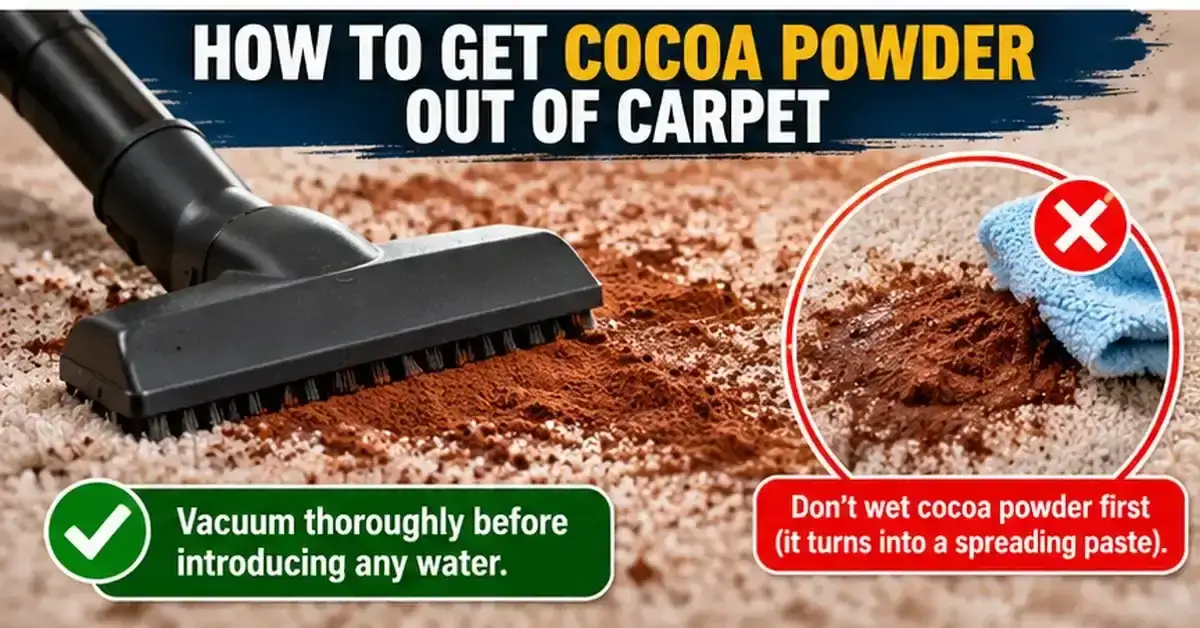
Cocoa powder needs the opposite first move from every other form of chocolate. Vacuum it thoroughly before introducing any water, since wetting dry cocoa powder first turns it into a spreading paste that pushes pigment deeper into the fiber.
Consider someone baking who spills cocoa powder from an open container onto the carpet and instinctively wipes it with a damp cloth to clean it up quickly. That single wipe turns a dry, vacuum-friendly mess into a dark, smeared stain covering twice the original area. Once the loose powder is fully vacuumed, treat any remaining discoloration with a dish soap and cool water solution, blotting from the outside in. Cocoa powder's fine particles and concentrated tannin content mean a faint shadow can remain even after most of the color lifts, so expect to repeat the treatment once or twice on a fresh spill.
How Do You Get Chocolate Ice Cream Out of Carpet?
Chocolate ice cream combines fat and tannin with dairy protein, which is why it behaves more stubbornly than plain melted chocolate. Scrape away any solid or frozen chunks first with a dull knife, working carefully to avoid pushing it deeper into the pile.
Blot the remaining melted residue with a cool, damp cloth, then apply a dish soap solution and let it sit for a few minutes before blotting again. Rinse with plain water and blot dry. If a faint shadow remains after the dairy and fat are lifted, a small amount of diluted hydrogen peroxide can help on light-colored carpet.
How Do You Get Chocolate Milk or Hot Chocolate Out of Carpet?
Both are liquid and dairy-based, so blot immediately rather than scraping. Chocolate milk and hot chocolate soak into the fiber quickly, which makes fast response more important than with solid chocolate.
Blot with a cool, damp cloth, then apply a dish soap solution and blot again from the outside in. Rinse with plain water and blot dry. Hot chocolate specifically can leave a lingering sweet odor even after the stain lifts, so a light baking soda application after the area is fully dry helps absorb what's left behind.
How Do You Get Chocolate Syrup or Dried, Set-In Chocolate Out of Carpet?
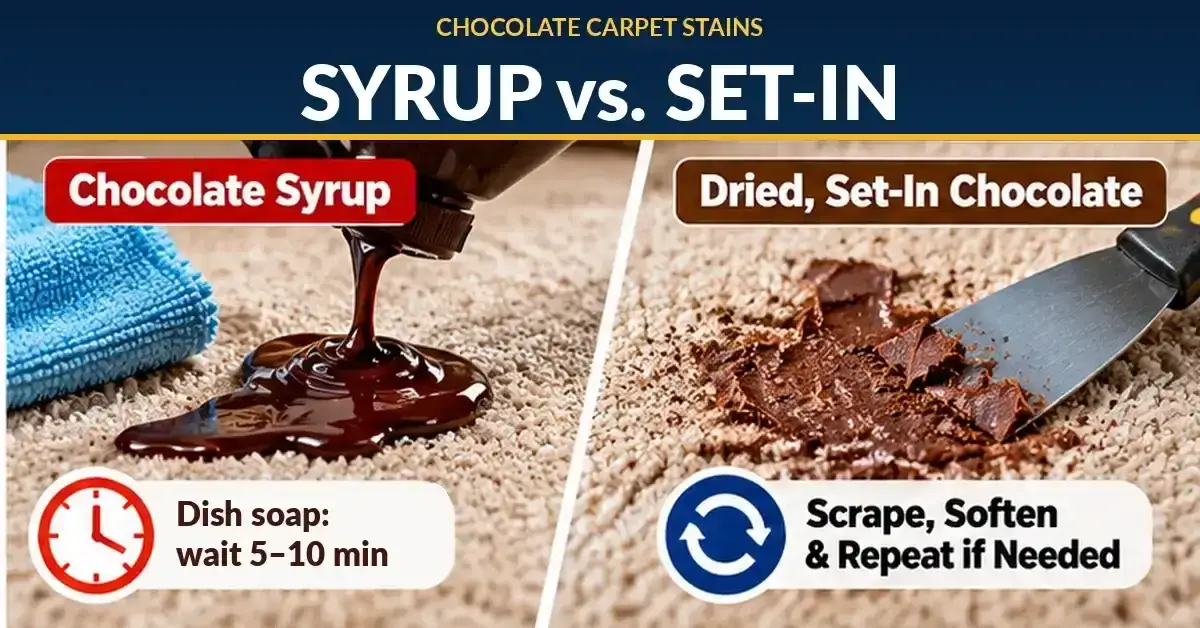
Chocolate syrup and dried, set-in chocolate both need longer dwell time than a fresh spill. For syrup, blot up excess first, then apply a dish soap solution and let it sit for five to ten minutes before blotting again, since the sugar content makes it stickier and slower to lift.
For dried chocolate that's already hardened into the fiber, scrape away what you can first, then mist the area with cool water to soften the remaining residue before treating with dish soap. Older, fully set stains often need two or three treatment cycles rather than one.
What Mistakes Make a Chocolate Stain Worse?
Wiping instead of blotting is the most common mistake, since it smears fat and tannin across a wider area instead of lifting it out. Using hot water is the second, setting the protein component into the fiber rather than loosening it.
Think of two identical chocolate syrup spills treated differently: one blotted gently from the outer edge inward, the other wiped in quick circular motions to "clean it up fast." The wiped spill ends up nearly twice the size of the original spot by the time any cleaning solution is applied. Wetting cocoa powder before vacuuming is the third mistake, turning a dry, manageable spill into a spreading paste. Skipping the final rinse is the fourth, leaving behind cleaning residue that attracts new dirt and dulls the spot again within days.
Why Acting Fast on Chocolate Stains Actually Matters
Chocolate contains fat from cocoa butter, protein from milk solids, and sugar together, three components that interact with carpet fiber in different ways, which is part of why it resists simple water-based cleaning (Source: BISSELL). Hot water should be avoided on chocolate stains specifically, since heat sets the protein component into the fiber rather than loosening it (Source: BISSELL).
Chocolate's tannin content, the same compound found in coffee, tea, and red wine, is responsible for the dark brown coloring it leaves behind in carpet fiber (Source: Zerorez Carpet Cleaning). Ammonia-based cleaning solutions, sometimes used on stubborn chocolate stains, should never be mixed with bleach or bleach-containing products, since the combination produces toxic fumes (Source: Washington State Department of Health). The ANSI/IICRC S100 standard identifies prompt spot-and-stain response as a defined part of proper carpet maintenance, applicable to fat and protein-based stains like chocolate (Source: ANSI/IICRC S100).
Common Questions About Chocolate Stain Removal, Answered
Does baking soda work on chocolate stains?
+
It absorbs some odor and light residue but has little effect on the fat and tannin causing the actual stain. Use it as a follow-up step, not the main treatment.
Is ammonia safe to use on chocolate stains?
+
In a diluted solution it can help on stubborn stains, but never mix it with bleach or bleach-containing products, since the combination produces toxic fumes.
Does hydrogen peroxide work on chocolate stains?
+
It can help lift residual discoloration on light-colored carpet in small, diluted amounts, but always test a hidden spot first, since it carries bleaching risk.
How do you get chocolate out of white carpet?
+
Use the same dish soap method, testing any solution on a hidden patch first. Diluted hydrogen peroxide can help clear a lingering shadow on white carpet specifically.
How do you get chocolate stains out of wool carpet?
+
Use a mild, diluted dish soap solution rather than stronger commercial removers, and always test a hidden spot first, since wool is more sensitive than synthetic fiber.
Can a chocolate stain come back after cleaning?
+
Yes, if fat residue is left behind. A thorough rinse and full drying prevent the fat from resurfacing and attracting dirt again later.
How do you get chocolate out of a rug specifically?
+
Follow the same method as carpet, but blot more gently on delicate or hand-knotted rugs and test any solution on a hidden corner first.
Does vinegar work on chocolate stains?
+
Vinegar has mild cleaning action from its acidity, but it's generally less effective than a dish soap solution on fat and protein-based stains like chocolate.
How do you get chocolate pudding out of carpet?
+
Treat it the same as chocolate ice cream, since both combine fat, tannin, and dairy protein. Scrape solids, blot, then apply a dish soap solution and rinse.
When should you call a professional for a chocolate stain?
+
Call a professional if the stain persists after repeated treatment, covers a large area, or is on delicate wool, silk, or antique carpet.
Learning how to get chocolate out of carpet successfully comes down to matching the treatment to the form, since cocoa powder, melted chocolate, and syrup each need a different first move. Handled correctly, most chocolate stains come out completely.
Need a carpet cleaning company you can trust? We handle residential and commercial carpet cleaning, rug cleaning, upholstery cleaning, and pet stain and odor removal —our team is ready to help.

Michael Sanders
Michael Sanders is a home care and cleaning industry writer covering carpet maintenance, flooring care, and household cleaning practices across the United States. His work focuses on practical, research-backed guidance — from stain and odor removal to deep extraction methods and indoor allergen prevention. Michael collaborates with cleaning professionals to ensure accuracy, and his writing reflects a genuine interest in helping homeowners make informed decisions about caring for their homes.