


Blog · Pest Identification Guide
Carpet Beetle Identification: What They Look Like and Whether They're Harmful
You spotted a tiny, speckled bug crawling near a window, or you pulled out a sweater and found a ragged hole you can't explain. Either way, you want a straight answer fast.
Published November 1, 20269 min read
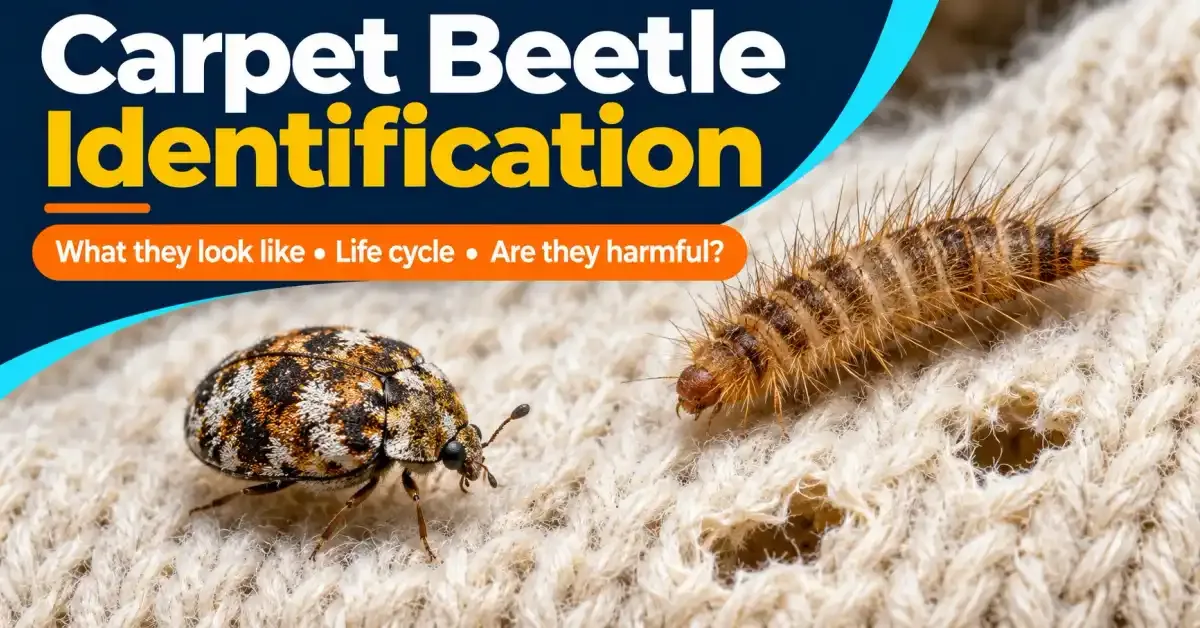
A carpet beetle is a small, oval household pest whose larvae feed on wool, fur, feathers, and other natural fibers, while the adults fly in from outside to feed on pollen. They're one of the most commonly misidentified bugs in American homes, often confused with bed bugs or dismissed as harmless until they've already damaged a rug or a coat. This guide covers what carpet beetles look like at every life stage, how they get inside, whether they're actually dangerous, and how to spot an infestation before it spreads.
What Is a Carpet Beetle?
A carpet beetle is a small beetle in the family Dermestidae, a group entomologists call skin feeders because the larvae eat materials that come from animals. In the United States, three species cause almost all the trouble: the varied carpet beetle, the furniture carpet beetle, and the black carpet beetle. The varied carpet beetle is the most common species found in homes, and it gets its name from the mottled pattern of white, brown, and yellow scales on its back.
Adults are outdoor insects at heart. They feed on pollen and nectar in gardens and parks, not on carpet, and only end up indoors by accident or while searching for a place to lay eggs. Carpet beetles turn up in homes across every state, so finding one doesn't mean a house is unusually dirty.
What Does a Carpet Beetle Look Like?
Adult Carpet Beetles
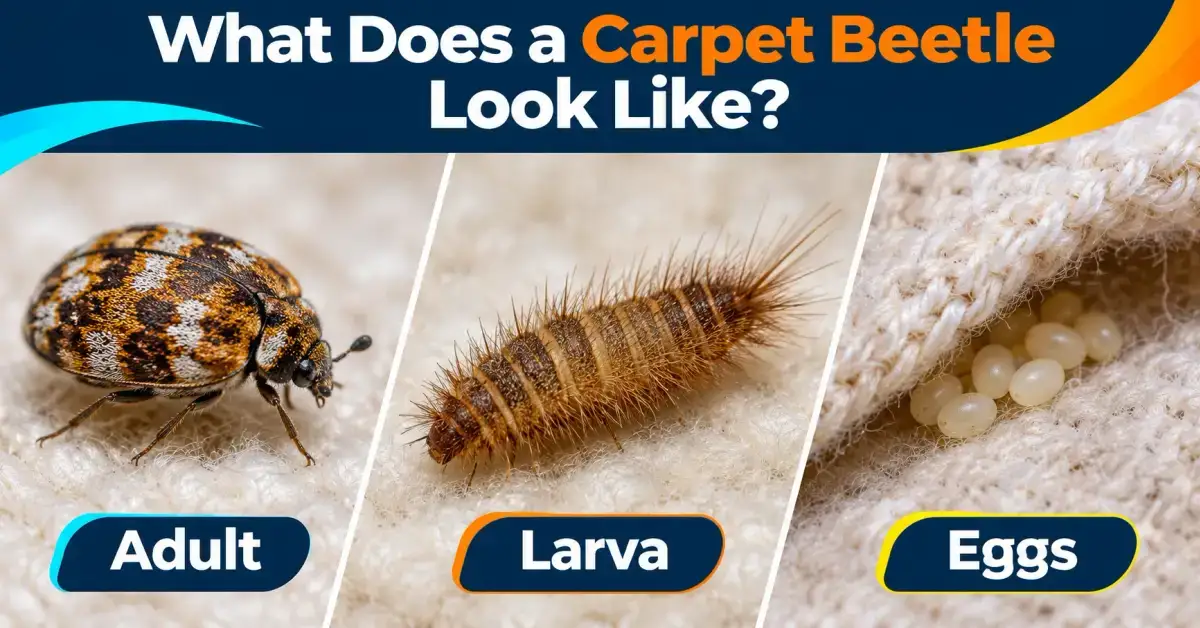
Adult carpet beetles are tiny, usually between one-sixteenth and one-eighth of an inch long, roughly the size of a pinhead to a grain of rice. Their bodies are oval and rounded, covered in a hard shell patterned with white, brown, yellow, or black scales that can look speckled, mottled, or almost solid black as the beetle ages and the scales wear off. Adults are strong fliers and are often spotted on windowsills, since they're drawn to light and are trying to get back outside. They don't bite, sting, or damage fabric themselves.
Carpet Beetle Larvae
The larvae, not the adults, cause the real damage, and they look nothing alike. Carpet beetle larvae are small, tan to dark brown, and covered in dense bristly hairs that make them look like tiny, fuzzy caterpillars, which is why people nickname them woolly bears. They're usually longer than the adults, reaching about one-quarter of an inch, with a body that tapers toward the rear and sometimes ends in a tuft of longer hairs. Larvae move slowly, avoid light, and stay hidden in closets, baseboards, vents, and the folds of stored fabric, where they feed for months without being noticed.
What Carpet Beetle Eggs Look Like
Carpet beetle eggs are easy to miss because they're genuinely tiny, typically under one millimeter long, oval in shape, and white to cream in color. A female lays them in batches, usually tucked into cracks, crevices, or the folds of fabric close to a food source, so the larvae have something to eat the moment they hatch. Because the eggs are so small and pale, they're frequently mistaken for dust, lint, or grains of salt, and most people never spot them directly. Finding shed skins or fabric damage nearby is usually the first real clue that eggs hatched there.
Key Takeaway: Adult carpet beetles are tiny, oval, and patterned, while larvae are fuzzy, bristly, and responsible for all the fabric damage. Eggs are nearly invisible, tiny, oval, and pale, usually hidden right where the larvae will feed.
Carpet Beetle Life Cycle
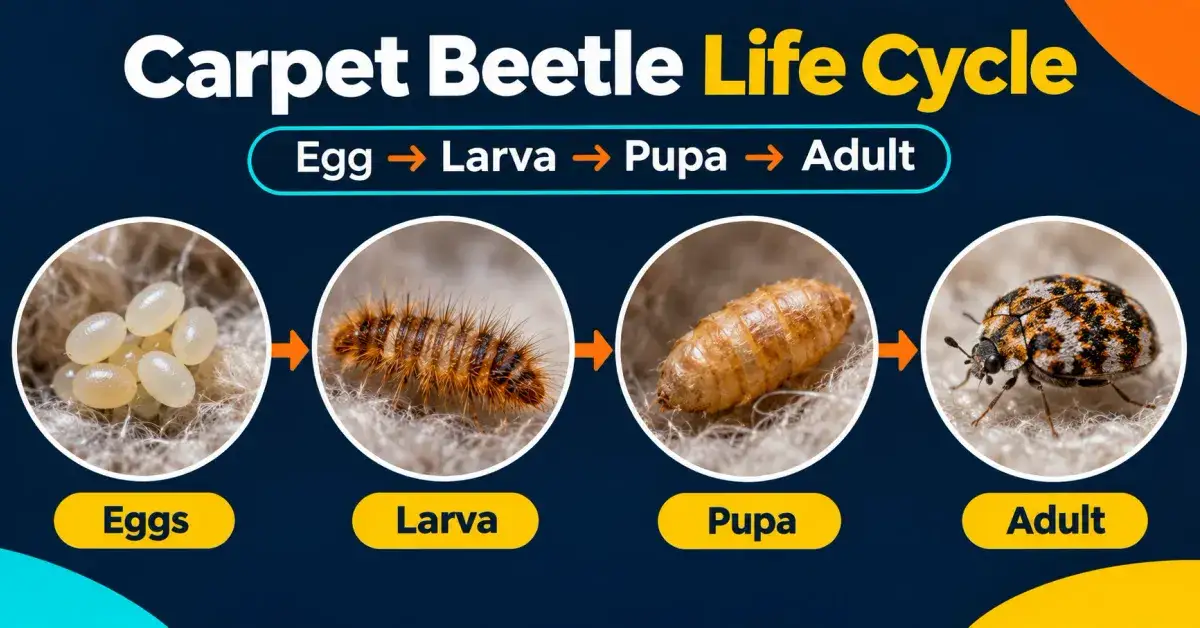
Carpet beetles go through complete metamorphosis, meaning they pass through four distinct stages: egg, larva, pupa, and adult. After mating, a female lays somewhere between 40 and 90 eggs, tucking them into cracks and fabric folds near a food source. Depending on the temperature, eggs typically hatch within one to five weeks.
The larval stage is by far the longest part of the life cycle, and it's also the only stage that causes damage. Depending on the species and how much food and warmth is available, larvae can feed and grow for anywhere from about ten weeks to well over a year before they're ready to pupate. Once a larva has eaten enough, it forms a hard, light brown pupal case in a dark, undisturbed spot and stays there for roughly one to two and a half weeks while it transforms into an adult.
Adult carpet beetles live only a few weeks, usually somewhere between two and eight weeks, just long enough to mate, lay eggs, and start the cycle again. That short adult lifespan is also why you're more likely to notice larval damage than the beetles themselves.
Key Takeaway: From egg to adult, a carpet beetle's life cycle can run from several months to more than a year, with the larval stage lasting the longest and causing all of the fabric damage people notice.
Carpet Beetle vs. Bed Bug: How to Tell Them Apart
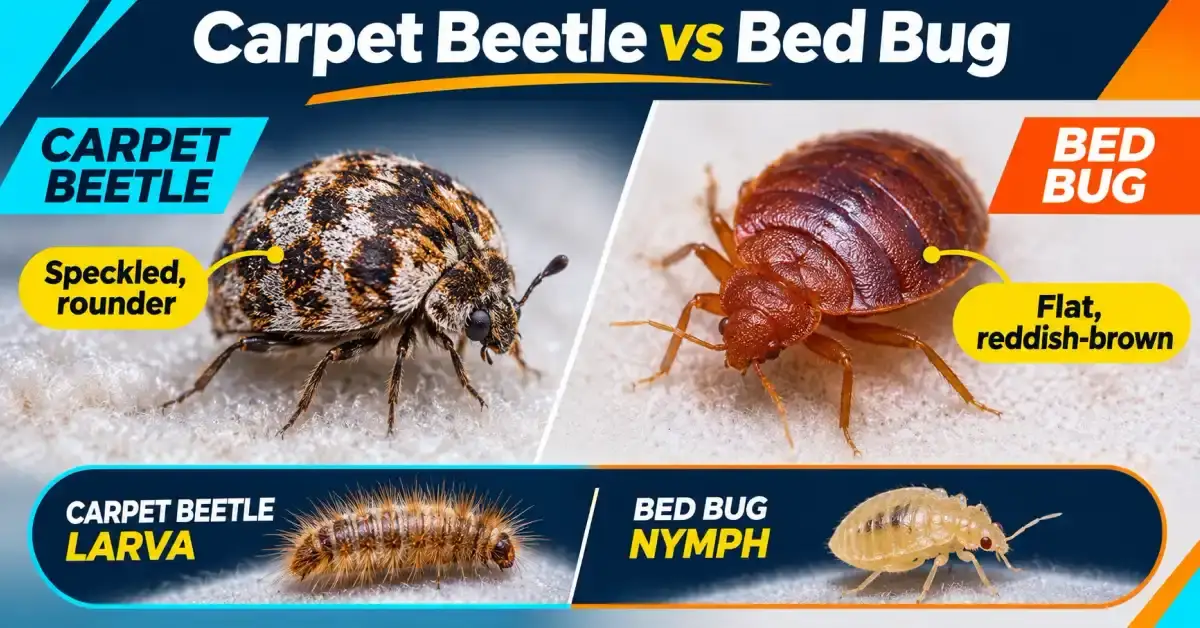
Carpet beetles and bed bugs get confused constantly, and it's easy to see why. Both are small, oval-ish, reddish-brown to black insects that can turn up almost anywhere in a home. The differences, though, are clear once you know where to look.
Bed bugs are flat and thin, with a shape often compared to an apple seed, and they turn reddish-brown after a blood meal. Carpet beetles are rounder and more domed, with a hard shell and a mottled or speckled pattern that bed bugs never have. Bed bugs also have long, thin antennae, while a carpet beetle's antennae are short and end in a small club.
The larvae look even less alike. Bed bug nymphs are simply smaller, paler versions of the adult, with the same flat shape. Carpet beetle larvae are fuzzy and bristly, closer to a miniature caterpillar than a beetle.
Diet is the real giveaway. Bed bugs feed exclusively on blood and leave behind true bite marks, usually in a line or cluster on exposed skin like the arms, neck, or face. Carpet beetles don't feed on people at all. Their larvae eat wool, fur, and other natural fibers, and any skin reaction people get is an allergic response to larval hairs, not a bite. Signs also differ: bed bugs leave dark fecal spotting and blood smears on sheets, while carpet beetles leave shed larval skins and irregular holes in fabric, with no blood and no webbing.
Key Takeaway: Bed bugs are flat, feed on blood, and leave true bite marks in a line, while carpet beetles are rounder, don't bite at all, and leave shed skins and fabric damage instead.
Where Do Carpet Beetles Come From?
Carpet beetles don't start out as an indoor problem. Adults live outdoors most of the year, feeding on pollen and nectar from flowering plants, and they only end up inside by accident or while searching for a place to lay eggs.
The most common way in is simply flying through an open window or door, often drawn by light. Cut flowers and houseplants brought in from the garden are another frequent source, since adults can be hiding among the petals. Secondhand furniture, rugs, and clothing can carry eggs or larvae too, especially if the item sat in storage for a long time.
A less obvious source is nests. Bird, wasp, and rodent nests in attics, eaves, and wall voids are a natural habitat for carpet beetles, and larvae can develop there for months without anyone noticing. This is also why a home can keep having carpet beetles even after it's been treated once. The real source may be in a wall void or attic rather than anywhere in the living space. None of this means a home is dirty. Carpet beetles turn up in spotless houses just as often as cluttered ones, since they're drawn to a food source, not a mess.
Are Carpet Beetles Harmful?
For the most part, carpet beetles are a nuisance to belongings rather than a threat to health. They don't spread disease, and the biggest real-world risk is damage to clothing, rugs, and upholstery. The main source of confusion is a skin reaction some people get from the larvae, which gets mistaken for something more serious far more often than it deserves.
Do Carpet Beetles Bite?
Carpet beetles do not bite. Adults and larvae both lack the mouthparts needed to pierce skin, so there's no mechanism for an actual bite. What people experience instead is an allergic reaction to the larvae's barbed hairs, which can lodge in skin or irritate the eyes and airways on contact, producing an itchy rash that looks a lot like a cluster of bites. This reaction, known as carpet beetle dermatitis, has been documented in dermatology literature since 1948, when the earliest known case report described contact dermatitis from a carpet beetle. More recently, the CDC's Emerging Infectious Diseases journal published a 2021 case cluster describing eleven patients across seven families in France who developed this exact rash and were initially misdiagnosed with bed bug or flea bites.
Are Carpet Beetles Harmful to Pets?
Carpet beetles aren't considered directly harmful to dogs or cats. They don't bite pets, and they aren't known to transmit any disease to them. The same barbed larval hairs that irritate human skin can occasionally cause mild skin or stomach irritation in a pet that rolls on or swallows larvae, but this is uncommon and rarely serious. Keeping floors, closets, and pet bedding vacuumed regularly is the simplest way to lower the odds of a pet coming into contact with larvae in the first place.
Key Takeaway: Carpet beetles can't bite humans or pets because they lack the mouthparts to do it. The itchy rash some people get, called carpet beetle dermatitis, comes from an allergic reaction to larval hairs and has been documented in medical literature since 1948.
Signs of a Carpet Beetle Infestation
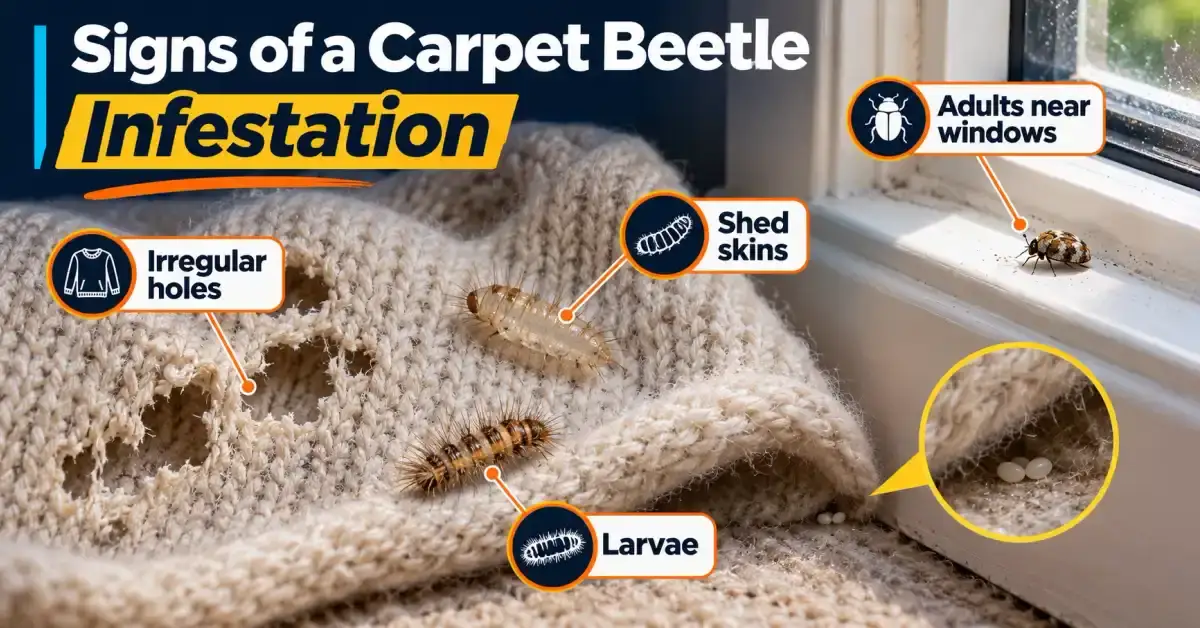
A carpet beetle infestation is usually easier to spot through its evidence than through the beetles themselves, since larvae avoid light and adults are only around briefly. Watch for:
- Irregular holes in wool, fur, silk, or other natural-fiber items, often concentrated in one spot rather than scattered
- Shed larval skins, which look like small, pale, hollow casings left in closets, baseboards, or under furniture
- Tiny fecal pellets near damaged items, about the size of a grain of sand
- Dead adult beetles collecting near windowsills or light fixtures
- Tiny, pale eggs tucked into fabric folds or cracks, usually the hardest sign to notice
Finding more than one of these signs is a good reason to check storage areas, closets, and vents more closely rather than treating it as a one-off.
How to Get Rid of Carpet Beetles
Getting rid of carpet beetles starts with cleaning, not chemicals. Vacuum thoroughly and often, paying close attention to carpet edges, baseboards, closets, vents, and under furniture, since larvae prefer these spots. Empty the vacuum canister or throw away the bag right afterward so eggs and larvae don't end up back in the room.
From there:
- Launder or dry-clean infested clothing, linens, and other washable items in hot water
- Freeze items that can't be washed for at least two weeks at a low setting to kill all life stages
- Seal cracks and gaps around windows, doors, and vents where adults might be getting in
- Store out-of-season wool, fur, and silk items in sealed, airtight containers rather than open shelves or cardboard boxes
- Inspect cut flowers and secondhand furniture or rugs before bringing them inside
Insecticides are usually unnecessary if these steps are done thoroughly, and they work best as a last resort on carpet edges or cracks rather than directly on clothing or bedding. If an infestation keeps coming back despite repeated cleaning, the source may be an attic, wall void, or old nest that needs a closer look.
Carpet Beetle FAQs
Do carpet beetles bite?
+
No. They lack the mouthparts to bite. The itchy rash some people get comes from an allergic reaction to the larvae's barbed hairs, not an actual bite.
What causes carpet beetles, and where do they come from?
+
Adults fly in from outdoors looking for a place to lay eggs, often through open windows, on cut flowers, or on secondhand furniture and clothing. Some infestations start in bird or rodent nests in attics or wall voids.
How long do carpet beetles live?
+
Adults typically live two to eight weeks. The full life cycle, including the much longer larval stage, can take anywhere from several months to more than a year.
What is the difference between a carpet beetle and a bed bug?
+
Carpet beetles are rounder, speckled, and don't bite, while bed bugs are flat, reddish-brown, and feed on blood, leaving true bite marks. The larvae look completely different too. Carpet beetle larvae are fuzzy and bristly, while bed bug nymphs are just smaller, paler versions of the adult.
Are carpet beetles harmful to dogs or cats?
+
Not directly. They don't bite pets or spread disease, though larval hairs can occasionally cause mild skin or stomach irritation if a pet contacts or swallows them.
Do carpet beetles jump?
+
No. They can fly and crawl, but they don't jump the way fleas do.
Why do I have carpet beetles if my house is clean?
+
Cleanliness isn't the cause. Adults fly in from outside or arrive on cut flowers and secondhand items regardless of how clean a home is.
Can carpet beetles live in your mattress or bed?
+
It's uncommon compared to closets or rugs, but possible if bedding includes natural fibers like wool or down and goes undisturbed for a long time.
Final Thoughts on Carpet Beetles
A carpet beetle can look alarming at first, especially if you've mistaken it for a bed bug or worried about a bite that never actually happened. In reality, it's a fabric problem more than a health problem, and most infestations clear up with thorough vacuuming, laundering, and sealing a few entry points. Pay attention to the early signs, mainly shed skins and small holes in natural-fiber items, and you can usually catch an infestation before it spreads to anything irreplaceable.
Need a carpet cleaning company you can trust? We handle residential and commercial carpet cleaning, rug cleaning, upholstery cleaning, and pet stain and odor removal —our team is ready to help.

Michael Sanders
Michael Sanders is a home care and cleaning industry writer covering carpet maintenance, flooring care, and household cleaning practices across the United States. His work focuses on practical, research-backed guidance — from stain and odor removal to deep extraction methods and indoor allergen prevention. Michael collaborates with cleaning professionals to ensure accuracy, and his writing reflects a genuine interest in helping homeowners make informed decisions about caring for their homes.