


Blog · Carpet Cleaning Guide
How to Remove Stains From Carpet: Complete DIY Guide
Blot the spot right away, figure out what kind of stain you're dealing with, then match the method to it. That order matters more than which product you grab first.
Published November 5, 202615 min read
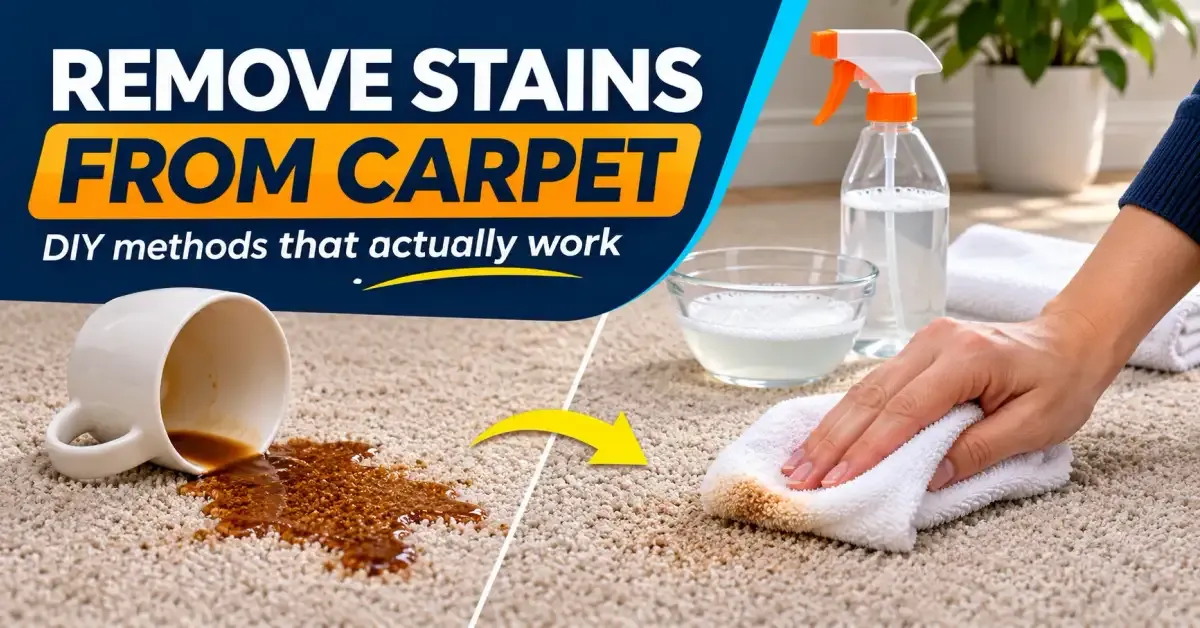
No single home remedy or store-bought spray removes every stain the same way. A fresh spill from dinner needs a different approach than a stain you just noticed that's probably been there for weeks. This guide walks through how to remove stains from carpet using things you likely already have at home, how to handle stains that have already set in, and which combinations of cleaners you should never mix. You'll also find a quick reference table for the most common stain types and a short list of things that sound helpful but usually aren't.
Know What Kind of Stain You're Dealing With
Protein, Tannin, Dye and Oil Stains Explained
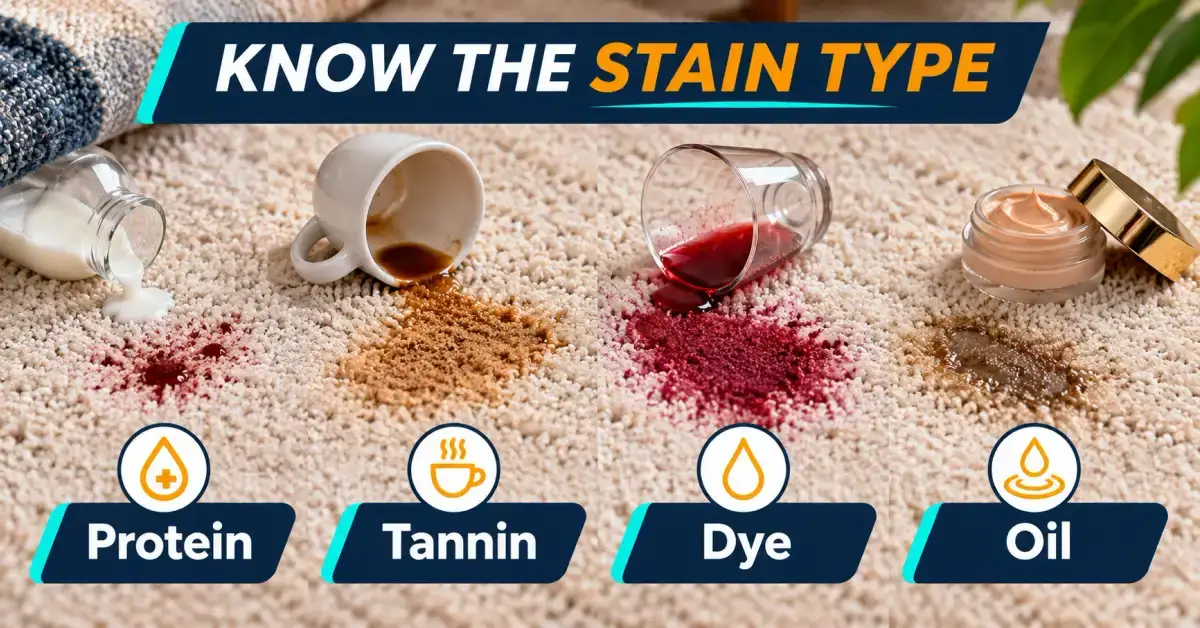
Most carpet-care advice treats every stain the same way, which is why so much of it doesn't work. Stains fall into four rough categories, and knowing which one you're facing tells you what will actually lift it.
Protein stains come from blood, dairy, and pet accidents. They respond to cold water and enzyme-based cleaners, and heat makes them worse by cooking the protein into the fiber. Tannin stains come from wine, coffee, tea, and fruit juice; a mild detergent solution usually handles these. Dye stains come from food coloring, red drink mix, ink, and hair dye; these are the hardest group, since the color itself chemically binds to the fiber the same way the carpet's own dye does. Oil-based stains come from grease, cosmetics, and tar; they need an absorbent first, then a degreasing solution, because water alone just spreads the oil around rather than lifting it out.
Knowing which category you're in before you reach for a cleaner saves time and avoids making the stain worse; using a protein method on a dye stain, for example, rarely does anything useful.
The One Rule That Matters Most: Blot, Don't Scrub
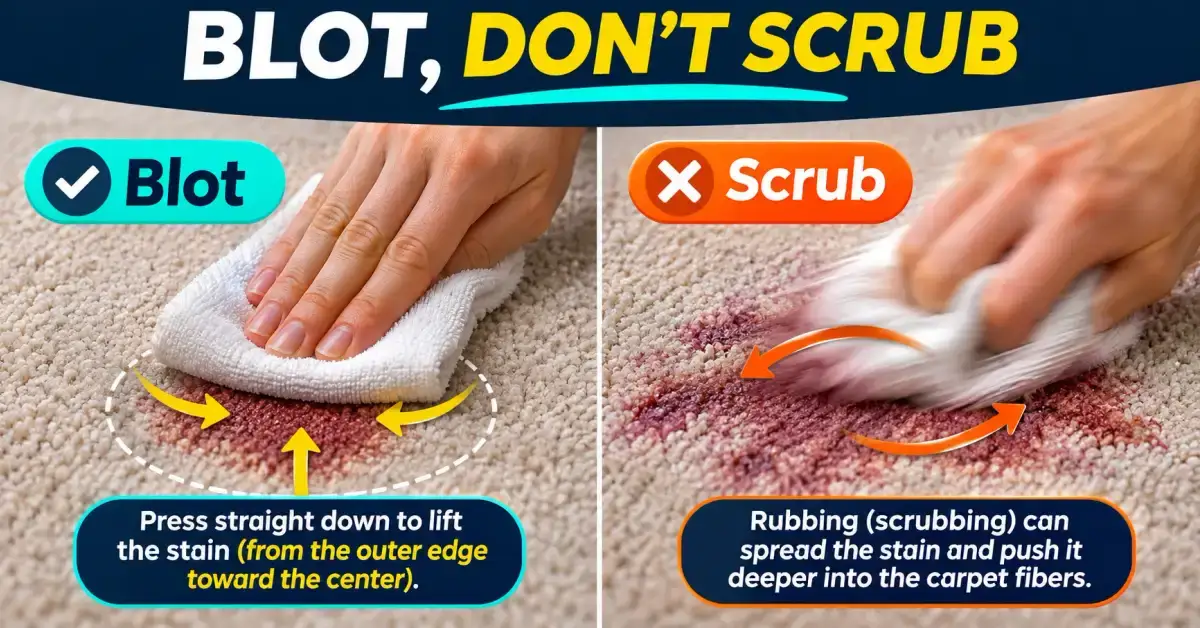
Scrubbing a carpet stain feels productive, but it's the single most common mistake people make. Rubbing grinds the stain deeper into the fibers and frays the pile, leaving a rough patch even after the color is gone. Blotting, the right way to spot clean a fresh mark, works differently: pressing a clean cloth against the stain uses the liquid's own wicking action to pull it up and out, instead of pushing it further in. Work from the outer edge toward the center, switching to a fresh section of cloth as it picks up color, and press straight down rather than side to side. This one habit decides whether a stain lifts cleanly or just spreads.
How to Remove Stains From Carpet With a DIY Stain Remover
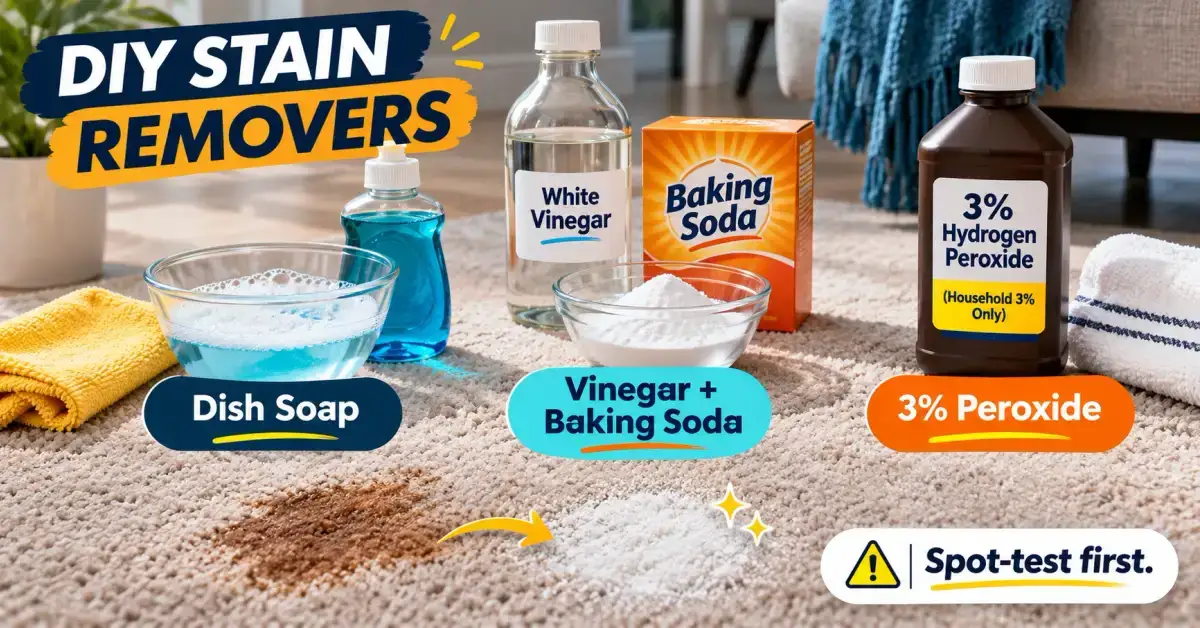
You don't need a specialty product to remove most carpet stains. A simple DIY carpet stain remover, built from three household ingredients, covers the large majority of spots, and which one you reach for depends on the stain category above.
Basic Dish-Soap Solution (for most fresh stains)
Mix 1/4 teaspoon of clear, non-bleaching liquid dish soap into 1 cup of lukewarm water. Don't go stronger: a more concentrated mix leaves residue that attracts dirt faster than before you cleaned it. Apply with a cloth, blot, and rinse with plain water afterward.
Vinegar and Baking Soda (for dried residue and odor)
Mix one part white vinegar to one part water. On natural-fiber or wool carpet, dilute this further than on synthetic carpet, and spot-test either way. Sprinkle baking soda over the stain first as a mild abrasive, then spray the vinegar mixture over it and let the two fizz for a few minutes before blotting. Independent testing has rated this combination as the best-performing home remedy among the common options, though it's not universal: it works best on dried-on residue and less well on fresh grease or heavily set dye.
3% Hydrogen Peroxide (for tougher organic and dye stains)
Household 3% hydrogen peroxide, applied and left to sit for roughly 30 to 60 minutes, handles tougher organic and some dye-based stains dish soap won't touch; it's the closest thing to a homemade heavy-duty option on this list. It breaks down into water with light exposure, so rinsing isn't always necessary. The caveat is bleaching risk, especially on wool or silk, and on white or very light carpet, where even a faint lightening spot can show up. Always spot-test first.
How to Remove Stains From Carpet: Common Stains, Step by Step
Red Stains: Wine, Food Coloring and Drink Mix
Blot a fresh red-wine stain immediately, then pour a small amount of white wine over it, which genuinely neutralizes the tannins rather than being an old myth. Follow with the dish-soap solution or, for a stubborn mark, the hydrogen peroxide method above, spot-testing either way. Red food dye and drink-mix stains deserve an honest warning: synthetic red dyes chemically bind to carpet fiber much like the carpet's own original dye, which is why they're disproportionately hard to shift and may need a specialized dye-reducing product or a professional. The same approach covers orange and jelly-type stains and dried fruit-juice marks; grass or chlorophyll stains respond better to a detergent solution followed by a vinegar rinse.
Coffee, Tea and Other Tannin Stains
Blot first, then apply the dish-soap solution, following with a vinegar rinse if any brown or dark residue remains. This also covers general dark stains and dark spots. Dried mud and dirt stains need a vacuum pass first; plain water stains, usually just a mineral ring left as a wet spot dries, need only a light detergent pass and full drying.
Blood and Other Protein Stains
Use cold water only: hot water sets the protein into the fiber and makes the stain much harder to remove. Dab with the dish-soap solution, or a 3% hydrogen peroxide application if the stain has already dried, always spot-testing first.
Grease and Oil Stains
Absorb as much of the oil as you can first with baking soda or cornstarch, letting it sit for several minutes before vacuuming it up. Follow with a degreasing dish-soap solution. Avoid over-wetting the area, since extra water just helps the oil spread into a wider ring rather than lifting it out.
Ink, Candle Wax and Gum
For ink, dab rubbing alcohol from the outer edge inward, then rinse with the dish-soap solution. Ink is consistently reported as one of the most stubborn stains homeowners deal with. For candle wax, harden it with an ice cube, scrape off what you can, then set a cloth over the rest and press a warm iron over the cloth so the wax lifts into the fabric instead of the carpet. For gum, freeze it the same way, then scrape it off in pieces.
Common Carpet Stains at a Glance
| Stain | Category | Best first method | Caution |
|---|---|---|---|
| Red wine / dye | Dye | White wine, then dish soap or peroxide | May not fully lift; spot-test |
| Coffee / tea | Tannin | Dish soap, then vinegar rinse | None major |
| Blood | Protein | Cold water, dish soap or peroxide | Never use hot water |
| Grease / oil | Oil | Absorb first, then dish soap | Avoid over-wetting |
| Ink | Dye | Rubbing alcohol, then dish soap | Test on hidden area first |
| Pet urine (old) | Protein | Uric-acid enzyme cleaner | See pet-stain section below |
| Grass / chlorophyll | Dye | Detergent, then vinegar rinse | Treat quickly |
| Candle wax | Oil | Ice, then warm iron over cloth | Don't use solvents near backing |
| Dirt / mud (dried) | n/a | Vacuum first, then dish soap | Let wet mud dry before touching it |
| Water / mineral rings | n/a | Light detergent pass, dry fully | More water won't fix it |
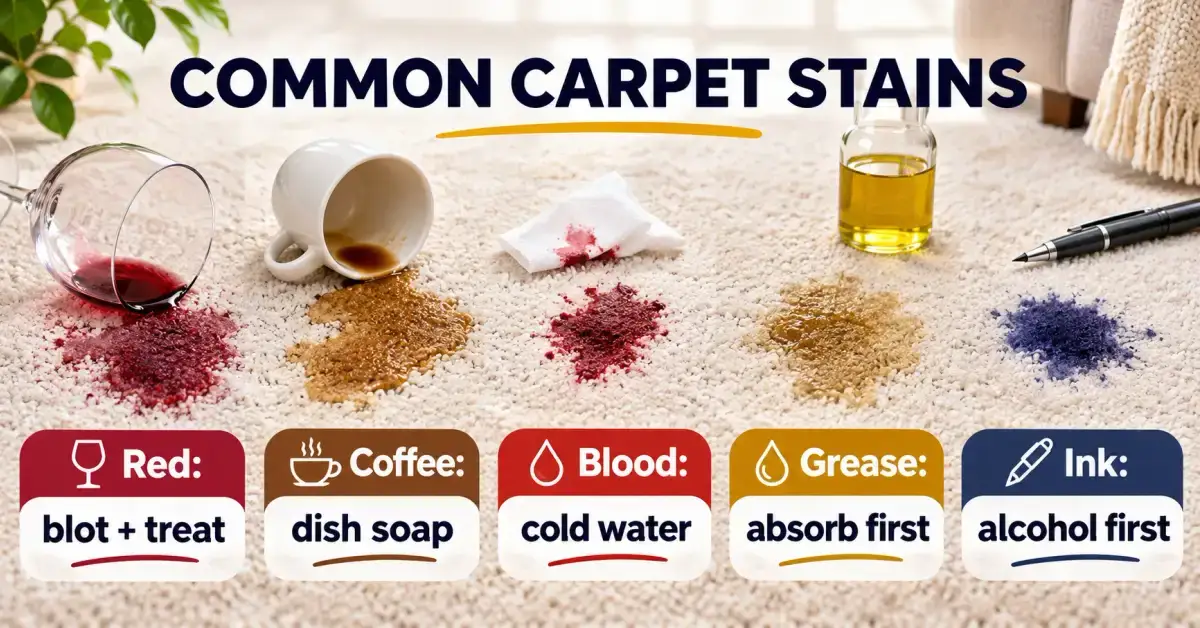
Key Takeaway: Match the method to the stain category (cold water for protein, dish soap for tannin, peroxide or a specialized product for dye, and an absorbent-first approach for oil) rather than reaching for the same cleaner every time.
How to Get Old, Set-In Stains Out of Carpet
Why Old Stains Need a Different Approach
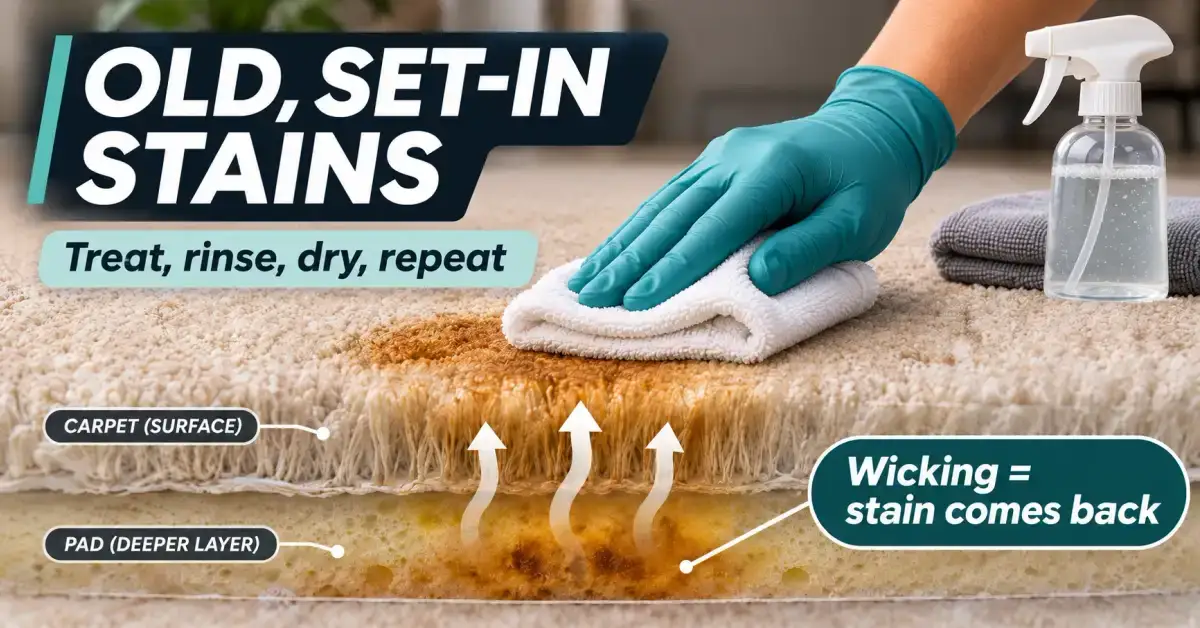
A method that lifts a fresh spill in minutes often fails on a stain that's been sitting for weeks.Older stains oxidize, bond more tightly to the fiber, and can migrate into the pad underneath, which is why one application rarely finishes the job. Plan to re-wet the area gently, apply the chemistry-matched method from above, and repeat, letting the carpet dry fully between attempts rather than piling on more product.
Why a Stain Comes Back After You Clean It (Wicking)
This is the part most carpet guides skip. If a stain disappears and reappears a day or two later, the cause is usually wicking: residual soil or moisture below the surface travels back up through the fiber as the carpet dries, bringing the stain with it. More cleaner isn't the fix: thorough rinsing and extraction, followed by letting the area dry completely, pulls the residue out instead of just hiding it.
Key Takeaway: A stain that returns after cleaning usually hasn't actually been removed. Residue below the surface is wicking back up as the carpet dries, so the fix is thorough rinsing and complete drying, not another round of product.
When Old Stains Won't Fully Lift
Some old, oxidized, or heavily dye-bound stains will only lighten no matter how many times you treat them. That's a real limit of DIY cleaning, not a sign you did something wrong. At that point, keep treating it patiently over several days, bring in a professional for hot-water extraction, or, for a small and severely bonded spot, consider a carpet patch.
How to Remove Old Pet Stains and Odor
Why Pet Urine Needs Its Own Method
Old pet urine needs an enzyme cleaner that specifically targets uric acid, not a generic urea-based or fragrance-masking product. The label should say it's formulated for uric acid or pet urine specifically. Lightly spraying the surface doesn't work; the solution needs to fully soak down to wherever the urine actually reached, which is often deeper than it looks. An older, larger stain usually needs two or three full soak-and-dry cycles rather than one application.
Why Steam Can Make an Old Pet Stain Smell Worse
Avoid steam cleaners on urine stains. The heat doesn't lift the smell. It permanently sets the odor and the stain into the carpet fibers by bonding the uric-acid residue in place, which is the opposite of what you want on an old pet stain. This caution comes directly from pet-welfare organizations' own published cleaning guidance, not just carpet-industry advice.
Finding Hidden Old Stains
If you know there's an old accident somewhere but can't see exactly where, a UV blacklight used in a darkened room will make dried urine spots glow, revealing stains that are invisible under normal light. This is a simple, inexpensive way to treat spots you'd otherwise miss entirely.
Carpet Stain Removal Safety: What Never to Mix
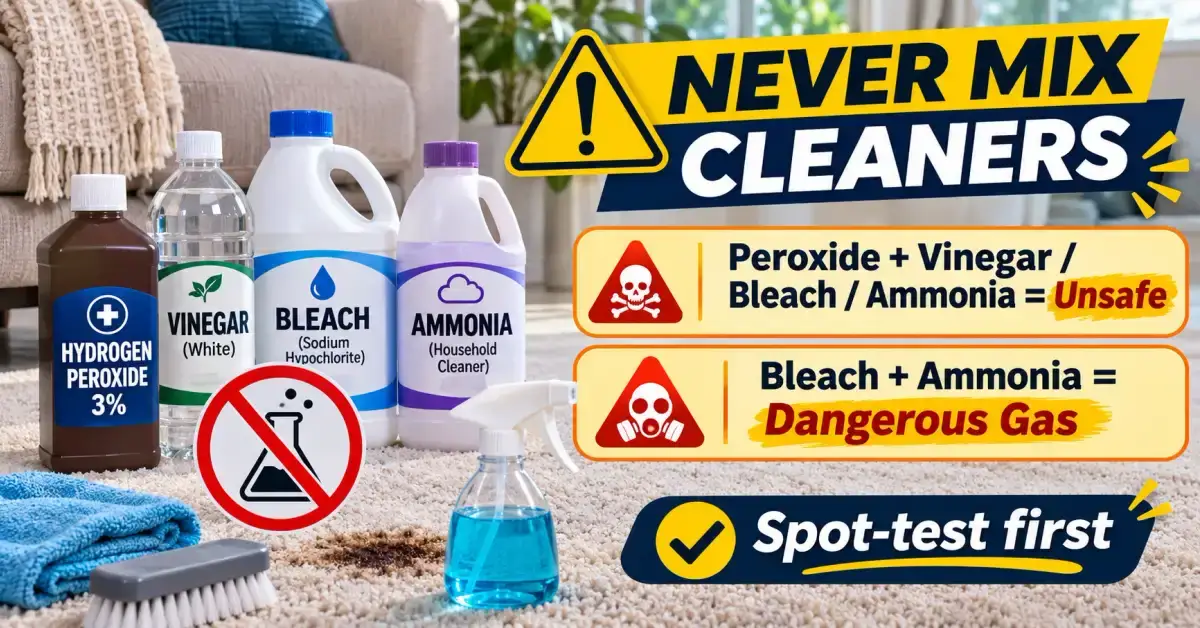
Two combinations are genuinely dangerous, and neither gets named clearly enough in most carpet-cleaning advice. Never mix hydrogen peroxide with vinegar, bleach, or ammonia: combining these can trigger harmful chemical reactions. Never mix ammonia and chlorine bleach; this produces chloramine gas, which has caused real, documented deaths in enclosed spaces. Treat this as a hard rule, not a minor caution. Always spot-test any cleaner on a hidden area first, checking for both color change and fiber damage. Chlorine bleach also strips a carpet's own dye permanently, so on colored carpet an oxygen-based cleaner is the lower-risk option, though even that needs a spot test first, especially on wool or silk.
What Doesn't Work as Well as People Think
A few habits that feel helpful usually aren't. Scrubbing spreads a stain deeper instead of lifting it out. Soaking an area with extra water doesn't help either; it raises the odds of wicking and can lead to mold underneath if the carpet doesn't dry fully. Hydrogen peroxide isn't risk-free, since it can bleach dyed carpet and natural fibers like wool or silk. And no home remedy reliably erases a bonded red-dye stain; sometimes the honest answer is that it will only fade, not disappear.
When to Call a Professional
Some situations are genuinely better left to a professional carpet cleaner. That includes large spills that have spread across a wide area, old pet-urine contamination that has reached down into the pad, a red-dye or ink stain that keeps resisting repeated home treatment, and valuable or delicate carpet made of wool or another natural fiber. A professional brings hot-water extraction equipment and controlled-strength products that go beyond what's safe to try at home.
How to Prevent Future Carpet Stains
A little prevention saves a lot of future scrubbing. Treat spills within minutes rather than hours; a fresh stain lifts far easier than one that's had time to set. Keep a small stain kit on hand: white cloths, mild dish soap, white vinegar, and 3% hydrogen peroxide cover most situations. Use doormats and a shoes-off policy in high-traffic rooms, spot-test any new cleaner before you actually need it, and let carpet dry fully after any wet treatment to avoid wicking and mold.
Carpet Stain FAQs
Is it safe to use an oxygen-based cleaner on all carpets?
+
No. Avoid wool, silk, leather, and anything dry-clean only, since the formula can affect natural-fiber dye.
How long should I leave a cleaning solution on a stain?
+
A vinegar rinse can sit a few hours on tough residue; hydrogen peroxide works best given 30 to 60 minutes; an enzyme cleaner should follow its label, often 10 to 15 minutes or longer for an older stain.
Can all carpet stains be completely removed?
+
Most can be significantly reduced or removed. Some old, oxidized, or dye-based stains may only lighten and need professional extraction.
Should I rub or scrub a stubborn stain?
+
No, blotting only. Scrubbing drives the stain deeper and frays the fibers.
The Bottom Line
Knowing how to remove stains from carpet comes down to a few habits more than any single product: identify the stain type, blot instead of scrub, and match the method to its chemistry. Old and pet stains need extra patience and often more than one application, and never mix cleaning chemicals together. Follow this approach and you'll handle most stains yourself, with a realistic sense of when to call a professional instead.
Need a carpet cleaning company you can trust? We handle residential and commercial carpet cleaning, rug cleaning, upholstery cleaning, and pet stain and odor removal —our team is ready to help.

Michael Sanders
Michael Sanders is a home care and cleaning industry writer covering carpet maintenance, flooring care, and household cleaning practices across the United States. His work focuses on practical, research-backed guidance — from stain and odor removal to deep extraction methods and indoor allergen prevention. Michael collaborates with cleaning professionals to ensure accuracy, and his writing reflects a genuine interest in helping homeowners make informed decisions about caring for their homes.